Google Discover Optimization: 2025 Strategy Guide
Learn how to optimize content for Google Discover traffic in 2026. Master E-E-A-T signals, image SEO, and technical requirements to unlock more views.
 Maya Krishnan
Imagine waking up to find 50,000 new visitors on your site before you've even had your morning coffee—all without a single keyword ranking #1.
This isn't a glitch. It's the power of Google Discover.
For years, SEO professionals have focused almost exclusively on "pull" marketing—optimizing for users actively searching for answers. But the search landscape in 2026 has shifted fundamentally. With Google Discover, the search engine has evolved into an anticipation engine, pushing content to over 800 million users based on their interests, not their queries.
If your strategy relies solely on traditional keyword targeting, you are missing one of the largest organic traffic channels available today. Optimizing for Discover requires a different mindset: you aren't answering a question; you're sparking an interest.
In this guide, you will learn the precise mechanics of Google Discover optimization, how to align your content with its interest graph, and why the technical foundation of your site—audited by tools like Digispot AI—is the gatekeeper to this massive audience.
Key Takeaways
- Optimize for interests, not keywords. Discover is a "query-less" feed—win it by pairing recognizable entities with a fresh, compelling angle rather than chasing exact-match search terms.
- The image is the click. Serve a 1200px-wide, 16:9 visual and add
max-image-preview:largeto your<head>; without that tag you lose the high-performing large-image card entirely. - E-E-A-T is a hard filter, not a tiebreaker. Because Google pushes content to passive users, weak authorship, thin experience, or off-niche topics get filtered out before they ever reach a feed.
- Speed and mobile are non-negotiable. Discover traffic is almost entirely mobile, so passing Core Web Vitals (LCP under 2.5s, CLS under 0.1, INP under 200ms) is a prerequisite for eligibility.
- Treat Discover as an accelerator, not a foundation. Traffic is volatile—diversify with evergreen coverage, refresh it regularly, and never make it your only channel.
How Google Discover Works: The Interest Graph
Google Discover is fundamentally different from Google Search. In traditional Search, a user types "best CRM for startups," and Google retrieves the most relevant answer. This is intent-based.
Discover is interest-based. It uses a "query-less" approach, leveraging three main data layers to predict what a user wants to read:
- User Interest Graph: Based on search history, YouTube activity, and location history.
- Content Entity Mapping: Google's understanding of the entities (people, places, concepts) in your content.
- Engagement Signals: High click-through rates (CTR) and dwell time on specific topics.
To rank here, you must stop thinking about "keywords" and start thinking about "entities" and "emotions." Your content needs to connect a known entity (like a celebrity, a stock, or a hobby) with a compelling, fresh angle.
1. The Visual Imperative: Optimizing Images for Impact
If traditional SEO is text-first, Google Discover is visual-first. The primary driver of a click in the Discover feed is the image, not the headline.
Google's own data suggests that cards with large images see a 5% increase in click-through rate and a 3% increase in time on page.
Technical Image Requirements
To qualify for the high-performing "large image card" format, your visual assets must meet strict criteria:
- Minimum Width: 1200 pixels
- Aspect Ratio: 16:9 is ideal for mobile cards
- File Format: WebP or JPG (optimized for speed)
- Directives: You must include the following meta tag in your
<head>:
<meta name="robots" content="max-image-preview:large">
Without this tag, Google will default to a thumbnail image, which generates significantly lower engagement.
Best Practices for Creative
- Avoid Stock Photos: Generic "business handshake" photos are ignored by users. Use custom charts, annotated screenshots, or high-emotion photography.
- Center the Subject: The feed may crop images. Keep the focal point in the center safe zone.
- No Logo Overlays: Google's policies explicitly discourage using your logo as the main image. It looks like an ad and reduces trust.
Digispot AI can help you identify and fix these issues automatically with AI-powered audits that check for the max-image-preview:large tag and analyze image dimensions across your entire site.
2. E-E-A-T: The Safety Filter for Push Content
Because Google pushes Discover content proactively, the bar for trust is higher than in search results. Google cannot afford to recommend low-quality or dangerous content to passive users.
This is where E-E-A-T (Experience, Expertise, Authoritativeness, and Trustworthiness) becomes your gatekeeper.
Demonstrating "Experience"
Google's 2026 updates heavily weight the "Experience" component. Users want to know you have actually used the product or visited the location.
- Use "I" statements: "When I tested this software..."
- Include original media: Photos or videos you took yourself prove you were there.
- Author Bios: Link articles to robust author profile pages that detail specific industry experience.
Building Entity Authority
You cannot "trick" Discover into thinking you are an expert. You must build Topical Authority. If you usually write about "Email Marketing" and suddenly publish a post about "Keto Diets," you will not rank in Discover.
Stick to your niche. Consistent publishing on related entities strengthens your association with that topic in Google's Knowledge Graph.
You can verify your site's entity signals and authority score using the On-Page SEO Analysis tool, which breaks down how search engines perceive your content's topic clusters.
3. The Art of the Discover Headline
Writing for Discover requires balancing curiosity with clarity. You are competing with social media feeds, not search results.
The "Gap Theory" of Curiosity
Effective Discover headlines open a "knowledge gap"—they tell the reader enough to be interested, but leave enough out to require a click.
- Bad (Too Vague): "SEO Tips for 2026"
- Bad (Clickbait): "You Won't Believe What Google Did!"
- Good (Discover Optimized): "Why Google's New 'Hidden' Metric Is Replacing Keywords in 2026"
Avoid the "Clickbait" Trap
Google's automated systems aggressively penalize misleading headlines. If your headline promises a "shocking result" and the content delivers mundane advice, your pogo-sticking rate (users bouncing back immediately) will skyrocket.
High bounce rates from Discover signal to Google that your content is low value, which can get your entire domain blacklisted from the feed.
4. Technical Foundations: Speed and Mobile Usability
Discover traffic is 99% mobile. If your site fails on mobile usability, you are invisible.
Core Web Vitals (CWV)
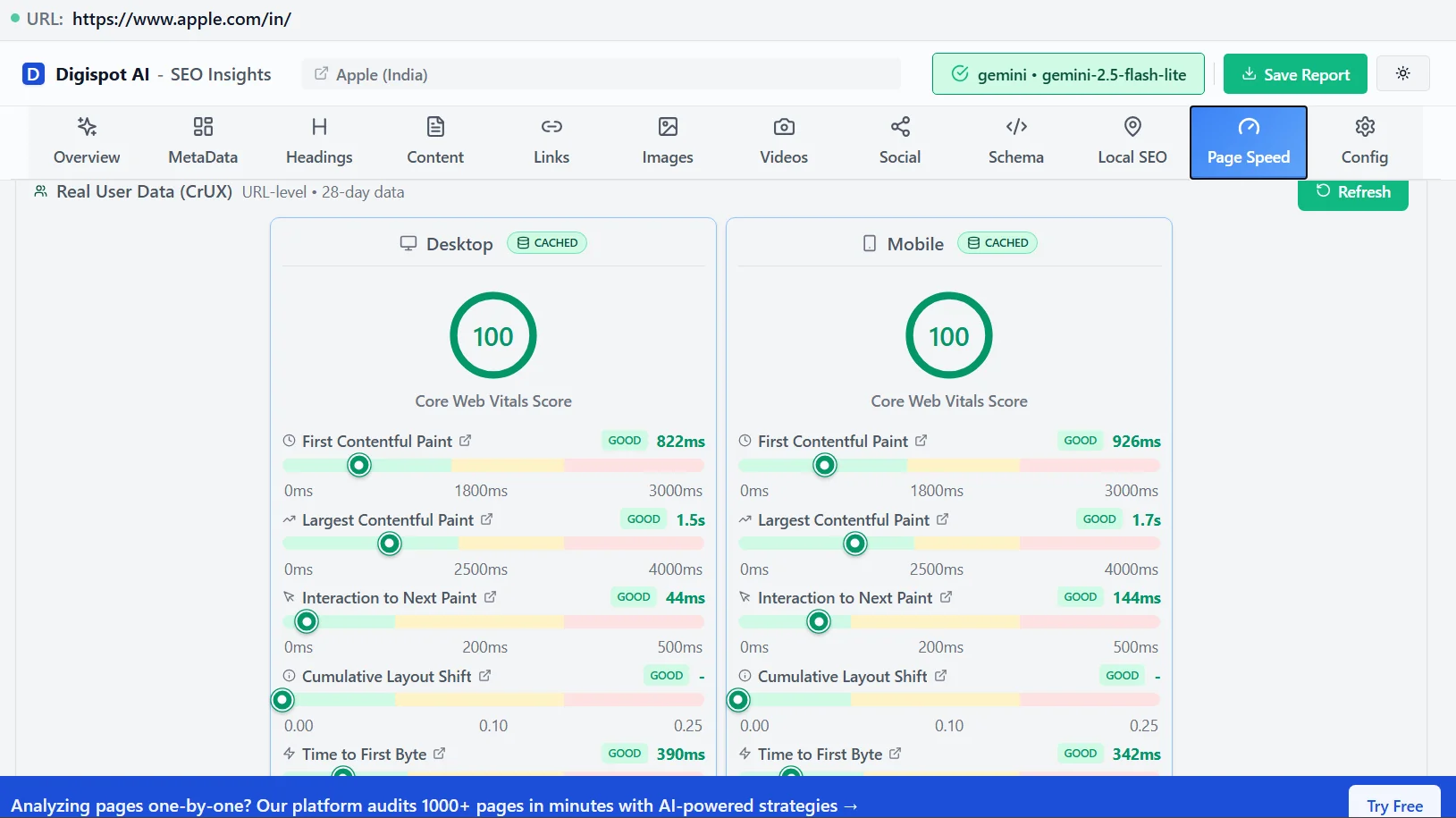
Core Web Vitals are a prerequisite, not a bonus. Since Discover content is often consumed in short bursts on the go, slow Load Largest Contentful Paint (LCP) or unstable layouts (CLS) will kill your reach.
- LCP: Under 2.5 seconds
- CLS: Under 0.1
- INP: Under 200 milliseconds
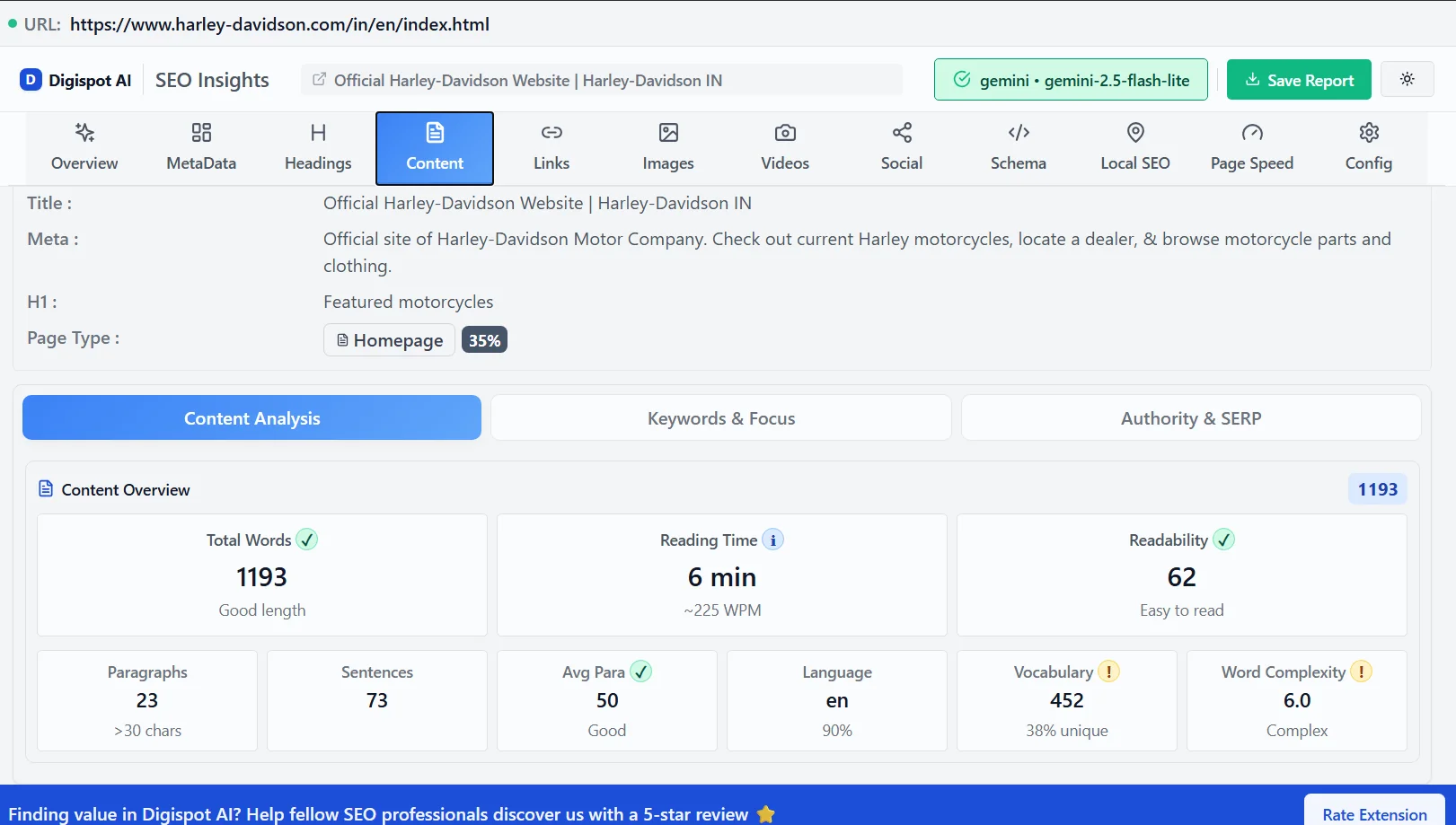
Get instant SEO insights on any page, including mobile performance scores, with our free Chrome extension. It highlights render-blocking resources that might be sabotaging your Discover eligibility.
AMP (Accelerated Mobile Pages)
While no longer strictly mandatory, AMP pages still perform exceptionally well in Discover because they guarantee the speed Google craves. If you are a news publisher, maintaining valid AMP versions is still a recommended strategy in 2026.
That said, most sites are better off investing in a fast, standard responsive template than in a parallel AMP stack. A well-tuned non-AMP page competes on equal footing in the feed as long as it passes Core Web Vitals—so before you commit to AMP, weigh the maintenance cost against the marginal speed gain. If you do adopt it, keep the canonical relationship between your AMP and non-AMP versions clean so Google indexes the right URL; our guide to AMP SEO benefits walks through the trade-offs in detail. For sites choosing the responsive route, prioritize the fixes that move LCP and CLS the most, which we break down in the Core Web Vitals optimization guide.
5. Optimizing for "AEO" and AI Search Platforms
Here is where the strategy evolves for 2026. The optimization work you do for Google Discover directly impacts your visibility in AI Search platforms (like ChatGPT Search, Google AI Overviews, and Perplexity).
Why? Because both Discover and AI models rely on Entity Confidence.
When you optimize for Discover by:
- Defining clear entities (using Schema markup)
- Demonstrating high E-E-A-T
- Generating high user engagement
You are simultaneously training AI models that your brand is the "authoritative source" for those entities. Digispot AI's "LLMBot vs GoogleBot" analysis is designed specifically to help you bridge this gap, ensuring your content is understood by both traditional crawlers and Large Language Models.
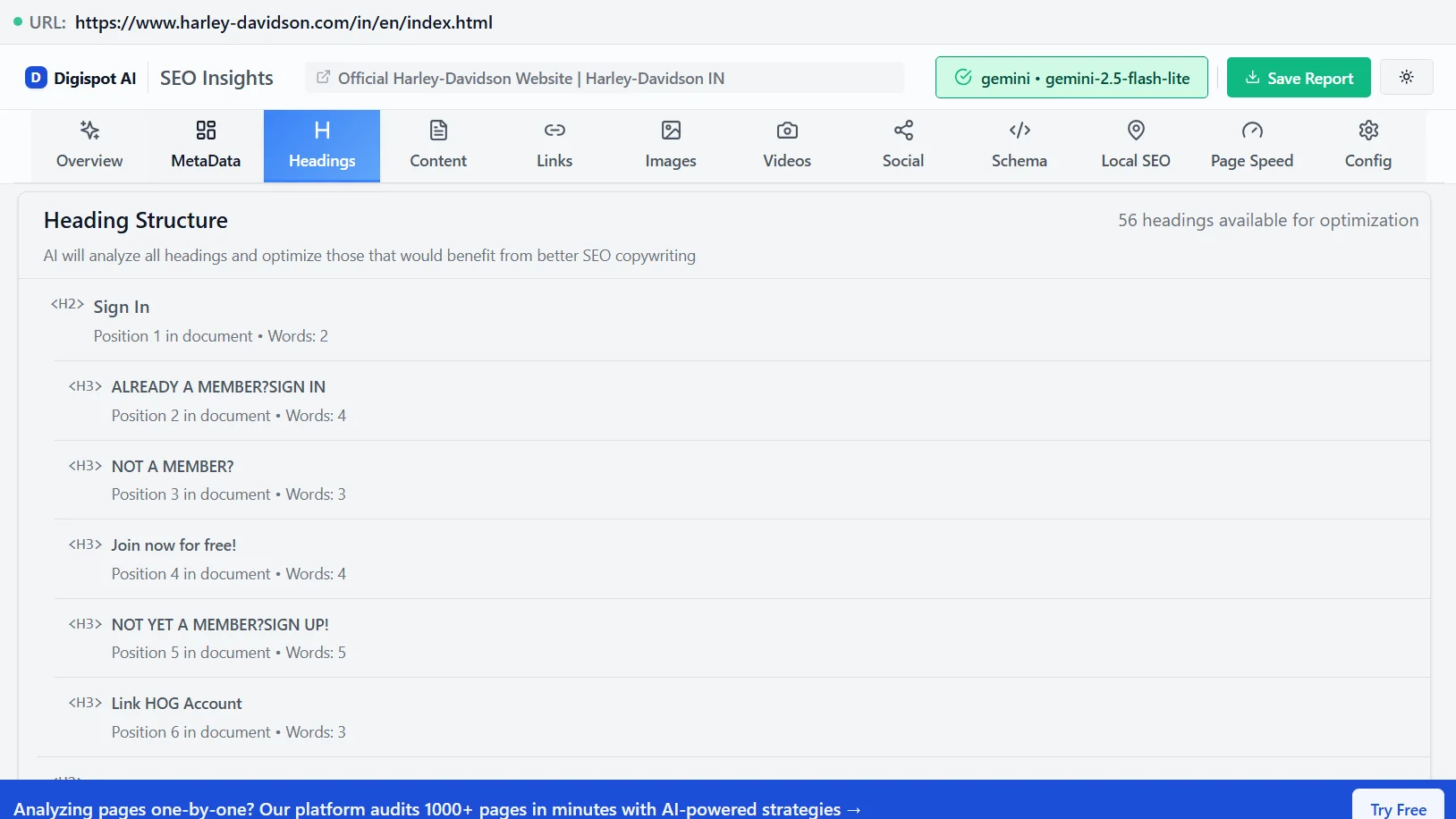
For structuring your entities correctly, use the free Schema Markup Generator to create valid JSON-LD code for Article, NewsArticle, or TechArticle types.
6. Content Lifecycles: Trending vs. Evergreen
A common myth is that Discover is only for breaking news. While news has a lower barrier to entry, Evergreen content has a longer shelf life.
The "Buzz" Strategy (Short-term)
Capitalize on trending topics by publishing quickly. Use tools like Google Trends to identify spiking interest.
- Lifespan: 24-48 hours
- Goal: massive traffic spikes
- Tactic: High publication frequency, news schema.
The "Interest" Strategy (Long-term)
Target enduring hobbies and interests: "Best hiking trails," "Personal finance tips," "Coding tutorials."
- Lifespan: Months or years (re-surfacing)
- Goal: Consistent, qualified traffic
- Tactic: Deep comprehensive guides, regular updates.
Pro Tip: Refresh your best evergreen content every 3-6 months. Changing the "Last Updated" date and adding a new section can trigger a fresh round of Discover impressions. Learn more about seasonal SEO strategies to time these updates perfectly.
7. Analyzing and Scaling Success
You cannot improve what you cannot measure. Google Search Console provides a dedicated "Discover" report, but it lacks context.
To truly scale, you need to segment your data:
- Identify Winning Entities: Which topics consistently trigger Discover traffic? Filter the Discover report by page and cluster the winners by subject—if three of your top five pages cover the same entity, that is your signal to publish more around it and deepen your topical coverage.
- Analyze CTR by Headline Type: Do questions work better than lists? Export the report, tag each headline by format (question, list, statement, curiosity gap), and compare median CTR per format so you write to the pattern your audience actually clicks. The CTR optimization guide covers how to test headline variants systematically.
- Monitor "Heartbeat" Metrics: Watch your average time on page for Discover traffic specifically, and segment it away from Search traffic in GA4—Discover visitors behave differently, and a short dwell time on a Discover-heavy page is an early warning that the content is under-delivering on its headline promise.
Because the native Discover report is limited to 16 months of data and offers no keyword-level detail, pair it with disciplined reporting habits from our Google Search Console guide to spot trends before they become drops. To keep the pipeline of Discover-worthy topics full, feed your winning entities back into a trending keyword research workflow so you are publishing on rising interest rather than reacting to it.
Digispot AI's platform integrates GSC data with site-level audits, allowing you to correlate technical health with Discover performance. If you see a drop in traffic, you can instantly check if a recent code deployment hurt your Core Web Vitals or broke your schema markup.
Conclusion: Start Your Discovery Engine
Optimizing for Google Discover is the most effective way to diversify your traffic beyond the "ten blue links." By combining emotional storytelling with rigorous technical SEO—large images, fast mobile speeds, and clear entity markup—you can unlock a stream of visitors who are genuinely interested in what you have to say.
Remember, Discover is volatile. Do not build your entire business model on it, but treat it as a powerful accelerator for your brand authority.
Ready to improve your search visibility? Try Digispot AI for comprehensive website audits and actionable recommendations that prepare your site for both Google Discover and the future of AI search.
Related deep-dives
Continue with these closely related guides:
- keyword mapping — Master Keyword Mapping: The Strategic Blueprint for Higher Rankings
- seo site migration — SEO Site Migration Checklist: The Ultimate 2026 Guide
References
- Google Search Central: Discover and your website
- Google Search Central: Creating helpful, reliable, people-first content
- Search Engine Journal: Google E-E-A-T: How To Demonstrate It For SEO
- Backlinko: The Ultimate Google Discover Guide
- Search Engine Land: Google Discover Content Policies
- Digispot AI: Schema Markup Generator
- Digispot AI: Chrome Extension
Audit any page in seconds
300+ SEO checks including Core Web Vitals, schema markup, meta tags, and AI readiness — trusted by 1000+ SEO experts and marketers.
Frequently Asked Questions
Here are some of our most commonly asked questions. If you need more help, feel free to reach out to us.
Written by
Maya Krishnan
Digital growth expert
Maya is a seasoned expert in web development, SEO, and digital strategy, dedicated to helping businesses achieve sustainable growth online. With a blend of technical expertise and strategic insight, she specializes in creating optimized web solutions, enhancing user experiences, and driving data-driven results. A trusted voice in the industry, Maya simplifies complex digital concepts through her writing, empowering readers with actionable strategies to thrive in the ever-evolving digital landscape.