Off-Page SEO Strategies: Build Authority & Links
Master off-page SEO strategies to build domain authority. Learn link building, brand mentions, social signals, and reputation management for higher rankings.
 Maya Krishnan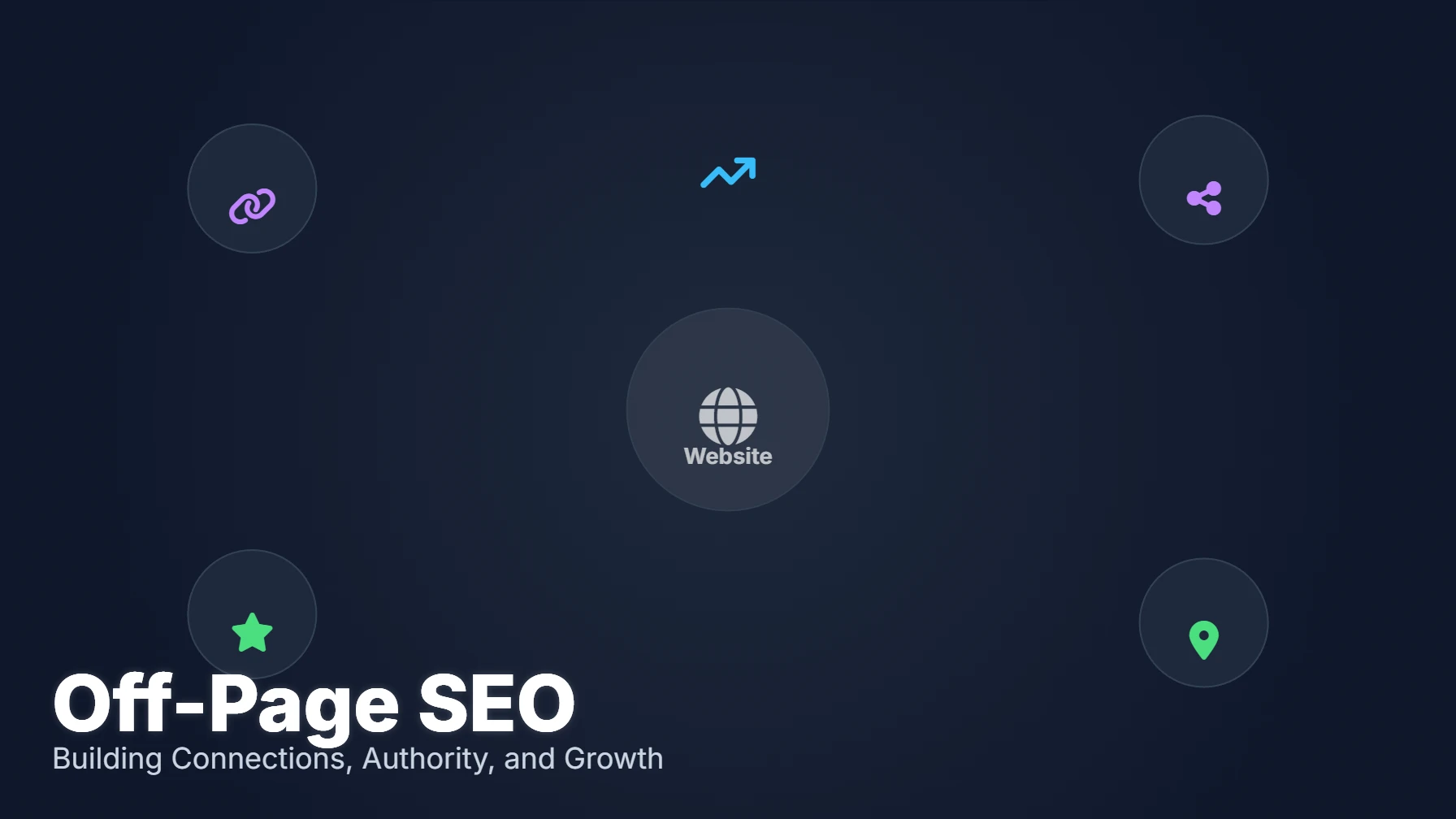
You have published the perfect article. It targets the right keywords, loads instantly, and answers user intent with precision. Yet, weeks later, it sits stagnant on page three of Google. Why?
The missing piece is often authority. While your on-page optimization tells search engines what your content is about, off-page SEO tells them how important it is. In a digital ecosystem where millions of pages compete for the same ten spots, Google relies on external signals—votes of confidence from the rest of the web—to determine who deserves the top ranking.
This guide moves beyond basic definitions to provide a strategic roadmap for Off-Page SEO. We will explore how to build a fortress of authority around your domain using modern link-building tactics, brand signal generation, and reputation management. We will also examine how AI-driven search experiences (SGE) are changing the value of external validation.
Key Takeaways
- Authority is earned, not built on your page. Off-page SEO is the sum of external votes—links, mentions, reviews, and shares—that prove your site deserves to rank.
- Relevance beats raw power. A niche-relevant editorial link aligned with E-E-A-T outperforms a generic link from a high-traffic aggregator.
- Diversify your signals. Combine link building, digital PR, social amplification, local citations, and reputation management—never lean on one tactic for more than a fraction of your profile.
- Protect what you earn. Audit for toxic links, keep anchor text natural, and disavow only clearly harmful backlinks to stay penalty-safe.
- Play the long game. Off-page results typically compound over 3–6 months, but the authority moat you build is what future-proofs rankings against algorithm updates.
Defining Off-Page SEO: The Authority Engine
Think of your website as a candidate running for office. On-page SEO is your platform, your speeches, and your appearance—everything within your control. Off-page SEO is the endorsements, the media coverage, and the word-of-mouth buzz. You can have the best policies (content), but without public support (authority), you won't win the election.
Technically, Off-Page SEO encompasses all efforts taken outside of your own website to improve its search engine rankings. These actions signal to search algorithms that your site is trustworthy, relevant, and authoritative. While link building is the most potent signal, a modern off-page strategy is a holistic mix of PR, social engagement, and brand management.
The "Trust Ecosystem" of Search
Search engines like Google view the web as a network of citations. If high-authority entities (like major news sites or industry leaders) link to or mention you, some of their authority flows to your site. This concept, often called "link juice" or "PageRank," remains a foundational element of the algorithm.
However, it is not just about raw power anymore. Google's E-E-A-T (Experience, Expertise, Authoritativeness, and Trustworthiness) guidelines emphasize the source of the endorsement. A link from a niche-relevant blog is often worth more than a generic link from a high-traffic news aggregator.
The tangible benefits of a strong off-page profile include:
- Ranking Stability: Sites with high authority are less volatile during algorithm updates.
- Crawl Budget Efficiency: Search bots crawl authoritative sites more frequently, indexing your new content faster.
- referral Traffic: High-quality backlinks bring visitors who are already interested in your topic.
- Brand Entity Strengthening: Consistent mentions help Google understand your brand as an entity, crucial for showing up in AI-generated answers and Knowledge Panels.
If you have neglected the technical foundations of your site, off-page efforts will yield diminishing returns. Before launching a campaign, ensure your site speed and structure are solid by reviewing our Core Web Vitals SEO guide.
Core Off-Page SEO Pillars for Authority
Off-page SEO is a multifaceted discipline. To succeed, you cannot rely on a single tactic. You need a diversified portfolio of signals.
1. Strategic Link Building: Quality Over Quantity
What are Backlinks? Backlinks are hyperlinks from one website to another. They act as the primary currency of the web's reputation system. However, the era of spamming directory links is long gone. Today, relevance and placement matter most.
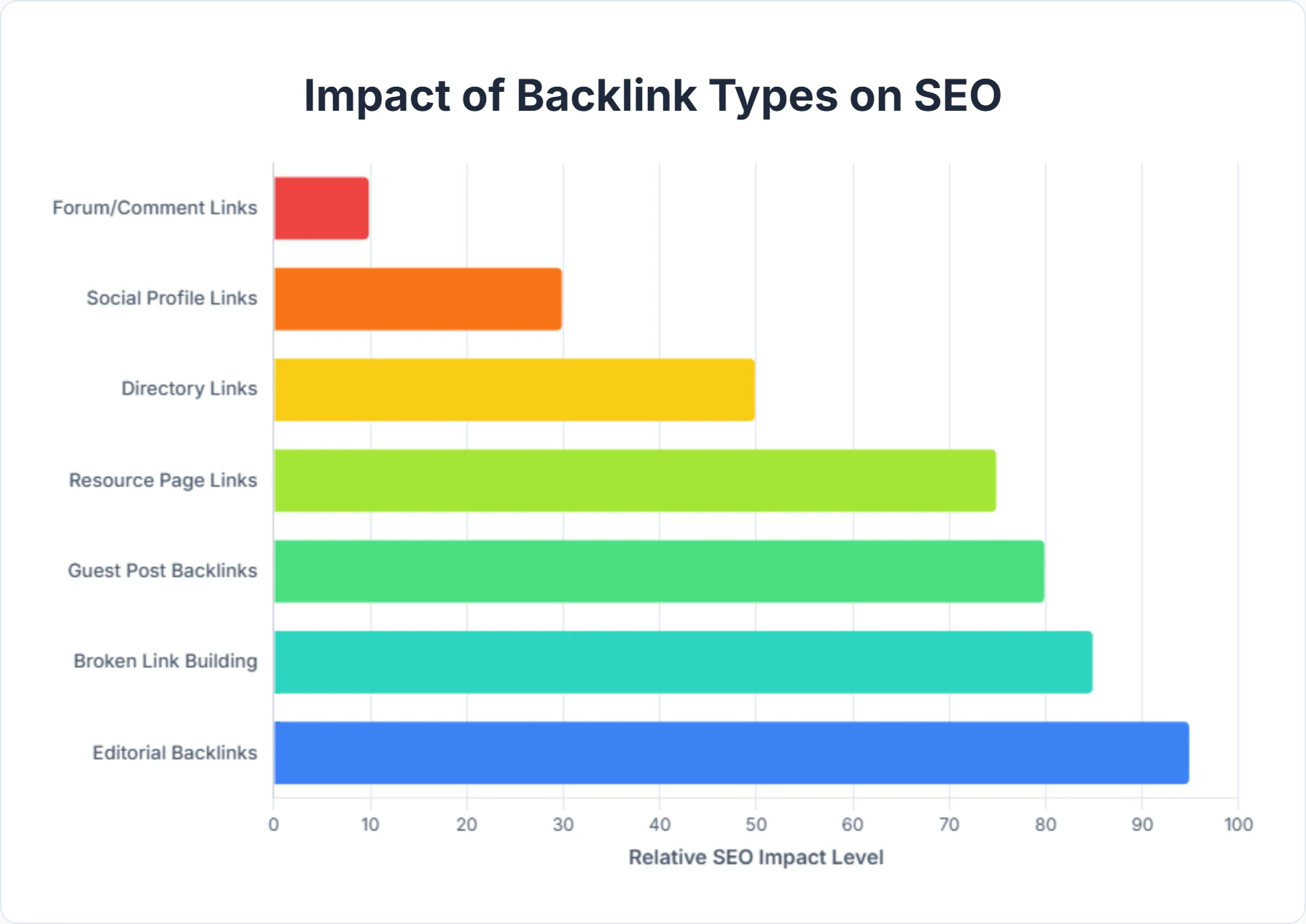
The Hierarchy of Link Value:
- Editorial Links: The gold standard. These are natural links within the body text of an article, given because your content adds value.
- Guest Post Links: Valuable for building relationships and tapping into new audiences, provided the content is high-quality and not purely self-promotional.
- Header/Footer Links: Generally carry less weight as they look like sitewide navigations or paid placements.
- User-Generated Content (UGC): Links in comments or forums. These are usually "nofollow" (telling Google not to count them for ranking) but can drive traffic.
Actionable Link Building Tactics:
- The "Skyscraper" Technique 2.0: Find content in your niche that has many backlinks. Create something significantly better—more up-to-date data, better design, or deeper analysis. Then, reach out to the sites linking to the original piece and ask them to link to yours instead.
- Digital PR & Data Studies: Journalists love data. Conduct a survey or analyze industry trends and publish a report. Pitch this data to industry news sites. When they cite your statistics, you earn a high-authority backlink.
- Unlinked Brand Mentions: Use tools to find where your brand is mentioned but not linked. Reach out to the author politely: "Thanks for mentioning Digispot! Would you mind making that a clickable link so your readers can find us easily?" This has a high success rate because the hard part (getting mentioned) is already done.
- Broken Link Building: Identification of broken links on competitor sites is a classic win-win. You help a webmaster fix a 404 error, and you gain a link.
- Competitor Gap Analysis: Analyze your competitors' backlink profiles. If five competitors have a link from a specific industry directory or blog, chances are you can get one too. Pair this with a broader look at how to analyze competitor SEO so you prioritize the referring domains that actually move rankings rather than chasing every link they hold.
Digispot AI can streamline this process by automatically identifying your competitors' most valuable backlink sources, saving you hours of manual research.
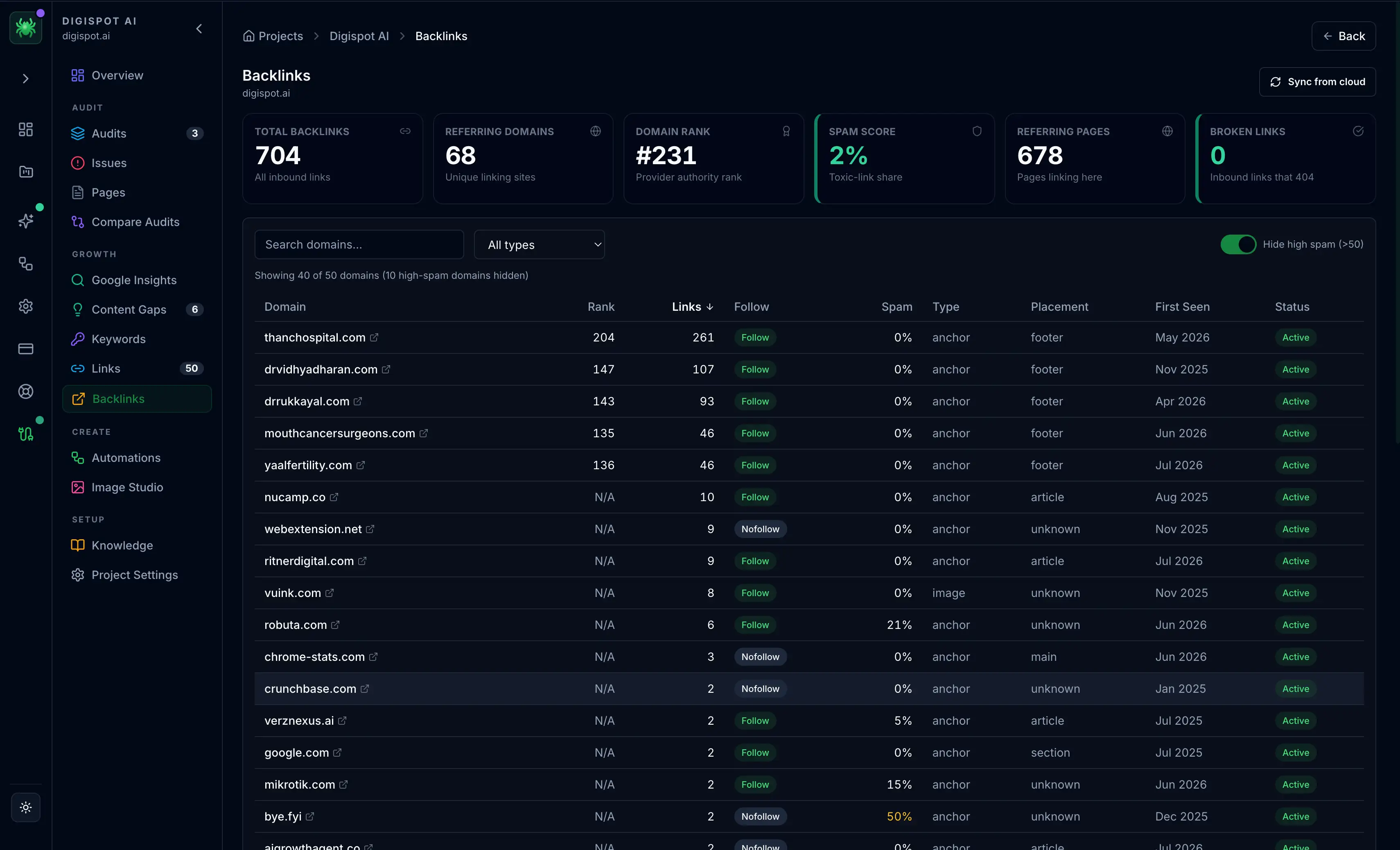
Table: Evaluating Backlink Types
| Backlink Type | Description | SEO Impact & Risk Profile |
|---|---|---|
| Editorial Backlinks | Links earned naturally within content context. | Highest Impact / Zero Risk: The strongest signal of authority. Hardest to get but most valuable. |
| Guest Post Backlinks | Links from articles you contribute to other sites. | High Impact / Low Risk: Excellent for authority if the site is relevant. Avoid "link farms" or sites that sell posts openly. |
| Resource Page Links | Curated lists of helpful tools or articles. | Medium Impact / Low Risk: Great for evergreen content. Signals your site is a utility to the industry. |
| Directory Links | Business listings (Yelp, Yellow Pages, Clutch). | Low Impact / Low Risk: Essential for Local SEO and trust foundation. Stick to reputable, moderated directories. |
| Forum/Comment Links | Signatures or comment sections. | Zero to Low Impact / High Risk: Often ignored by Google. If automated or spammy, can lead to penalties. Use only for genuine community engagement. |
| PBNs (Private Blog Networks) | Networks of sites created solely to build links. | Negative Impact / Critical Risk: Strictly against Google guidelines. Can result in de-indexing. Avoid at all costs. |
2. Social Media Signal Amplification
While Google has stated that social shares (likes, tweets) are not a direct ranking factor, the correlation between high-ranking pages and high social engagement is undeniable.
The Indirect SEO Loop:
- You share high-quality content on LinkedIn or X (Twitter).
- Industry influencers see it and engage.
- One of those influencers writes a blog post or newsletter and links to your content.
- That backlink improves your rankings.
Platform-Specific Tactics:
- LinkedIn: Ideal for B2B. Publish long-form posts that summarize your blog content, then link to the full article in the comments or bio to drive traffic without penalizing the post's reach (algorithms often downrank posts with external links in the body).
- Pinterest: Functions more like a visual search engine than a social network. High-quality infographics linked to blog posts can drive massive referral traffic and image search visibility.
- YouTube: Google owns YouTube. Embedding relevant videos in your posts and linking back to your site from video descriptions creates a powerful synergy between the two largest search engines.
3. Local SEO: Dominating the "Near Me" Space
For local businesses, off-page SEO is existential. It centers on the NAP consistency (Name, Address, Phone) and proximity signals.
- Google Business Profile (GBP): This is your digital storefront. Regularly posting updates, photos, and offers on your GBP signals activity to Google.
- Citation Building: Ensure your business is listed on major aggregators (Data Axle, Neustar) and industry-specific directories. Inconsistent addresses (e.g., "St." vs "Street") can confuse search engines and dilute your authority—see our guide on NAP consistency for a full cleanup workflow.
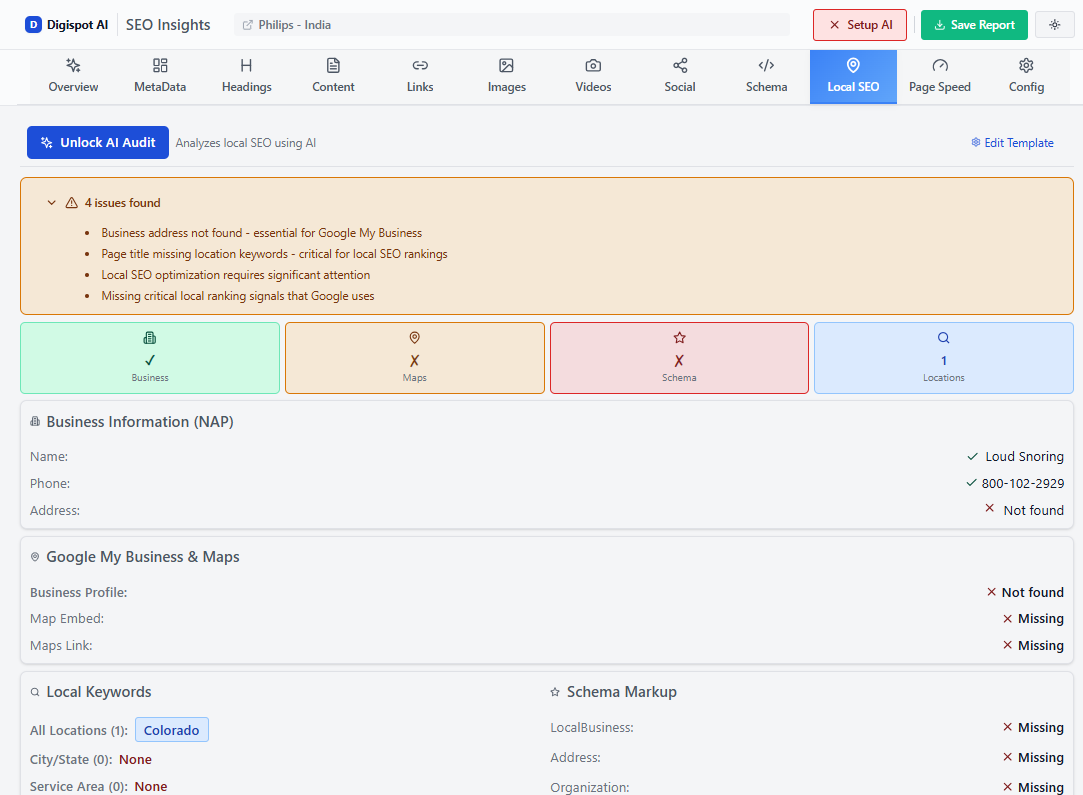
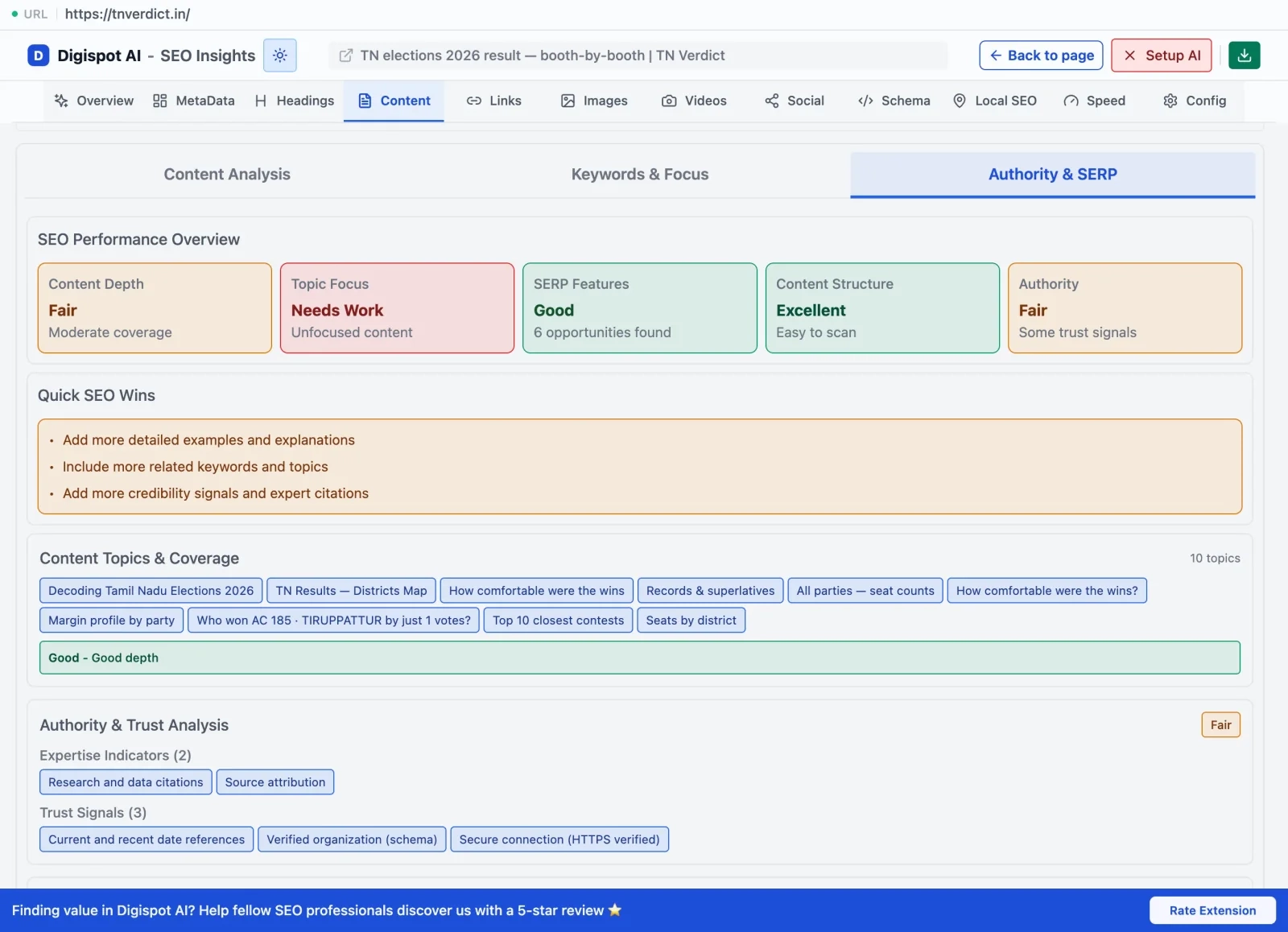
Turn invisible SEO data into clear visuals with our Free Chrome extension.
- Local PR: Sponsoring a local Little League team or getting featured in the local newspaper provides hyper-relevant geographic signals that national competitors cannot replicate.
4. Reputation Management: Reviews & Sentiment
Google is getting better at understanding sentiment. A business with thousands of links but a 1.5-star rating will struggle to rank because Google wants to satisfy users, not send them to a bad experience.
- Review Velocity: A sudden influx of 100 reviews looks suspicious. Aim for a steady stream of genuine feedback.
- Response Strategy: Replying to reviews (both positive and negative) shows engagement. Keywords in your responses (e.g., "Glad you enjoyed our SEO audit tool...") can subtly help relevance, but don't overdo it.
- Third-Party Platforms: Don't just focus on Google. Gather reviews on Trustpilot, Capterra, or G2. These platforms often rank highly for "[Your Brand] reviews" queries, protecting your brand reputation.
5. Content Syndication and Distribution
Creating content is only half the battle; distribution is the other half.
- Syndication: Republishing your top-performing articles on platforms like Medium or LinkedIn Articles can tap into their built-in audiences. Crucial: Always use a
rel="canonical"tag pointing back to your original website to prevent duplicate content issues. Where a canonical isn't supported (some third-party publishers), wait until the original is indexed before syndicating, and only republish a summary with a "read the full article" link back to your domain. Stagger syndication a few days after original publication so search engines credit your site as the source. - Newsletter Sponsorships: Getting your content featured in a popular industry newsletter puts your brand in front of engaged readers who are likely to share or link to your work. Prioritize niche-relevant newsletters over broad-reach ones—a 5,000-subscriber list of practitioners in your field drives more qualified referral traffic and link follow-through than a general audience ten times its size.
- Community and Q&A Distribution: Answer high-intent questions on platforms like Reddit, Quora, and industry Slack or Discord communities with genuinely useful responses, referencing your content only where it directly helps. These placements rarely pass link equity but seed brand mentions and drive engaged visitors who later cite you organically.
6. Influencer Marketing & E-E-A-T
Influencer marketing isn't just for fashion brands. In B2B and technical fields, "influencers" are subject matter experts. Their involvement does double duty: it earns promotion and links, and it reinforces the Experience and Expertise pillars of E-E-A-T by tying recognized names to your content.
- Co-Creation: Interview an expert for your blog. They are highly likely to share the final piece with their audience, earning you traffic and potential links from their personal sites. Attribute the expert clearly with a bio and, where relevant, an "author" or "Person" schema entity so search engines connect the credibility signal to your page.
- Expert Roundups: Ask 10 experts one specific question (e.g., "What is your #1 prediction for SEO in 2026?"). Compile the answers. The participants will promote the article, driving a surge of authority signals. Make sharing frictionless—give each contributor a pre-written social snippet, a direct link to their quote, and a graphic they can post.
- Guest Contributions Both Ways: Beyond hosting experts, contribute to their platforms. A well-placed byline on an authoritative industry publication is one of the highest-trust editorial links available; our guest posting strategy breaks down how to pitch and land these placements without tripping spam filters.
The Undeniable Benefits of a Strong Off-Page SEO Strategy
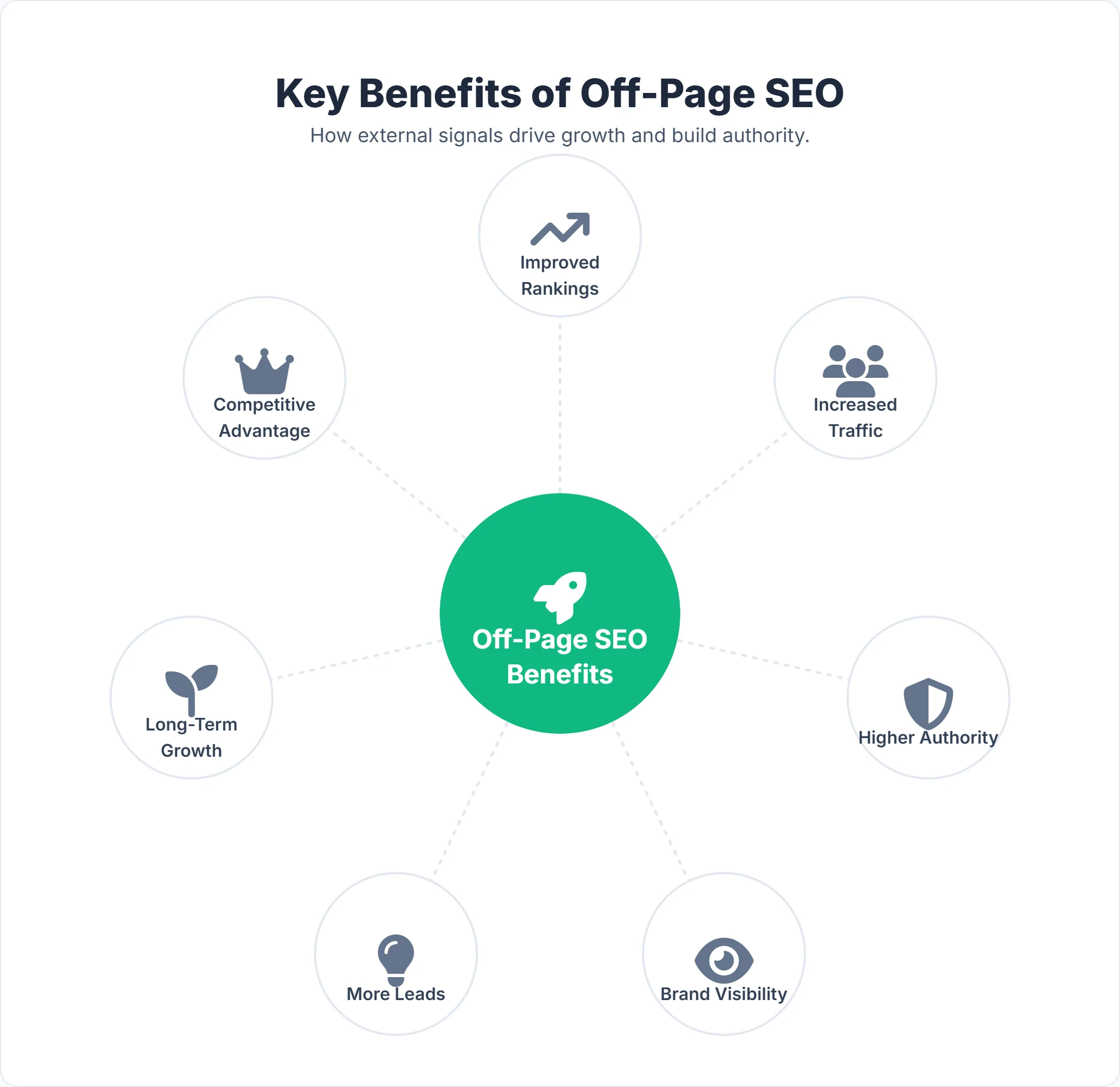
Why invest resources in activities outside your website? The ROI extends far beyond simple rankings.
1. The "Moat" of Authority
Competitors can copy your content. They can copy your design. But they cannot easily copy a decade of earned backlinks and brand reputation. High Domain Authority (DA) acts as a competitive moat, making it harder for new entrants to displace you.
2. Accelerated Indexing
Search engine bots prioritize crawling sites they trust. If you have strong off-page signals, new content you publish might appear in search results in minutes, whereas a low-authority site might wait days or weeks.
3. Referral Traffic Quality
Organic search traffic is great, but referral traffic is often better converting. A user clicking a link from a trusted review site or a partner's blog has already been "warmed up" by the context of that link. They arrive with a higher intent to engage or purchase.
4. Brand Resilience
Algorithm updates are inevitable. When Google adjusts its ranking factors, sites with diverse off-page profiles (links, reviews, mentions, social) tend to weather the storm better than sites relying solely on keyword optimization.
For a deeper dive into avoiding pitfalls that leave you vulnerable during updates, read about common SEO mistakes to ensure your foundation is secure.
How to Implement and Monitor Your Off-Page SEO Efforts
Effective off-page SEO isn't a "set it and forget it" task; it requires a cyclical process of prospecting, execution, and analysis.
Phase 1: The Audit & Strategy
Before building, you must assess.
- Backlink Audit: Use tools to identify "toxic" links—spammy links pointing to your site that could trigger a penalty. You may need to use Google's Disavow Tool to distance yourself from them.
- Anchor Text Analysis: Ensure your incoming links have a natural variety of anchor text. If 90% of your links say "best seo software," Google will flag this as manipulation. You want a mix of branded ("Digispot"), generic ("click here"), and naked URLs.
Phase 2: Active Campaigning
- Month 1-2: Focus on foundational links (social profiles, directories) and fixing broken links.
- Month 3-4: Launch a content-led campaign (e.g., an original study) and conduct outreach to journalists.
- Ongoing: Dedicate 2-3 hours a week to unlinked mention reclamation and relationship building.
Phase 3: Monitoring Success
You need to track more than just rankings.
- Domain Authority/Rating: While these are third-party metrics (from Moz, Ahrefs, Semrush), they correlate well with ranking potential.
- referral Traffic: Is your off-page work actually bringing visitors?
- Brand Search Volume: Are more people searching for your company by name? This is a huge signal of off-page success.
Monitoring these metrics manually can be overwhelming. By integrating with Google Search Console and Google Analytics, Digispot AI provides a unified dashboard that tracks your off-page performance alongside on-page metrics.
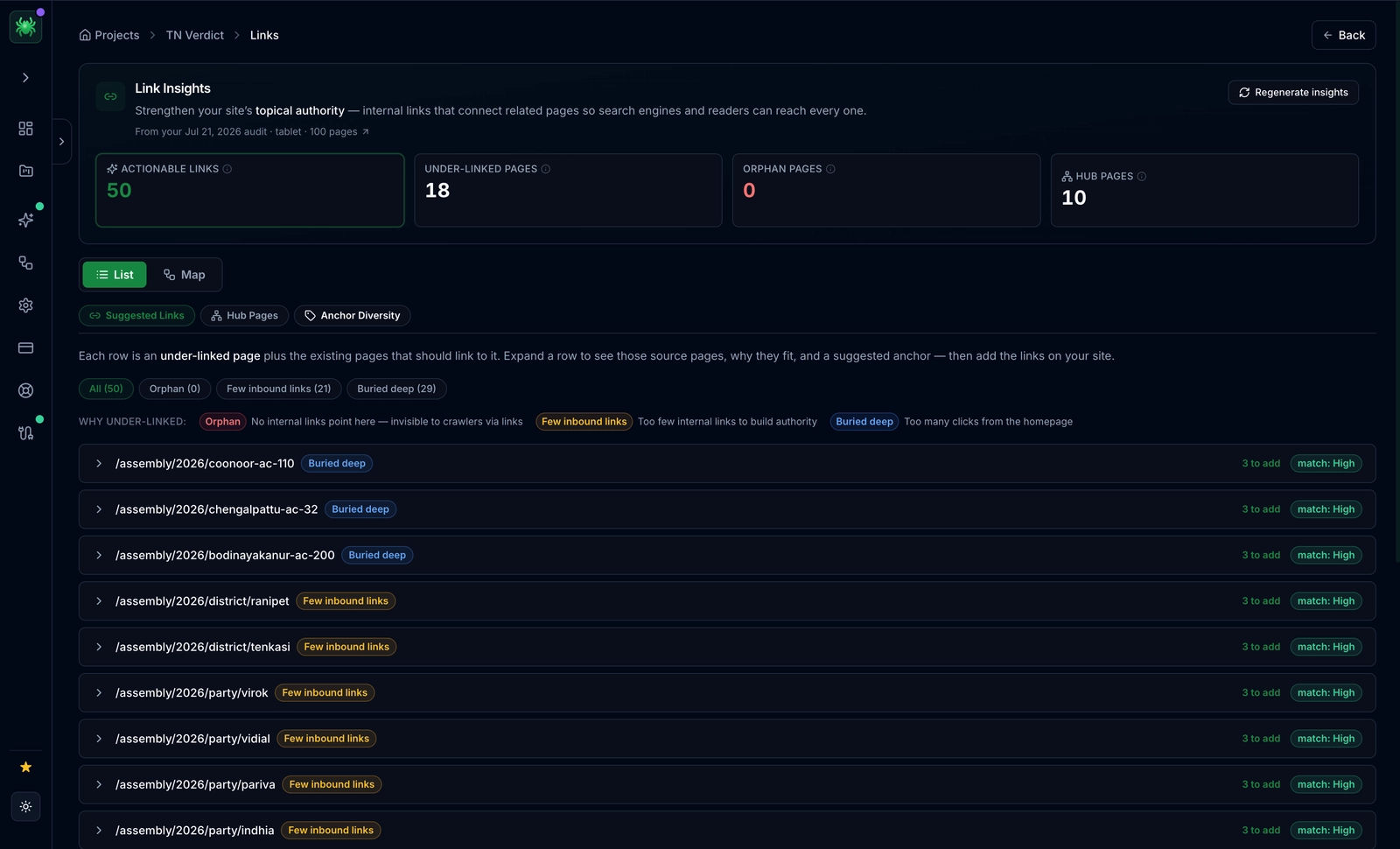
For quick, on-the-fly checks of competitor pages or your own assets, get instant SEO insights with our free Chrome extension. It allows you to peek under the hood of any webpage to see their schema and metadata strategy.
Schema Markup: A Hidden Off-Page SEO Gem
While schema markup is code that lives on your website, its primary purpose is to influence how you appear off your website—specifically on the Search Engine Results Pages (SERPs). It bridges the gap between on-page technicalities and off-page visibility.
What is Schema Markup?
Schema (structured data) is a standardized vocabulary that helps search engines understand the entities on your page, not just the strings of text. You are explicitly telling Google, "This is a Product," "This is a Review," or "This is an Event."
Influencing the "Click" Before the Visit
Correctly implemented schema can award you Rich Snippets:
- Review Stars: Instantly establishing trust before a user even clicks.
- FAQ Snippets: Dominating more pixel space on the search result page.
- Local Business Knowledge Panels: Displaying hours, maps, and phone numbers prominently.
Schema as a Brand Signal
In the age of AI search (like Google's SGE or ChatGPT), being recognized as a distinct entity is crucial. "Organization" and "SameAs" schema link your website to your social profiles and Wikipedia entries, helping algorithms connect the dots of your digital footprint. This consolidates your authority signals into a single, robust entity profile.
If you are unsure if your schema is valid or helping your entity status, you can use the on-page SEO audit tool within Digispot AI to validate your structured data implementation.
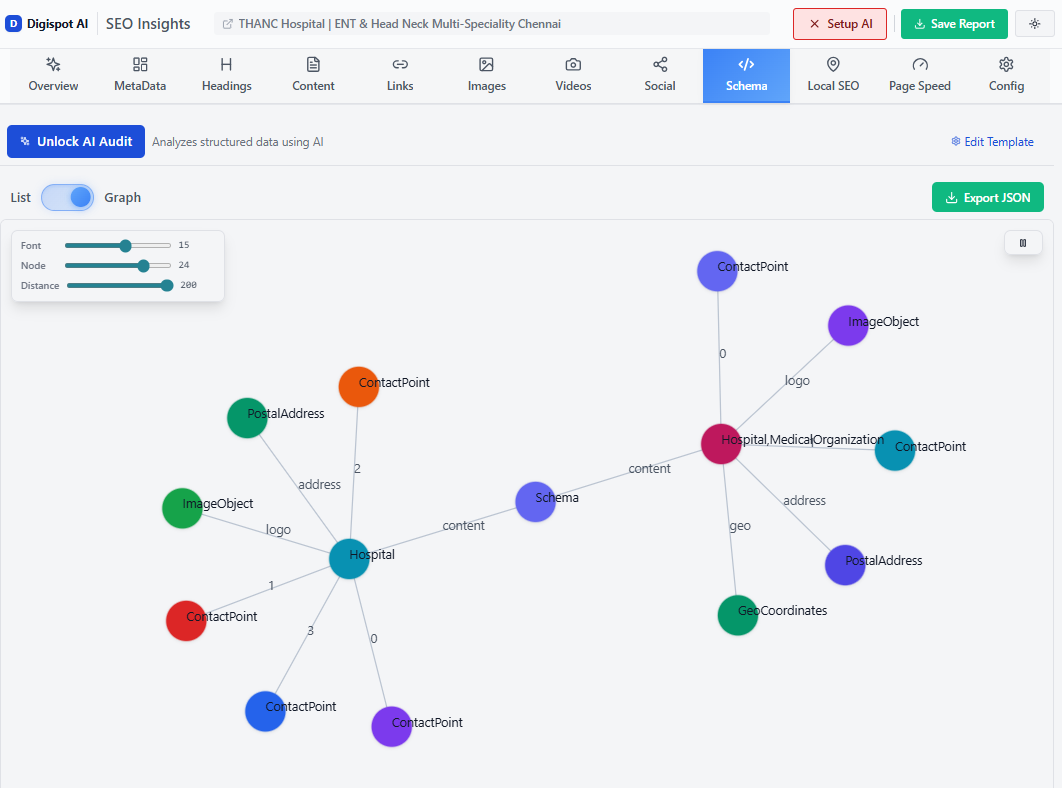
Turn invisible SEO data into clear visuals with our Free Chrome extension.
Overcoming Challenges in Off-Page SEO
Off-page SEO is notoriously difficult because you lack direct control. Here is how to navigate common hurdles:
- The "Cold Outreach" Fatigue: Webmasters are inundated with link requests. To stand out, stop asking for favors. Start by giving value. Point out a typo on their site, compliment a specific point in their article, or offer a unique data point they can use.
- Negative SEO Attacks: Unscrupulous competitors may blast your site with thousands of spam links. Regular monitoring is your only defense. If you see a spike in links from unrelated countries or gambling sites, investigate immediately.
- Resource Constraints: High-quality link building takes time. If you cannot afford an agency, focus on passive link acquisition: creating "Link Magnets" like free tools, templates, or calculators that people link to naturally over time.
- Algorithm Volatility: Google constantly devalues certain link types (e.g., excessive guest posting with exact-match anchors). The solution is diversification. Never rely on one single method for more than 20% of your link profile.
Ready to improve your SEO without the guesswork? Try Digispot AI for comprehensive website audits that highlight exactly where your authority gaps lie and how to fix them.
Conclusion: Your Path to Lasting Online Authority
Off-page SEO is the reputation management of the digital age. It is the cumulative effect of every link, mention, review, and share that occurs outside your domain. While on-page SEO ensures you are relevant, off-page SEO proves you are the authority.
In a future dominated by AI and machine learning, "brand authority" will likely become the single most important ranking factor. Search engines want to cite trusted sources, not just optimized pages. By committing to a strategy of ethical link building, active community engagement, and digital PR, you are not just chasing rankings for today—you are future-proofing your business.
Don't let your great content go unnoticed. Start building bridges to your site today, and watch your visibility—and your business—grow.
Related deep-dives
Continue with these closely related guides:
- toxic backlinks removal & — Toxic Backlinks Removal & Disavow: The Complete Recovery Guide (2026)
- to find — How to Find and Analyze Backlinks: The Complete Guide for SEO
References
- Link Building for SEO: The Definitive Guide
- What is Off-Page SEO? - Moz
- Beginner's Guide to Link Building - Search Engine Journal
- Google's Search Quality Rater Guidelines
- About rich results and structured data on Google Search
- Google My Business Help
- Google Search Console
- Google Analytics
- Digispot AI - FREE On Page SEO Audit Tool
- Digispot AI - FREE Chrome Extension for SEO Insights
Audit any page in seconds
300+ SEO checks including Core Web Vitals, schema markup, meta tags, and AI readiness — trusted by 1000+ SEO experts and marketers.
Frequently Asked Questions
Here are some of our most commonly asked questions. If you need more help, feel free to reach out to us.
Written by
Maya Krishnan
Digital growth expert
Maya is a seasoned expert in web development, SEO, and digital strategy, dedicated to helping businesses achieve sustainable growth online. With a blend of technical expertise and strategic insight, she specializes in creating optimized web solutions, enhancing user experiences, and driving data-driven results. A trusted voice in the industry, Maya simplifies complex digital concepts through her writing, empowering readers with actionable strategies to thrive in the ever-evolving digital landscape.