Black Hat SEO Risks: Techniques to Avoid
Discover black hat SEO techniques to avoid in 2026. Learn risks, penalties, and how to build sustainable white hat SEO strategies.
 Maya Krishnan
Every digital marketer knows the pressure. You launch a website, and the clock starts ticking. Stakeholders want visibility, traffic, and revenue—yesterday. In this high-stakes environment, the race for the top spot on Google and emerging AI search engines like Perplexity or SearchGPT is fierce. When you are fighting for market share, the promise of a "secret shortcut" or a "guaranteed ranking hack" can be incredibly seductive. This is where Black Hat SEO enters the conversation, often disguised as "aggressive marketing" or "growth hacking."
While the allure of bypassing the hard work of ethical optimization is real, the consequences are often catastrophic. Black Hat SEO isn't just about breaking rules; it's about gambling your entire digital existence against algorithms that are infinitely smarter than they were a decade ago. Google’s SpamBrain and other AI-driven detection systems process billions of signals daily to identify and crush manipulative tactics.
This guide provides an uncompromising look at Black Hat SEO. We will dismantle the deceptive tactics used by bad actors, analyze the fleeting gains they might offer, and detail the devastating penalties that follow. More importantly, we will demonstrate how to build a fortress of digital authority using ethical strategies and modern tools like Digispot AI, ensuring your growth is not just rapid, but resilient.
Key Takeaways
- Black Hat SEO trades short-term gains for long-term risk. Manipulative tactics may spike rankings briefly, but Google's AI detection systems catch them in waves—and recovery is far more expensive than doing it right the first time.
- Know the eight core violations. Keyword stuffing, cloaking, link schemes, hidden text, content scraping, doorway pages, schema abuse, and unedited auto-generated content are all direct guideline breaches.
- Penalties come in two forms. Algorithmic penalties hit silently; manual actions appear in Google Search Console. Both can drop traffic off a cliff, and de-indexing can erase your site entirely.
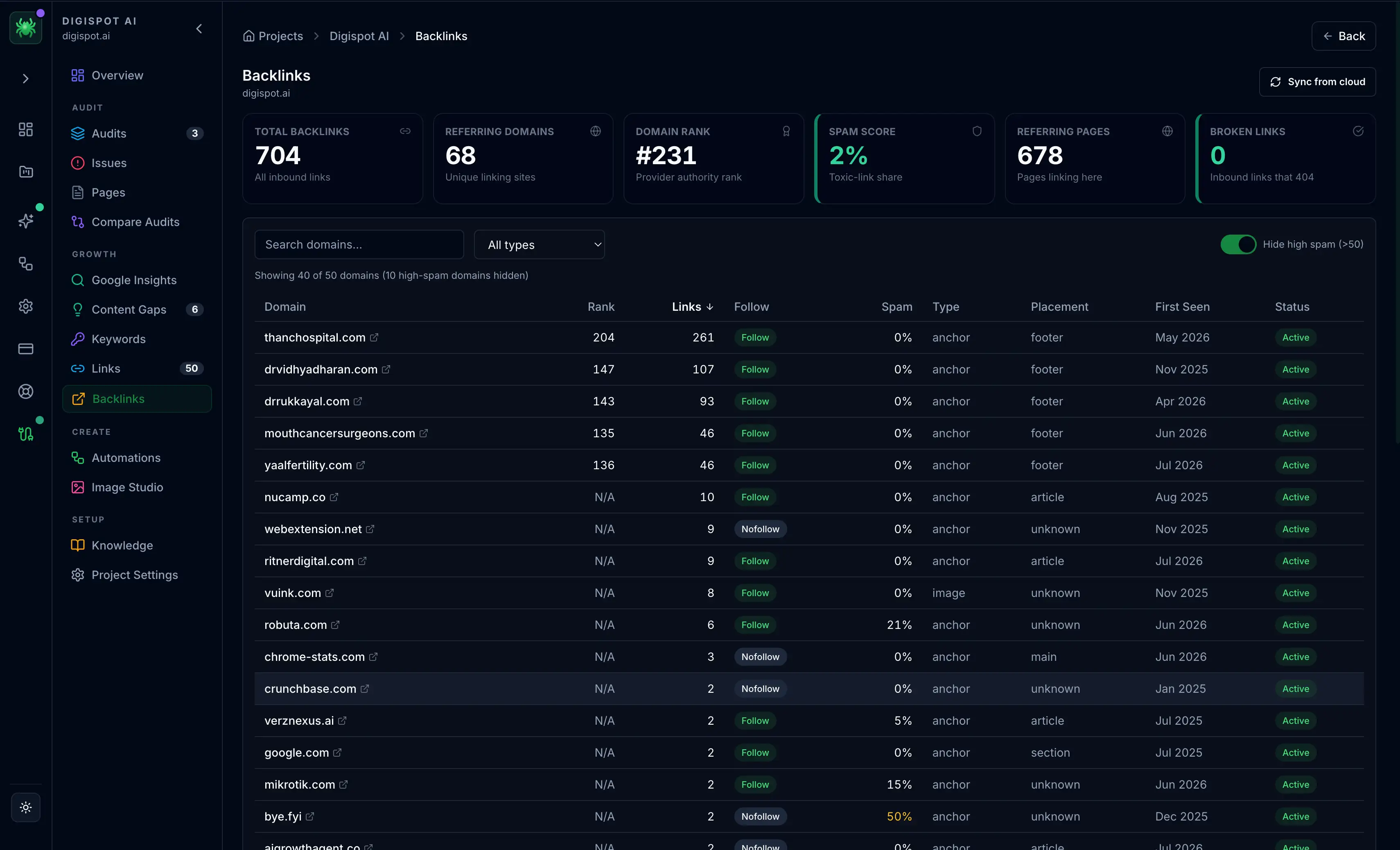
- Audit your backlinks and content regularly. Damage can come from agencies, compromised plugins, or competitor negative SEO—not just your own choices. Flag and remove toxic backlinks before they trigger a penalty.
- White Hat wins the compound game. Quality content, genuine user value, and naturally earned links build durable authority that survives every algorithm update.
What Exactly is Black Hat SEO?
At its core, Black Hat SEO defines a set of aggressive, unethical practices aimed at manipulating search engine algorithms to inflate rankings artificially. Unlike legitimate optimization, which seeks to improve a site's usability and relevance, Black Hat tactics focus solely on tricking the search engine bot, often at the expense of the human user.
These practices are direct violations of Webmaster Guidelines (now known as Google Search Essentials). The term itself draws from classic Western cinema, distinguishing the "bad guys" in black hats from the law-abiding heroes in white hats. In the SEO world, the villain isn't robbing a bank; they are robbing legitimate businesses of visibility through deception.
The Spectrum: White, Black, and Gray
To understand the danger, you must understand the alternatives.
White Hat SEO is the practice of earning rankings through merit. It involves creating high-quality content, optimizing technical performance, and building a brand that people naturally want to reference. It aligns with Google’s goal: organizing the world's information and making it universally accessible and useful.
Gray Hat SEO sits in the murky middle. These tactics might not technically violate a specific written rule today, but they violate the spirit of the guidelines. Gray Hat is often a gateway to Black Hat. It involves higher risk and relies on the hope that Google’s algorithm hasn't caught up yet. However, as AI search evolves, the line between Gray and Black is disappearing—what is "clever" today often becomes a penalty tomorrow.
Here is how the approaches compare fundamentally:
| Feature | Black Hat SEO | White Hat SEO |
|---|---|---|
| Objective | Quick, artificial ranking boosts | Sustainable, long-term organic growth |
| Approach | Manipulative, deceptive, violates guidelines | Ethical, user-focused, adheres to guidelines |
| Focus | Search engine algorithms (to trick them) | User experience and valuable content |
| Risk Level | Extremely High (penalties, de-indexing) | Low to Moderate (standard competition risks) |
| Sustainability | Very Low (short-lived gains) | High (builds lasting authority) |
| Outcome | Penalties, loss of traffic, reputational damage | Increased visibility, genuine traffic, brand trust |
The Allure: Why Do Websites Gamble with Black Hat SEO?
If the Black Hat SEO risks are so high, why do businesses even consider it? The psychology behind this decision usually stems from desperation or misinformation.
- The Illusion of Speed: Ethical SEO is a compound interest game. It takes months to build momentum. Black Hat vendors often promise "Page 1 in 30 Days." For a struggling startup or a business under pressure, this timeline is intoxicating.
- The "Traffic First" Fallacy: Some site owners believe that if they can just get the traffic by any means necessary, they can "fix" the site later. They chase the spike in metrics, ignoring that the traffic is often unqualified or bounces immediately due to poor user experience.
- Cost Miscalculation: Generating high-quality, expert content requires investment in writers and strategists. Buying 1,000 spam links for $50 seems like a bargain financially—until you factor in the cost of a domain ban, which effectively destroys the business asset.
- Competitive Panic: Seeing a competitor rank quickly using spammy tactics can trigger a "fight fire with fire" response. This is a trap. Just because a competitor hasn't been caught yet doesn't mean they are safe. Google often rolls out penalties in waves, wiping out entire networks of spammers overnight.
Search engines are no longer static codebases; they are learning machines. The "benefits" of Black Hat SEO are a mirage. You might see a graph spike upwards for a week, but the crash that follows is often permanent.
Understanding the Arsenal: Common Black Hat SEO Techniques to Avoid
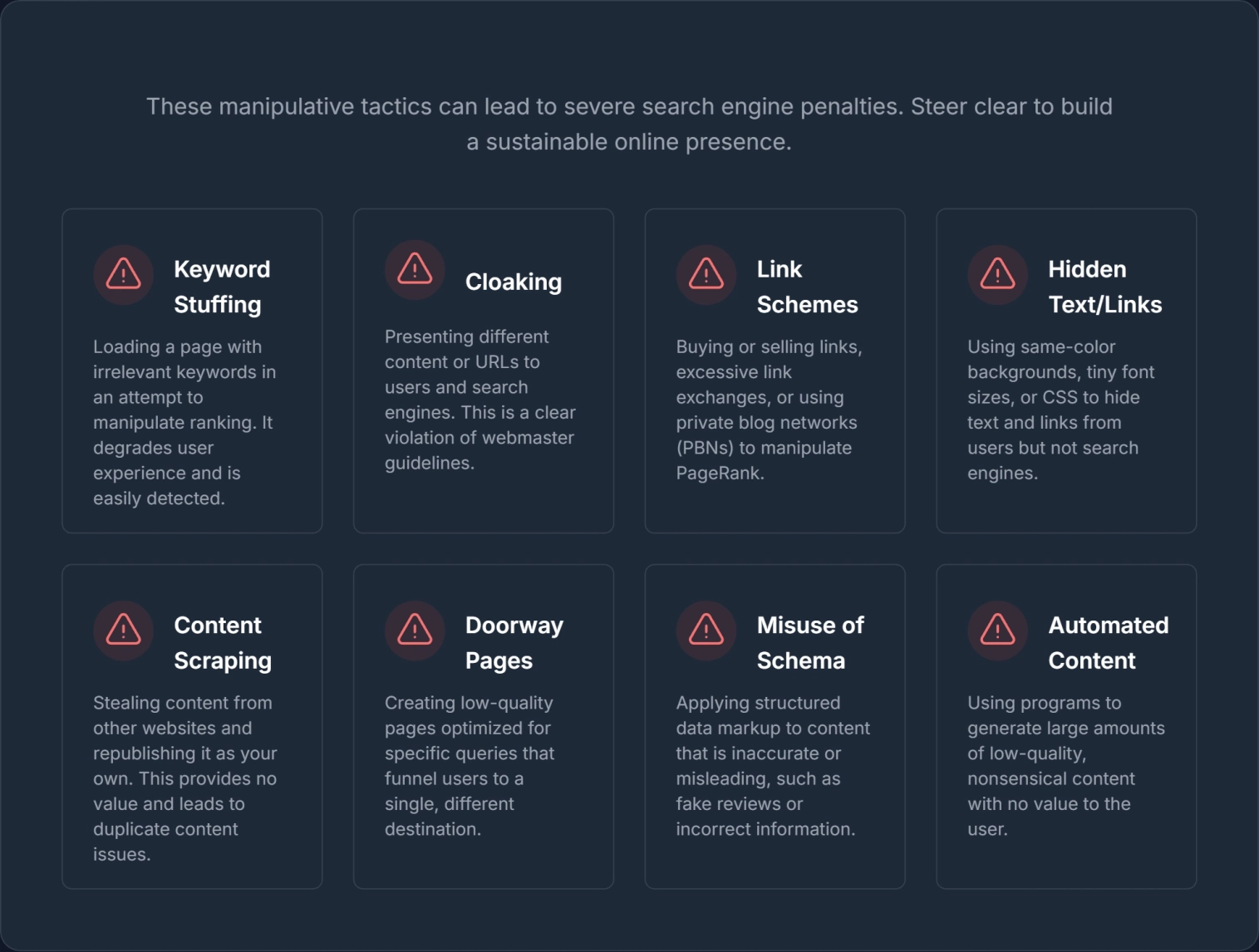
To protect your site, you need to recognize the enemy. Many of these techniques operate in the shadows of code or server configurations. Understanding the mechanics helps you avoid accidental violations and spot red flags when hiring agencies.
1. Keyword Stuffing
What is it? Keyword stuffing is the oldest trick in the book. It involves forcefully injecting target keywords into content, meta tags, or alt text where they don't belong naturally.
The Mechanics: In the early 2000s, search engines relied on simple keyword matching. If a page said "best running shoes" 50 times, the engine assumed it was very relevant to "best running shoes."
Why it fails today: Google’s Hummingbird (2013) and BERT (2019) updates revolutionized natural language understanding. Algorithms now analyze context, sentiment, and entity relationships. They read content like a human does. When they encounter a sentence like "We sell cheap laptops best cheap laptops buy cheap laptops online," they don't see relevance; they see spam.
The Result: Your page is flagged for low quality. It creates a horrific user experience, leading to high bounce rates—a signal that further tanks your rankings. For guidance on writing naturally optimized content, review our On-Page SEO Best Practices.
Example: "Looking for the best pizza in New York? Our New York pizza restaurant offers the best pizza, New York style pizza, for pizza lovers in New York looking for the best New York pizza."
2. Cloaking
What is it? Cloaking is a sophisticated bait-and-switch. It involves configuring a server to present different versions of a webpage depending on who (or what) is requesting it.
The Mechanics: The web server identifies the visitor by their "User-Agent" string or IP address.
- If the visitor is identified as
Googlebot, the server delivers a text-heavy, highly optimized page full of keywords and clean code. - If the visitor is a human user, the server delivers a completely different page, often flash-heavy, spammy, or even malicious (selling illegal products or pornography).
Why it’s dangerous: This is considered one of the most deceitful practices because it fundamentally breaks the trust between the search engine and the user. Google creates an index based on what it sees. If it sends a user to a page based on that index, and the user sees something else, Google has failed its user.
Example: A user clicks a search result for "Disney vacation tips" but lands on a page selling unregulated diet pills.
3. Link Schemes
Backlinks are the currency of the web, acting as votes of confidence. Black Hat SEO attempts to counterfeit this currency.
- Private Blog Networks (PBNs):
This involves buying expired domains that already have authority and rebuilding them as generic blogs. These blogs link back to a "money site" to pass authority.
- Detection: Google can see hosting footprints. If 50 sites linking to you all share the same IP block or WHOIS registration data, the network is burned.
- Buying/Selling Links:
Exchanging money, goods, or services for links is a violation. While sponsored content exists, it must be marked with
rel="nofollow"orrel="sponsored". - Comment Spam: Using automated scripts to blast millions of blog comments like "Great post! Visit my site for [keyword]." Most modern systems (WordPress, Disqus) automatically nofollow these links or block them, making this tactic useless and risky.
- Scholarship Links: Creating fake scholarship pages to trick universities (.edu domains) into linking to a site.
- Negative SEO: A malicious tactic where a competitor points thousands of spammy links to your site to trigger a penalty against you. While Google is good at ignoring these, it remains a threat to monitor.
The Fix: Focus on earning links through high-value resources. Check our Common SEO Mistakes guide to ensure your link building strategy is safe.
4. Hidden Text and Links
What is it? Hiding content so users can't see it, but search spiders can crawl it.
The Mechanics:
- CSS Manipulation: Setting
font-size: 0,display: none, or positioning text 10,000 pixels off-screen (left: -9999px). - Color Matching: White text on a white background.
- Micro-Links: Hiding a link in a single character, like a period or hyphen, to manipulate link flow without user awareness.
Why it fails: Search engines render pages. They "see" the CSS. If text is visible in the code but rendered invisible on the screen, the algorithm flags the discrepancy immediately.
The Accidental Trap: Not all hidden content is malicious, and this is where well-meaning sites get caught. Common legitimate patterns that can look like hidden text include:
- Tab or accordion panels that use
display: noneuntil a user clicks—generally fine, because the content is accessible on interaction. - Off-screen "skip to content" links for accessibility—also acceptable, since they serve users.
- A theme or plugin that injects keyword-heavy footer text styled to match the background—this is the red flag.
The distinguishing test is intent and user value: if the content is reachable by a real visitor and serves them, you are safe; if it exists only for crawlers, you are at risk. When in doubt, audit rendered versus raw HTML and confirm your content meets genuine quality standards.
5. Content Scraping & Duplicate Content
What is it? Stealing content from other websites to populate your own pages.
The Mechanics:
- Scraping: Using bots to crawl reputable sites, copy their articles, and republish them on your domain.
- Patchwork Content: Taking paragraphs from five different articles and stitching them together to create a "new" article without adding original thought.
The Consequence: Google prioritizes the canonical source (the original publisher). The scraper site is filtered out of results. Furthermore, this opens you up to Digital Millennium Copyright Act (DMCA) takedowns, where your hosting provider may shut down your site entirely due to copyright infringement.
White Hat Alternative: If you need to curate content, summarize it in your own words and link back to the source. Always aim for strong E-E-A-T signals by adding your unique expert perspective.
6. Doorway Pages
What is it? Creating hundreds or thousands of low-quality pages targeting specific long-tail keywords or geographical locations, which all funnel users to a single destination.
The Mechanics: Imagine a plumber creates 500 pages for every town in the state: "Plumber in Akron," "Plumber in Canton," "Plumber in Stow." Each page is identical except for the city name. When a user clicks, they might be auto-redirected to the homepage, or the page itself offers zero local value other than a generic phone number.
Why it’s banned: These pages clutter search results. They force users to click through multiple layers to get actual information. Google views this as a poor user experience designed solely for ranking manipulation.
The White Hat Line: Legitimate local landing pages are not doorway pages—the difference is substance. A compliant "Plumber in Akron" page includes a real service area map, genuine local reviews, Akron-specific pricing or projects, a dedicated contact number, and content written for that community. A doorway version is the same boilerplate with only the city name swapped and no unique value. If you could delete the city name and the page would read identically for any location, it is a doorway. Build out each location page as a standalone resource rather than a template clone.
7. Misuse of Schema Markup / Rich Snippet Manipulation
What is it? Structured data (Schema) helps search engines understand content types (reviews, recipes, events). Misuse involves lying in this code to get "rich snippets" (stars, prices, images) in search results.
The Mechanics:
- Fake Reviews: Marking up a page with 5-star ratings when no users have actually reviewed the product.
- Irrelevant Markup: Using "Recipe" schema on a page selling tires just to get a photo in the search result.
- Hidden Markup: Including content in the schema code that isn't visible on the page.
Solution: Use the Digispot AI Schema Markup Generator to ensure your code is valid, accurate, and compliant with Google's strict structured data policies.
8. Automated Content Generation / Article Spinning
What is it? Using crude software to generate mass content. Note: This is different from using modern AI (like ChatGPT) as a writing assistant.
The Mechanics:
- Spinning: Taking an article and using a thesaurus script to swap every 5th word. "The quick brown fox" becomes "The fast chestnut canine." The result is often unreadable garbage.
- Mass Auto-Gen: churning out 10,000 pages of AI text with no human editorial oversight.
Google's Stance: Google focuses on quality, not method of production. However, unedited, mass-produced content rarely meets the "Helpful Content" standard. It lacks nuance, experience, and original insight.
Here's a summary of common Black Hat SEO techniques:
| Technique | Description | Primary Goal (Deceptive) |
|---|---|---|
| Keyword Stuffing | Overloading content with keywords | Artificially boost keyword relevance |
| Cloaking | Showing different content to users vs. search engines | Trick bots into ranking for unseen content |
| Link Schemes | Buying/selling links, PBNs, comment spam, negative SEO, hacked links | Artificially inflate link popularity/authority |
| Hidden Text/Links | Concealing text/links with matching colors, CSS, tiny fonts | Hide keywords/links from users, show to bots |
| Content Scraping/Duplicate | Copying content from other sites or within own site without value | Rapidly create content without effort |
| Doorway Pages | Low-quality pages for ranking that redirect to another page | Capture broad search terms, funnel traffic |
| Misuse of Schema Markup | Falsifying structured data for rich snippets | Mislead users with false search results info |
| Automated Content Generation | Unedited AI/software generating unoriginal, low-quality content | Mass-produce content with minimal effort |
The High Stakes: Real Risks and Dire Consequences of Black Hat SEO
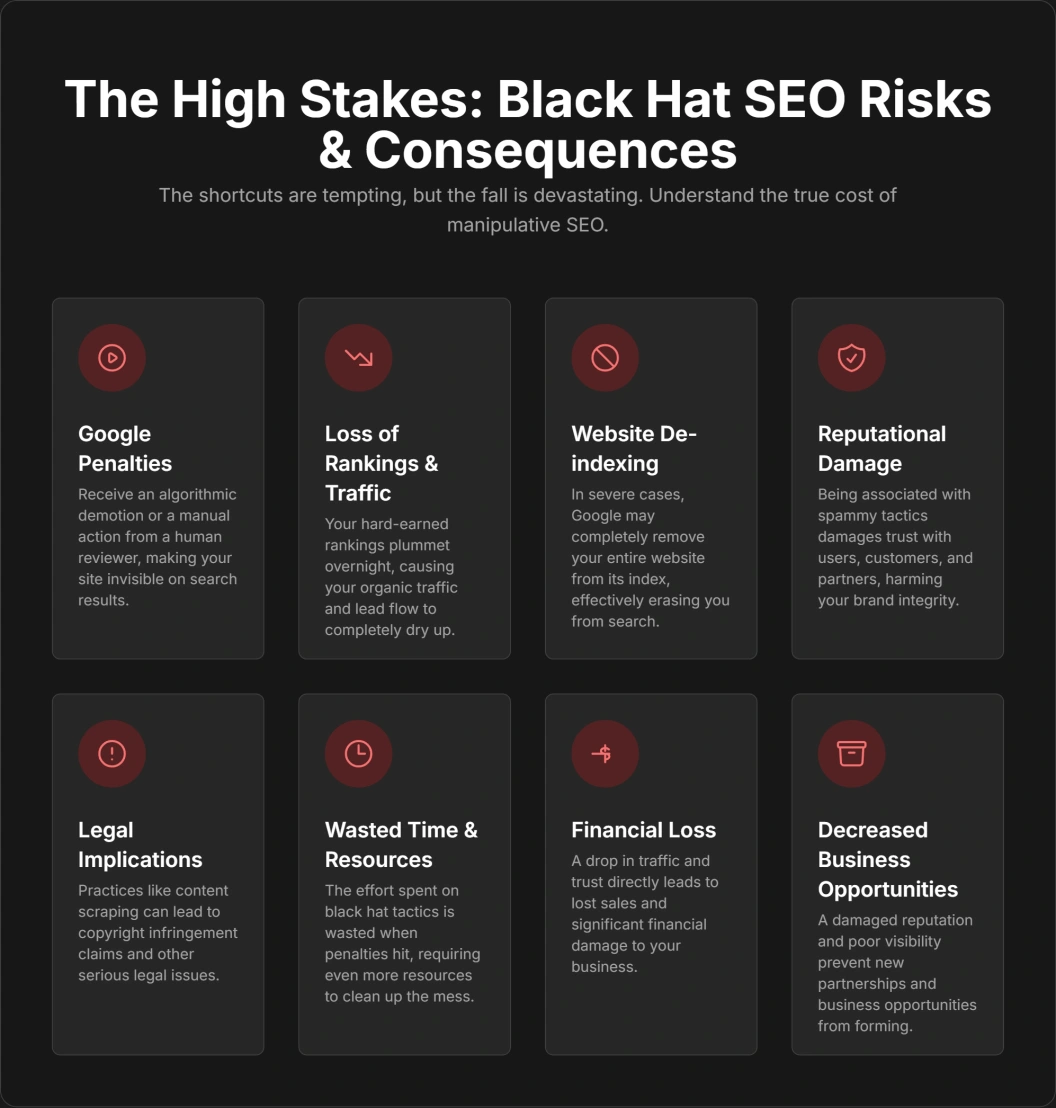
The most critical aspect of Black Hat SEO is not its fleeting benefits, but its profound and often irreversible consequences. Engaging in these manipulative practices is a dangerous gamble that can undermine your entire online presence.
1. Google Penalties (Manual & Algorithmic)
Google polices its index through two primary mechanisms. Getting hit by either can be devastating.
- Algorithmic Penalties: These are automated. Updates like Penguin (links), Panda (content), or the Helpful Content Update run silently. You won't get a notification. You will simply wake up one morning to find your traffic has dropped by 80%. Diagnosing an algorithmic penalty is difficult because Google doesn't tell you exactly what you did wrong; you have to deduce it by analyzing your site against the update's focus.
- Manual Actions: These are issued by human reviewers at Google. If a reviewer determines your site violates guidelines, they will apply a manual action. You will receive a notification in the Manual Actions report—one reason it pays to know your way around Google Search Console. This is a scarlet letter for your domain. Until you fix the issue and file a reconsideration request (which can be rejected multiple times), your site will be suppressed or removed.
2. Loss of Rankings & Organic Traffic
The drop isn't usually a slow slide; it's a cliff. When a penalty hits, you lose your primary keywords.
Scenario: Imagine an e-commerce store that makes $10,000/month from the keyword "buy organic coffee." If they are penalized for buying links, they don't just move from position 1 to position 5. They often drop to page 10 or disappear entirely. That $10,000 revenue stream evaporates overnight, but the operational costs (inventory, staff, hosting) remain.
3. Website De-indexing or Banning
In the most severe cases—such as pure spam, excessive cloaking, or malware distribution—Google will trigger the "nuclear option": De-indexing.
What it means: Your URL is completely wiped from the Google database. Even if someone searches for your specific brand name, your site will not appear. For an online business, this is a death sentence. While recovery is theoretically possible, it often requires months of cleanup and pleading with Google. Many businesses find it cheaper to abandon the brand and start over from scratch.
4. Reputational Damage & Loss of User Trust
Black Hat SEO creates a messy user experience.
- Users hate clicking a link for "iPhone Repair" and landing on a doorway page full of ads.
- Users distrust sites with garbled, spun content.
Trust is a conversion metric. If users feel your site is spammy, they won't enter their credit card information. Negative reviews will pile up on Trustpilot and social media, warning others to stay away. This damage persists even if you fix your SEO technicalities.
5. Legal Implications
While "bad SEO" isn't a crime, the tactics used often cross legal lines.
- Copyright Infringement: Scraping content can lead to Cease and Desist orders and lawsuits from original creators.
- Fraud: Selling links without disclosure or faking business reviews can violate Federal Trade Commission (FTC) guidelines in the US and similar consumer protection laws globally.
- Hacking: Injecting links into other sites (hacklinks) is a criminal offense involving unauthorized access to computer systems.
6. Wasted Time and Resources
Black Hat SEO is often sold as a time-saver, but it creates a massive "technical debt."
The Recovery Cost: Recovering from a penalty is significantly harder than doing SEO right the first time.
- Audit: You must pay experts to identify every toxic link or spammy page.
- Cleanup: You must manually contact webmasters to remove links or use the Disavow Tool. You must delete or rewrite hundreds of pages of content.
- Wait: Even after you submit a reconsideration request, you might wait weeks for a response. After the penalty is lifted, it can take months for rankings to recover to their previous levels—if they ever do.
For a comprehensive guide on checking your site's health, use our SEO Audit Checklist.
7. Decreased Business Opportunities and Financial Loss
The culmination of these risks is a direct hit to the bottom line. When organic channels fail, businesses are often forced to pivot to paid advertising (PPC) to survive. This spikes customer acquisition costs (CAC) drastically, often making the business model unsustainable.
| Consequence | Description | Impact on Business |
|---|---|---|
| Google Penalties | Algorithmic or manual actions by search engines | Rapid drop in rankings, potential de-indexing |
| Loss of Rankings & Traffic | Significant decrease in search engine visibility and website visitors | Reduced leads, sales, and online presence |
| Website De-indexing/Banning | Complete removal from search engine results | Zero organic visibility, business effectively disappears |
| Reputational Damage | Erosion of brand credibility and user trust due to deceptive practices | Negative customer perception, reduced loyalty |
| Legal Implications | Potential lawsuits or fines (e.g., for copyright infringement) | Financial drain, legal battles, further reputational harm |
| Wasted Time & Resources | Lengthy and costly recovery process to fix issues | Diversion of resources, operational inefficiencies |
| Decreased Business Opportunities | Inability to attract new customers through organic search | Significant financial loss, business stagnation |
How to Safeguard Your Website: Proactive SEO Strategies
The definitive way to avoid the perils of Black Hat SEO is to commit to ethical, White Hat practices. This involves creating valuable content, building a strong user experience, and earning authority naturally. However, identifying potential issues, whether intentional or accidental, and continuously optimizing your site can be a complex and time-consuming endeavor.
Sometimes, well-intentioned marketers accidentally trip spam filters. A technical glitch might generate thousands of duplicate URLs, or a forgotten plugin might be injecting hidden links. This is where a robust AI SEO platform like Digispot AI becomes invaluable. It acts like an early warning system, detecting even subtle deviations that could lead to issues, much like spotting a potential vulnerability before it's exploited.
The Role of Comprehensive Website Auditing
Manually auditing a website for 300+ ranking factors, across both mobile and desktop modes, is practically impossible for most businesses. Yet, neglecting these factors can unintentionally lead to practices that mimic Black Hat signals or simply hinder your performance.
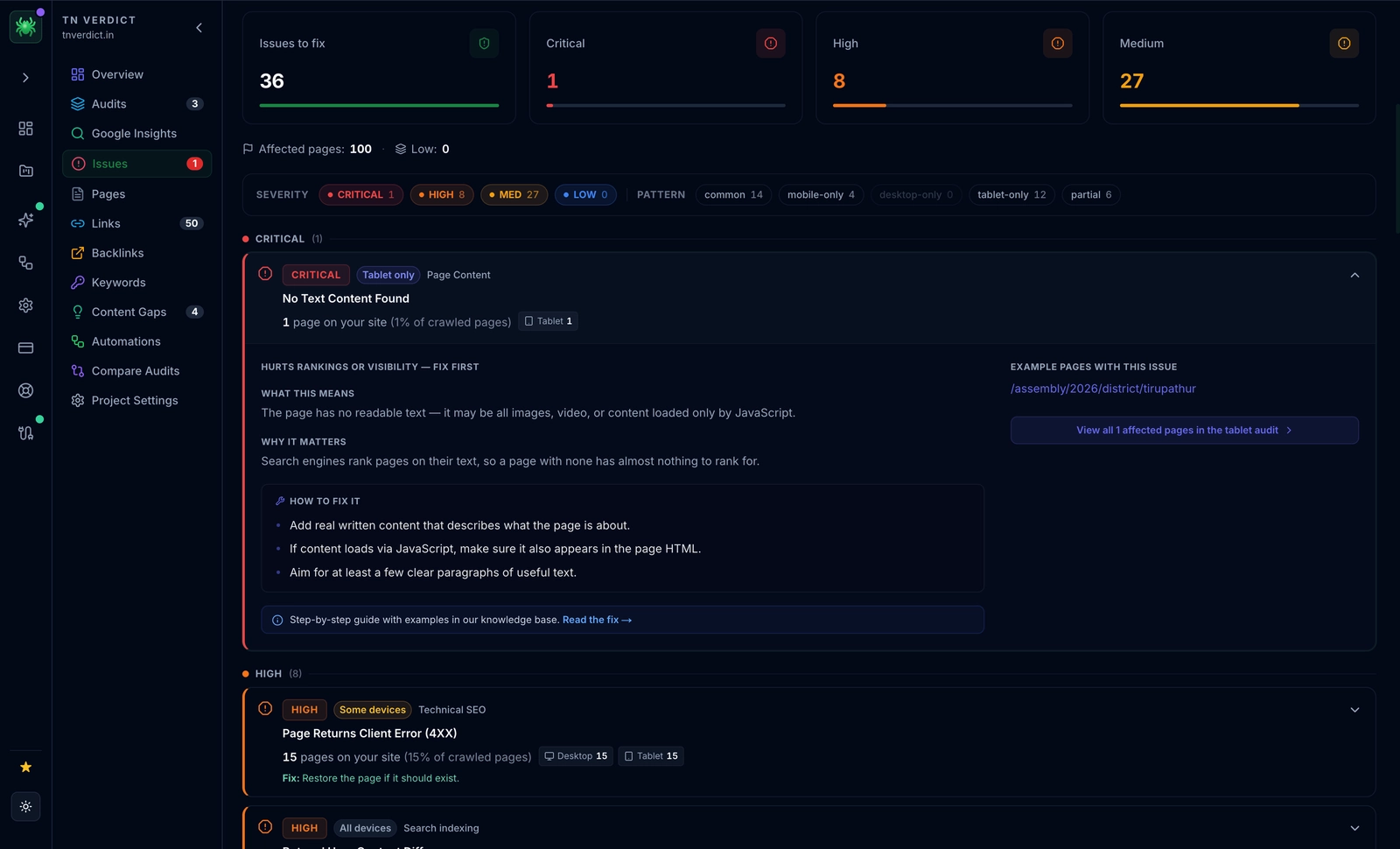
Digispot AI helps by providing detailed audits of your website in both mobile and desktop modes. It identifies a wide array of issues across:
- Content: Detecting low-quality, thin, or potentially duplicate content, and advising on keyword optimization that avoids stuffing. It ensures your keyword density is natural and semantically rich.
- Technical SEO: Uncovering problems with site architecture, crawlability, indexability, broken links, and other technical aspects that Black Hat SEOs often exploit or compromise.
- Local SEO: Ensuring your local presence is optimized ethically, avoiding manipulative tactics like fake reviews or keyword-stuffed business listings.
- Page Performance: Analyzing loading speeds and user experience factors (Core Web Vitals). Slow, ad-heavy pages are often correlated with spam sites. Read more in our Core Web Vitals SEO Guide.
By flagging these issues, Digispot AI doesn't just list problems; it helps you understand them and offers pathways to solve them, ensuring your website adheres to search engine guidelines and focuses on user value. Digispot AI can help you identify and fix these issues automatically with AI-powered audits analyzing 300+ ranking factors.
Leveraging Digispot AI for Ethical SEO & Risk Mitigation
Digispot AI is designed to help businesses achieve their SEO goals ethically and sustainably, directly addressing many of the challenges that might tempt one towards Black Hat practices.
Smart Detection and Visualization for Compliance
Understanding complex SEO issues, especially those related to technical elements like schema markup, can be daunting. Digispot AI's capabilities extend beyond simple identification. Its sophisticated detection and visualization features are crucial for maintaining ethical practices:
- Schema Markup Audit, Detection, and Visualization: The platform helps you audit your schema markup, detect any potential errors or misrepresentations, and visualize how your structured data is interpreted by search engines. This ensures your rich snippets are accurate and compliant, preventing any unintended misuse that could be flagged as Black Hat.
- Identifying Suspicious Patterns: The system's analysis of 300+ ranking factors, including content and tech SEO, helps it identify patterns that might resemble Black Hat tactics – such as an unnatural keyword density or a sudden influx of low-quality backlinks. Its "detection" capabilities mean it can alert you to potential issues before they escalate into penalties.
Seamless Integration for Holistic Performance Tracking
One of the business outcomes of using Digispot AI is an increase in traffic and business leads and improving business visibility. Digispot AI achieves this by fostering healthy SEO growth, and its integration capabilities are key to this.
- Google Search Console and Google Analytics Integration: By seamlessly integrating with your Google Search Console (GSC) and Google Analytics (GA) data, Digispot AI provides a holistic view of your website's performance. This allows you to track genuine organic growth, identify legitimate opportunities, and quickly discern if any unusual traffic spikes are the result of risky, Black Hat tactics or genuine, sustainable improvements. This integration is vital for understanding your actual performance and making informed, ethical decisions.
- Opportunity Finder: The platform's "Opportunity Finder" leverages this integrated data to spot genuine areas for improvement and expansion, guiding you toward legitimate keywords and content gaps rather than pushing you toward manipulative shortcuts.
Content Creation with Integrity through AI Agents
A common reason businesses resort to Black Hat SEO is the challenge of consistently producing high-quality content. The Content Studio feature within Digispot AI offers a solution that promotes ethical content creation.
- Generating SEO-Optimized, Original Content: Powered by AI agents, the Content Studio helps you generate SEO-optimized content that adheres to best practices. This means crafting valuable, relevant, and original articles, blog posts, and website copy. By automating the process of creating high-quality, human-friendly content, Digispot AI significantly reduces the temptation to resort to tactics like article spinning or keyword stuffing, ensuring your content is both engaging for users and approved by search engines. This directly contributes to time and cost savings by streamlining content workflows.
Operating at Scale with Accuracy
The Digispot AI cloud platform brings all SEO best practices into an automated and user-friendly model. This allows businesses to operate their SEO strategy at scale with accuracy, translating directly into tangible business outcomes:
- Improved Business Visibility: By consistently applying White Hat SEO principles and detecting issues proactively, Digispot AI helps you build a strong, visible presence in search results.
- Increased Traffic and Business Leads: Ethical SEO leads to sustainable, high-quality organic traffic, which converts into more genuine leads and customers.
- Time and Cost Savings: Automating audits, content suggestions, and performance tracking frees up valuable time and resources that would otherwise be spent on manual checks or, worse, on recovering from penalties.
Your On-the-Go Auditor: The Free Community Chrome Extension
For quick, on-page insights and immediate checks, the Digispot AI free community Chrome extension is a powerful, accessible tool.
- Instant On-Page Audits: Powered by popular LLM (Large Language Model) models, this extension enables you to audit individual web pages directly in your browser. It provides a snapshot of on-page SEO health, helping you spot potential issues or opportunities on the fly. Get instant SEO insights on any page with our free Chrome extension.
- Basic Schema Markup Checks: It can even assist with basic detection and visualization of schema markup on any given page, empowering you to quickly verify compliance and identify areas for improvement without needing to dive deep into the full platform. This quick audit capability helps reinforce ethical practices right from your browser.
- Competitor Analysis: You can use the extension to inspect competitor pages. If you notice they are ranking with suspicious content or hidden text, you can avoid copying their mistakes.
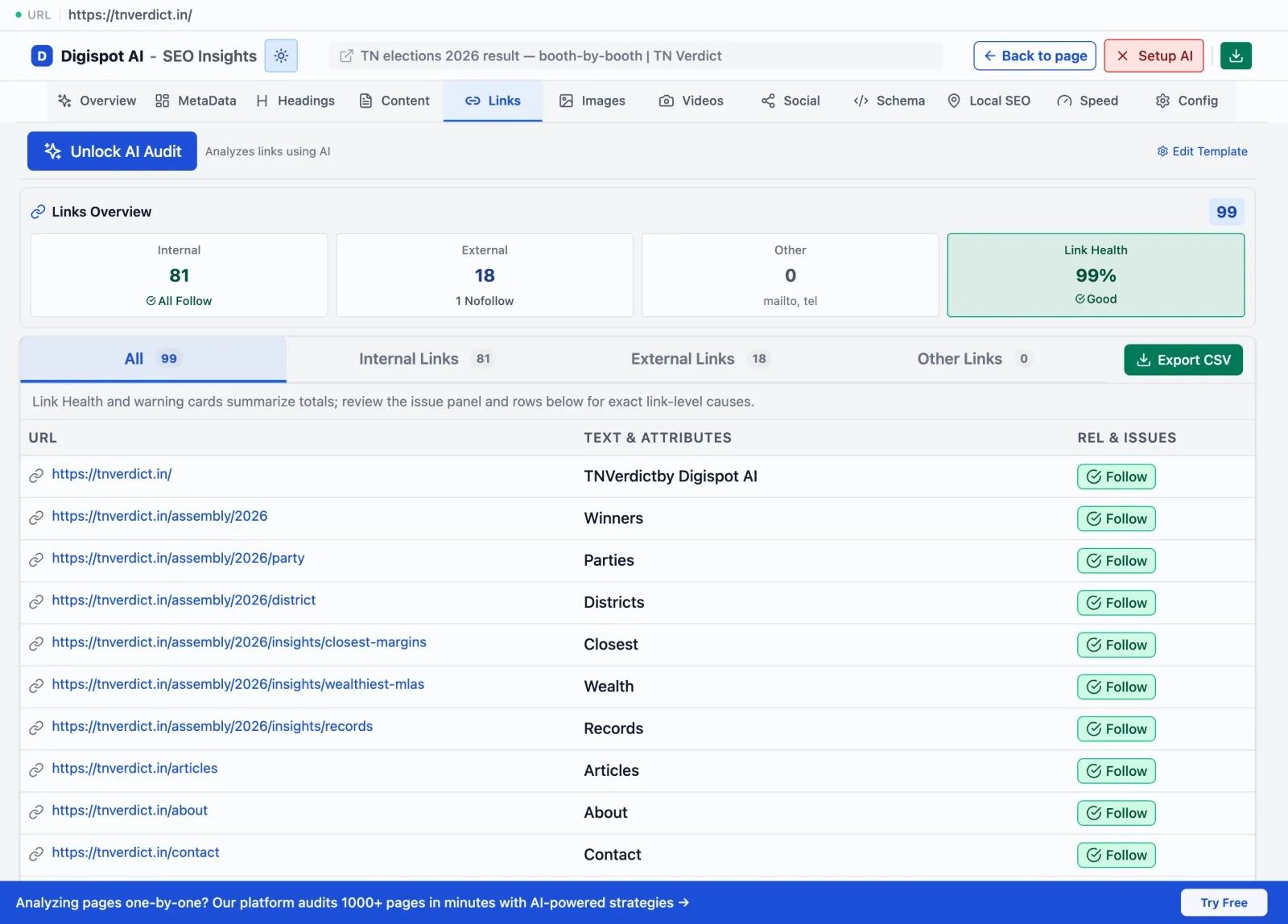
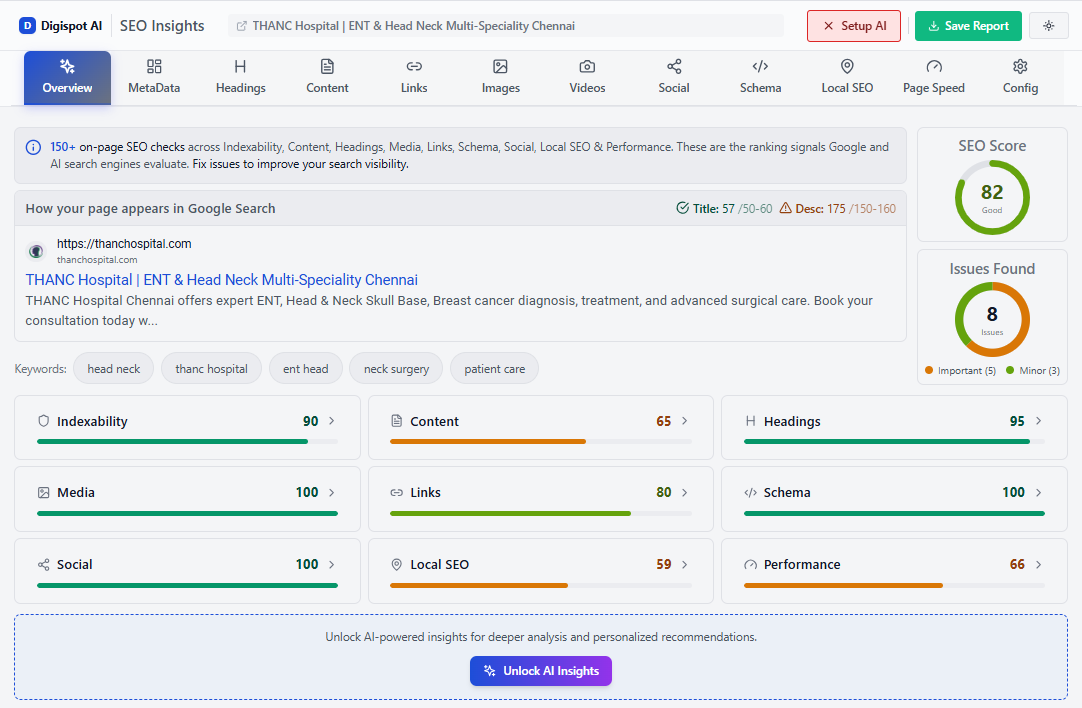
Turn invisible SEO data into clear visuals with our Free Chrome extension.
Building a Sustainable Future: Beyond the Quick Fix
Ultimately, the goal of SEO is not just to rank higher, but to attract relevant traffic that converts into loyal customers. This requires a commitment to building a valuable online presence that earns trust, not manipulates it.
To build a truly sustainable and successful online strategy, follow this roadmap:
- Prioritize User Experience (UX): Create a website that is fast, easy to navigate, and provides an excellent experience for visitors on all devices. Google's algorithm is increasingly measuring user satisfaction signals.
- Focus on High-Quality, Original Content: Produce content that genuinely answers user queries, is well-researched, and provides unique insights. Content should demonstrate Experience, Expertise, Authoritativeness, and Trustworthiness (E-E-A-T).
- Earn Natural Backlinks: Build relationships, create shareable assets (infographics, research papers), and engage in legitimate outreach to earn links from authoritative and relevant websites.
- Stay Informed: Keep up-to-date with search engine guidelines and algorithm updates to ensure your practices remain compliant. The SEO landscape shifts rapidly; what worked in 2024 might be obsolete in 2026.
- Invest in the Right Tools: Utilize platforms like Digispot AI that are built on the principles of ethical SEO. Try the free On-Page SEO Analysis tool to audit any URL instantly and ensure you are on the right track.
The allure of Black Hat SEO risks might be tempting, but the fleeting gains are never worth the inevitable, severe consequences. From crippling Google penalties and complete de-indexing to irreparable reputational damage, the dark side of SEO offers only short-term mirages followed by long-term devastation.
Instead, the path to true digital success lies in embracing White Hat SEO practices – a commitment to quality, user value, and ethical growth. With the right strategies and the support of advanced AI SEO platforms like Digispot AI, businesses can proactively identify and mitigate risks, build a resilient online presence, and achieve sustainable improvements in visibility, traffic, and business leads.
Ready to improve your search visibility? Try Digispot AI for comprehensive website audits and actionable recommendations. Choose the white hat, build trust, and secure your future in the ever-evolving digital landscape.
References
- Google Search Central: Webmaster Guidelines
- Google Search Central: Specific guidelines on link schemes
- Google Search Central: Specific guidelines on keyword stuffing
- Google Search Central: Specific guidelines on cloaking
- Google Search Central: Specific guidelines on hidden text and links
- Google Search Central: Specific guidelines on doorway pages
- Google Search Central: Specific guidelines on scraped content
- Google Search Central: Guidelines for structured data (schema markup)
- Google Search Central: Manual actions
- Google Search Central: Algorithmic updates
- Digispot AI - Official Website
- Digispot AI - FREE On Page SEO Audit Tool
- Digispot AI - FREE Chrome Extension for SEO Insights
- Google Search Console
- Google Analytics
Audit any page in seconds
300+ SEO checks including Core Web Vitals, schema markup, meta tags, and AI readiness — trusted by 1000+ SEO experts and marketers.
Frequently Asked Questions
Here are some of our most commonly asked questions. If you need more help, feel free to reach out to us.
Written by
Maya Krishnan
Digital growth expert
Maya is a seasoned expert in web development, SEO, and digital strategy, dedicated to helping businesses achieve sustainable growth online. With a blend of technical expertise and strategic insight, she specializes in creating optimized web solutions, enhancing user experiences, and driving data-driven results. A trusted voice in the industry, Maya simplifies complex digital concepts through her writing, empowering readers with actionable strategies to thrive in the ever-evolving digital landscape.