Content Quality SEO: High-Performance Guidelines
Master content quality standards for SEO. Align with Google's E-E-A-T principles, create authoritative pages, and build topical expertise that ranks.
 Maya Krishnan
Achieving online visibility and effectively engaging an audience demands more than simply having a website or publishing blog posts. Businesses are continuously striving to reach their target demographic, drive traffic, and convert visitors into loyal customers. Central to these objectives is a powerful, yet frequently misunderstood, concept: Content Quality SEO Standards.
Many marketers mistake "quality" for perfect grammar or high word counts. In reality, modern search engines define quality through a complex matrix of user engagement signals, semantic relevance, and authority markers. What precisely do these standards entail, and how can prioritizing high-quality content fundamentally transform your online presence?
This comprehensive guide will break down the core principles of content quality within Search Engine Optimization (SEO). We will analyze why its importance has intensified with the rise of AI Overviews, define the characteristics of truly high-quality content, and demonstrate how modern tools, including advanced AI platforms like Digispot AI, can assist you in not just meeting but exceeding these crucial benchmarks.
What is Content Quality SEO?
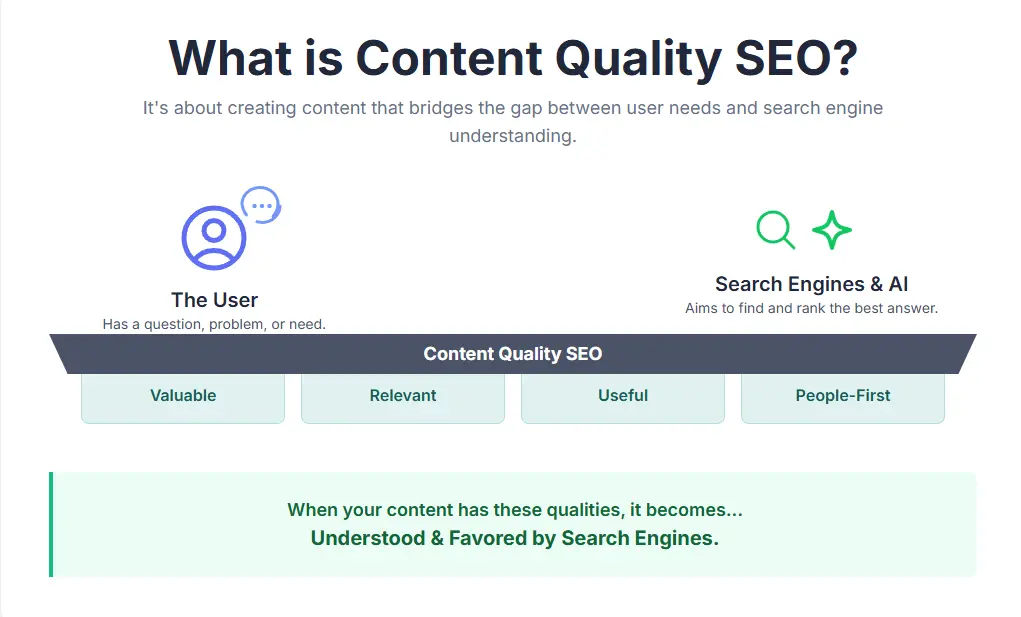
At its heart, what is content quality SEO? It is the practice of creating and optimizing web content that is genuinely valuable, relevant, and useful to your target audience, while also being easily understood and favored by search engines like Google and other emerging AI search systems (such as ChatGPT Search or Perplexity).
It goes beyond basic keyword placement. Content quality SEO aligns your output with the "Helpful Content" signals that Google's algorithms prioritize. It involves ensuring your content:
- Satisfies Intent: Does the user find exactly what they need without having to go back to the search results (pogo-sticking)?
- Provides Information Gain: Does your page offer something new—a fresh perspective, original data, or a better synthesis—compared to what is already ranking?
- Communicates Clearly: Is the information accessible to both humans and Large Language Models (LLMs) trying to parse your data?
Search engines are constantly evolving to better understand and serve human search queries. They want to deliver the best possible answers and experiences. Therefore, content quality SEO is about aligning your content strategy with this core objective – creating content that is "people-first" and inherently helpful. This involves a holistic approach to content creation and optimization that considers the entire user journey.
Why Does Content Quality Matter for SEO? The Benefits are Clear.
The impact of high-quality content on your SEO and overall business visibility cannot be overstated. Why is it so important? The benefits are multifaceted, extending from direct search engine rankings to improved user engagement and, ultimately, significant business growth.
Here's a breakdown of the key advantages:
- Improved Search Engine Rankings: Search engines prioritize and reward helpful, original, and reliable content that effectively addresses user search intent. High-quality content is more likely to rank well in search results, making your website easily discoverable. With the rise of AI Overviews, only the most authoritative content is selected for citations.
- Enhanced User Experience (UX): Quality content is designed with the user in mind. It's easy to read, navigate, and provides the information or solutions users are seeking. This leads to higher user satisfaction, encouraging visitors to spend more time on your site and explore further.
- Increased Engagement Metrics: When users find your content valuable, they are more likely to engage with it. This translates to lower bounce rates, higher dwell times, and more pages per session – all positive signals that tell search engines your content is valuable.
- Building Trust and Authority: Consistently publishing accurate, well-researched, and insightful content establishes your brand as a credible and authoritative voice in your industry. This trust is crucial for long-term audience relationships and can attract free quality backlinks from other reputable sites, which acts as a powerful vote of confidence for your domain.
- Higher Organic Traffic and Leads: Better rankings and increased user engagement naturally lead to more organic traffic to your website. This targeted traffic, comprised of individuals actively searching for information related to your offerings, is more likely to convert into valuable business leads.
- Cost and Time Savings (Long-Term): While creating high-quality content requires initial investment, it offers significant long-term savings. Content that ranks well continues to drive organic traffic over time, reducing reliance on paid advertising. Furthermore, a solid content strategy can streamline your marketing efforts.
The relationship between content quality and SEO is symbiotic. Good content fuels good SEO, and good SEO helps good content reach a wider audience.
Core Pillars of Content Quality SEO Standards
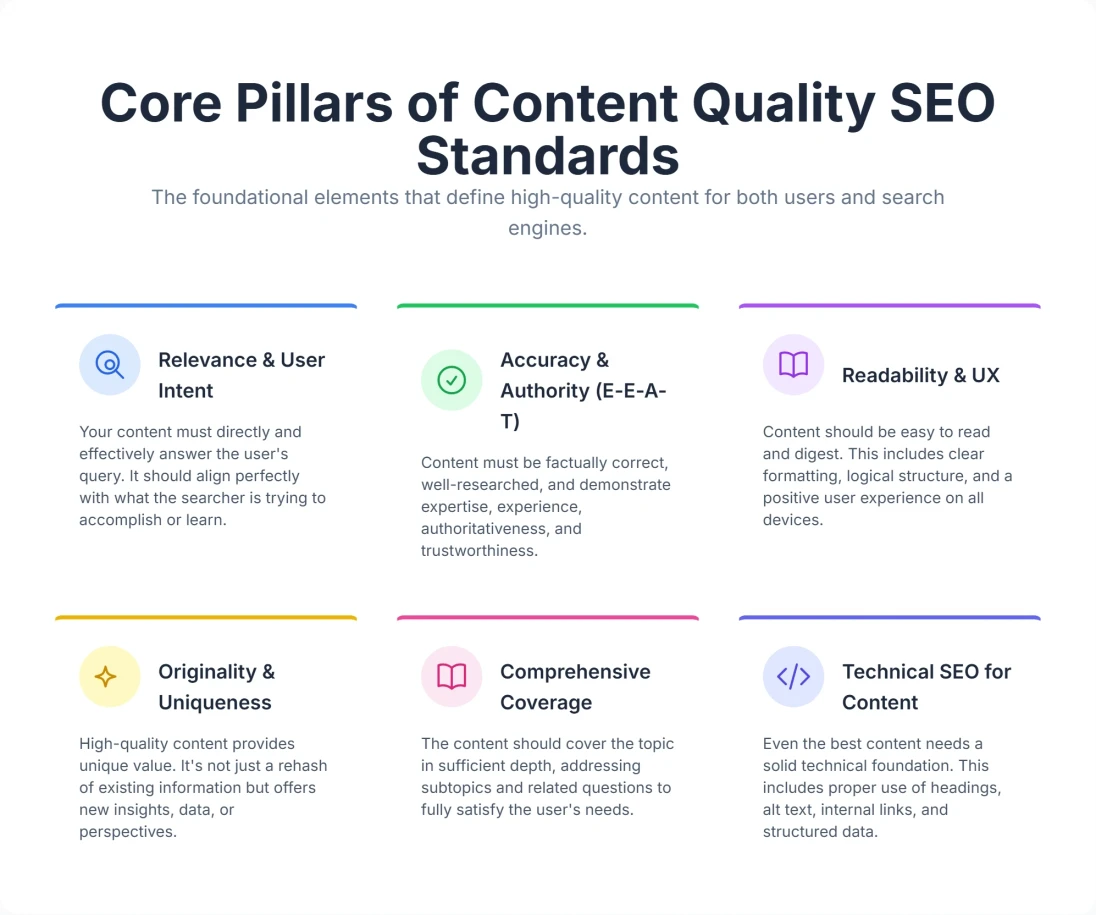
So, how do we define "high quality" content in the context of SEO? It's not just about word count or keyword density. Google, and by extension, AI search engines, evaluate hundreds of factors to assess content quality. Here are the fundamental pillars:
1. Relevance and User Intent: The Foundation
At the very core of quality content is its relevance to the user's search query and their underlying intent. What is user intent? It's the "why" behind a search – are they looking for information, a solution, a product to buy, or a place to visit? Understanding this is paramount.
- Keyword Research: This is your starting point. It helps you identify the terms and phrases your target audience uses. However, simply finding keywords isn't enough; you must also grasp the intent behind those keywords. For example, "best running shoes" implies a commercial investigation intent (looking for comparisons), while "how to tie running shoe laces" suggests an informational intent (looking for instructions).
- Fractured Intent: Sometimes a single keyword can mean multiple things. A search for "Toast" could be about bread or the software company. High-quality content clarifies context immediately using semantic signals and entity associations.
- Addressing the "Why": Your content should directly and comprehensively answer the user's questions or solve their problems. If your content doesn't align with what the user is truly looking for, even if it ranks, they'll quickly leave, signaling low quality to search engines.
- How Digispot AI helps: Platforms like Digispot AI can assist in detailed keyword research and, through their "opportunity finder," help you pinpoint topics and questions that your target audience is actively searching for, ensuring your content is relevant from the outset.
2. Accuracy and Authority (E-E-A-T)
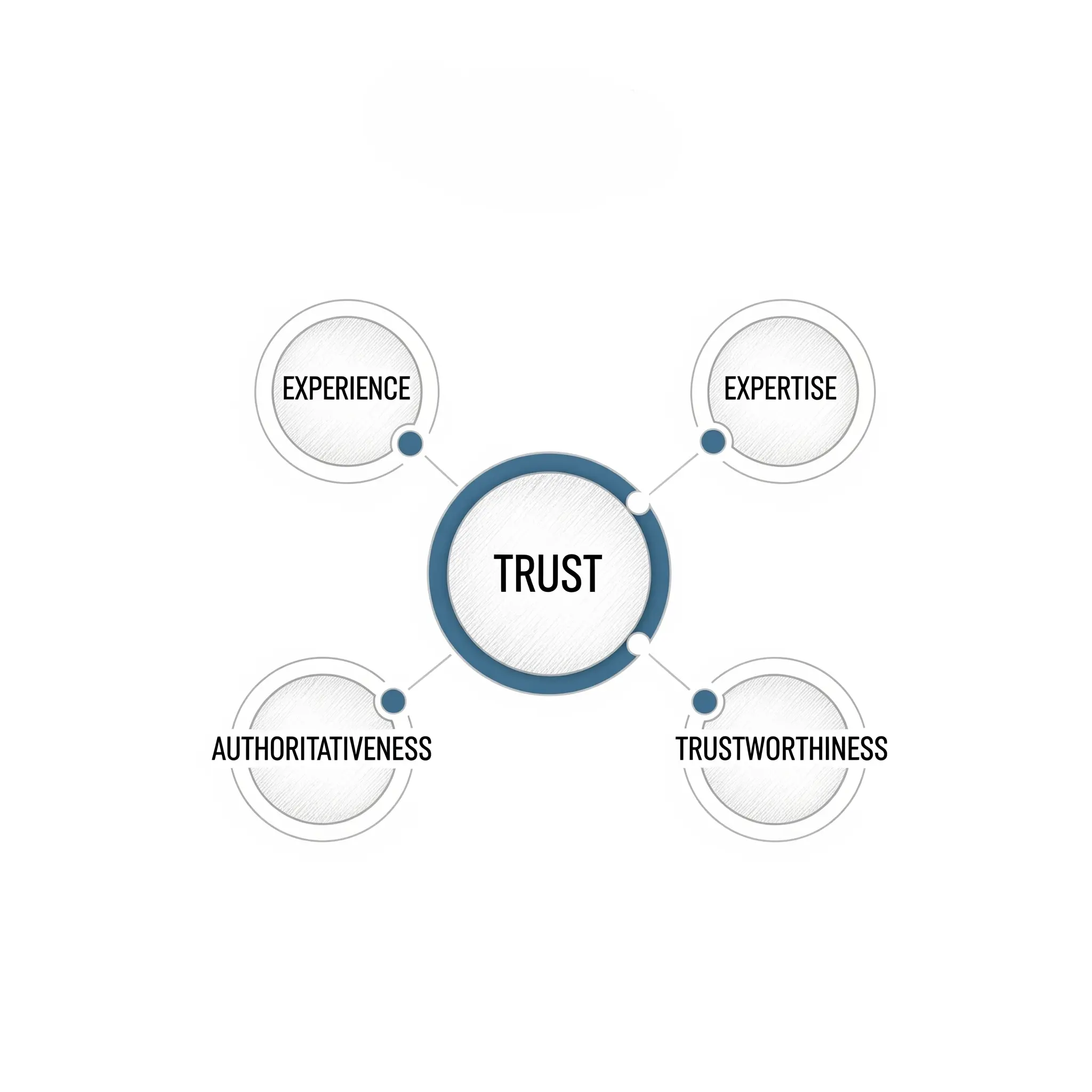
In an era of misinformation and mass-produced AI text, accuracy and authority are more critical than ever. Google heavily emphasizes E-E-A-T: Experience, Expertise, Authoritativeness, and Trustworthiness. This framework helps Google assess the credibility and quality of your content and its creators.
-
Experience: Does the content creator have firsthand experience with the topic? For example, a restaurant review written by someone who actually ate there carries more weight than a summary of other reviews. This is why using phrases like "In our tests..." or "When we analyzed..." matters.
-
Expertise: Is the content authored by someone with recognized knowledge or skills in the field? This could be formal qualifications, extensive professional experience, or demonstrated talent. You can deepen your understanding of these nuances in our E-E-A-T SEO guide.
-
Authoritativeness: Is the website or content creator recognized as a go-to source for the topic by others in the industry? This is often built through backlinks from reputable sites and positive mentions.
-
Trustworthiness: This is often cited as the most crucial element. Is the content accurate, transparent, and secure? Trust signals include transparent contact information, secure website (HTTPS), well-researched content with citations, and positive reviews.
- How to demonstrate E-E-A-T:
- Showcase author bios with credentials and relevant experience.
- Cite sources and data to support claims.
- Ensure your website is secure (HTTPS).
- Provide clear contact information.
- Regularly update content to ensure accuracy and freshness.
- Example: When auditing a client's website for E-E-A-T with Digispot AI, we might discover that their author profiles are minimal. Digispot AI's audit could flag this, prompting the client to enrich author bios with credentials, improving their perceived expertise and trustworthiness. For a full list of actionable steps, refer to our E-E-A-T checklist.
- How to demonstrate E-E-A-T:
3. Readability and User Experience (UX): Making it Enjoyable
Even the most accurate and authoritative content won't be effective if it's difficult to read or navigate. How can you make your content enjoyable for users? Readability and a strong user experience are paramount.
- Clear, Concise Language: Use simple sentences and avoid jargon where possible. Break down complex ideas into easily digestible chunks. Aim for a reading level that is accessible to your specific audience.
- Effective Formatting:
- Headings and Subheadings (H1, H2, H3, etc.): These break up text, guide readers, and signal topic hierarchy to search engines.
- Short Paragraphs: Long blocks of text can be daunting. Short paragraphs improve visual flow and reduce cognitive load.
- Lists (Bulleted/Numbered): Great for presenting information concisely and improving scanability.
- Images and Multimedia: Visuals break up text, aid comprehension, and keep users engaged. Ensure images have descriptive alt text for accessibility and SEO.
- Mobile-Friendliness: With the majority of searches happening on mobile devices, your content must display well and be easy to interact with on smartphones and tablets.
- Example: Digispot AI excels in this area by auditing websites in both mobile and desktop modes. This dual-mode auditing helps identify issues that might hinder readability or user experience specifically on mobile, such as non-responsive elements or overly large paragraphs, which a manual check might miss.
4. Originality and Uniqueness: Stand Out from the Crowd
In a world saturated with content, how do you ensure your content stands out? Originality is key. This concept is often referred to as "Information Gain." Google patents suggest that if your content simply restates what the top 3 results already say, it has low value.
- Unique Insights: Offer a fresh perspective, original research, or a unique take on a topic. Can you aggregate data in a new way? Can you interview a Subject Matter Expert (SME)?
- Value Proposition: What unique value does your content bring to the reader that they can't find elsewhere?
- Avoiding Plagiarism: Never copy content. Create your own based on your knowledge and research. Even "patchwork plagiarism" (rewriting sentences from multiple sources) is easily detected by modern algorithms.
5. Comprehensive Coverage: Go Deep, Not Just Broad
High-quality content doesn't just scratch the surface; it delves deep into a topic, providing comprehensive answers to all potential user questions. This is crucial for Answer Engine Optimization (AEO), where AI agents look for the most complete answer to serve users directly.
- Thoroughness: Cover all relevant aspects of a topic, anticipating follow-up questions users might have. If you are writing about "content marketing," don't just define it; explain how to do it, measure it, and improve it.
- Topic Clusters: Consider creating interconnected articles that cover a broad topic in depth through various sub-topics, establishing topical authority. This structure helps search engines understand your site's expertise.
- Self-Correction: Be careful not to cannibalize your own keywords. Ensure each page has a distinct focus. You can learn how to spot missing opportunities in our content gap analysis guide.
6. Technical SEO for Content: The Unseen Foundation
While often perceived as separate, technical SEO is intrinsically linked to content quality. How does technical SEO support content? It ensures that your high-quality content can actually be discovered, crawled, indexed, and displayed effectively by search engines.
-
Schema Markup (Structured Data): This is code you add to your webpage to help search engines (and AI systems) understand the meaning behind your content. It allows your content to appear in "rich results" like review stars, FAQs, or event dates, making your listing more appealing. While not a direct ranking factor, schema markup significantly enhances visibility and click-through rates, and is increasingly vital for AI systems to accurately summarize and cite your content.
- Example: A practical application is using schema markup for product reviews. Digispot AI's free community Chrome extension can help you audit your website page right in your browser. This extension can detect and visualize schema markup, helping you ensure it's correctly implemented to leverage rich snippets and improve how your content is understood by search engines and AI models. Use the free Schema Markup Generator to create valid structured data in minutes.
-
Internal Linking: This helps search engines understand the relationships between your pages and allows them to crawl your site more effectively. It also guides users to related content, improving engagement. Learn more about distinct internal linking strategies to distribute authority across your domain.
-
Page Speed and Core Web Vitals: How fast your page loads significantly impacts user experience and is a ranking factor. Optimized images and efficient code are crucial.
-
Crawlability and Indexability: Ensuring search engine bots can easily access and index your content is fundamental. This involves proper sitemaps and robots.txt file management.
- Example: Digispot AI analyzes your site for over 300+ ranking factors, including page performance and technical SEO elements. If your page is slow due to unoptimized images, Digispot AI's audit capabilities would identify this issue, offering actionable insights to improve speed and thus overall content performance.
How to Achieve High Content Quality SEO Standards: A Practical Approach
Achieving and maintaining high content quality SEO standards is an ongoing process that involves strategy, creation, and continuous optimization. How can you implement this effectively?
1. Develop a Robust Content Strategy
- Audience Research: Before writing a single word, understand your audience. Who are they? What are their pain points, questions, and interests? Use social listening or sales call data to find real questions people ask.
- Competitor Analysis: What content are your competitors ranking for? Where are the gaps you can fill, or where can you provide a better, more comprehensive answer? Look for comments on competitor blogs to see what users are complaining about or asking for.
- Topic Clustering and Content Pillars: Organize your content around core topics and create a network of interlinked articles that cover subjects in depth. This builds topical authority.
- Example: Imagine you're in the pet care industry. A topic cluster around "dog training" might have a main pillar page and supporting articles on "puppy obedience," "leash training tips," and "advanced dog commands." Digispot AI's "opportunity finder" can help identify these clusters and related keywords.
2. Master the Content Creation Process
- Thorough Research: Dive deep into your chosen topic. Gather facts, statistics, and expert opinions. Don't rely on a single source.
- Outline and Structure: A clear outline ensures logical flow and comprehensive coverage. It prevents "fluff" and keeps the writer focused on the user intent.
- Write with the User in Mind: Focus on delivering value and answering user intent directly and clearly. Use simple, human-friendly sentences.
- Edit and Refine: Proofread for grammar, spelling, and clarity. Ensure your tone is consistent with your brand voice.
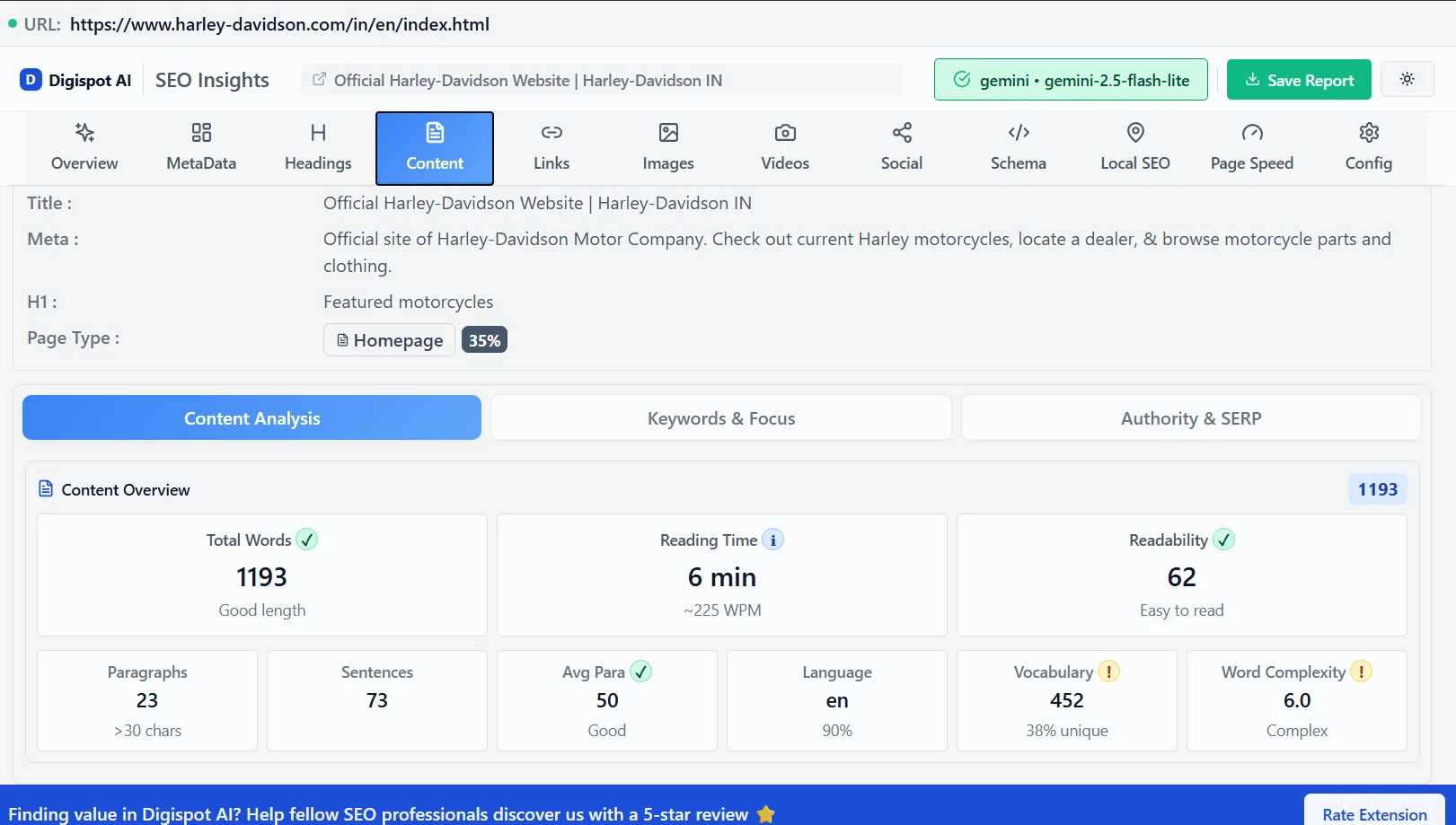
- The Role of AI in Content Creation: AI can be a powerful co-pilot in content creation, but it should not replace human creativity and oversight. If you are using AI, follow our guidelines on AI content for SEO to ensure you don't violate spam policies.
- AI for Research & Ideation: AI tools can quickly analyze vast datasets, identify keyword patterns, uncover trending themes, and generate content ideas.
- AI for Outlining & First Drafts: AI can assist in creating comprehensive content outlines and even generate initial drafts, speeding up the process.
- AI for Optimization: AI can help suggest optimal keyword placements, meta descriptions, and title tags.
- Example: Digispot AI's "Content Studio" feature is designed precisely for this. It leverages AI agents to help you generate SEO-optimized content. While it accelerates the content creation process, it's crucial to remember that human expertise for fact-checking, adding unique insights, and refining the content to match your brand's voice is indispensable. As per Google's stance, AI-generated content can rank, but only if it meets high standards of quality, originality, and user value.
3. Continuous Optimization and Monitoring
Content creation isn't a "set it and forget it" task. To maintain high quality and strong SEO performance, ongoing optimization is necessary.
- On-Page SEO Best Practices: Beyond keywords, this includes optimizing title tags, meta descriptions, URLs, and image alt text. Digispot AI can help you identify and fix these issues automatically with AI-powered audits analyzing 300+ ranking factors.
- Content Audits: Regularly review your existing content to assess its performance, identify outdated or underperforming pieces, and decide whether to keep, update, repurpose, or remove them. This helps you find hidden opportunities and fix issues. You can start this process instantly using our free On-Page SEO Analysis tool.
- How Digispot AI helps: Digispot AI is designed as an AI SEO platform that helps businesses audit their websites comprehensively. It identifies issues across 300+ ranking factors, from content quality to technical SEO and page performance. Its integration with Google Search Console and Google Analytics is vital here, providing data to track and improve performance. This allows for a proactive approach to content audits, rather than a reactive one.
- Performance Tracking: Monitor key metrics like organic traffic, rankings, bounce rate, time on page, and conversions. Tools integrated with Google Analytics and Search Console are essential.
- Example: Digispot AI's direct integration with Google Search Console and Google Analytics is a prime example of how you can effectively track your content's performance. It allows you to see how your SEO-optimized content is truly impacting your business visibility and generating leads.
Tools and Technologies for Ensuring Content Quality: The Digispot AI Advantage
Manually auditing a website for all 300+ ranking factors, identifying issues, and crafting perfectly optimized content can be an overwhelming task, especially for businesses operating at scale. This is where advanced AI SEO platforms and tools become indispensable.
The Power of an AI SEO Platform like Digispot AI
Digispot AI is built to bring all SEO best practices into an automated and user-friendly model, enabling businesses to operate at scale with accuracy. How does Digispot AI specifically help ensure content quality SEO standards?
- Comprehensive Website Audits (Mobile & Desktop): Digispot AI audits your website in both mobile and desktop modes, meticulously identifying issues across a vast array of ranking factors. This includes crucial aspects of content quality, technical SEO, local SEO, and page performance. For instance, it can pinpoint slow-loading images, missing meta descriptions, or structural issues that hinder content readability and search engine crawlability.
- Issue Identification and Resolution Guidance: The platform doesn't just identify problems; it helps you understand them and provides guidance on how to solve them. This transforms complex SEO challenges into actionable steps.
- Integration with Google Search Console & Google Analytics: This seamless integration is critical for accurate performance tracking. Digispot AI pulls data from these vital sources, giving you a holistic view of how your content is performing in real-world search results and with actual users. This helps you refine your content strategy based on concrete data.
- Opportunity Finder: This feature is invaluable for content planning. It helps you spot content opportunities by identifying keywords, topics, and content gaps that your competitors might be missing, ensuring your new content is strategically aligned with user demand.
- Content Studio with AI Agents: This is where content generation meets optimization. The Content Studio assists in generating SEO-optimized content, leveraging AI agents to help craft compelling, relevant, and well-structured pieces. Remember, the goal is AI assistance, not full replacement, ensuring human oversight for accuracy, unique insights, and brand voice.
- Analysis of 300+ Ranking Factors: Digispot AI's ability to analyze your site against an extensive list of ranking factors means it covers everything from content depth and keyword usage to schema markup implementation and mobile responsiveness. This holistic view is crucial for comprehensive content quality assurance. For a deeper dive into the specifics of these factors, explore our article on on-page SEO best practices.
The Free Digispot AI Community Chrome Extension: Your Instant Auditor
For quick, on-the-go insights, the free Digispot AI Community Chrome Extension is a powerful tool at your fingertips. What can this Chrome extension do to help with content quality?
- In-Browser Page Audits: It allows you to audit any website page directly within your browser, providing instant feedback on its SEO health.
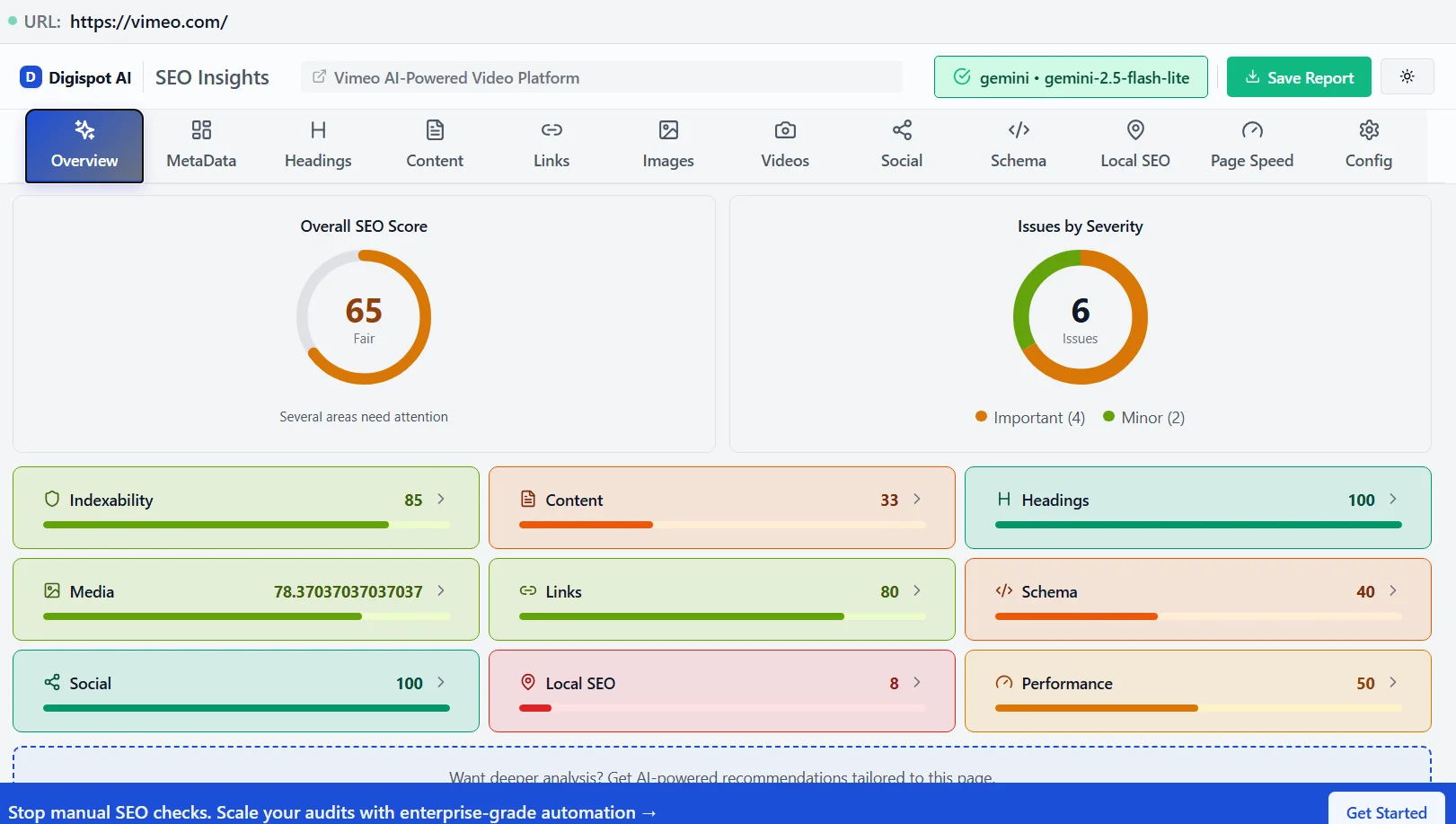
Turn invisible SEO data into clear visuals with our Free Chrome extension
- Powered by Popular LLM Models: The extension leverages advanced large language models (LLMs) to provide intelligent insights.
- Schema Markup Detection and Visualization: A standout feature, it helps you detect existing schema markup on a page and even visualize it. This is incredibly helpful for verifying correct implementation of structured data, which, as we've discussed, is vital for rich snippets and AI search understanding.
- Issue Detection: It can quickly flag common content and technical SEO issues on a page, offering immediate areas for improvement.
The Digispot AI platform and its Chrome extension act as powerful enablers, allowing businesses to operationalize robust content quality SEO standards efficiently and effectively. They empower you to make data-driven decisions and implement best practices at scale.
Key Benefits of Implementing Content Quality SEO Standards: Business Outcomes
Ultimately, the effort invested in adhering to content quality SEO standards translates directly into tangible business outcomes. By prioritizing content quality, you are investing in:
- Improving Business Visibility: High-quality, SEO-optimized content ranks better, making your business more visible to potential customers searching for your products or services. This means you show up when and where it matters most.
- Increase in Traffic and Business Leads: Enhanced visibility leads to more organic traffic. When that traffic is driven by highly relevant, quality content, it attracts users who are genuinely interested, leading to a higher conversion rate for business leads.
- Time and Cost Savings: By building an evergreen library of high-ranking, valuable content, you reduce the continuous need for expensive paid advertising. The automation and efficiency provided by platforms like Digispot AI further optimize your time and resources, allowing you to achieve more with less.
- Future-Proofing for AI Search: As search behavior shifts toward conversational AI models (like Gemini and ChatGPT), content quality standards become the gatekeeper. These models prioritize content that is structurally sound (schema), authoritative (E-E-A-T), and highly relevant. Adhering to these standards now prepares your business for the next evolution of search.
Conclusion: Start Elevating Your Content Today
In the evolving landscape of search, where AI plays an increasingly significant role, content quality SEO standards are not just a recommendation; they are a fundamental requirement for online success. It's about creating content that is a true asset to your audience – content that is relevant, accurate, authoritative, readable, original, comprehensive, and technically sound.
By understanding what defines quality, why it matters, and how to achieve it through meticulous strategy, creation, and continuous optimization, you can significantly enhance your digital presence. Tools like Digispot AI, with its comprehensive auditing capabilities, opportunity discovery, and AI-powered content studio, coupled with the convenient free Chrome extension for on-the-go insights into aspects like schema markup, provide a robust framework to implement these standards.
They help you operate with accuracy and at scale, ensuring your business not only ranks better but truly connects with its audience, driving valuable traffic and leads. Focus on delivering exceptional value to your readers, and the search engines will reward you.
Ready to improve your search visibility? Try Digispot AI for comprehensive website audits and actionable recommendations that turn content into a growth engine.
References
- Build your SEO strategy with Google Search Console data | Google Search Central
- Google Analytics
- Understand page experience in Google Search results | Google Search Central
- Core Web Vitals | Google Search Central
- Introduction to schema.org | Schema.org
- Understand how Google Search works | Google Search Central
- Create helpful, reliable, people-first content | Google Search Central
- Digispot AI - FREE On Page SEO Audit Tool
- Digispot AI - FREE Chrome Extension for SEO Insights
Audit any page in seconds
300+ SEO checks including Core Web Vitals, schema markup, meta tags, and AI readiness — trusted by 1000+ SEO experts and marketers.
Frequently Asked Questions
Here are some of our most commonly asked questions. If you need more help, feel free to reach out to us.
Written by
Maya Krishnan
Digital growth expert
Maya is a seasoned expert in web development, SEO, and digital strategy, dedicated to helping businesses achieve sustainable growth online. With a blend of technical expertise and strategic insight, she specializes in creating optimized web solutions, enhancing user experiences, and driving data-driven results. A trusted voice in the industry, Maya simplifies complex digital concepts through her writing, empowering readers with actionable strategies to thrive in the ever-evolving digital landscape.