E-E-A-T SEO Checklist: Build Trust & Authority
Follow this Google E-E-A-T checklist to strengthen Expertise, Experience, Authoritativeness, and Trustworthiness in your content while improving SEO rankings.
 Maya Krishnan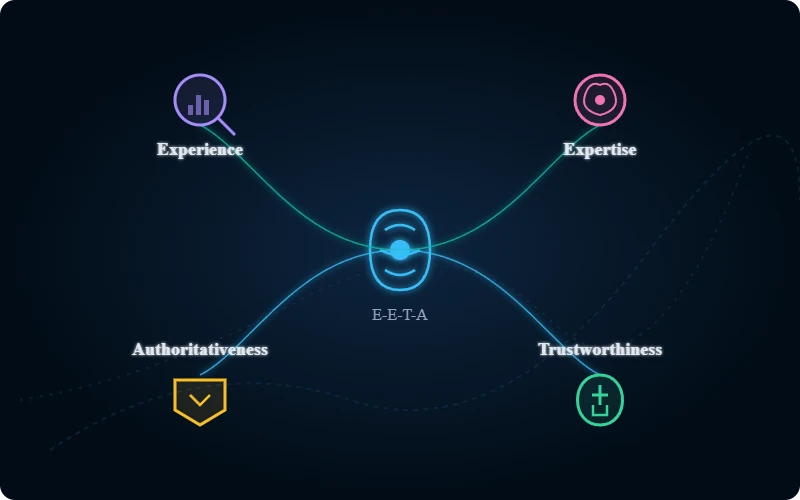
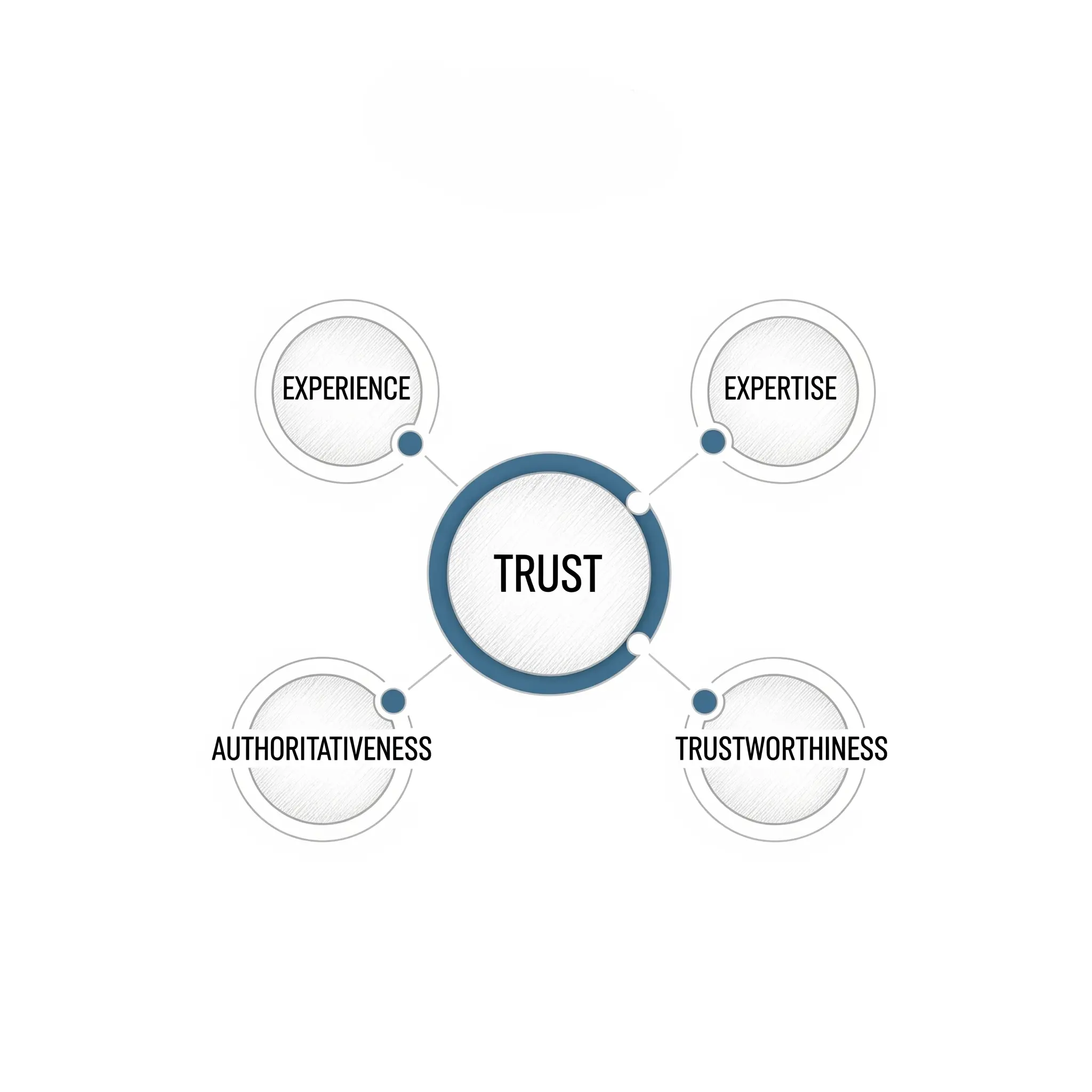
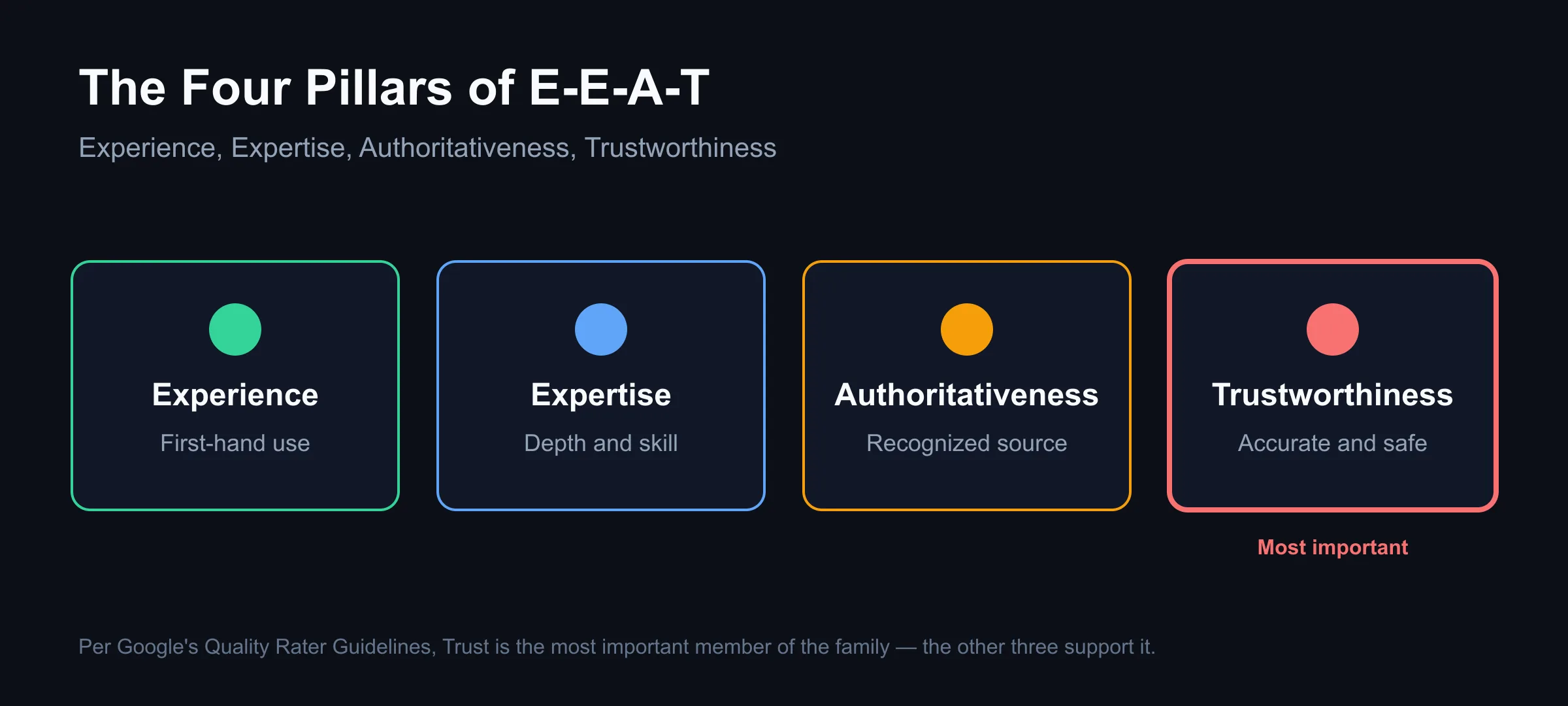
Google's priority is delivering reliable information. As generative AI floods the internet with mass-produced articles, the need for human verification and genuine trust signals has never been higher. The algorithms governing search results are increasingly sophisticated at distinguishing between generic content and content backed by real-world knowledge. Central to this evaluation is E-E-A-T: Experience, Expertise, Authoritativeness, and Trustworthiness.
This guide analyzes the specific components of Google's E-E-A-T framework. You will learn how to implement these signals technically and structurally on your site. We will also examine how AI-powered tools can streamline the auditing process, ensuring your business secures better rankings and builds lasting credibility with your audience.
Key Takeaways
- Experience is the anti-AI moat. Original photos, first-hand anecdotes, and case studies with real outcomes prove involvement that a language model cannot fabricate.
- Expertise and Authoritativeness are different signals. Expertise lives on the page (depth, sourcing, credentials); authoritativeness lives off it (backlinks, brand mentions, citations from others).
- Trust is the deciding pillar. Without HTTPS, transparent contact details, clear policies, and accurate claims, strong expertise still fails, especially for YMYL topics.
- E-E-A-T is not a direct ranking factor, but it shapes the algorithms that are. Treat it as an operational standard you audit continuously, not a one-time checkbox.
- Optimizing E-E-A-T is also Answer Engine Optimization. The same credibility signals that satisfy Google's raters help AI engines choose your page as a cited source.
Understanding Google E-E-A-T Principles
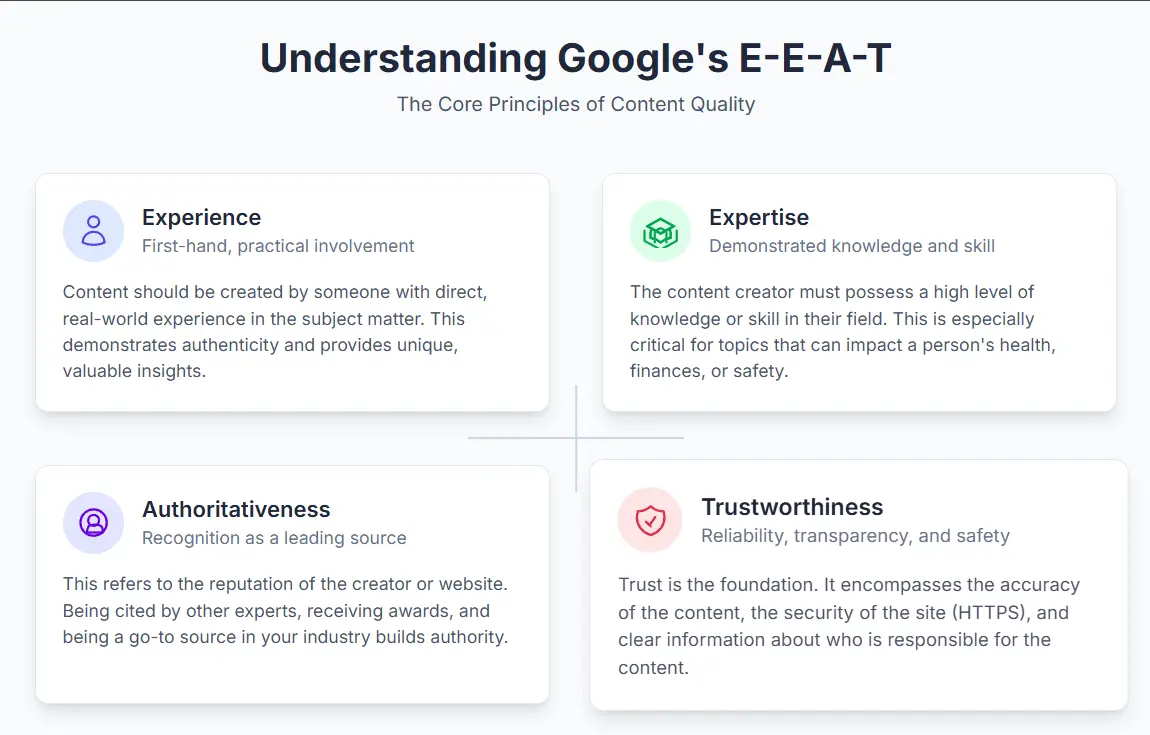
E-E-A-T serves as the quality control mechanism for Google's algorithms. While not a direct ranking factor like page speed or keyword usage, it determines the weight Google gives to your content. If your technical SEO is perfect but your E-E-A-T signals are weak, you will struggle to rank for competitive terms.
Initially known as "E-A-T" (Expertise, Authoritativeness, Trustworthiness), Google updated the guidelines in December 2022 to include "Experience." This shift acknowledges that AI can mimic expertise (facts), but it cannot mimic experience (living through an event).
Why E-E-A-T dictates modern SEO:
Users require safety and accuracy. If a website gives poor medical advice or scams a user financially, that reflects poorly on Google. Therefore, sites demonstrating strong E-E-A-T are prioritized. This concept is foundational to any modern SEO strategy, ensuring that the content users find is accurate, safe, and authored by qualified individuals.
Let's examine the four pillars in detail:
1. Experience: The Human Element
Defining Experience Experience is the proof of direct involvement. It answers the question: "Did the author actually do the thing they are writing about?" A product review written by someone who has never touched the item lacks experience. Conversely, a review containing original photos of the unboxing and usage demonstrates high experience.
Demonstrating Experience effectively:
- Narrative Evidence: Use "I" statements backed by specific details that only a user would know (e.g., "The texture felt gritty after ten minutes of use").
- Original Media: Stock photos hurt your credibility here. Upload unique images, video walkthroughs, or audio clips of you engaging with the subject.
- Community Validation: Integrate user-generated content (UGC). A forum or comment section where real users discuss the product adds layers of experience signals to the page. Our guide on using user-generated content for SEO covers how to capture and structure these contributions safely.
- Case Studies: Move beyond theory. Detail specific scenarios where you applied a strategy and explain the outcome, including the failures.
2. Expertise: The Knowledge Layer
Defining Expertise Expertise focuses on the creator's knowledge level. Unlike experience, which is about usage, expertise is about understanding. A doctor has medical expertise; a patient has the medical experience of the illness. Both are valuable, but they serve different user intents.
Demonstrating Expertise effectively:
- Comprehensive Coverage: Thin content implies a lack of depth. Cover the topic fully, answering follow-up questions users might have.
- Semantic Authority: Use correct industry terminology and cover related entities. This signals to search engines that you understand the broader context of the topic.
- Sourcing and Data: Expert content relies on evidence. Conduct original research or cite primary sources rather than rehashing existing blog posts.
- Credential Display: Don't hide your qualifications. Use clearly defined author boxes that list degrees, certifications, and years in the industry.
3. Authoritativeness: The Reputation Signal
Defining Authoritativeness Authoritativeness is your standing in the industry. It is external validation. You cannot simply claim to be an authority; others must cite you as one. If expertise is what you know, authoritativeness is who listens to you.
Demonstrating Authoritativeness effectively:
- Link Profile Quality: Backlinks from government sites (.gov), educational institutions (.edu), and major industry publications carry immense weight. Prioritize relevance over raw volume; a single link from a respected niche publication signals more authority than dozens of directory listings. Audit your profile regularly and disavow spammy sources, following a disciplined backlink analysis process so low-quality links do not drag down your reputation.
- Brand Mentions: Even unlinked mentions of your brand or authors in news articles contribute to your "entity" authority in Google's Knowledge Graph. Google increasingly evaluates entities, not just pages, so consistent naming of your organization and authors across the web strengthens how the algorithm associates you with your topic. Track where you are mentioned and pursue a link where it makes sense.
- Awards and History: A long track record matters. Highlight the age of your business, awards won, and recognized accreditations on your "About" page, and link out to the awarding body so the claim is verifiable rather than self-asserted.
- Topic Clusters: Build authority by dominating a specific niche. Rather than publishing scattered one-off posts, organize content into a pillar page supported by focused subtopics, all connected with descriptive internal links. This hub-and-spoke content structure creates a network of information that proves you are a specialist, not a generalist, and concentrates link equity on the pages that matter most.
4. Trustworthiness: The Safety Net
Defining Trustworthiness Trust is the most critical component. If a site is untrustworthy, no amount of expertise will save it. Trustworthiness encompasses technical security, business transparency, and accuracy. This is vital for YMYL (Your Money or Your Life) topics involving health, finance, or legal advice, where the bar is highest, our guides on building trust in medical content and fintech and YMYL strategy walk through the extra scrutiny these niches face.
Demonstrating Trustworthiness effectively:
- Technical Security: A secure connection (HTTPS) is non-negotiable.
- Business Transparency: Users must be able to find who owns the site, physical addresses, and phone numbers easily.
- Policy Clarity: Refund policies, editorial guidelines, and affiliate disclosures must be easy to find and understand.
- Reputation Management: Respond to negative reviews on third-party sites (Google Business Profile, Trustpilot). Unaddressed complaints erode trust signals.
The ROI of E-E-A-T Compliance
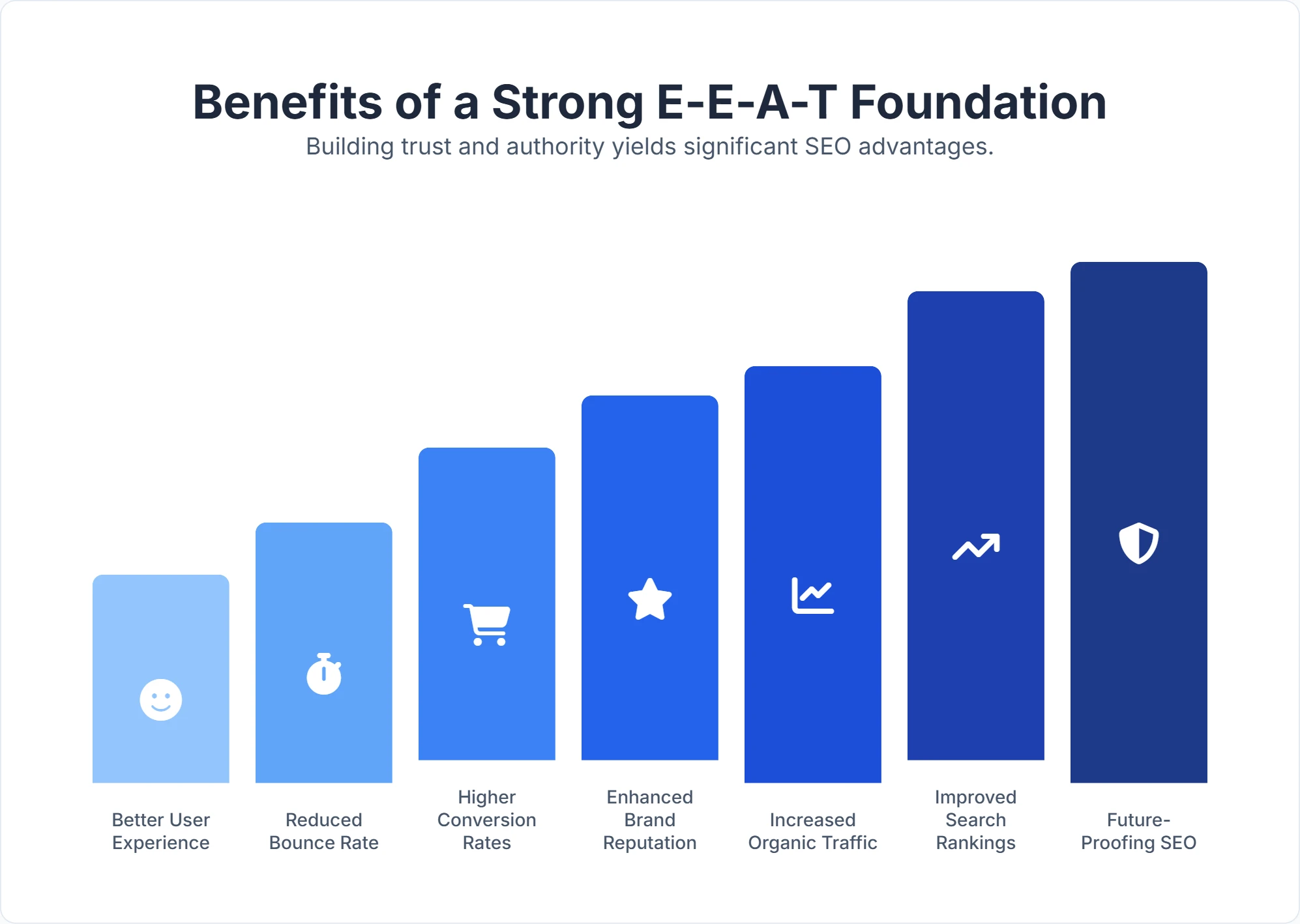
Ignoring E-E-A-T makes your site vulnerable to core updates. Focusing on it builds a defensive moat around your business.
| Benefit | Strategic Advantage |
|---|---|
| Resilience to Updates | Google continually refines algorithms to punish low-quality content. High E-E-A-T sites often see stability or growth during volatility. |
| Featured Snippet Dominance | Google prefers to pull answers (snippets) from authoritative sources. High trust signals increase your chances of capturing "position zero." |
| Brand Equity | When users repeatedly see your brand associated with accurate, expert info, you become their default choice, reducing reliance on search acquisition. |
| Conversion Lift | Trust removes friction. A user who verifies your expertise and sees transparent policies is significantly more likely to purchase. |
| Lower Bounce Rates | Accurate, expert content satisfies intent immediately. Users stay longer to read and explore when they trust the source. |
| AI Search Visibility | AI engines (ChatGPT, Gemini) prioritize credible sources for citations. E-E-A-T optimization is effectively Answer Engine Optimization (AEO). |
| User Satisfaction | Quality content reduces frustration. Helping a user solve a problem efficiently creates positive brand sentiment. |
Actionable E-E-A-T Checklist for 2026
Building E-E-A-T is not a one-time setup; it is an ongoing operational standard. Use this checklist to audit your current assets and plan future content.
Validating Experience
- Audit Content for Generic Advice: Review top pages. Do they sound like a summary of other articles? Inject personal anecdotes or proprietary data.
- Visual Proof Protocol: Mandate that all reviews or guides include at least 3 original photos or a video demonstration.
- UGC Strategy: Implement a system to gather and display customer stories. This could be a "Customer Spotlight" section or detailed review schema.
- "Behind the Scenes" Content: Publish content showing your manufacturing process, team meetings, or service delivery to prove operational reality.
Establishing Expertise
- Author Schema Implementation: Use structured data to explicitly tell Google who the author is and link to their social profiles.
- Tip: Use the free Schema Markup Generator to create valid Person schema in minutes.
- Content Depth Audit: Identify thin pages. Expand them to cover "People Also Ask" questions and related sub-topics. Concise, well-structured answers to these questions also improve your odds of winning Google featured snippets, where authoritative sources are favored.
- Citation Standards: Ensure every statistic links to the original study, not a news article about the study.
- Update Cadence: Set a schedule to review and update older content. Outdated information is a negative expertise signal.
Building Authoritativeness
- Digital PR Campaign: Stop buying low-quality links. Focus on getting quoted in industry news by responding to journalist requests (e.g., HARO/Connectively).
- Podcast Appearances: Get your experts booked on niche podcasts. The show notes often provide high-quality backlinks and contextual relevance.
- Wikipedia/Wikidata: If eligible, a Wikipedia page is a massive authority signal. Alternatively, ensure your brand has a clear Wikidata entry.
- Cross-Promotion: Leverage LinkedIn and X (Twitter) to share insights. High engagement on social platforms correlates with authority.
Securing Trustworthiness
- HTTPS & SSL: verify your certificate is valid and forces HTTPS on all versions of the site.
- About Page Overhaul: Does your About page list your mission, history, and key team members? Avoid generic corporate speak.
- Contact Verification: Ensure your phone number and address in the footer match your Google Business Profile exactly.
- Ad Experience: If you run ads, ensure they do not obscure content. Aggressive pop-ups destroy trust scores.
- Error Management: Broken links and 404s signal a neglected site. Regularly check for these.
- Resource: Read our guide on common SEO mistakes to avoid trust-killing errors.
Leveraging Technology for E-E-A-T: The Digispot AI Advantage
Manually tracking 300+ E-E-A-T signals across a large website is impossible for most teams. This is where AI-driven automation transforms the process from a burden into a competitive advantage. Digispot AI provides the infrastructure to monitor and enhance these signals at scale.
1. Automated Trust & Technical Audits A broken website is inherently untrustworthy. Digispot AI performs comprehensive site-level audits that go beyond basic SEO checks. We analyze mobile usability, core web vitals, and security protocols. If your pages load slowly or shift unexpectedly (CLS), users lose trust. Digispot AI helps you identify and fix these issues automatically, analyzing over 200 ranking factors to ensure your technical foundation supports your E-E-A-T goals.
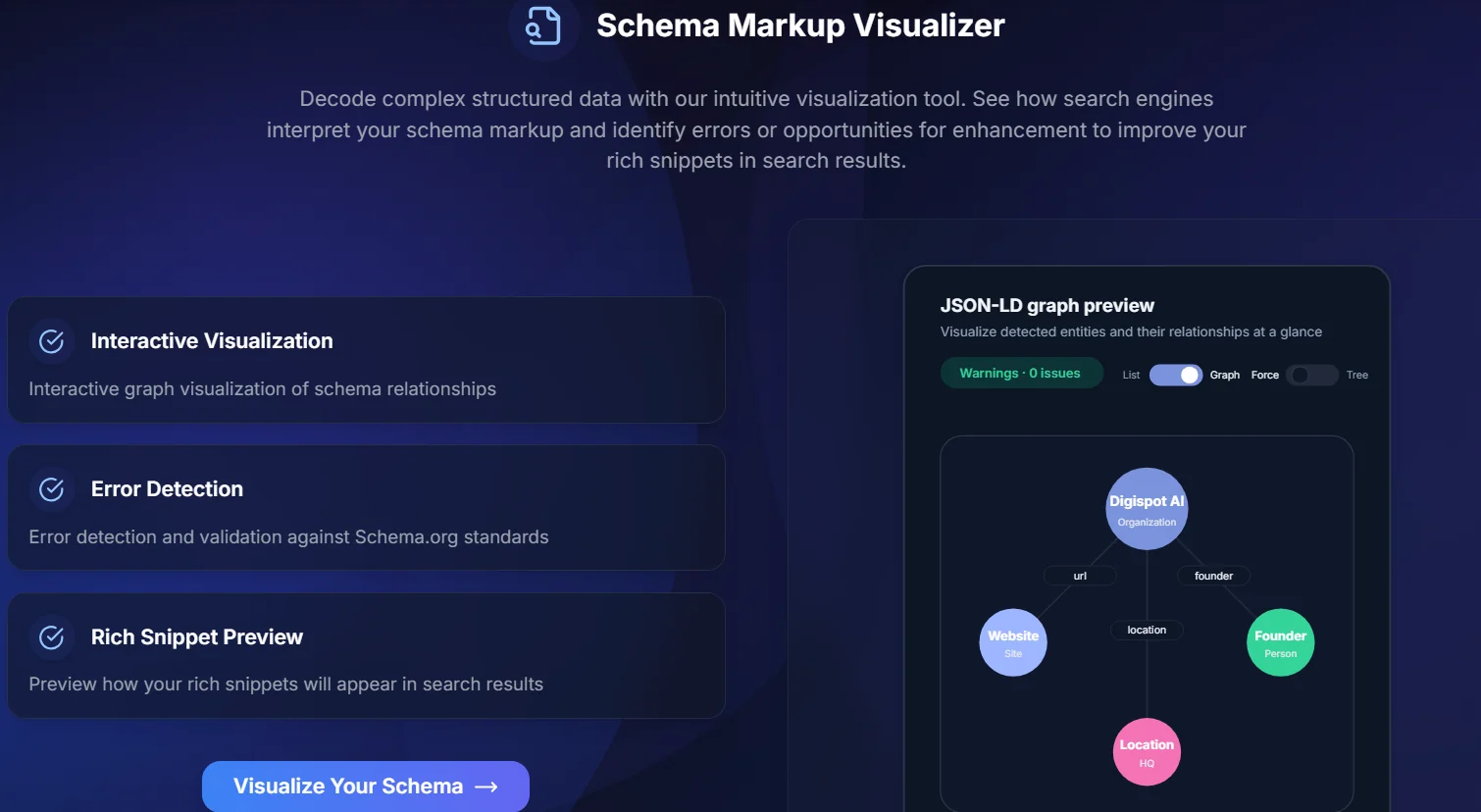
2. Schema Markup Visualization & Validation Search engines need to "understand" your expertise, not just read it. Schema markup is the language of this understanding. Many sites have broken or missing schema, meaning Google doesn't know who wrote the content or what organization stands behind it.
- The Solution: Use our Schema Markup Visualizer to see exactly how search engines perceive your structured data. Correcting Author and Organization schema is one of the fastest ways to boost E-E-A-T signals.
3. Content Relevance & Opportunity Finder Expertise requires covering a topic completely. Digispot AI's "Opportunity Finder" analyzes your niche to find gaps in your content strategy. It highlights topics where you have authority but lack content, allowing you to build topical clusters that signal deep expertise. Our Content Studio then helps you draft outlines that naturally incorporate the semantic terminology experts use, avoiding the "generic AI" tone that search engines penalize.
4. Browser-Based Instant Audits You don't always need a full platform crawl. Sometimes you need to check a competitor's page or valid your own new post immediately.
- Instant Analysis: Get SEO insights on any page with our free Chrome extension. It provides an instant score on content depth, schema presence, and technical health, allowing you to spot E-E-A-T weaknesses in real-time.
5. Performance Tracking via Integration Expertise is validated by user engagement. By integrating with Google Search Console and Analytics, Digispot AI correlates your content updates with performance metrics. If you improve the author bios on a section of your site, our platform helps you track if that correlates with increased time-on-page or higher rankings, validating your E-E-A-T efforts with hard data. Learn more about interpreting these metrics in our SEO audit checklist.
Start Improving Your E-E-A-T Score Today
In the era of AI-powered search, the human elements of experience, expertise, authoritativeness, and trustworthiness are your strongest differentiators. Google's algorithms are actively hunting for content that demonstrates these qualities. By ignoring E-E-A-T, you risk invisibility; by embracing it, you build a brand that is resilient, respected, and profitable.
Don't leave your reputation to chance. Start by auditing your key pages for "Experience" signals and ensuring your technical "Trust" foundation is solid.
Ready to improve your search visibility? Try Digispot AI for comprehensive website audits and actionable recommendations that turn E-E-A-T theory into ranking reality.
References
- Search Quality Rater Guidelines: An Overview | Google Services
- Search Console Help | Google Help
- Access your Google Analytics account
- Documentation - Schema.org
- Does HTTPS Influence Google's Ranking Algorithm? - Backlink Manager
- Digispot AI - FREE On Page SEO Audit Tool
- Digispot AI - FREE Chrome Extension for SEO Insights
Audit any page in seconds
300+ SEO checks including Core Web Vitals, schema markup, meta tags, and AI readiness — trusted by 1000+ SEO experts and marketers.
Frequently Asked Questions
Here are some of our most commonly asked questions. If you need more help, feel free to reach out to us.
Written by
Maya Krishnan
Digital growth expert
Maya is a seasoned expert in web development, SEO, and digital strategy, dedicated to helping businesses achieve sustainable growth online. With a blend of technical expertise and strategic insight, she specializes in creating optimized web solutions, enhancing user experiences, and driving data-driven results. A trusted voice in the industry, Maya simplifies complex digital concepts through her writing, empowering readers with actionable strategies to thrive in the ever-evolving digital landscape.