
Hub and Spoke SEO: Build Topic Cluster Authority
Master the hub and spoke content strategy for topical authority. Structure pillar pages, internal linking, and topic clusters that rank.
 Maya Krishnan
Staying ahead in the ever-evolving world of search engine optimization (SEO) is no longer an option; it's a necessity for any business determined to thrive online. As search engines grow increasingly sophisticated, simply stuffing keywords or churning out isolated articles no longer cuts it. Modern SEO demands a more strategic, organized, and truly user-centric approach. This is precisely where Hub and Spoke Content emerges – a powerful and intuitive content strategy designed not just to satisfy search engine algorithms, but more crucially, to deliver immense value to your audience. It's a true win-win for both online visibility and user experience.
This comprehensive guide will delve deep into the world of Hub and Spoke Content, breaking down its core principles, explaining its myriad benefits, and showing you how to implement it effectively. We'll explore how this strategic content architecture can transform your website's authority, drive significant traffic, and ultimately lead to tangible business growth. Furthermore, we'll subtly touch upon how innovative platforms like Digispot AI can serve as an invaluable ally in mastering this strategy, from initial audits to content generation and performance tracking, all while ensuring your content resonates with both human readers and advanced AI search engines.
What Exactly is Hub and Spoke Content?
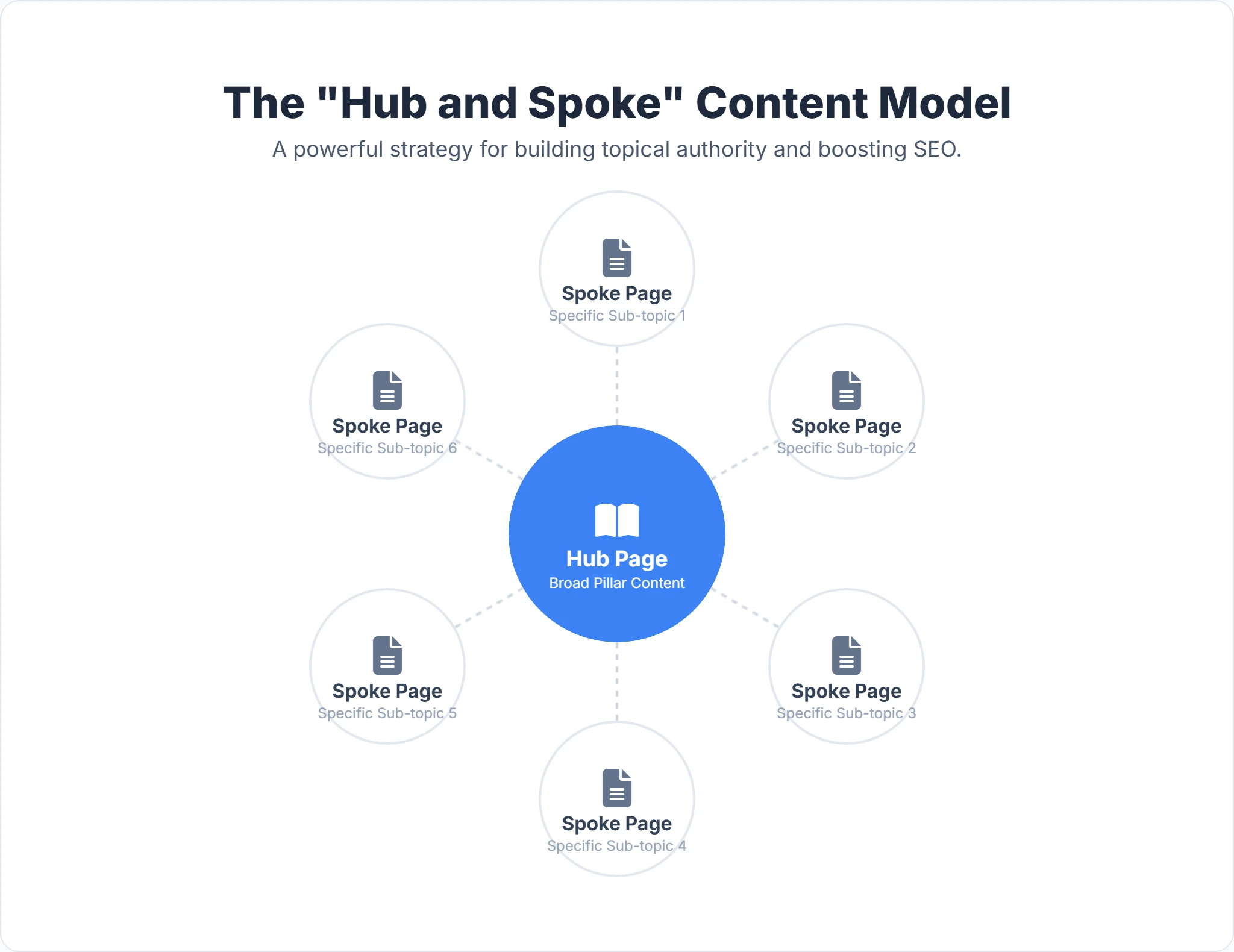
At its heart, the Hub and Spoke content model is an organizational strategy that structures your website's content around a central, broad topic (the "Hub") and several related, more specific sub-topics (the "Spokes"). Think of it like a bicycle wheel: the central hub connects to various spokes, all leading outwards but intrinsically linked back to the core. This structure is intuitive, logical, and incredibly effective for building topical authority and improving navigation.
The Core Components: Hub Pages and Spoke Pages
To truly grasp this concept, let's break down its two fundamental components:
What is a Hub Page?
A Hub page is a comprehensive, authoritative piece of content that covers a broad subject in detail. It acts as the central pillar of your content cluster, providing a high-level overview of a particular theme. This page doesn't necessarily aim to rank for hyper-specific keywords but rather establishes your site's expertise on the overarching topic. It should be rich in information, well-researched, and serve as a definitive resource.
Key characteristics of a Hub Page:
- Broad Scope: Addresses a wide topic (e.g., "The Ultimate Guide to Digital Marketing").
- Comprehensive: Offers a detailed, high-level overview.
- Authoritative: Establishes your site as an expert.
- Links Out to Spokes: Contains internal links to several related Spoke pages for deeper dives.
- Often Long-Form: Due to its comprehensive nature, Hub pages are typically lengthy.
What are Spoke Pages?
Spoke pages are individual articles or blog posts that delve into specific sub-topics related to the main Hub page. Each Spoke page explores a particular aspect of the broader Hub topic in much greater detail. They are designed to target more specific, long-tail keywords and provide in-depth information on their respective niches.
Key characteristics of a Spoke Page:
- Specific Focus: Addresses a narrow sub-topic (e.g., "Understanding SEO for Small Businesses," "The Power of Social Media Marketing").
- Detailed: Provides in-depth information on its specific subject.
- Links Back to the Hub: Crucially, Spoke pages link back to the central Hub page, reinforcing its authority.
- Target Specific Keywords: Optimized for more granular, long-tail search queries.
- Can Link to Other Spokes: In some cases, relevant Spoke pages might also link to each other if appropriate.
How Do Hub and Spoke Pages Connect?
The magic of the Hub and Spoke model lies in its intelligent internal linking structure. The Hub page links out to all its Spoke pages, acting as a gateway to more specific information. Conversely, each Spoke page links back to the central Hub page. This bi-directional linking creates a powerful web of interconnected content, signaling to search engines the relationship and importance of these pages.
Illustration of Hub and Spoke Connection:
| Element | Description | Link Direction |
|---|---|---|
| Hub Page | Central, broad topic, comprehensive overview. | Links out to all relevant Spoke Pages. |
| Spoke Pages | Specific sub-topics, detailed information. | Links back to the central Hub Page. |
| Internal Flow | Authority and relevance flow from Hub to Spokes and from Spokes to Hub. | Strengthens topical authority and site structure. |
Why This Structure Works for Search Engines
Search engines, particularly advanced AI-driven ones like Google, strive to understand content deeply and deliver the most relevant and authoritative results to users. The Hub and Spoke model aligns perfectly with this goal:
- Establishes Topical Authority: By creating a cluster of interconnected content around a core topic, you demonstrate to search engines that your website is a definitive resource for that subject. This signals expertise and trustworthiness, which are critical ranking factors.
- Improves User Experience (UX): Users can easily navigate from a general overview (Hub) to specific details (Spokes) and back again, finding exactly what they need. This reduces bounce rates and increases time on site, positive signals for search engines.
- Enhances Internal Linking: The structured internal linking distributes "link equity" (or "link juice") more effectively across your site. This helps search engines discover and index more of your content and understand its hierarchy.
- Targets a Wider Range of Keywords: While your Hub page targets broad terms, your Spoke pages can meticulously target long-tail keywords, capturing a wider net of search queries and bringing in more qualified traffic.
- Simplified Content Planning: This model provides a clear framework for future content creation, making it easier to identify gaps and plan new Hubs or Spokes.
The Indisputable Benefits of a Hub and Spoke Content Strategy
Implementing a Hub and Spoke content strategy isn't just about organizing your website; it's about fundamentally transforming your SEO performance and enhancing your digital presence. The benefits ripple across various aspects of your online operations.
1. Improved SEO Visibility and Rankings
This is often the primary driver for adopting the Hub and Spoke model. By systematically building topical authority, your website becomes more relevant and trustworthy in the eyes of search engines.
- Higher Rankings: Search engines favor sites that demonstrate deep expertise. A well-constructed content cluster signals this expertise, leading to improved rankings for both broad (Hub) and specific (Spoke) keywords.
- Featured Snippets Potential: Comprehensive content clusters often contain the structured, answer-driven information that search engines use to generate featured snippets, giving you prime visibility at the top of search results.
2. Enhanced User Experience (UX)
Beyond search engines, the Hub and Spoke model significantly benefits your human visitors.
- Logical Navigation: Users can effortlessly move from a high-level overview to granular details, making it easy to find precisely what they are looking for without feeling lost or overwhelmed.
- Reduced Bounce Rate: When content is well-organized and easy to explore, users are more likely to stay on your site longer, consuming multiple pieces of content. This reduces bounce rates, a positive signal to search engines about the quality and relevance of your site.
- Satisfied Information Seekers: By providing comprehensive answers to both broad and specific queries, you cater to various stages of the user journey, making your site a go-to resource.
3. Increased Topical Authority
Authority is built on trust and expertise. The Hub and Spoke model is a direct pathway to establishing your site as an authoritative source.
- Deep Coverage: Instead of scattering content thinly across many unrelated topics, this strategy encourages deep dives into specific themes, making your site truly knowledgeable in those areas.
- Signals to AI Search Engines: Modern AI search engines prioritize understanding the context and depth of content. A Hub and Spoke structure clearly delineates these relationships, helping AI understand your site's comprehensive coverage of a topic.
4. Better Internal Linking Structure
Internal links are the backbone of site navigation and SEO.
- Efficient Link Equity Distribution: Links from high-authority Hub pages pass value to Spoke pages, and vice-versa, ensuring that valuable "link juice" is distributed evenly and strategically throughout your content cluster.
- Improved Indexing: A clear internal linking structure helps search engine crawlers discover and index more of your pages efficiently, ensuring that all your valuable content is discoverable.
5. Higher Organic Traffic
The culmination of improved rankings, better UX, and enhanced authority is a significant increase in organic traffic.
- Broader Keyword Reach: By targeting both broad and long-tail keywords, you capture a wider audience of searchers with varying intents.
- Qualified Leads: Content that precisely matches user intent (as provided by Spoke pages) tends to attract more qualified visitors who are deeper in their research or decision-making process.
6. Easier Content Planning and Organization
Content creation can be a daunting task, but Hub and Spoke simplifies it.
- Strategic Blueprint: Once you identify your Hub topics, you have a clear blueprint for brainstorming and developing related Spoke content, ensuring all new content contributes to a larger, strategic goal.
- Identifies Content Gaps: This structure makes it easier to spot areas where your content might be lacking, guiding future content creation efforts to fill those gaps and strengthen your topical authority further.
How to Implement a Robust Hub and Spoke Strategy: A Step-by-Step Guide
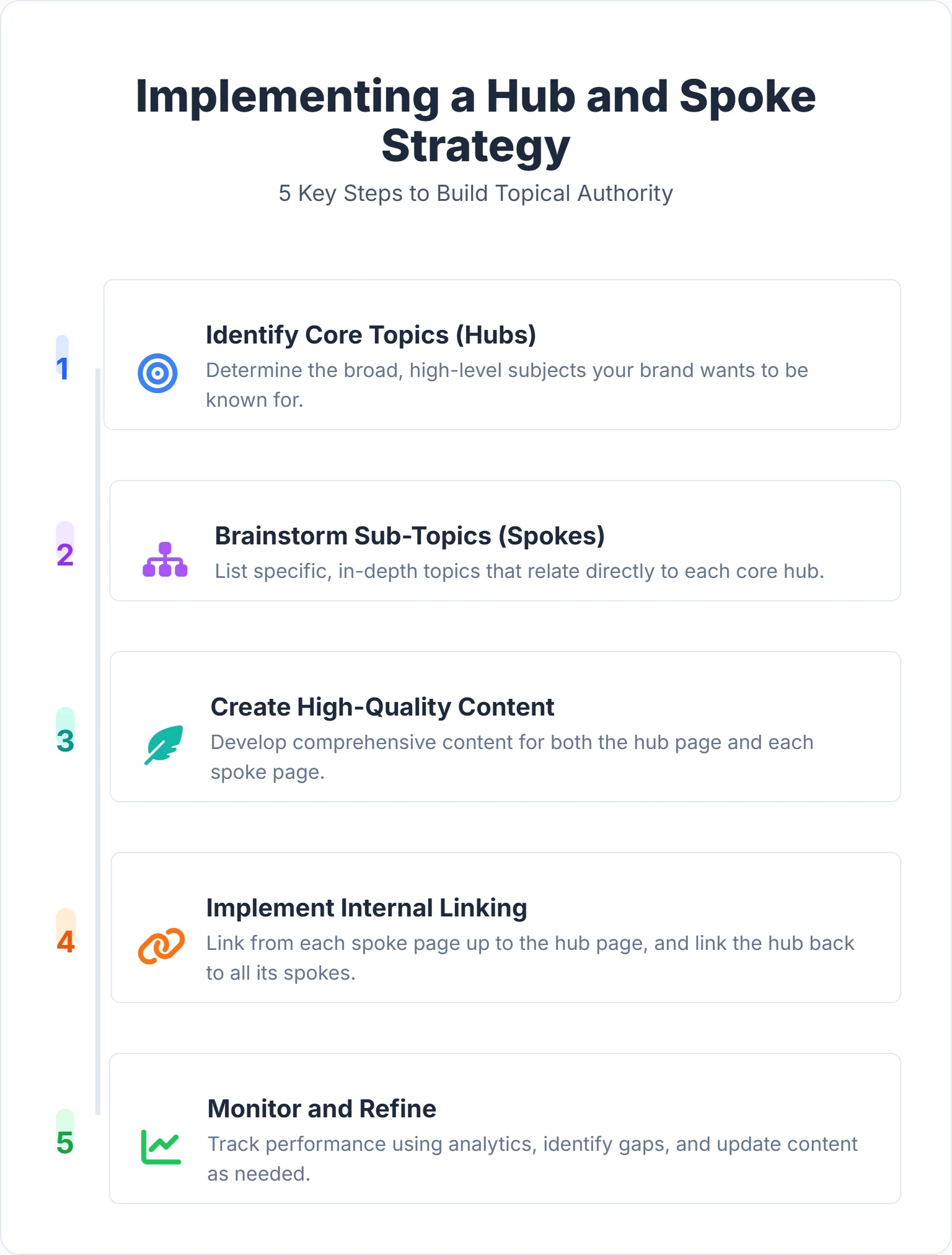
Implementing a successful Hub and Spoke strategy requires careful planning and execution. Here’s a detailed breakdown of the steps involved:
Step 1: Identify Your Core Topics (Hubs)
This foundational step involves selecting the broad themes that are most relevant to your business, your target audience, and your overall goals.
- Brainstorm Broad Categories: Think about the main services, products, or knowledge areas your business specializes in. These should be topics that have enough depth to support multiple sub-topics.
- Audience Research: What are your audience's biggest pain points, questions, and interests? Use keyword research tools, forums, social media, and customer feedback to identify popular and frequently searched broad topics.
- Competitor Analysis: What Hub topics are your competitors excelling at? Are there gaps they are missing that you can capitalize on?
- Business Relevance: Ensure your chosen Hub topics align directly with your business offerings and expertise.
Example Hub Topics:
- "Sustainable Living"
- "Advanced Digital Marketing Techniques"
- "Small Business Accounting Solutions"
- "Effective Remote Work Strategies"
Step 2: Brainstorm Related Sub-Topics (Spokes)
Once your Hubs are identified, it's time to brainstorm the more specific Spoke topics that will radiate from each Hub.
- Deep Dive into Hub: For each Hub topic, consider all the logical sub-areas that could be explored in greater detail.
- Keyword Research for Long-Tail: Use keyword research tools to find specific, long-tail keywords and questions related to your Hub. Each of these can become a Spoke page.
- Address Specific User Intent: Think about different aspects, problems, or solutions within your Hub topic that users might search for individually.
- Variety of Content Formats: While primarily articles, Spokes could also be guides, how-to's, lists, or even case studies.
Example Spokes for a "Sustainable Living" Hub:
- "How to Start a Zero-Waste Kitchen"
- "Benefits of Composting at Home"
- "Beginner's Guide to Sustainable Fashion"
- "Eco-Friendly Home Cleaning Products"
- "Reducing Plastic Use in Everyday Life"
Step 3: Create High-Quality Content for Both Hubs and Spokes
Quality is non-negotiable. Both your Hub and Spoke pages must provide exceptional value to your audience.
- In-Depth Research: Ensure all content is thoroughly researched, accurate, and up-to-date.
- Compelling Writing: Write engaging, easy-to-understand content that resonates with your target audience. Use human-friendly, simple sentences.
- Optimize for Keywords: While keyword stuffing is out, intelligent use of primary and secondary keywords is crucial for both Hub (broad) and Spoke (specific) pages.
- Multimedia: Incorporate images, videos, infographics, and other multimedia elements to make content more engaging and digestible.
- Consider Schema Markup: For both Hub and Spoke pages, adding schema markup (structured data) can help search engines understand your content better and display rich snippets, enhancing visibility. This is a crucial, often overlooked, aspect of modern SEO.
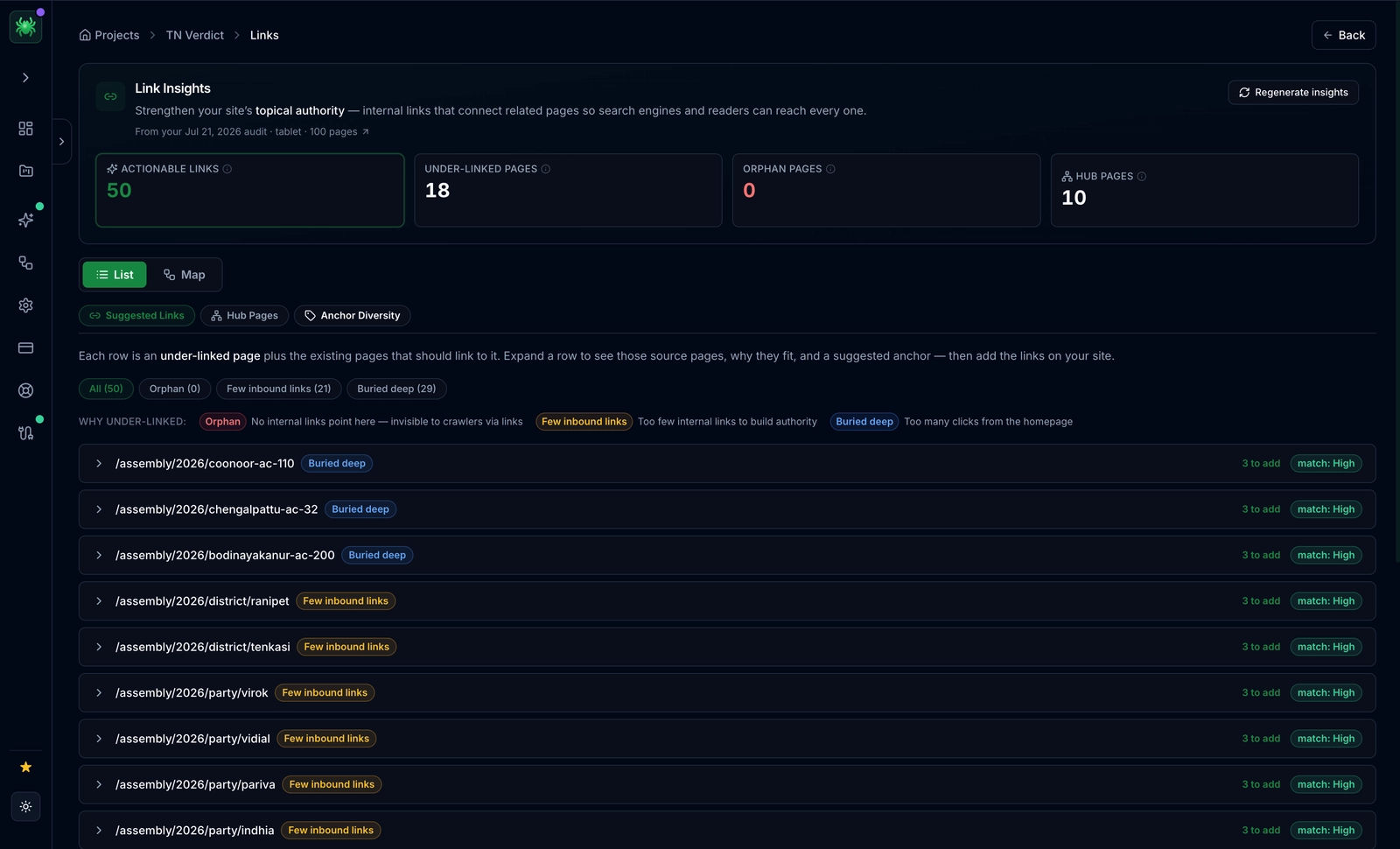
Step 4: Implement a Robust Internal Linking Strategy
This is where the structure comes to life.
- Hub to Spoke Links: From your Hub page, strategically link to all its relevant Spoke pages. Use descriptive anchor text that accurately reflects the content of the Spoke page.
- Spoke to Hub Links: From each Spoke page, link back to its central Hub page. Again, use relevant and natural anchor text. This reinforces the Hub's authority.
- Spoke to Spoke Links (Optional but Recommended): Where relevant, link between Spoke pages within the same cluster if they offer additional, related context. Avoid forcing links; they must be natural and add value.
- Audit Regularly: As your content grows, regularly audit your internal links to ensure they are all working, relevant, and optimally structured.
Step 5: Monitor and Refine
SEO is an ongoing process. Once your Hub and Spoke content is live, continuous monitoring and refinement are essential.
- Track Performance: Use tools like Google Analytics and Google Search Console to monitor traffic, rankings, bounce rate, time on page, and keyword performance for both Hub and Spoke pages.
- Identify Gaps: Look for opportunities to create new Spoke pages based on emerging trends, new keywords, or unanswered questions from your audience.
- Update Content: Regularly update existing Hub and Spoke content to keep it fresh, accurate, and relevant. This signals to search engines that your content is current and valuable.
- Analyze User Behavior: Observe how users interact with your content cluster. Are they navigating as expected? Are there any broken links or confusing pathways?
By diligently following these steps, you can build a powerful, authoritative content structure that not only pleases search engines but truly serves your audience.
Leveraging Digispot AI for Your Hub and Spoke Strategy: An Intelligent Edge
While the Hub and Spoke strategy is powerful, its successful implementation, especially at scale, can be resource-intensive. This is where advanced AI SEO platforms like Digispot AI can provide an unparalleled advantage, streamlining your efforts and maximizing your outcomes without overt selling. Digispot AI is designed to automate best SEO practices, making it easier for businesses to operate with accuracy and efficiency, subtly enhancing your content strategy.
Digispot AI is an AI SEO platform that helps business websites rank better in Google and other AI search engines. It accomplishes this by auditing websites, identifying issues, and providing solutions, integrating seamlessly with your Hub and Spoke efforts.
How Digispot AI Helps with Content Auditing
A strong Hub and Spoke strategy requires a healthy website foundation. Digispot AI's auditing capabilities are a significant asset here.
- Comprehensive Website Audits: Digispot AI performs detailed audits of your entire website, not just individual pages. This means it can assess the overall structure and health of your Hub and Spoke content clusters.
- Mobile and Desktop Analysis: It audits your website in both mobile and desktop modes, ensuring your content is accessible and performs well on all devices – a critical ranking factor for Google's mobile-first indexing.
- Issue Identification and Solutions: The platform identifies specific issues that might hinder your Hub and Spoke performance, such as broken internal links, slow loading Spoke pages, or duplicate content within a cluster. Crucially, it provides actionable recommendations to solve these problems, helping you maintain a pristine content architecture. For instance, if a crucial Spoke page is loading slowly, Digispot AI would flag this, allowing you to optimize it and improve user experience, thus supporting the overall Hub.
How Digispot AI Helps with Opportunity Finder
Identifying new Hub and Spoke topics and optimizing existing ones is a continuous process. Digispot AI's Opportunity Finder feature excels at this.
- Uncovering New Content Gaps: By analyzing search trends, competitor content, and existing site performance, the Opportunity Finder can pinpoint areas where you can create new Hubs or Spokes to capture untapped search demand. For example, if your "Sustainable Living" Hub is performing well, the platform might identify "DIY Upcycling Projects" as a high-potential Spoke topic.
- Keyword Intelligence: It helps you discover relevant keywords and long-tail variations that your Spoke pages can target, ensuring your content addresses actual user queries. This is vital for expanding your content clusters strategically.
How Digispot AI's Content Studio Helps
Creating high-quality, SEO-optimized content is demanding. Digispot AI's Content Studio, powered by AI agents, simplifies this process.
- AI-Assisted Content Generation: The Content Studio helps you generate SEO-optimized content for both your Hub and Spoke pages. This doesn't replace human creativity but rather augments it, ensuring your content meets technical SEO best practices from the outset.
- Optimization Suggestions: As you create content, the AI agents provide real-time suggestions for keyword usage, readability, structure, and other ranking factors, ensuring your Hubs are truly comprehensive and your Spokes are perfectly targeted.
- Efficiency at Scale: For businesses managing numerous Hubs and hundreds of Spokes, the Content Studio dramatically reduces the time and effort required to produce high-quality, SEO-ready content.
Integration with Google Search Console and Google Analytics
Tracking the performance of your Hub and Spoke strategy is crucial for ongoing refinement. Digispot AI's seamless integrations make this effortless.
- Unified Performance Tracking: By integrating with Google Search Console and Google Analytics, Digispot AI provides a holistic view of your Hub and Spoke content's performance. You can monitor rankings, organic traffic, user engagement metrics, and indexing status all within one platform.
- Actionable Insights: This integration allows Digispot AI to offer more precise, data-driven recommendations for improving specific Hub or Spoke pages, ensuring your efforts are always guided by real-world performance.
Digispot AI and Schema Markup: Enhancing Semantic Understanding
Schema markup (structured data) is increasingly important for helping search engines understand the context and meaning of your content. Digispot AI is particularly strong in this area.
- Schema Markup Detection and Optimization: The platform can detect existing schema markup on your Hub and Spoke pages and identify opportunities for improvement. For instance, it can suggest relevant schema types (e.g., Article, FAQPage, HowTo) to apply to your Spoke pages, making them more machine-readable.
- Rich Snippets Potential: By ensuring correct and comprehensive schema implementation, Digispot AI helps your content qualify for rich snippets in search results, such as star ratings, product information, or FAQs directly under your listing. This dramatically increases click-through rates and visibility, making your Hub and Spoke content stand out.
Visualization of Site Structure and Issues
Understanding complex site structures, especially for large Hub and Spoke implementations, can be challenging.
- Clarity Through Visualization: Digispot AI provides visualization tools that can help you see your website's architecture, including your Hub and Spoke clusters. This visual representation makes it easier to identify potential linking issues, orphaned pages, or areas where the structure could be improved. You can literally see how your Hub links to its Spokes and vice-versa, making structural optimization more intuitive.
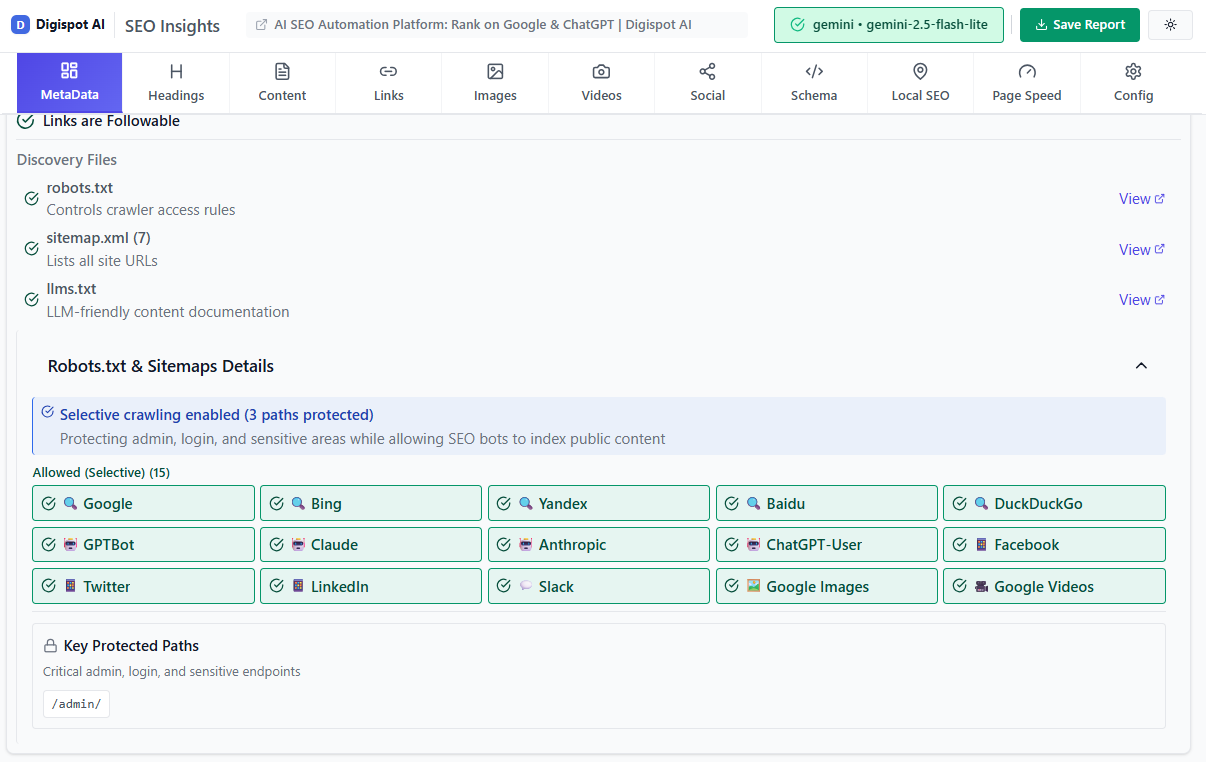
By leveraging Digispot AI's capabilities, businesses can implement and manage their Hub and Spoke content strategy with greater precision, efficiency, and confidence, turning complex SEO tasks into manageable, automated workflows.
The Power of the Digispot AI Free Community Chrome Extension: On-the-Go Audits
While the Digispot AI cloud platform provides comprehensive, enterprise-level capabilities, the need for quick, on-page insights is constant for content creators and SEOs. This is precisely where the Digispot AI Free Community Chrome Extension shines, bringing powerful auditing capabilities directly into your browser, powered by popular LLM models. It's an invaluable companion for anyone managing a Hub and Spoke strategy.
What the Free Chrome Extension Is
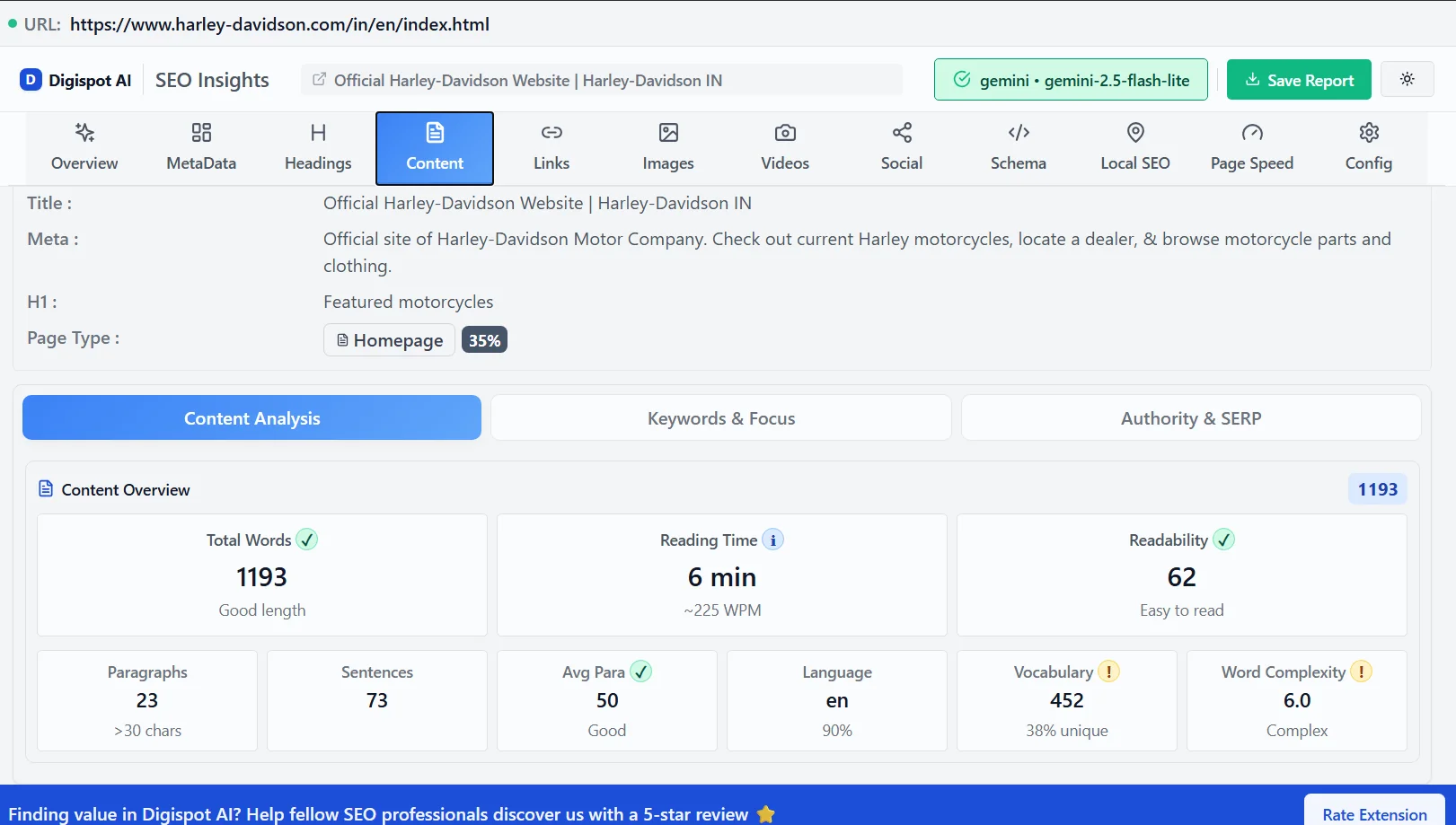
The Digispot AI Free Community Chrome Extension is a browser extension that allows you to perform instant, on-page SEO audits of any webpage you are currently viewing. It's a quick, accessible tool for assessing critical SEO elements without needing to navigate to the full platform.
How It Helps with Hub and Spoke Content on an Individual Page Level
The extension empowers you to quickly check the health of individual Hub or Spoke pages as you are creating or reviewing them.
- Instant On-Page Audit: While browsing one of your Spoke pages, for example, on "How to Start a Zero-Waste Kitchen," you can activate the extension to get immediate feedback on its on-page SEO health. This includes checks on title tags, meta descriptions, headings, image alt text, and keyword density.
- Rapid Issue Identification: If a Spoke page is missing a crucial H1 tag, has a too-long title, or lacks sufficient content, the extension will flag these issues in real-time. This allows for immediate corrections, ensuring that each Spoke contributes optimally to its respective Hub's authority.
- Complementary to Platform: It acts as a lightweight, agile complement to the main Digispot AI platform, enabling proactive optimization at the point of content creation or review.
Detection and Visualization Capabilities
The extension isn't just about flagging issues; it also aids in understanding the page's structure and performance elements.
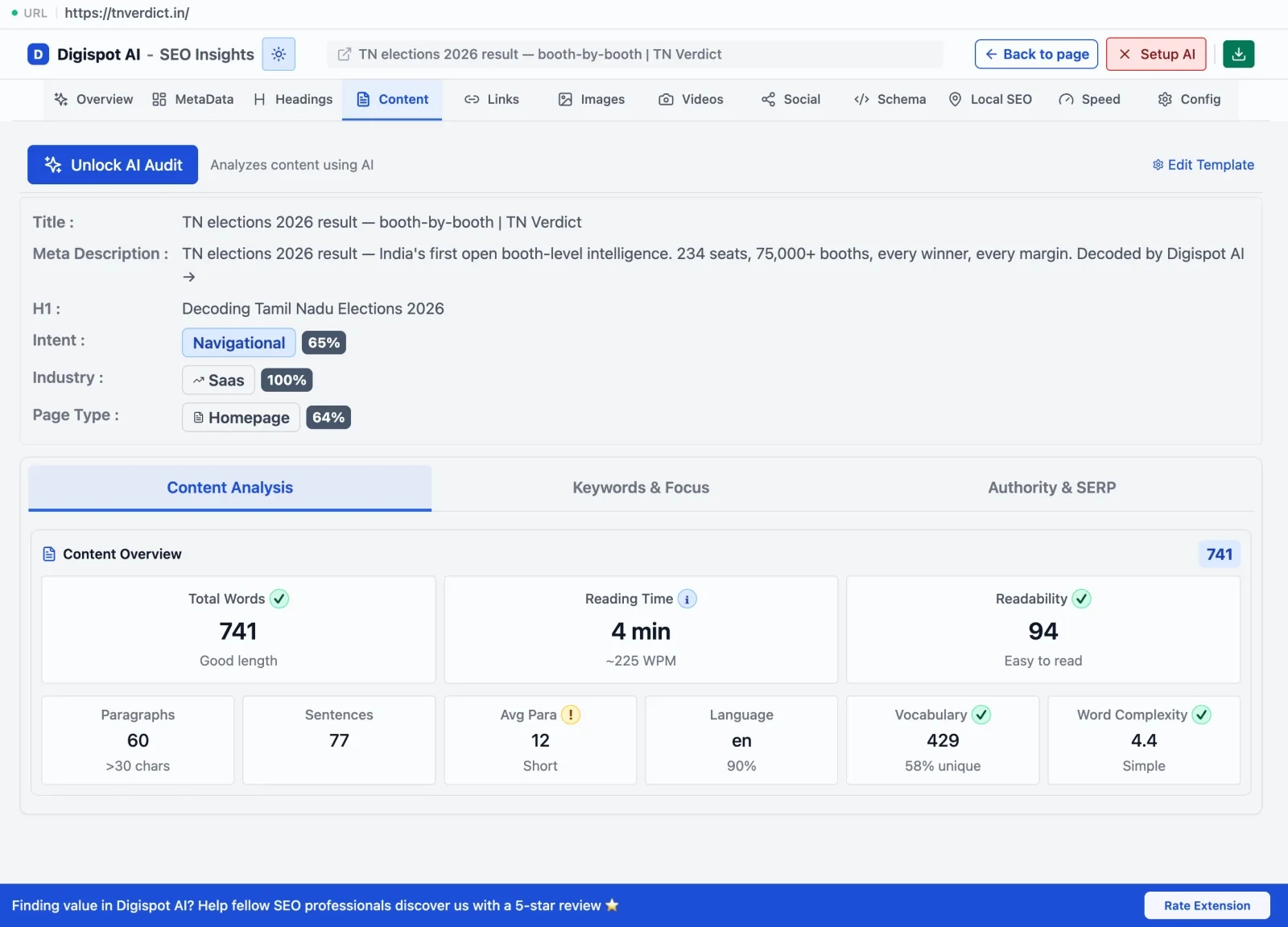
- Quick SEO Element Detection: It can detect various on-page SEO elements, visualizing their presence and suggesting improvements. This is particularly useful for ensuring consistent optimization across all your Spoke pages within a cluster.
- Content Structure Overview: Get a quick visual breakdown of a page's heading structure (H1, H2, H3), which is crucial for readability and semantic understanding, especially for long-form Hub pages.
Schema Markup Support in the Extension
One of the most powerful features of the Digispot AI Chrome Extension, especially for modern SEO and Hub and Spoke strategies, is its support for schema markup.
- Schema Markup Audit and Detection: The extension can analyze the schema markup present on the current page. For example, if you're viewing a Spoke page that is a "How-To" guide, the extension can confirm if the appropriate HowTo schema is implemented correctly.
- Visualization of Structured Data: It can help visualize the structured data, making it easier to see what information search engines are receiving about your content. If a Spoke page about "Benefits of Composting" is meant to be an FAQ page, the extension helps you verify if the FAQPage schema is correctly applied and free of errors.
- Spotting Opportunities/Errors: This allows content creators to quickly spot missing schema, incorrect implementations, or opportunities to add more detailed structured data to their Hub or Spoke pages, ensuring maximum visibility in rich results.
By offering these capabilities, the Digispot AI Free Community Chrome Extension empowers users to maintain the SEO integrity of their Hub and Spoke content at every touchpoint, ensuring that each page is optimized for both human readability and AI search engine understanding. It’s a practical, everyday tool for keeping your content clusters in top shape.
Common Mistakes to Avoid in Your Hub and Spoke Strategy
Even with the best intentions and powerful tools, certain pitfalls can derail your Hub and Spoke efforts. Being aware of these common mistakes can help you navigate your content strategy more effectively.
1. Thin Content on Spoke Pages
What it is: Creating Spoke pages that are too short, lack depth, or simply rehash information from the Hub page without adding new value. Why it's a mistake: Search engines prioritize comprehensive, valuable content. Thin content won't rank well, won't establish authority, and won't satisfy user intent. It also dilutes the overall quality of your content cluster. How to avoid: Ensure each Spoke page provides a unique, in-depth perspective on its specific sub-topic, offering new insights, data, or actionable advice. Aim for substantial word counts and thorough coverage.
2. Poor or Non-Existent Internal Linking
What it is: Forgetting to link between Hub and Spoke pages, using generic anchor text, or creating broken links. Why it's a mistake: The internal linking structure is the glue of the Hub and Spoke model. Without it, search engines can't understand the relationships between your content, and users can't navigate easily. Link equity won't flow, hindering authority building. How to avoid: Be deliberate with your internal linking. Use descriptive anchor text, ensure every Spoke links back to its Hub, and regularly audit your links for functionality and relevance. Tools like Digispot AI can automatically detect and help you visualize linking issues.
3. Ignoring User Intent
What it is: Creating content based solely on keywords without considering what a user truly wants to achieve or learn when searching for that term. Why it's a mistake: If your content doesn't answer the user's underlying question, they'll quickly leave your site, increasing bounce rates and negatively impacting your rankings. How to avoid: Before creating any Hub or Spoke, deeply understand the search intent behind the target keywords. Is the user looking for information, a transaction, navigation, or something else? Tailor your content to match that intent precisely.
4. Lack of Monitoring and Updating
What it is: Publishing Hub and Spoke content and then leaving it untouched, without tracking performance or updating information. Why it's a mistake: SEO is dynamic. Content can become outdated, rankings can fluctuate, and new opportunities can emerge. Stagnant content loses its relevance and authority over time. How to avoid: Regularly monitor your Hub and Spoke content's performance using analytics tools. Update statistics, add new insights, refresh outdated information, and look for opportunities to expand existing Spokes or create new ones. This signals to search engines that your content is current and continuously valuable.
5. Over-Optimization or Keyword Stuffing
What it is: Excessively repeating keywords in a desperate attempt to rank, making the content sound unnatural and robotic. Why it's a mistake: Modern AI search engines are highly sophisticated. Keyword stuffing is easily detected and can lead to penalties, severely harming your rankings. It also creates a terrible user experience. How to avoid: Focus on natural language and providing value. Integrate keywords organically where they make sense. Use synonyms and latent semantic indexing (LSI) keywords to demonstrate topical depth without sounding forced. Digispot AI's content studio can assist in generating SEO-optimized content that avoids such pitfalls.
By proactively addressing these common mistakes, you can ensure your Hub and Spoke content strategy remains robust, effective, and continuously drives positive results for your business.
Real-World Application: A Fictional Case Study with Digispot AI
Let’s imagine "GreenGrow Solutions," a company specializing in eco-friendly gardening products. They want to increase their online visibility for sustainable gardening practices.
The Challenge: GreenGrow Solutions has many blog posts, but they are scattered and not performing optimally. They lack a clear content structure.
The Hub and Spoke Solution:
- Identified Hub: "The Ultimate Guide to Sustainable Gardening"
- Brainstormed Spokes:
- "Composting for Beginners: Turning Waste into Gold"
- "Organic Pest Control: Natural Solutions for a Healthy Garden"
- "Water-Saving Techniques for Your Garden"
- "Choosing Eco-Friendly Gardening Tools"
- "Growing Your Own Organic Vegetables"
How Digispot AI Stepped In:
- Initial Audit: GreenGrow Solutions used Digispot AI to audit their existing website. Digispot AI immediately identified that their "Composting for Beginners" page had slow loading times on mobile and a missing H1 tag. It also flagged several broken internal links that were supposed to connect to other related content.
- Opportunity Finder: The Digispot AI Opportunity Finder suggested "Vertical Gardening for Small Spaces" as a high-potential new Spoke, based on trending searches and competitor analysis, which GreenGrow hadn't considered.
- Content Studio for New Content: When developing the new "Vertical Gardening" Spoke, GreenGrow utilized Digispot AI's Content Studio. The AI agents helped them draft SEO-optimized content, suggesting relevant keywords and ensuring proper structure, avoiding over-optimization.
- Schema Markup Implementation: Digispot AI helped GreenGrow add HowTo schema to their "Composting for Beginners" Spoke and FAQPage schema to relevant sections within the "Sustainable Gardening" Hub, making their content more likely to appear as rich snippets.
- Chrome Extension for Quick Checks: The content team used the Digispot AI Free Community Chrome Extension to do quick on-page audits of each Spoke page before publishing, ensuring all images had alt tags and headings were structured correctly. They quickly caught a missing meta description on the "Organic Pest Control" Spoke.
- Performance Tracking: Through Digispot AI’s integration with Google Search Console and Analytics, GreenGrow monitored their progress. They saw a significant increase in organic traffic to their "Sustainable Gardening" Hub, and several Spoke pages began ranking for highly specific long-tail keywords, leading to an increase in newsletter sign-ups and product sales.
Business Outcomes for GreenGrow Solutions:
- Improved Visibility: Within months, GreenGrow's website began appearing higher in search results for a wide range of sustainable gardening queries.
- Increased Traffic and Leads: Organic traffic surged by 40%, leading to a 25% increase in leads for their eco-friendly products.
- Time and Cost Savings: By leveraging Digispot AI's automation and insights, GreenGrow's marketing team saved significant time on manual SEO tasks, allowing them to focus on content quality and strategy.
This example illustrates how a structured content approach, amplified by a powerful AI platform like Digispot AI, can transform a business's online presence and drive measurable results.
Conclusion: The Path to SEO Excellence with Hub and Spoke Content
The digital landscape is a dynamic environment, constantly shaped by evolving search engine algorithms and increasingly discerning user expectations. In this context, the Hub and Spoke content strategy emerges as a timeless and highly effective approach to building robust, authoritative, and user-friendly websites. It moves beyond superficial keyword targeting, focusing instead on creating deeply interconnected content that serves both human readers and sophisticated AI search engines.
By meticulously organizing your content around central Hub topics and detailed Spoke pages, you inherently improve your website's topical authority, enhance internal linking, and provide a superior user experience. These foundational elements collectively contribute to significantly improved SEO visibility, higher rankings, and, crucially, a measurable increase in organic traffic and business leads.
While implementing such a comprehensive strategy might seem daunting, especially for large websites or those with extensive content needs, innovative platforms like Digispot AI are specifically designed to simplify and accelerate this process. From performing thorough audits on both mobile and desktop, identifying opportunities for new content, and assisting in the generation of SEO-optimized material through its Content Studio, Digispot AI acts as an intelligent co-pilot. Its seamless integration with Google Search Console and Google Analytics ensures you can track your performance with precision, while its strong capabilities in schema markup detection and visualization ensure your content is understood and highlighted by modern AI search engines. Furthermore, the convenience of the Digispot AI Free Community Chrome Extension provides on-the-go auditing capabilities, including schema detection and visualization, keeping every page of your Hub and Spoke structure finely tuned.
Embracing the Hub and Spoke content model, supported by the intelligent automation and insights of a platform like Digispot AI, is not just an SEO tactic; it's a strategic investment in your online future. It's about building a digital ecosystem that consistently attracts, engages, and converts your target audience, ensuring your business not only ranks better but truly thrives in the competitive digital arena. Start structuring your content today, and unlock the full potential of your online presence.
Related deep-dives
Continue with these closely related guides:
- keyword clustering seo — Master Keyword Clustering SEO Strategy: Dominate Search in 2026
- product lifecycle seo — Product Lifecycle SEO: Optimize Every Stage
- seo for startups — SEO for Startups - How to Gain Visibility Quickly
References
- Build your site structure for search engines and users | Google Search Central
- Understand how Google Search works | Google Search Central
- Google Search Console
- Google Analytics
- Understand structured data | Google Search Central
- Mobile-first indexing (MFI) best practices | Google Search Central
- Understand page experience in Google Search results | Google Search Central
- Digispot AI - FREE On Page SEO Audit Tool
- Digispot AI - FREE Chrome Extension for SEO Insights
- Improve your site's SEO | Google Search Central
Audit any page in seconds
300+ SEO checks including Core Web Vitals, schema markup, meta tags, and AI readiness — trusted by 1000+ SEO experts and marketers.
Frequently Asked Questions
Here are some of our most commonly asked questions. If you need more help, feel free to reach out to us.
Written by
Maya Krishnan
Digital growth expert
Maya is a seasoned expert in web development, SEO, and digital strategy, dedicated to helping businesses achieve sustainable growth online. With a blend of technical expertise and strategic insight, she specializes in creating optimized web solutions, enhancing user experiences, and driving data-driven results. A trusted voice in the industry, Maya simplifies complex digital concepts through her writing, empowering readers with actionable strategies to thrive in the ever-evolving digital landscape.