SEO for Startups - How to Gain Visibility Quickly
SEO strategies for startups to gain visibility quickly on limited budgets. Learn prioritization, quick wins, and scalable tactics for early-stage growth.
 Maya Krishnan
Introduction
Most startups operate with a runway measured in months, not years. You need visibility immediately, but you likely cannot afford to burn cash on Pay-Per-Click (PPC) campaigns that stop delivering results the moment you pause the budget. This is where the strategic power of organic search comes into play.
Search Engine Optimization (SEO) is not merely a marketing tactic; it is a fundamental survival mechanism for early-stage companies. While established enterprises dominate broad, high-volume search terms, startups possess a unique advantage: agility. You can pivot faster, target niche problems more precisely, and adopt modern optimization strategies—like Answer Engine Optimization (AEO)—that legacy competitors often overlook.
This guide provides a pragmatic, low-cost roadmap for startups to gain traction. We move beyond theory to implementable tactics that drive sustainable growth without requiring a massive marketing department.
Why SEO Is the Growth Engine for Startups
For a startup, every dollar spent must show a return. SEO offers distinct advantages that align perfectly with the high-growth, resource-constrained nature of new ventures.
- Compound Interest for Traffic: Paid ads provide linear growth—you pay for a visitor, you get a visitor. SEO provides exponential growth. A single high-performing piece of content can drive thousands of visitors month after month without additional spend. As you layer more content and build authority, your traffic baseline rises permanently.
- High-Intent Acquisition: 68% of online experiences begin with a search engine. These users are actively seeking solutions. Unlike social media ads that interrupt a user's feed, SEO captures users at the exact moment they have a problem. If your startup offers the solution, the conversion rate for this organic traffic is typically significantly higher than outbound channels.
- Brand Legitimacy: In the B2B and SaaS worlds, ranking on the first page of Google acts as a trust signal. Potential customers often equate search visibility with market leadership. For a new brand, appearing alongside industry giants instantly elevates your perceived credibility.
- Lower Customer Acquisition Cost (CAC): While SEO requires an upfront investment of time and effort, the marginal cost of acquiring a customer drops over time. This is crucial for startups needing to improve unit economics before scaling or seeking Series A funding.
- Asset Building: Your website is digital real estate. Every optimized page, backlink, and technical improvement increases the valuation of that asset. Paid ad spend is an expense; SEO is a capital investment in your digital infrastructure.
Busting Common Startup SEO Myths
Startups often hesitate to invest in SEO due to pervasive misconceptions. Let's clear the air so you can execute with confidence.
- "SEO Takes Years to Work": While dominating competitive terms takes time, you can see results in weeks by targeting "low-hanging fruit." Long-tail keywords with lower search volume often have little competition, allowing new sites to rank quickly.
- "We Need to Hire an Expensive Agency": You don't need a $10k/month retainer to start. Founders and early employees can handle the basics—content creation, on-page optimization, and basic technical fixes—using the right tools.
- "It's All About Tricks and Backlinks": Modern SEO is about User Experience (UX) and relevance. Google's algorithms (and AI engines like ChatGPT) prioritize content that genuinely answers the user's query. "Gaming the system" is a relic of 2010.
- "SEO Is Too Technical": You do not need to be a developer. Most modern CMS platforms (WordPress, Webflow, Shopify) handle the heavy lifting. Tools like Digispot AI can automate the technical auditing process, flagging issues like broken links or missing tags without requiring you to look at code.
- "AI Search Killed SEO": False. AI search (Google AI Overviews, Perplexity) has shifted the focus from "ten blue links" to being the cited source of the answer. AEO (Answer Engine Optimization) is the new frontier, and it relies on the same core principles: authority, clarity, and structured data.
The Reality of SEO for Startups: A TechGear Case Study
Let's look at a concrete example. TechGear, a hypothetical hardware startup launching in 2023, faced a common problem: zero brand recognition and a marketing budget of under $1,000/month.
The Challenge: They were competing against Amazon and Best Buy for terms like "gaming mouse." Ranking was impossible.
The Strategy:
- Pivot to Niche: Instead of "gaming mouse," they targeted "ergonomic vertical mouse for wrist pain."
- Content Hub: They built a "Wrist Health Hub" with articles reviewed by a physiotherapist (E-E-A-T signal).
- Technical Fixes: They ensured their Shopify site passed Core Web Vitals to prevent bounce rates on mobile.
The Results (12 Months):
- 50,000 monthly organic visitors
- 60% reduction in CAC compared to their initial Instagram ads.
- #1 Ranking for "best mouse for carpal tunnel" and related medical-adjacent terms.
This proves that specificity wins where budget cannot.
The 8-Step SEO Roadmap for Rapid Growth
Follow this framework to build a visibility engine that scales with your startup.
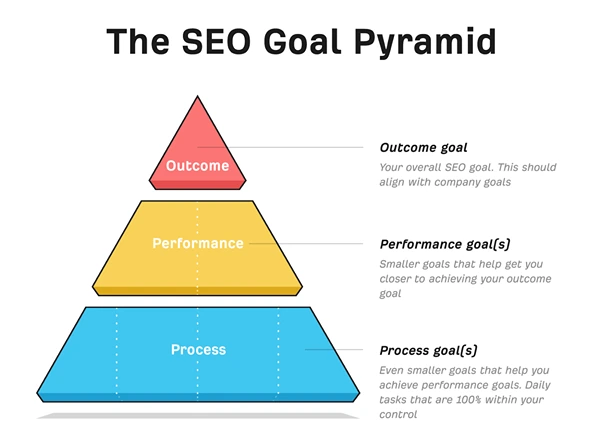
1. Set Clear, Data-Driven Goals
"Getting more traffic" is not a strategy. You need metrics that tie back to your burn rate and growth targets.
- Define SMART Objectives:
- Specific: "Rank in the top 3 for [Product Category] keywords."
- Measurable: "Achieve 5,000 organic sessions per month."
- Achievable: Don't target single-word keywords yet.
- Relevant: Focus on traffic that converts, not vanity metrics.
- Time-bound: "Double organic leads by Q4."
- Align with the Funnel: Determine if you need top-of-funnel awareness (blog posts) or bottom-of-funnel conversions (product pages). For most startups, a mix is essential, but bottom-of-funnel often brings quicker revenue.
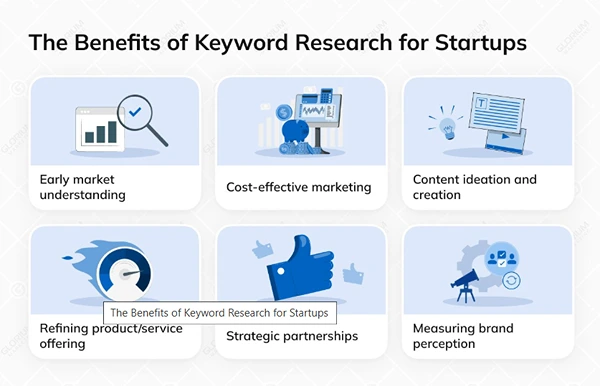
2. Strategic Keyword Research & Intent Mapping
This is where you win or lose. You must identify what your customers are actually typing (or speaking) into search engines.
- Find the "Goldilocks" Keywords: You want keywords with enough volume to matter, but low enough difficulty that a new site can rank. Use tools like Digispot AI or Google Keyword Planner. Look for "Keyword Difficulty" (KD) scores under 30.
- The Long-Tail Advantage: Long-tail keywords (e.g., "AI-powered CRM for real estate agents") reveal specific intent. Users searching for this are at the decision stage. They are ready to buy.
- Generic: "CRM" (High competition, low conversion rate).
- Long-tail: "Best CRM for small real estate teams" (Low competition, high conversion rate).
- Analyze Search Intent: Before writing, Google the keyword. What comes up?
- Informational: Blog posts, guides, "how-to" videos. (You need a blog post).
- Transactional: Product pages, pricing tables. (You need a landing page).
- Comparison: "Top 10" lists. (You need a comparison page or a third-party review).
- Competitor Gap Analysis: Enter a competitor's URL into an SEO tool to see their ranking keywords. Look for terms they rank for on page 2 or 3—these are opportunities where you can create better content and steal that traffic.
Real Example: PawTracker A pet tech startup avoided the impossible keyword "pet products." Instead, they targeted:
- "Automatic feeder for multiple cats"
- "Smart water fountain for dogs reviews"
- "How to track cat activity levels" Result: They dominated these specific niches, building enough authority to eventually rank for broader terms.
3. Create High-Impact, Authoritative Content
Content is the fuel for your SEO engine. But "content is king" is a cliché—helpful content is king.
- E-E-A-T is Non-Negotiable: Google evaluates Experience, Expertise, Authoritativeness, and Trustworthiness.
- Experience: Use "I" and "We." Share real stories, data, and failures.
- Expertise: If you are in a technical or medical niche, have experts review your content.
- Authority: Link to reputable sources and get cited by others.
- Trust: Have clear contact info, privacy policies, and secure HTTPS.
- Learn more: Dive deeper into building trust with our E-E-A-T SEO Guide.
- Structure for Skimmers: No one reads walls of text. Use H2s/H3s, bullet points, and bold text. Break complex ideas into simple steps.
- The Skyscraper Technique: Find the best content currently ranking for your keyword, and build something 10x better. Add original data, better graphics, or a video walkthrough.
- Topic Clusters: Don't just write random posts. Create a "Pillar Page" (e.g., "The Ultimate Guide to Startup Finance") and link it to 10 supporting articles (e.g., "How to manage cash flow," "Startup tax deductions"). This interlinking signals deep topical authority to search engines.
- Repurpose Everything: A great blog post should become a LinkedIn carousel, a YouTube script, and a newsletter. Squeeze every drop of value from your research.
4. On-Page Optimization: The Technical Basics
Once your content is written, you must "package" it for search engines. This is about helping Google understand exactly what your page is about.
- Title Tags & Meta Descriptions: Your title tag is the single most important on-page ranking factor. Include your primary keyword near the beginning. The meta description doesn't directly affect rank, but it drives clicks (CTR). Treat it like ad copy.
- URL Structure: Keep it clean.
yoursite.com/blog/seo-tipsis better thanyoursite.com/cat=3/post?id=123. - Header Tags (H1, H2, H3): Use one H1 per page (your title). Use H2s for main sections. Include semantic variations of your keyword in these headers naturally.
- Internal Linking: This is critical for distributing "link juice" (authority) around your site. Link from your high-authority pages to your new content. Check out our guide on on-page SEO best practices for a deeper dive.
- Image Optimization: Large images slow down your site. Compress them to WebP format. Always add Alt Text describing the image for accessibility and SEO.
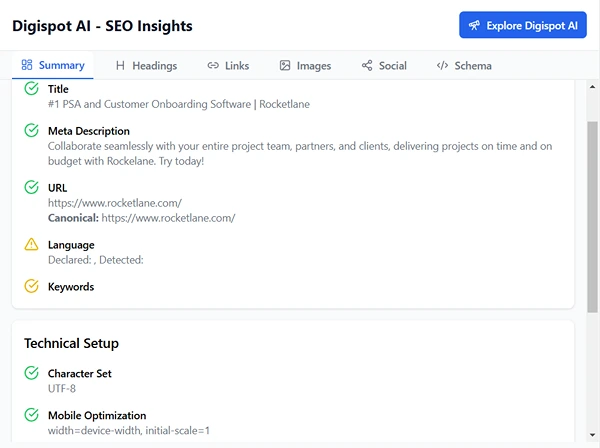
Pro Tip: Not sure if your page is optimized? Get instant insights with our free Chrome extension. It checks 150+ factors in seconds.
5. Technical SEO: Building a Solid Foundation
You can't build a skyscraper on quicksand. Technical SEO ensures search engines can crawl, index, and render your site without errors.
- Mobile-First Indexing: Google looks at the mobile version of your site first. If your mobile site is broken or slow, your desktop rankings will suffer.
- Core Web Vitals: These are Google's metrics for user experience—loading speed (LCP), interactivity (INP), and visual stability (CLS). A slow site frustrates users and lowers rankings. Learn how to optimize these metrics in our Core Web Vitals guide.
- Sitemaps & Robots.txt: Ensure you have an
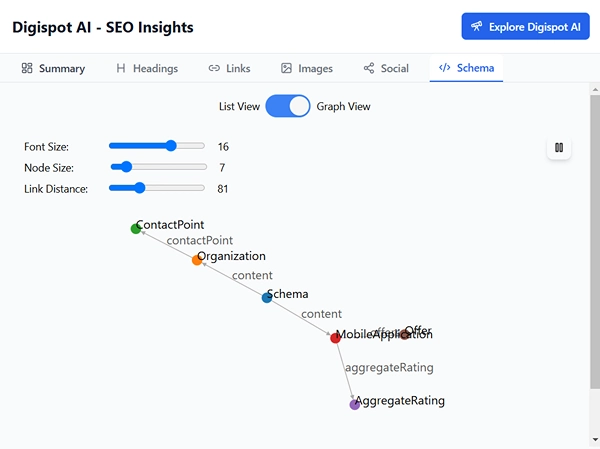
sitemap.xmlsubmitted to Google Search Console. Check yourrobots.txtfile to ensure you aren't accidentally blocking Google from crawling your site. - Schema Markup: This is code that helps Google understand your content type (e.g., "Review," "Product," "Event"). It powers those rich snippets (stars, prices, images) you see in search results.
- Tool: Use the free Schema Markup Generator to create valid code without hiring a developer.
- Fixing Broken Links: 404 errors leak authority and annoy users. Regularly audit your site to fix these.
6. Off-Page Optimization: Authority & Trust
Backlinks (links from other sites to yours) are essentially "votes of confidence." However, quality matters far more than quantity.
- Digital PR: As a startup, you have news. Funding rounds, product launches, or unique data insights are newsworthy. Pitch these stories to industry blogs and journalists.
- Guest Blogging: Write high-value articles for other reputable sites in your niche. Do not do this just for the link; do it to build your reputation as a thought leader. The link is a byproduct.
- Podcast Appearances: Founders should try to get on industry podcasts. The show notes usually include a link to your site, and the audience is highly engaged.
- Unlinked Mentions: Use tools to find where your brand name is mentioned but not linked. Reach out to the author politely and ask if they can turn the text into a link.
- Partnerships: Co-market with non-competing startups. Swap guest posts, do a joint webinar, or create a co-branded case study.
7. Local SEO (For Local Startups)
If you serve a specific geographic area (e.g., a delivery service or a local SaaS for dentists), Local SEO is vital.
- Google Business Profile: Claim and verify it. Fill out every section. Post updates regularly.
- NAP Consistency: Ensure your Name, Address, and Phone number are identical across your website, social media, and directories.
- Local Keywords: Optimize for "Service + City" (e.g., "IT support in Austin").
- Reviews: actively ask satisfied customers for Google reviews. Respond to every review, positive or negative.
8. Analytics, Reporting & Iteration
SEO is not "set it and forget it." You must measure what works and pivot.
- Google Search Console (GSC): Your source of truth. Look at the "Performance" tab to see which queries are driving impressions. If you have high impressions but low clicks, optimize your title tags.
- Google Analytics 4 (GA4): Track behavior. Are organic users staying on the site? Are they converting?
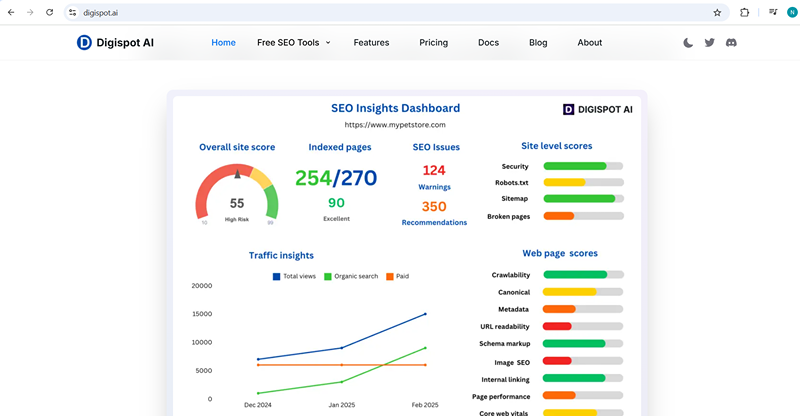
- Audit Regularly: The web changes. Run a site audit once a month to catch new technical errors. Digispot AI automates this, providing a health score and prioritized fix list.
- Iterate: If a blog post reaches page 2 of Google, that's a signal to upgrade it. Add more content, better images, or fresh data to push it to page 1.
Quick Wins for Startups
Need results fast? Focus on these high-impact, low-effort tactics.
- Optimize Existing Content: If you have pages ranking on positions 4-10, update them. Add an FAQ section, embed a video, and refresh the date. This can bump you to the top 3.
- Claim "Alternative" Keywords: Write comparison pages like "TechGear vs. Competitor." These capture users right before they buy.
- Fix H1 Tags: Ensure every page has exactly one unique H1 tag that includes the target keyword.
- Speed Up Images: Run all site images through a compression tool. This often instantly improves page speed scores.
- Use Free Tools: You don't need enterprise software yet. Leverage the Digispot Free On-Page Analysis tool to spot check your most important pages.
SEO Mistakes to Avoid
Even smart founders fall into these traps. Avoid them to save time and money.
- Keyword Stuffing: Jamming keywords into text where they don't belong looks spammy to users and Google. Read your content aloud; if it sounds robotic, rewrite it.
- Buying Links: Never buy links from "link farms" or Fiverr gigs. These are toxic and can get your site penalized or banned from Google entirely.
- Ignoring Mobile: Don't design on a 27-inch monitor and assume it looks good on an iPhone. Always test on a real device.
- The "Launch and Leave" Mentality: SEO requires consistency. Publishing 10 posts in one week and then nothing for three months is less effective than publishing one post every week consistently.
- Neglecting Search Intent: Ranking for a high-volume keyword is useless if those users aren't looking to buy. Focus on relevance over volume.
- Ignoring Technical Debt: See our guide on common SEO mistakes for a detailed list of pitfalls to avoid.
The Technical Debt Disaster: A Cautionary Tale
Consider e-commerce startup "Y," which ignored technical SEO to focus solely on Instagram ads. By month 6, their site was a mess of broken code.
- The Issues: 404 errors on product pages, duplicate content issues caused by tagging systems, and zero mobile optimization.
- The Consequence: Despite great products, their organic traffic flatlined. Google refused to index new pages.
- The Fix: They spent two months pausing marketing to fix the code.
- Redirected broken links.
- Canonicalized duplicate pages.
- Implemented responsive design.
- The Turnaround:
- 85% Increase in Mobile Traffic immediately.
- 40% Decrease in Bounce Rate.
- 25% Improvement in Conversion Rate.
- Lesson: Fix the foundation before you build the house.
Tools for Startups
Leveraging the right stack allows you to punch above your weight class.
- Digispot AI: The ultimate all-in-one platform for startups. It combines keyword research, site auditing, and AEO tracking (optimizing for ChatGPT and Gemini) into one dashboard. It's designed to give you the "what to do next" without the jargon.
- Google Analytics: Essential for understanding who is visiting your site and what they do there.
- Google Search Console: The only direct line of communication between you and Google. Use it to submit sitemaps and check for penalties.
- Google Keyword Planner: Great for finding search volume data, though it leans heavily toward paid ad data.
- Yoast SEO / RankMath: If you use WordPress, these plugins are essential for managing title tags and meta descriptions easily.
The Future of Startup SEO: AI and AEO
The landscape is shifting. With the rise of AI-powered search (Search Generative Experience, ChatGPT, Claude), optimizing for "ten blue links" is no longer enough. You must optimize for Answer Engines.
This means your content must be structured clearly enough for an AI to read, understand, and summarize.
- Direct Answers: Start paragraphs with direct answers to questions.
- Structured Data: Use schema markup so machines understand the context.
- Credibility: AI models favor sources that demonstrate high E-E-A-T.
Recent Case Study: AI startup "DataFlow" realized their traffic was dipping, but their brand mentions in AI chats were rising. They pivoted to optimizing for voice and conversational queries (e.g., "How does DataFlow compare to Tableau for small teams?").
- Strategy: They added FAQ schemas and "Key Takeaways" summaries to every blog post.
- Result: A 40% increase in appearances within Featured Snippets and AI-generated answers.
Start Improving Your Search Visibility Today
SEO offers the highest ROI of any marketing channel for startups, but it rewards patience and precision. By focusing on niche long-tail keywords, solving real user problems with high-quality content, and maintaining a healthy technical foundation, you can outmaneuver larger competitors.
Do not wait for "perfect" conditions. Start today. Audit your site, write that first problem-solving article, and begin building your digital asset.
Ready to professionalize your SEO strategy? Try Digispot AI for comprehensive website audits, competitor intelligence, and AI-driven recommendations that help you rank faster.
Related deep-dives
Continue with these closely related guides:
- digital marketing channels — Digital Marketing Channels: SEO, PPC & Strategy Guide
References and Additional Resources
Audit any page in seconds
300+ SEO checks including Core Web Vitals, schema markup, meta tags, and AI readiness — trusted by 1000+ SEO experts and marketers.
Frequently Asked Questions
Here are some of our most commonly asked questions. If you need more help, feel free to reach out to us.
Written by
Maya Krishnan
Digital growth expert
Maya is a seasoned expert in web development, SEO, and digital strategy, dedicated to helping businesses achieve sustainable growth online. With a blend of technical expertise and strategic insight, she specializes in creating optimized web solutions, enhancing user experiences, and driving data-driven results. A trusted voice in the industry, Maya simplifies complex digital concepts through her writing, empowering readers with actionable strategies to thrive in the ever-evolving digital landscape.