SEO for Banks & Financial Institutions: 2026 Guide
Banking SEO strategy guide. Build trust, ensure YMYL compliance, and rank for financial services with local SEO, E-E-A-T, and content strategy.
 Maya Krishnan
Banking Sector SEO Guide: Dominating Digital Visibility in Financial Services
In a digital-first economy, the most valuable real estate your bank owns isn't a brick-and-mortar branch on a prime street corner—it's the top position on a Google search results page. The modern customer journey has fundamentally shifted. It no longer begins with a walk-in visit; it starts with a specific question typed into a search bar, often on a smartphone during a moment of immediate financial need.
The data supports this shift: 71% of all financial decisions now begin with online research. Whether it's a recent graduate asking "how to open my first checking account," a growing family researching "best mortgage lenders for a 30-year fixed loan," or a seasoned business owner investigating "commercial real estate loans in Chicago," their path starts on Google. If your institution fails to appear with a clear, authoritative answer at that exact moment, you effectively do not exist to that prospect.
This is the definitive 2026 playbook for financial services SEO, engineered for banks, credit unions, and financial institutions. It is built on proven, data-backed strategies that drive measurable, bottom-line growth in a highly regulated industry.
SEO: The Engine for Trust, Leads, and Sustainable ROI
For banks, the stakes are incredibly high. Your core product isn't just an account or a loan; it's trust. In the digital age, that trust is forged online long before a handshake ever occurs. While paid advertising has its place for immediate visibility, a strategic, long-term SEO approach delivers transformative results that compounding paid media cannot match.
Financial institutions that implement comprehensive SEO strategies see up to 3.5x higher conversion rates for loan applications, account openings, and financial product sign-ups compared to those relying primarily on paid advertising.
- Build Real, Lasting Trust: A staggering 81% of people say "brand trust" is a major factor in purchasing decisions. For finance, this sensitivity is magnified. SEO builds this trust organically. When you consistently appear with helpful, expert-driven content, you become a reliable resource rather than just an advertisement. You earn attention rather than renting it.
- Attract High-Intent Customers Ready to Act: SEO connects you with customers at their precise moment of need. A search for "how to open a small business account" or "best mortgage rates in Dallas" signals clear transactional intent. Capturing this traffic means engaging with the most motivated segment of your market—those actively seeking a solution you provide.
- Achieve a Compounding Return on Investment (ROI): When you stop paying for ads, the leads stop immediately. SEO is an investment in a digital asset that appreciates over time. A well-ranking article or loan calculator can generate qualified leads for years, creating a sustainable, compounding return and significantly lowering your overall Cost Per Acquisition (CPA).
The stakes are exceptionally high for financial institutions. Recent studies reveal that 84% of consumers trust organic search results more than paid advertisements when researching financial products and services. Without strategic SEO implementation, your institution risks being invisible in today's digital marketplace, ceding market share to fintech disruptors and competitors who have embraced organic search.
Transformative Benefits of SEO for Financial Institutions
Beyond basic visibility, a sophisticated SEO strategy delivers advantages that directly impact your bank's bottom line:
- Targeted Acquisition: Connect with customers at precisely the moment they're searching for specific financial products, delivering qualified leads with clear intent at a fraction of traditional marketing costs.
- Regulatory-Compliant Authority Building: Establish your bank as a trusted financial advisor through high-quality, compliant content that addresses regulatory concerns while building customer confidence.
- Competitive Market Intelligence: Gain valuable insights into competitor strategies and emerging financial trends through comprehensive keyword and content gap analysis.
- Measurable ROI: Track and attribute customer acquisition directly to your SEO efforts, optimizing your marketing budget allocation with precision analytics.
Every day without an optimized SEO strategy represents potential customers choosing your competitors who already rank for valuable banking-related queries.
Google's Critical Ranking Factors for Banking Websites
For financial institutions to succeed online, it is essential to understand how Google evaluates banking websites specifically. The search giant applies particularly stringent standards to financial content due to its potential impact on users' financial well-being, categorizing it under "Your Money or Your Life" (YMYL).
E-E-A-T: The Foundation of Banking SEO Success
For banking websites, Google's E-E-A-T framework (Experience, Expertise, Authoritativeness, Trustworthiness) is applied with heightened scrutiny. Generic content written by unidentified authors will no longer suffice. Financial content must demonstrate:
- Experience: Content showing firsthand expertise in financial matters. This means going beyond textbook definitions to provide practical insights on how financial products work in real-world scenarios.
- Expertise: Clear credentials of content authors and financial professionals. Articles should be written or reviewed by individuals with verifiable qualifications (CFA, CFP, CPA) and linked to professional profiles.
- Authoritativeness: Industry recognition and external validation. This includes citations from major financial news outlets, government .gov sites, and educational .edu domains.
- Trustworthiness: Transparent information practices and security measures. This involves clear contact info, physical addresses, accessible privacy policies, and HTTPS encryption.
Google's Quality Rater Guidelines specifically mention financial content as YMYL content that receives the highest level of scrutiny. Banking websites must prioritize demonstrating E-E-A-T signals throughout their digital presence to survive core updates.
Core Web Vitals: The Technical Foundation
Google now explicitly uses page experience metrics as ranking factors, with recent algorithm updates increasing their importance for financial websites. For banking sites with complex applications and calculators, achieving excellent Core Web Vitals scores requires careful optimization. Slow load times on a mortgage calculator can lead to immediate bounce backs.
- Largest Contentful Paint (LCP): Financial pages should load primary content in under 2.5 seconds. For banks, this often means optimizing hero images and ensuring regulatory text doesn't block rendering.
- First Input Delay (FID): Interactive elements like loan calculators must respond in under 100ms. Users expect instant feedback when adjusting interest rate sliders.
- Cumulative Layout Shift (CLS): Page elements should maintain stability during loading (under 0.1). A shifting "Apply Now" button can cause misclicks and frustration.
- Interaction to Next Paint (INP): The newer metric measuring responsiveness should stay under 200ms. This is critical for complex banking dashboards and multi-step forms.
Banks that optimize these technical metrics gain a significant advantage in search rankings while also improving user engagement and conversion rates for financial products.
Financial websites that achieve "Good" Core Web Vitals scores across all metrics see a 27% reduction in abandonment rates for critical conversion paths like loan applications and account sign-ups compared to those with "Poor" scores.
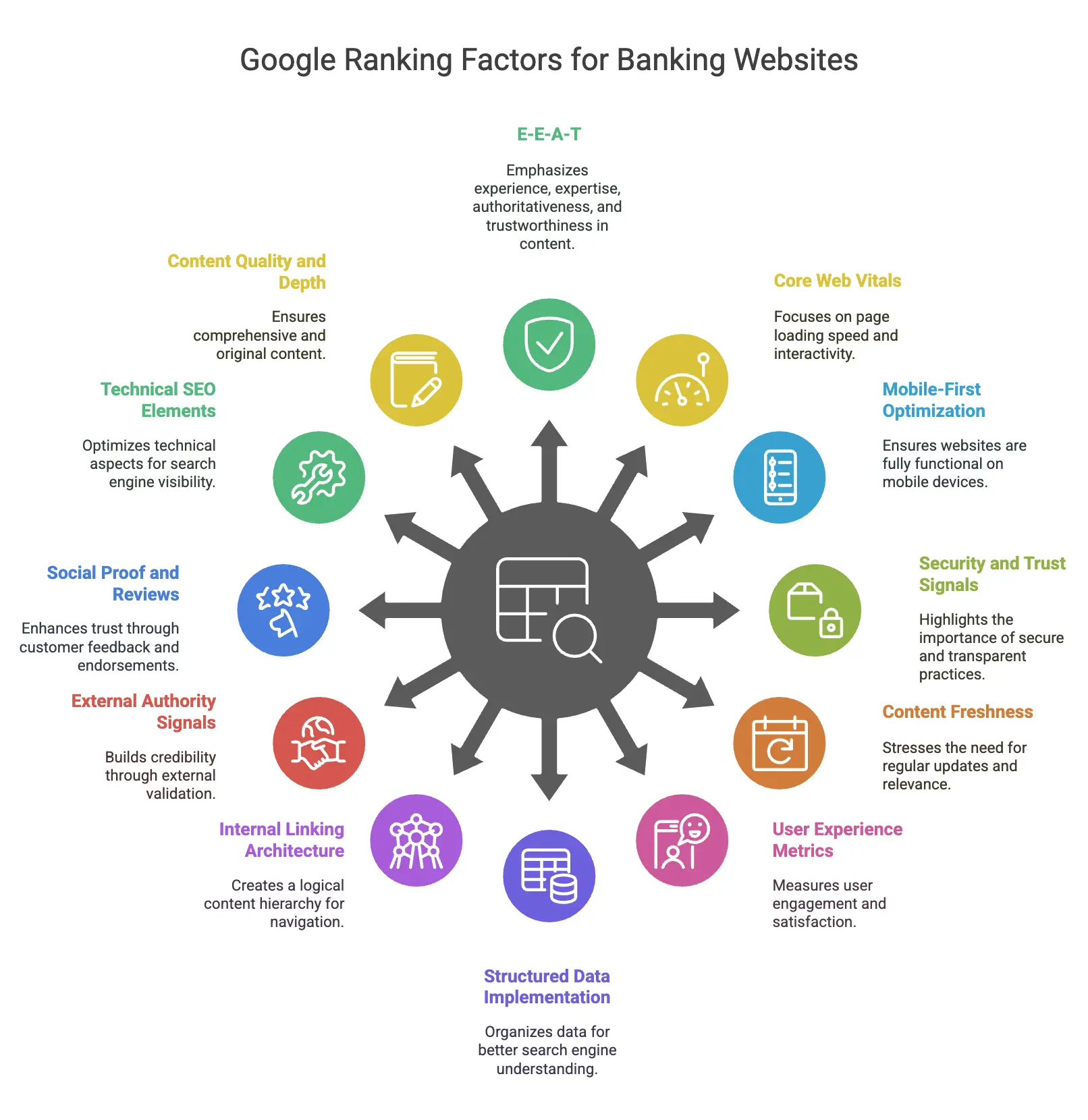
Additional Critical Ranking Factors for Banking Websites
Beyond Core Web Vitals, several other ranking factors are particularly important for financial institutions. If you need a complete check of your site's health, you can consult our SEO audit checklist for a deeper dive into these technical requirements.
| SEO Focus Area | Optimization Strategies |
|---|---|
| Mobile-First Indexing Optimization | Mobile-friendly responsive design |
| Security and Trust Signals | HTTPS with valid SSL |
| Content Freshness and Relevance | Updated financial product data |
| User Experience Metrics | Improve time on site and pages/session |
| Structured Data Implementation | Financial product schema |
| Internal Linking Architecture | Logical content structure |
| External Authority Signals | High-quality financial backlinks |
| Social Proof and Reviews | Google Business optimization |
| Technical SEO Elements | Optimized XML sitemap and robots.txt |
| Content Quality and Depth | In-depth financial guides |
Core SEO Pillars for Financial Institution Dominance
1. Strategic Financial Keyword Intelligence
The foundation of banking SEO success lies in understanding exactly how your customers search for financial services. This requires a sophisticated approach to keyword research that goes beyond volume metrics to understand intent.
-
Customer Journey Mapping: Identify specific queries at each stage of the financial decision process:
- Awareness: "how to improve credit score for mortgage" — At this stage, users want education, not a sales pitch.
- Consideration: "fixed vs variable rate home loans" — Users are comparing options. Content here should objectively weigh pros and cons.
- Decision: "best mortgage lenders near me with low closing costs" — These users are ready to convert.
-
Financial Intent Classification:
- Informational: "How do CDs work as investments?" - Target with educational content.
- Navigational: "Chase bank downtown branch hours" - Optimize location pages.
- Transactional: "Apply for small business loan online" - Streamline conversion funnels.
- Commercial: "Best high-yield savings accounts 2026" - Develop comparison content.
-
Zero-Click and AEO Optimization: Many simple financial queries (e.g., "current fed rate," "routing number for X bank") are now answered directly in search results or by AI engines. To capture this visibility, you must optimize for zero-click searches by structuring answers concisely for featured snippets.
-
Compliance-Sensitive Keyword Selection: Prioritize terms that allow you to showcase expertise while avoiding regulatory red flags. Avoid optimizing for terms that imply guarantees (e.g., "guaranteed loan approval") which can trigger compliance violations.
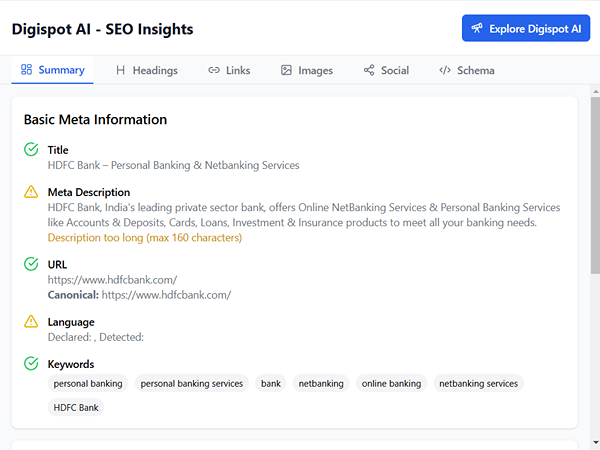
Case Study: HDFC Bank's Precision Keyword Strategy
HDFC Bank partnered with AdLift to revitalize their SME vertical's organic visibility. By developing a keyword strategy centered on high-intent financial queries, they achieved an 823% year-over-year increase in blog traffic and a 65% growth in overall organic visibility.
Their approach focused on identifying exactly what information SME customers needed at each stage of considering financial products, then creating content clusters that addressed these specific needs. By mapping keywords to precise customer journeys, they were able to capture potential customers at every stage of the decision-making process.
2. Technical Excellence: Security Meets Searchability
For financial institutions, technical SEO encompasses both search engine requirements and stringent security standards. The complexity of banking platforms often leads to technical debt that hinders crawling and indexing.
-
Financial-Grade Security Integration: Implement advanced SSL/TLS certification that satisfies both customer trust requirements and search engine preferences. Financial websites should implement EV (Extended Validation) SSL certificates that display the bank name in the browser address bar, providing additional trust signals.
-
Page Experience Optimization: Achieving excellent Core Web Vitals scores requires financial websites to:
- Implement server-side rendering (SSR) for faster page loading, ensuring Googlebot can read content immediately without waiting for JavaScript execution.
- Optimize and lazy-load custom banking calculator scripts so they don't block the initial page paint.
- Preload critical financial form elements.
- Minimize third-party tracking scripts that can degrade performance.
- Implement proper cache policies for non-sensitive elements.
-
Mobile-First Banking Experience: With 73% of financial searches now occurring on mobile devices, optimization must prioritize:
- Simplified mobile application forms with progressive disclosure (showing fields only as needed).
- Touch-friendly interactive elements sized appropriately (minimum 48x48 pixels) to prevent "fat finger" errors.
- Biometric authentication integration for secure mobile access.
- Visible click-to-call functions for immediate support.
-
Schema Implementation for Financial Products: Deploy structured data markup specifically for banking products, rates, and services to gain enhanced search visibility. This is a powerful way to communicate data directly to search engines.
FinancialProductschema with accurate interest rates and terms.ExchangeRateSpecificationfor currency exchange pages.LocalBusinessschema for branch locations.FAQPageschema for financial education content.
Digispot AI can help you identify and fix these technical issues automatically with AI-powered audits analyzing 300+ ranking factors.
Example: BPC's Technical SEO Transformation
BPC, a global payment solutions provider, addressed fundamental technical SEO issues including duplicate content and poor site architecture. Following their technical optimization initiative, they secured an 85% increase in keyword rankings and significantly improved visibility for their core financial service offerings.
Their technical SEO overhaul included:
- Consolidating duplicate content across regional banking pages.
- Implementing hreflang tags for proper international targeting.
- Creating a dedicated mobile site architecture.
- Improving site architecture to limit depth to maximum 3 clicks.
- Implementing advanced schema markup using tools like the Schema Markup Generator.
This case demonstrates how technical excellence creates the foundation for all other SEO efforts.
3. Content Excellence: Becoming the Financial Resource Center
In the highly regulated banking sector, content must balance educational value, marketing effectiveness, and strict compliance requirements. You cannot simply produce volume; you must produce value and accuracy.
- Regulatory-Compliant Content Strategy: Develop a systematic review process ensuring all content meets financial advertising standards across jurisdictions. Pair banking-specific checks with our fintech SEO and YMYL strategy so compliance and search visibility move together.
- Integrate legal review workflows into your content publishing calendar.
- Use standardized disclosure templates for rates, terms, and conditions to ensure consistency.
- clearly document sources for all financial claims to satisfy E-E-A-T requirements.
- Conduct regular content audits to update rates or sunset outdated financial advice.
- Financial Decision Journey Content: Create comprehensive resources targeting each stage of financial decisions.
- Life Event Targeting: Build content hubs around major life triggers like "Getting Married," "Buying a First Home," or "Sending a Child to College." These events trigger multiple financial needs simultaneously.
- Calculators and Tools: Interactive assets like "Rent vs. Buy Calculators" attract high-quality backlinks and keep users on the page longer.
- Comparison Content: Don't shy away from comparing your products to generic market averages.
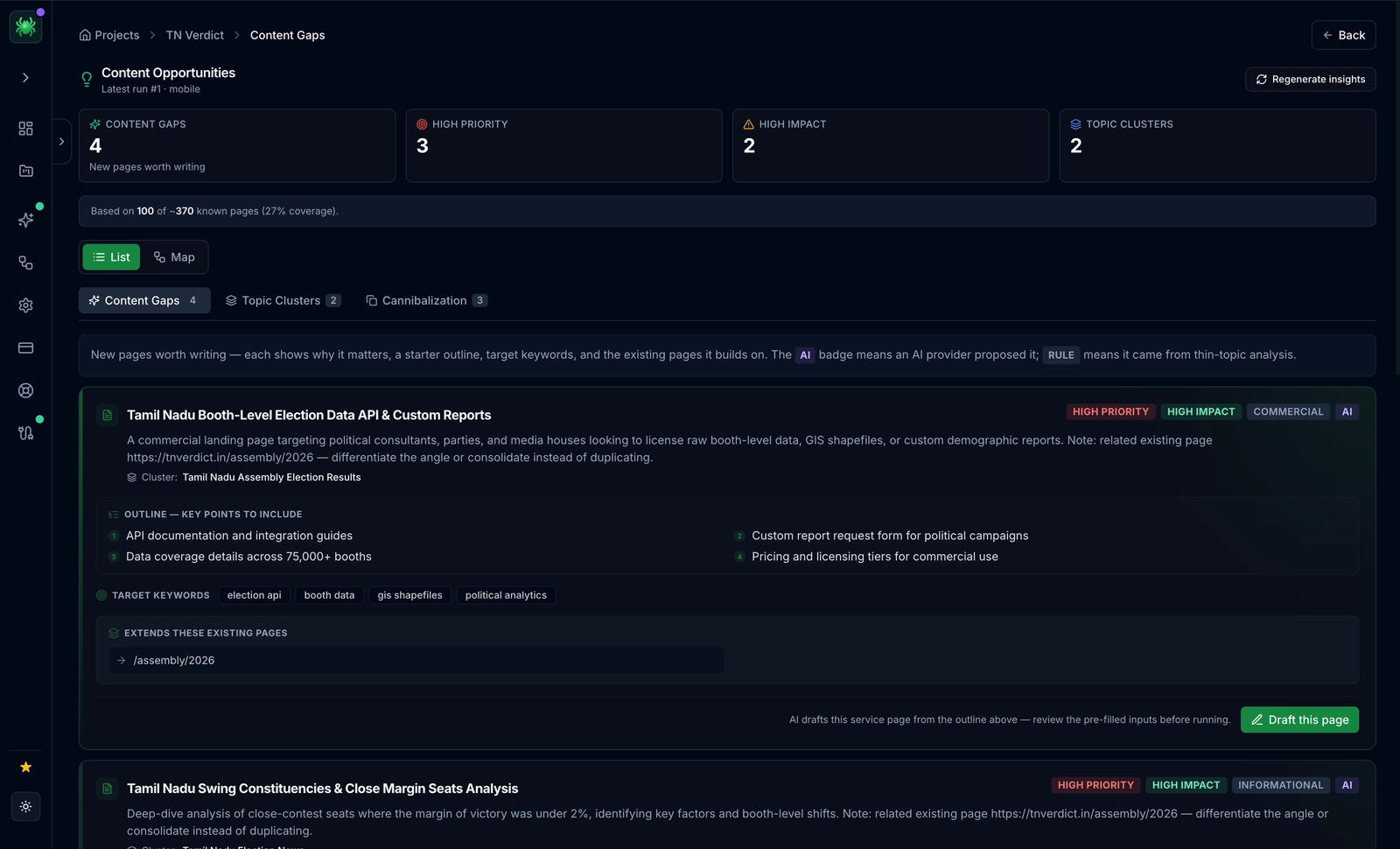
- Hub and Spoke Strategy: Organize your content using a hub and spoke strategy where a central "pillar" page (e.g., "Ultimate Guide to Home Loans") links out to specific cluster pages (e.g., "FHA Loan Requirements," "Current Refinance Rates"). This builds topical authority.
- Trust-Building Content Formats:
- Video explainers for complex financial products with transcripts for accessibility.
- Downloadable financial planning worksheets and guides.
- Customer success stories with detailed metrics and outcomes (with appropriate compliance disclosures).
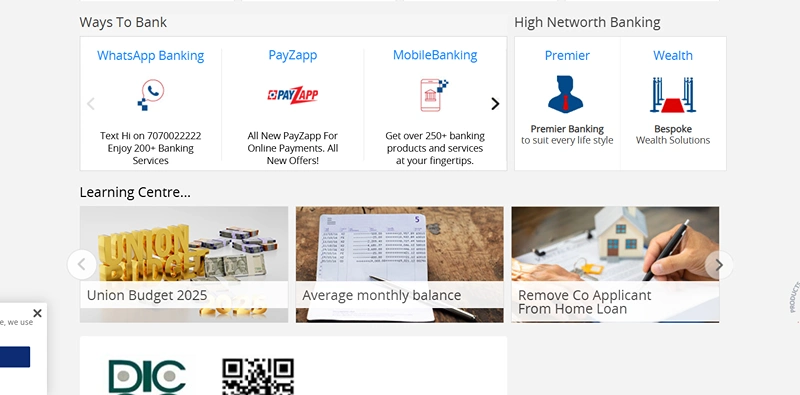
Case Study: Eastport Financial Group's Content Authority Strategy Eastport Financial Group developed comprehensive financial guides, localized market analysis, and educational resources. This content strategy led to a 340% increase in organic traffic in just three months, establishing them as go-to financial advisors in their target markets.
For a detailed breakdown of how to structure your pages for maximum impact, review our guide on on-page SEO best practices.
4. Local SEO: Banking on Community Connections
For institutions with physical branches, dominating local search results is essential to connect digital research with in-person banking relationships. "Near me" searches for banks have grown exponentially, and Google Maps is often the first touchpoint.
- Branch-Specific Optimization Strategy:
- Unique Landing Pages: Create individual location pages with unique content for each branch. Avoid generic "copy-paste" descriptions. Mention local landmarks, specific branch manager names, and community events the branch sponsors.
- Google Business Profile (GBP): Optimize GBP for each location. Ensure categories are correct (e.g., "Bank," "ATM," "Loan Agency," "Mortgage Lender").
- Attributes: Highlight specific amenities like "Drive-through," "Wheelchair accessible," or "Notary public."
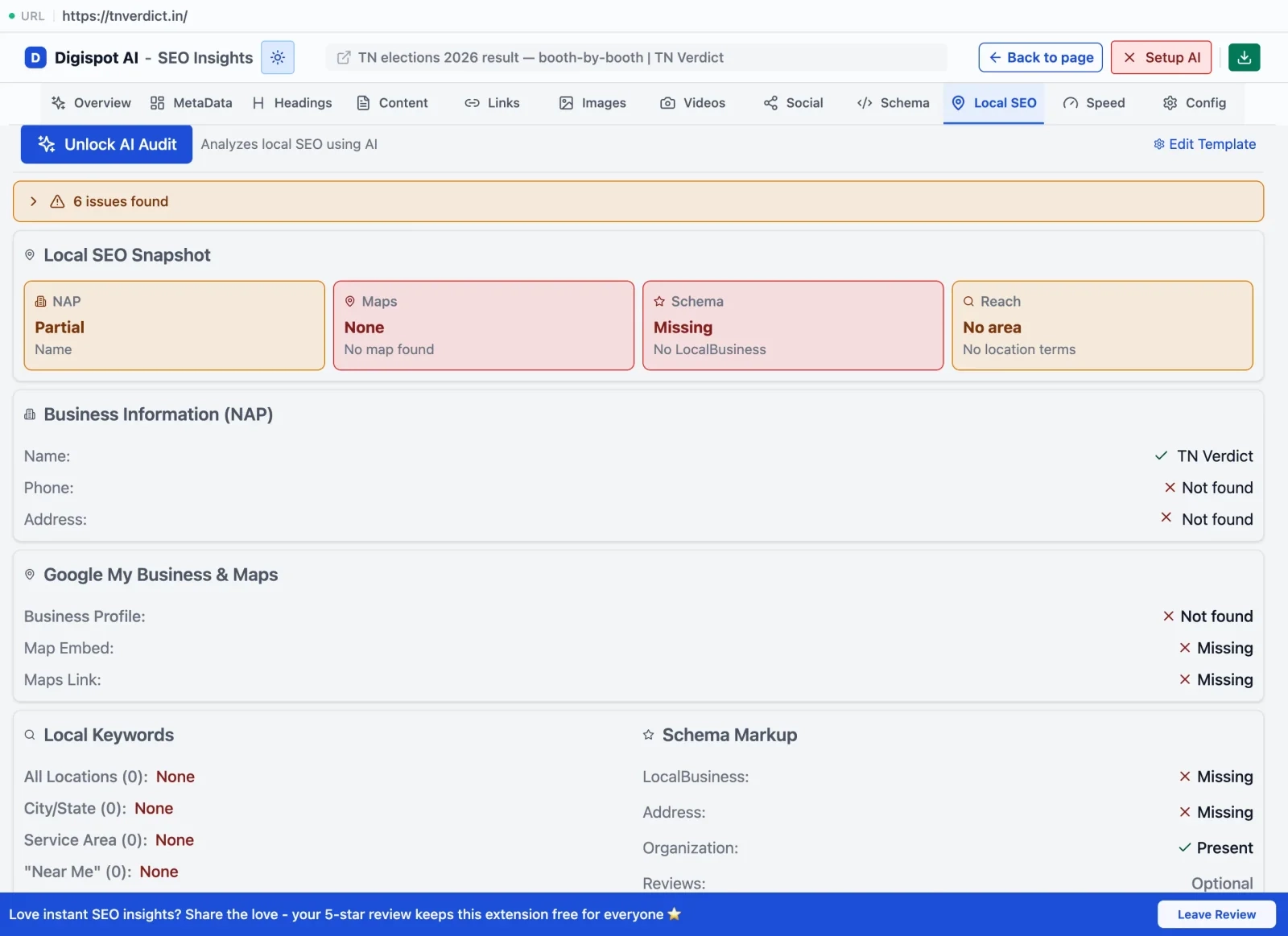
- Schema Markup: Implement
LocalBusinessschema with precise latitude/longitude coordinates.
-
Reputation Management:
- Actively manage reviews. A bank branch with a 2.5-star rating will lose traffic to a 4.5-star competitor across the street. Respond to all reviews, especially negative ones, in a compliant, professional manner.
- Establish consistent NAP (Name, Address, Phone) information across all citations (Yelp, Yellow Pages, local chamber of commerce).
-
Local Financial Content Development:
- Create area-specific financial guides (e.g., "First-Time Homebuyer's Guide to [City]").
- Develop content addressing regional financial concerns (e.g., "Agricultural Loans for [County] Farmers").
- Highlight community involvement and local financial initiatives.
Example: Regional Bank's Local Visibility Breakthrough
A regional banking service developed an integrated local SEO strategy across 14 branch locations. By optimizing location-specific content and local citations, they achieved a 140% increase in organic traffic and significantly improved their visibility for "near me" banking queries in their service areas.
Their strategy included:
- Creating unique, valuable content for each branch location page (not just address changes).
- Developing city-specific financial guides addressing local economic conditions.
- Implementing branch-specific schema markup with accurate service information.
- Building a consistent citation profile across local business directories.
- Actively soliciting and managing Google reviews for each location.
This comprehensive approach allowed them to dominate local search results for banking terms in their service areas.
5. Authority Building: The Trust Equation in Banking SEO
In financial services, trust signals are particularly critical. You cannot rank for competitive terms without a backlink profile that signals authority to Google.
- Strategic Financial Industry Partnerships:
- Guest contributions to respected financial publications (Forbes Finance Council, local business journals).
- Collaborations with certified financial educators and institutions.
- Partnerships with relevant financial technology providers.
- Participation in industry organizations with visible credentials (FDIC, FINRA member badges linked to official verification pages).
- Authority-Building Link Development:
- Earn backlinks from financial regulatory bodies and associations.
- Develop shareable financial resources (infographics, original data studies) that naturally attract links.
- Create linkable assets such as industry studies and financial trend reports.
- Establish thought leadership through original research and data reports.
Case Study: Saxo Bank's Authority Development
Saxo Bank implemented a comprehensive authority-building strategy across 15+ markets, focusing on establishing expertise in local financial ecosystems. Their approach combined thought leadership content with strategic industry partnerships, resulting in a 179% increase in monthly organic traffic and significant improvements in financial keyword rankings.
Their strategy centered on:
- Publishing original financial research with market insights.
- Creating country-specific financial guides for international investors.
- Establishing partnerships with local financial publications in each market.
- Developing a robust expert contributor network for content creation.
- Implementing advanced technical SEO to showcase expertise signals.
Transform Your Banking SEO with Digispot AI
Implementing a comprehensive SEO strategy for your financial institution requires expertise, resources, and continuous optimization. Digispot AI's specialized SEO platform eliminates these barriers by providing the only comprehensive solution designed specifically for banking websites.
How Digispot AI Addresses All 300+ Ranking Factors
Digispot AI's platform helps financial institutions master these complex ranking factors through automated solutions:
- Technical Excellence: Real-time monitoring of Core Web Vitals, mobile optimization, and security signals.
- Content Intelligence: AI-powered content gap analysis, keyword research, and E-E-A-T compliance checking.
- Local Presence: Multi-location optimization and Google Business Profile management.
- Authority Building: Backlink opportunity identification and industry partnership tracking.
- User Experience: Conversion path optimization and engagement analytics.
- Compliance: Automated regulatory compliance checking and security signal optimization.
The Digispot AI Advantage
Unlike general SEO tools, Digispot AI provides banking-specific analysis, compliance-first approach, and prioritized recommendations that drive measurable results for financial institutions. Whether you are optimizing a local credit union site or a multinational banking platform, our tools scale to meet your needs.
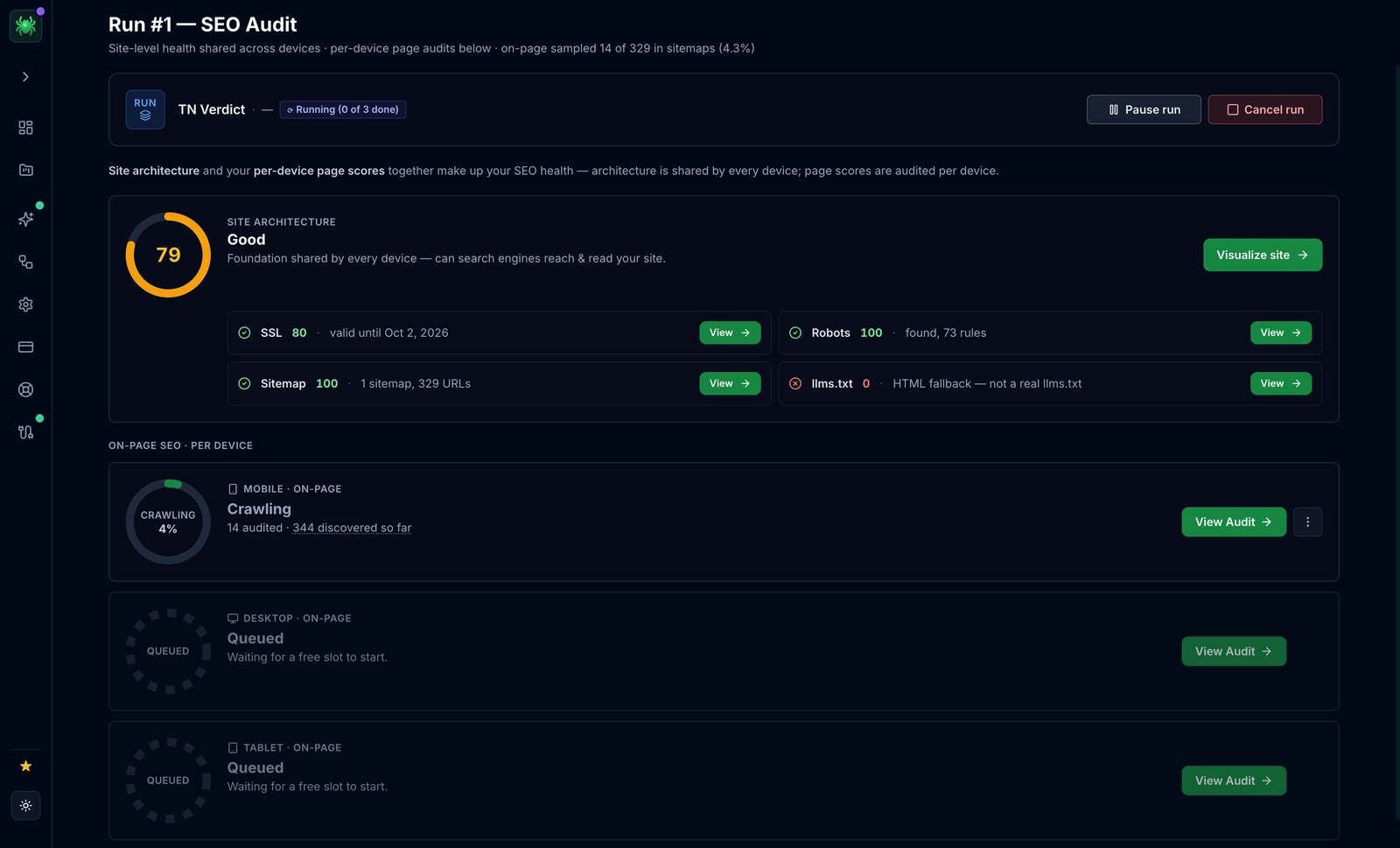
Crawl Your Entire Banking Site with the Digispot AI SEO Spider
Banking sites are sprawling — hundreds of product, rate, and branch-locator pages, all under intense YMYL and E-E-A-T scrutiny where a single trust misstep can sink rankings across the domain. The Digispot AI SEO Spider is a desktop crawler and auditor that renders every page in a real browser, exactly as Googlebot sees it, and runs 300+ SEO and AEO checks per URL. It surfaces the issues that quietly erode financial-search performance: weak security signals, broken links to closed products, thin or duplicated rate pages, and missing or malformed schema.
What sets it apart for a lean bank marketing team is prioritization — every finding is ranked by traffic-at-risk, so you fix the mortgage or checking-account page driving real revenue before a dormant FAQ. It syncs Google Search Console and GA4 to ground those priorities in actual performance, and because trust is a ranking currency in YMYL, its link analysis exposes where your authority and backlink profile fall short of competitors. It even ships an MCP server, so an AI agent like Claude or Cursor can run the crawl and apply fixes for you — the only SEO crawler your AI agent can run, from $14/mo.
Ready to Transform Your Banking Institution's Digital Presence?
Every day without optimized SEO means lost opportunities to connect with potential customers actively searching for the financial products you offer. Digispot AI makes implementing comprehensive SEO strategies simple, allowing your team to focus on driving results rather than figuring out complex SEO tactics.
Request a Personalized Banking SEO Analysis →
Discover how our AI-driven approach can:
- Increase organic visibility for your highest-value financial products.
- Improve conversion rates through optimized customer journeys.
- Enhance trust signals that matter specifically to banking customers.
- Ensure compliance while maximizing search engine performance.
Additional Banking SEO Resources
- Digispot AI - FREE Chrome Extension
- Digispot AI - FREE On Page SEO Audit Tool
- Digispot AI - FREE Schema Markup Visualizer
Related deep-dives
Continue with these closely related guides:
- automotive seo — Automotive SEO Guide: Drive Dealership Traffic
- comprehensive seo for ngos — Comprehensive SEO Guide for NGOs and Non-Profits
References
- AdLift. (2024). HDFC SEO & Content Marketing Case Study. Retrieved from AdLift.
- Social Spike. (2024). Financial Services SEO Case Study | 340% Increase in Traffic! Retrieved from Social Spike.
- Hawksem. (2024). SEO for Banks: Costs, Examples & Strategies to Get More Customers. Retrieved from Hawksem.
- Loopex Digital. (2024). 8 Best Agencies Offering Bank SEO Services for 2025. Retrieved from Loopex Digital.
- Traffic Think Tank (2024). 8 SEO Case Studies: Examples That Energize 2025 Strategies. Retrieved from Traffic Think Tank.
- Google. (2024). Understanding Page Experience in Google Search Results. Retrieved from Google Search Central.
- Search Engine Journal. (2024). Core Web Vitals: A Complete Guide. Retrieved from Search Engine Journal.
Audit any page in seconds
300+ SEO checks including Core Web Vitals, schema markup, meta tags, and AI readiness — trusted by 1000+ SEO experts and marketers.
Frequently Asked Questions
Here are some of our most commonly asked questions. If you need more help, feel free to reach out to us.
Written by
Maya Krishnan
Digital growth expert
Maya is a seasoned expert in web development, SEO, and digital strategy, dedicated to helping businesses achieve sustainable growth online. With a blend of technical expertise and strategic insight, she specializes in creating optimized web solutions, enhancing user experiences, and driving data-driven results. A trusted voice in the industry, Maya simplifies complex digital concepts through her writing, empowering readers with actionable strategies to thrive in the ever-evolving digital landscape.