What is Link Building? The Complete SEO Guide for 2026
Master the art of link building. Learn proven strategies to boost authority, drive traffic, and rank in Google and AI search engines like Perplexity.
 Maya Krishnan
You create excellent content, optimize your meta tags, and ensure your site loads instantly. Yet, you still struggle to break into the top three search results for your most competitive keywords.
The missing piece is likely your backlink profile.
Link building remains the backbone of off-page SEO. Despite hundreds of algorithm updates, Google continues to view links as the primary signal of a website's authority and trustworthiness. However, the days of spamming forums or buying directory listings are long gone. In an era dominated by AI search engines like Perplexity and Google's AI Overviews, link building has evolved from a numbers game into a strategic pursuit of relevance and reputation.
This guide covers exactly what link building is, why it is critical for both traditional SEO and the new wave of AI optimization, and how you can build a link profile that withstands algorithm updates.
What is Link Building?
Link building is the process of acquiring hyperlinks from other websites to your own. A hyperlink (usually just called a link) is a way for users to navigate between pages on the internet.
From a search engine's perspective, a link is a "vote of confidence." When Website A links to Website B, it tells Google, "This resource is valuable, credible, and worth my visitors' time."
The Core Concept: PageRank
To understand link building, you must understand the foundation of Google itself: PageRank. Developed by Larry Page, this algorithm measures the importance of website pages based on the quantity and quality of links pointing to them.
While Google's algorithms are now far more complex, the core principle remains:
- Votes: Every link counts as a vote.
- Weight: Not all votes are equal. A link from a high-authority site (like the New York Times or a university .edu domain) carries significantly more weight than a link from a brand-new blog.
- Relevance: A link from a site in your industry is worth more than a random link from an unrelated niche.
If you want to understand the broader context of where link building fits, read our guide on what search engine optimization is.
Why Link Building is Non-Negotiable in 2026
You might hear rumors that "links don't matter anymore." Data proves otherwise.
1. It Is Still a Top Ranking Factor
Google representatives and independent industry studies consistently confirm that backlinks remain one of the top three ranking factors, alongside content quality and RankBrain (user experience signals). Without links, it is mathematically difficult for Google to determine if your site is authoritative enough to rank for competitive queries.
2. Referral Traffic
Links aren't just for bots. A well-placed link on a high-traffic industry publication drives qualified visitors directly to your site. Unlike organic search traffic, which can fluctuate with algorithm updates, referral traffic is stable and often converts at a higher rate because the visitor is already primed by the referring content.
3. Faster Indexing
Search engine crawlers (spiders) discover new content by following links. If you launch a new page but no one links to it (internally or externally), Google may take weeks to find it. Backlinks act as express highways for crawlers to discover and index your pages.
4. Brand Visibility in AI Search (AEO)
This is the new frontier. AI tools like ChatGPT, Claude, and Google's AI Overviews rely on authoritative sources to generate answers. They determine authority largely through citations (links). If your brand is frequently linked to as the source of data or definitions, AI models associate your entity with those topics.
Digispot AI helps you track these entity relationships, ensuring your link building efforts contribute to visibility in both traditional search and AI platforms.
The Anatomy of a Hyperlink
To build links effectively, you need to understand the technical code behind them. A standard link looks like this in HTML:
<a href="https://www.digispot.ai" rel="nofollow">Digispot AI Platform</a>
Here is the breakdown:
<a>tag: The opening tag that defines a hyperlink.href: Stands for "hypertext reference." This indicates the destination URL.- Anchor Text: "Digispot AI Platform" is the clickable text users see. This text tells Google what the destination page is about.
relAttribute: This attribute tells crawlers how to treat the link.
Critical Link Attributes
Not all links pass value. You must know the difference:
- Dofollow (Default): If no
relattribute is present, the link is "dofollow." It passes authority (PageRank) and helps your SEO. - Nofollow (
rel="nofollow"): Tells Google, "I am linking to this page, but I don't want to endorse it or pass authority." These are common in blog comments and social media. - Sponsored (
rel="sponsored"): Must be used for paid placements, advertisements, or affiliate links. - UGC (
rel="ugc"): Stands for User Generated Content. Used for forum posts and comments sections.
Pro Tip: You can instantly inspect the attributes of any link on a page using the Digispot AI Chrome Extension. It highlights nofollow and sponsored links so you can assess a page's value quickly.
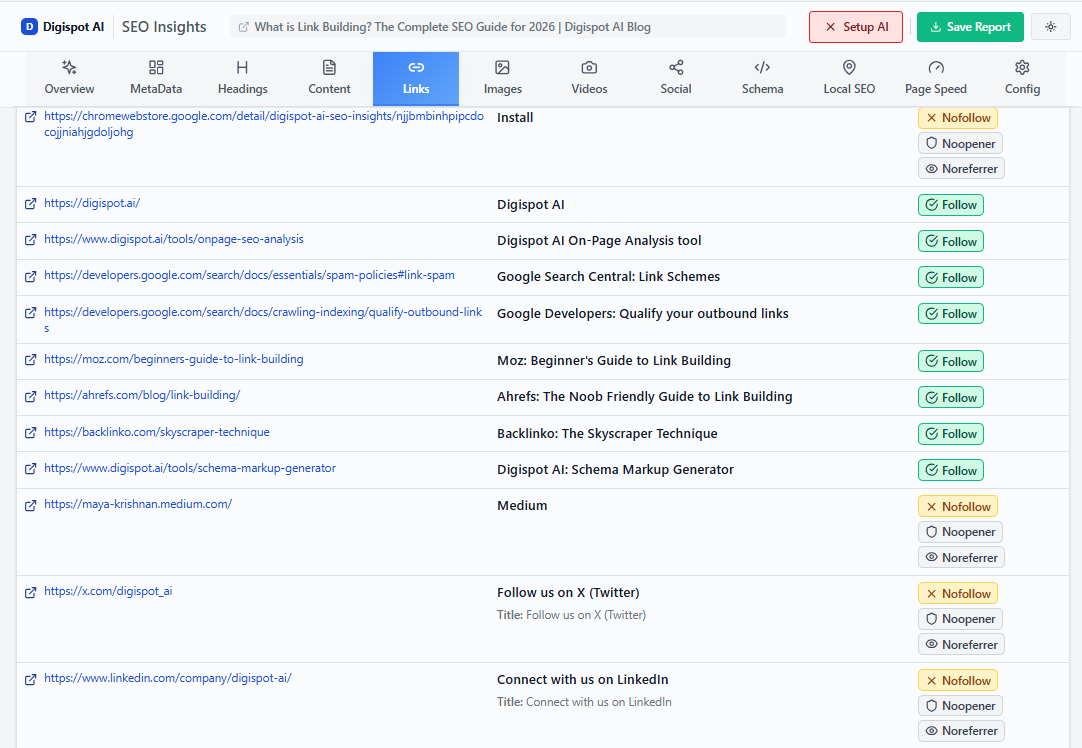
Turn invisible SEO daGet instant SEO insights on any page with our free Chrome extension.
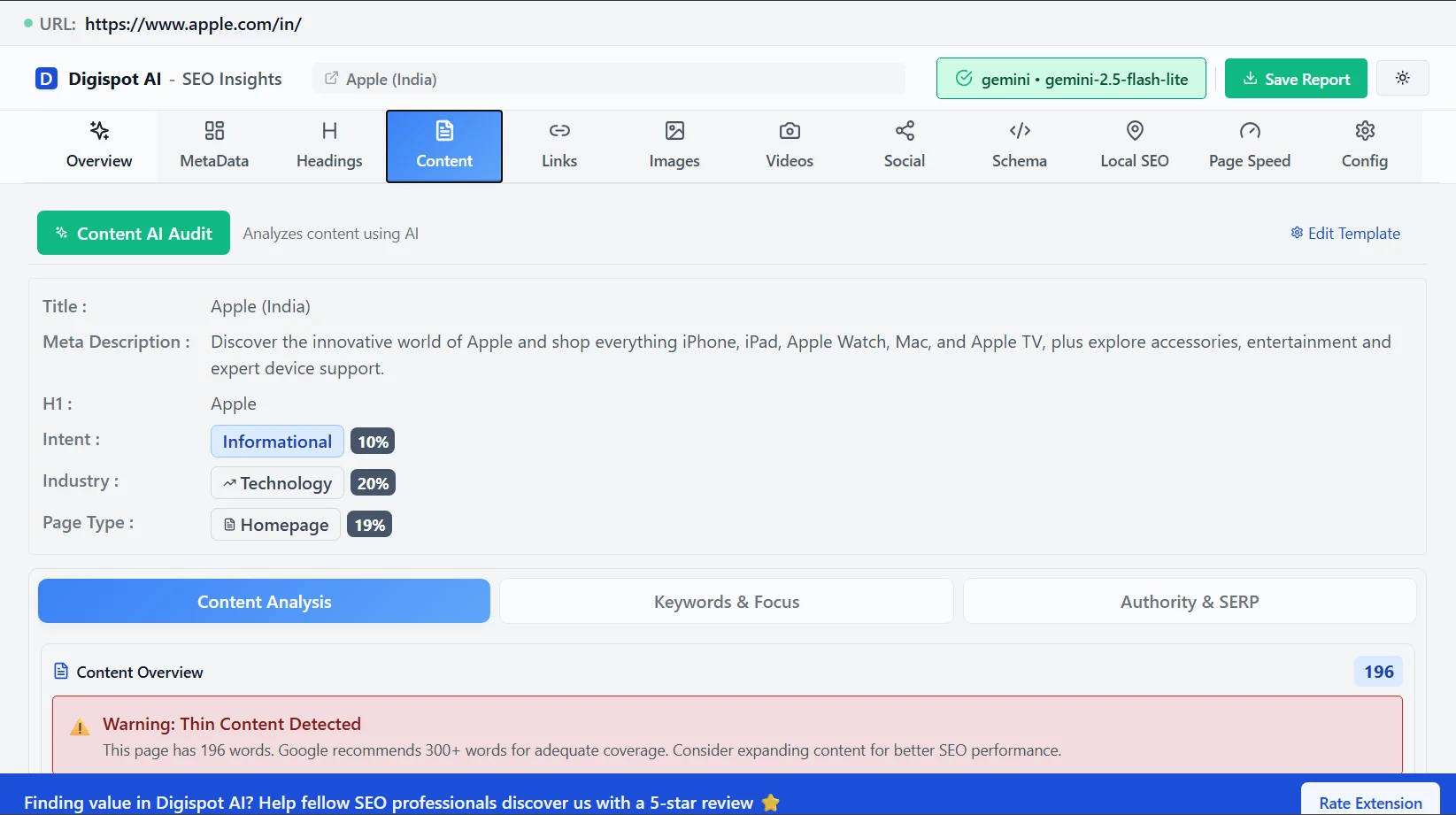
Quantity vs. Quality: The Authority Matrix
In the early 2000s, SEOs would blast their sites with thousands of low-quality directory links. Today, that strategy will get you penalized. You must focus on the Quality Matrix.
1. Authority (Trust)
Does the linking site have a strong reputation? Metrics like Domain Authority (DA) or Domain Rating (DR) are third-party estimates of this strength. While Google doesn't use DA/DR directly, they correlate well with ranking potential. A single link from a DR 80 site is often worth more than 100 links from DR 10 sites.
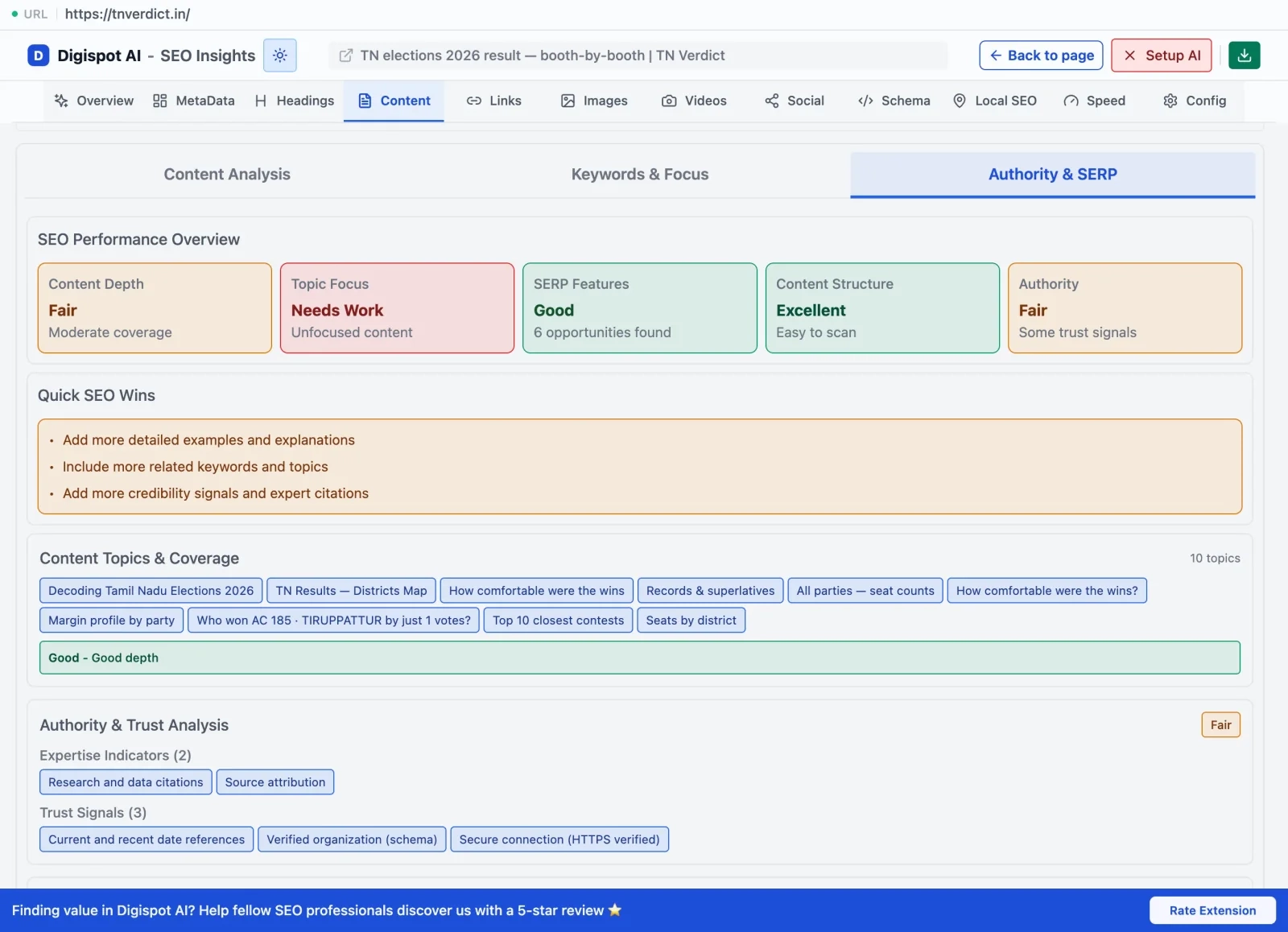
Before pursuing a link from any prospect page, the Digispot AI Chrome extension lets you check its authority and SERP appearance on the spot, so you invest outreach effort only where the link will actually carry weight.
2. Relevance (Context)
This is increasingly important. If you run a plumbing business, a link from a popular food blog looks unnatural and carries little weight. A link from a home improvement magazine or a local hardware store is highly relevant. Google's algorithms are semantic—they understand the relationship between topics.
3. Placement (Visibility)
Where is the link located?
- Editorial Links: Located within the main body content. These carry the most weight.
- Footer/Sidebar Links: Google devalues these as they are often site-wide and less navigational.
- Profile Links: Links in user bios are generally low value.
4. Anchor Text Diversity
If 100% of your backlinks use the exact anchor text "best seo software," Google will flag this as manipulation. A natural profile includes a mix of:
- Branded: "Digispot AI"
- Naked URLs: "digispot.ai"
- Generic: "click here," "website"
- Partial Match: "SEO software by Digispot"
For a deeper dive on maintaining a healthy profile, read our guide on how to improve your backlink profile.
5 Actionable Link Building Strategies for 2026
You cannot simply wait for links to happen. You must actively earn them. Here are five proven strategies that work in the current SEO landscape.
1. The Skyscraper Technique (Content-Led)
This strategy, popularized by Brian Dean, relies on creating superior content.
- Find a piece of content in your niche that has generated many backlinks (use tools like Ahrefs or Semrush).
- Create a piece of content that is significantly better. Make it longer, more up-to-date, better designed, or more comprehensive.
- Reach out to the people who linked to the original piece. Show them your superior version and suggest it as a better resource for their readers.
2. Digital PR and Data Journalism
Journalists are always looking for data to support their stories.
- Conduct a survey or analyze internal data.
- Create an infographic or report summarizing the findings.
- Pitch this unique data to industry news sites and journalists.
When they cite your statistics, you earn a high-authority editorial link. This is one of the safest and most scalable ways to build "white hat" links.
3. Broken Link Building
The web is full of "link rot"—links that point to 404 error pages.
- Identify authoritative sites in your niche.
- Use a broken link checker to find external links on their resource pages that no longer work.
- Create content that replaces the missing resource.
- Email the webmaster: "Hi, I was reading your article and noticed this link is broken. I actually have a guide on the same topic if you want to swap it out."
This works because you are helping the webmaster fix an error on their site. To find opportunities for content you can create, use a content gap analysis.
4. Unlinked Brand Mentions
Often, websites will mention your brand or product name but fail to link to you.
- Set up alerts (Google Alerts or Digispot Monitor) for your brand name.
- When you see a mention without a link, reach out politely.
- "Thanks for mentioning Digispot! Would you mind linking that mention to our homepage so your readers can find us easily?"
- This has a high success rate because the author already knows and likes your brand.
5. Resource Page Link Building
Many sites curate lists of helpful tools and articles (e.g., "Best Marketing Tools for 2026").
- Search for strings like
intitle:"resources" + [your keyword]orinurl:links + [your keyword]. - Analyze the page to see if your content or tool adds value.
- Pitch your resource as a valuable addition to the list.
Internal Linking: The Forgotten Power
While external links (backlinks) get all the glory, internal linking is equally vital. Internal links distribute the authority you gain from backlinks to other pages on your site.
If you earn a high-authority link to your homepage, you should internally link from your homepage to your most important service pages. This flows the "link juice" deep into your site structure.
To master this structure, read our guide on internal linking strategy.
How to Measure Link Building Success
Don't just count links. Measure impact.
1. Keyword Rankings
The ultimate goal is visibility. Track the ranking positions of the pages you are building links to. If you build 10 quality links to a page and it moves from position 15 to position 4, the strategy is working.
2. Organic Traffic
Are you getting more visitors? Check Google Search Console. Filter by the specific page to see if clicks and impressions are trending upward after your campaign.
3. Referral Traffic
Check Google Analytics (GA4). Look under Acquisition > Traffic acquisition and check the "Referral" channel. High-quality links should send real users to your site.
4. Domain Authority / Rating
While these are vanity metrics from third-party tools (Moz, Ahrefs), a gradual increase over time indicates your overall site strength is growing.
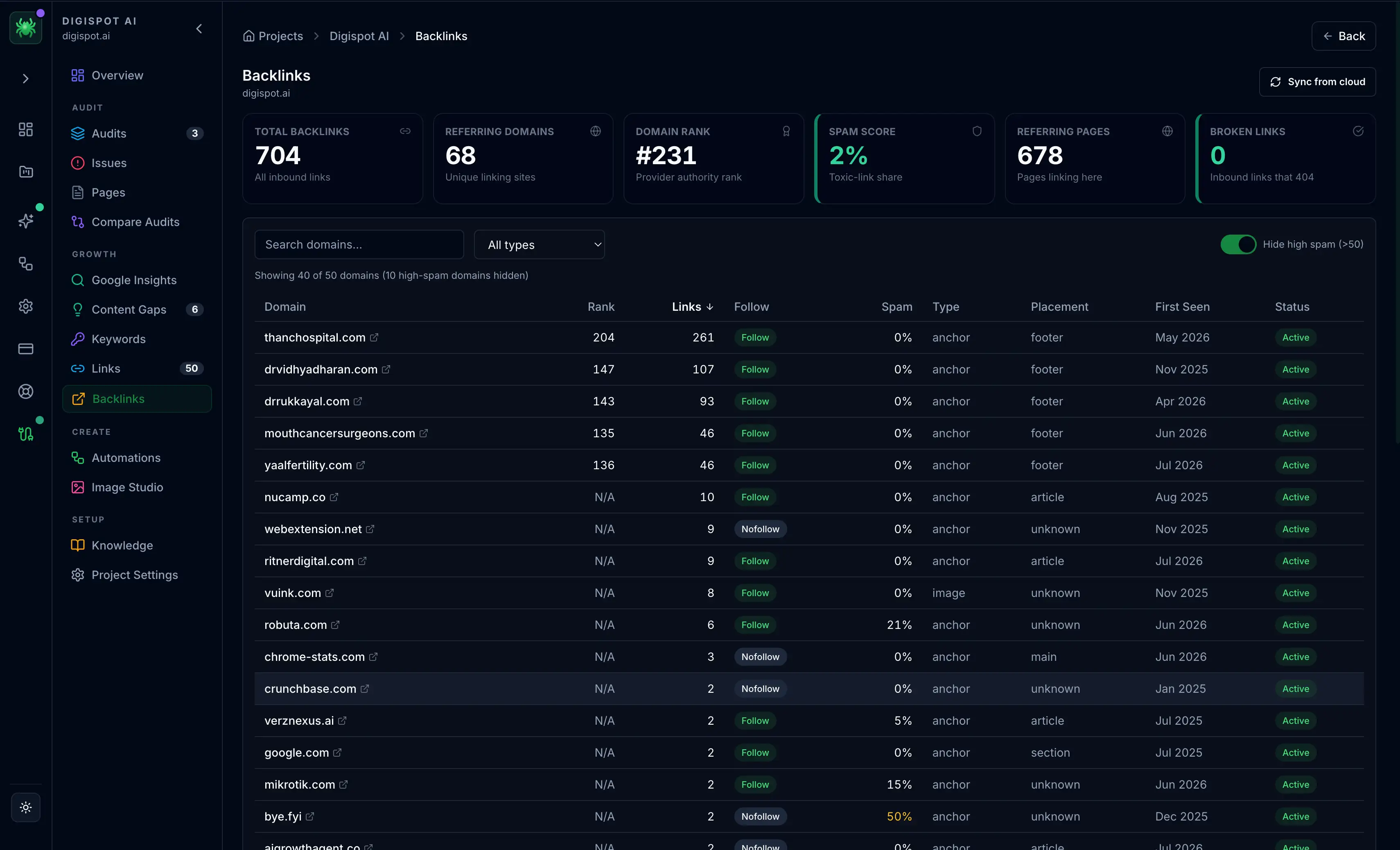
The Digispot AI Spider backlinks dashboard consolidates these signals in one view — total backlinks, referring domains, domain rank, and spam share — with a per-domain table so you can spot toxic sources and track profile growth as your campaign progresses.
Digispot AI provides comprehensive site audits that correlate your backlink growth directly with ranking improvements, giving you a clear ROI picture.
Risks: Black Hat vs. White Hat
It is crucial to stay on the right side of Google's guidelines.
White Hat (Safe):
- Creating high-value content.
- Outreach for guest posting on relevant sites.
- Digital PR.
- Fixing broken links.
Black Hat (Dangerous):
- Buying Links: Paying for dofollow links is a direct violation.
- PBNs (Private Blog Networks): Creating fake websites solely to link to your main site.
- Comment Spam: Using bots to post links in blog comments.
- Link Farms: Sites that exist only to sell links.
The Consequence: Google's Penguin algorithm (now part of the core algorithm) devalues spammy links. In severe cases, you may receive a Manual Action, removing your site from search results entirely.
If you suspect your site has been targeted by spammy links (negative SEO), you may need to use Google's Disavow Tool. However, use this with caution. Learn more about identifying bad links in our guide to free quality backlinks.
The Future: AEO and Entity-Based Linking
As we move toward 2026, the nature of linking is shifting. Large Language Models (LLMs) don't just count links; they analyze Semantic Proximity.
If you sell "accounting software," a link from a "financial news" site is infinitely more valuable than a link from a "generic tech news" site because it strengthens the entity relationship between your brand and the concept of finance.
When building links now, ask yourself:
- Does this link help an AI understand who we are?
- Is this link in a context that validates our expertise?
- Is the surrounding text (co-occurrence) relevant to our target keywords?
This approach ensures you rank not just in the "ten blue links" of Google, but also as the cited answer in ChatGPT and Perplexity.
Start Building Your Authority Today
Link building is not a one-time task; it is an ongoing process of reputation management. It requires patience, creativity, and a relentless focus on quality over quantity.
Your Action Plan:
- Audit your current link profile to identify weaknesses.
- Create one piece of "skyscraper" content this month.
- Identify 5 competitors and analyze where they get their links.
- Fix your internal linking structure to maximize the value of existing links.
Ready to see exactly where your opportunities lie? Use the Digispot AI On-Page Analysis tool to check your current page authority, or sign up for the full Digispot AI platform to automate your backlink monitoring and strategy.
Link Building Tactics & Guides
Once you understand the fundamentals, the next step is execution. The guides below break link building into platform-specific tactics, profile auditing and cleanup, and the risks you need to steer clear of.
Tactics by platform and channel:
- Explore the full range of off-page SEO strategies that complement your link building.
- Follow Google-friendly backlink building strategies to earn links that hold up to algorithm updates.
- Land editorial placements with a repeatable guest posting strategy for backlinks.
- Turn a software listing into authority by learning how to get backlinks from G2.
- Capture answer-driven traffic and links by understanding how to get SEO traffic from Quora.
- Tap community platforms with our guide on how to use Reddit for SEO backlinks.
- Build entity signals through how to use Crunchbase for SEO.
- Earn developer-focused links with GitHub backlinks.
Auditing and cleanup:
- Run a full backlink analysis and link profile audit.
- Understand how to analyze competitor SEO to reverse-engineer their link sources.
- Clean up harmful links with our guide on how to remove toxic backlinks safely.
Risks to avoid:
- Steer clear of penalties by reviewing black hat SEO risks.
References
Audit any page in seconds
300+ SEO checks including Core Web Vitals, schema markup, meta tags, and AI readiness — trusted by 1000+ SEO experts and marketers.
Frequently Asked Questions
Here are some of our most commonly asked questions. If you need more help, feel free to reach out to us.
Written by
Maya Krishnan
Digital growth expert
Maya is a seasoned expert in web development, SEO, and digital strategy, dedicated to helping businesses achieve sustainable growth online. With a blend of technical expertise and strategic insight, she specializes in creating optimized web solutions, enhancing user experiences, and driving data-driven results. A trusted voice in the industry, Maya simplifies complex digital concepts through her writing, empowering readers with actionable strategies to thrive in the ever-evolving digital landscape.