What is SEO? Search Engine Optimization Explained
Learn what SEO is and how search engine optimization works. Understand ranking factors, optimization techniques, and strategies to improve organic visibility.
 Maya Krishnan
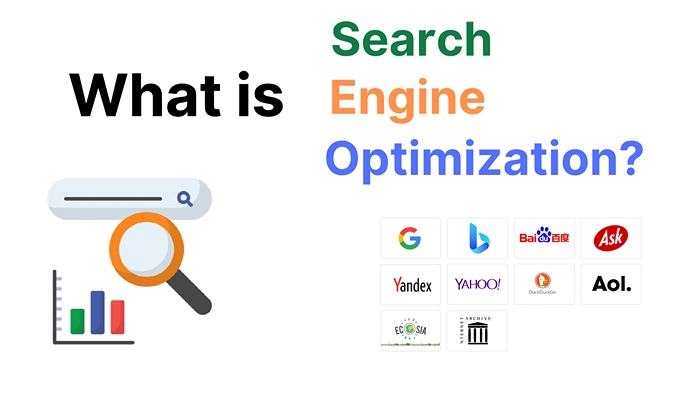
Search Engine Optimization (SEO) is the strategic process of improving a website to increase its visibility in search engines like Google, Bing, and Yahoo for relevant queries. Unlike paid advertising, SEO focuses on earning traffic through organic, non-paid search results.
Every day, billions of people turn to search engines to solve problems, find products, or answer questions. If you own a website, you want to be the answer they find. But simply publishing content isn't enough. You need to speak the language of search algorithms while delivering value to human readers.
Think of your website as a high-end restaurant tucked away in a massive city. The food might be incredible, but if the location is hidden, the signage is confusing, and no critics are talking about it, the dining room will stay empty.
In this analogy, search engines are the "food critics" and "city guides." They scour every street (crawling), categorize every menu (indexing), and recommend the best spots to hungry diners (ranking). SEO is the art of perfecting your menu, ensuring your decor is inviting, and getting those glowing reviews so the critics guide customers straight to your door.
Why is SEO Critical for Business Growth?
In a digital-first economy, visibility equals viability. Users rarely scroll past the first page of results, meaning if you aren't ranking, you are essentially invisible. The statistics highlight just how dominant organic search is compared to other channels.
-
Organic Search Dominance: Over 53% of all website traffic originates from organic search. This figure jumps to 64% for B2B sectors, proving that business buyers rely heavily on search to find vendors and solutions.
-
Traffic Source Breakdown:
- Organic search: 53%
- Direct traffic: 27%
- Paid advertising: 15%
- Social media: 5%
When you combine organic and paid search, search marketing controls over 76% of total web traffic. Ignoring SEO means ignoring three-quarters of your potential audience.
-
Click-Through Rates (CTR) Reality Check:
- Organic search results: 27.6% average CTR on position #1
- Paid ads: 3.17% average CTR
Users inherently trust organic results more than ads. They view high rankings as a vote of confidence from the search engine, leading to significantly higher engagement.
-
Revenue Impact:
- 46% of businesses report organic search influences more than 25% of their revenue.
- 26% state it impacts over 50% of their revenue.
-
Search Engine Market Share:
- Google controls roughly 92% of the search engine market.
- It processes over 8.5 billion searches daily.
- That equates to approximately 3.1 trillion searches annually.
Tangible Benefits for Global Business
Beyond the raw numbers, SEO provides strategic advantages that compound over time.
1. Brand Authority and Trust
When your brand appears at the top of search results for industry-related terms, it creates a psychological association of authority. Users perceive top-ranking sites as market leaders. This "search share of voice" builds trust before a user even clicks your link.
2. Full-Funnel Lead Generation
Organic search captures intent at every stage.
- Top of Funnel: A user searches "what is seo" (Informational).
- Middle of Funnel: They search "best seo tools for small business" (Commercial Investigation).
- Bottom of Funnel: They search "Digispot AI pricing" (Transactional). By creating content for each stage, you nurture leads naturally. To do this effectively, you must master search intent optimization to match your content to what the user actually needs.
3. Long-Term Cost Efficiency
Paid advertising (PPC) is like renting an apartment; the moment you stop paying, you're evicted (traffic stops). SEO is like buying a house. It requires an upfront investment in content and technical optimization, but once you rank, you own that visibility. The traffic you receive tomorrow doesn't cost you a per-click fee.
Summary: The growth of organic search traffic is vital for global businesses as it not only drives significant website traffic but also enhances brand visibility, generates high-quality leads, and contributes to overall revenue growth.
How Search Engines Actually Work
To dominate search results, you must understand the underlying mechanism. Search engines are not magic; they are sophisticated information retrieval systems. For a deeper dive, read our guide on how Google Search works.
The process consists of three main stages:
1. Crawling (Discovery)
Search engines use bots (also called spiders or crawlers) to scour the web. They start with a list of known URLs and follow links to discover new pages. If your site structure is messy or lacks internal links, bots may fail to find your best content.
2. Indexing (Filing)
Once a page is discovered, the bot analyzes it to understand what it's about. It looks at text, images, video, and code. This data is stored in a massive database called the Index. If your page isn't indexed, it cannot rank.
3. Ranking (Retrieval)
When a user types a query, the search algorithm sorts through the index to find the most relevant answers. It ranks them based on hundreds of factors, including relevance, authority, page speed, and user location.
It is crucial to remember that search engines are algorithms, not humans. While they use AI to simulate human understanding, they rely heavily on technical signals. They look for "hidden gems" in your code, such as structured data (Schema markup), which helps them understand entities (people, places, things) on your page.
Here are the specific bots you need to be aware of:
-
General Web Crawlers These act as the primary librarians of the internet. They scan HTML text, links, and metadata to determine the core topic of a page.
-
Image Search Bots These bots rely on file names, alt text, and surrounding context to understand visuals. If you upload an image named
IMG_1234.jpg, this bot learns nothing. Naming itseo-process-diagram.jpggives it context. -
Video Search Bots Video crawlers analyze titles, descriptions, and transcripts. They look for key moments within a video to serve as answers for specific queries.
-
Voice Search Crawlers Optimized for natural language, these bots look for conversational phrasing. They prioritize concise, direct answers often found in FAQ sections.
-
Large Language Model (LLM) Bots This is the new frontier. Bots from OpenAI (ChatGPT), Google (Gemini), and others crawl the web to train AI models. These bots focus on semantic depth and factual accuracy to power conversational answers.
-
E-Commerce Bots Specialized for retail, these bots scan for product-specific data like price, availability, and SKU numbers. Ensuring your product schema is correct allows these bots to display your items in "Shopping" tabs.
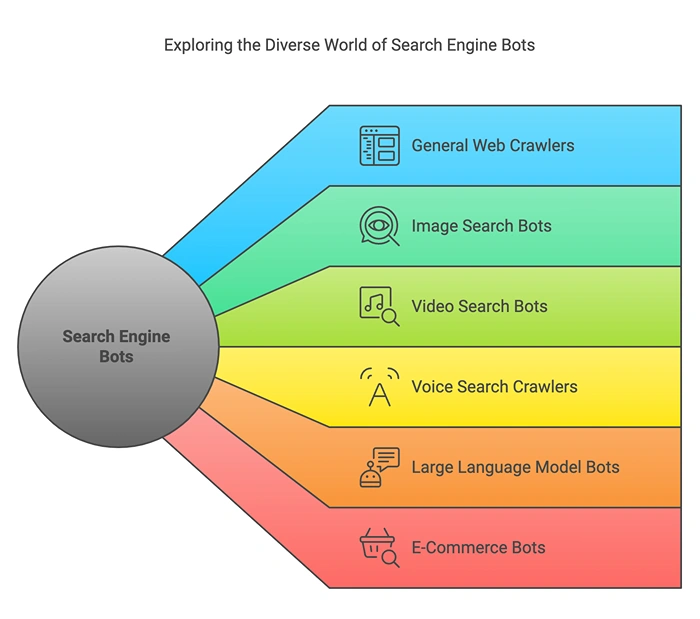
Understanding these bots allows you to segment your strategy. A visual portfolio site needs to prioritize Image Bots, while a B2B SaaS company should focus on General Crawlers and LLM optimization.
The Three Pillars of SEO Strategy
Successfully optimizing a website requires a holistic approach. SEO professionals generally categorize tasks into three pillars: Technical, On-Page, and Off-Page.
1. Technical SEO: The Foundation
Technical SEO ensures that search engines can crawl and index your site without issues. If your technical foundation is weak, your content—no matter how good—will struggle to rank.
- Site Speed: Users and Google expect pages to load in under 2.5 seconds.
- Mobile-Friendliness: With mobile-first indexing, Google ranks your site based on its mobile version, not the desktop version.
- Secure Sockets Layer (SSL): HTTPS is a confirmed ranking signal.
- Crawl Budget: For large sites, managing how many pages Google crawls per day is vital. Learn more about crawl budget optimization.
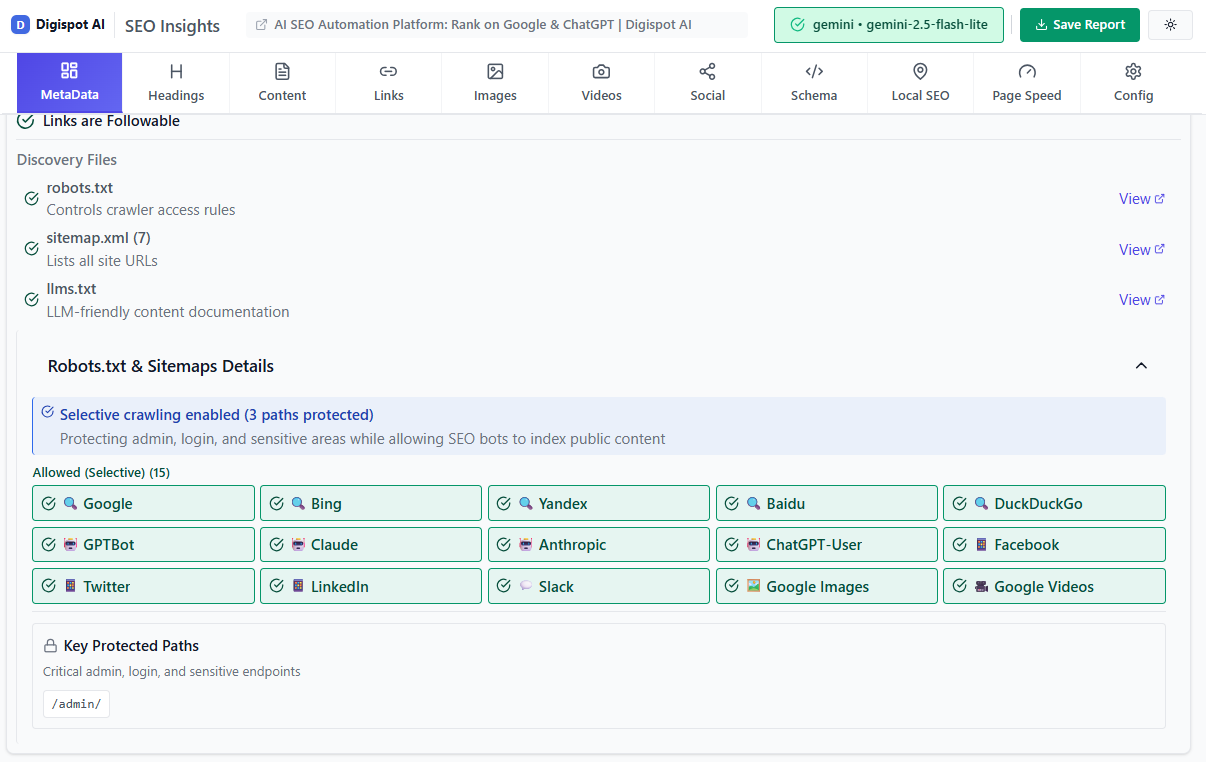
Turn invisible SEO data into clear visuals with our Free Chrome extension
Digispot AI helps you identify these invisible technical blockers automatically with AI-powered site audits, ensuring your foundation is solid.
2. On-Page SEO: The Content
This involves optimizing individual pages to rank for specific keywords.
- Keyword Research: Identifying terms with the right volume and intent.
- Content Quality: Writing comprehensive, helpful content that demonstrates Experience, Expertise, Authoritativeness, and Trustworthiness (E-E-A-T).
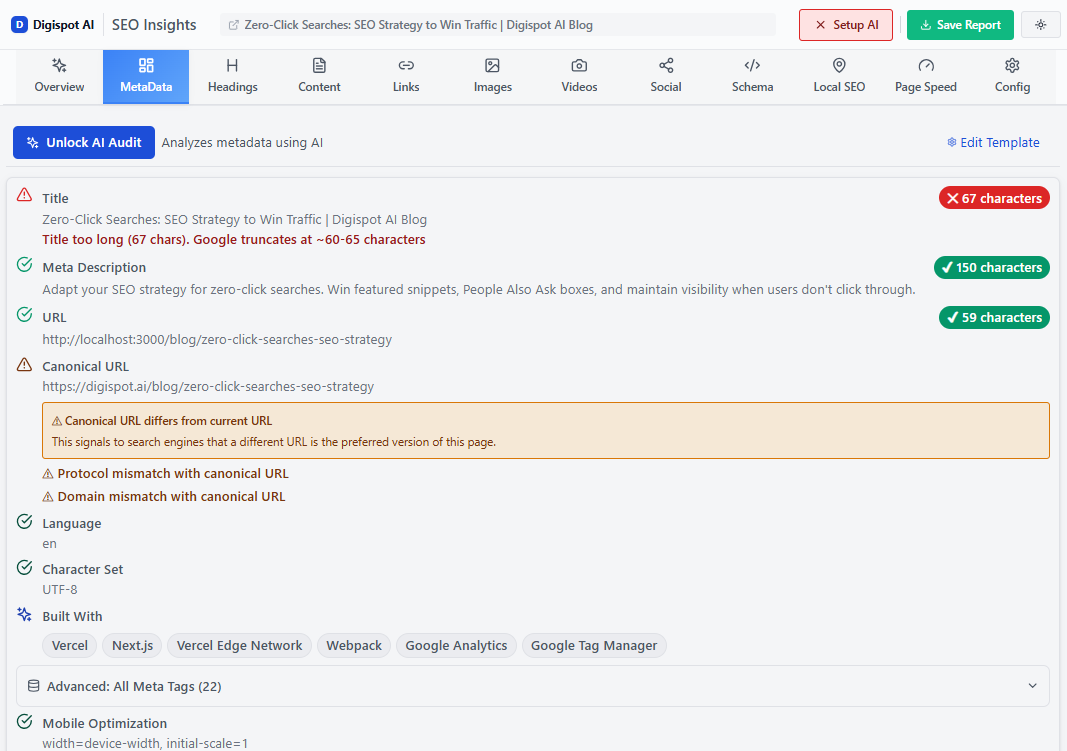
- Meta Tags: Writing compelling title tags and meta descriptions to improve click-through rates. Check our meta tags optimization guide for best practices.
- Internal Linking: Connecting related pages to help bots understand your site's hierarchy and distribute authority.
3. Off-Page SEO: The Authority
This refers to actions taken outside your website to impact your rankings. The biggest factor here is backlinks—links from other websites pointing to yours. Google views these as "votes."
- Link Building: Earning links from reputable industry sites.
- Digital PR: Getting mentioned in news outlets or industry blogs.
- Social Signals: While not a direct ranking factor, social shares increase visibility, which leads to more organic links.
Warning: Avoid "black hat" tactics like buying links or using link farms. Google's algorithms (like Penguin and SpamBrain) are highly sophisticated at detecting manipulation. Penalties can de-index your site entirely. Stick to earning links through high-quality content.
Modern SEO: Adapting to AI and Semantic Search
SEO is no longer just about matching keywords. Google's algorithms now use Semantic Search to understand the context and intent behind a query.
For example, if you search for "jaguar," does Google show you the animal or the car? By analyzing your search history and the surrounding words in your query (e.g., "jaguar speed" vs. "jaguar habitat"), the search engine determines the correct entity.
To succeed today, you must move beyond simple keywords and focus on semantic search SEO. This means:
- Covering topics in-depth rather than creating thin pages for single keywords.
- Using structured data to define entities clearly.
- Optimizing for "Zero-Click" searches where the answer appears directly on the results page.
The Rise of AI Overviews
With the introduction of AI Overviews (formerly SGE) in Google, users often get a generated summary at the top of the page. To appear in these snapshots, your content must be structurally sound and factually accurate. We cover strategies for this shift in our guide to zero-click searches.
Optimizing for Different Search Engines
While Google is the giant, a diversified strategy can capture untapped traffic.
- Google & Bing: Prioritize structured data, E-E-A-T signals, and mobile responsiveness.
- Image & Video Search: Use descriptive file names, alt text, and transcripts. YouTube is the world's second-largest search engine—don't ignore it.
- Voice Search (Siri/Alexa): Focus on long-tail, conversational keywords (e.g., "How do I fix a leaking faucet?" vs. "plumbing repair").
- AI-Powered Discovery: Tools like Perplexity and ChatGPT Search are becoming traffic sources. They favor content that is cited by other authoritative sources.
Measuring SEO Success
You cannot improve what you do not measure. SEO is data-driven.
- Google Search Console: The source of truth for organic performance. Track clicks, impressions, and index status.
- Google Analytics: Measure what users do after they land on your site (conversions, bounce rate, time on page).
- Keyword Rankings: Monitor your positions for target terms, but focus more on traffic and revenue than vanity metrics.
If you are seeing impressions but low clicks, you likely have a CTR issue. Learn how to fix this in our click-through rate optimization guide.
Get instant SEO insights on any page you visit with our free Chrome extension. It allows you to check meta tags, headers, and technical health in seconds.
Staying Ahead of the Curve
The only constant in SEO is change. Google updates its algorithm thousands of times per year.
- Core Updates: Major changes that reassess how Google ranks content.
- Helpful Content System: An ongoing signal that rewards content written for people, not just for search engines.
- AI Integration: The continued merging of generative AI into search results.
To stay competitive, regularly audit your website. What worked in 2023 might be obsolete in 2026. Use AI-driven tools like Digispot AI to keep your strategy agile.
Conclusion: SEO is a Journey, Not a Destination
SEO is not a one-time checklist; it is an ongoing discipline of improvement and adaptation. It blends technical engineering with creative content marketing. By understanding the core principles—crawling, indexing, and ranking—and applying them consistently, you can build a sustainable traffic engine for your business.
Remember, successful SEO starts with putting your audience first. Serve them with valuable, relevant, and engaging content, and search engines will reward your efforts with higher rankings and greater visibility.
Ready to improve your SEO performance? Try Digispot AI for comprehensive website audits and actionable recommendations that take the guesswork out of optimization.
You can also check out our Why SEO Audit Matters, SEO Audit Checklist for 2026, and Canonical URL Guide to deepen your technical knowledge.
References and Further Reading
Audit any page in seconds
300+ SEO checks including Core Web Vitals, schema markup, meta tags, and AI readiness — trusted by 1000+ SEO experts and marketers.
Frequently Asked Questions
Here are some of our most commonly asked questions. If you need more help, feel free to reach out to us.
Written by
Maya Krishnan
Digital growth expert
Maya is a seasoned expert in web development, SEO, and digital strategy, dedicated to helping businesses achieve sustainable growth online. With a blend of technical expertise and strategic insight, she specializes in creating optimized web solutions, enhancing user experiences, and driving data-driven results. A trusted voice in the industry, Maya simplifies complex digital concepts through her writing, empowering readers with actionable strategies to thrive in the ever-evolving digital landscape.