Google Business Profile Ranking Factors 2026: Full Guide
Discover the critical Google Business Profile ranking factors for 2026. Learn how to optimize relevance, prominence, and distance to dominate the Local Pack.
 Maya Krishnan
You have a verified Google Business Profile. You uploaded a logo. You even posted an update last month. Yet, when you search for your services, competitors with fewer reviews and uglier photos sit comfortably in the top three spots of the Local Pack.
It is frustrating, but it is not random.
Local SEO operates on a specific set of algorithmic rules that differ significantly from traditional organic search. While standard SEO focuses on website authority and content depth, local algorithms prioritize physical location, category precision, and specific trust signals.
Understanding these mechanics is the difference between getting lost in the "View All" map expansion and dominating the top three spots that capture the majority of local clicks.
This guide breaks down the confirmed and data-backed ranking factors for Google Business Profile (GBP) in 2026, helping you move from invisible to unavoidable.
Note: this article focuses on the ranking signals—the factors that determine where you sit in the Local Pack. If you want the step-by-step how-to for setting up and refining your profile, follow our Google Business Profile optimization guide instead.
Key Takeaways
- Get your Primary Category right first. It is the single most influential ranking factor—choose the most specific option, then add relevant secondary categories rather than irrelevant ones.
- Build reviews steadily, not in bursts. A consistent trickle with natural, service-specific keywords beats sudden spikes that trip spam filters.
- Treat your website as part of your listing. Organic authority,
LocalBusinessschema, and fast Core Web Vitals directly feed the "prominence" pillar and reinforce your GBP data. - Keep NAP identical everywhere. Citations rarely lift you, but inconsistent name, address, or phone data erodes Google's trust and drags you down.
- Earn behavioral signals honestly. Clicks, calls, and direction requests move rankings—fresh photos, Posts, and complete attributes drive them; bot traffic gets punished.
The Core Trinity: How Google Determines Local Rank
Before obsessing over individual tactics, you must understand the framework Google uses to sort local businesses. Google explicitly states that local results are based primarily on three pillars: Relevance, Distance, and Prominence.
Every optimization task you perform feeds into one of these three buckets.
1. Relevance
This measures how well a local business profile matches what someone is searching for. If a user searches for "emergency plumber," a profile categorized merely as "handyman" may be deemed less relevant, even if the business offers plumbing services.
Actionable Insight: Vague descriptions hurt you. Google needs explicit data points—via categories, attributes, and on-site content—to understand the full scope of your services.
2. Distance (Proximity)
This calculates how far each potential search result is from the location term used in a search. If a user doesn't specify a location, Google calculates distance based on what it knows about their location.
The Hard Truth: You cannot "optimize" your physical location without moving. If you are 20 miles away from the searcher, you will not rank in the Map Pack for that specific query, regardless of your SEO efforts. Focus your energy on ranking in areas where you are physically competitive.
What you can influence is where your relevance is concentrated. Two levers help you compete outside your immediate block:
- Service-area geometry. For a Service Area Business, the areas you list act as soft geographic hints. Define them around real, adjacent neighborhoods you actually serve rather than an entire metro—overreaching dilutes your relevance in your core zone.
- Geo-specific content. Dedicated, genuinely unique pages for each city or neighborhood you serve extend how far your prominence reaches. This is where geo-targeting for local search does the heavy lifting the map pin cannot.
A useful edge case: search from a competitor's neighborhood using an incognito browser with location spoofing to see the ranking grid from their proximity, not yours. It reveals which zones are realistically winnable before you invest content effort.
3. Prominence
Prominence refers to how well-known a business is. This is where Google pulls data from across the web. It looks at your review count, star rating, backlinks, articles about your business, and your position in organic search results.
The Bridge: This is where traditional SEO meets Local SEO. A strong website helps your map listing rank higher.
Digispot AI can help you identify gaps in your prominence signals by auditing your backlink profile and website authority relative to your local competitors.
Primary and Secondary Categories: The #1 Factor
If you get this wrong, nothing else matters.
Your Primary Category is widely accepted by SEO professionals as the single most influential ranking factor. It acts as the primary filter for the algorithm. If you are a "Pizza Restaurant" but categorize yourself primarily as a "Meal Delivery," you will struggle to rank for "best pizza near me."
Strategic Categorization
Many businesses fit into multiple boxes. A law firm might be a "Lawyer," "Personal Injury Attorney," and "Trial Attorney."
- Be Specific: Always choose the most specific category available as your Primary Category. Use "Cosmetic Dentist" rather than just "Dentist" if that is your main revenue driver.
- Utilize Secondary Categories: You can (and should) add up to 9 secondary categories. This informs Google that while you are primarily a "Gym," you also qualify as a "Personal Trainer" and "Yoga Studio."
Warning: Do not add irrelevant categories in an attempt to capture traffic. If you are a grocery store that sells flowers, add "Florist." If you just sell pre-packaged bouquets at the checkout, adding "Florist" may confuse the algorithm and dilute your relevance.
The Business Name Controversy
Does having keywords in your business name help you rank? Yes. Should you stuff keywords into your GBP name? Generally, no.
Data consistently shows that a business named "Dallas 24/7 Emergency Plumbing" will rank higher for "emergency plumbing" than a business named "Smith & Sons." This is a strong ranking signal.
However, Google’s guidelines are strict: Your GBP name must match your real-world business name.
The Risk of Keyword Stuffing
If your legal name is "Smith & Sons" but you set your GBP name to "Smith & Sons Plumbing & Heating Best Prices," you are violating guidelines.
Competitors and "Local Guides" can suggest edits to your name. If Google verifies the spam, they may:
- Revert the name (causing a ranking drop).
- Suspend the listing entirely (hard suspension removes you from Maps).
Strategy: If you are rebranding or starting a new business, consider including a descriptor in your legal entity name. If you are established, focus on legitimate ranking factors rather than risking your entire profile on a name hack.
Review Signals: Quality, Velocity, and Context
Reviews are not just a vanity metric; they are a critical ranking fuel. Google analyzes three distinct aspects of your review profile.
1. Review Quantity and Score
A 4.8 rating with 200 reviews usually beats a 5.0 rating with 5 reviews. You need enough volume to establish statistical significance and trust.
Volume also cushions you against damage. A single one-star review drops a 5-star average with 5 reviews down to roughly 4.3; the same review barely moves a profile with 200. Depth is your buffer. Practically, that means asking every satisfied customer, not just the delighted ones—make the request part of your closeout routine (a follow-up text with a direct review link converts far better than a business card). For a repeatable system that keeps the flow steady, see our guide on how to get more Google reviews.
2. Review Velocity
Getting 50 reviews in one day and zero for the rest of the year looks suspicious (spam behavior). A steady trickle of 2-5 reviews per week signals an active, healthy business.
3. Keywords in Reviews
This is often overlooked. When a customer writes, "They did amazing landscape lighting for my backyard patio," Google associates your profile with those terms.
How to leverage this: When asking for reviews, guide the client. Instead of saying "Please review us," try: "Could you mention the specific service we performed (like the drainage repair) in your review? It helps others find us."
The Website Connection: Organic Authority
Your Google Business Profile does not live in a vacuum. It is tethered to the website URL you provide in the profile. Google crawls your website to verify data and assess authority.
If your website ranks well organically for "HVAC repair," your Map Pack listing is more likely to rank for that term too.
Local Landing Pages
If you serve multiple cities but have one physical office, you need robust location pages on your site. However, avoid "doorway pages" (duplicate content with just the city name swapped).
Best Practice for Local Pages:
- Unique content describing specific projects in that city.
- Embed a Google Map of your service area.
- Include local testimonials.
- Mention local landmarks or neighborhoods.
Check your current landing page optimization with our free On-Page SEO Analysis tool. It will help you ensure your keywords and geography are properly targeted.
For a deeper dive on structuring your site for authority, read our guide on E-E-A-T principles.
Behavioral Signals: The User Vote
Google watches how users interact with your listing. If you rank #1 but nobody clicks, you won't stay #1 for long. Conversely, if you are #4 but receive heavy engagement, you will likely move up.
Key Metrics Google Tracks:
- Click-Through Rate (CTR): Clicks to website.
- Mobile Clicks-to-Call: High intent signal.
- Direction Requests: Users driving to your location.
- Dwell Time: How long they look at your profile or photos.
Optimization Tactics
You cannot fake these signals (bot traffic is easily detected and punished). You must earn them:
- Better Photos: Profiles with high-quality, regularly updated photos receive significantly more clicks.
- Posts: Use Google Posts to share offers. A "20% Off" deal visible right on the map listing drives clicks.
- Complete Attributes: Fill out every available field (WiFi, Wheelchair Accessible, Women-Led). These attributes often appear as justifications in search results (e.g., "Sold here: Vegan Pizza").
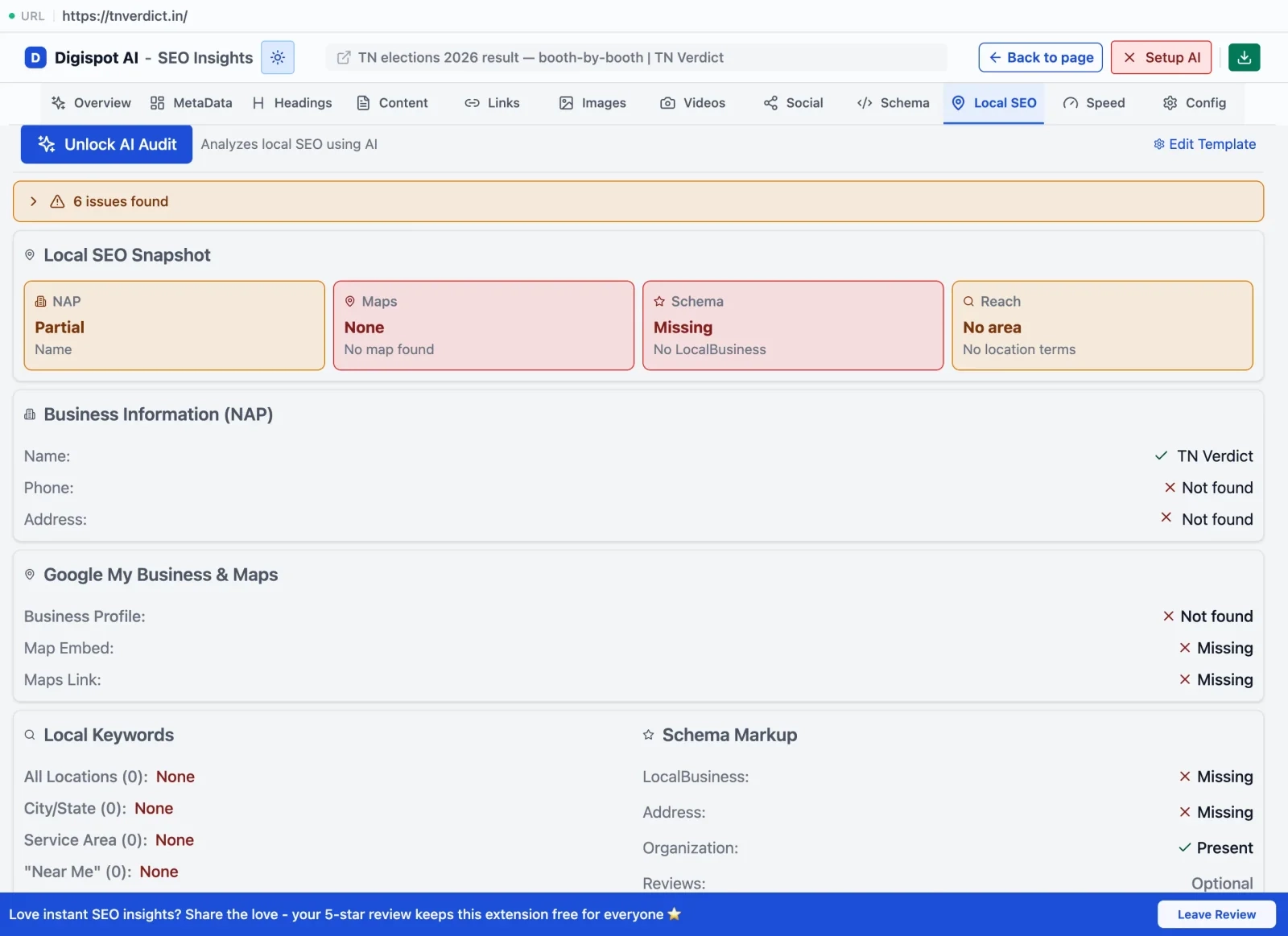
On-Page Signals and Schema Markup
Structured data (Schema) is a language that helps search engines understand your content. For local businesses, LocalBusiness schema is mandatory.
This code sits on your homepage (or location page) and explicitly tells Google your NAP (Name, Address, Phone), operating hours, and geo-coordinates. It reinforces the data on your GBP, resolving any inconsistencies.
Implementation: You don't need to be a coder. Use the free Schema Markup Generator to create valid JSON-LD code for your business, then paste it into your site's header.
If you are unsure if your current site has valid schema, test it immediately with the Schema Markup Visualizer.

Citations and NAP Consistency
Citations are mentions of your business name, address, and phone number on other websites (Yelp, YellowPages, BBB, industry directories).
Are Citations Still Important?
In 2015, they were critical. In 2026, they are "table stakes."
Having citations won't skyrocket you to #1, but inconsistent citations can drag you down. If Google sees three different phone numbers and two different addresses for your business across the web, it loses trust in your data reliability.
The Strategy:
- Focus on the "Big Aggregators" (Data Axle, Foursquare, etc.).
- Ensure your NAP on your website footer matches your GBP exactly.
- Prioritize niche-relevant directories over generic ones (e.g., Avvo for lawyers, Houzz for contractors).
For a step-by-step approach to building and cleaning up listings, work through our guide to local citations, and treat NAP consistency as the non-negotiable foundation underneath all of it.
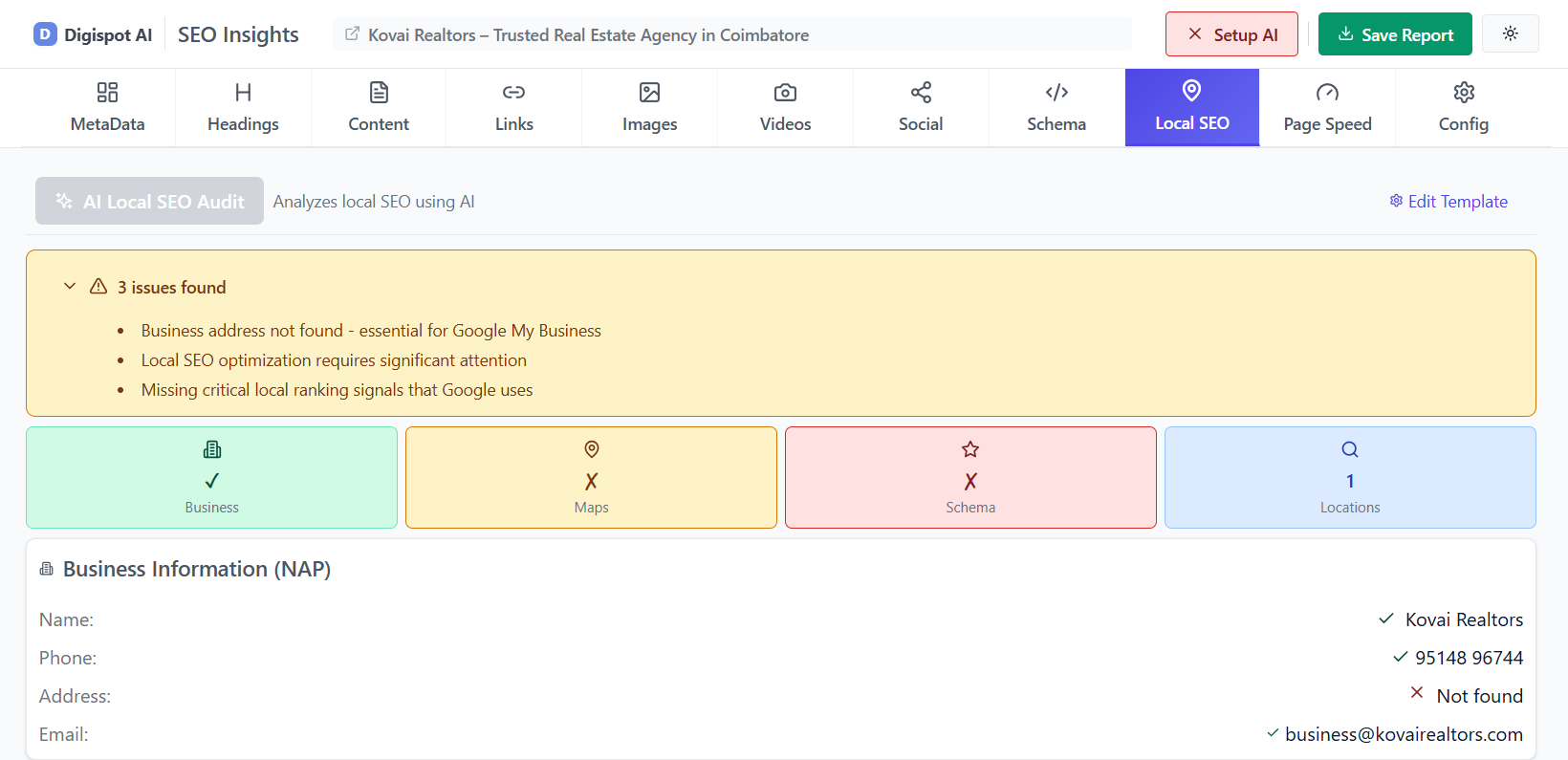
Turn invisible SEO data into clear visuals with our Free Chrome extension
Learn more about how external signals impact your standing in our backlink profile guide.
AEO: The New Frontier of Local Search
With the rise of Answer Engine Optimization (AEO), users are increasingly asking tools like ChatGPT, Claude, and Perplexity for local recommendations.
"Find me a quiet coffee shop in Austin with good wifi and vegan options."
These AI engines rely heavily on:
- Structured Data: To understand "coffee shop" + "wifi" + "vegan."
- Review Sentiment: Analyzing the text of reviews to confirm "quiet."
- Entity Consistency: Ensuring the business information is consistent across the web.
Digispot AI is specifically built to track these AEO metrics. Unlike traditional rank trackers that only look at Google Maps, our platform analyzes how your business entities are perceived by Large Language Models.
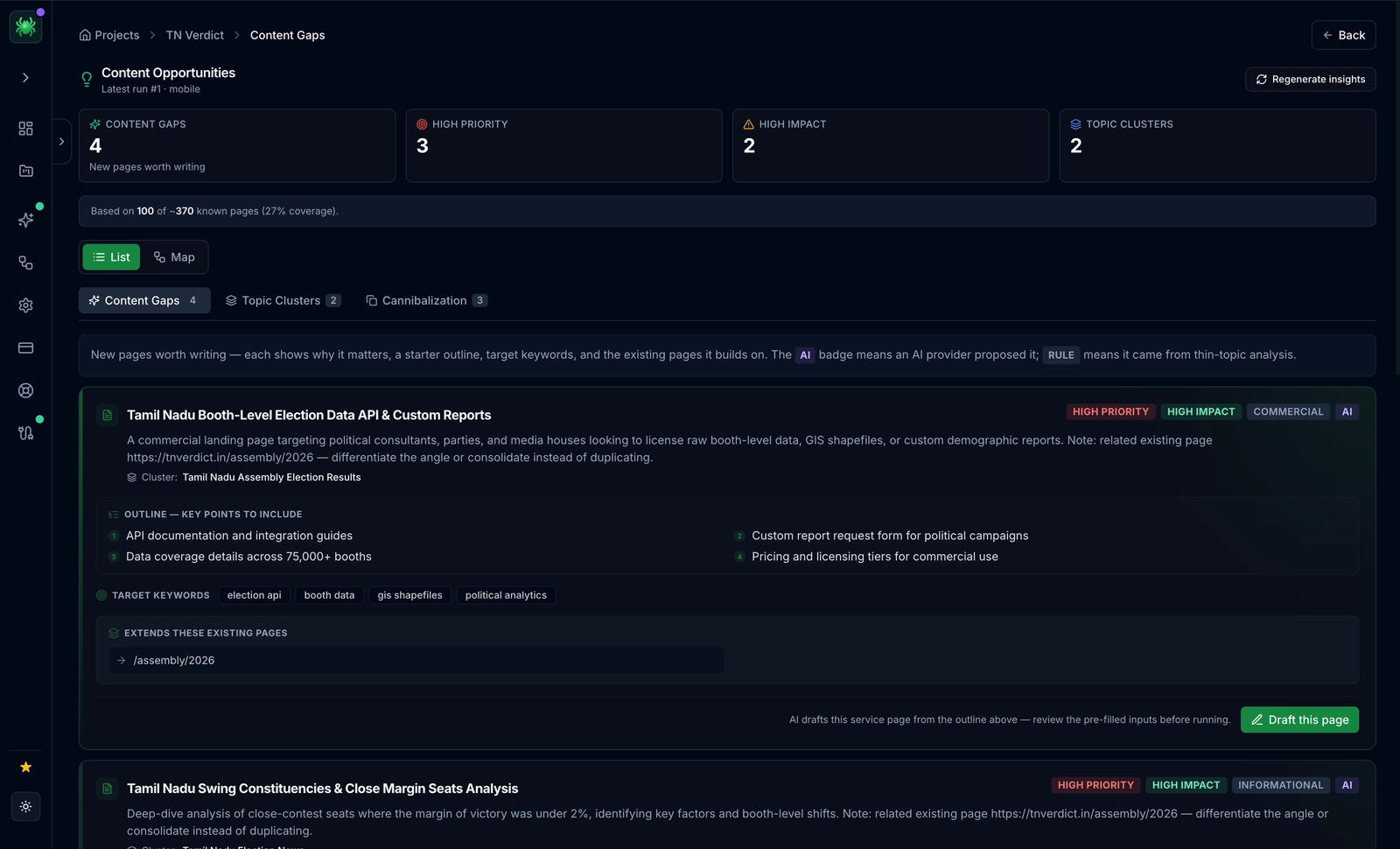
Negative Ranking Factors: What to Avoid
Optimizing is half the battle; avoiding penalties is the other half. The following tactics can lead to algorithmic suppression or manual suspension.
1. The Virtual Office Trap
Using a UPS Store, P.O. Box, or virtual office as your business address is a violation. Google creates filters specifically to catch these addresses. If you are a Service Area Business (SAB), hide your address. Do not fake a physical location.
2. Keyword Stuffing
We mentioned the business name, but this also applies to responses to reviews and business descriptions. Writing "Best plumber best plumber cheap plumber" in your description looks spammy and degrades user trust.
3. Duplicate Profiles
Creating multiple profiles for the same business at the same location to dominate the map is a violation. Google will eventually merge or suspend them.
4. Poor Core Web Vitals
If users click through to your site and bounce immediately because it loads slowly, that negative behavioral signal bounces back to Google. Ensure your site is fast. Read our Core Web Vitals guide to fix these issues.
How to Audit Your Local Performance
You cannot improve what you do not measure. A comprehensive local audit should check:
- NAP Consistency: Is data identical across Google, Bing, and Apple Maps?
- Category Benchmarking: What categories are top competitors using?
- Photo Density: Do you have more or fewer photos than the market leader?
- Review Sentiment: What common keywords appear in negative reviews?
Get instant SEO insights on any page—including competitor local landing pages—with our free Chrome extension. It allows you to peek under the hood of successful competitors to see their schema, headers, and meta tags in real-time.
For a full site-wide checkup, refer to our 2026 SEO Audit Checklist.
Start Improving Your Local Rankings Today
Ranking in the Local Pack is not about finding a "secret trick." It is about consistent execution of the fundamentals: accurate data, genuine reviews, relevant content, and a technically sound website.
As search evolves into AI-driven results, the businesses that provide clear, structured, and authoritative data will win.
Ready to improve your search visibility? Try Digispot AI for comprehensive website audits and actionable recommendations that bridge the gap between traditional SEO and the new world of AI search.
Benchmark Local Prominence with the Digispot AI SEO Spider
Google's "prominence" signal — how well-known and authoritative your business is — leans heavily on your website's backlink profile, not just your GBP activity. The Digispot AI SEO Spider, the only SEO crawler your AI agent can run, is a desktop crawler and auditor that renders pages in a real browser like Googlebot and runs 300+ SEO and AEO checks per page. Use its Link Insights to compare your referring domains and authority against the businesses winning the Local Pack, so you know exactly how much link equity separates you from the map leader.
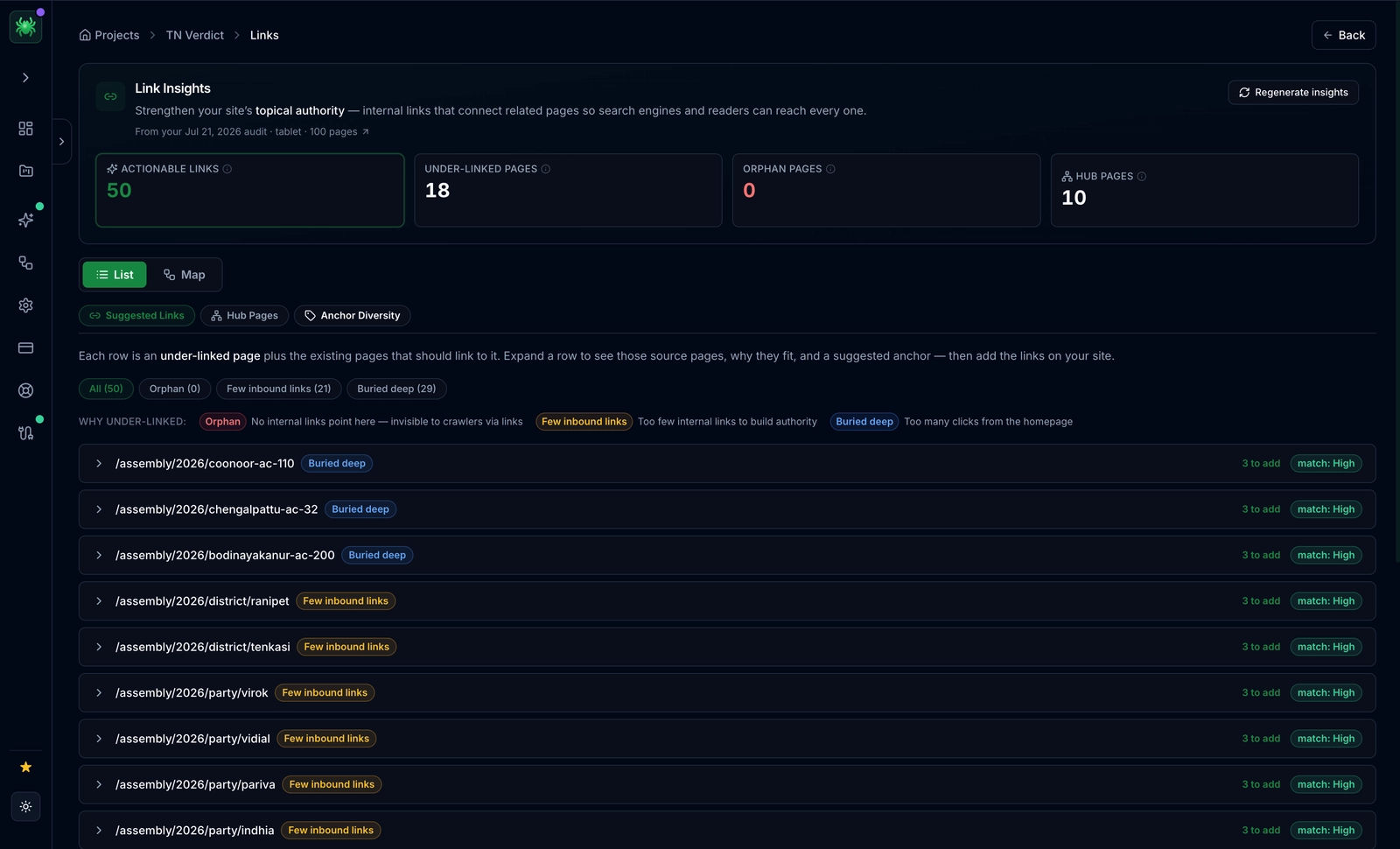
The same crawl covers the on-site half of local ranking: it verifies NAP consistency inside your schema, confirms valid LocalBusiness structured data, and flags mobile and Core Web Vitals problems. Every issue is ranked by traffic-at-risk, so multi-location brands repair their highest-value location pages first. It syncs GSC and GA4 and ships an MCP server, letting an agent like Claude or Cursor run the crawl and apply fixes. From $14/mo.
Related deep-dives
Continue with these closely related guides:
- to rank higher — How to Rank Higher in Google Maps (2026 Local SEO Guide)
- what is local seo? — What Is Local SEO? A Complete Beginners Guide for 2026
References
Audit any page in seconds
300+ SEO checks including Core Web Vitals, schema markup, meta tags, and AI readiness — trusted by 1000+ SEO experts and marketers.
Frequently Asked Questions
Here are some of our most commonly asked questions. If you need more help, feel free to reach out to us.
Written by
Maya Krishnan
Digital growth expert
Maya is a seasoned expert in web development, SEO, and digital strategy, dedicated to helping businesses achieve sustainable growth online. With a blend of technical expertise and strategic insight, she specializes in creating optimized web solutions, enhancing user experiences, and driving data-driven results. A trusted voice in the industry, Maya simplifies complex digital concepts through her writing, empowering readers with actionable strategies to thrive in the ever-evolving digital landscape.