How to Improve Your Backlink Profile for SEO
Strengthen your backlink profile for better SEO rankings. Earn quality links, identify and remove toxic backlinks, and build sustainable domain authority.
 Maya Krishnan
Standing out online in today's crowded digital world can often feel like an overwhelming challenge. Every business strives for visibility, because simply having a great website isn't enough; potential customers need to find you. This is precisely where the undeniable power of a strong backlink profile emerges, acting as a crucial signpost for search engines like Google, guiding them directly to your digital doorstep.
Think of it this way: your website is a fantastic new restaurant opening in a bustling city. A backlink is essentially a glowing recommendation from another established business or a trusted food critic, pointing people directly to your door. The more quality recommendations you receive from reputable sources, the more trustworthy and popular your restaurant appears, naturally leading to more eager visitors. In the digital realm, these recommendations are links, and their collective strength forms your backlink profile. This comprehensive guide will demystify backlinks, walk you through the "what" and "how" of building a powerful profile, and show you how smart tools can make this journey smoother and significantly more effective.
Key Takeaways
- Audit before you build. Map your current referring domains, anchor text spread, and any toxic links first — you can't improve a profile you haven't measured.
- Chase quality, not counts. A handful of relevant, authoritative, editorially earned links will outrank a pile of low-quality ones every time.
- Let great content carry the weight. Long-form guides, original data, and useful tools are the most durable link magnets; outreach amplifies them but rarely replaces them.
- Keep anchor text natural. Blend branded, generic, and partial-match anchors — over-optimized exact-match text is a common trigger for algorithmic devaluation.
- Prune and monitor continuously. Regularly review new and lost links, and disavow genuinely toxic domains only after careful analysis to keep your profile clean.
What Are Backlinks and Why Are They Your Website's Best Friend?
At its core, a backlink (also known as an inbound link or external link) is a hyperlink from one website to another. When Website A links to Website B, it's considered a backlink for Website B. These links are much more than simple navigation tools; they are fundamental signals that search engines use to determine the credibility, authority, and relevance of your website. Think of them as votes of confidence. The more high-quality, relevant "votes" your website receives from other authoritative sites, the more search engines will trust and favor your content.
For Google and other AI-powered search engines, backlinks are a cornerstone of their ranking algorithms. They help search engines:
- Discover New Content: Bots follow links to find new pages and content.
- Determine Authority: A site with many quality backlinks is seen as a trustworthy source.
- Understand Relevance: Links from related topics signal what your content is about.
Without a strong backlink profile, even the most beautifully designed and expertly written website can struggle to rank in search results, hidden away on pages where few users venture.
The Unseen Power: What Are the Benefits of a Strong Backlink Profile?
Investing time and effort into building a robust backlink profile yields a multitude of benefits that directly contribute to your online success. These advantages extend beyond just search engine rankings, impacting your overall brand presence and business outcomes.
| Benefit | Explanation |
|---|---|
| Improved Search Engine Rankings | This is often the primary goal. Quality backlinks are a major ranking factor. Websites with more relevant, authoritative backlinks tend to rank higher for their target keywords, leading to greater visibility on search engine results pages (SERPs). |
| Increased Organic Traffic | Higher rankings translate directly into more organic traffic. When your website appears on the first page of Google, especially in the top positions, you naturally attract more clicks from users searching for information, products, or services related to your business. |
| Enhanced Domain Authority and Trust | Each high-quality backlink acts as an endorsement, signaling to search engines that your website is a credible and reliable source of information. Over time, this builds your domain authority (DA) and page authority (PA), making it easier for your new content to rank. |
| Faster Content Discovery/Indexing | Search engine crawlers (bots) follow links from one page to another. A healthy backlink profile means these bots will find and index your new content more quickly, allowing it to appear in search results sooner. |
| Referral Traffic | Beyond search engines, backlinks can directly send visitors to your site. When a user clicks on a link from another website to yours, that’s referral traffic. These visitors are often highly engaged, as they've been specifically directed by a source they were already interacting with. |
| Brand Visibility and Credibility | Being linked to by reputable websites places your brand in front of new audiences and associates your business with authority. This exposure can significantly boost brand recognition and establish your company as a thought leader or reliable resource within your industry. |
| Better Business Outcomes | Ultimately, all these benefits converge to improve your business's bottom line. Increased visibility leads to more leads, higher conversion rates, and ultimately, greater revenue. It also offers significant time and cost savings compared to continually paying for ads for visibility. |
Starting Point: How Do You Understand Your Current Backlink Profile?
Before you can improve something, you need to know its current state. Understanding your existing backlink profile is the crucial first step in any effective link-building strategy. This involves an audit to identify not just the number of links, but their quality, relevance, and overall health.
What to Look For During Your Backlink Audit:
- Quantity of Referring Domains: How many unique websites are linking to you? A diverse set of referring domains is usually better than many links from a single site.
- Quality and Authority of Referring Domains: Are the linking sites reputable, relevant, and authoritative in their own right? A link from a low-quality, spammy, or irrelevant site can actually harm your SEO.
- Anchor Text Distribution: What words or phrases are being used to link to your site? A natural, diverse mix of anchor texts (brand name, specific keywords, generic terms like "click here") is ideal. Over-optimization with exact-match keywords can be seen as manipulative.
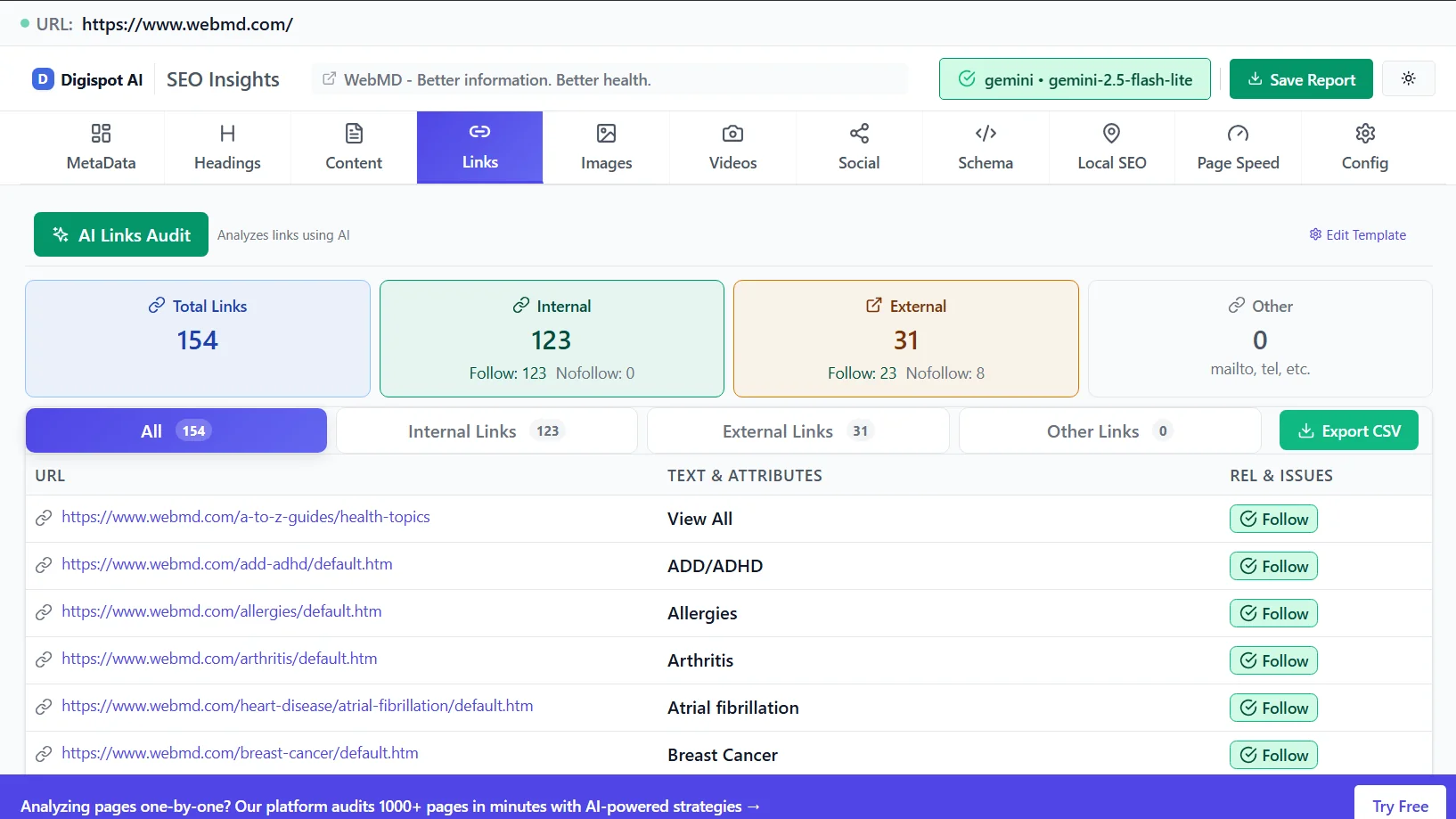
- Link Type (Dofollow vs. Nofollow): Dofollow links pass "link equity" or "SEO juice," while nofollow links generally do not. While dofollow links are primarily what you're after for SEO benefits, a natural profile will include a mix of both.
- Link Velocity: How quickly are you acquiring new links? Sudden spikes can sometimes signal unnatural link-building practices.
- Toxic or Harmful Links: Are there any links from spammy websites, link farms, or irrelevant foreign sites that could be hurting your ranking or even leading to a Google penalty?
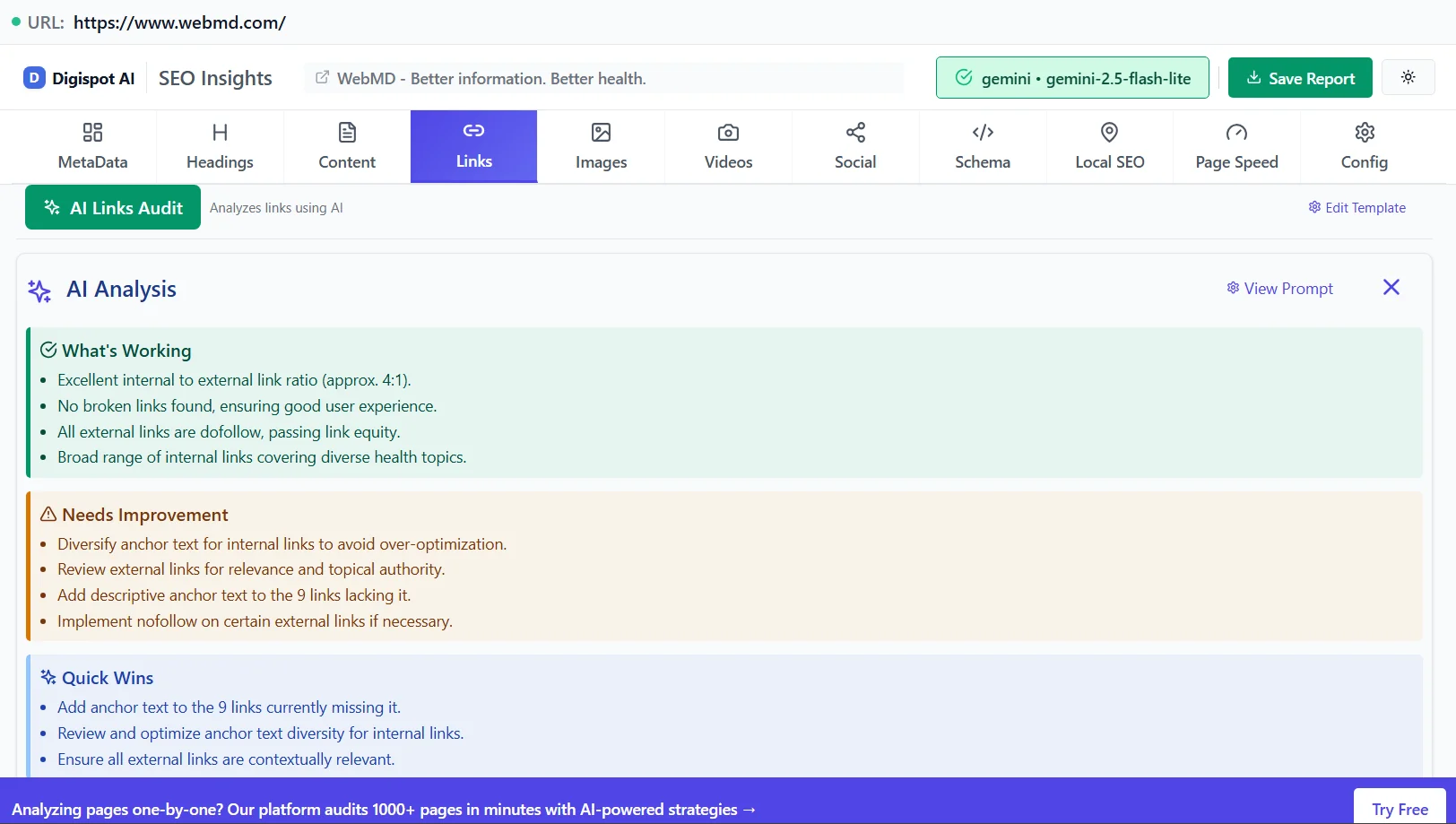
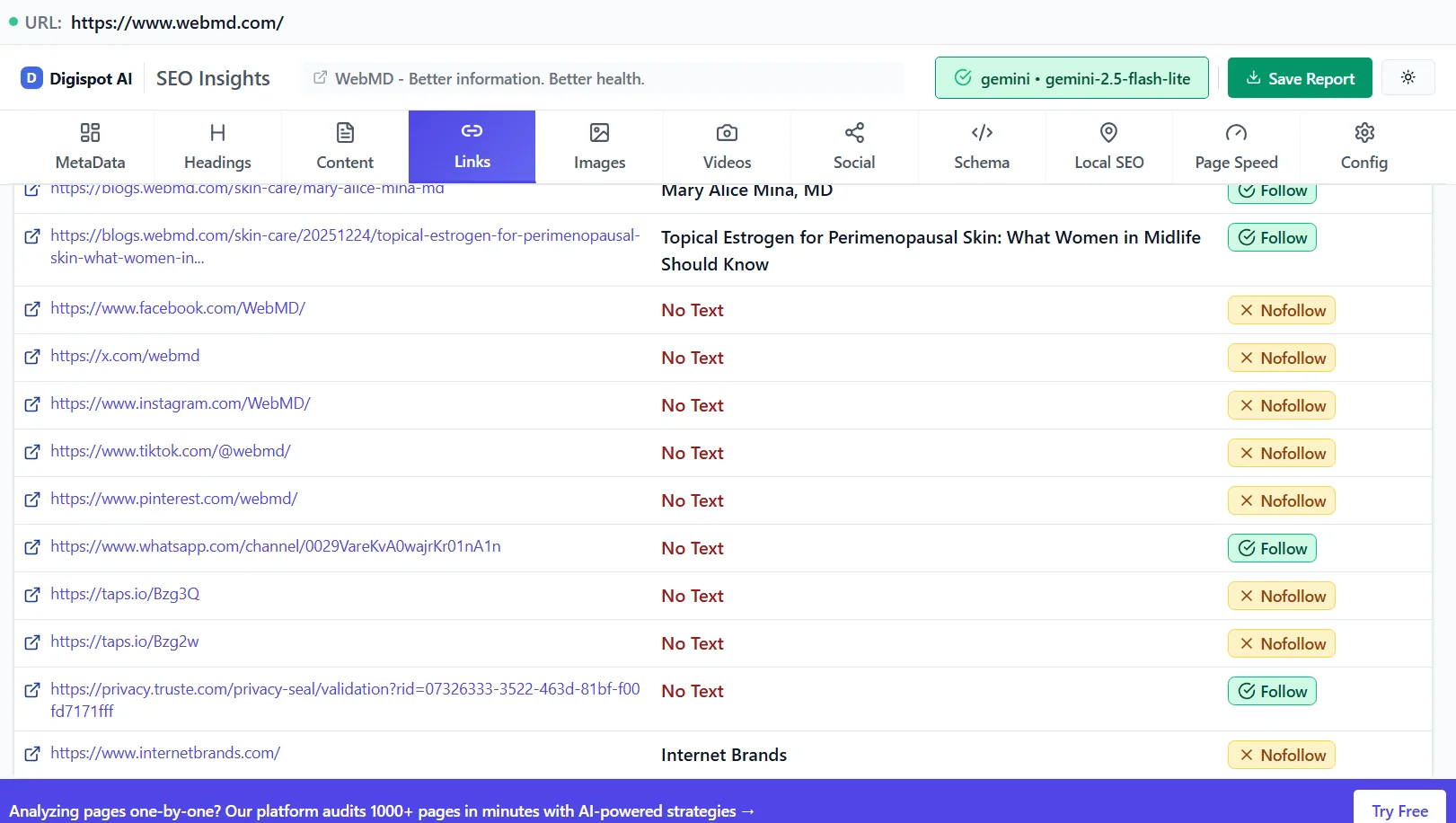
Tools like Google Search Console offer a free way to see some of your backlinks. However, for a truly comprehensive and in-depth analysis, specialized SEO platforms are invaluable. For example, Digispot AI can meticulously audit your website in both mobile and desktop modes, checking against 300+ ranking factors, including comprehensive backlink analysis. This level of detail provides you with a clear, actionable picture of your current standing, allowing you to identify both strengths to leverage and weaknesses to address.
Building Bridges: What Are the Most Effective Strategies for Acquiring High-Quality Backlinks?
Once you understand your current backlink profile, you can start strategically building new, high-quality links. This isn't about getting as many links as possible; it's about acquiring relevant, authoritative, and natural links that genuinely enhance your website's value in the eyes of search engines and users.
1. Content is King (and Your Best Link Magnet)
The fundamental truth of link building is that people link to great content. If your website offers valuable, unique, and well-researched information, other sites will naturally want to reference it.
- Create Link-Worthy Content:
- Long-form Guides and Evergreen Resources: Comprehensive guides on a specific topic can become definitive resources that others reference repeatedly.
- Data-Driven Research and Original Studies: Publishing unique data or conducting original research positions you as an industry authority, making your content highly linkable.
- Infographics and Visual Content: Complex information presented visually is easily digestible and shareable, often leading to natural links.
- Interactive Tools or Calculators: If you offer a useful tool, other sites in your niche might link to it as a helpful resource for their audience.
- The "Skyscraper Technique": This involves finding existing content that is popular and has many backlinks, then creating something significantly better, more comprehensive, or more up-to-date. Once your superior piece is ready, you reach out to websites that linked to the original content, suggesting they link to your improved version instead.
- Guest Blogging: Write high-quality articles for other reputable websites in your industry. In return, you usually get a backlink to your site within the author bio or content. Focus on quality over quantity, choosing sites with good domain authority and a relevant audience.
2. Reclaiming What's Yours: Link Reclamation
Sometimes, you don't have to create new content to earn a link; you just need to claim what's already yours.
- Broken Link Building: This technique involves finding broken links on other websites (links that lead to a 404 error page). Once you find a broken link, you reach out to the website owner, notify them of the broken link, and suggest your relevant content as a replacement. It's a win-win: they fix a problem, and you get a backlink.
- Unlinked Brand Mentions: Periodically search the web for mentions of your brand, products, or key personnel that don't include a link back to your website. Many tools can help you do this. When you find one, politely reach out to the website owner and ask if they would consider adding a link.
3. Spying Smart: Competitor Backlink Analysis
Your competitors' backlink profiles are a treasure trove of opportunities. If a website links to your competitor, it might also be willing to link to you, especially if you offer similar or superior content.
- Identify Competitors' Strong Backlinks: Use SEO tools to analyze the backlinks of your top-ranking competitors, then sort by authority and relevance to surface the links actually moving the needle rather than every low-value mention.
- Find New Opportunities: Run a "link intersect" — websites that link to two or three of your competitors but not to you. These sites have already shown they link to businesses like yours, which makes them the warmest outreach prospects. Resource pages, "best of" roundups, and industry blogs that appear repeatedly across competitor profiles deserve the top of your list. A structured competitor SEO analysis turns this from a scattershot exercise into a repeatable playbook.
- Digispot AI's integrated Opportunity Finder can help you identify these valuable link-building possibilities by analyzing your competitors' backlink strategies and spotting gaps you can fill. It streamlines the often tedious process of competitor research, providing you with targeted leads.
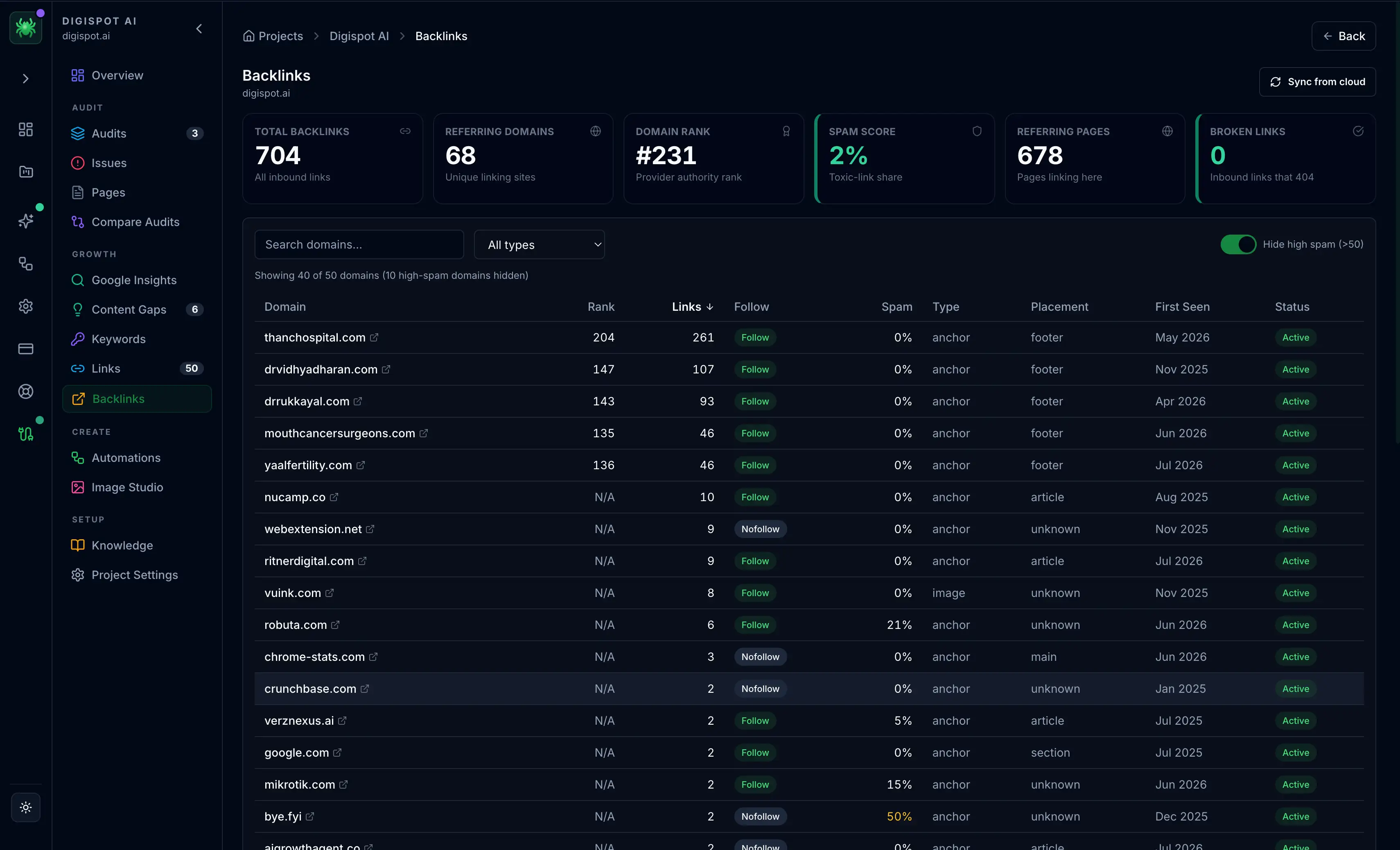
The Digispot AI Spider makes this a side-by-side read. Track a rival by its domain and its Competitors module sets your referring-domain count against theirs, pulling each profile from Digispot's cloud so you can see the off-page gap at a glance. Because unmeasured data is never shown as zero, a rival you have not looked up reads as "not measured yet" rather than a misleading empty score — so you always know whether a gap is real or simply unchecked.
4. Strategic Outreach
No matter the technique, effective link building often comes down to successful outreach.
- Personalized Emails: Avoid generic templates. Tailor each email to the specific website and contact person, explaining why your content is valuable to their audience.
- Building Relationships: Think long-term. Engage with other industry leaders on social media, comment on their blogs, and become a recognizable, helpful voice in your niche.
- Focus on Value Proposition: Clearly articulate what benefit linking to your content will bring to their audience.
5. Local SEO and Directories
For local businesses, local citations and directory listings are crucial backlinks.
- Niche-Specific, High-Authority Directories: Listing your business in relevant, reputable online directories can provide valuable backlinks and improve local search visibility. Prioritize directories tied to your industry or region — a legal directory for a law firm, a healthcare directory for a clinic — and skip the pay-to-list aggregators that stuff thousands of unrelated businesses onto a single page. A useful litmus test: would a real customer ever browse this directory to find a business like yours? If not, the link adds little.
- Local Citations: Ensure your Name, Address, and Phone number (NAP) are consistent across all online listings (Google Business Profile, Yelp, Apple Maps, local chambers of commerce, and industry associations). Even small inconsistencies — "St." versus "Street," an old suite number, or a tracking phone number — can confuse search engines and dilute the trust these mentions build. Because NAP consistency underpins local ranking so directly, it is worth auditing your citations periodically and correcting stale entries. For a broader view of how directories, citations, and reviews fit together, our local SEO guide walks through the full picture.
6. Internal Linking Optimization
While internal links (links from one page on your site to another page on your site) don't pass external link equity, they are vital for distributing link authority throughout your site, helping search engines discover your content, and improving user experience. Make sure your most important pages receive internal links from other relevant, authoritative pages on your site. A deliberate internal linking strategy channels the equity you earn from external backlinks toward the pages you most want to rank, so the two efforts compound rather than work in isolation.
The Gold Standard: What Makes a Truly High-Quality Backlink?
Not all backlinks are created equal. One high-quality, relevant backlink can be worth more than dozens of low-quality, spammy ones. Understanding the characteristics of a "good" backlink is essential to focus your efforts effectively.
| Characteristic | Explanation |
|---|---|
| Relevance | The most crucial factor. The linking website and the specific page linking to you should be highly relevant to your website's topic or industry. A link from a pet blog to a car mechanic's website makes little sense and provides minimal value. |
| Authority | The linking website should have a strong domain authority (DA) or page authority (PA) itself. A link from a well-established, respected website carries significantly more weight than one from a brand-new or low-authority site. |
| Anchor Text | This is the clickable text of the hyperlink. It should be natural, diverse, and descriptive, providing context about the linked page. Avoid overly optimized exact-match keyword anchors, which can be seen as manipulative by search engines. A mix of brand names, partial matches, and generic terms is ideal. |
| Placement | Links placed naturally within the main body content of a page are typically more valuable than those in footers, sidebars, or author boxes. They indicate contextual relevance. |
| Dofollow Status | While a natural backlink profile will have a mix, dofollow links pass "link equity" (sometimes called "link juice") to your site, directly contributing to your SEO performance. Nofollow links generally do not pass this equity but can still provide referral traffic and brand visibility. |
| Trustworthiness | The linking website should be perceived as trustworthy by search engines. It shouldn't be a spammy site, a link farm, or engaged in black-hat SEO practices. |
| Context | The link should appear within content that is logical and relevant to your linked page. It shouldn't feel forced or out of place. |
Navigating the Minefield: How to Avoid Harmful Backlinks and Penalties?
Just as good backlinks can elevate your website, bad backlinks can drag it down. Search engines, particularly Google, are highly sophisticated at detecting manipulative link schemes designed to artificially boost rankings. Engaging in such practices can lead to severe penalties, significantly harming your search visibility.
What Are "Bad" Backlinks?
- Spammy Websites: Links from sites with low quality content, excessive ads, or a history of spam.
- Link Farms/Networks: Websites created solely for the purpose of linking to other sites, often irrelevant ones.
- Irrelevant Sites: Links from websites completely unrelated to your niche (e.g., a gambling site linking to a dentist's office).
- Excessive Exact-Match Anchor Text: Too many links using the exact keyword you want to rank for can signal manipulation.
- Paid Links (Undisclosed): Buying links without a proper nofollow or sponsored attribute.
- Comment Spam/Forum Spam: Links left in blog comments or forums without providing genuine value.
Google Penalties:
Google can issue two types of penalties related to backlinks:
- Manual Actions: A human reviewer at Google determines that your site has violated their Webmaster Guidelines, often due to unnatural links. This will be reported in Google Search Console.
- Algorithmic Devaluations: Google's algorithms detect suspicious link patterns and automatically devalue the impact of those links, or even your site as a whole, without a manual notification.
How to Protect Your Profile: Disavowing Links
If you discover a significant number of toxic or spammy backlinks pointing to your site (perhaps from a past SEO company's shady practices or a negative SEO attack), you can use the Google Disavow Tool. This tool tells Google to ignore specific links when assessing your site's authority. However, it should be used with extreme caution and only after a thorough analysis, as misusing it can inadvertently harm your good links. Because the stakes are high, it is worth following a deliberate process for removing toxic backlinks — attempting outreach-based removal first and reserving disavowal for links you genuinely cannot get taken down.
Regular monitoring of your backlink profile is crucial to catch and address potentially harmful links early. The advanced auditing features of Digispot AI don't just find opportunities; they also help in detecting potentially harmful links, offering a clearer path to maintaining a clean and robust backlink profile. This proactive approach safeguards your website from penalties and ensures your link-building efforts are always moving you forward, not backward.
Staying on Course: How Do You Measure and Track Backlink Performance?
Building backlinks is an ongoing process, and like any marketing effort, it requires consistent measurement and tracking to ensure its effectiveness. You need to know what's working, what's not, and where to adjust your strategy.
Key Metrics to Monitor:
- Referring Domains: This is arguably the most important metric. An increasing number of unique, high-quality referring domains indicates a healthy and growing backlink profile.
- New Backlinks Acquired: Keep an eye on how many new links you're gaining over specific periods.
- Lost Backlinks: Track any links that disappear. This could be due to a page being removed, a link being changed, or a website update. Understanding why you're losing links can help you refine your strategy.
- Anchor Text Distribution: Monitor the variety and relevance of the anchor text used. Look for any unusual spikes in exact-match keywords that could signal a problem.
- Domain Authority (DA) / Page Authority (PA) Growth: While third-party metrics, these can provide a useful proxy for how search engines perceive your site's overall authority, which is directly influenced by your backlink profile.
- Organic Traffic and Keyword Rankings: Ultimately, the goal of backlink building is to improve these. Track how your target keywords are performing and whether organic traffic is increasing.
Essential Tools for Tracking:
- Google Search Console (GSC): This free tool from Google is indispensable. It shows you many of the links Google knows about, provides insights into manual actions, and helps you submit disavow files.
- Google Analytics: While not directly a backlink tool, Google Analytics allows you to track changes in organic traffic, referral traffic from specific links, and overall website performance, which are downstream effects of successful link building.
Digispot AI seamlessly integrates with Google Search Console and Google Analytics, providing a unified dashboard to track your backlink performance and overall SEO health, helping you make data-driven decisions. This integration means you don't have to jump between multiple platforms, saving you time and giving you a holistic view of your SEO efforts, including the direct impact of your backlink strategy.
Your AI-Powered Co-Pilot: How Digispot AI Elevates Your Backlink Strategy
Improving your backlink profile is a complex, time-consuming endeavor. It requires meticulous auditing, insightful opportunity identification, compelling content creation, and continuous performance tracking. This is where advanced AI SEO platforms like Digispot AI become an invaluable asset, transforming a challenging task into a streamlined, efficient process. Digispot AI doesn't just promise results; it provides the tools and intelligence to achieve them, making expert-level SEO accessible to businesses of all sizes.
Comprehensive Website Audits (Desktop & Mobile)
Before embarking on any link-building journey, you need a precise map of your current SEO landscape. Traditional audits can be superficial, missing critical nuances.
- Digispot AI goes beyond basic checks, conducting in-depth audits on both mobile and desktop versions of your site. It scrutinizes over 300+ ranking factors, including the intricate details of your existing backlink profile, technical SEO, content quality, local SEO signals, and page performance. This comprehensive analysis uncovers hidden issues, potential penalties, and vital opportunities that manual or less sophisticated tools might completely overlook. By pinpointing exactly where your backlink profile needs attention, Digispot AI ensures your efforts are always targeted and impactful.
Opportunity Finder: Unearthing High-Value Link Prospects
One of the most arduous tasks in link building is identifying relevant, high-authority websites willing to link to your content. It often involves hours of manual research, sifting through competitor profiles and industry publications.
- Imagine a tool that actively helps you find relevant, high-authority websites for potential link building. Digispot AI's integrated Opportunity Finder does just that. By leveraging advanced AI, it analyzes your niche, content, and competitor strategies to suggest prime link-building targets. This significantly streamlines the research phase of your outreach, presenting you with a curated list of prospects that align with your goals, saving you countless hours and improving the quality of your link acquisitions.
Content Studio for Link-Worthy Content
To attract those valuable backlinks, you need stellar content that truly stands out and offers immense value to its readers. This content needs to be not only engaging but also perfectly optimized for search engines to ensure it gets discovered by potential linking partners.
- To attract those valuable backlinks, you need stellar content. Digispot AI's Content Studio, powered by advanced AI agents, assists in generating SEO-optimized content. This isn't just about writing; it's about crafting articles, guides, or infographics that are not only deeply engaging for your audience but also naturally appealing to other websites for linking. The AI helps you integrate relevant keywords, structure your content for readability, and ensure it covers topics that resonate within your industry, making it a natural magnet for links.
Schema Markup Support: Enhancing Discoverability
Schema markup, or structured data, helps search engines better understand the context and content of your web pages. While not a direct backlink strategy, enhancing discoverability is a powerful indirect way to earn links. Content that is well-understood and presented effectively in search results is more likely to be found and linked to by others.
- The Digispot AI platform also understands the importance of structured data. It supports schema markup implementation, ensuring your content is better interpreted by search engines. This enhanced comprehension can lead to richer search results (like rich snippets), boosting visibility and making your content more 'linkable' due to its increased discoverability and perceived authority.
The Free Digispot AI Community Chrome Extension: Your On-the-Go SEO Auditor
For quick, on-the-fly insights and competitor analysis, having a powerful tool readily available in your browser is a game-changer.
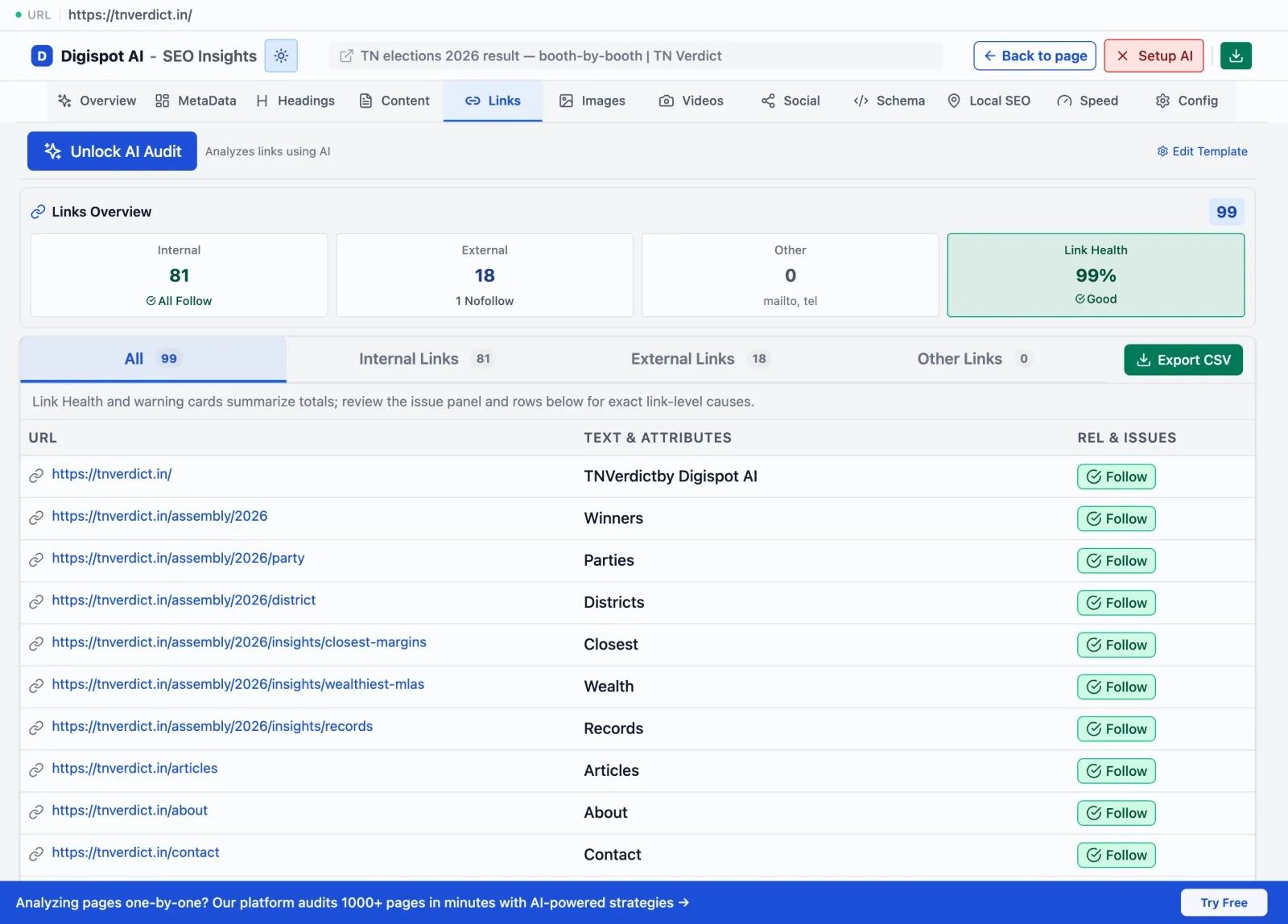
- For quick, on-the-fly insights, the free Digispot AI Community Chrome Extension is an invaluable tool for any SEO practitioner or business owner. It allows you to audit any web page directly in your browser, providing instant feedback on its SEO health.
- Powered by popular LLM (Large Language Model) models, this extension provides instant detection of on-page SEO issues, offers clear visualization of critical elements (like headings, meta descriptions, and image alt text), and even supports schema markup analysis. It's like having a miniature SEO expert at your fingertips, helping you spot potential issues or opportunities on competitor pages, analyze the SEO quality of potential linking partners, or quickly check your own pages before publishing. This tool empowers you to make informed decisions and identify link opportunities even when you're just browsing the web.
Automated Best Practices for Scalable, Accurate SEO
Ultimately, the goal of Digispot AI is to distill the complexity of SEO, including backlink profile improvement, into an actionable, automated system.
- Ultimately, Digispot AI brings all SEO best practices, including those for building a robust backlink profile, into an automated, user-friendly model. This allows you to operate at scale with accuracy, translating into improved business visibility, increased traffic and business leads, and significant time and cost savings. By automating routine tasks and providing intelligent insights, Digispot AI empowers you to focus on strategic growth, knowing that your foundational SEO is robust and continuously optimized.
Conclusion: The Long Game of Backlinks
Improving your backlink profile is not a one-time task; it's a continuous journey, a long game that demands patience, persistence, and a strategic approach. High-quality backlinks remain one of the most powerful signals to search engines that your website is a trustworthy, authoritative, and valuable resource. By focusing on creating exceptional content, actively seeking out relevant linking opportunities, meticulously auditing your profile, and diligently tracking your progress, you can build a backlink profile that truly elevates your online presence.
Remember, the goal is always quality over quantity. A few authoritative, relevant links are far more valuable than hundreds of spammy ones. In this dynamic digital environment, leveraging smart, AI-powered tools like Digispot AI can provide the critical advantage you need. They streamline complex processes, uncover hidden opportunities, and empower you to implement best practices with unparalleled accuracy and efficiency. Start leveraging smart tools to transform your backlink strategy today, and unlock the full potential of your website's visibility and growth.
Related deep-dives
Continue with these closely related guides:
- what is link building? — What is Link Building? The Complete SEO Guide for 2026
- reddit backlinks — Reddit Backlinks: Community-Driven Link Building
- crunchbase seo — Crunchbase SEO: Build High-Quality Backlinks
- google backlinks — Google Backlinks: Build Authority & Boost Rankings
- guest posting seo — Guest Posting SEO: Build Backlinks & Authority
References
Audit any page in seconds
300+ SEO checks including Core Web Vitals, schema markup, meta tags, and AI readiness — trusted by 1000+ SEO experts and marketers.
Frequently Asked Questions
Here are some of our most commonly asked questions. If you need more help, feel free to reach out to us.
Written by
Maya Krishnan
Digital growth expert
Maya is a seasoned expert in web development, SEO, and digital strategy, dedicated to helping businesses achieve sustainable growth online. With a blend of technical expertise and strategic insight, she specializes in creating optimized web solutions, enhancing user experiences, and driving data-driven results. A trusted voice in the industry, Maya simplifies complex digital concepts through her writing, empowering readers with actionable strategies to thrive in the ever-evolving digital landscape.