Competitor SEO Analysis: Winning Strategies
Analyze competitor SEO strategies to find ranking opportunities. Identify keyword gaps, reverse-engineer backlinks, and discover tactics to outrank rivals.
 Maya Krishnan
Success in search marketing demands more than just a functional website; it requires a forensic understanding of the battlefield. Businesses must not only assess their own technical health but also meticulously analyze the strategies of their rivals. This isn't about mere imitation, but strategic intelligence—specifically, decoding competitor SEO. It involves unraveling the specific optimization tactics of those outranking you to carve a unique path toward superior online visibility.
Many site owners operate in a vacuum, optimizing their content without looking at who currently holds the top spot. This is a mistake. If a competitor is ranking #1, they are doing something right that Google's algorithm prefers.
This guide will demystify competitor SEO analysis, highlighting its undeniable benefits, and revealing how leveraging intelligent tools can transform this complex task into a streamlined, actionable strategy. You will learn to reverse-engineer success, spotting the exact keywords, links, and technical structures that drive your industry's leaders.
Key Takeaways
- Your SEO rivals aren't always your business rivals. Identify who actually ranks for your money keywords, then pick 3-5 targets that mix a large industry leader with agile, similar-sized sites.
- Start with the keyword gap. Filtering competitors' rankings for commercial intent, achievable difficulty, and real volume surfaces the "low-hanging fruit" fastest.
- Reverse-engineer authority, not just links. Focus on link intersect (domains linking to several rivals but not you), anchor text ratios, and relevance over raw referring-domain counts.
- Treat their technical weaknesses as your openings. Slow Core Web Vitals, missing schema, or a poor mobile experience are gaps you can exploit with a faster, cleaner build.
- Make it a repeatable cycle. Do a deep quarterly dive but monitor rankings, new content, and backlinks monthly so you react to competitive shifts and algorithm updates early.
What is Decode Competitor SEO and Why Does It Matter?
At its core, competitor SEO analysis is the strategic process of dissecting the search engine optimization tactics employed by your rivals. The goal is to understand their successes, identify their weaknesses, and uncover opportunities for your own website. Think of it as industrial espionage, but entirely legal and focused on public data. Instead of guessing what might work, you learn from proven strategies and adapt them to your unique business context.
Why is this crucial? Search engines are zero-sum games. For every rank you gain, someone else must fall. In an environment where Google and emerging AI platforms (like ChatGPT or Perplexity) are the primary gateways for consumers, standing out is paramount. Without understanding how your rivals achieve their rankings, you are navigating a maze blindfolded while they have a map.
Decoding competitor SEO offers a strategic advantage by providing a clear roadmap. It helps you:
- Identify Keyword Gaps: Find high-value terms you are missing but your competitors are capitalizing on.
- Analyze Search Intent: Understand effective content formats (videos, lists, tools) that satisfy users.
- Uncover Link Sources: Discover where industry leaders get their authority-building backlinks.
- Spot Technical Flaws: Pinpoint issues they suffer from (slow speeds, broken schema) to exploit with a faster, cleaner site.
- Improve AEO Visibility: See how competitors appear in AI overviews and optimize your entities to compete.
Ultimately, this analysis improves your business visibility, increases organic traffic, and generates more qualified leads by removing the guesswork from your strategy.
The Fundamentals: What to Look For When Decoding Competitor SEO
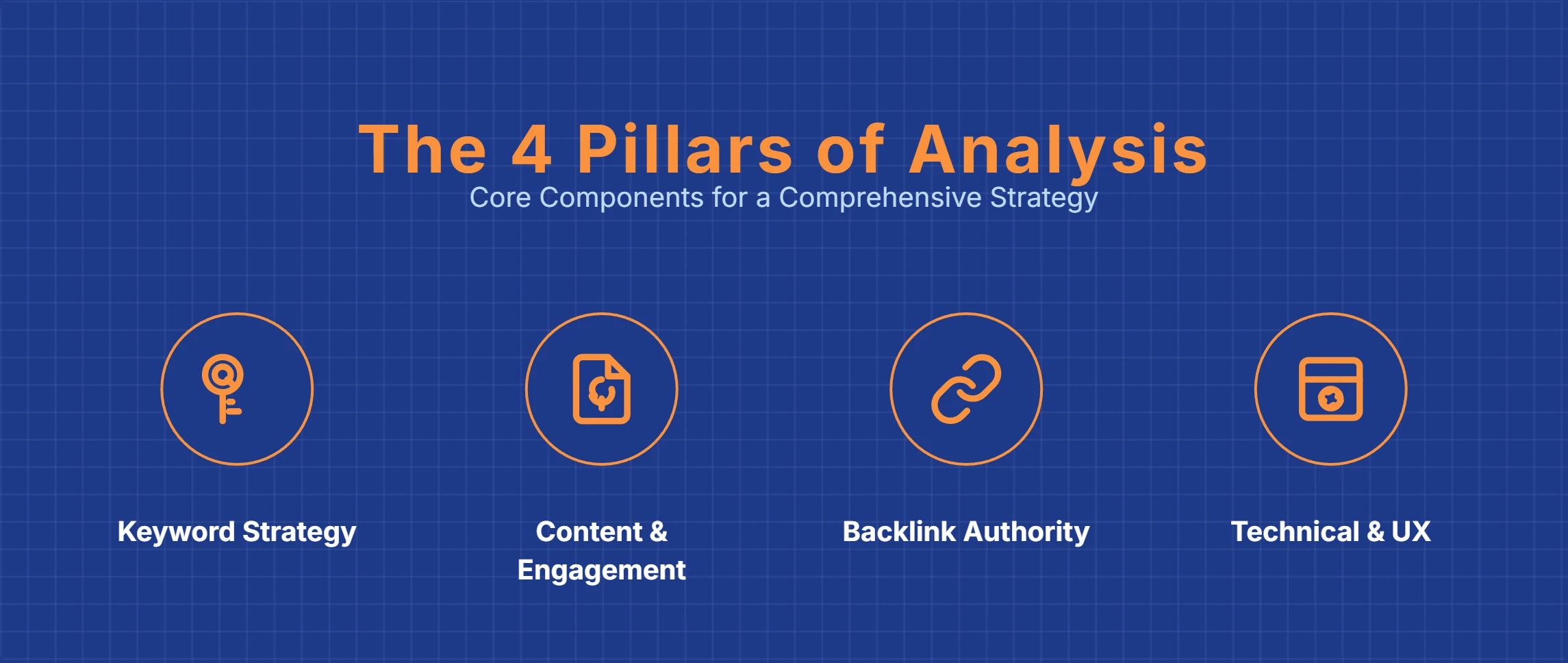
When you embark on the journey of decoding your competitors' SEO, you are looking for patterns across several key pillars. Understanding these areas gives you a holistic view of their digital footprint.
1. Keyword Strategy: What Are They Ranking For?
One of the most foundational aspects of competitor analysis is understanding their keyword portfolio. You need to look beyond the vanity metrics of "total keywords" and assess relevance and intent.
- Traffic Drivers vs. Vanity Metrics: What keywords actually drive their organic traffic? A competitor might rank for 10,000 keywords, but if 9,000 are low-value navigational terms, they aren't a threat. Focus on non-branded, commercial intent keywords.
- Topic Clusters: How do they organize their keywords? successful sites often use "hub and spoke" models. Identifying their hubs can help you structure your own internal linking strategy.
- Keyword Gaps: These are terms your competitors rank for, but you do not. This is often the "low-hanging fruit" of SEO strategy. If five competitors rank for "best CRM for small business" and you don't, you have a content gap to fill. Running a structured content gap analysis turns these scattered missing terms into a prioritized publishing roadmap.
This analysis refines your research, allowing you to compete directly where they are strong or carve out a niche where they are weak.
2. Content Strategy: What Kind of Content Drives Engagement?
Content is king, but context is queen. You must analyze not just what they write, but how they present it.
- Content Formats: Are they winning with 3,000-word guides, or short, punchy videos? Do they use interactive calculators or downloadable PDFs? Matching the format to the user intent is often why a page ranks.
- Depth and E-E-A-T: How comprehensive is their content? Do they demonstrate Experience, Expertise, Authoritativeness, and Trustworthiness? If their content is thin, you can outrank them by creating a more robust resource. Learn more about optimizing for E-E-A-T.
- Content Velocity: How often are they publishing? If a competitor publishes five high-quality articles a week, you cannot compete with one post a month.
- Refresh Rate: successful competitors frequently update old content. Check the "Last Updated" dates on their top pages. If they update annually and you update quarterly, you may gain an edge.
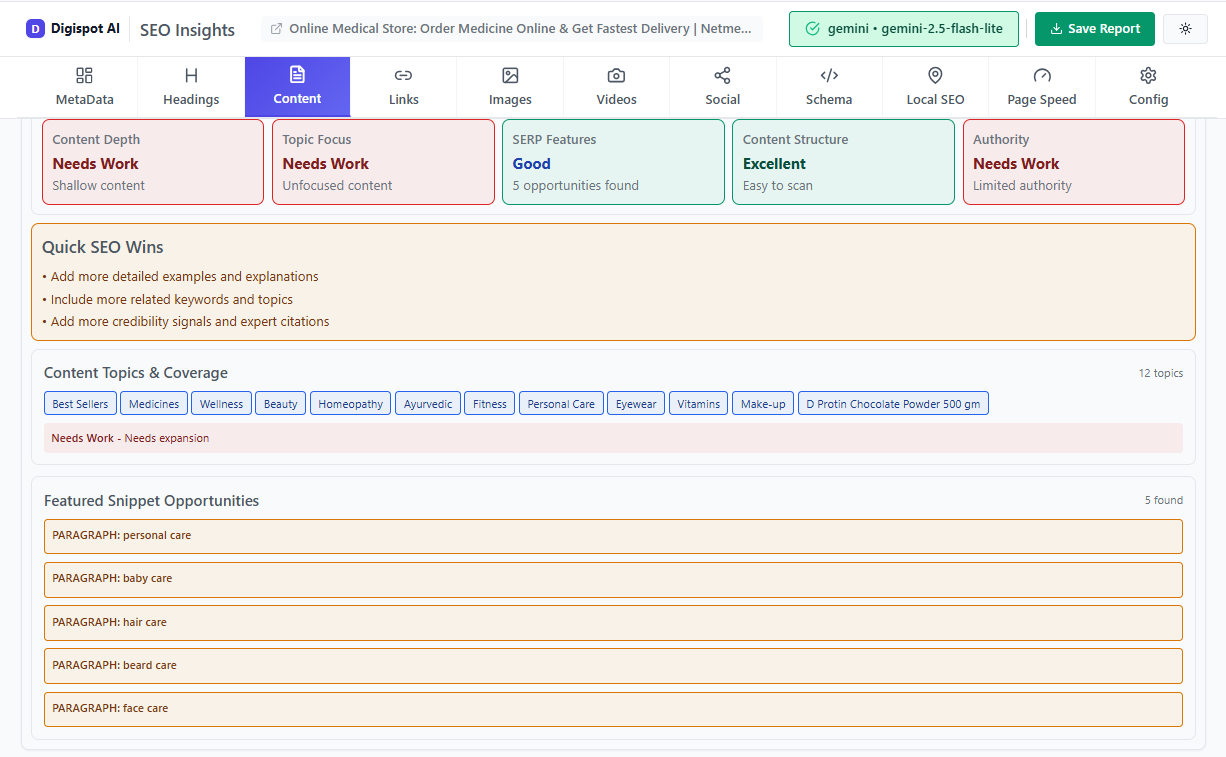
By analyzing their content, you gain insights into what Google and AI search engines value for your specific industry.
3. Backlink Profile: How Strong Is Their Authority?
Backlinks remain one of the strongest ranking signals. You need to reverse-engineer their off-page strategy.
- Quality over Quantity: A high volume of links from spammy directories is useless. Look for links from high-authority, relevant domains in your niche.
- Link Intersect: Identify domains that link to multiple competitors but not to you. These sites are clearly willing to link to businesses like yours and are prime targets for outreach.
- Anchor Text Strategy: Analyze their anchor text ratios. Are they using exact-match keywords (aggressive SEO) or branded terms (brand building)? A natural profile is usually brand-heavy.
- Link Velocity: Are they gaining links steadily, or did they have a massive spike? Spikes might indicate a viral campaign you can study—or a negative SEO attack you should avoid.
4. Technical SEO: Is Their Site Built for Search Engines?
Technical SEO ensures that search engines can crawl, index, and understand a website. If your competitor has a slow site, this is a major vulnerability you can exploit.
- Core Web Vitals: How fast does their site load? Use tools to check their Largest Contentful Paint (LCP) and Cumulative Layout Shift (CLS). A faster site often wins the tie-breaker in rankings. For a deeper dive, read our guide to Core Web Vitals.
- Mobile Experience: With mobile-first indexing, a poor mobile site is a death sentence. Check if their mobile view is responsive and easy to use.
- Schema Markup: Are they using advanced structured data? Schema helps search engines understand context and can win rich snippets (stars, FAQs, pricing) in search results.
- Renderability: Do they use heavy JavaScript that Google struggles to read? A cleaner, HTML-first site might index better.
Pro Tip: You can instantly check a competitor's schema and technical health using the Digispot AI Chrome Extension. It visualizes their structured data with one click.
5. User Experience (UX) and Page Performance: How Do Users Interact?
Google uses interaction signals (like pogo-sticking, where a user clicks a result and immediately bounces back) to adjust rankings.
- Navigation Structure: Is their site intuitive? Easy navigation keeps users engaged longer.
- Visual Stability: Do elements jump around while loading? This frustrates users and hurts rankings.
- Readability: Do they use short paragraphs, bullet points, and clear headings? Wall-of-text content usually performs poorly.
6. Local SEO (If Applicable): How Do They Dominate Local Searches?
For businesses with a physical presence, the "Map Pack" is the most valuable real estate.
- Google Business Profile (GBP): Look at their primary category, secondary categories, and photo posting frequency. The primary category is often the single biggest lever in Map Pack rankings, so if a competitor outranks you locally, compare their category against yours first.
- Reviews: Study not just quantity and average rating, but the keywords within reviews. Are customers mentioning specific products, services, or neighborhoods? Google reads this review text as relevance signals, so replicating those service-and-location mentions in how you solicit reviews can help you compete.
- Local Citations: Check whether they are listed in niche or geo-specific directories you missed, and confirm their name, address, and phone number are identical across every listing. Inconsistent NAP data dilutes local authority, so spotting a rival's clean citation footprint tells you which sources to prioritize for your own local citation building.
How to Decode Competitor SEO: A Step-by-Step Guide
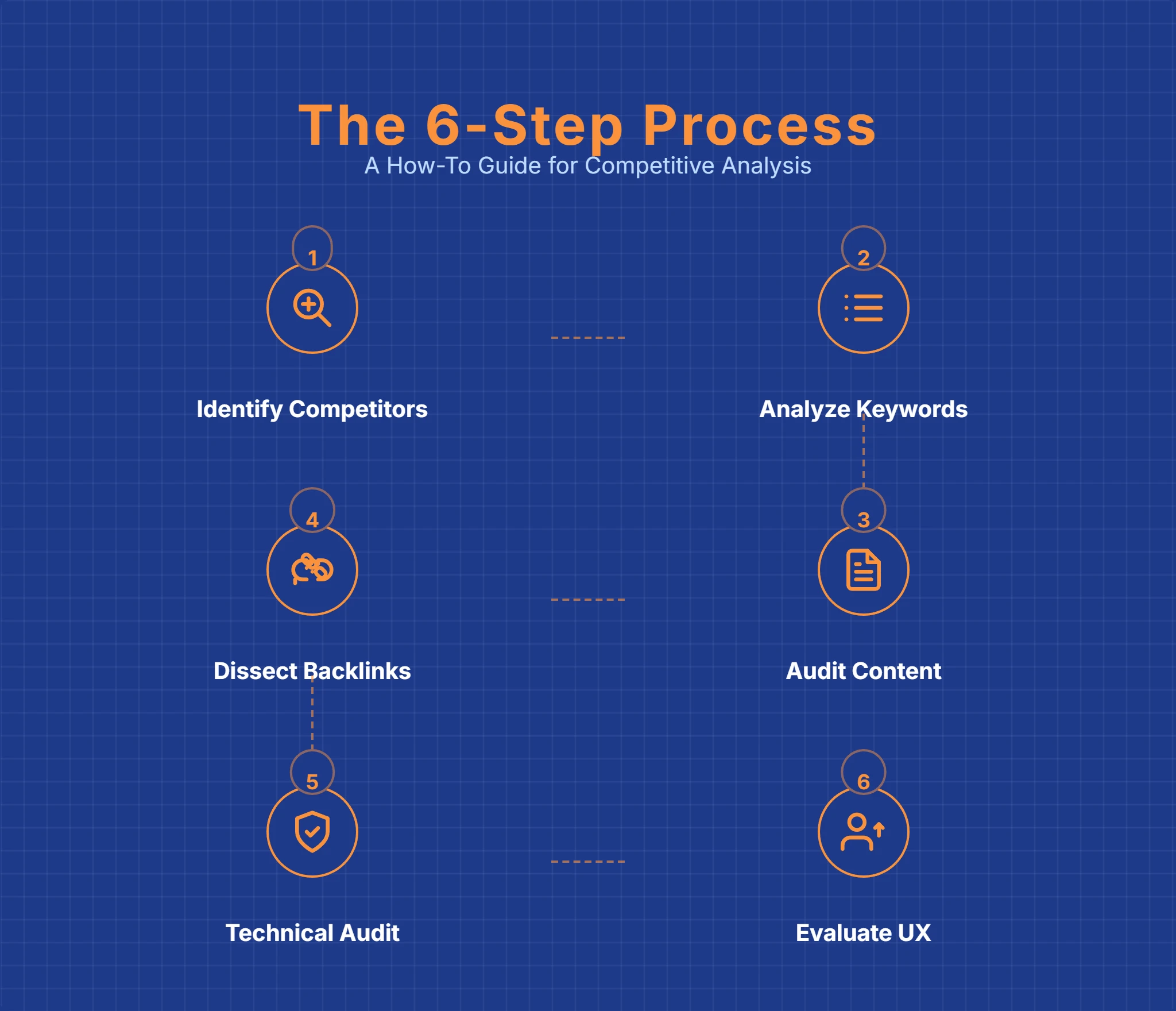
Now that we understand what to look for, let's explore how to systematically decode your competitors' SEO strategies. This process blends manual observation with powerful tool utilization.
Step 1: Identify Your Top Organic Competitors
Your direct business competitors aren't always your SEO competitors. A small local shop might be your business rival, but Wikipedia or a massive industry blog might be your search rival.
- How to find them: Search for your top 5 "money keywords" (high intent, revenue-driving terms) in Google. Note who consistently appears in the top 3 results.
- Categorize: Separate them into "Direct Competitors" (selling what you sell) and "SERP Competitors" (publishers/aggregators).
- Select Targets: Choose 3-5 competitors to analyze. Mixing a giant industry leader with a similar-sized agile competitor gives you the best range of insights.
Step 2: Conduct a Deep Dive into Their Keyword Strategy
This is where the real digging begins. You want to steal their roadmap.
- How to uncover competitor keywords: Utilize SEO tools designed for competitor analysis. Input their domain to see a list of every keyword they rank for.
- Filter for Value: Ignore their branded terms (you can't rank for their company name). Filter for keywords with:
- Volume: Enough searches to matter.
- Difficulty: Within a range you can target.
- Intent: Commercial or Transactional intent.
- Action: Create a spreadsheet of high-priority keywords where they rank #1-#10, and you rank #11+ or not at all.
Step 3: Analyze Their Content Strategy and Identify Opportunities
Once you have the keywords, look at the pages ranking for them.
- Audit competitor content: Visit their top-ranking pages. Analyze the word count, header structure (H1, H2, H3), and media usage.
- Spot the weakness: Is the content outdated? Is it hard to read? Does it lack custom images?
- Example: If a competitor has a guide on "AI in SEO" that is 1,000 words of dense text, you can outperform them using Digispot AI's "Content Studio". This feature helps you generate an outline for a 2,000-word piece with better structure, FAQs, and clearer examples. By creating something objectively better (known as "10x Content"), you give Google a reason to rank you higher.
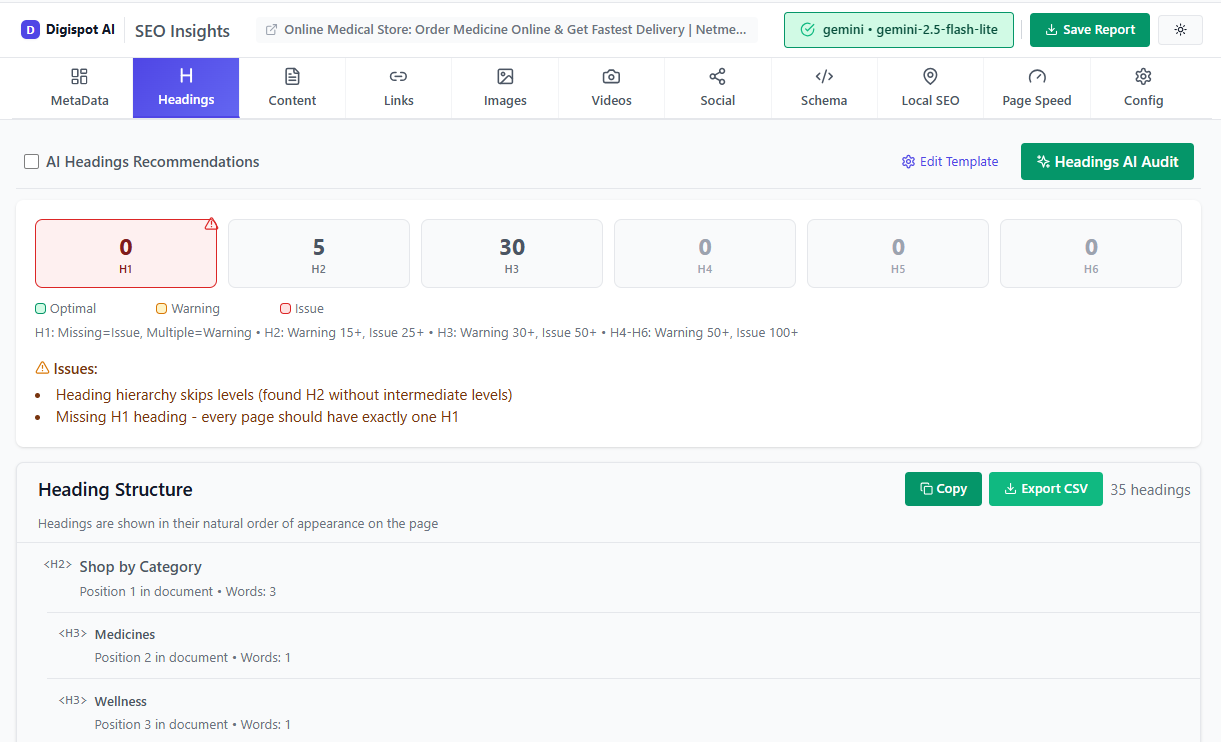
Turn invisible SEO data into clear visuals with our Free Chrome extension.
Step 4: Dissect Their Backlink Profile
Understanding where your competitors get their links is crucial for your own off-page campaigns.
- Find the sources: Use backlink analysis tools to pull a competitor's referring domains, then sort by authority and topical relevance rather than raw count. A structured backlink audit helps you separate genuine editorial links from low-value directory noise before you decide what to replicate.
- Look for "Resource Pages": If a competitor is listed on a page titled "Best Tools for Marketing," reach out to that site owner and ask to be included as well. These curated lists already link to sites like yours, which makes them warm, high-probability outreach targets.
- Broken Link Building: Check if your competitors have incoming links pointing to 404 error pages. You can contact the linking site, point out the broken link, and suggest your working content as a replacement.
- Link Intersect in Practice: Run two or three competitors through an intersect report to find domains that link to all of them but not to you. A site willing to link to several of your rivals is highly likely to link to you too, so these overlaps often become the fastest wins in your wider link-building efforts.
Step 5: Perform a Technical SEO Audit (External Perspective)
You can't see their server logs, but you can assess their frontend performance.
- Check Site Health: Use tools to scan for broken links, redirect chains, and SSL issues on their site.
- Schema & Structure: Verify if they use breadcrumb schema, article schema, or product schema.
- Example: The Digispot AI free community Chrome extension is invaluable here. As you browse a competitor's page, this tool (powered by advanced LLMs) instantly audits the page. It visualizes their schema markup, letting you see exactly how they are talking to search engines. If they lack schema and you implement it using our Schema Markup Generator, you gain a significant technical edge.
Step 6: Evaluate Their Performance Metrics and User Experience
Although you won't have access to their analytics, you can infer performance.
- Core Web Vitals: Use public tools (like PageSpeed Insights) to run a check on their key landing pages.
- UX Observations: Look at their Call-to-Action (CTA) placement. Do they use pop-ups that are annoying? Do they have a sticky table of contents?
- Integration: While you can't see their data, the Digispot AI cloud platform integrates with Google Search Console and Google Analytics. This allows you to benchmark your site's real data against the external metrics you gather about them, helping you track if your optimizations are closing the gap.
Benefits of Decoding Competitor SEO
The insights gained from competitor analysis translate into tangible business outcomes. It moves you from "hoping" for traffic to "engineering" traffic.
| Benefit Area | How Decoding Competitor SEO Helps |
|---|---|
| Improved Visibility | By mimicking successful keyword targeting and structure, you align your site with what search algorithms already prefer. This leads to higher rankings on Google and better visibility in AI answers (ChatGPT/Gemini). |
| Increased Traffic & Leads | Targeting proven keywords attracts visitors who are already searching for solutions you offer. This traffic is higher intent and more likely to convert than experimental content topics. |
| Time & Cost Savings | Competitors have likely spent years testing what works. By analyzing their results, you skip the "trial and error" phase. You don't need to waste budget on strategies that fail; you only implement what is proven to work. |
| Identify Opportunities | Analysis often uncovers "keyword gaps"—topics your competitors have missed entirely. These are "Blue Ocean" opportunities where you can rank quickly with minimal resistance. |
| Risk Mitigation | Monitoring competitors helps you spot algorithm updates. If all your competitors in a specific niche drop in rankings simultaneously, you know a Google update has hit that sector, allowing you to adapt before your own site is penalized. |
| Benchmark Performance | Knowing where competitors stand allows you to set realistic goals. You can measure your progress against industry leaders rather than arbitrary numbers, driving continuous improvement. |
| Inform Business Strategy | SEO data reveals market demand. If a competitor sees massive traffic for a specific product feature page, it signals high market demand for that feature, informing your product development team. |
Leveraging AI for Competitor SEO Analysis: The Digispot AI Advantage
The sheer volume of data involved in comprehensive competitor analysis—thousands of keywords, millions of backlinks, technical code reviews—can overwhelm even seasoned professionals. This is where artificial intelligence transforms the workflow.
How does AI transform competitor analysis? AI platforms process vast datasets instantly, identifying patterns humans might miss. They can correlate a specific heading structure with higher rankings or identify a missing semantic entity that is holding your content back.
Digispot AI is the ultimate all-in-one platform for this, specifically designed to help businesses rank in both traditional Google Search and the new wave of AI Search engines.
Here is how Digispot AI's capabilities align perfectly with decoding competitor SEO:
- Comprehensive Auditing: Digispot AI audits websites in both mobile and desktop modes. This feature allows you to identify not just your own site's issues but also to infer weaknesses in a competitor's performance. It systematically identifies technical flaws based on 300+ ranking factors.
- Deep Ranking Factor Analysis: The platform doesn't just look at keywords; it analyzes content quality, technical health, and local optimization. When you see your site score 85/100 and a competitor score 92/100, Digispot shows you exactly why—perhaps they have better image compression or more valid HTML tags.
- Integrated Performance Tracking: By connecting with Google Search Console and GA4, Digispot AI lets you track your own growth in real-time. You can define a "Competitor Watchlist" and receive alerts when their content changes or their rankings shift.
- Opportunity Finder: This feature is a game-changer. It automates the "Keyword Gap" analysis. You simply input a competitor's URL, and the AI identifies high-volume terms they rank for that you don't. It eliminates manual spreadsheet work.
- Content Studio with Multi-LLM Support: Once you find a gap, you need to fill it. Digispot's Content Studio uses a blend of GPT-4, Claude, and DeepSeek models to generate content outlines that are mathematically optimized to rank. It ensures your new content covers all the semantic entities your competitors might be missing.
- Free Community Chrome Extension: This tool extends Digispot's power into your browser. It helps you audit any page on the fly. Crucially, it supports schema markup visualization. You can instantly see if a competitor is using
Product,Review, orFAQschema, allowing you to replicate and improve upon their strategy.
Decode Rivals Without Crawling Them — Digispot AI Spider
The Digispot AI Spider desktop app turns competitor analysis into a side-by-side read. Add a rival by its domain and it profiles them from their own sitemap and robots files. It never crawls their pages, so the read is fast and their footprint is drawn entirely from what they publish. The result is a clear picture of where you stand across every rival at once: who leads on the most sections, where you are strongest, and the sections and topics they publish that you do not.
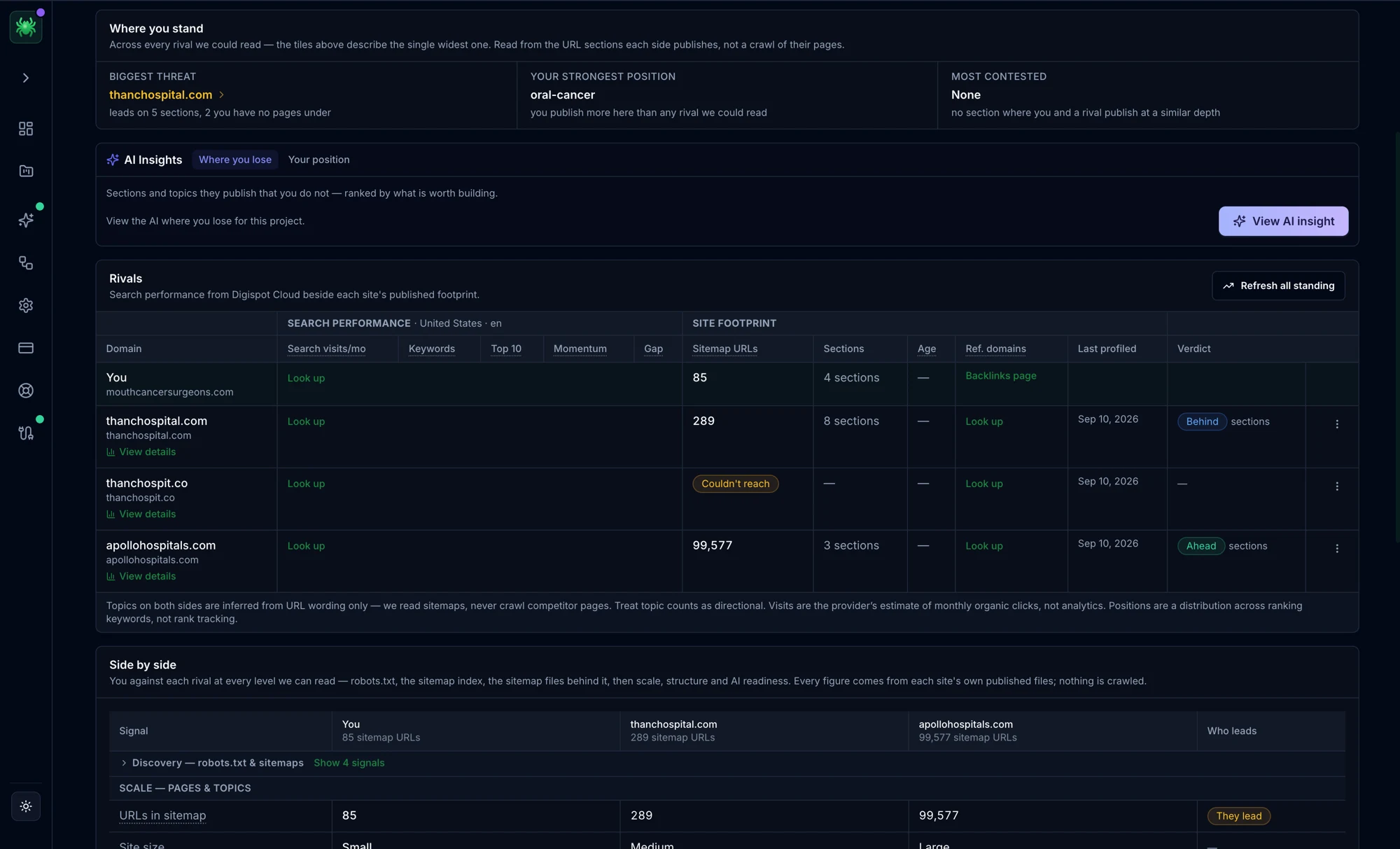
Open any rival for the head-to-head. A content-gap view ranks the sections they build against yours and weighs their templated clusters separately, an AI rival brief explains where they are ahead and behind, and an AI-readiness read compares their llms.txt and AI-crawler posture with yours. Backlink and search-visibility gaps pull from Digispot's cloud when you want the off-page picture too. Because the counts come from URL wording rather than a crawl, the app flags them as directional and tells you to verify a gap before you commission the content to fill it.
Ready to start? You can perform a quick audit of your own site (or a competitor's page) right now using our free On-Page SEO Analysis tool.
By using an AI-driven platform, you move beyond manual data entry. You gain actionable intelligence that allows you to make decisions faster and with higher confidence than your rivals.
Conclusion: Turn Insight into Action
Decoding competitor SEO is not a one-time task; it is an ongoing cycle of espionage and adaptation. The digital landscape shifts daily. New competitors emerge, Google updates its algorithm, and AI search engines change how answers are delivered. In this volatile environment, your competitors are your best teachers.
By systematically analyzing their keyword choices, content structures, backlink sources, and technical foundations, you gain a blueprint for success. You stop guessing what Google wants and start providing exactly what the market demands.
Don't let your competitors keep their advantage. Start your analysis today:
- Identify your top 3 search rivals.
- Audit their top-performing content.
- Find the gaps where they are vulnerable.
- Use automation to monitor and outpace them.
Take the first step now. Equip yourself with the Digispot AI cloud platform for deep, site-wide intelligence, or install the free Chrome extension to start auditing pages immediately. The data is there—you just need the right tools to decode it.
References
- SEO Starter Guide: The Basics | Google Search Central
- Technical SEO Techniques and Strategies | Google Search Central
- Google Search Console
- Google Analytics
- Understanding Core Web Vitals and Google search results | Google Search Central
- Mobile-first Indexing Best Practices | Google Search Central
- Intro to How Structured Data Markup Works | Google Search Central
- Rich Results Test | Google Search Central
- Digispot AI - The Ultimate All-in-One AI-Powered SEO Audit & Optimization Platform
- Digispot AI - FREE Google Chrome Extension for SEO Insights
- Features | AI-Powered SEO Platform - Digispot AI
Audit any page in seconds
300+ SEO checks including Core Web Vitals, schema markup, meta tags, and AI readiness — trusted by 1000+ SEO experts and marketers.
Frequently Asked Questions
Here are some of our most commonly asked questions. If you need more help, feel free to reach out to us.
Written by
Maya Krishnan
Digital growth expert
Maya is a seasoned expert in web development, SEO, and digital strategy, dedicated to helping businesses achieve sustainable growth online. With a blend of technical expertise and strategic insight, she specializes in creating optimized web solutions, enhancing user experiences, and driving data-driven results. A trusted voice in the industry, Maya simplifies complex digital concepts through her writing, empowering readers with actionable strategies to thrive in the ever-evolving digital landscape.