What Is Local SEO? A Complete Beginners Guide for 2026
Master local search visibility: optimize your Google Business Profile, manage citations, and use AEO to rank for near me searches.
 Maya Krishnan
46% of all searches on Google have local intent.
Think about that for a second. Nearly half of the billions of queries processed daily are people looking for services, stores, or solutions right now, in their immediate vicinity. If your business doesn't appear in those results—specifically in the "Local Pack" (the map and three listings at the top)—you are invisible to your most high-intent customers.
Local SEO is no longer just about adding your address to a footer. It has evolved into a complex ecosystem involving entity recognition, reputation management, and now, visibility in AI-driven answer engines like ChatGPT and Google's AI Overviews.
This guide moves beyond surface-level advice. We will examine the mechanics of how local search algorithms work, how to build a technical foundation that withstands algorithm updates, and how to position your brand for the future of search.
What is Local SEO?
Local Search Engine Optimization (Local SEO) is the strategic process of optimizing your online presence to attract more business from relevant local searches. These searches take place on Google, Bing, Yelp, Apple Maps, and increasingly, AI chatbots.
While traditional SEO focuses on improving your site's visibility on a national or global scale, local SEO prioritizes geographical relevance.
The Three Pillars of Local Ranking
Google uses a specific set of criteria to decide which businesses rank in the Local Pack versus those buried on page two. Understanding these three pillars is critical for effective optimization:
- Relevance: How well does a local business profile match what someone is searching for? (e.g., Does your category say "Pizza Restaurant" when the user searches for "Pizza"?)
- Distance (Proximity): How far is each potential search result from the location term used in a search? If a user doesn't specify a location, Google calculates distance based on what is known about their location.
- Prominence: How well-known is a business? This is based on information Google has about a business from across the web (links, articles, directories) and review count/score.
If you want to understand the broader context of search optimization before narrowing down, you can read our guide on what is search engine optimization.
Why Local SEO is Non-Negotiable in 2026
The behavior of searchers has shifted. "Near me" searches have become implicit. Users simply search for "coffee shop" or "plumber," expecting the search engine to understand they mean here and now.
- High Conversion Rates: Local searches result in purchases more often than organic searches. 76% of people who search on their smartphones for something nearby visit a business within a day.
- Mobile Dominance: With mobile devices driving the majority of web traffic, location data is constantly influencing search results.
- Voice and AI Search: Queries like "Where is the best mechanic near me?" via Siri or ChatGPT rely entirely on structured local data to provide an answer.
The Foundation: Google Business Profile (GBP)
Your Google Business Profile (formerly Google My Business) is the single most important asset in local SEO. It is not social media; it is a database entry that Google relies on to populate Maps and Search.
Claiming and Verifying
If you haven't claimed your profile, do so immediately. Verification methods have become stricter, often requiring video verification where you must record your workspace, signage, and equipment to prove legitimacy.
Strategic Optimization of GBP
Simply filling out the fields isn't enough. You need to optimize for entities—the specific concepts and things your business relates to.
- Business Title: Use your actual business name. Adding keywords (e.g., "Bob's Plumbing - Best Drain Cleaner") is against Google's guidelines and can lead to suspension.
- Categories: This is your primary relevance signal. Choose the most specific primary category (e.g., "Personal Injury Attorney" rather than just "Lawyer"). Use secondary categories to cover other services.
- Attributes: Google offers toggle options based on your category (e.g., "Wheelchair accessible," "Women-owned," "Outdoor seating"). Select all that apply; these are often used as filters in voice search.
- Products and Services: Populate these sections fully. Even though they don't directly impact ranking, they improve conversion by answering user questions immediately.
Pro Tip: Not sure which categories your competitors are using? Get instant SEO insights on any page with our free Chrome extension.
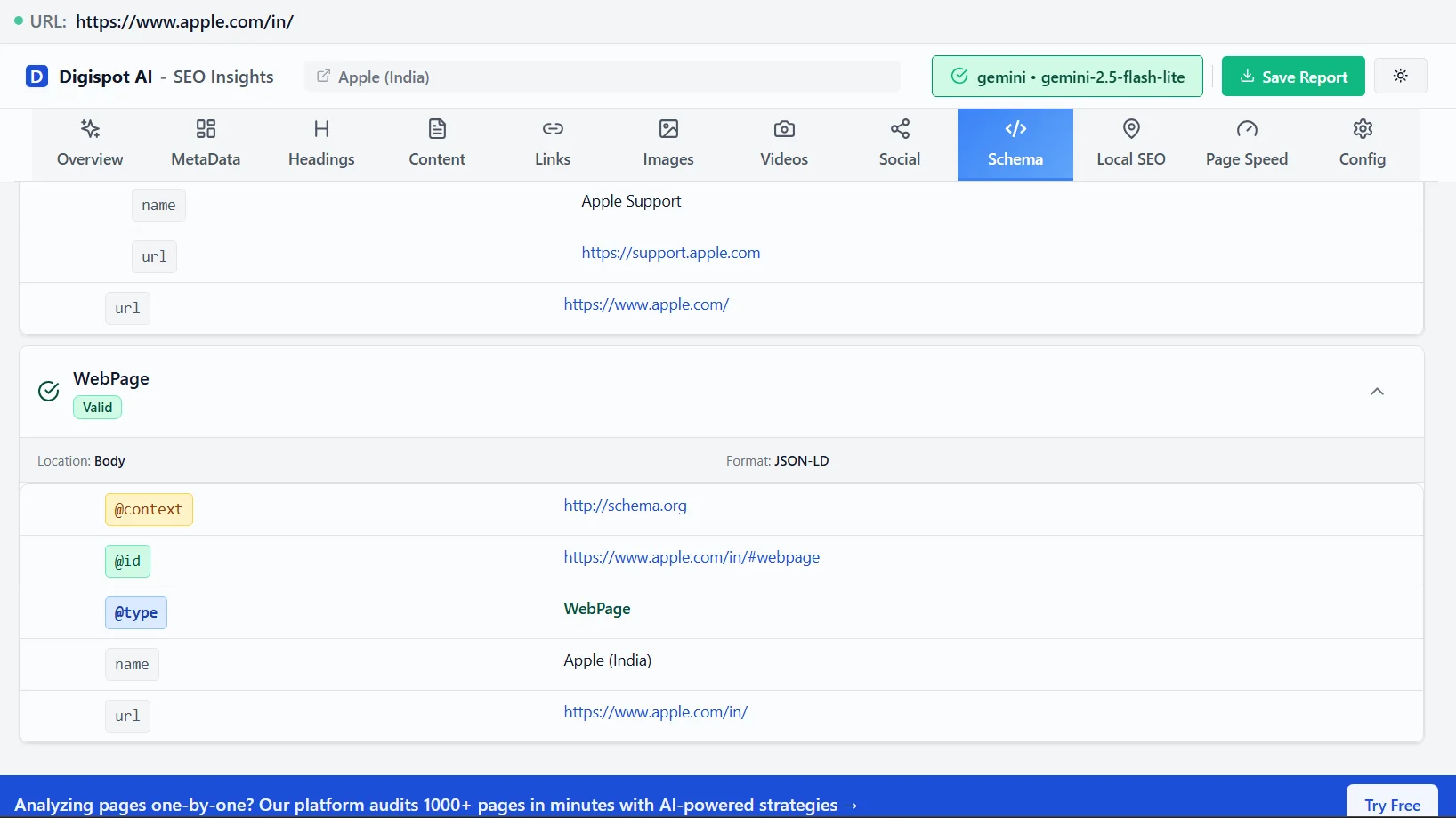
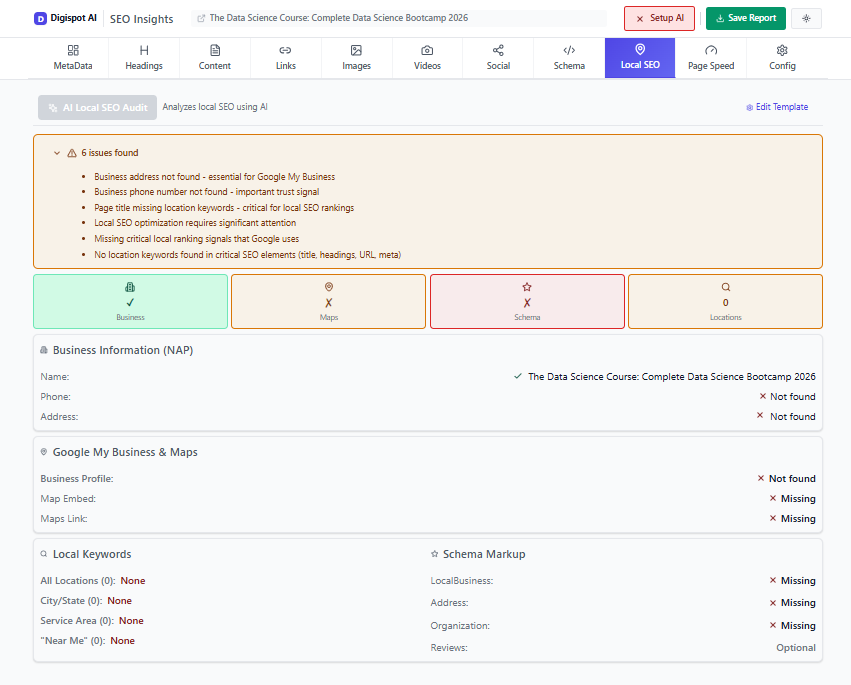
Turn invisible SEO data into clear visuals with our Free Chrome extension.
NAP Consistency and Citations
NAP stands for Name, Address, and Phone Number. Consistency of this data across the web acts as a "trust signal" for search engines. If Google sees your phone number is (555) 123-4567 on your website but (555) 987-6543 on Yelp, it loses confidence in the accuracy of your data, resulting in lower rankings.
What Are Citations?
A citation is any mention of your business online. They come in two forms:
- Structured Citations: Business directories like Yelp, Yellow Pages, Bing Places, and TripAdvisor.
- Unstructured Citations: Mentions in blog posts, news articles, or event listings where your NAP is present but not in a directory format.
The Modern Approach to Citations
Years ago, quantity mattered. Today, quality and data aggregator accuracy matter. Focus on the "Big Three" data aggregators in the US (Foursquare, Data Axle, Localeze). These platforms feed data to hundreds of smaller directories. If your data is correct there, it trickles down.
Avoid low-quality, spammy directories. A link from a high-authority local chamber of commerce is worth 100 links from obscure web directories.
On-Page SEO for Local Businesses
While your GBP gets you into the Map Pack, your website's organic ranking ensures you stay there and captures users who scroll past the maps.
Localizing Content
Your homepage and service pages must clearly state who you are and where you serve.
- Include your NAP in the footer of every page.
- Embed a Google Map on your contact page.
- Create location-specific landing pages if you serve multiple cities (e.g., "SEO Services in Austin" and "SEO Services in Dallas").
Warning: Do not duplicate content across location pages. Simply swapping the city name is known as "doorway page" tactics and can result in penalties. Each location page needs unique descriptions, testimonials, and localized details. For a deeper dive, check out our comprehensive guide to local SEO.
Schema Markup: The Secret Weapon
Structured data (Schema) is code that helps search engines understand the content of your page. for Local SEO, LocalBusiness schema is essential. It explicitly tells Google your hours, coordinates, price range, and department info.
Here is a simplified example of what this looks like in JSON-LD format:
{
  "@context": "https://schema.org",
  "@type": "Restaurant",
  "name": "DigiSpot Bistro",
  "image": "https://www.example.com/image.jpg",
  "telephone": "555-0123",
  "address": {
    "@type": "PostalAddress",
    "streetAddress": "123 SEO St",
    "addressLocality": "Tech City",
    "addressRegion": "CA",
    "postalCode": "90210"
  }
}
Implementation can be technical. You can use the free Schema Markup Generator to create valid structured data in minutes without writing a single line of code.
Once implemented, verify your work with our Schema Markup Visualizer to ensure there are no errors preventing Google from reading your data.
Managing Reviews and Reputation
Reviews are the "Prominence" pillar of the local algorithm. A steady stream of positive reviews creates a feedback loop: better rankings lead to more customers, which leads to more reviews.
The Velocity Factor
It is not just about having 5 stars. Google looks at Review Velocity (how often you get new reviews) and Review Age (are your reviews from 2020 or last week?).
responding to Reviews
You must respond to every review, positive or negative.
- Positive: Thank them and mention a specific service they liked (reinforces keywords).
- Negative: Be professional, acknowledge the issue, and take the conversation offline. Do not get defensive.
For industries like healthcare, handling reviews requires specific compliance with HIPAA. Learn more in our guide to healthcare local SEO.
The Rise of AEO (Answer Engine Optimization)
This is where the future of local search is heading. Platforms like ChatGPT, Claude, and Google's AI Overviews provide direct answers rather than a list of links.
When a user asks ChatGPT, "What's the best quiet coffee shop in Brooklyn for working?", the AI doesn't just look for keywords. It looks for context found in reviews and website content ("good wifi," "quiet atmosphere," "plenty of outlets").
To optimize for AEO:
- FAQ Pages: Answer natural language questions on your site.
- Descriptive Reviews: Encourage customers to mention specific attributes in reviews.
- Comprehensive Details: Ensure your GBP has every attribute filled out (e.g., "Has Wi-Fi," "Gender-neutral restrooms").
Digispot AI is the first platform to offer specific AEO tracking, helping you understand how your business appears in AI-generated responses, not just traditional search results.
Measuring Local SEO Success
How do you know if it's working? Vanity metrics (like impressions) are nice, but actionable metrics are better.
Key Performance Indicators (KPIs)
- GBP Interactions: Calls, website clicks, and direction requests directly from the Map Pack.
- Keyword Rankings: Specifically for "Service + Location" and "Near Me" terms.
- Local Organic Traffic: Traffic to your location landing pages.
- Sentiment Analysis: Is the tone of your reviews improving over time?
For a robust analysis, you need to look at both on-page and off-page factors. Try the free On-Page SEO Analysis tool to audit any URL instantly and see how well your location pages are optimized.
Common Local SEO Mistakes to Avoid
- Inconsistent NAP: Even minor differences (St vs. Street) can cause data confusion.
- Ignoring Negative Reviews: This signals to potential customers that you don't care about service recovery.
- Keyword Stuffing Business Names: Adding "Best Plumber" to your business name on Google is a fast track to account suspension.
- Neglecting Mobile Experience: If your site loads slowly on mobile, users clicking from Maps will bounce immediately. See our Core Web Vitals guide to fix speed issues.
Start Improving Your Local Visibility Today
Local SEO is a marathon, not a sprint. It requires a blend of technical accuracy (schema, website structure) and human engagement (reviews, photos, posts). However, the payoff is building a sustainable channel of high-intent customers right in your backyard.
Don't let competitors dominate your neighborhood. Start by auditing your current presence.
Ready to improve your search visibility? Try Digispot AI for comprehensive website audits, automated competitor tracking, and actionable recommendations to dominate both Google and the new wave of AI search.
Related deep-dives
Continue with these closely related guides:
- top google business profile — Top Google Business Profile Ranking Factors for 2026: The Complete Guide
Local SEO Deep Dives
Want to go deeper on any part of the local SEO playbook? Explore these focused guides:
- Get your listing right with our Google Business Profile optimization guide, then follow the practical steps to optimize your Google Business Profile.
- Turn happy customers into social proof by learning how to get more Google reviews.
- Build off-page authority with our guide to local citations and understand why NAP consistency matters.
- Capture high-intent traffic by ranking for near me searches and climbing higher on Google Maps.
- Sharpen your targeting with geo-targeting for local search, then pull it all together with our local SEO checklist for 2026.
References
Audit any page in seconds
300+ SEO checks including Core Web Vitals, schema markup, meta tags, and AI readiness — trusted by 1000+ SEO experts and marketers.
Frequently Asked Questions
Here are some of our most commonly asked questions. If you need more help, feel free to reach out to us.
Written by
Maya Krishnan
Digital growth expert
Maya is a seasoned expert in web development, SEO, and digital strategy, dedicated to helping businesses achieve sustainable growth online. With a blend of technical expertise and strategic insight, she specializes in creating optimized web solutions, enhancing user experiences, and driving data-driven results. A trusted voice in the industry, Maya simplifies complex digital concepts through her writing, empowering readers with actionable strategies to thrive in the ever-evolving digital landscape.