CTR Optimization for SEO: Boost Click-Through Rates
Master CTR optimization for better SEO results. Learn strategies for meta titles, descriptions, and SERP features to increase organic traffic.
 Maya Krishnan
Getting your website to rank high on search engines used to feel like the ultimate victory. But let's be honest, merely appearing on the first page isn't enough anymore, is it? What truly matters is getting people to click on your links. That's precisely where Click-Through Rate (CTR) Optimization comes into play, turning your search engine presence into actual website traffic and, ultimately, real business growth. Especially now, with Artificial Intelligence (AI) constantly reshaping how we all interact with search engines, understanding and optimizing your CTR has become more vital than ever before.
This comprehensive guide will dive deep into the fundamentals of CTR optimization, uncover its often-underestimated benefits, and equip you with actionable strategies to help your business websites not only rank better but also capture far more attention in Google and other AI-driven search environments.
Key Takeaways
- Fix high-impression, low-CTR pages first. Use Google Search Console to find URLs that already rank but underperform on clicks — that is where snippet tweaks pay off fastest.
- Treat your snippet as an ad. The title tag, meta description, and URL together decide whether searchers click, so front-load the keyword, promise a clear benefit, and add a call to action.
- Add schema markup to earn rich results. Structured data unlocks star ratings, FAQs, and product details that make your listing visually stand out and pull more clicks.
- Match intent and never mislead. Snippets that over-promise trigger fast bounce-backs to the SERP, sending negative signals; the content must deliver on the click.
- Measure, then iterate. CTR optimization is continuous — compare before-and-after data in GSC, give changes a few weeks, and refine what works.
What is Click-Through Rate (CTR) and Why Does It Matter So Much?
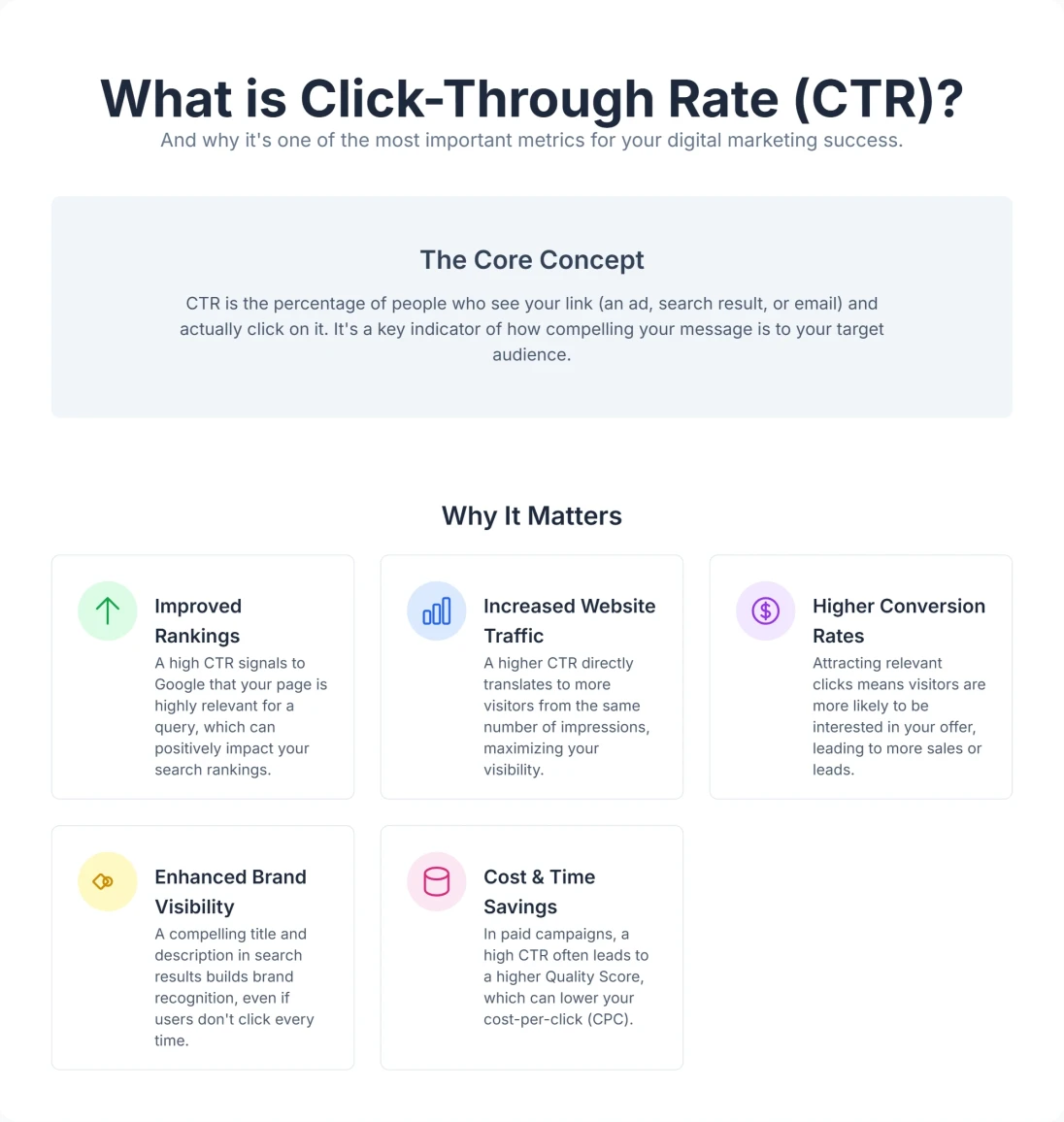
What is CTR? Click-Through Rate (CTR) is a fundamental metric in digital marketing, representing the ratio of users who click on a specific link to the total number of users who view an impression of that link. Whether it's a search result, an advertisement, or an email link, CTR tells you how effective your messaging is at encouraging action. It's typically expressed as a percentage, calculated with a simple formula:
CTR Formula:
CTR = (Clicks / Impressions) x 100%
For example, if your website link appears in search results 1,000 times (impressions) and receives 50 clicks, your CTR would be 5%.
Why Does a High CTR Matter? A high CTR is more than just a vanity metric; it's a powerful signal to search engines, including Google and emerging AI search engines, that your content is highly relevant and valuable to users. Search engines constantly strive to deliver the most useful and engaging results to their users. When many people click on your link, it indicates that your title, description, and overall snippet accurately represent what users are looking for, satisfying their search intent.
Here's why CTR holds immense importance:
- A Signal of Relevance and Quality: Search engine algorithms, including those powered by AI, interpret a high CTR as a strong indicator of content quality and relevance. If users consistently choose your result over others, it suggests your offering is a good match for their query. This positive engagement can indirectly influence your organic rankings, creating a beneficial cycle: better CTR leads to higher rankings, which in turn can lead to even higher CTRs.
- Increased Website Traffic: This is the most direct and obvious benefit. More clicks mean more visitors to your website. More visitors translate into more opportunities for conversions, leads, and sales.
- Improved Ad Quality Scores (for Paid Ads): While this guide focuses on organic SEO, it's worth noting that in paid advertising platforms like Google Ads, a higher CTR directly leads to a better Quality Score. A better Quality Score can result in lower cost-per-click (CPC) and improved ad positioning, giving you more for your advertising budget.
- Understanding User Behavior: Analyzing your CTR provides invaluable insights into what resonates with your target audience. A low CTR, despite a good ranking, might indicate that your title or description isn't compelling enough, or that your content isn't meeting the searcher's true intent. Conversely, a high CTR tells you your messaging is spot on.
In essence, CTR is a critical health check for your digital marketing strategies. Regularly monitoring it helps you understand if your efforts are truly capturing audience attention and driving the desired action.
The Unseen Power: What are the Benefits of Optimizing Your CTR?
Optimizing your Click-Through Rate is a strategic investment that yields a multitude of benefits, extending far beyond just a numerical increase in clicks. These advantages contribute significantly to your overall business visibility, lead generation, and operational efficiency.
1. Improved Organic Search Rankings: While CTR isn't always cited as a direct ranking factor, it sends powerful behavioral signals to search engines. When your search result consistently receives more clicks than competitors at similar or even higher positions, it tells Google that users find your content exceptionally relevant and valuable. This positive user engagement can lead to improved organic rankings over time. Google's algorithms are designed to deliver the best possible results, and a high CTR indicates that your page is often the "best answer" for a given query.
2. Increased Website Traffic: This is the most straightforward benefit. A higher CTR directly translates to more visitors landing on your website. This surge in qualified traffic means more eyes on your products, services, or information, significantly expanding your reach. Each additional click is a new opportunity to engage with a potential customer, convert a lead, or inform an audience.
3. Higher Conversion Rates: When your search snippets are optimized for a high CTR, they are designed to be highly relevant and enticing. This means the users clicking through are more likely to be genuinely interested in your offering. More qualified traffic often leads to better engagement on your site and, consequently, higher conversion rates – whether that's filling out a form, making a purchase, or signing up for a newsletter. The quality of the click matters as much as the quantity.
4. Enhanced Brand Visibility and Recognition: Appearing prominently and enticingly in search results, particularly with rich snippets (which we'll discuss soon), increases your brand's exposure. Even if a user doesn't click on your link every time, the repeated exposure to your brand name, compelling title, and useful description builds recognition and trust. Over time, this contributes to stronger brand recall and authority within your industry.
5. Cost and Time Savings: Optimizing for CTR can lead to significant efficiencies. For organic SEO, improving CTR on existing content means you're maximizing the value of your current rankings and content investments. Instead of constantly needing to create new content or build more backlinks, you're making your existing assets work harder. For businesses utilizing paid ads, a higher CTR can lead to lower cost-per-click, meaning you get more clicks for the same budget. Streamlining this process with smart tools can also save countless hours in manual analysis and optimization.
Table: Summary of CTR Optimization Benefits
| Benefit | Description |
|---|---|
| Improved Rankings | Signals relevance and quality to search engines, potentially leading to higher organic positions. |
| Increased Traffic | More clicks directly translate to more visitors to your website, expanding your reach. |
| Higher Conversions | Attracts more qualified leads, as enticing snippets bring genuinely interested users, boosting on-site actions. |
| Enhanced Visibility | Prominent and appealing search results increase brand exposure and recognition, building trust. |
| Cost & Time Savings | Maximizes existing SEO efforts, potentially lowering ad costs and reducing the need for extensive new content creation. Streamlines analysis and optimization. |
By understanding and actively pursuing CTR optimization, businesses can unlock these powerful advantages, turning their online presence into a more effective engine for growth.
How to Supercharge Your CTR: Key Strategies and Elements for Success
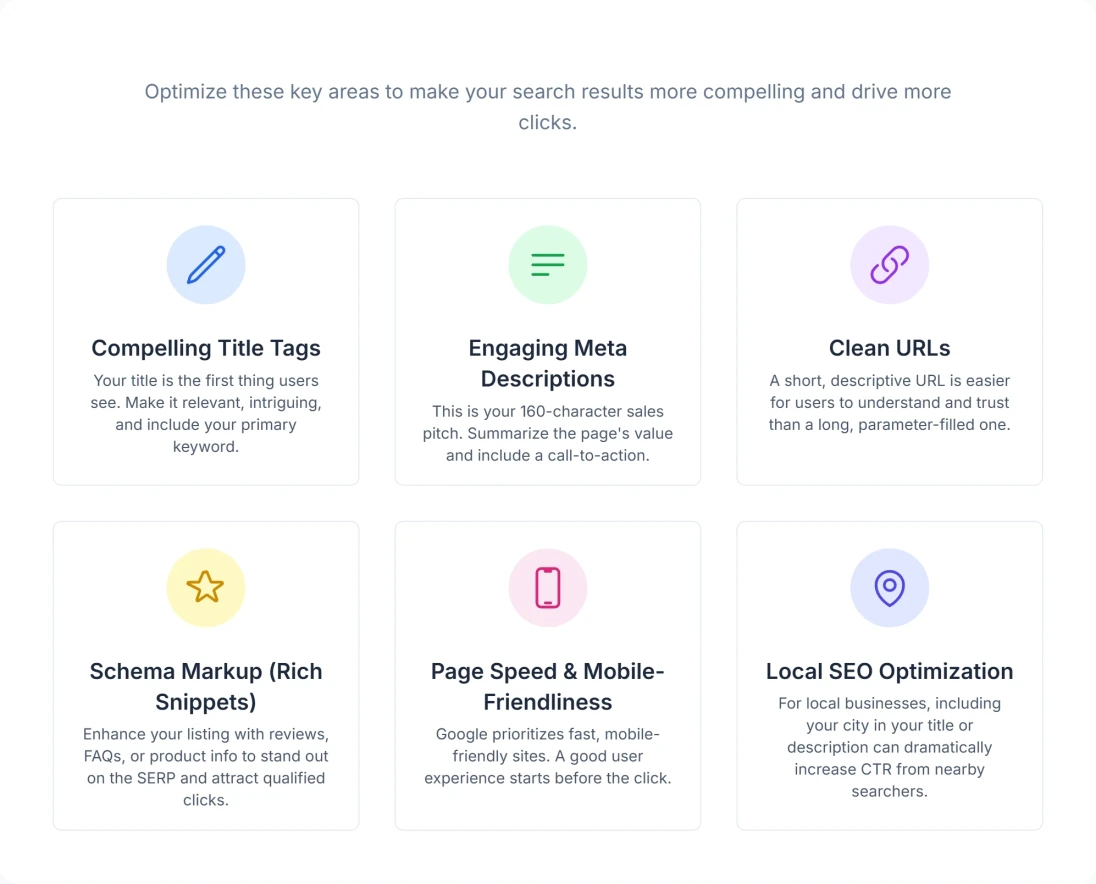
Optimizing your CTR involves refining every element of your search engine result snippet to make it as appealing and informative as possible. This section dives into the core strategies and key components that, when fine-tuned, can significantly boost your click-through rates.
1. Crafting Irresistible Title Tags
Your title tag is arguably the most crucial element in influencing CTR. It's the headline that appears in search results, browser tabs, and social shares. A compelling title tag grabs attention and communicates value.
What to do:
- Include Your Primary Keyword: Place your main target keyword near the beginning of your title. This instantly signals relevance to both users and search engines.
- Convey Value and Benefit: Don't just state what the page is about; explain what the user will gain by clicking. Use action-oriented words.
- Spark Curiosity: A dash of intrigue can encourage clicks, but ensure it's not misleading.
- Use Numbers, Dates, or Parentheses: Numbers (e.g., "10 Tips," "2026 Guide") often stand out. Parentheses or brackets can highlight unique selling propositions (e.g., "[Case Study]").
- Optimize for Length: Google typically displays the first 50-60 characters (around 500-600 pixels) of a title tag. Keep it concise but impactful.
- Consider Emotional Triggers: Words that evoke emotion or address a pain point can be very effective.
Example Title Tag Optimization:
| Original Title Tag (Low CTR) | Optimized Title Tag (Higher CTR Potential) |
|---|---|
| SEO Basics | SEO Basics: Your 2026 Guide to Dominating Google Rankings |
| Website Design Services | Stunning Website Design Services [Boost Your Online Presence Today] |
| Our Product Features | Unlock Growth: Discover the Power of Our AI-Driven Solution |
| How to Write Good Articles | How to Write Engaging Articles (10 Proven Tips for Higher Reads) |
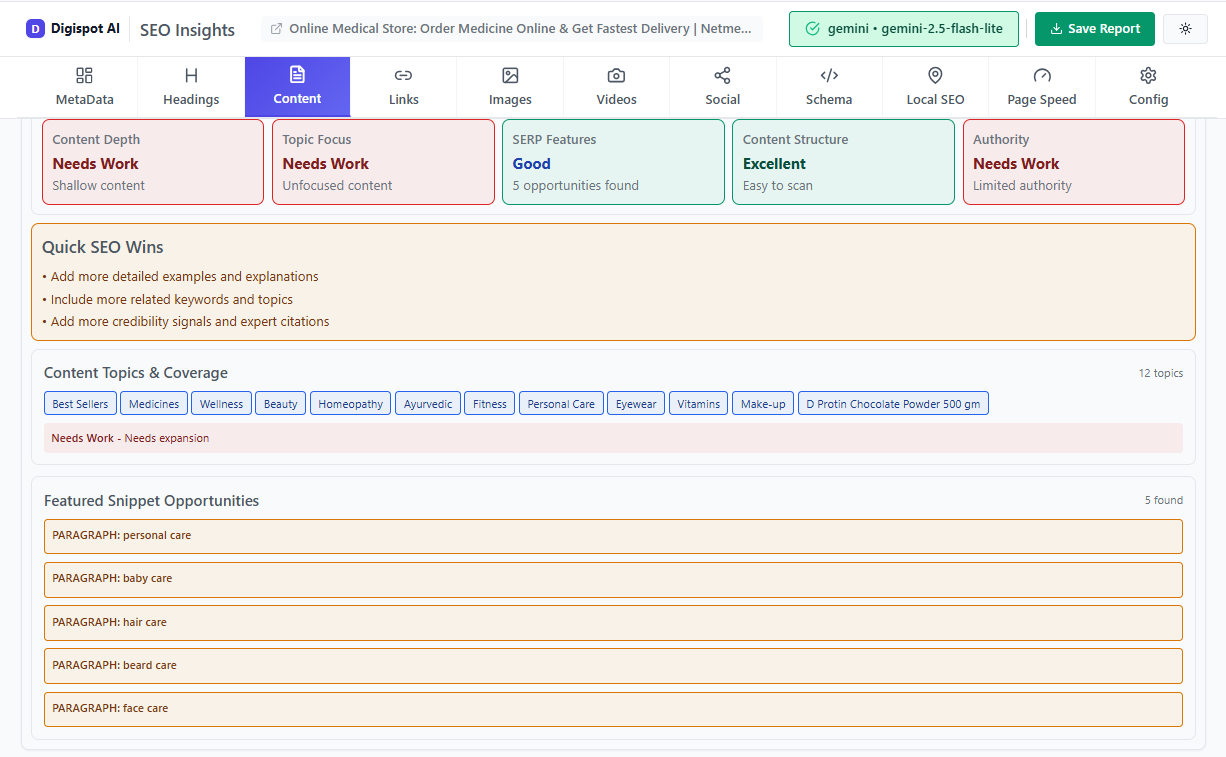
Tools can be incredibly helpful here. For instance, Digispot AI can audit your website's meta tags and provide smart content and heading suggestions, helping you optimize your titles for better performance.
2. Writing Compelling Meta Descriptions
While not a direct ranking factor, your meta description acts as your advertisement on the search results page. It's the short paragraph that appears under your title, offering a concise summary and a reason to click.
How to craft them:
- Summarize Accurately: Clearly and concisely describe what the page is about. Avoid misleading information.
- Include a Strong Call to Action (CTA): Encourage users to take the next step. Phrases like "Learn More," "Discover How," "Shop Now," or "Get Your Free Guide" can be highly effective.
- Incorporate Keywords (Naturally): While not for ranking, keywords in your meta description will often be bolded by Google if they match a user's query, drawing attention to your snippet.
- Address User Intent/Problem: Show that your page provides the solution or information the user is seeking.
- Mind the Length: Meta descriptions are typically truncated after 155-160 characters on desktop and slightly less on mobile. Keep your most important information at the beginning.
Example Meta Description Optimization:
| Original Meta Description (Low CTR) | Optimized Meta Description (Higher CTR Potential) |
|---|---|
| Information about our company and services. | Discover how our innovative services can transform your business. Learn more about our solutions today! |
| This page has a product. | Explore our top-rated product, designed to simplify your workflow. Shop now and experience the difference! |
| We help with SEO. | Struggling with Google rankings? Get expert SEO strategies and boost your traffic with our proven methods. Read our guide! |
Leveraging AI-powered tools can significantly enhance your meta description writing. Digispot AI's Content Studio, for example, can assist in generating SEO-optimized content, including meta descriptions, ensuring they are compelling and keyword-rich, using advanced AI agents.
3. Optimizing Your URLs for Clarity and Trust
Your URL is another visual cue in search results. A clean, descriptive, and user-friendly URL can instill trust and provide context, encouraging clicks.
What to consider:
- Readability: Use hyphens to separate words instead of underscores or spaces. Keep it simple and easy to understand.
- Keyword Inclusion: Incorporate relevant keywords when logical and natural, but avoid keyword stuffing.
- Conciseness: Shorter, more memorable URLs are generally preferred.
- Logical Structure: A well-structured URL can hint at the page's hierarchy on your site (e.g.,
yourdomain.com/category/sub-category/page-title).
Remember that Google frequently shows a breadcrumb-style path in place of the raw URL, so a clean folder structure does double duty: it clarifies where the page sits and it reads as a trust signal in the SERP. A few practical rules make the biggest difference. Lowercase every character to avoid duplicate-URL confusion, strip session IDs and tracking parameters from indexable URLs, and resist the temptation to encode dates or version numbers you will later want to change. Once a URL is published and earning clicks, changing it costs you — you either break the link or add a redirect that adds latency. So decide the slug deliberately the first time, keep it stable, and let the title tag carry the freshness cues like "2026" instead.
Example URL Optimization:
| Original URL (Less Optimal) | Optimized URL (Better for CTR) |
|---|---|
| yourdomain.com/p?id=12345&cat=seo | yourdomain.com/seo-guide/ctr-optimization |
| yourdomain.com/blog/article_on_marketing_strategies_for_2026.html | yourdomain.com/blog/marketing-strategies-2026 |
4. Leveraging Schema Markup (Rich Snippets) for Enhanced Visibility
Schema markup, also known as structured data, is code you add to your website to help search engines better understand your content. It uses a standardized vocabulary to define entities and their attributes, making your content easier for machines to interpret. When implemented correctly, schema markup can enable "rich snippets"—visually enhanced search results that stand out from traditional blue links.
What are Rich Snippets? Rich snippets provide additional, valuable information directly in the search results, making your listing more prominent and attractive. This can include:
- Review Snippets: Star ratings and review counts for products or services.
- Product Snippets: Price, availability, and images for e-commerce products.
- FAQ Snippets: Expandable answers to common questions directly in the SERP.
- Event Snippets: Dates, times, and locations for events.
- How-to Snippets: Step-by-step instructions.
- Local Business Snippets: Address, phone number, hours for local businesses.
How Rich Snippets Boost CTR: These visual enhancements make your search result more appealing and informative, helping users quickly determine if your page is relevant to their needs. This increased visibility and context can significantly boost your CTR, as users are more likely to click on a result that offers more information upfront and appears more credible. Structured, answer-first content is also what qualifies a page for the position-zero box above the standard results — our guide on winning Google featured snippets breaks down the formatting patterns Google favors.
Table: Impact of Schema Markup on SERP Appearance
| Schema Type | Information Displayed in SERP (Example) | Potential CTR Benefit |
|---|---|---|
| Product | Price, availability, star rating. | Users see key purchase details at a glance, increasing qualified clicks. |
| Review | Star rating, number of reviews. | Builds trust and credibility, enticing clicks from users seeking quality. |
| FAQ | Expandable common questions and answers. | Provides immediate value and encourages users to click for more detailed answers. |
| Event | Date, time, location. | Helps users quickly find relevant events, driving clicks from interested attendees. |
| Local Business | Address, phone, opening hours, average rating. | Crucial for local search, guiding users directly to relevant local businesses. |
Implementing schema markup can be technical, but tools simplify the process. Digispot AI offers advanced capabilities for schema markup mastery, including interactive structured data visualization (both list and graph views) and real-time validation with error highlighting. This allows you to visualize your schema markup and ensure it's correctly implemented, detecting any issues that might prevent rich snippets from appearing.
5. Ensuring Content Quality and Relevancy
Ultimately, your title and meta description are promises. Your content must deliver on those promises. High-quality, relevant content that genuinely addresses user intent will lead to a better user experience, lower bounce rates, and send positive signals to search engines. If users find your content valuable, they're more likely to spend time on your site, share it, and return, all of which indirectly contribute to sustained high CTRs for related queries.
The tightest link in this chain is intent. A page can be beautifully written yet earn a poor CTR simply because it answers a different question than the one the searcher is asking. Before rewriting a snippet, confirm the page satisfies the dominant intent behind the query — informational, commercial, navigational, or transactional. A guide that ranks for a "how to" query but leads with a sales pitch will win few clicks, and the ones it does win bounce quickly. Aligning the page to what searchers actually want is the foundation for everything else; see our guide on optimizing for search intent for a practical framework.
There is also a snippet-content feedback loop worth respecting. When your title and meta description accurately preview the value on the page, click-throughs convert into engaged sessions rather than pogo-sticking back to the SERP. Reducing that bounce-back is one of the most direct levers you have on perceived relevance, and it compounds over time — steady, satisfied clicks reinforce the query-to-page match that keeps you ranking. If a page attracts clicks but sheds them fast, treat it as a content problem first and a snippet problem second; our guide on reducing bounce rate covers the on-page fixes that hold visitors once they arrive.
6. The Crucial Role of Page Speed and Mobile-Friendliness
In today's mobile-first world, page speed and mobile-friendliness are non-negotiable. If your page loads slowly or isn't optimized for mobile devices, users will quickly bounce back to the search results, negatively impacting your CTR and sending negative signals to search engines.
How they impact CTR:
- User Experience: Faster loading pages provide a smoother experience, reducing frustration and encouraging users to stay.
- Google's Ranking Factors: Page speed is a known ranking factor. Pages that load quickly are favored in search results.
- Mobile-First Indexing: Google primarily uses the mobile version of your content for indexing and ranking. If your site isn't mobile-friendly, its chances of ranking well and attracting clicks are severely diminished.
Digispot AI can help by auditing websites in both mobile and desktop modes, identifying performance issues that could be hindering your CTR. It helps you review your page performance score for web and mobile directly.
7. Local SEO Optimization for Geo-Targeted Clicks
For businesses with a physical location or serving a specific geographic area, Local SEO is paramount for CTR. Local Pack results, which often appear at the top of local searches, can dominate the SERP and drive significant local traffic.
How Local SEO impacts CTR:
- Google My Business (GMB) Profile: Optimizing your GMB listing with accurate information, photos, reviews, and posts can significantly enhance your visibility in local search results and local packs.
- Local Keywords: Targeting "near me" or "in [city/region]" keywords will help you appear for highly localized searches.
- Local Schema Markup: Implementing schema for local businesses helps search engines understand your location, contact details, and services, making your local listing richer.
Digispot AI offers Local SEO Optimization, including checks for Google Name, Address, Phone Number (NAP) consistency, Google Business and Google Maps integration, local SEO-specific schema markup analysis, and local place keywords analysis. This comprehensive approach ensures your local presence is optimized to attract local clicks.
Practical Steps: Your CTR Optimization Checklist
Now that you understand the key elements, here's a practical checklist to guide your CTR optimization efforts:
Step 1: Identify Low-Performing Pages/Keywords
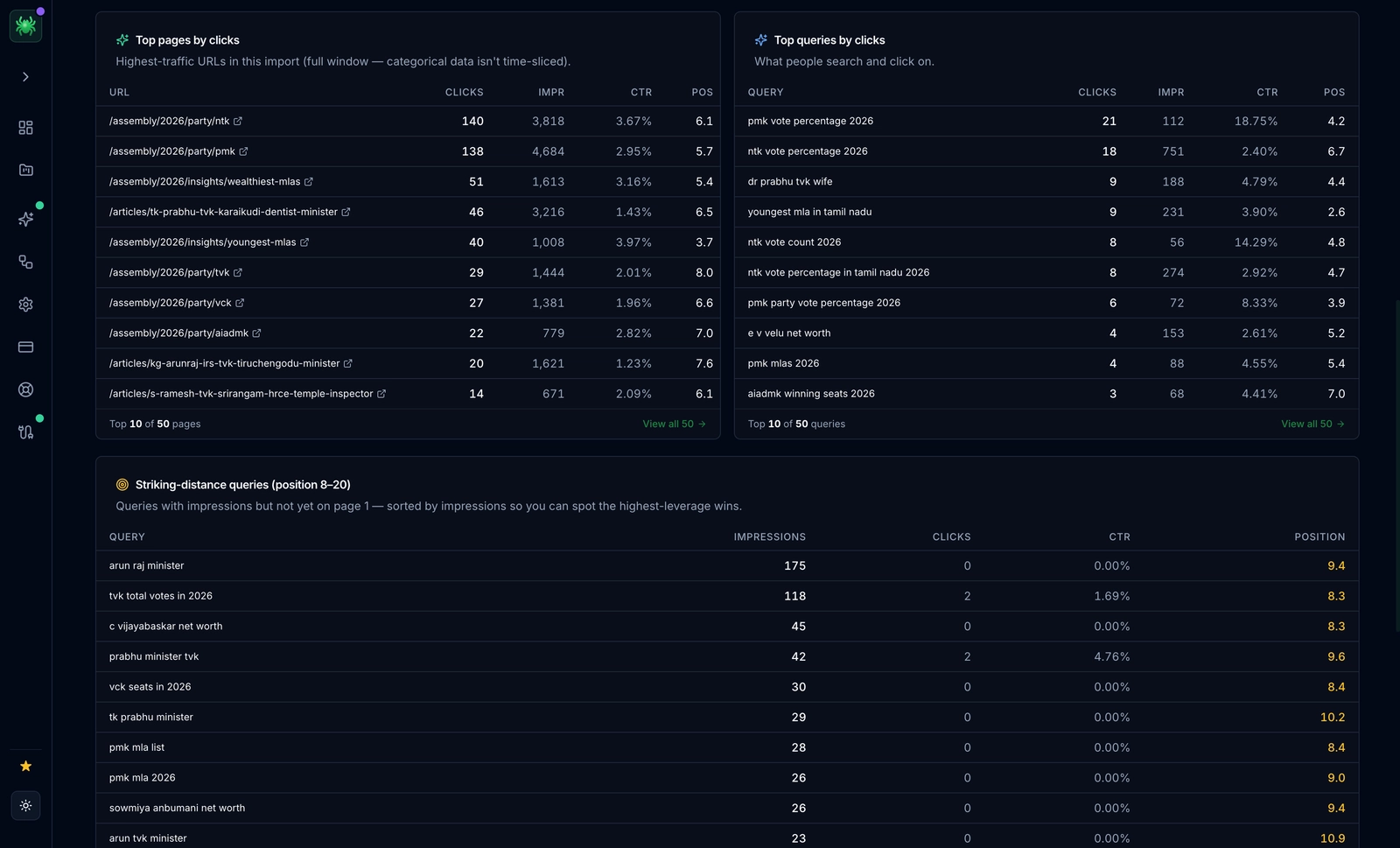
- What to do: Start by analyzing your current CTR. Utilize tools like Google Search Console (GSC). GSC's Performance report shows your average CTR, impressions, and clicks for various keywords and pages. Look for pages that have a good number of impressions (meaning people are seeing your link) but a comparatively low CTR. This indicates an opportunity for improvement.
- How Digispot AI Helps: Digispot AI integrates with Google Search Console and Google Analytics, providing a unified view of your performance data, making it easier to pinpoint underperforming areas and track improvements.
Step 2: Brainstorm and Implement Title and Meta Description Improvements
- What to do: For the identified low-CTR pages, re-evaluate their title tags and meta descriptions. Apply the strategies discussed above: use compelling language, include keywords naturally, add power words, numbers, or a clear call to action. Consider what would make you click on that link.
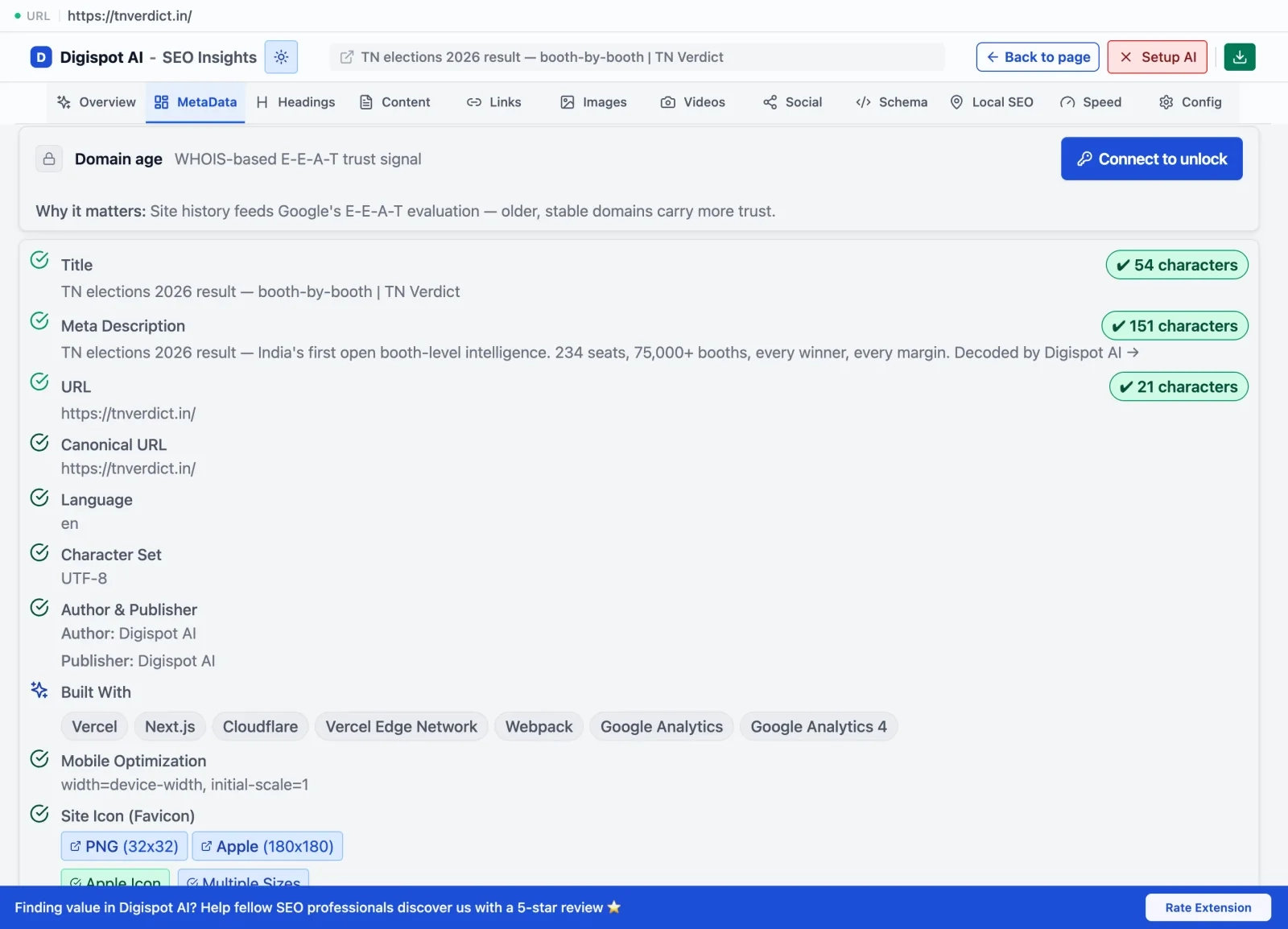
- How Digispot AI Helps: Use Digispot AI's Content Studio and its AI agents to generate optimized titles and meta descriptions. The platform's insights can help you refine these elements quickly and effectively. Its free community Chrome extension also provides instant on-page SEO audits, analyzing meta tags and offering smart content and heading suggestions directly in your browser.
Step 3: Implement or Enhance Schema Markup
- What to do: Identify opportunities to add relevant schema markup to your pages. For product pages, use Product schema. For articles, consider Article or FAQ schema. This will enable rich snippets and make your search results more visually appealing.
- How Digispot AI Helps: Digispot AI assists with schema detection and visualization, ensuring your markup is correctly implemented and structured. Its Chrome extension can also visualize your schema markup, offering both list and graph views, and validating structured data in real-time with error highlighting.
Step 4: Optimize URLs for Clarity
- What to do: Review your URLs for readability and keyword inclusion. Aim for clean, descriptive URLs that reflect the page's content.
Step 5: Ensure Mobile-Friendliness and Page Speed
- What to do: Use Google's Mobile-Friendly Test and PageSpeed Insights tools to identify and fix any issues. A fast and responsive website is fundamental to a positive user experience and higher CTR.
- How Digispot AI Helps: Digispot AI audits websites in both mobile and desktop modes, helping you identify performance bottlenecks that might affect user engagement and CTR. It can help you detect problems with slow-loading pages.
Step 6: A/B Test Your Changes
- What to do: Don't just implement changes and hope for the best. A/B testing allows you to test different versions of your titles, meta descriptions, or even rich snippets to see which performs better. This data-driven approach ensures your efforts are effective.
- How to do it: While direct A/B testing on SERP snippets is complex, you can monitor CTR changes in GSC after implementing a change, or run ad experiments to test messaging variations.
Step 7: Continuously Monitor and Refine
- What to do: CTR optimization is an ongoing process. Regularly revisit your GSC data, identify new opportunities, and iterate on your strategies. The search landscape is always evolving, and so should your optimization efforts.
Table: CTR Optimization Checklist Summary
| Step | Action Items | Tools to Use |
|---|---|---|
| 1. Identify Low-Performers | Analyze GSC Performance report for pages with high impressions, low CTR. | Google Search Console, Digispot AI (integrates with GSC & GA) |
| 2. Optimize Title & Meta | Rewrite compelling titles & meta descriptions with keywords, value, CTAs, and emotional triggers. | Digispot AI (Content Studio, AI agents, Chrome Extension for suggestions) |
| 3. Implement Schema Markup | Add relevant structured data (Product, FAQ, Review, Event, Local Business) to enable rich snippets. | Digispot AI (Schema Markup Mastery: visualization, validation, detection in platform and Chrome Extension) |
| 4. Clean Up URLs | Ensure URLs are readable, concise, and keyword-friendly. | Manual review, CMS features |
| 5. Boost Speed & Mobile-Friendly | Test page speed and mobile responsiveness. Optimize images, code, and server response times. | Google PageSpeed Insights, Google Mobile-Friendly Test, Digispot AI (website auditing in mobile/desktop modes, page performance scores) |
| 6. A/B Test | Monitor CTR changes after implementing optimizations; consider A/B testing ad copy for insights into messaging. | Google Search Console, Google Ads (for ad copy testing) |
| 7. Monitor & Refine | Establish a regular review schedule for CTR metrics; adapt strategies based on performance and evolving search trends. | Google Search Console, Google Analytics, Digispot AI (performance tracking, opportunity finder, 300+ ranking factors analysis) |
By following this checklist, you can systematically improve your website's CTR, leading to better visibility, increased traffic, and improved business outcomes.
Common CTR Optimization Mistakes to Avoid
While the pursuit of a higher CTR is vital, it's equally important to steer clear of common pitfalls that can backfire, damaging your credibility and overall SEO performance.
1. Keyword Stuffing in Titles or Descriptions: What it is: Overloading your title tags or meta descriptions with too many keywords in an unnatural way. Why it's a mistake: This makes your snippets unreadable and spammy to users, reducing their appeal. Search engines are also sophisticated enough to detect keyword stuffing and may penalize your site or simply ignore the stuffed keywords, leading to lower rankings or poor snippet display.
2. Misleading Titles or Meta Descriptions: What it is: Crafting clickbait-style titles or descriptions that promise something the actual page content doesn't deliver. Why it's a mistake: While you might get an initial click, users will quickly realize the content isn't what they expected and will bounce back to the search results. This high bounce rate sends strong negative signals to search engines, indicating your content isn't relevant to the query, which can harm your rankings. It also damages user trust and brand reputation.
3. Ignoring Mobile Users: What it is: Only optimizing your snippets or website for desktop view, neglecting the mobile experience. Why it's a mistake: A vast and growing percentage of searches occur on mobile devices. If your titles and descriptions are too long for mobile screens or your pages load slowly on mobile, your mobile CTR will suffer. Google's mobile-first indexing also means that a poor mobile experience can negatively impact your overall search performance. Digispot AI helps you avoid this by auditing your website in both mobile and desktop modes, ensuring a consistent and optimal experience.
4. Not Tracking Your Results: What it is: Implementing changes without monitoring their impact on your CTR and other key metrics. Why it's a mistake: Without tracking, you won't know if your optimizations are working. You'll miss opportunities to refine your approach, perpetuate ineffective strategies, and fail to understand what truly resonates with your audience. Remember, what works for one industry or audience might not work for another. Digispot AI helps you track and improve performance by integrating with Google Search Console and Google Analytics.
5. Static, Unchanging Snippets: What it is: Creating a title and meta description once and never revisiting them. Why it's a mistake: The search landscape, user intent, and competitor strategies are constantly evolving. A snippet that performed well a year ago might be underperforming today. Continuous monitoring and iterative optimization are crucial for sustained success.
By consciously avoiding these common mistakes, you can ensure your CTR optimization efforts are effective, sustainable, and contribute positively to your long-term SEO and business goals.
Measuring Your Success: Tracking and Analyzing CTR Performance
Effective CTR optimization isn't a one-time task; it's a continuous cycle of analysis, implementation, and measurement. Knowing how to track and interpret your CTR data is paramount to understanding what's working and where further improvements are needed.
1. The Power of Google Search Console (GSC): Google Search Console is your primary tool for organic CTR analysis. It provides invaluable data directly from Google about how your website performs in search results. If you're not yet fluent with its reports and filters, our Google Search Console guide for SEO walks through the setup and workflows that make CTR analysis repeatable.
How to use GSC for CTR:
- Performance Report: Navigate to the "Performance" report in GSC. Here, you can view your total clicks, impressions, average CTR, and average position for various queries and pages.
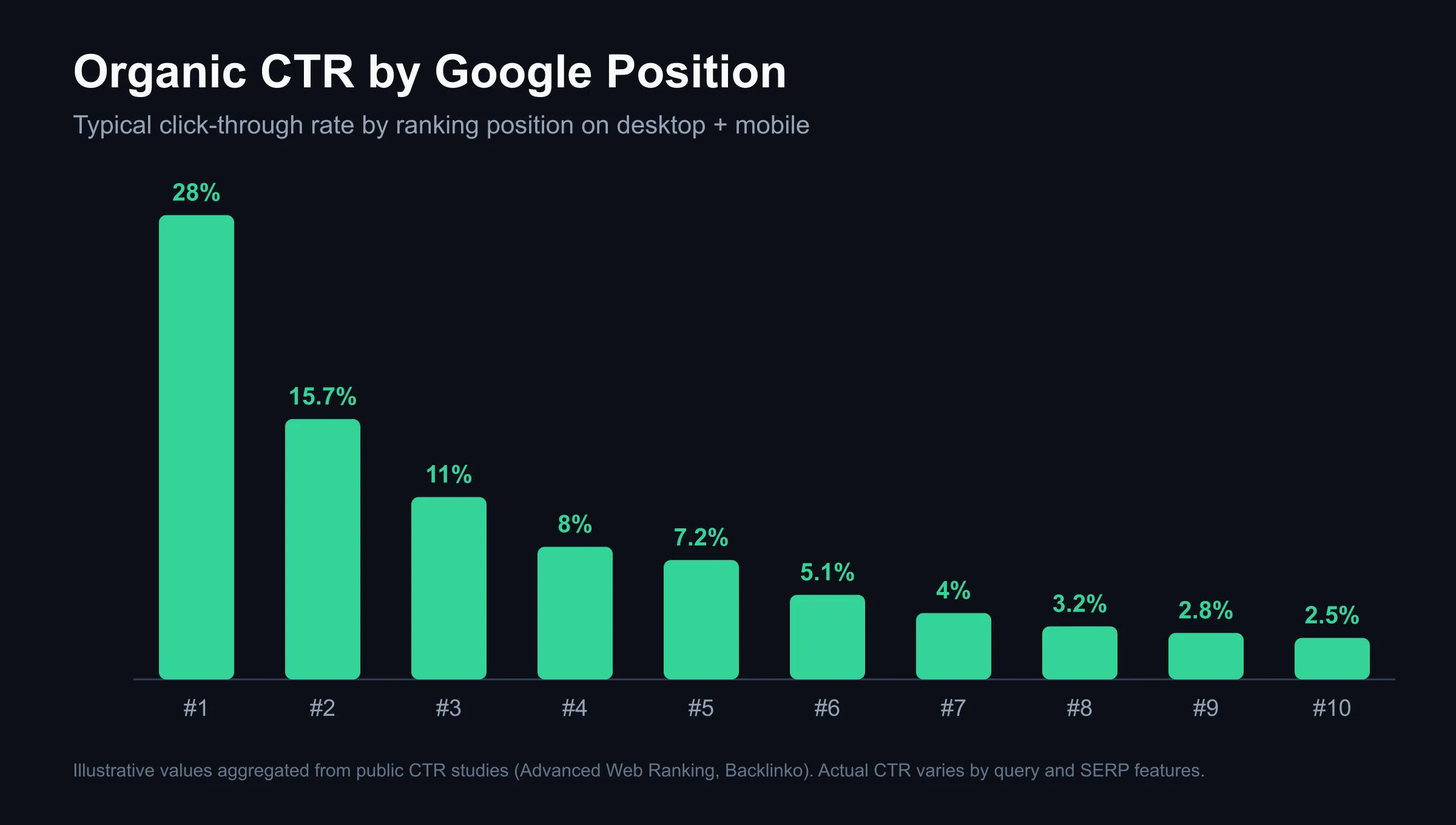
- Query Analysis: Filter by "Queries" to see which keywords your site is appearing for and their respective CTRs. Look for keywords where you have a good average position (e.g., positions 1-10) but a lower-than-expected CTR. This indicates that your snippet might not be compelling enough, despite ranking well.
- Page Analysis: Filter by "Pages" to identify specific URLs on your site that are underperforming in terms of CTR. This helps you prioritize which pages need immediate attention for title and meta description optimization.
- Date Range Comparison: Use GSC's date comparison feature to analyze the impact of your CTR optimization efforts over time. Did your CTR improve after you updated a title tag? GSC will show you.
Table: Interpreting CTR in Google Search Console (Example)
| Query/Page | Impressions | Clicks | CTR | Average Position | Analysis | Action |
|---|---|---|---|---|---|---|
| "best AI SEO" | 10,000 | 50 | 0.50% | 3 | High impressions, good position, but very low CTR. Snippet likely not enticing. | Optimize title & meta for relevance/CTA. |
| "SEO trends" | 5,000 | 250 | 5.00% | 8 | Decent CTR for position 8. Content is resonating; potential for higher ranking with better snippet. | Refine snippet slightly, aim for featured snippet if applicable. |
| "local SEO" | 2,000 | 10 | 0.50% | 15 | Low impressions and position; low CTR. Need to improve ranking first, then snippet. | Focus on content quality & backlinks to improve ranking, then CTR. |
2. Integrating with Google Analytics: While GSC focuses on how users interact with your presence in search results, Google Analytics (GA) tracks what happens after they click through.
- Behavior Flow: Analyze user behavior paths from your landing pages. Are users engaging with your content, or bouncing immediately? A high bounce rate from organic search traffic, despite a good CTR, might indicate that your snippet is attracting the wrong audience or that your landing page isn't meeting expectations.
- Conversions: Link your GSC data with GA to see how organic traffic with specific CTRs translates into conversions. This helps you understand the true business impact of your CTR improvements.
How Digispot AI Assists with Performance Tracking: Digispot AI takes the complexity out of tracking by providing a unified platform. It seamlessly integrates with both Google Search Console and Google Analytics, offering a holistic view of your SEO performance. This integration helps you track and improve performance by connecting the dots between your search result appearance (impressions, clicks, CTR) and on-site user behavior (engagement, conversions). Digispot AI's comprehensive analysis of over 300+ ranking factors, including page performances, means it's constantly evaluating issues that might impact your CTR, allowing you to pinpoint and solve them effectively.
By diligently tracking and analyzing these metrics, you gain clear insights into the effectiveness of your CTR optimization strategies, enabling data-driven decisions that propel your website towards greater visibility and success.
The Role of AI in CTR Optimization: A Modern Approach with Digispot AI
Artificial Intelligence (AI) is fundamentally reshaping the landscape of search engine optimization, and CTR optimization is no exception. AI is not just a tool; it's a paradigm shift, enabling deeper analysis, faster insights, and more intelligent content creation than ever before.
How AI is Changing CTR Optimization:
- Deeper Intent Understanding: AI-powered algorithms are becoming increasingly adept at understanding complex user intent behind search queries. This means your content needs to be semantically rich and truly align with what users are trying to achieve, not just stuffed with keywords. AI tools can help analyze and match this intent more precisely.
- Personalized Search Results: AI facilitates more personalized search results, meaning the same query might yield slightly different results for different users based on their history, location, and other factors. Optimizing for CTR in this environment means focusing on broad topical relevance and strong core messaging.
- AI Overviews and Richer SERPs: Google's AI Overviews (AIOs), powered by models like Gemini, synthesize information directly into summaries at the top of search results. While this can sometimes reduce organic clicks for traditional listings, it also presents new opportunities to be cited within these overviews, potentially leading to clicks if the AIO encourages further exploration. Optimizing for AIOs often involves structuring content with clear, concise answers and strong schema. Because more queries now resolve without a click, it also pays to understand strategy for zero-click searches so you still capture visibility and brand recall even when a click doesn't follow.
- Automated Insights and Recommendations: AI excels at processing vast amounts of data quickly, identifying patterns, and generating actionable recommendations that would take humans countless hours. This is where AI-powered platforms become indispensable for CTR optimization.
Digispot AI: Your Intelligent Partner in CTR Optimization
Digispot AI is an AI SEO platform designed to help business websites thrive in this evolving environment, making it easier to rank better in Google and other AI search engines. It integrates cutting-edge AI capabilities directly into your SEO workflow, including those crucial for CTR optimization.
How Digispot AI leverages AI for your CTR success:
- Comprehensive Website Auditing (Mobile & Desktop): Digispot AI helps by auditing websites in both mobile and desktop modes. It understands and helps you rank better by analyzing your site for 300+ ranking factors, including content, technical SEO, local SEO, and page performance. This holistic audit capability allows Digispot AI to identify issues that may be hindering your CTR, from slow loading times to structural problems, and guides you on how to solve them.
- Opportunity Finder: Leveraging AI, Digispot AI's "Opportunity Finder" helps you spot untapped potential for higher CTRs. It can analyze keyword gaps, identify queries where your site is ranking just outside the top positions but has strong potential for a click boost, and suggest improvements.
- Content Studio with AI Agents: One of the most powerful features for CTR optimization is Digispot AI's "Content Studio." This studio empowers you to generate SEO-optimized content using AI agents. This means you can swiftly create compelling title tags, meta descriptions, and on-page content that are not only keyword-rich but also designed to attract clicks and engage users. The AI can help refine your messaging to perfectly align with user intent, crucial for a high CTR.
- Seamless Data Integration: As mentioned earlier, Digispot AI seamlessly integrates with Google Search Console and Google Analytics. This integration provides a centralized hub for tracking and improving your performance, allowing you to see the direct impact of your CTR optimization efforts on traffic and leads.
- Advanced Schema Markup Mastery: Digispot AI brings in all SEO best practices in an automated and user-friendly model. For schema markup, it offers interactive structured data visualization, real-time validation with error highlighting, and entity relationship mapping for semantic SEO. This helps ensure your rich snippets appear correctly and effectively, significantly boosting your visibility and CTR in search results.
The Free Community Chrome Extension: Your On-the-Go CTR Auditor
For quick, real-time insights directly in your browser, Digispot AI also offers a free community Chrome extension: Digispot AI SEO Insights. This extension is a game-changer for daily auditing and offers powerful, AI-powered features for CTR optimization right at your fingertips.
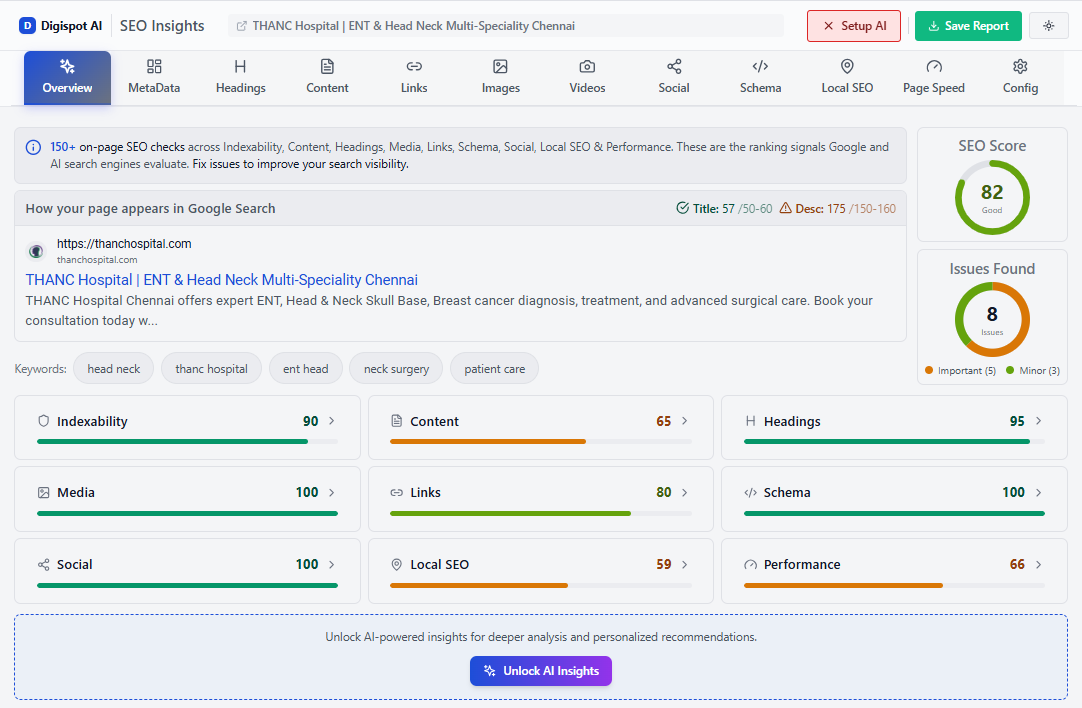
Turn invisible SEO data into clear visuals with our Free Chrome extension.
What the Digispot AI Chrome Extension provides for CTR optimization:
- Instant On-Page SEO Audits: Get immediate audits of any webpage, analyzing vital SEO elements that impact CTR, such as meta tags, heading structure, and content quality.
- Schema Markup Validation & Visualization: This is a standout feature for CTR. The extension helps you audit, detect, and visualize schema markup directly in your browser. You can see your structured data in both list and graph views, ensuring it's correctly implemented to generate those valuable rich snippets.
- AI Keyword Relevance Analysis & Suggestions: The extension provides instant on-page SEO audits and keyword relevance scoring, offering AI-powered suggestions to optimize your content, including titles and meta descriptions, for higher CTR.
- Social Media Metadata Optimization: Ensure your content looks compelling when shared on social media by validating Open Graph and Twitter cards. Optimized social snippets can indirectly drive traffic and brand recognition that loops back to search.
- Powered by Popular LLM Models: The extension is powered by popular LLM (Large Language Model) models, bringing sophisticated AI insights directly into your auditing process.
This free tool makes advanced SEO capabilities accessible to everyone, streamlining technical audits and content optimization right where you need it – in your browser.
By integrating the analytical power of Digispot AI's cloud platform with the immediate utility of its free Chrome extension, you gain a comprehensive suite of tools to proactively identify, address, and capitalize on CTR optimization opportunities, operating at scale with accuracy.
Conclusion: The Never-Ending Journey of CTR Optimization
Click-Through Rate optimization is not a static goal but a continuous journey. In an increasingly competitive and AI-driven search landscape, mastering CTR is no longer optional; it's fundamental to improving business visibility, increasing traffic, and generating valuable leads.
What we've learned:
- CTR is a powerful signal: It tells search engines how relevant and valuable your content is, indirectly influencing your rankings.
- Every snippet element counts: From compelling titles and enticing meta descriptions to clear URLs and visually striking rich snippets, each piece contributes to attracting clicks.
- Mobile-friendliness and speed are non-negotiable: A poor user experience, especially on mobile, will send users away before they even consider clicking.
- AI is transforming the game: AI offers unprecedented capabilities for analysis, content generation, and identifying hidden opportunities for CTR improvement.
By understanding the "what," "how," and "why" of CTR optimization, and by leveraging modern AI-powered platforms like Digispot AI, you can move beyond simply ranking to truly captivating your audience and driving more qualified traffic to your business. Whether it's through the comprehensive insights of the Digispot AI cloud platform, with its 300+ ranking factor analysis, opportunity finder, and content studio, or the immediate, in-browser auditing power of its free community Chrome extension, you have the tools to make your search results irresistibly clickable.
Embrace the continuous process of testing, learning, and refining your approach. Your efforts in CTR optimization will not only lead to more clicks but will also foster stronger connections with your audience and propel your business towards sustained online success in the evolving AI search era.
Related deep-dives
Continue with these closely related guides:
- meta tags seo — Meta Tags SEO Guide: Optimize for Better Rankings
- on-page seo best practices — On-Page SEO Best Practices: Optimize Every Element
- marketplace seo — Marketplace SEO: Optimize Product Listings
References
Audit any page in seconds
300+ SEO checks including Core Web Vitals, schema markup, meta tags, and AI readiness — trusted by 1000+ SEO experts and marketers.
Frequently Asked Questions
Here are some of our most commonly asked questions. If you need more help, feel free to reach out to us.
Written by
Maya Krishnan
Digital growth expert
Maya is a seasoned expert in web development, SEO, and digital strategy, dedicated to helping businesses achieve sustainable growth online. With a blend of technical expertise and strategic insight, she specializes in creating optimized web solutions, enhancing user experiences, and driving data-driven results. A trusted voice in the industry, Maya simplifies complex digital concepts through her writing, empowering readers with actionable strategies to thrive in the ever-evolving digital landscape.