Mobile App SEO: App Store & Search Optimization
Master mobile app SEO and ASO strategies. Improve app store rankings, drive organic downloads, and optimize app indexing for Google search visibility.
 Maya Krishnan
Mobile apps have evolved from simple utilities into the primary touchpoint for modern businesses. However, the "build it and they will come" philosophy is a relic of the past. With over 5 million apps available across major stores, publishing an app without a rigorous visibility strategy is like opening a flagship store in a ghost town.
Your app needs to be actively found by users at the exact moment they experience a problem your software solves. This requires Mobile App SEO—a disciplined approach to ensuring your digital product dominates search results, attracts high-intent users, and drives sustainable growth without an endless reliance on paid ads.
Think of your mobile app marketing as a two-front war: you must win the battle inside the app stores (ASO) while simultaneously conquering the open web (SEO). Neglecting either leaves a massive portion of your potential audience on the table. This guide details exactly how to execute a dual-channel strategy, leveraging technical precision and search intent optimization to elevate your app above the noise.
What Exactly is Mobile App SEO? Unlocking Digital Visibility
Mobile App SEO is the holistic process of maximizing your application's discoverability across the entire digital ecosystem. It is not a single task but a synchronized effort targeting two distinct types of search algorithms: the closed ecosystems of app stores and the open algorithms of web search engines.
To truly succeed, you must move beyond the basic notion of "keywords in titles" and understand the mechanics of how different platforms index and rank software.
The Two Pillars of Mobile App SEO
1. App Store Optimization (ASO)
This is often called "SEO for Apps." It focuses strictly on the ranking factors within Google Play and the Apple App Store. The primary goal here is to appear in the top positions when users search for generic terms like "fitness tracker" or "budget planner" directly inside the store.
- Primary Signals: App title, keywords field (iOS), short description (Android), install velocity, retention rates, and star ratings.
- User Intent: High. Users searching here are usually seconds away from downloading.
2. Web SEO for Apps
This pillar focuses on making your app discoverable through standard search engines like Google, Bing, and AI search tools (like ChatGPT or Perplexity). It involves optimizing a dedicated marketing website or landing page that links to your app.
- Primary Signals: Domain authority, backlinks, page speed, schema markup, and content relevance.
- User Intent: Varied. Users might be researching "best ways to save money" (informational) and discover your app as the solution.
By combining these pillars, you create a funnel where web search captures researchers and browsers, pushing them to your app store page where ASO takes over to convert them into users.
Why is Mobile App SEO Crucial? The Indispensable Benefits
Competition in the app economy is ruthless. The top 5 results in any app store search generate the vast majority of organic downloads. If you aren't visible, you are invisible. Implementing a robust Mobile App SEO strategy isn't just about vanity metrics; it drives fundamental business health.
Key Benefits of Robust Mobile App SEO
| Benefit | Description |
|---|---|
| Increased Organic Visibility | Your app appears for non-branded keywords. Instead of just finding you by name, users find you by searching for the problem you solve. This captures an audience that didn't know you existed. |
| Higher Quality User Acquisition | Users who search for specific features and find your app organically tend to have higher retention rates (LTV) compared to users acquired through interruptive display ads. |
| Reduced User Acquisition Costs | Organic installs are effectively "free" after the initial SEO investment. A strong organic funnel lowers your overall Customer Acquisition Cost (CAC), balancing out expensive paid campaigns. |
| Improved App Store Rankings | Traffic drives rankings. As you drive more web traffic to your app store listing, the increased download velocity signals popularity to the app store algorithms, further boosting your store rank. |
| Enhanced Credibility & Trust | Ranking #1 suggests market leadership. Users implicitly trust the top results. High rankings combined with a professional web presence validate your legitimacy before a user commits to installing. |
| Sustainable Growth | Ad campaigns stop working the moment you stop paying. SEO builds an asset—your search presence—that continues to deliver traffic and downloads month over month with maintenance. |
| Valuable User Insights | Search data reveals what users actually want. If you see traffic for "offline mode," but you don't have that feature, your SEO data just gave you a critical product roadmap item. |
| Competitive Advantage | Outranking competitors for their own brand keywords or key feature terms allows you to siphon market share directly from the competition. |
| Better Conversion Rates | A well-optimized listing (ASO) ensures that once a user lands on your page, the screenshots and copy effectively sell the download. Traffic without conversion is wasted; ASO fixes the leak. |
| Global Reach & Accessibility | Through localization SEO, you can replicate your success in new markets. Translating keywords and metadata opens up visibility in non-English speaking regions instantly. |
| Positive Review & Rating Impact | Satisfied users found through accurate search intent are more likely to leave positive reviews. This creates a virtuous cycle: better reviews lead to better rankings. |
| Cross-Platform Synergy | Google now indexes app content ("App Packs"). Strong SEO ensures your app icon appears directly in Google search results, providing a shortcut to installation. |
How Mobile App SEO Works: A Deep Dive into Key Pillars
Achieving top rankings requires a granular approach. You cannot simply "sprinkle keywords" and hope for the best. You need to mechanically align your app's digital footprint with the ranking signals used by Apple and Google.
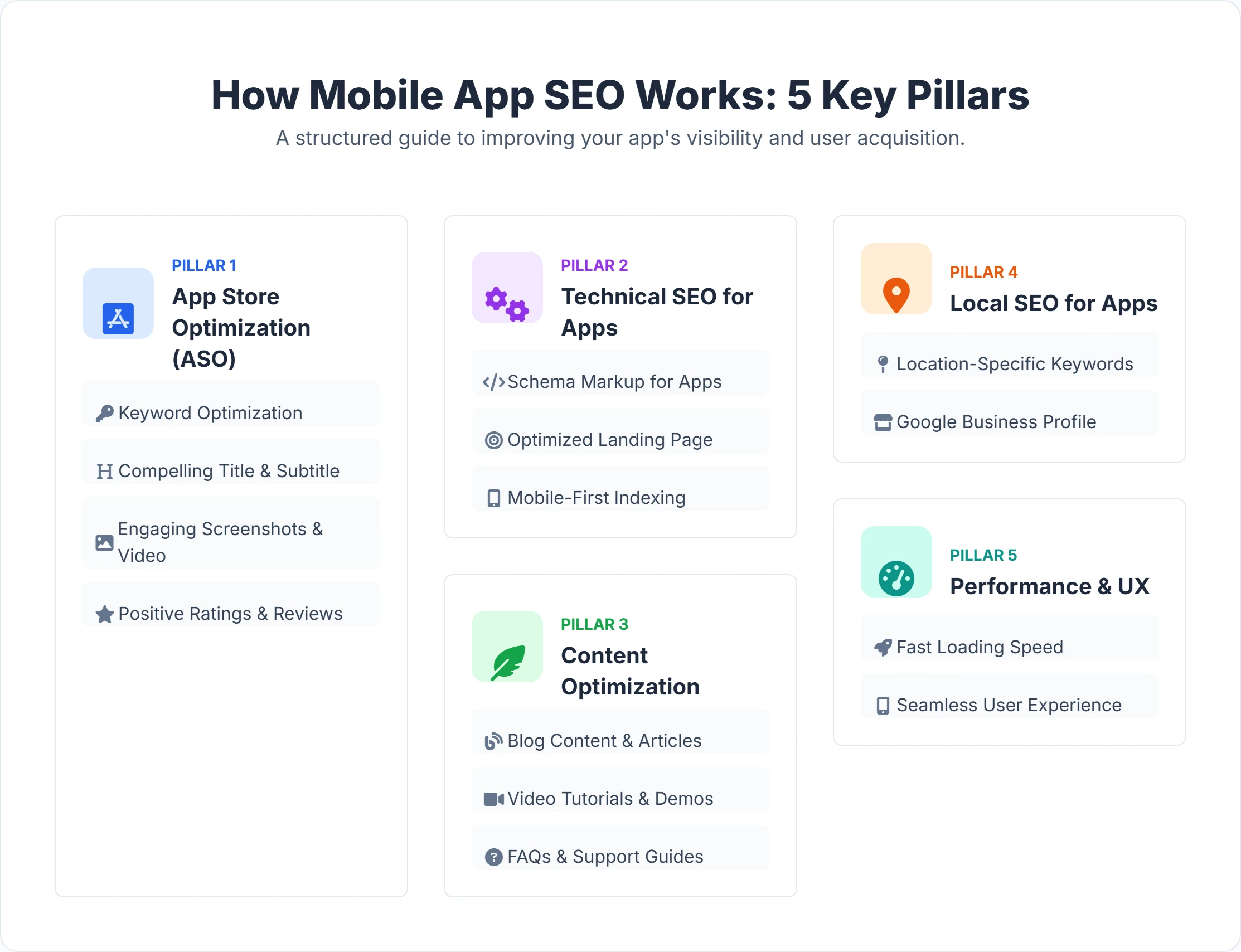
1. App Store Optimization (ASO): Conquering the App Stores
ASO is the bedrock of your strategy. It determines your fate within the walled gardens of the App Store and Google Play.
Keyword Research & Strategy
The foundation of ASO is identifying the vocabulary your potential users use.
- Head Terms vs. Long-Tail: While "Fitness" is a high-volume head term, it is brutally competitive. A newer app should target long-tail phrases like "postpartum fitness for beginners" or "5k runner training free."
- Tooling: Use tools like MobileAction, Sensor Tower, or Data.ai to see which keywords competitors rank for.
- Placement:
- iOS: Place strongest keywords in the Title (30 chars) and Subtitle (30 chars). Use the hidden Keyword Field (100 chars) for variations and misspellings. Do not repeat keywords between fields in iOS.
- Android: Place strongest keywords in Title (30-50 chars) and Short Description (80 chars). The Full Description (4000 chars) is indexed by Google, so write naturally but include keyword density.
Visual Conversion Optimization
Your ranking gets users to see your listing; your visuals get them to tap "Get."
- App Icon: Must be legible at small sizes. Avoid text in icons. Use contrasting colors that stand out against white and black backgrounds (dark mode).
- Screenshots: The first three screenshots are critical. Use the first slot to show your main value proposition, not a login screen. Add caption text above screenshots to explain the feature being shown.
- Video Previews: Auto-play videos increase conversion for games and complex apps. Ensure the first 5 seconds grab attention without relying on sound.
Ratings and Reviews Management
Algorithms favor apps with frequent, positive updates.
- Prompt Timing: Ask for a review after a user has experienced a "win" (e.g., completed a level, saved a file), not when they first open the app.
- Response Strategy: Reply to negative reviews. Changing a 1-star review to a 3-star review through good support can significantly impact your average rating.
2. Technical SEO for Apps: Optimizing Supporting Web Assets
Many developers ignore the web, assuming "apps live in the store." This is a fatal mistake. A website acts as a powerful funnel, capturing traffic from the billions of Google searches that happen daily.
The App Landing Page
You need a dedicated URL for your app (e.g., yourbrand.com/app). This page serves as the anchor for your web SEO efforts.
- Above the Fold: Clear "Download on the App Store" and "Get it on Google Play" badges immediately visible.
- Copywriting: Focus on benefits, not just features. Use the same keywords you targeted in your ASO strategy.
- Smart Banners: Implement smart banners (meta tags) that prompt mobile web visitors to open the app if installed, or download it if not.
Digispot AI can help you identify technical flaws on your landing page automatically with AI-powered audits analyzing 300+ ranking factors.
Schema Markup (Structured Data)
Search engines need help understanding that your webpage represents a mobile application. Structured data is the translator. By adding SoftwareApplication schema to your landing page, you enable rich snippets in search results—showing your star rating, price (Free/Paid), and operating system directly in the Google search list.
- Key Properties:
applicationCategory,operatingSystem,aggregateRating,offers. - Benefit: Rich snippets increase Click-Through Rate (CTR) significantly, which is a ranking signal in itself.
Use the free Schema Markup Generator to create valid structured data for your mobile app in minutes.
Mobile-First Indexing & Performance
Google predominantly uses the mobile version of your content for indexing. If your app's landing page is slow or broken on mobile, your rankings will tank.
- Core Web Vitals: Ensure your Cumulative Layout Shift (CLS) is near zero and Largest Contentful Paint (LCP) is under 2.5 seconds.
- Viewport Configuration: verify your viewport meta tags prevent zooming issues and content cut-offs on small screens.
3. Content Optimization for Apps: Beyond the App Store
Content marketing is the fuel that drives users to your app landing page. You need to create content that addresses the context of your app's usage.
Strategic Blog Content
Create a blog that answers questions related to your app's niche.
- Example: A budgeting app should write articles on "How to save for a house deposit" or "Best 50/30/20 rule templates."
- The Funnel: The user searches for financial advice (Top of Funnel), reads your helpful article, and sees a CTA: "Automate this saving strategy with our free app."
- Internal Linking: Use these blog posts to pass authority to your main app landing page. Learn more about internal linking strategies to maximize this flow.
App Indexing and Deep Linking
App Indexing allows Google to crawl the content inside your app (if you allow it).
- Deep Links: These are URLs that open a specific screen in your app rather than a webpage.
- The Benefit: If a user searches for "vegan lasagna recipe" and you have a recipe app installed with that content indexed, Google can show your app as a result. Clicking it opens the app directly to the lasagna recipe, bypassing the homepage. This dramatically improves retention and engagement.
4. Local SEO for Apps: Connecting with the Community
For apps with a geo-specific component (delivery, ride-sharing, local services), Local SEO is non-negotiable.
- Google Business Profile: Create a profile for your "headquarters" or local hubs. This puts you on Google Maps.
- Local Landing Pages: If you serve multiple cities, create specific landing pages for each (e.g., "Dog Walking App in Austin," "Dog Walking App in Seattle").
- Localized Metadata: In ASO, you can localize your listing for different countries. But also consider localizing for regions. In Spain, users might search differently than in Mexico. Customizing your Spanish listing for both markets (using "Localizations" in App Store Connect) captures both audiences.
5. Page Performance & User Experience (UX): The Speed Factor
User experience is a ranking factor for both Google (Core Web Vitals) and App Stores (ANRs - App Not Responding rates).
- Crash Rates: Google Play explicitly penalizes apps with high crash rates or "App Not Responding" errors. Monitor your Android Vitals dashboard obsessively. If your technical quality score drops, your visibility drops.
- Web Speed: On your landing page, optimize image sizes and defer non-essential JavaScript. A slow landing page leads to a high bounce rate. If users bounce before clicking "Download," Google assumes your page (and by extension, your app) isn't relevant.
Get instant SEO insights on any landing page with our free Chrome extension, which checks performance metrics in real-time.
Elevating Your Mobile App SEO with Digispot AI
Managing the intersection of ASO, technical web SEO, and content strategy is complex. Most mobile teams lack the resources to monitor algorithm changes across Google, Apple, and Bing simultaneously. This is where Digispot AI transforms your workflow.
Digispot AI is an all-in-one SEO and AEO (Answer Engine Optimization) platform designed to automate the heavy lifting of search visibility. It bridges the gap between your web presence and your app's growth goals.
How Digispot AI Supports Your Mobile App SEO Journey
Comprehensive Website & Landing Page Auditing
Your app's marketing site is your primary acquisition channel outside the store. Digispot AI performs rigorous audits analyzing over 300+ ranking factors.
- Mobile-Specific Checks: It verifies touch-target sizes, viewport configurations, and mobile rendering issues that standard desktop audits miss.
- Technical Health: Identifies broken backlinks, 404 errors, and redirect chains that might be bleeding your domain authority.
Opportunity Finder for High-Value Keywords
Stop guessing which keywords to target. The Opportunity Finder analyzes your current rankings and identifies "striking distance" keywords—terms where you rank on page 2 or lower page 1 that could move to top positions with minor optimization.
- Gap Analysis: It compares your content against top-ranking competitors to see what topics they cover that you don't.
- AI Search Readiness: Uniquely, it assesses how likely your content is to be cited by AI engines like ChatGPT and Gemini, a crucial frontier for modern app discovery.
Content Studio for AI-Optimized Content
Writing SEO-friendly descriptions and blog posts takes time. Digispot AI’s Content Studio uses advanced agents (integrating GPT-4, Claude, and DeepSeek) to generate content drafts that are pre-optimized for semantic relevance.
- FAQ Generation: Automatically generate schema-ready FAQs for your landing page to capture "People Also Ask" snippets.
- Blog Post Outlines: Create structured outlines based on top-performing competitor content.
Advanced Schema Detection and Visualization
Implementing the SoftwareApplication schema correctly is technical and prone to syntax errors. Digispot AI visualizes your schema structure, highlighting missing fields or errors that prevent Google from awarding you rich snippets. This ensures your star ratings and app details appear prominently in search results.
Digispot AI Free Community Chrome Extension: Your On-the-Go Audit Tool
For mobile marketers who need quick answers, Digispot AI offers a powerful free community Chrome extension.
- Instant Page Audits: Analyze a competitor's app landing page in seconds to see their title tags, header structure, and keyword usage.
- Schema Markup Analysis: Instantly view the structured data on any page. See exactly how top apps are tagging their content to replicate their success.
- Core Web Vitals Check: Get a real-time read on loading performance without leaving the browser tab.
Ready to improve your search visibility? Try Digispot AI for comprehensive website audits and actionable recommendations that drive real app growth.
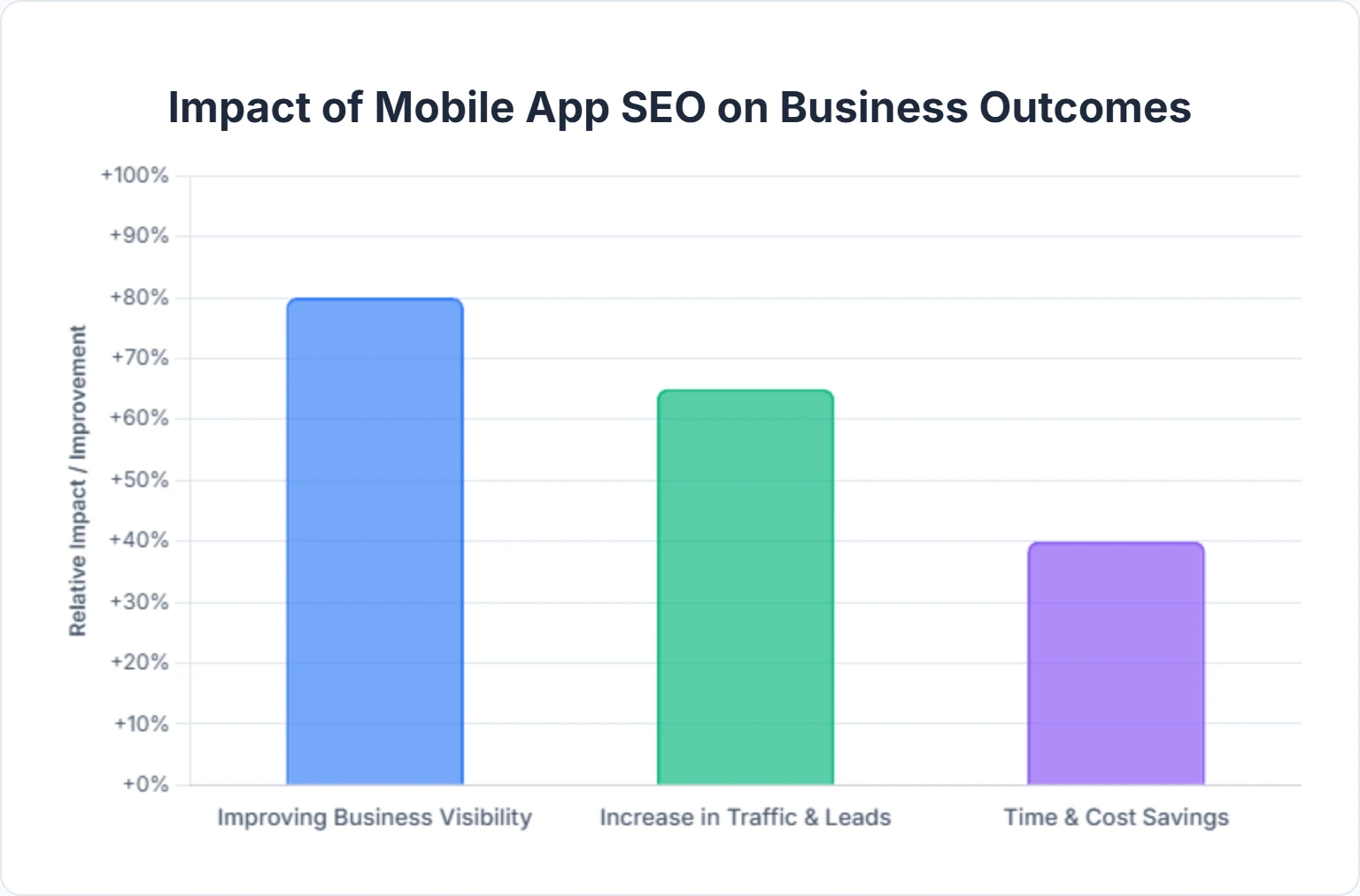
The Business Outcomes: Transforming Visibility into Growth
Investing in a unified Mobile App SEO strategy is not an expense; it is a revenue generator. When you align your ASO and Web SEO, the compound effect on your business metrics is profound.
1. Lower Blended CAC (Customer Acquisition Cost)
By building a consistent stream of organic downloads, you reduce your reliance on paid channels like Facebook or Google Ads. This lowers your "Blended CAC" (Total Spend / Total Users), making your business model more resilient and profitable.
2. Increased Brand Authority and Trust
Users trust organic search results more than sponsored ads. Consistently appearing at the top of Google and App Store search creates a "halo effect" for your brand. This perceived market leadership leads to higher conversion rates, as users feel safer downloading a "popular" app.
3. Higher Retention and LTV (Lifetime Value)
Users who find you via search have intent. They have a problem and are actively seeking a solution. These users are far less likely to churn compared to users who clicked an interruptive ad out of curiosity. Better retention signals to app stores that your app is high quality, which in turn boosts your rankings further—a positive feedback loop.
4. Future-Proofing for AI Search
As search behaviors shift toward AI agents (like Siri, Google Assistant, and ChatGPT), having structured, optimized content is essential. These AI tools rely on the same SEO principles—schema, authority, clarity—to recommend apps. Optimizing now positions you to be the recommended app when a user asks their AI assistant for help.
Conclusion: Charting a Course for App Success
Mobile App SEO is a discipline of precision and persistence. It requires you to look beyond the app store and treat the entire web as your acquisition funnel. By mastering ASO for conversion and Web SEO for discovery, you create a powerful engine that drives users to your product 24/7.
Start by auditing your current app landing page to ensure it is technically sound and mobile-responsive. Use the free On-Page SEO Analysis tool to get an immediate baseline. Then, dive into your keyword research, refine your app store visuals, and begin building a content library that solves user problems.
The digital marketplace is crowded, but it is not impenetrable. With the right data, the right tools, and a commitment to quality, your app can rise to the top. Do not leave your visibility to chance—optimize for discovery and watch your user base grow.
Related deep-dives
Continue with these closely related guides:
- long-tail keywords seo — Long-Tail Keywords SEO: Target High-Intent Searches
References
- Google Search Console
- Google Analytics
- Introduction to structured data | Google Search Central
- Core Web Vitals | Google Search Central
- Mobile-first indexing | Google Search Central
- Build Sitemaps | Google Search Central
- Robots.txt Introduction and Guide | Google Search Central
- Digispot AI - FREE On Page SEO Audit Tool
- Digispot AI - FREE Chrome Extension for SEO Insights
Audit any page in seconds
300+ SEO checks including Core Web Vitals, schema markup, meta tags, and AI readiness — trusted by 1000+ SEO experts and marketers.
Frequently Asked Questions
Here are some of our most commonly asked questions. If you need more help, feel free to reach out to us.
Written by
Maya Krishnan
Digital growth expert
Maya is a seasoned expert in web development, SEO, and digital strategy, dedicated to helping businesses achieve sustainable growth online. With a blend of technical expertise and strategic insight, she specializes in creating optimized web solutions, enhancing user experiences, and driving data-driven results. A trusted voice in the industry, Maya simplifies complex digital concepts through her writing, empowering readers with actionable strategies to thrive in the ever-evolving digital landscape.