Shipping Charges for Indian D2C Stores: Zones and Weight Slabs
Shipping charges for Indian D2C stores: pincode zones, volumetric weight, weight slabs, COD fees and free-shipping thresholds, with worked examples.
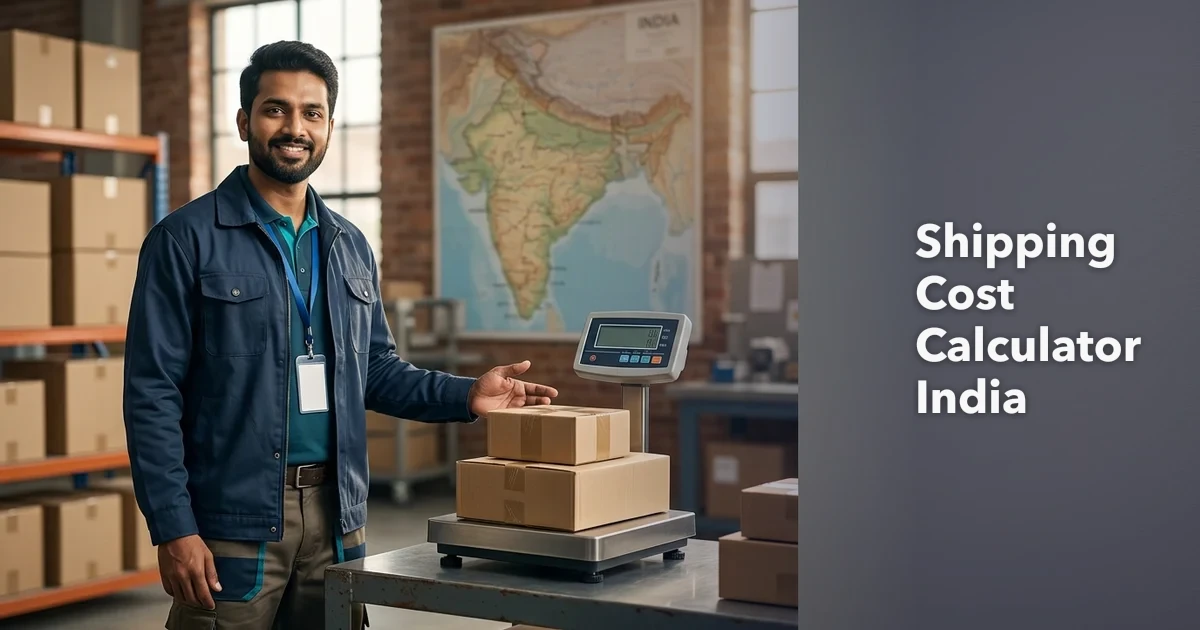
Building a profitable online brand requires exact clarity on logistics, packaging metrics, and checkout delivery pricing across regional courier networks. A reliable shipping cost calculator for India helps D2C merchants determine precise freight rates, prevent profit loss, and present transparent delivery fees to online shoppers. By understanding volumetric weight rules and pincode zoning, small sellers can protect product margins while offering friction-free checkout experiences.
What Is a Shipping Cost Calculator for India's E-Commerce Stores?
A shipping cost calculator for Indian e-commerce is a digital tool or formulaic system that computes domestic logistics fees based on package dimensions, physical weight, origin pincode, and destination address. It allows online sellers to accurately predict carrier billing before dispatching orders. This system processes physical measurements alongside regional pricing tiers to output instant freight estimates.
Logistics partners across India do not bill shipments solely on scale weight. They calculate freight costs by comparing physical weight against space consumption inside delivery trucks or cargo flights. When a seller ships lightweight goods in large boxes, carriers charge for spatial volume rather than mass.
An automated shipping rate calculator processes these parameters instantly. It integrates destination pincode databases with carrier pricing slabs so merchants can display correct shipping fees during checkout. This prevents unexpected courier debit adjustments on monthly logistics invoices.
- Physical Package Evaluation: Measure actual scale weight (Dead Weight in kg) and box dimensions (Length x Width x Height in cm).
- Volumetric Calculation: Divide total volume (Length x Width x Height) by your courier's divisor (commonly 5000).
- Weight Comparison: Compare Dead Weight against Volumetric Weight to find the higher value.
- Billable Weight Selection: Use the higher value as the final billable weight.
- Zone Rate Application: Apply the destination pincode zone rate (Local, Regional, Metro, or Special Zone).
Modern calculators also account for ancillary charges like fuel surcharges, cash collection fees, and GST. By centralizing these calculations, merchants can maintain healthy margins across every order.
Dead Weight vs. Volumetric Weight Formulas
Dead weight refers to the physical weight of an item placed on a digital scale, measured in grams or kilograms. It includes the product, immediate container, protective bubble wrap, and outer corrugated shipping box.
Volumetric weight measures the space a package occupies during transit. Indian courier companies use a volumetric divisor, set in their contract and commonly 5000 for domestic parcels, to calculate dimensional weight in kilograms:
- Volumetric Weight (kg) = (Length in cm x Width in cm x Height in cm) / 5000
Courier aggregators calculate both figures for every shipment. The billable weight is always whichever number is higher.
| Product Category | Box Dimensions (L x W x H in cm) | Dead Weight | Volumetric Weight | Billable Weight |
|---|---|---|---|---|
| Handcrafted Soap Bar (3-pack) | 12 x 10 x 5 cm | 0.35 kg | 0.12 kg | 0.35 kg (Dead Weight) |
| Cotton Apparel T-Shirt | 25 x 20 x 4 cm | 0.25 kg | 0.40 kg | 0.40 kg (Volumetric) |
| Herbal Agarbatti Packets | 30 x 15 x 10 cm | 0.40 kg | 0.90 kg | 0.90 kg (Volumetric) |
| Organic Millets (2 kg Pouch) | 20 x 15 x 12 cm | 2.10 kg | 0.72 kg | 2.10 kg (Dead Weight) |
| Brass Temple Bell | 15 x 15 x 15 cm | 1.20 kg | 0.68 kg | 1.20 kg (Dead Weight) |
| Handwoven Cane Basket | 35 x 35 x 25 cm | 0.80 kg | 6.13 kg | 6.13 kg (Volumetric) |
Calculating dimensional weight correctly prevents unexpected courier debit adjustments on monthly shipping bills. A small variance in package size can shift an order into a higher pricing tier.
Understanding Indian Pincode Zones
Domestic logistics providers divide India's 19,000+ pincodes into courier pricing zones. Zone names and boundaries vary by courier; a common pattern is: Freight fees increase as shipments travel across broader geographical boundaries.
- Zone A (Within City): Origin and destination share the same metropolitan boundary or municipality.
- Zone B (Intra-State / Regional): Movement within the same state or neighbouring economic corridors.
- Zone C (Metro to Metro): Transit between major metros such as Mumbai, Delhi NCR, Chennai, Hyderabad and Kolkata.
- Zone D (Rest of India): Inter-state movement connecting tier-2 and tier-3 towns across non-metro regions.
- Zone E (Special Zones): Remote destinations, including North-Eastern states, Jammu & Kashmir, Himachal Pradesh, Uttarakhand, and island territories.
Understanding these pricing brackets allows sellers to structure tiered shipping rules across their storefront. Knowing how carriers classify destinations helps prevent margin loss on long-distance fulfillment.
Why Calculating Accurate Shipping Charges Matters for D2C Sellers
Underestimating shipping fees directly erodes product profit margins, while overcharging customers causes immediate shopping cart abandonment. Sellers must balance competitive pricing with actual operational expenses.
- Hidden Fees Impact: High hidden shipping charges lead directly to checkout abandonment.
- Inaccurate Metrics Impact: Incorrect weight calculations lead to courier margin leakage.
- Combined Effect: Both issues deplete overall store profits.
- Resolution: Setting up transparent, pincode-based rates resolves profit loss and cart abandonment.
For small D2C brands selling handcrafted items or niche consumer goods, shipping rates directly influence order conversion rates. Indian online shoppers expect competitive delivery pricing alongside clear transit timelines before placing orders.
Heavy or bulky goods create significant margin risk if freight calculations rely on rough estimations. A 2-kilogram jar of cold-pressed oil or a bag of organic millets requires sturdy packaging. If the seller charges a flat freight fee of ₹50 but the carrier bills, say, ₹140 for cross-zone surface freight, the profit margin disappears.
Transparent delivery calculations protect profit margins while building consumer trust. Presenting real-time pincode shipping quotes at checkout eliminates billing surprises, encouraging buyers to complete their payments.
Consistent delivery pricing also minimizes customer service inquiries regarding shipping costs. Clear policies build long-term buyer trust and encourage repeat purchases across regional markets.
How to Estimate Shipping Cost Across India
Estimating domestic shipping fees requires a systematic workflow that accounts for package mass, box volume, origin-destination distance, and payment handling methods. Sellers must establish a repeatable process to calculate shipping charges for every inventory item.
- Measure Box Dimensions: Record length, width, and height in centimeters.
- Calculate Volumetric Weight: Multiply dimensions and divide by 5000 (L x W x H / 5000).
- Weigh Packaged Item: Measure the fully packaged product on a scale to obtain dead weight.
- Determine Billable Weight: Compare physical weight and volumetric weight to select the higher figure.
- Identify Pincode Zone Rate: Match origin and destination pincodes to carrier tariff zones.
- Apply Surcharges and Taxes: Add COD collection fees, fuel surcharges, and GST to finalize the total cost.
Step 1: Calculate Billable Weight
Begin by packaging the finished product in its final outbound container, including all interior cushioning like paper fills or bubble wrap. Place the sealed box on a calibrated scale to record the actual weight in kilograms.
Next, measure the extreme outer dimensions of the box using a ruler or measuring tape. Note the length, width, and height in centimeters.
Apply the volumetric weight formula: multiply the three dimensions and divide by 5000. Compare the physical dead weight to the volumetric weight. Record the higher figure as the final billable weight, rounded up to your courier's weight slab (0.5 kg slabs are common).
Step 2: Map Origin and Destination Pincodes
Determine the geographic zone relationship between your warehouse location and the customer's delivery pincode. Most courier platforms provide zone lookup tools or pincode mapping spreadsheets.
Cross-reference the billable weight slab with the zone tariff chart provided by your logistics partner. For example, dispatching a 0.8 kg billable box from a Chennai warehouse to a buyer in Delhi usually falls under Metro-to-Metro (Zone C) rates.
Add the base rate for the first 500g slab to the incremental rate for each additional 500g step. This ensures accurate base freight calculations across all weight tiers.
Step 3: Compute Additional Surcharges and Taxes
Base freight rates rarely represent the final invoice amount billed by courier partners. Sellers must apply operational surcharges to determine total fulfillment costs.
- Fuel Surcharge: Some couriers add a fuel surcharge as a percentage of base freight; check your rate card.
- GST (Goods and Services Tax): Courier services are typically billed with 18% GST on freight and surcharges; confirm on your courier's invoice.
- Cash on Delivery (COD) Collection Charge: Usually a fixed fee or a percentage of order value, whichever is higher, as set in your contract.
Summing these elements yields the final shipping cost for the order. Maintaining an updated pricing matrix prevents unexpected profit leakage.
Domestic Shipping Services in India: Key Cost Factors
Selecting the appropriate transit mode balance between air cargo and surface logistics directly dictates total fulfillment expenditure. Each transport method serves specific product constraints and margin thresholds.
| Service Feature | Surface Logistics | Air Cargo Logistics |
|---|---|---|
| Base Freight Rate | Lower cost | Higher premium cost |
| Ideal Cargo Type | Heavy, dense, or bulk goods | Light, high-value, or urgent goods |
| Delivery Window | Slower | Faster, mainly between metros |
| Transport Impact | Lower volumetric pricing sensitivity | Strict volumetric rules and battery limits |
Surface Freight vs. Air Cargo Trade-offs
Surface shipping utilizes road and rail networks, offering cost-effective transit for heavy items like millets, cast iron cookware, or bulk liquids. Surface transit is slower, but it keeps base rates low.
Air transport is faster, especially between metros. However, air freight incurs premium base rates and stricter volumetric billing enforcing higher charges on boxed items. Brands selling high-value or time-sensitive products often choose air despite higher costs. If you sell food, check packaging and labelling rules first; our guide to selling sweets online covers this.
Evaluating item value against transit speed helps select the right service tier. Premium products absorb air costs easily, whereas low-cost goods benefit from surface transit.
Managing Return-To-Origin (RTO) Expenses
Return-To-Origin (RTO) charges present another major cost factor for Indian D2C sellers. When a customer rejects a Cash on Delivery shipment or provides an incomplete address, the carrier charges the seller for both outbound and return freight. High RTO rates quickly destroy profit margins if delivery addresses are not verified prior to dispatch.
To reduce RTO losses, validate the pincode and address at checkout, confirm COD orders with the buyer before dispatch, and encourage prepaid payment. Prepaid orders are far less likely to be refused at the door.
Setting Up Pincode-Zone Shipping Rates on Your Online Store
Configuring automated zone rates within your storefront administration panel ensures customers are billed exact delivery fees during checkout. Modern platforms support rule-based shipping engines to automate this process.
- Pincode Entry: The customer enters their delivery pincode on the checkout page.
- Zone Matching: The system matches the pincode against the zone database (Zones A through E).
- Weight Summation: The order desk calculates the total billable weight of cart items.
- Rate Calculation: Real-time shipping fees add to the cart subtotal instantly.
Configuring Tiered Pincode Shipping
Instead of applying a flat nationwide delivery charge, set up rules based on cart weight and delivery zones:
The figures below are illustrative only; build yours from your courier's rate card.
- Local Zone: Flat ₹40 for orders up to 1 kg.
- Regional Zone: ₹60 for initial 500g, plus ₹25 per additional 500g.
- Metro-to-Metro Zone: ₹75 for initial 500g, plus ₹35 per additional 500g.
- Special Zones: ₹110 for initial 500g, plus ₹50 per additional 500g.
Set free delivery thresholds strategically. If your average order value is ₹650, offer free shipping on orders above ₹999. This strategy increases average order value while covering fulfillment expenses within the higher product margins. Collecting prepayment through a gateway such as Razorpay lowers COD RTO risk; see our Razorpay setup guide.
Remember to add packaging weight to product weight, or every order will be under-charged.
Technical Storefront Audit for Product Pages
Ensuring smooth checkout execution requires clean site code and structured product data. Sellers should run periodic storefront technical audits to confirm that product schema markup correctly exposes price, stock status, and shipping conditions.
To check one product page, the free Digispot AI Chrome extension shows its schema, meta tags and headings in one click. To audit the whole store, the Digispot AI Desktop SEO Spider, which runs on Mac and Windows, crawls every page and flags missing Product schema and duplicate variant URLs. Our Product schema guide shows where shipping details sit inside the Offer.
Regular code audits help identify script errors that slow down cart calculations. A fast checkout page improves conversion rates across desktop and mobile shoppers.
Common Shipping Rate Mistakes Small Sellers Make
Small D2C brands frequently lose revenue by making simple errors when establishing shipping policies. Addressing these issues early protects operating margins.
- Ignoring Outer Packaging Weight: Weighing only the unpackaged product leads to underbilling. Corrugated boxes, bubble wrap, and tape add 50g to 150g extra weight per package.
- Applying Nationwide Flat Pricing: Charging a flat rate across India causes sellers to absorb expensive remote delivery fees in Special Zones.
- Overlooking COD Charges: Failing to account for Cash on Delivery collection fees leaves uncollected ₹40 charges that eat into item margins. Push prepaid, and recover failed payments.
- Failing to Optimize Package Size: Using oversized boxes for light items increases volumetric weight unnecessarily, triggering higher courier rates.
- Omitting Structured Shipping Schema: Leaving shipping details out of product page code prevents search engines from displaying delivery terms in search results.
Auditing shipping charges monthly helps identify these leaks before they cause substantial loss. Small adjustments in packaging design yield significant freight savings.
How Shipping Transparency Improves E-Commerce SEO and Sales
Displaying clear, real-time shipping costs improves user experience metrics across your storefront, directly lowering checkout drop-offs. Google can show merchant details such as shipping cost in product results. Adding OfferShippingDetails markup (inside the product's Offer, under shippingDetails) lets search engines read your shipping cost, destination, handling time and transit time from your page code.
<script type="application/ld+json">
{
  "@context": "https://schema.org/",
  "@type": "OfferShippingDetails",
  "shippingRate": {
    "@type": "MonetaryAmount",
    "value": "60.00",
    "currency": "INR"
  },
  "shippingDestination": {
    "@type": "DefinedRegion",
    "addressCountry": "IN"
  },
  "deliveryTime": {
    "@type": "ShippingDeliveryTime",
    "handlingTime": {
      "@type": "QuantitativeValue",
      "minValue": 1,
      "maxValue": 2,
      "unitCode": "DAY"
    },
    "transitTime": {
      "@type": "QuantitativeValue",
      "minValue": 2,
      "maxValue": 5,
      "unitCode": "DAY"
    }
  }
}
</script>
Clear delivery pricing in search results sets expectations before the click. Shoppers landing on clear product pages complete checkouts faster, driving sustainable growth for your online business. Transparent delivery terms eliminate buyer hesitation during peak shopping seasons.
Build a Store That Calculates Shipping for You
Scaling an ecommerce brand needs a storefront that charges the right shipping on every order, takes payments reliably and has clean technical SEO.
Digispot AI builds your own online store on your domain for growing D2C brands and makers across India. Shipping works the way couriers bill: zones, weight slabs, packaging weight added to product weight and an optional free-shipping threshold, looked up from a 19,000+ pincode directory at checkout. Payments run on your own Razorpay account, with optional COD.
Whether you sell handcrafted lifestyle products, packaged foods or apparel, the right shipping rules turn delivery pricing into an advantage. See our order management and shipping service to set it up for your store, or first launch your online store.
More in the Selling Online in India guide
Start with the How to Start an Online Store in India: A Two-Day Launch Plan.
Audit any page in seconds
200+ SEO checks including Core Web Vitals, schema markup, meta tags, and AI readiness — trusted by 1,250+ SEO experts and marketers.
Frequently Asked Questions
Here are some of our most commonly asked questions. If you need more help, feel free to reach out to us.

Maya Krishnan is an SEO and AEO specialist at Digispot AI. She helps agencies and businesses across industries and countries grow organic traffic from Google and AI search, and knows the major SEO platforms well, from desktop crawlers to all-in-one suites. She checks and approves every article published under her name.
More from Maya Krishnan