Selling Sweets Online: How Sweet Makers Get Found and Ship Fresh
Selling sweets online in India: shelf-life packaging, pincode shipping rules, UPI checkout and the store SEO that gets your sweet shop found.
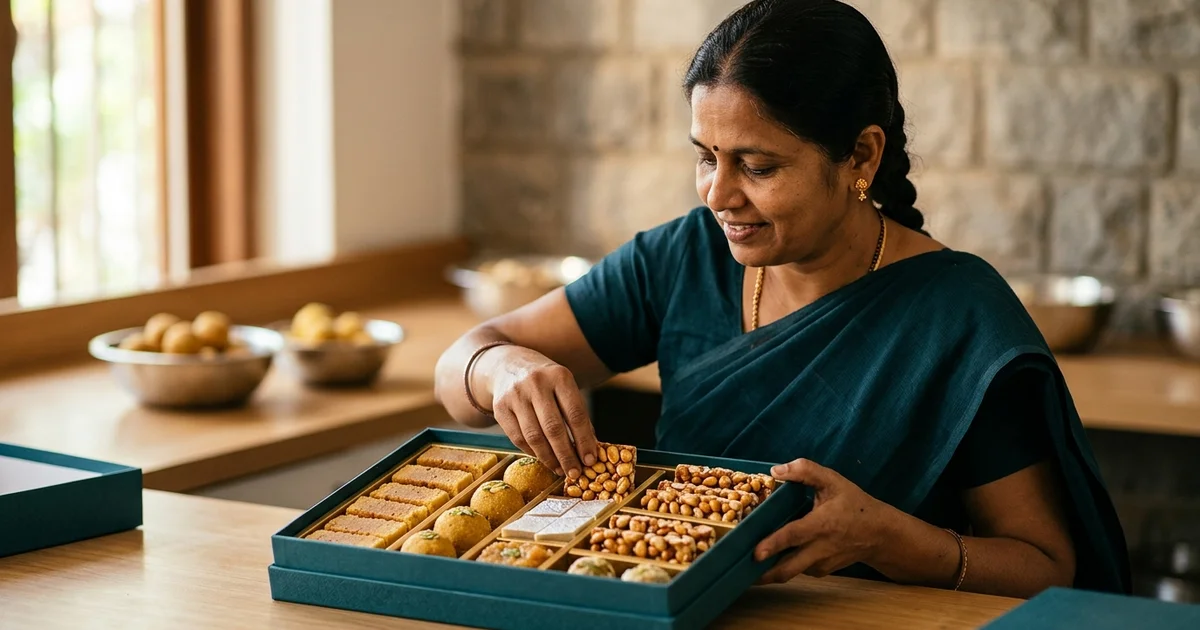
Building a direct-to-consumer online business allows regional confectioners to serve customer demand across the country without opening physical outlets. Setting up an efficient sweets online delivery operation requires integrating specialized food packaging, pincode-level shipping rules, online payment collection, and search engine optimization. This guide outlines the end-to-end framework for Indian sweet makers to transition from over-the-counter sales to a nationwide digital storefront.
What Is Sweets Online Delivery and How Does the D2C Model Work?
Sweets online delivery is an e-commerce fulfillment model where Indian confectioners receive orders through digital channels and ship packaged Indian sweets directly to customer locations. By bypassing retail distributors, sweet makers retain control over product freshness, presentation, and pricing margins. If you are weighing your own store against marketplaces, our comparison of D2C brand vs marketplace selling in India sets out the trade-offs.
- Customer places an order on the online storefront.
- The order routes to the central production kitchen for fulfillment.
- Short shelf-life items go only to nearby pincodes by local or express courier.
- Long shelf-life items use vacuum packaging or MAP and ship via surface courier.
The Growth of D2C Confectionery in India
The Indian confectionery market relies on centuries of regional tradition, from Mysurpa in the south to Kaju Katli in the north. Historically, consumers purchased these regional specialties during physical visits or relied on visiting relatives to bring them back. Direct-to-consumer (D2C) online delivery replaces this physical limitation by allowing regional makers to ship fresh batches straight from central kitchens to homes across India.
Modern shoppers demand high-grade packaging, regional authenticity, and predictable shipping times. The shift toward digital channels lets small manufacturers serve buyers living outside their home state, including working professionals seeking authentic tastes from home. Direct delivery models eliminate regional distribution middlemen, keeping inventory fresh while lowering operational overhead.
Key Differences Between Aggregators and Owned Online Stores
Third-party hyper-local delivery apps connect sweet shops to buyers within a short delivery radius. These marketplace aggregators charge a commission per order, restrict customer contact data, and push shops to compete on price with immediate local competitors.
| Capability / Metric | Third-Party Aggregators | Owned D2C E-Commerce Store |
|---|---|---|
| Delivery Radius | Hyper-local | Any pincode your courier serves in India |
| Commissions | Commission per order, set by the platform | No commission; payment gateway fees only |
| Customer Data Ownership | Restricted (Aggregator retains buyer info) | Full ownership (Emails, phone numbers, addresses) |
| Packaging & Branding | Aggregator-branded outer packaging | Custom branded boxes, leaflets, and gifts |
| Repeat Marketing | Controlled by platform algorithm | Your own email and WhatsApp to past buyers who agreed to hear from you |
An independent store gives confectioners complete authority over branding and packaging. Customers visiting an owned online storefront evaluate the brand based on product quality rather than discount filters. Most importantly, owning the platform allows sweet brands to store buyer addresses and order history for repeat marketing during high-demand festival periods.
Why Small Indian Makers Should Build an Independent Store to Buy Sweets Online
Building an independent e-commerce channel ensures long-term business resilience by removing dependence on food aggregator algorithms. Sweet makers control their profit margins, build direct customer relationships, and establish brand value beyond their physical location.
Escaping Marketplace Commission Traps
Relying exclusively on food delivery platforms caps a confectionery business's net profitability. Aggregators deduct platform fees from every completed transaction, narrowing margins on items with high raw-material costs like pure ghee, nuts, and saffron.
Owning your store restores product margins. By paying only the gateway's processing charges, you retain more profit to absorb packaging costs, offer free shipping thresholds, or run customer acquisition campaigns. Check the current commission on each platform and your gateway's pricing page, then compare the two on a ₹1,000 order before you decide.
Direct order processing protects profitability on high-volume bulk items. Instead of discounting products to rank on aggregate feeds, owned stores build brand equity through clear product descriptions, verified buyer reviews, and premium presentation.
Building Direct Customer Loyalty for Seasonal Spikes
Indian confectionery buying follows predictable seasonal surges during festivals like Diwali, Raksha Bandhan, and Durga Puja. Aggregators do not share buyer phone numbers or email addresses, preventing merchants from re-engaging past buyers when these key sales windows open.
An owned online storefront stores customer buying preferences, delivery locations, and purchase frequencies. Direct access allows merchants to launch pre-booking campaigns ahead of major festivals via WhatsApp messages and email newsletters to buyers who opted in.
- Build targeted lists of past buyers who purchased corporate gift boxes.
- Offer early-bird reservation discounts to guarantee production scheduling.
- Send single-click re-order links to customers who bought seasonal sweets last year.
- Collect customer preference data to craft custom sweet combinations for upcoming holidays.
How to Package and Preserve Fresh Sweets for Long-Distance Delivery
Preserving product texture, taste, and visual presentation during transport requires matching specific packaging methods to individual sweet categories. Standard plastic containers and cardboard boxes often lead to leakage, spoilage, or crushed items during long-distance transit.
- Dry Sweets (Soan Papdi, Besan Ladoo): Pack using a standard food-grade box combined with outer shrink wrap.
- Semi-Moist Sweets (Kaju Katli, Mysurpa): Use Modified Atmosphere Packaging (MAP) or vacuum sealing with food-safe desiccant packets.
- Syrup-Based Sweets (Gulab Jamun, Rasgulla): Secure in rigid plastic containers sealed with heat-induction foil lids.
Selecting Packaging Solutions by Sweets Types
Different sweets react differently to humidity, temperature shifts, and physical motion during freight handling. Confectioners must categorize their product line by moisture content to choose the correct packaging technology.
- Syrup-Based Sweets (Gulab Jamun, Rasgulla, Cham Cham): Liquid syrup leaks easily under pressure changes during air or road shipping. Pack these items in rigid food-grade polypropylene containers sealed with heat-induction foil lids before adding outer box casing.
- Semi-Moist Ghee Sweets (Kaju Katli, Mysurpa, Milk Peda): Moisture loss makes these sweets dry out, while excess oxygen turns dairy fats rancid. Use Modified Atmosphere Packaging (MAP) to replace oxygen inside the tray with food-grade nitrogen gas, which can extend shelf life; confirm the gain with your own tests.
- Dry & Flaky Sweets (Soan Papdi, Soan Halwa, Besan Ladoo): Flaky textures crumble under impact. Place dry sweets into thermoformed tray inserts that isolate individual pieces, then vacuum-seal the entire tray in food-safe barrier film.
Managing Shelf Life and Transit Degradation
Establishing a reliable shelf life relies on testing your own recipes and strict temperature control during production and transit. Print the result as a Best Before date on every box, with the labels your FSSAI licence for selling food online requires. The table below outlines how major product categories usually compare across domestic courier routes.
| Sweets Category | Relative Shelf Life | Packaging Method | Recommended Logistics Mode |
|---|---|---|---|
| Syrup Sweets | Short | Induction Sealed Container | Express courier, nearby zones |
| Ghee-Based Sweets | Medium | Nitrogen Flush / MAP | Surface Express Courier |
| Nut-Based (Kaju/Pista) | Longer | Vacuum Sealed Barrier Film | Standard Ground Freight |
| Bengali Milk Sweets | Very short | Insulated Poly Box + Ice Packs | Local Express Courier Only |
Always mark outer packages with "Perishable Food - Handle With Care" labels and clear orientation arrows. Include printed care instructions inside the package telling customers whether to refrigerate the sweets immediately upon arrival.
How to Structure Sweets Price, Catalog, and Pincode Logistics
E-commerce logistical failure in India usually stems from uniform shipping rules applied to non-uniform geographies. Managing an online store requires defining shipping rules down to individual pincodes to avoid taking orders for perishable items in slow delivery zones.
- Customer enters target pincode at storefront checkout.
- Tier 1 / Metro Pincode: Enables all catalog sweets, including short shelf-life items, with express courier choices.
- Tier 2 / Tier 3 Pincode: Filters out perishable products to offer dry or MAP sweets via standard ground shipping.
- Non-Serviceable Zone: Displays an unserviceable message to prevent checkout.
Configuring Zone-Based Pincode Delivery Rules
Couriers divide Indian pincodes into delivery performance tiers based on transit speed. Check the buyer's pincode on your storefront's product and checkout pages so perishable items are only sold where they will arrive fresh.
- Zone A (Same City / Metro): Allow all catalog items, including fresh milk sweets with 48-hour shelf life. Enable same-day or next-day courier delivery options.
- Zone B (Regional Metros & State Capitals): Allow ghee-based and vacuum-sealed sweets with shelf lives exceeding 7 days. Use your courier's fastest service for these routes.
- Zone C (Rest of India / Tier 3 & Remote): Restrict product selection strictly to dry items, baked sweets, or long-life vacuum-sealed products capable of surviving 5 to 7 days in transit.
Restricting unserviceable pincodes before payment prevents customer complaints, product spoilage costs, and expensive return logistics.
Calculating Sweets Price to Maintain Healthy Margins
Pricing products for nationwide delivery requires factoring packaging overhead, transit damage risks, and courier weights into your baseline prices. Our guide to shipping charges for Indian D2C stores shows how to set zone and weight-slab rates. A simple markup over retail counter prices will burn through profit margins.
Use this formula to calculate profitable direct-to-consumer pricing:
Final Listed Price = Base Cost + Specialized Packaging + Courier Charge + Spoilage Reserve
- Base Product Cost: Raw ingredients, kitchen labor, and kitchen utility expenses.
- Packaging Expense: MAP trays, nitrogen flushing, induction seals, custom outer boxes, and thermal liners.
- Weighted Shipping Fee: Calculate courier charges using volumetric weight (Length × Width × Height / 5000) rather than physical dead weight alone.
- Spoilage / Damage Reserve: Add a 3% to 5% reserve margin into the base price to cover damaged shipments without incurring losses.
How to Accept Payments Reliably via Indian Payment Gateways
Cart abandonment on Indian e-commerce sites often happens during checkout when preferred payment methods are missing or when payment processing fails. Adding a reliable payment stack helps retain shoppers browsing your catalog.
Streamlining UPI and Cards Checkout for Higher Conversion
Modern Indian consumers prefer Unified Payments Interface (UPI) options over credit cards or net banking. Integrating payment processors like Razorpay gives buyers access to instant UPI payment flows, including Google Pay, PhonePe, and Paytm. Our Razorpay setup guide covers activation.
- Customer selects UPI as their preferred checkout method.
- Storefront triggers a UPI intent call or presents a collect request QR code.
- Customer approves transaction inside their UPI application.
- The store receives payment confirmation and the order appears on your order desk.
UPI Intent flows eliminate manual VPA entry on mobile screens, redirecting buyers straight to their installed UPI app. Reducing checkout steps increases completed orders, especially during fast-paced holiday gifting periods.
Following Up on Failed Payments
Technical bank errors and network timeouts interrupt transactions. When a payment fails, a quick personal follow-up recovers many of these orders.
- Call or WhatsApp promptly: Contact the buyer the same day with a friendly check on what went wrong.
- Offer direct UPI: If the gateway keeps failing, let the buyer pay you by UPI directly and mark the order paid.
- Alternative Payment Offer: Provide Cash on Delivery (COD) as a fallback option for pincodes you trust if digital payments fail repeatedly.
In a Digispot store, the Contacts view keeps a Payment-failed list with one-tap call, WhatsApp and email, and the desk can mark an order paid by direct UPI after a failed checkout. See our guide to recovering failed payments in India. A Digispot store is payment-ready in 1 to 2 days; live payments start once Razorpay activates your account after its KYC checks.
How to Optimize Your Online Sweets Store for Search Engines and AI
Search engines and conversational AI bots need structured data to read your product catalog correctly. Implementing technical search engine optimization (SEO) helps your online store rank for high-intent terms like buy sweets online and india sweets online. For the full approach, see our ecommerce SEO services.
- Search engines and AI crawlers fetch your product page code.
- Crawlers extract structured markup including Product Schema, category keywords, and performance metrics.
- Search engines format and output rich snippets or AI shopping answers directly in search results.
Validating Structured Data with Schema Audit Tools
Product Schema is code placed on your storefront that tells search bots your product's price, stock status, weight, and customer rating. Incorporate JSON-LD markup across every individual sweet product page.
{
  "@context": "https://schema.org/",
  "@type": "Product",
  "name": "Pure Ghee Kaju Katli 500g",
  "brand": { "@type": "Brand", "name": "Your Brand" },
  "image": "https://example.com/images/kaju-katli.jpg",
  "description": "Authentic cashew sweet prepared with pure desi ghee. Vacuum-packed for nationwide delivery across India.",
  "sku": "KK-500G",
  "offers": {
    "@type": "Offer",
    "priceCurrency": "INR",
    "price": "650.00",
    "availability": "https://schema.org/InStock",
    "shippingDetails": {
      "@type": "OfferShippingDetails",
      "shippingRate": {
        "@type": "MonetaryAmount",
        "value": "50",
        "currency": "INR"
      }
    }
  }
}
Run schema validation checks using Google's Rich Results Test tool to catch missing fields. To check one product page right now, the free Digispot Chrome extension shows its schema, title and meta tags. Clean schema markup helps search engines display your pricing details, star ratings, and stock status directly within organic search results. Our guide on how to implement Product schema covers each field.
Crawling E-Commerce Catalogs to Fix Broken Links and Metadata
As products sell out or seasonal variants change, broken URLs and missing title tags can harm search visibility. Run routine technical site audits with a crawler such as the Digispot Desktop SEO Spider, which runs on Mac and Windows and lists every page with missing Product schema, missing titles or duplicate variant URLs.
- Fix 404 errors by redirecting discontinued seasonal products to relevant main category pages.
- Ensure every product page has a unique Title tag incorporating descriptive target phrases (e.g., Buy Authentic Mysurpa Online | Nationwide Delivery).
- Optimize image file sizes by converting product photos to WebP formats, keeping page load speeds under 2 seconds.
Targeted audits prevent duplicate content issues when managing multiple variants of similar sweets (like 250g, 500g, and 1kg boxes).
How Local SEO Helps Regional Sweet Shops Capture Nearby Delivery Intent
Physical sweet shops can capture high-intent local searches like best sweets near me or same day sweets delivery in their city by optimizing local search assets. Combine local storefront presence with fast doorstep delivery to capture immediate local orders.
Optimizing Local Listings for Same-Day City Delivery
Your Google Business Profile serves as the digital front door for nearby customers. Setting up local listings accurately ensures regional customers find your store for urgent purchases.
- Customer searches for location-based queries such as "best sweets near me".
- Search engine surfaces your Google Business Profile listing.
- Customer chooses between visiting for local pickup or clicking through to your storefront for same-day express delivery.
Fill out your profile details completely, including exact store address, operating hours, contact numbers, and direct delivery links. Add clear product categories and keep your seasonal sweet menus updated year-round. View our complete guide to local business SEO tactics to master location-based search setups.
Turning Local Customer Reviews into Organic Ranking Signals
Customer reviews build prospective buyer trust and provide positive ranking signals to local search engines. Requesting reviews from satisfied customers helps establish local search dominance over competitors.
- Include QR codes on physical delivery bags that point directly to your Google review link.
- Respond to every customer review promptly, thanking positive reviewers and addressing negative feedback professionally.
- Mention the product naturally when responding to reviews (e.g., "Thank you for ordering our Mysore Pak!").
Active review management proves operational authenticity to both search algorithms and first-time online shoppers.
How Seasonal Demand Impacts Online Sweets Delivery in India
Seasonal surges bring a large share of annual sales for many Indian confectionery businesses. Preparing technical infrastructure, kitchen capacity, and packaging inventory well ahead of key festivals prevents operational bottlenecks during high-volume sales windows.
- 30 Days Before Festival: Audit web infrastructure and scale server capacity.
- 20 Days Before Festival: Launch bulk and corporate gifting landing pages to capture quotes.
- 10 Days Before Festival: Lock down packaging inventory and reserve courier pickup slots.
- Peak Festival Days: Execute real-time order routing and monitor express delivery flights.
Preparing E-Commerce Infrastructure for Festival Traffic Spikes
A sudden spike in traffic during Diwali or Rakhi can crash under-prepared e-commerce servers, leading to lost sales and wasted ad spend. Conduct performance stress tests on your website hosting stack at least one month before festival periods.
Choose high-performance web hosts that scale server resources automatically during traffic bursts. Use Content Delivery Networks (CDNs) to cache static product images, scripts, and stylesheets, ensuring rapid load times even under heavy user loads.
Structuring Corporate Gifting and Bulk Sweets Quotes
Corporate buyers source large quantities of packaged sweets for employees and clients months before major holiday seasons. Capture this high-value demand by creating a dedicated Corporate Gifting landing page on your online store.
Include an intuitive inquiry form asking buyers for key details:
- Total box quantity required (e.g., 50 to 500+ boxes)
- Preferred sweet selection (Assorted Ghee, Dry Fruit, Custom Mix)
- Custom branding options (Custom outer box printing, personalized greeting cards)
- Target delivery dates and multiple destination address handling options
Promote this inquiry page via targeted business platforms to capture early corporate gift budgets.
Traditional Sweet Shop vs. D2C Online Sweets Delivery Platform
Shifting from a purely physical counter to a direct-to-consumer digital storefront changes your operational cost structure, customer reach, and growth potential.
- Traditional Sweet Shop: Relies on fixed retail store rent, counter sales staff, and footfall limited to a 5 km local radius.
- D2C Online Sweets Platform: Operates from a central production kitchen using print-on-demand boxes to access customers nationwide.
Comparing Operational Overhead and Reach
Physical retail locations require high upfront investments in prime real estate, storefront displays, and extensive counter staff. Geographic reach remains tied strictly to foot traffic walking past the storefront.
An online store decouples sales volume from physical store footprints. A single central production facility in a low-rent area can fulfill orders across the country, redirecting capital expenses away from physical leases and toward specialized food packaging technology and targeted digital marketing.
Margin Analysis: Over-the-Counter vs. Direct Delivery
While direct e-commerce requires spending on shipping and specialized protective packaging, higher average order values (AOVs) and reduced retail overhead lead to stronger long-term unit economics.
| Cost Component | Over-the-Counter Retail Shop | Direct-to-Consumer Online Store |
|---|---|---|
| Retail Store Rent | High (Prime commercial street rates) | Zero (Operated from central kitchen) |
| Customer Reach | Limited to immediate neighborhood | Nationwide (any pincode your courier serves) |
| Packaging Cost | Low (Standard carry bags) | Higher (MAP or insulated boxes) |
| Logistics / Freight | Zero (Customer carries item home) | Charged to buyer or offset by order value |
| Average Order Value | Lower (Daily pickup) | Often higher (Gifting / Multi-pack) |
D2C stores can earn higher margins by encouraging customers to purchase multi-packs, seasonal assortments, and premium gift boxes that are less common in quick over-the-counter transactions.
Launch Your Sweets Delivery Store with Professional E-Commerce SEO Services
Building a profitable online confectionery business requires combining food packaging techniques, fast pincode-based shipping, secure payment processing, and high-visibility search engine optimization. Moving away from commission-heavy aggregators gives your brand direct ownership of customer data, higher product margins, and nationwide growth opportunities.
Transitioning your traditional business into a high-performing e-commerce store demands technical expertise in site structure, speed optimization, schema markup, and local search. Digispot builds online stores for sweet and snack makers on your own domain: Razorpay on your own account, product options and gift bundles with stock, courier-style shipping rates by zone and weight on a 19,000+ pincode directory, guest checkout with a private order-tracking link, and an order desk that moves each order from accepted to packed, shipped and delivered with emails sent as your shop.
More in the Selling Online in India guide
Start with the How to Start an Online Store in India: A Two-Day Launch Plan.
Audit any page in seconds
200+ SEO checks including Core Web Vitals, schema markup, meta tags, and AI readiness — trusted by 1,250+ SEO experts and marketers.
Frequently Asked Questions
Here are some of our most commonly asked questions. If you need more help, feel free to reach out to us.

Maya Krishnan is an SEO and AEO specialist at Digispot AI. She helps agencies and businesses across industries and countries grow organic traffic from Google and AI search, and knows the major SEO platforms well, from desktop crawlers to all-in-one suites. She checks and approves every article published under her name.
More from Maya Krishnan