D2C Brand vs Marketplace in India: Fees, Control and Customers
How a D2C brand in India compares with selling on Amazon and Flipkart, covering fees, customer data, control and the SEO an owned store needs.
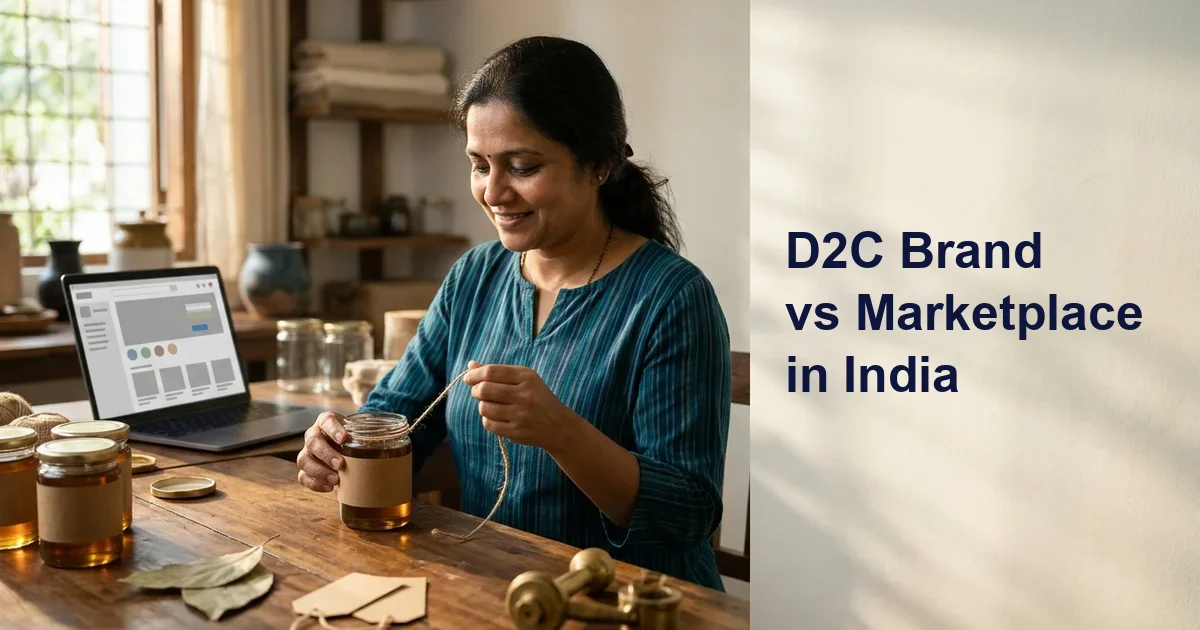
Building an independent online store allows manufacturers and merchants to break free from pure marketplace dependency and claim full ownership of their customer relationships. Transitioning to a D2C brand requires a deliberate shift from transactional price competition to long-term brand equity, structured search optimization, and direct customer engagement. This guide outlines how small businesses and digital marketers can successfully launch, optimize, and scale an independent direct-to-consumer storefront alongside existing sales channels.
What Is a D2C Brand and How Does Direct-to-Consumer Work?
Understanding the direct-to-consumer framework helps business owners eliminate intermediary costs and establish direct control over product distribution.
A D2C brand is a business model where manufacturers, creators, or brand owners market and sell their products directly to end consumers without relying on third-party wholesalers, distributors, or traditional retail stores. By operating their own ecommerce storefronts, these businesses manage the entire customer journey from marketing to fulfillment.
- Product Creation: The manufacturer designs, produces, and packages inventory directly inside their owned facilities or contract manufacturing units.
- Digital Distribution: Products are listed on an owned web store, mobile application, or dedicated sales channel.
- Direct Marketing: Digital campaigns drive traffic straight to owned touchpoints using search engines, social channels, and email marketing.
- Order Fulfillment: Logistics partners pick, pack, and ship orders straight to the end buyer's doorstep.
The Evolution from Traditional Commerce to D2C
Traditional retail relied heavily on distributor networks to get products onto store shelves. This setup limited maker visibility into real consumer behavior and reduced profit margins at each handoff.
As digital tools matured, creators began shifting toward direct-to-consumer strategies across categories like apparel, home goods, skincare, and packaged foods. This shift allows manufacturers to launch products faster, gather real-time usage feedback, and adjust inventory based on direct demand signals rather than wholesale order forecasts.
Key Differences Between D2C, B2C, and Marketplace Sellers
While all three models sell to end users, their structural mechanics differ significantly across data control, branding, and transaction fees.
- D2C (Direct-to-Consumer): The product creator owns the storefront, customer data, pricing, and brand narrative.
- Standard B2C Retailer: A business resells items manufactured by third-party brands through a physical or digital shop.
- Marketplace Seller: A merchant lists products on platforms like Amazon or Flipkart, competing inside a shared catalog where the platform owns the buyer relationship.
| Operational Aspect | Direct-to-Consumer (D2C) | Traditional B2C Retailer | Third-Party Marketplace |
|---|---|---|---|
| Primary Product Source | In-house / Contract manufactured | Third-party wholesale stock | Third-party or self-owned stock |
| Brand Identity Control | 100% Owned and managed | Retailer-filtered branding | Platform-constrained listing |
| Customer Data Access | Full access (Email, Phone, History) | Retailer-owned customer base | Masked / Restricted by platform |
| Margin Structure | No commission; you pay for ads, payments and shipping | Retail markup margins | Variable (Platform fees applied) |
Developing strong branding allows companies to build long-term brand recall and topical authority rather than competing solely on price discounts inside crowded marketplace grids. For early-stage companies, combining direct sales with a clear search marketing strategy provides a foundation for steadier growth.
Marketplace vs. D2C Brand: Why Indian Merchants Need Both
Evaluating sales channel economics helps merchants balance immediate traffic availability against long-term profit margins.
Small Indian makers producing items like handcrafted agarbatti, cold-pressed oils, handloom apparel, or artisanal soaps often begin on platforms like Amazon, Flipkart, or Meesho. These platforms provide immediate visibility and access to millions of active buyers with high intent. However, building an independent store alongside marketplace channels provides a balanced growth path.
Understanding Platform Fees, Shipping, and GST Realities
Marketplace selling involves cumulative platform expenses that impact net margins over time:
- Referral and Closing Fees: Platforms charge category-based referral or commission fees alongside closing fees per item sold.
- Logistics Costs: Shipping fees scale based on volumetric weight and delivery distances across national zones.
- Return Handling Fees: Customer returns often incur operational penalties and reverse shipping costs borne by the seller.
- Tax Liabilities: Services provided by platforms incur 18% Goods and Services Tax (GST), adding to overhead expenses.
Commission on low-priced products has come down sharply. Amazon India stopped charging referral fees on products priced under ₹300 across 135+ categories from April 2025 (Amazon announcement), and from March 2026 extended zero referral fees to products under ₹1,000 in many categories (Amazon India). Flipkart waived seller commission on items under ₹1,000 from November 2025 (YourStory). Closing fees, shipping fees and 18% GST on those fees still apply, and platforms change fees at their discretion, so check the current rate card for your category before you set prices.
| Expense Component | Marketplace Channel | Owned D2C Storefront |
|---|---|---|
| Customer Acquisition | Commission & platform ads | Organic SEO, content, paid social |
| Transaction Processing | Built into platform fees | Payment gateway fee per transaction |
| Logistics & Fulfillment | Managed network or self-ship | Integrated third-party logistics (3PL) |
| Customer Data Access | Restricted / Masked | 100% Owned (Email, Phone, Behavior) |
The Hybrid Model: Using Marketplaces for Discovery and D2C for Loyalty
Marketplaces function as discovery engines for top-of-funnel customer acquisition. Once buyers discover your product quality, your owned website serves as the retention hub where shoppers return for exclusive bundles and loyalty rewards.
Marketplace rules, Amazon's included, restrict inserts and messages that steer buyers off the platform, so do not rely on package inserts. Build recall through your brand name and packaging instead, so buyers who later search for you find your own store. Mastering listing structures remains vital during this phase; read our breakdown of marketplace listing SEO to maximize platform conversion rates.
Why Relying Solely on Third-Party Marketplaces Poses Business Risks
Analyzing single-channel risks helps merchants protect their operations against unexpected policy shifts and platform dependencies.
- Marketplace Policy Changes: Terms of service updates can suddenly alter seller fee structures or listing rules.
- Account Suspension Risk: A suspended account stops daily order flow until the issue is resolved.
- Immediate Revenue Exposure: Concentrating revenue into a single channel leaves no backup income source during disputes.
- Diversified Stability: Operating an owned web store protects cash flow while resolving third-party platform issues.
The Customer Data Gap: Why You Don't Own Marketplace Buyers
When a transaction occurs on a third-party platform, the channel retains ownership of the buyer's contact details. Communication with customers remains restricted to order updates, preventing sellers from building first-party email lists or sending personalized WhatsApp updates. On Amazon, for example, buyer-seller messaging is allowed only to complete an order, not for marketing (Amazon Seller Central).
Without access to customer contact details, merchants cannot run cost-effective re-engagement campaigns or analyze lifetime value patterns accurately. A typical store relying only on external channels misses opportunities to launch automated reorder workflows for consumable goods.
Mitigating Deplatforming and Algorithm Suspension Risks
Relying entirely on a single sales platform leaves a business vulnerable to automated account suspensions, policy updates, or sudden algorithm shifts. This risk is real: in 2021, close to 2,000 Indian sellers reported account suspensions on Amazon India (Inc42).
Establishing an independent storefront ensures your business maintains continuous operations and revenue even if a third-party listing faces disruption.
Essential Tech Stack to Launch an Owned D2C Online Store
Assembling the right technical infrastructure ensures smooth shopping experiences, secure payment processing, and dependable order fulfillment.
- Store Core: Select an e-commerce platform or custom engine to manage catalog structures and shopping carts.
- Payment Layer: Connect localized payment gateways supporting UPI, debit cards, credit cards, and digital wallets.
- Shipping: Many stores use a shipping aggregator for pickups, tracking and label printing.
Read how to start an online store in India.
Configuring UPI and Card Payment Gateways
Indian online shoppers expect quick checkout options. Integrating a gateway like Razorpay allows your store to accept Unified Payments Interface (UPI) apps, credit cards, debit cards, and net banking.
Activation requires submitting business details, PAN details, and bank account verification. Ensuring instant UPI payment options reduces checkout abandonment, particularly for mobile device traffic.
Managing Shipping Zones, Pincodes, and COD Orders
Fulfillment logistics depend on clear coverage configurations and weight-based rate calculations across every target territory:
- Pincode Coverage: Many stores use a shipping aggregator such as Shiprocket or Delhivery to check whether a pincode is serviceable.
- Cash on Delivery (COD) Management: Implement automated WhatsApp or SMS verification checks for COD purchases to confirm orders before dispatch.
- Weight Calibration: Define physical and volumetric weight limits per product listing to ensure precise shipping calculations.
- Failed-Payment Recovery: Follow up on failed or interrupted payments by phone, WhatsApp or email, contacting only shoppers who have agreed to hear from you.
Ecommerce SEO Strategy for D2C Brands Across Search Touchpoints
Structuring website content to capture shoppers at every phase of their research creates a consistent pipeline of organic store traffic.
- Problem Identification: Searchers seek guidance on broad symptoms, challenges, or lifestyle needs.
- Solution Evaluation: Searchers compare product types, ingredients, or alternative approaches.
- Transactional Purchase: Searchers query specific product names, sizes, or brand store links to buy.
Mapping Search Intent: Problem-Aware to Product-Aware Keywords
Organic search strategy must address the consumer journey across three distinct stages:
- Problem-Aware Stage: Searchers look for answers to broad concerns (e.g., "how to prevent hair breakage in winter"). Address these with informational blog guides.
- Solution-Aware Stage: Searchers evaluate specific remedies (e.g., "cold pressed almond oil vs onion oil"). Create comparative landing pages and ingredient breakdowns.
- Product-Aware Stage: Searchers prepare to purchase using transactional queries (e.g., "buy cold pressed almond oil online"). Optimize store catalog pages and product listings.
Entity SEO: Optimizing Ingredients, Methods, and Origins
Search engines organize web content by connecting entities, such as ingredients, manufacturing methods, and geographic origins. When structuring product copy, state key components clearly using recognized terms:
- Highlight natural ingredients clearly (e.g., organically farmed Kashmiri saffron).
- Detail traditional processing steps (e.g., wood-pressed extraction below 45 degrees).
- Link geographic origins directly to quality standards within your site's metadata.
Connecting these attributes helps search algorithms understand your product context, improving rankings for specific consumer intent searches.
Technical SEO Essentials: Schema Markup and Variant Canonicalization
Implementing accurate technical markup protects search engine rankings and helps product listings appear with rich snippets in search results.
Implementing Structured Product Schema for Rich Snippets
Structured JSON-LD schema markup communicates key product attributes directly to search engine crawlers. Including structured details makes your pages eligible for rich results that can show star ratings, pricing, and stock status in search listings. Our guide on how to implement product schema covers every required and recommended property.
{
  "@context": "https://schema.org/",
  "@type": "Product",
  "name": "Artisanal Cold-Pressed Coconut Oil",
  "image": "https://example.com/images/coconut-oil.jpg",
  "description": "Pure wood-pressed coconut oil extracted using traditional methods.",
  "sku": "C-OIL-500",
  "brand": {
    "@type": "Brand",
    "name": "Your Brand"
  },
  "offers": {
    "@type": "Offer",
    "url": "https://example.com/products/cold-pressed-coconut-oil",
    "priceCurrency": "INR",
    "price": "450",
    "availability": "https://schema.org/InStock"
  }
}
Managing Product Variant Canonical URLs to Avoid Duplicate Content
E-commerce catalogs with multiple sizes, colors, or bundle variants often create duplicate URLs. If left unmanaged, search engines may split ranking authority across identical pages. If canonical tags are new to you, start with what a canonical URL is.
Set up primary canonical tags pointing back to the main base product URL. For instance, variant pages like example.com/products/tshirt?color=blue should contain a canonical tag pointing directly to example.com/products/tshirt.
To verify your technical implementation on one product page, open it with the free Digispot Chrome extension and check the Schema and Metadata tabs for the JSON-LD and the canonical tag. For larger catalog reviews, run the Digispot AI Desktop SEO Spider, a desktop app for Mac and Windows, to audit duplicate variant URLs, pages missing Product schema, broken links, and canonical tags across your whole store. On a paid plan you can also ask Claude or another AI agent to pull every product page with a schema or canonical issue from the Spider over MCP.
Building D2C Brand Equity in Competitive Verticals
Creating clear brand positioning helps independent storefronts stand out in established markets without competing purely on advertising spend.
Niche Differentiation in Saturated Fashion and Lifestyle Markets
Saturated verticals such as fashion, skincare and packaged foods require distinct product positioning. Independent makers can differentiate by focusing on specialized product attributes:
- Ethical Sourcing: Emphasize fair-trade supply chains and organic materials.
- Production Craft: Highlight small-batch manufacturing or traditional processes.
- Fit and Functionality: Focus on specific sizing, ergonomic designs, or unique formulations.
Consistent storytelling across site design, product packaging, and search touchpoints builds strong brand recall. Highlighting ethical sourcing and craftsmanship helps justify premium positioning, including when selling abroad from an Indian store.
Maximizing Customer Lifetime Value and Repeat Purchase Rates
Sustained direct-to-consumer profitability relies on encouraging repeat orders rather than constantly funding initial customer acquisition:
- Reorder Reminders: Send timely notifications via email or WhatsApp, to customers who have opted in, based on average product usage cycles.
- Loyalty Tiers: Offer points or early access to new releases for returning customers.
- Cross-Selling Bundles: Recommend complementary accessories or product pairs directly inside checkout drawers.
AI and Answer Engine Optimization (AEO) for Next-Gen D2C Search
Structuring store data for artificial intelligence engines ensures your products are recommended during conversational consumer searches.
Optimizing Product Content for ChatGPT and Generative Search
Modern shoppers increasingly use conversational AI tools like ChatGPT, Claude, and Google AI Overviews to discover products. To ensure AI platforms accurately understand and recommend your brand:
- Structure product listings with clear H2 and H3 headings answering specific use-case questions.
- Maintain transparent ingredient lists and usage instructions on every product detail page.
- Include structured FAQ sections on product landing pages addressing common buyer concerns directly.
Monitoring how your brand appears across conversational platforms is essential for maintaining search visibility; learn how to measure AI platforms using our guide to tracking AI search engine rankings.
Building Multi-Platform Brand Mentions for AI Recognition
AI search engines validate product recommendations by cross-referencing information across multiple web platforms. Ensure your business maintains consistent details across independent review directories, active social channels, and third-party press coverage.
Consistent entity references across the web establish multi-platform trust. This consistency increases the likelihood that generative search tools feature your products in relevant shopping queries.
Grow Your D2C Search Strategy with Digispot AI
Combining third-party marketplace visibility with an independent, SEO-optimized direct-to-consumer storefront offers a balanced path to long-term profitability. Marketplaces generate top-of-funnel discovery, while an owned D2C web store builds long-term brand equity, preserves customer data access, and protects business margins.
Scaling an independent storefront requires technical accuracy, structured product schema, and clean site architecture.
Ready to strengthen your online store's search performance and build sustainable organic authority? Our ecommerce SEO services team can audit your catalog and optimize your direct-to-consumer search strategy.
More in the Ecommerce SEO guide
Start with the E-commerce SEO Guide: Basics to Advanced.
More in the Selling Online in India guide
Start with the How to Start an Online Store in India: A Two-Day Launch Plan.
Audit any page in seconds
200+ SEO checks including Core Web Vitals, schema markup, meta tags, and AI readiness — trusted by 1,250+ SEO experts and marketers.
Frequently Asked Questions
Here are some of our most commonly asked questions. If you need more help, feel free to reach out to us.

Maya Krishnan is an SEO and AEO specialist at Digispot AI. She helps agencies and businesses across industries and countries grow organic traffic from Google and AI search, and knows the major SEO platforms well, from desktop crawlers to all-in-one suites. She checks and approves every article published under her name.
More from Maya Krishnan