Track AI Search Rankings Monitoring: The New SEO Frontier
Learn how to track AI search rankings monitoring across ChatGPT, Perplexity, and Google AI Overviews. Master metrics like Share of Model and citation frequency.
 Maya Krishnan
Your rank tracker is lying to you.
You see green arrows. Your keyword positions on Google are stable. You are ranking in the top 3 for your core terms. Yet, your organic traffic is plateauing or even dipping.
The culprit isn't an algorithm penalty. It is a fundamental shift in user behavior.
Users are no longer just searching; they are asking. They are turning to ChatGPT for software recommendations, Perplexity for news summaries, and Google AI Overviews for quick answers. In this new ecosystem, "position 1" doesn't exist. There is only the answer, and whether you are part of it.
If you continue to rely solely on traditional SERP tracking, you are flying blind. You need to evolve how you track AI search rankings monitoring workflows to capture the full picture of your digital visibility.
This guide details exactly how to measure your presence in the age of Artificial Intelligence and what metrics actually matter when blue links fade away.
The Death of "Position" and Birth of "Citation"
For twenty years, SEO was two-dimensional: a list of ten blue links. If you were number one, you won.
AI Search—powered by Large Language Models (LLMs) and Retrieval-Augmented Generation (RAG)—changes the geometry of search.
When a user asks Claude or Gemini a question, the AI doesn't return a list. It synthesizes a single, coherent answer. It reads multiple sources, extracts facts, and constructs a narrative.
In this environment, you don't "rank." You are cited.
Why Traditional Trackers Fail
Standard SEO tools scrape Google's HTML results. They look for your URL in a specific <div>. AI platforms work differently:
- Dynamic Generation: Every answer is generated in real-time. Two users might get slightly different wording.
- No Fixed Positions: There is no "page 1." You are either mentioned in the answer or you aren't.
- Source Blending: Your content might be combined with a competitor's data to form a complete answer.
To effectively track AI search rankings monitoring data, you must stop counting positions and start measuring Share of Model (SoM).
Core Metrics for AI Search Visibility
Before you can improve your visibility, you must define what success looks like. The metrics for Answer Engine Optimization (AEO) differ significantly from traditional SEO. If you need to ground these metrics in the wider strategy first, see our complete AEO guide.
1. Share of Model (SoM)
This is the holy grail of AEO metrics. It answers the question: For a given set of prompts, how often does the AI mention my brand?
If you ask ChatGPT "Best CRM for small businesses" 10 times, and HubSpot appears in 8 of those answers, their SoM is 80%.
2. Citation Authority
Being mentioned isn't enough. How are you mentioned?
- Primary Recommendation: "I recommend Brand X..."
- List Member: "Options include Brand X, Brand Y..."
- Source Credit: "According to Brand X..."
High-value citations position you as the authority. Low-value citations just list you as an option.
3. Sentiment Alignment
LLMs understand context. A mention can be negative.
- "Digispot AI is a powerful tool for professionals." (Positive)
- "Digispot AI is complex and hard to learn." (Negative/Nuanced)
You need to analyze the sentiment of your mentions, not just the volume.
Digispot AI can help you identify and fix these issues automatically with AI-powered audits analyzing 300+ ranking factors, ensuring your sentiment profile remains positive across platforms.
How to Manually Track AI Search Rankings
Until enterprise tools catch up, manual auditing is the most reliable way to gauge your baseline performance. This process requires a structured testing methodology.
Step 1: Develop a Prompt Matrix
Do not just test your keywords. LLM users speak in natural language. Convert your keywords into conversational prompts.
| Keyword Type | Traditional Keyword | AI Prompt Example |
|---|---|---|
| Informational | "how to fix 404 error" | "Explain the best way to identify and fix 404 errors on a large e-commerce site." |
| Commercial | "best seo software" | "Compare the top SEO tools for an enterprise agency focusing on technical audits." |
| Transactional | "buy schema generator" | "Where can I find a reliable, free tool to generate JSON-LD schema?" |
Step 2: Cross-Platform Testing
You cannot test on just one platform. Different AI models have different training data and browsing capabilities.
- ChatGPT (OpenAI): Heavily reliant on training data but browses Bing for current info.
- Perplexity: A "reasoning engine" that prioritizes live citations and academic sources.
- Google AI Overviews (SGE): The hybrid model appearing directly in Google Search.
- Claude (Anthropic): Tends to be more conservative and analytical.
Step 3: Scoring Your Visibility
Run your prompts through each engine. Create a spreadsheet to log the results.
- 0 points: Not mentioned.
- 1 point: Listed in a bulleted list (neutral).
- 2 points: Linked as a footnote/source.
- 3 points: Explicitly recommended in the text.
This manual scoring gives you a "Visibility Score" that you can track month-over-month.
Automating the Process with Digispot AI
Manual tracking is time-consuming. As you scale, you need automation.
Digispot AI's platform includes dedicated AEO tracking capabilities. Our Multi-LLM AI engine simulates queries across GPT-4, Claude, and Gemini simultaneously.
Instead of spending hours prompting chatbots, you get a dashboard showing:
- Brand Mention Frequency: Across all major AI platforms.
- Source Links: Which of your pages are being used to generate answers.
- Competitor Gap Analysis: Which competitors are dominating the AI conversation for your topics.
Ready to improve your search visibility? Try Digispot AI for comprehensive website audits and actionable recommendations.
Strategies to Boost AI Rankings (AEO)
Once you establish a baseline, how do you improve? Optimizing for machines (AEO) is stricter than optimizing for humans.
1. Own the Knowledge Graph with Entities
LLMs think in "entities" (concepts, people, places), not keywords. They build connections between these entities.
If you want to rank for "technical SEO," you must be semantically linked to that entity in the vector space. This means your content must clearly define who you are and what you do.
- Use consistent naming conventions for your products.
- Create a robust "About Us" page that clearly defines your organizational expertise.
- Link to external authoritative sources that validate your claims.
Learn more about semantic search SEO to understand how vector space impacts your visibility.
2. Implement Structured Data (Schema)
Schema markup is the native language of search engines. It turns ambiguous text into structured data points.
If an AI is scanning your pricing page, standard HTML forces it to guess which number is the price. JSON-LD Schema explicitly tells it: "price": "49.00".
Critical Schemas for AEO:
- Organization: Establishes brand identity.
- Article/BlogPosting: Clarifies authorship and publication dates.
- FAQPage: Feeds directly into question-answering algorithms.
- Product: Details specs, price, and availability.
Use the free Schema Markup Generator to create valid structured data in minutes.
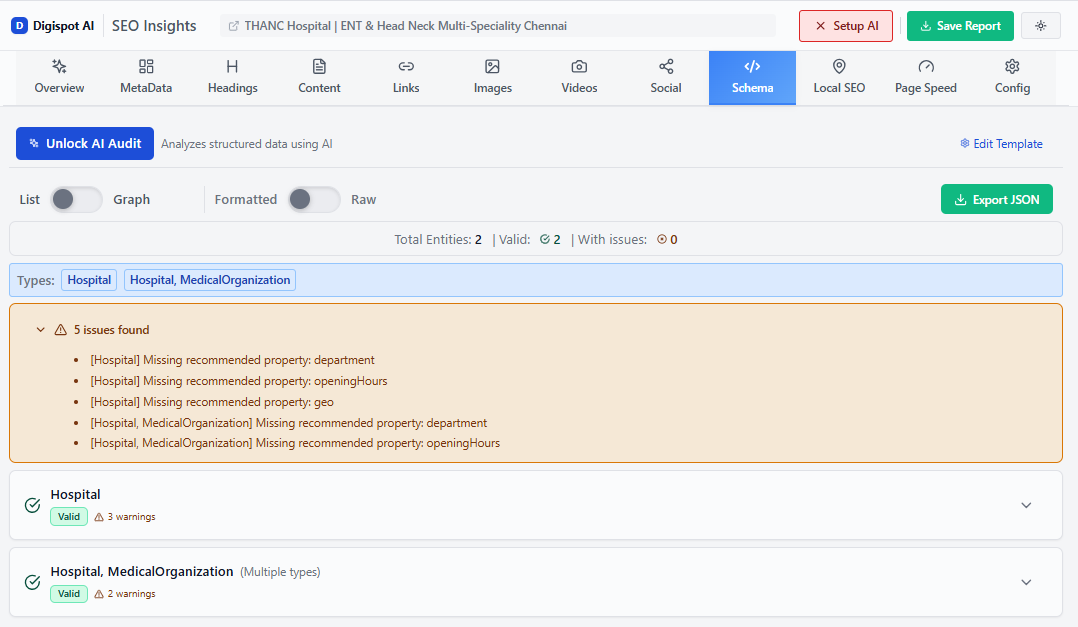
Turn invisible SEO data into clear visuals with our Free Chrome extension.
3. Answer Directly and Concisely
LLMs prefer content that is easy to summarize. This is often called the "BLUF" method (Bottom Line Up Front).
Do not bury the answer 500 words deep.
- Bad: "When considering the various factors that influence the time it takes for DNS to propagate..."
- Good: "DNS propagation typically takes 24 to 48 hours."
Start your sections with direct answers, then expand on the details. This increases the probability of your text being extracted for an AI Overview or snippet.
For more on formatting, read our guide on on-page SEO best practices.
Tracking Referral Traffic from AI Sources
While "rankings" are hard to track, traffic is concrete. However, AI traffic often hides in your analytics.
Identifying the Traffic
In Google Analytics 4 (GA4), traffic from AI tools often appears as:
- Referral:
chatgpt.com,bing.com(for Copilot),perplexity.ai - Direct: Many users use desktop apps, which strip referrer data.
Setting Up GA4 Filters
To better track AI search rankings monitoring impact on traffic, create a custom Channel Group in GA4 named "AI Search."
Include referrers containing:
openaichatgptbingj(Bing Chat)perplexityclaudebard/gemini
This isolates the data, allowing you to see if your AEO efforts are driving actual visits, not just brand awareness.
The Role of Brand Authority in AI
In the world of zero-click searches, brand authority is your strongest asset.
LLMs are trained to prioritize "high-confidence" sources. They are less likely to hallucinate when citing a well-known brand.
Digital PR and Mentions
Getting mentioned on high-authority sites (Forbes, TechCrunch, industry journals) does double duty:
- It builds traditional backlinks for Google SEO.
- It feeds the LLM training data. If GPT-5 scrapes Forbes and sees your brand associated with "top SEO tools," it learns that association.
Consistency is Key
Ensure your brand facts are consistent across the web. If your Crunchbase profile says you were founded in 2020, but your LinkedIn says 2021, the AI decreases its confidence score. Low confidence equals fewer citations.
It helps to keep those facts in one authoritative place. In the Digispot AI Spider, you record your verified business facts once, and they feed the site's knowledge graph and generated llms.txt — the structured context an AI assistant reads over MCP. Nothing an AI proposes becomes grounding truth until you approve it, so the set of facts the model reads about you stays accurate and consistent as it grows.
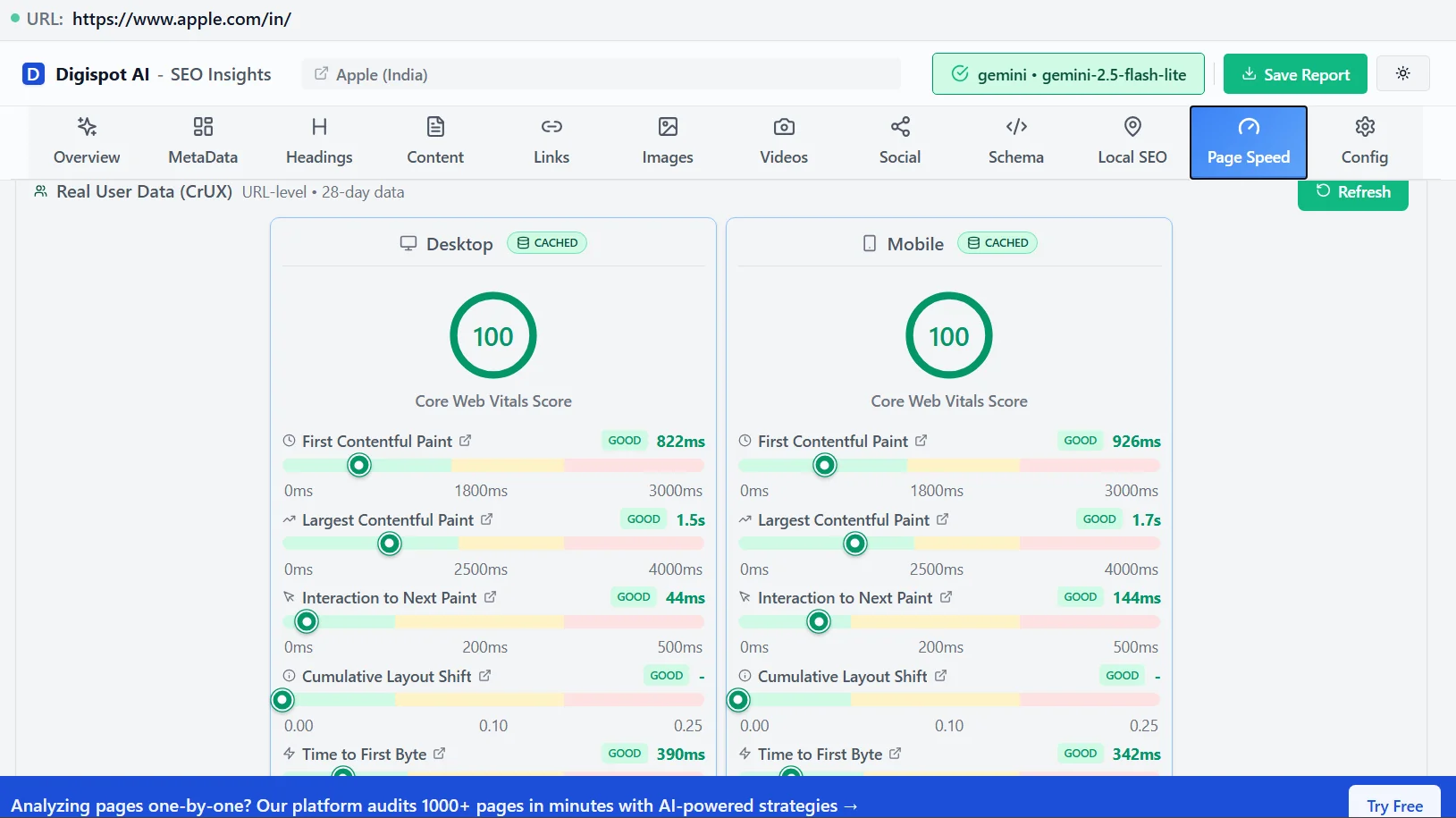
Get instant SEO insights on any page with our free Chrome extension.
Future-Proofing Your Strategy
The ability to track AI search rankings monitoring systems is still in its infancy. We are moving toward an era of "predictive search" where AI anticipates needs before a query is even typed.
From Keywords to Intent
You must stop obsessing over exact-match keywords. Focus entirely on search intent optimization.
If a user asks an AI, "Help me plan a marketing budget," they don't want a definition of a budget. They want a template, a calculator, or a strategy guide. If your content provides the utility, the AI will recommend it.
The Feedback Loop
AI platforms are starting to provide feedback loops. Bing Webmaster Tools now offers some data on chatbot impressions. We expect Google Search Console to follow suit for AI Overviews.
Until then, tools like Digispot AI bridge the gap, providing the insights you need to stay ahead.
Start Improving Your AI Visibility Today
The shift to AI search is not coming; it is already here. If you ignore it, you are ignoring a growing segment of your market.
Don't let your brand disappear from the conversation. Start by auditing your current Share of Model. Optimize your entities. Clean up your schema.
And if you need a partner in this transition, Digispot AI is built for the future of search.
Take the first step: Try the free On-Page SEO Analysis tool to audit any URL instantly and see if your content is ready for the AI era.
Related deep-dives
Continue with these closely related guides:
- b2c startup seo — B2C Startup SEO: Direct-to-Customer Growth
References
Audit any page in seconds
300+ SEO checks including Core Web Vitals, schema markup, meta tags, and AI readiness — trusted by 1000+ SEO experts and marketers.
Frequently Asked Questions
Here are some of our most commonly asked questions. If you need more help, feel free to reach out to us.
Written by
Maya Krishnan
Digital growth expert
Maya is a seasoned expert in web development, SEO, and digital strategy, dedicated to helping businesses achieve sustainable growth online. With a blend of technical expertise and strategic insight, she specializes in creating optimized web solutions, enhancing user experiences, and driving data-driven results. A trusted voice in the industry, Maya simplifies complex digital concepts through her writing, empowering readers with actionable strategies to thrive in the ever-evolving digital landscape.