B2C Startup SEO: Direct-to-Customer Growth
SEO strategies for B2C startups to acquire customers fast. Learn growth hacking, content marketing, and search optimization for consumer brand visibility.
 Maya Krishnan
Leveraging SEO as a Strategic Imperative in a High-Growth B2C Environment
The direct-to-consumer digital marketplace is undergoing a period of significant expansion, fundamentally altering the landscape of retail. For B2C startups, achieving visibility in this crowded ecosystem is paramount. Search Engine Optimization (SEO) has evolved from a marketing tactic into a foundational component of a successful digital strategy.
SEO enables businesses to capture high-intent prospects at the most critical stage of the customer journey: the search query. By optimizing your digital presence, you align your brand with the precise language and needs of your target audience, driving qualified organic traffic that is more likely to convert.
Furthermore, unlike ephemeral paid campaigns, a well-executed SEO strategy builds lasting brand equity. It establishes your website as an authoritative resource, fostering trust and creating a sustainable channel for growth. In the current B2C climate, investing in SEO is not merely advantageous—it is essential for long-term viability and competitive differentiation.
Starting a B2C company in 2026 presents a pivotal decision: do you rent space on someone else's platform, or do you build your own digital home? While giants like Amazon and Flipkart offer the seductive promise of immediate access to millions of customers, there's a significant trade-off. You're essentially building someone else's business, not your own.
The most forward-thinking B2C founders are charting a different course. They are forging direct connections with their customers through their own websites, leveraging the incredible power of Search Engine Optimization (SEO) to create sustainable and profitable growth engines that they fully control.
This strategic choice defines your company's financial future. Marketplace dependence leaves you vulnerable to algorithm changes that can wipe out sales overnight. In contrast, an owned SEO strategy creates a compounding asset—traffic that grows over time without a linear increase in cost.
This guide will show you exactly how they do it.
Why B2C Startups Are Going Direct (And Why It's an SEO Game-Changer)
The shift away from total reliance on marketplaces isn't just a trend; it's a strategic move toward long-term viability. Here’s why building your own platform is critical for growth and how it directly fuels your SEO success.
You Own the Customer Relationship
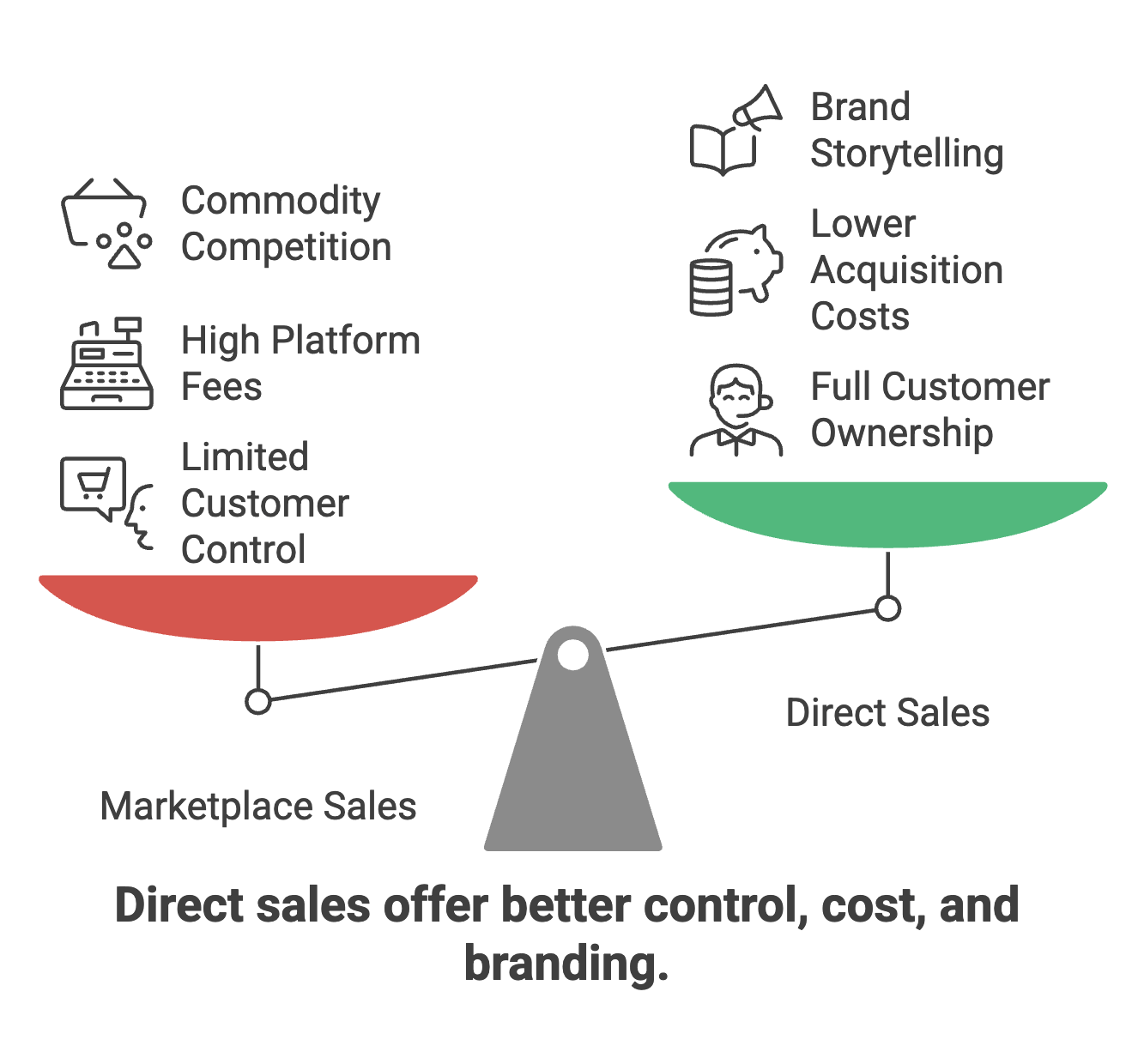
On marketplaces, you're merely a tenant in a crowded digital mall. You rarely get access to customer email addresses or browsing data, making retention marketing impossible. On your own site, you are the architect of the entire customer journey, from the first curious click to the fifth repeat purchase.
This control is a superpower. It allows you to optimize every touchpoint for both conversions and search visibility, creating a brand experience that marketplaces simply cannot offer. You can deploy retargeting pixels, build email lists, and analyze user behavior to refine your SEO for startups strategy continuously.
Vastly Better Unit Economics
Marketplace fees, fulfillment costs, and advertising placements can easily consume 15% to 30% of your revenue. Direct sales through organic search all but eliminate these platform fees. Your primary investment shifts from paying rent to building an asset: creating compelling content and an optimized site that attracts customers for free, forever.
Consider the Customer Acquisition Cost (CAC) difference. Paid ads stop working the moment you stop paying. SEO content written three years ago can still drive revenue today. This efficiency is often the difference between a burn-rate disaster and a profitable business.
Brand Building vs. Commodity Competition
Marketplaces are designed to reduce products to commodities where price and review count are the sole differentiators. Your own website is a canvas. It empowers you to share your story, highlight your values, showcase your unique quality, and cultivate a community.
Google recognizes this brand-building effort. Search engines are evolving to reward "Experience, Expertise, Authoritativeness, and Trust" (E-E-A-T). A generic marketplace listing cannot convey expertise; a dedicated brand site with educational resources can.
The outcome? B2C startups with robust, direct-to-customer SEO strategies frequently achieve customer acquisition costs (CAC) that are 60% to 80% lower than those relying exclusively on paid marketplace advertising, according to analyses from leading e-commerce research firms.
Why B2C Startups Actually Have SEO Advantages
Speed Beats Size in SEO
While large retailers move slowly—requiring months to implement changes across thousands of products—you can optimize your entire site in weeks. When Google releases algorithm updates or new features, you can adapt instantly while competitors are still in committee meetings.
Startups can embrace Agile SEO. You can test new title tag formats on Monday, analyze results on Friday, and roll out changes the following week. Large corporations often have "code freezes" during peak seasons or require legal approval for minor content updates. This agility allows you to snatch rankings for trending topics before the giants wake up.
Real example: A skincare startup noticed Google started featuring ingredient information in search results. Within 48 hours, they added detailed ingredient sections to all product pages. Their organic traffic increased 40% in the following month while established brands took 6+ months to make similar changes.
Niche Focus Trumps Broad Targeting
Amazon tries to rank for everything. You can dominate specific niches that larger players ignore because they're "too small." These niches often have highly engaged customers willing to pay premium prices for specialized solutions.
The magic of specificity: Instead of competing for "protein powder" (impossible), a fitness startup might own "plant-based protein for runners" or "keto-friendly protein for women over 40." Lower competition, higher intent, better conversions.
This is where a dedicated SEO platform for B2C becomes vital. Using tools like Digispot AI, you can identify these "long-tail" opportunities that have high commercial intent but low difficulty—data points that generic tools might overlook.
Community Building Creates Unbeatable Content
Your customers are your biggest SEO asset. When people genuinely love your product, they create content, write reviews, share on social media, and link to your site—all of which are powerful ranking signals Google can't ignore.
Large retailers get transactions. You can build relationships that translate into sustainable organic growth. An active community section or a hashtag campaign on your site generates "freshness" signals that search engines prioritize.
The B2C Customer Journey and Your SEO Strategy
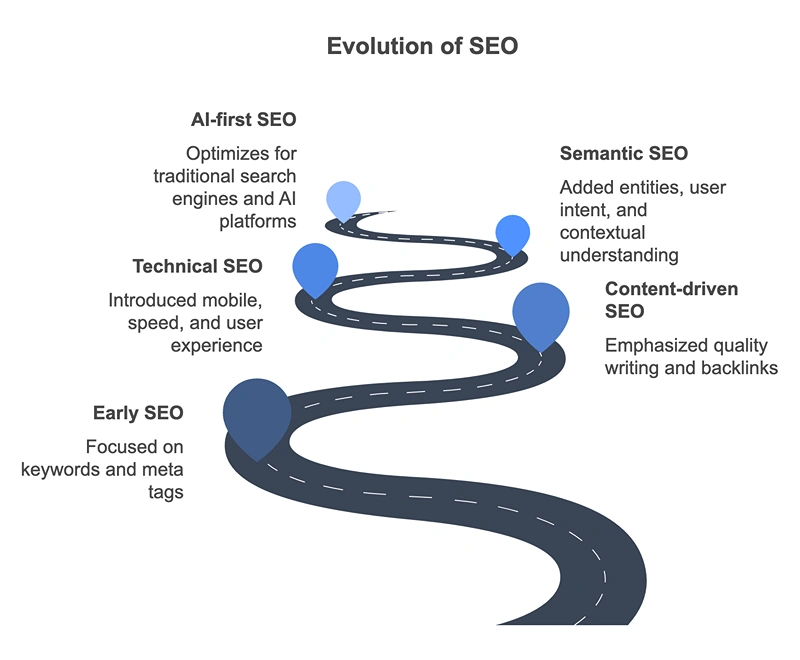
Understanding how your customers discover, research, and buy is crucial for SEO success. Modern SEO isn't just about keywords; it's about Answer Engine Optimization (AEO). You must answer questions better than the AI bots can.
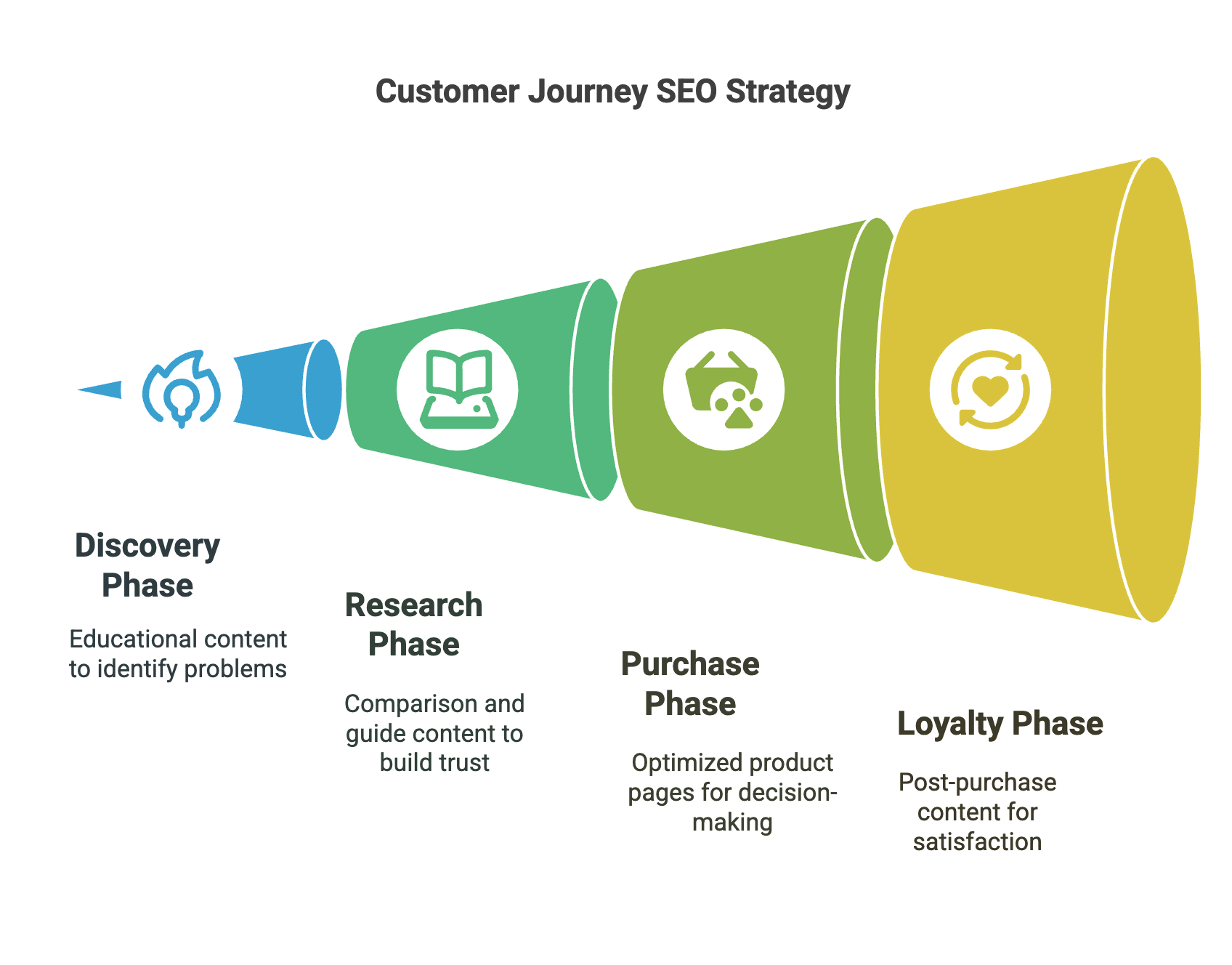
Stage 1: The Discovery Phase (Problem-Aware Searches)
At this stage, the customer doesn't know your brand or product exists. They only know their problem. In the era of AI search (ChatGPT, Gemini), these queries are often conversational.
- What they search: "how to fix hormonal acne," "why is my skin so dry," "best home workout for busy moms."
- Your SEO opportunity: Create high-value, educational blog content that positions your brand as a helpful expert, not a pushy salesperson. These "top-of-funnel" searches have huge volume and relatively low commercial competition.
- AEO Strategy: Structure your content to be "snippable." Use clear headings and concise definitions so AI engines can easily extract your answer for their summaries.
- Content examples:
- "The Science Behind Hormonal Acne (And What Actually Works)"
- "5-Minute Morning Routines That Will Transform Your Skin"
- "Why Your Expensive Moisturizer Might Not Be Working"
Stage 2: The Research Phase (Solution-Aware Searches)
The customer now knows a solution exists and is trying to figure out which one is best for them.
- What they search: "best skincare routine for oily skin," "natural acne treatments," "gentle face wash for sensitive skin."
- Your SEO opportunity: Develop comparison content, in-depth buying guides, and educational articles that build trust while showcasing your expertise and product category.
- Content examples:
- "Building the Perfect Skincare Routine: A Step-by-Step Guide"
- "Chemical vs. Physical Sunscreens: Which Is Right for You?"
- "A Dermatologist's Guide to the Best Ingredients for Acne-Prone Skin"
Stage 3: The Purchase Phase (Product-Aware Searches)
They are now close to buying and are comparing specific products and brands. This is the "money" phase.
- What they search: "[Your competitor's brand] review," "best vitamin C serum 2026," "[Your brand] ingredients."
- Your SEO opportunity: Perfectly optimized product and category pages that rank for branded, competitor, and "best of" terms. Detailed information is key here to build confidence.
- Visual Strategy: Ensure your product images appear in Google Shopping and Image Search. High-quality visuals are a ranking factor for transactional queries.
Stage 4: The Loyalty Phase (Usage & Advocacy Searches)
The customer has purchased your product and now needs to know how to get the most out of it.
- What they search: "how to apply retinol serum," "correct skincare routine order," "can I use vitamin C with niacinamide?"
- Your SEO opportunity: Create post-purchase content (blog posts, video tutorials) that enhances the customer experience, increases lifetime value, and captures new customers who are searching for usage tips.
The Foundation: Nailing Your Technical SEO
Before you can win with content, your website's technical foundation must be flawless. For B2C, this primarily means speed and structure. If your site is slow, users leave, and Google notices.
Site Speed for Mobile Shoppers
B2C customers are impatient, especially on mobile, where over 60% of e-commerce traffic originates. A 2-second delay in page load time can increase bounce rates by over 30%. Google's Core Web Vitals are a direct ranking factor, making speed optimization critical for both SEO and sales.
You need to pay attention to specific metrics like Interaction to Next Paint (INP), which measures responsiveness. If a user clicks "Add to Cart" and the site freezes for a second, that's a poor INP score.
- Quick Wins for a Faster Site:
- Optimize Product Images: Compress images and use modern formats like WebP or AVIF.
- Implement Lazy Loading: Load images only as the user scrolls down the page.
- Minimize Checkout Steps: A clunky, multi-page checkout is a conversion killer.
- Use a Content Delivery Network (CDN): A CDN stores copies of your site on servers around the world, delivering content faster to every user.
For a deeper dive into technical performance, read our Core Web Vitals SEO Guide.
Product Page Structure That Google Loves
Your product pages must be organized for both search engine crawlers and human shoppers. This means a clear hierarchy, descriptive URLs, and structured data.
- Essential Structural Elements:
- Descriptive URLs:
yourstore.com/products/organic-vitamin-c-serum-sensitive-skinis infinitely better thanyourstore.com/product/12345. - Clear Heading Structure: Use a single H1 for the product name, H2s for key sections like "Benefits" or "How to Use," and H3s for specifications.
- Breadcrumb Navigation:
Home > Skincare > Serums > Organic Vitamin C Serum. This helps users navigate and gives Google powerful context about your site structure.
- Descriptive URLs:
Schema Markup for Enhanced Product Visibility
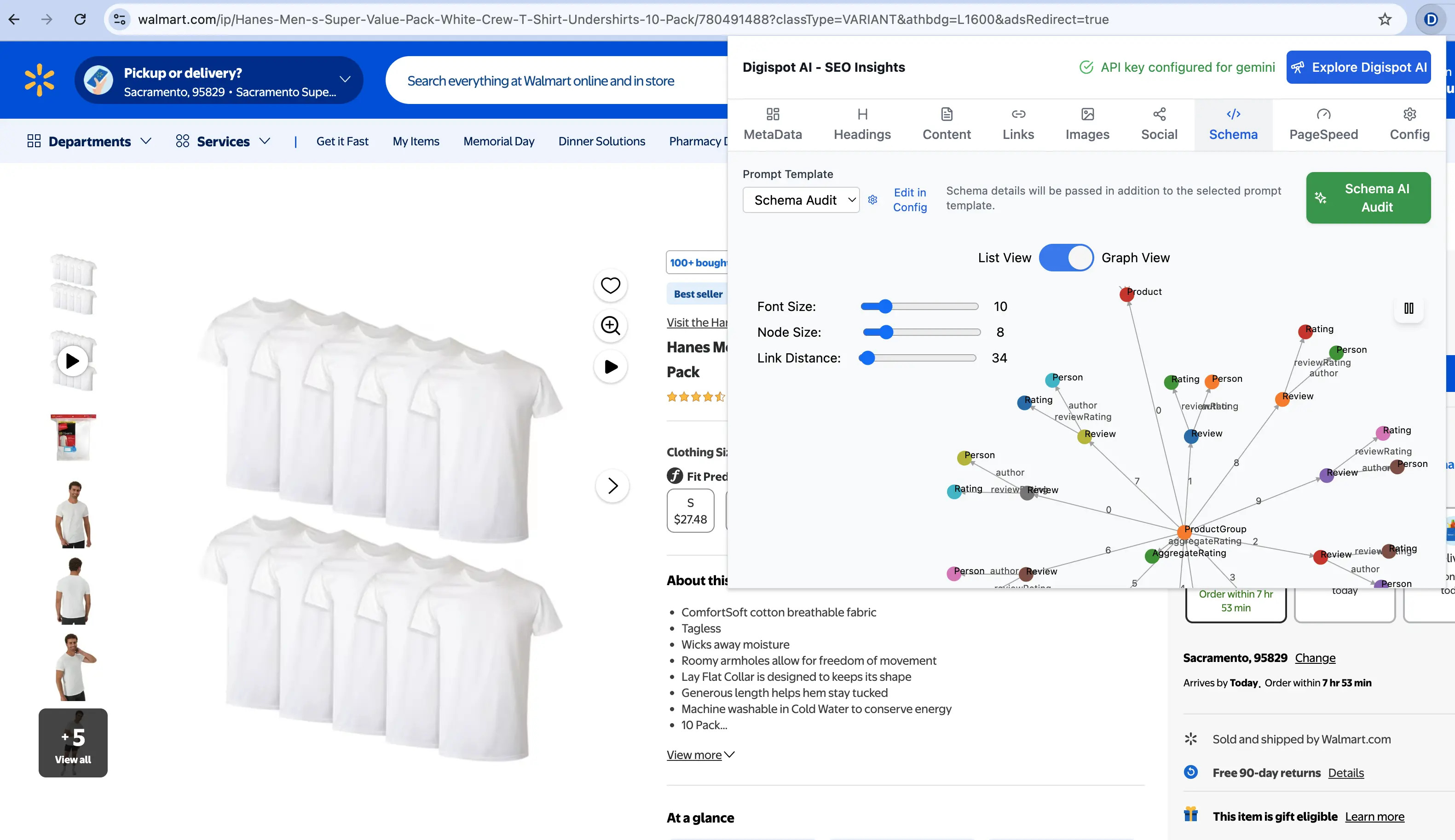
Schema markup is a snippet of code that helps search engines understand the information on your page and display it as a "rich snippet" in search results. This extra visibility can dramatically improve your click-through rate.
When you implement structured data correctly, Google can display price, availability, and star ratings directly in the search results. This "visual real estate" grabs attention before a user even visits your site.
Priority schema types:
- Product schema: Essential for price, SKU, and availability status.
- Review schema: Aggregates customer feedback to show star ratings.
- FAQ schema: Answers common questions directly in the SERP.
- Organization schema: Establishes brand credibility and logo association.
Use the free Schema Markup Generator to create valid structured data in minutes without writing code.
Product SEO: Making Every Product Page a Traffic Magnet
Writing Product Descriptions That Rank and Sell
Your product descriptions need to satisfy both Google's algorithms and customer intent. This means naturally incorporating keywords while highlighting benefits that matter to your target audience.
Modern search engines use "semantic understanding." They don't just count keywords; they look for related entities. If you sell a coffee maker, Google expects to see terms like "brewing temperature," "filter type," "capacity," and "barista."
The formula that works:
- Primary keyword in the first 100 words naturally integrated.
- Benefits before features (how it solves problems, not just what it contains).
- Specific details that help with long-tail keywords ("fragrance-free moisturizer for sensitive skin").
- Social proof integration (customer quotes, usage statistics).
Example transformation: ❌ "Our advanced retinol serum contains 0.5% retinol in a hydrating base." ✅ "Transform your skin overnight with our gentle retinol serum, specifically formulated for sensitive skin. Unlike harsh retinol treatments that cause irritation, our 0.5% encapsulated retinol delivers anti-aging benefits while hyaluronic acid keeps skin hydrated and comfortable."
Get instant feedback on your descriptions with our free On-Page SEO Analysis tool.
Image Optimization for Google and Pinterest
Visual search is huge for B2C products. Optimizing images helps you rank in Google Images, Pinterest, and visual search features while improving page load speeds.
Don't ignore the technical side of images. Ensure your images have proper dimensions (width and height attributes) to prevent layout shifts (CLS), another Core Web Vital.
SEO-friendly image strategy:
- Descriptive file names:
organic-vitamin-c-serum-before-after.jpgnotIMG_2847.jpg. - Alt text that describes and sells: "Before and after photos showing reduced dark spots after 8 weeks of using organic vitamin C serum."
- Multiple angles and contexts: Product shots, lifestyle images, ingredient close-ups, usage demonstrations.
Customer Reviews as SEO Goldmines
Reviews provide fresh, user-generated content that Google loves while addressing customer concerns and building trust. They're also rich sources of long-tail keywords customers actually use.
A customer might describe your product as a "lifesaver for winter dryness"—a phrase you might never have thought to use in your marketing copy, but one that thousands of people search for.
Maximize review SEO value:
- Make reviews easily accessible to search engines (avoid JavaScript-only implementations).
- Encourage detailed reviews with photo incentives.
- Respond to reviews professionally (creates additional content and shows engagement).
- Use review content for product optimization (customers often mention keywords you missed).
Content Strategy: Beyond Product Pages
Educational Content That Drives Discovery
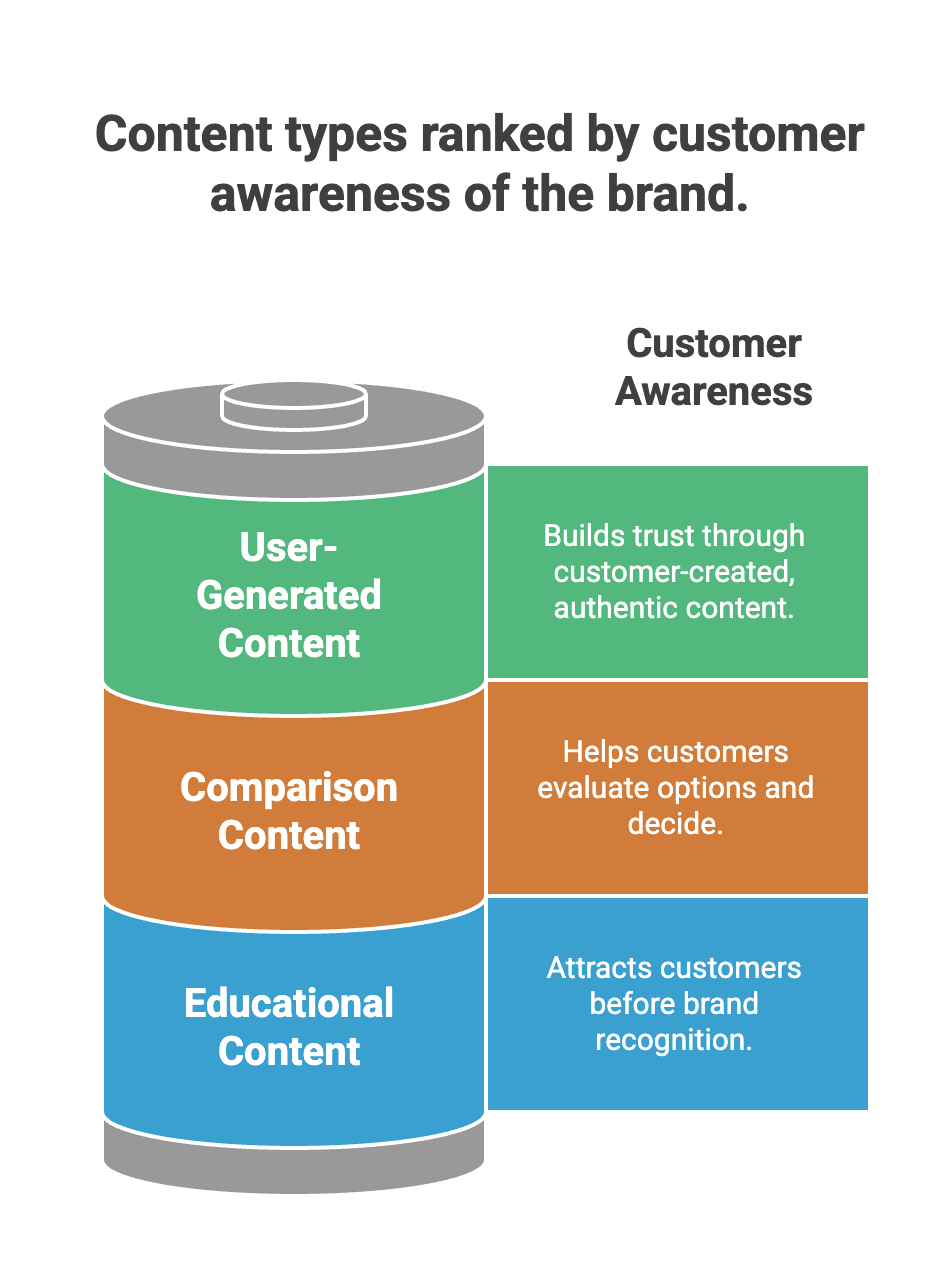
The biggest B2C SEO opportunity is educational content that attracts potential customers before they know your brand exists. This content should solve real problems while subtly positioning your products as solutions.
Effective educational content establishes your E-E-A-T signals, proving to Google that your site is a credible source of information, not just a storefront.
High-impact content types:
- How-to guides that showcase product usage.
- Problem-solving articles that address customer pain points.
- Ingredient education that builds trust and expertise.
- Lifestyle content that connects products to aspirational outcomes.
Example content cluster for a fitness brand:
- Hub page: "Complete Guide to Home Workouts for Busy Parents"
- Supporting content: "15-Minute HIIT Workouts," "Creating a Home Gym on a Budget," "Workout Nutrition for Time-Strapped Moms"
- Product integration: Equipment recommendations, supplement guides, meal prep tools.
Comparison Content That Captures Consideration
When customers are evaluating options, comparison content helps them make decisions while positioning your products favorably. This content often ranks well because it directly matches search intent.
Be honest in these comparisons. If a competitor is better for a specific use case, say so. This transparency builds immense trust.
Effective comparison strategies:
- Honest competitor comparisons that highlight your unique advantages.
- "Best of" roundups that include your products alongside others.
- Alternative guides ("Looking for a gentler alternative to retinol?").
- Feature comparison charts that make decision-making easy.
User-Generated Content That Builds Trust
Customer-created content is powerful for SEO because it's authentic, keyword-rich, and continuously updated. It also builds social proof that improves conversion rates.
UGC strategies that boost SEO:
- Customer photo contests with branded hashtags.
- Video testimonials optimized for YouTube and website embedding.
- Customer success stories that target long-tail keywords.
- Community forums that generate fresh content and internal linking opportunities.
Link Building for B2C: Reviews, PR, and Partnerships
Getting Product Reviews from Bloggers and Influencers
Product reviews from trusted sources provide high-quality backlinks while building brand awareness. The key is targeting reviewers whose audiences match your ideal customers.
Unlike B2B link building, which often relies on guest posting, B2C link building relies on getting your physical product into the hands of creators.
Outreach strategy that works:
- Identify micro-influencers in your niche (1K-100K followers often have better engagement).
- Personalize your pitch by referencing their recent content.
- Make it easy by providing product information, high-quality images, and key talking points.
- Follow up professionally but don't be pushy.
Turning Customers into Content Creators
Your happiest customers are often willing to create content featuring your products. This generates natural backlinks while providing authentic social proof.
Customer advocacy programs:
- Ambassador programs that reward content creation with discounts or free products.
- Customer spotlight features on your blog and social media.
- User-generated content campaigns with clear guidelines and incentives.
- Referral programs that encourage sharing.
PR Strategies That Generate Backlinks
Media coverage provides authoritative backlinks while building brand credibility. B2C brands often have natural PR opportunities that B2B companies lack.
Don't just aim for the New York Times. Local news, niche industry magazines, and hobbyist blogs often send more qualified traffic and are easier to secure.
PR angles that work for B2C startups:
- Founder story (especially if there's a personal connection to the problem you're solving).
- Industry trend commentary (position yourself as an expert in your niche).
- Product innovation (new ingredients, sustainable packaging, technology integration).
- Community impact (social responsibility, charitable partnerships).
Measuring Success: KPIs That Matter for B2C
Organic Traffic to Revenue Conversion
The ultimate measure of B2C SEO success is how organic traffic converts to revenue. Track not just traffic growth, but revenue per organic visitor and customer lifetime value from organic channels.
Avoid "vanity metrics" like total impressions if they don't correlate with sales. Focus on commercial intent.
Key metrics to monitor:
- Organic conversion rate by traffic source and landing page.
- Average order value from organic vs. other channels.
- Customer lifetime value for organic customers.
- Revenue attribution across the full customer journey.
Product Page Ranking Improvements
Monitor how your product pages rank for target keywords, including branded terms, product categories, and competitor comparisons.
Ranking metrics that matter:
- Primary keyword positions for key product pages.
- Long-tail keyword rankings that drive qualified traffic.
- Competitor comparison rankings (ranking for "[competitor] alternative").
- Featured snippet captures for product-related queries.
Brand Search Growth
As your SEO efforts build brand awareness, you should see increases in branded searches—people specifically looking for your company or products. This is a strong proxy for overall brand health.
Brand metrics to track:
- Branded keyword search volume growth over time.
- Direct traffic increases (often from people who heard about you elsewhere).
- Social media mentions that correlate with search volume spikes.
- Customer survey responses about how they discovered your brand.
Case Study: How Glow Recipe Grew from Startup to SEO Powerhouse
The Challenge: Breaking into the crowded skincare market dominated by established brands with massive marketing budgets.
The Strategy:
- Educational content first: Created comprehensive guides about K-beauty ingredients and routines.
- Product-led SEO: Optimized product pages for specific skin concerns and ingredient searches.
- Community building: Encouraged customer reviews and user-generated content.
- Influencer partnerships: Collaborated with skincare enthusiasts and beauty editors.
The Results:
- 300% organic traffic growth in 18 months.
- Ranking #1 for high-value keywords like "watermelon skincare" and "glass skin routine."
- 40% of new customer acquisition through organic search.
- Reduced customer acquisition cost by 65% compared to paid advertising.
Key Lessons:
- Education builds trust before selling products.
- Specific targeting beats broad keywords every time.
- Customer content is more powerful than brand-created content.
- Consistency and patience pay off in compound growth.
Reference: Glow Recipe success story with SEO
The SEO Ranking Factors That Make or Break B2C Success
Understanding Google's ranking factors helps you prioritize where to invest your limited time and resources. Here's what actually moves the needle for B2C startups:
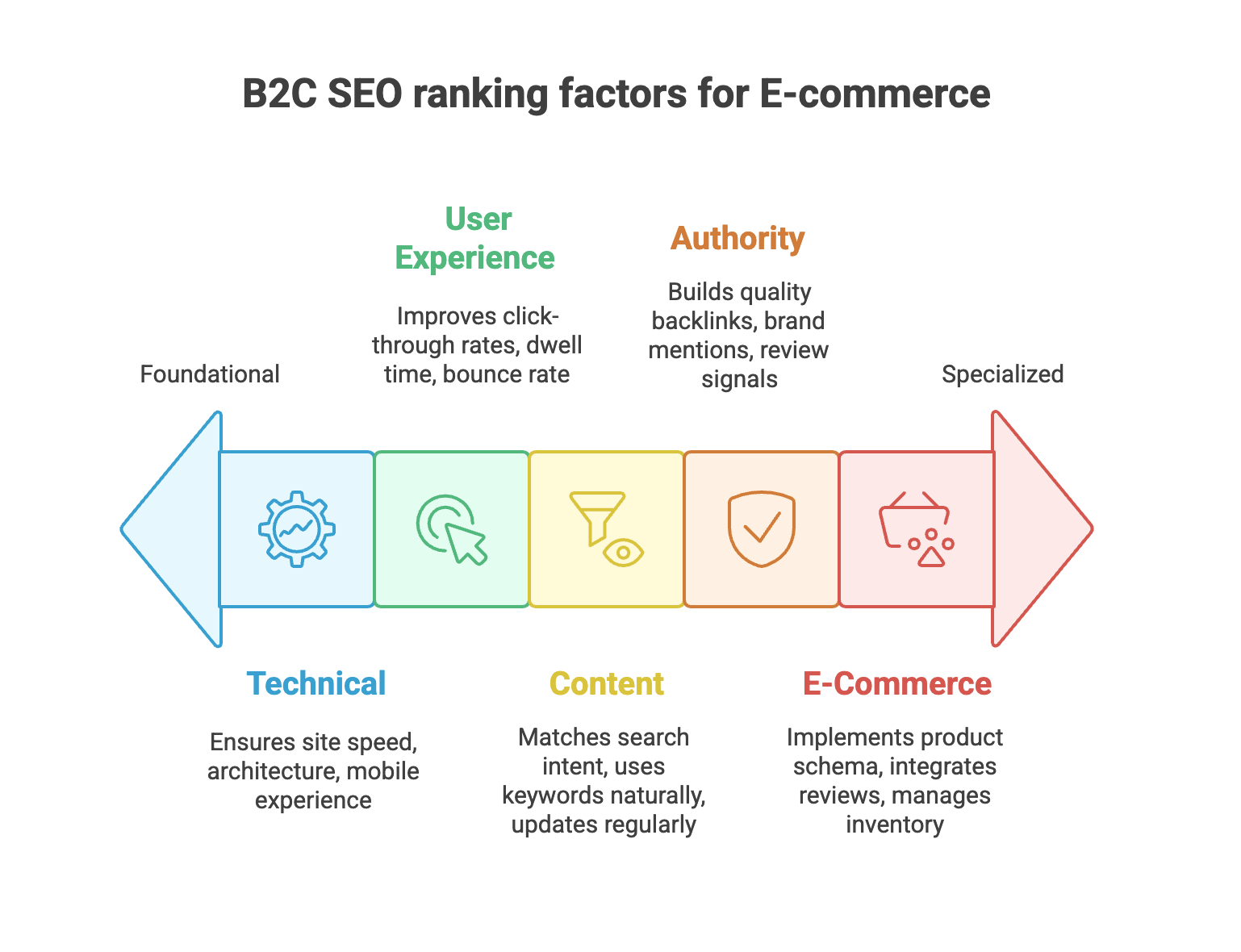
Technical Performance (25% Impact)
Core Web Vitals: Page speed, visual stability, and interactivity directly impact rankings. Mobile Experience: 60%+ of B2C searches happen on mobile—poor mobile experience kills rankings. Site Architecture: Clean URLs, logical hierarchy, and proper internal linking strategies ensure crawlers can find every product.
How Digispot AI helps: Automated technical audits identify critical issues by impact level. Instead of guessing what to fix first, AI prioritizes the technical changes that will improve rankings fastest.
Content Relevance (30% Impact)
Search Intent Matching: Your content must align with what searchers actually want to find. Keyword Context: Natural keyword usage within comprehensive, helpful content. Content Freshness: Regular updates and new content signals active, current information.
How Digispot AI helps: Content gap analysis reveals exactly what topics your competitors rank for but you don't. AI identifies search intent patterns and suggests content that matches what Google wants to rank.
User Experience Signals (20% Impact)
Click-Through Rates: Higher CTRs from search results indicate content relevance. Dwell Time: How long users stay on your pages after clicking from search. Bounce Rate: Quick exits suggest content doesn't match search intent.
How Digispot AI helps: Integrated Google Analytics data shows which pages perform well and which need optimization. AI suggests improvements based on user behavior patterns across your site.
Authority & Trust (15% Impact)
Quality Backlinks: Links from relevant, authoritative sites in your industry. Brand Mentions: Unlinked mentions of your brand across the web. Review Signals: Customer reviews and ratings influence local and product search rankings.
How Digispot AI helps: Competitor backlink analysis reveals where your competition gets links and identifies replicable opportunities. Get instant SEO insights on any page with our free Chrome extension.
E-Commerce Specific Factors (10% Impact)
Product Schema: Structured data that helps Google understand your products. Review Integration: Customer reviews provide fresh content and trust signals. Inventory Signals: Stock availability and updated product information.
How Digispot AI helps: WordPress plugin automatically implements proper schema markup and optimizes product pages based on performance data from thousands of successful e-commerce sites.
How AI-Powered Platforms Accelerate B2C SEO Success
The modern search landscape includes more than just Google. Users are asking complex questions to AI platforms like ChatGPT, Perplexity, and Claude. Optimizing for these engines—known as AEO—requires a different approach than traditional SEO.
Traditional SEO vs. AI-Powered Approach
Traditional Method: Spend weeks manually auditing your site, analyzing competitors, and researching keywords. AI-Powered Method: Get comprehensive insights in minutes, with clear prioritization and implementation guidance.
Traditional Method: Guess which content to create based on broad keyword research. AI-Powered Method: Identify specific content gaps and opportunities based on competitor analysis and search intent data across multiple LLMs.
Traditional Method: Make changes and wait months to see if they worked. AI-Powered Method: Track performance in real-time with integrated analytics and automated optimization suggestions.
The Speed Advantage for B2C Startups
Faster Issue Identification: AI audits your entire site in minutes, categorizing issues by business impact and implementation effort. Smarter Content Planning: Instead of creating content and hoping it ranks, AI identifies proven content opportunities in your niche. Automated Optimization: Browser extensions and plugins optimize as you work, eliminating the lag between insight and action. Integrated Intelligence: GSC and GA4 data combined with site analysis provides unified insights traditional tools can't match.
Your Fast-Track Implementation Plan
Execution is the differentiator. Many startups know what to do, but few do it consistently. Follow this timeline to build momentum.
Month 1: Foundation & Quick Wins
- Week 1: AI audit + fix top 5 technical issues. Focus on crawl errors and broken links first. Digispot AI can help you identify and fix these issues automatically.
- Week 2: Optimize 10 highest-traffic pages with AI recommendations. Rewrite meta descriptions and title tags for higher CTR.
- Week 3: Implement automated schema markup and review systems. Ensure your "Review" schema is validating correctly.
- Week 4: Launch content creation based on AI-identified gaps. Publish your first "Pillar Page" covering a core customer problem.
Month 2-3: Scale & Systematize
- Create content systematically using AI opportunity analysis. Aim for 2-4 high-quality articles per week.
- Build link acquisition campaigns targeting AI-identified prospects. Start with unlinked brand mentions.
- Implement automated monitoring for competitor activities and ranking changes. Watch for when they change their pricing or product titles.
- Optimize conversion paths based on user behavior insights. Look for pages with high traffic but low conversion.
Expected Results:
- Month 1: 30-50% improvement in technical scores, 15-25% traffic increase.
- Month 3: 100-200% organic traffic growth, established content production system.
For a comprehensive list of what to check, refer to our SEO Audit Checklist 2026 to ensure nothing slips through the cracks.
Tools and Resources for B2C SEO Success
Essential Free Tools for B2C SEO
Google Tools:
- Google Search Console: Monitor search performance and technical issues.
- Google Analytics: Track traffic, conversions, and user behavior.
- Google My Business: Essential for any physical presence or local customers.
Keyword Research:
- Ubersuggest: Free keyword research with competition analysis.
- Answer The Public: Discover question-based keywords customers actually ask.
- Google Keyword Planner: Basic search volume and competition data.
When to Invest in Premium Tools
As your traffic and revenue grow, premium tools become worthwhile investments that pay for themselves through improved efficiency and better insights.
ROI-focused tool selection:
- When organic traffic reaches 10K+ monthly visitors: Invest in comprehensive SEO platform.
- When managing 100+ products: Consider e-commerce-specific SEO tools.
- When expanding internationally: Invest in multi-language keyword research tools.
AI-Powered Optimization for Faster Results
Modern AI-powered SEO platforms can compress months of manual work into hours of intelligent analysis and optimization.
How AI accelerates B2C SEO:
- Automated technical audits that prioritize fixes by business impact.
- Content gap analysis that identifies high-value opportunities competitors are missing.
- Product page optimization suggestions based on successful patterns across thousands of sites.
- Integrated analytics that connect SEO efforts directly to revenue outcomes.
The B2C startups that embrace AI-powered SEO today will have sustainable competitive advantages tomorrow. They'll build direct customer relationships, reduce acquisition costs, and create growth engines that compound over time.
Start Building Your Digital Empire Today
The most successful B2C founders don't choose between marketplaces and SEO—they use SEO to build sustainable direct relationships while marketplaces provide additional distribution. Start with a comprehensive audit to discover your biggest opportunities, then systematically build the content and optimization systems that will drive long-term growth.
Don't let technical debt or content gaps slow you down. The tools exist to make this process faster and more effective than ever before.
Ready to improve your search visibility? Try Digispot AI for comprehensive website audits and actionable recommendations that turn your B2C startup into a search engine leader.
Transform your B2C startup's growth trajectory with AI-powered SEO. Get a free site audit and discover optimization opportunities that your competitors are missing.
Audit any page in seconds
300+ SEO checks including Core Web Vitals, schema markup, meta tags, and AI readiness — trusted by 1000+ SEO experts and marketers.
Frequently Asked Questions
Here are some of our most commonly asked questions. If you need more help, feel free to reach out to us.
Written by
Maya Krishnan
Digital growth expert
Maya is a seasoned expert in web development, SEO, and digital strategy, dedicated to helping businesses achieve sustainable growth online. With a blend of technical expertise and strategic insight, she specializes in creating optimized web solutions, enhancing user experiences, and driving data-driven results. A trusted voice in the industry, Maya simplifies complex digital concepts through her writing, empowering readers with actionable strategies to thrive in the ever-evolving digital landscape.