Fashion Ecommerce SEO: Rank Your Apparel Store Higher
Master fashion ecommerce SEO with proven strategies for product pages, category optimization, and apparel keywords to boost clothing store rankings.
 Maya Krishnan
You have the perfect collection. The fabrics are high-quality, the designs are on-trend, and your brand story is compelling. Yet, traffic remains stagnant while competitors with inferior products dominate the search results. Why? The answer usually lies in the invisible architecture of your online store: Search Engine Optimization (SEO).
Fashion ecommerce is ruthlessly competitive. You aren't just fighting for attention against other boutiques; you are competing with massive marketplaces, established department stores, and agile fast-fashion giants. To win, you need more than just great clothes. You need a digital strategy that puts your products directly in front of shoppers the moment they realize they need a new look.
This guide isn't about generic SEO advice. It explores the specific, nuanced tactics required for apparel brands—from handling complex faceted navigation to optimizing for visual search. Let’s unpack how to tailor your online presence to attract a flood of high-intent shoppers to your digital racks.
What is Fashion Ecommerce SEO?
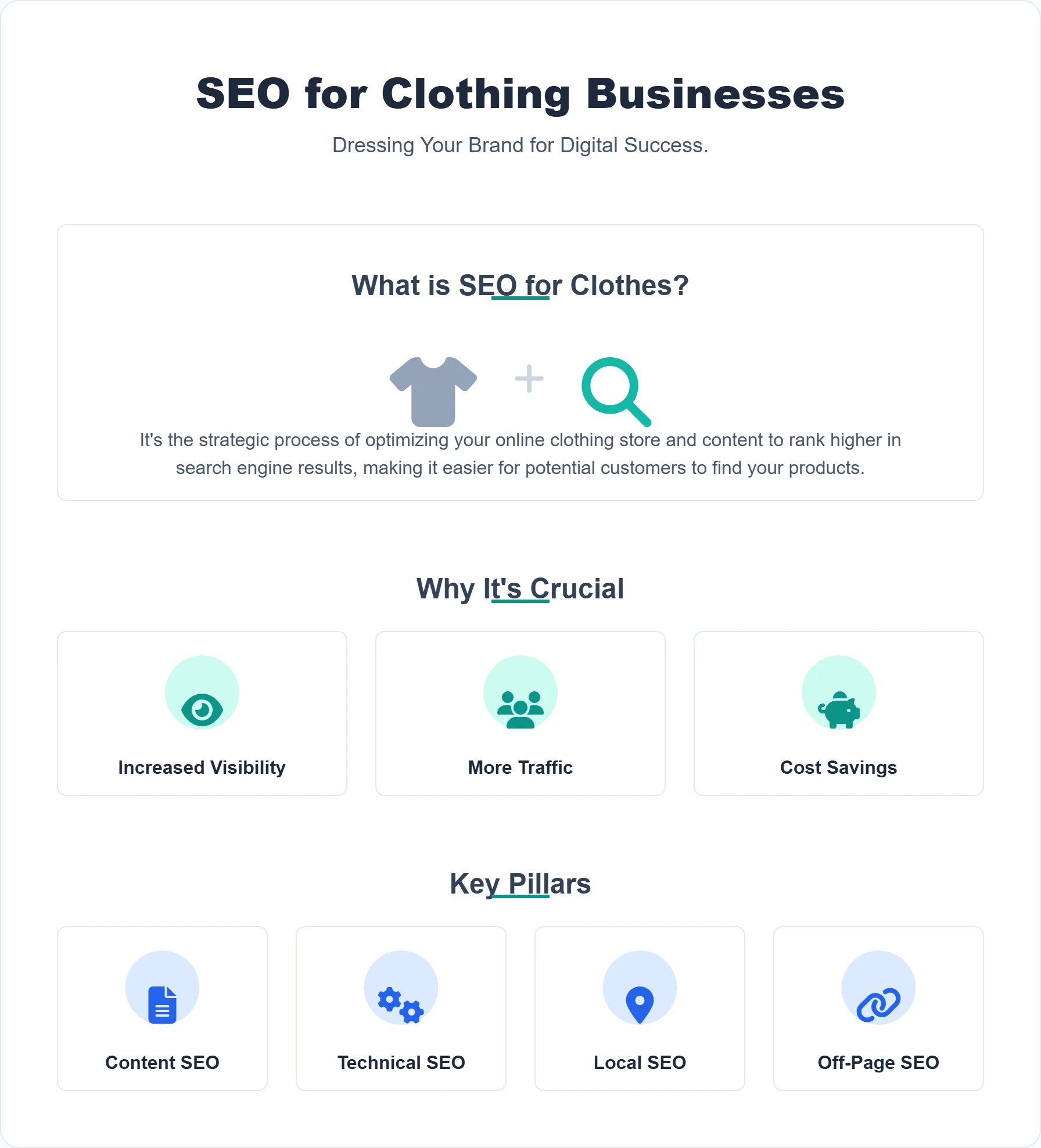
Fashion ecommerce SEO is the process of optimizing an online apparel store to rank higher in organic search results. It is the digital equivalent of securing a window display on the world's busiest shopping street.
However, unlike a physical window, this display needs to morph instantly to match what the passerby is looking for. When a user searches for "vintage leather motorcycle jacket," your site needs to present that specific item, not a generic homepage.
It involves a sophisticated mix of technical performance, content strategy, and authority building. You must help search engines like Google and Bing understand your inventory structure—colors, sizes, fabrics, and styles—so they can match your products with specific user queries.
The Rise of AEO in Fashion
We are entering a new era of Answer Engine Optimization (AEO). Shoppers are increasingly using AI tools like ChatGPT, Claude, and Google's AI Overviews to find clothing. They ask complex questions like, "What should I wear to a semi-formal outdoor wedding in October?"
Fashion SEO now requires optimizing for these conversational queries. Your content must provide direct answers and structured data that these AI models can easily parse and cite.
Why Fashion Ecommerce SEO Matters for Your Brand
In a crowded marketplace, relying solely on paid ads is a risky strategy. Customer Acquisition Costs (CAC) are rising, and ad performance fluctuates. Organic search provides a stable foundation for growth.
1. Reducing Reliance on Paid Spend
Paid advertising stops working the second you stop paying. SEO is an asset that appreciates over time. A well-optimized category page for "women's linen trousers" can drive traffic for years without a daily ad budget. This lowers your blended CAC and improves overall profitability.
2. Capturing High-Intent Shoppers
Shoppers searching for specific terms like "black silk slip dress midi" are often ready to buy. They have moved past the discovery phase and are in the consideration or decision phase. Ranking for these specific, long-tail keywords brings you visitors with a much higher likelihood of converting compared to generic social media traffic.
3. Building Brand Authority
High rankings signal trust. When a user sees your brand appear repeatedly for style-related queries—whether it's "how to style a trench coat" or "best winter boots for walking"—they begin to associate your brand with expertise. This fosters loyalty and increases the lifetime value (LTV) of your customers.
4. Enhancing User Experience (UX)
Google’s ranking factors often align with what users want. Fast loading times, mobile responsiveness, and intuitive navigation are crucial for SEO. By optimizing for search engines, you inadvertently build a better, faster, and more enjoyable shopping experience for your human visitors.
Key Pillars of Fashion Ecommerce SEO
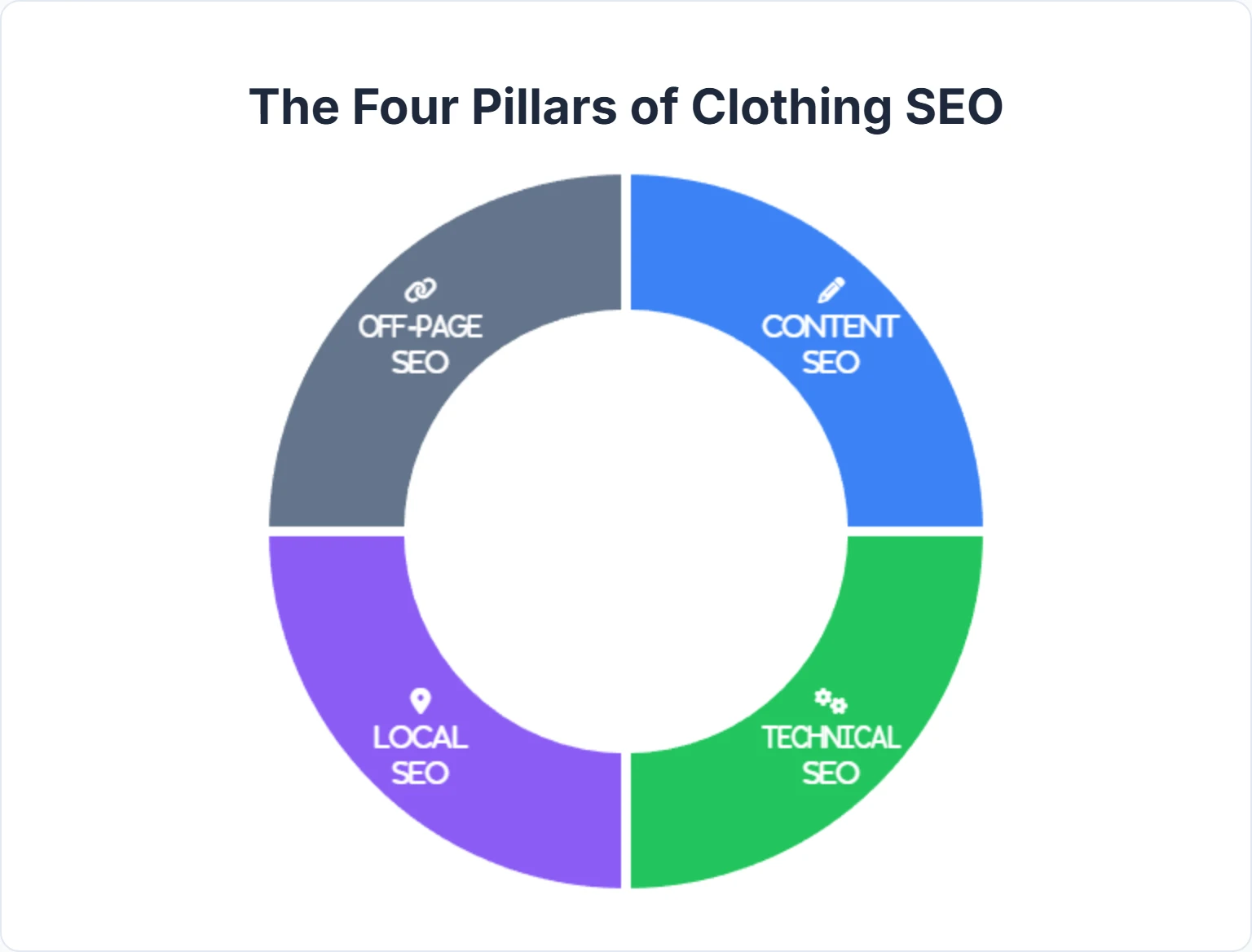
Success in fashion SEO requires a holistic approach. You cannot rely on keywords alone; you need a robust technical foundation and off-page authority.
Content SEO: weaving Your Brand Narrative
In fashion, content serves two masters: the algorithm and the shopper.
- Evocative Product Storytelling: Standard manufacturer descriptions hurt your rankings. You need unique, sensory-rich text. Describe the drape of the fabric, the texture of the material, and the occasion suitability.
- Strategic Category Pages: These are your SEO powerhouses. A category page for "Men's Boots" needs substantial content—not just a grid of products. Add an introductory paragraph explaining your collection's USP and a footer section with styling tips or FAQ content to add semantic weight.
- Trend-Based Blogging: Fashion is seasonal and trend-driven. Use your blog to capture top-of-funnel traffic. Articles like "Summer 2026 Shoe Trends" or "The Ultimate Guide to Layering" attract users who aren't ready to buy yet but are interested in your niche.
- Visual Optimization: Fashion is visual. Your images must work hard. High-resolution photos are non-negotiable, but they must be compressed (using Next-Gen formats like WebP) to ensure speed. Learn more about core web vitals to understand how image loading affects your rankings.
Technical SEO: The Skeleton of Your Store
Technical SEO for ecommerce is notoriously complex due to the sheer volume of pages.
- Faceted Navigation Control: This is the biggest technical challenge for fashion sites. Users filter by size, color, price, and material. If every combination creates a new indexable URL, you will suffer from "index bloat," wasting your crawl budget on low-value pages. You must implement proper canonical tags or
noindexrules for parameters that don't have search demand. - Mobile-First Architecture: Fashion shopping is predominantly mobile. Your site must offer a seamless thumb-scrolling experience. CLS (Cumulative Layout Shift) is a common issue where images pop in and push text down—this frustrates users and hurts rankings.
- Structured Data: Implementing Schema markup is like handing Google a catalog with sticky notes highlighting exactly what everything is. It powers the rich snippets that show price, availability, and star ratings directly in search results.
Local SEO: Bridging Online and Offline
If you have brick-and-mortar boutiques, local SEO connects your physical presence with digital intent.
- "Near Me" Optimization: Optimize for queries like "dress shops near me" or "men's suits in [City]."
- Google Business Profile: Keep your hours updated, especially during holidays. Upload photos of your latest storefront displays to encourage foot traffic.
- Local Inventory Ads (LIA): While paid, these connect with your local feed to show users that a specific item is in stock at a store nearby, driving immediate visits.
Off-Page SEO: Digital PR and Reputation
You need the fashion world to talk about you.
- Influencer Collaborations: Partner with influencers not just for social exposure, but for backlinks. Ask them to link to specific product or category pages in their blog posts or "shop the look" pages.
- Unlinked Mentions: Fashion brands often get mentioned in magazines or blogs without a link. Reach out to these publishers and politely ask them to turn the brand mention into a hyperlink.
- Visual Search Platforms: Pinterest and Google Lens are massive drivers. Optimizing your visual assets increases the chance of appearing in these discovery-based search engines.
How to Optimize Your Fashion Ecommerce Store: Step-by-Step
Transforming your store's SEO performance is a journey. Break it down into these actionable phases to manage the complexity effectively.
1. Unearthing the Right Keywords: Your Shopper's Language
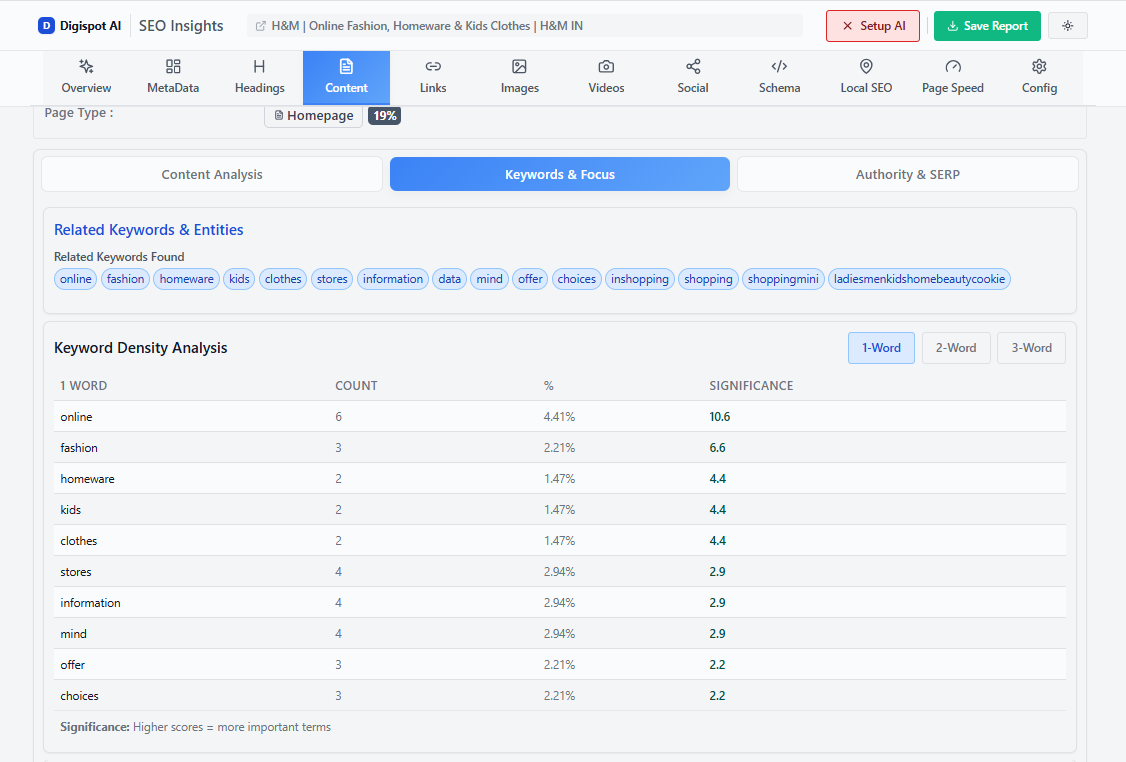
Keyword research in fashion requires understanding the nuance of style. A "shirt" can be a "blouse," "top," "button-down," or "tee."
- Identify Core Categories: Start with your main navigation. "Dresses," "Shoes," "Accessories."
- Layer the Attributes: Add modifiers that describe fabric, occasion, and fit.
- Fabric: "Cotton," "Silk," "Leather," "Denim."
- Style: "Bohemian," "Minimalist," "Vintage," "Streetwear."
- Occasion: "Wedding guest," "Office wear," "Party," "Gym."
- Fit: "Petite," "Plus size," "Oversized," "Slim fit."
- Target Long-Tail Specifics: The magic happens in the long tail. "Women's oversized beige trench coat" is a keyword with high conversion intent.
- Analyze Seasonality: Use Google Trends to spot when demand spikes. "Puffer jackets" peak in November; "swimwear" peaks in May. Plan your content calendar accordingly.
2. Mastering On-Page Optimization: Crafting Your Digital Display
Once you have your keyword map, apply it to your pages with surgical precision.
- Title Tag Strategy: This is your headline on Google. Follow a formula:
[Product/Category Name] | [Key Feature/Benefit] | [Brand Name].- Good: "Men's Leather Jackets"
- Better: "Men's Genuine Leather Biker Jackets | Vintage Style | BrandName"
- Magnetic Meta Descriptions: Treat this as ad copy. Include a USP (Unique Selling Proposition) like "Free Shipping" or "Sustainable Materials" and a clear Call to Action (CTA).
- Example: "Shop our collection of sustainable linen dresses. Breathable, eco-friendly fabrics perfect for summer. Free shipping on orders over $100."
- Header Hierarchy: Use H1 for the main product name. Use H2s for "Product Details," "Sizing," and "Care Instructions." This structure helps screen readers and search bots digest the page.
- Clean URL Structure: Avoid messy parameters like
?id=39281. Use hierarchical URLs:yourbrand.com/women/dresses/maxi-dresses.
Pro Tip: Audit your current URL structure to identify weak points. Digispot AI can help you identify and fix these issues automatically with AI-powered audits analyzing 300+ ranking factors.
3. Creating Engaging Content: Becoming a Fashion Authority
To rank for informational queries, you need a content hub.
- The "Hub and Spoke" Model: Create a central "Ultimate Guide to Denim" (Hub) and link out to smaller articles like "How to Wash Jeans," "Skinny vs. Straight Leg," and "History of Denim" (Spokes). This builds topical authority.
- Buying Guides: "How to Measure Your Ring Size" or "The Complete Guide to Bra Fitting." These utility pages attract huge traffic and reduce return rates.
- Lookbooks: Create pages based on "looks" (e.g., "The Paris Weekend Edit"). These allow you to target lifestyle keywords and bundle products together.
- Author E-E-A-T: Google cares about who is writing the content. Ensure your blog posts have author bios. If you have a fashion designer or stylist on your team, have them review or write the content to demonstrate Expertise, Experience, Authoritativeness, and Trustworthiness. Learn more about E-E-A-T guidelines to boost your credibility.
4. Building a Strong Technical Foundation: Ensuring Your Site Runs Smoothly
A slow fashion site is a leaky bucket. Users will not wait for high-res images to load.
-
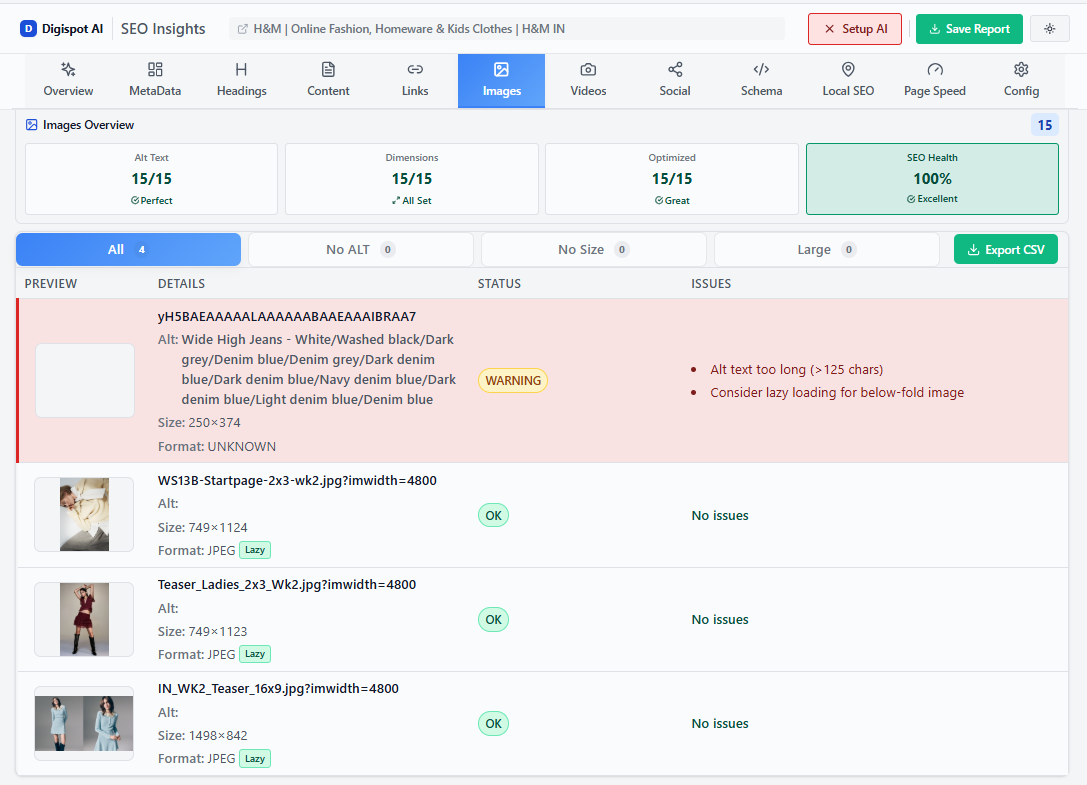
Image Compression: Use tools to compress images without losing quality. Serve images in WebP format, which is smaller and faster than JPEG or PNG.
-
Lazy Loading: Implement lazy loading so that images below the fold (screen bottom) only load when the user scrolls down. This drastically improves initial load time.
-
Handling Out-of-Stock Products: Don't just delete the page (returning a 404 error). This destroys any SEO value that page had accumulated.
- Temporary Out of Stock: Keep the page live, label it "Out of Stock," and offer a "Notify Me" email signup. Show related products.
- Permanently Discontinued: 301 redirect the URL to the most relevant equivalent category or a newer version of the product.
-
Internal Linking: Link from your blog posts to your product pages. If you write about "Summer Trends," link the text "floral maxi dress" directly to your floral dress category. Check our guide on internal linking strategies for more architectural tips.
5. Leveraging Schema Markup: Speaking Google's Language
Schema is the translator between your database and Google's index.
- Product Schema: Crucial. Must include
name,image,description,brand,sku,price,availability, andpriceCurrency. - Review Schema:
AggregateRatingallows stars to appear in search results. This social proof increases Click-Through Rate (CTR). - BreadcrumbList: Helps Google understand the site hierarchy (Home > Women > Shoes > Boots).
- VideoObject: If you use catwalk videos or styling clips, mark them up to appear in Google Video search.
Manually writing JSON-LD code is prone to errors. Use the free Schema Markup Generator to create valid structured data in minutes.
6. Monitoring and Improving Performance: The Continuous Loop
SEO is a marathon, not a sprint. You need data to steer the ship.
- Google Search Console (GSC): Monitor the "Index Coverage" report to find pages with errors. Check the "Performance" tab to see which queries are driving traffic.
- Core Web Vitals: Keep an eye on LCP (Largest Contentful Paint), FID (First Input Delay), and CLS. These are direct ranking factors.
- Competitor Analysis: Watch your competitors. If they start ranking for a new term, investigate their content. What are they doing that you aren't?
Get instant SEO insights on any page—yours or a competitor's—with our free Chrome extension. It visualizes schema and checks for critical on-page errors in seconds.
Digispot AI: A Smart Ally for Your Clothing Brand's SEO Journey
Managing SEO for a catalog of thousands of SKUs is overwhelming for humans alone. This is where AI becomes a force multiplier. Digispot AI is designed to handle the scale and complexity of modern ecommerce.
Automated Site Audits: Digispot AI crawls your entire site—simulating both mobile and desktop users. It checks for over 200 ranking factors, identifying broken links, missing alt tags, duplicate meta descriptions, and schema errors. Instead of manually checking pages, you get a prioritized list of fixes.
AEO and Search Generative Experience: As search evolves into conversation, Digispot AI helps you optimize for Answer Engines. Our multi-LLM engine (integrating GPT-4, Claude, and Gemini) analyzes your content to ensure it answers user questions in a format that AI platforms can easily retrieve. This prepares your brand for the future where users ask their phone, "Find me a sustainable red dress for a holiday party," rather than typing keywords.
Content Generation at Scale: The Content Studio uses AI agents to generate SEO-optimized product descriptions and blog posts. Unlike generic AI text, these agents are trained on SEO best practices, ensuring keyword inclusion, proper formatting, and brand voice consistency. This allows you to launch new collections with fully optimized content instantly.
Unified Data Intelligence: By integrating GSC and GA4, Digispot AI connects the dots between rankings and revenue. You can see which technical fixes led to traffic increases and which keywords are driving actual sales, allowing you to calculate ROI on your SEO efforts.
Ready to improve your search visibility? Try Digispot AI for comprehensive website audits and actionable recommendations that turn data into revenue.
Essential SEO Elements for Clothing Brands
| SEO Category | Key Elements | Benefits |
|---|---|---|
| On-Page SEO | Optimized Product Descriptions, Title Tags, Meta Descriptions, Header Tags, Image Alt Text, Keyword-Rich Content | Higher rankings for specific products, increased click-through rates, better user understanding. |
| Technical SEO | Mobile Responsiveness, Page Speed, Clean URL Structure, SSL Certificate, Schema Markup, Faceted Navigation Handling | Improved crawlability and indexability, enhanced user experience, potential for rich snippets, prevents index bloat. |
| Content SEO | Blog Posts, Style Guides, How-To Articles, Category Page Descriptions, User-Generated Content | Establishes authority, attracts informational searches, drives organic traffic, builds trust and engagement. |
| Off-Page SEO | Quality Backlinks, Social Media Presence, Brand Mentions, Influencer Partnerships | Boosts domain authority, widens reach, indirect traffic and ranking benefits. |
| Local SEO | Google My Business Optimization, Consistent NAP Information, Local Inventory Ads | Drives foot traffic to physical stores, increases local visibility for "near me" searches. |
Common SEO Issues for Clothing Brands and How to Address Them
| Common SEO Issue | Impact on Rankings & User Experience | How to Address (with example) |
|---|---|---|
| Slow Page Loading Speed | High bounce rates, lower rankings, poor mobile experience | Compress images (WebP), enable browser caching, use a CDN. A tool like Digispot AI can pinpoint slow elements. |
| Duplicate Content (e.g., product descriptions) | Search engines struggle to identify original source, dilutes ranking power | Write unique descriptions for each product/color/size variant. Use canonical tags when variations are necessary. |
| Index Bloat from Filters | Wastes crawl budget on low-value pages (e.g., "size small + red + cotton") | Use canonical tags pointing to the main category page or use robots.txt to block specific parameter combinations. |
| Lack of Mobile Responsiveness | Poor user experience on smartphones, lower mobile search rankings | Implement a responsive design. Digispot AI audits can highlight specific mobile layout issues. |
| Missing or Poorly Optimized Alt Text for Images | Reduced visibility in image search, accessibility issues | Add descriptive alt text for all product images and lifestyle shots (e.g., alt="Women's organic cotton tunic in indigo blue"). |
| Generic or Missing Meta Descriptions | Lower click-through rates from search results, missed opportunity to entice users | Craft compelling, keyword-rich meta descriptions for every page, highlighting benefits and a call to action. |
| Broken Links (internal or external) | Frustrates users, wastes crawl budget, signals poor site maintenance | Regularly check for and fix broken links using website audit tools. Digispot AI can help identify these. |
| No Schema Markup for Products | Missed opportunity for rich snippets (stars, price), less visible in SERPs | Implement Product Schema. The Digispot AI Chrome extension can help visualize if schema is correctly detected. |
| Thin or Unengaging Content | Low user engagement, search engines may deem content unvaluable | Expand product descriptions, add more informational content (sizing guides, fabric details), and create blog posts. |
For a deeper dive into common pitfalls, check out our guide on common SEO mistakes to ensure you aren't unknowingly sabotaging your efforts.
Frequently Asked Questions About Fashion Ecommerce SEO
What is the most important factor for SEO in a clothing store? While many factors contribute, a strong combination of relevant keywords in high-quality, descriptive content (especially product pages) and a fast, mobile-friendly website forms the most critical foundation. Without these, even other efforts will struggle to yield results.
How can I find the best keywords for my clothing products? Start by brainstorming broad terms related to your products, then use keyword research tools to find longer, more specific (long-tail) phrases your target audience uses. Consider seasonal trends and customer intent (e.g., "buy," "review," "how to style"). Also, observe what keywords your successful competitors are ranking for.
What is schema markup, and how does it help my clothing brand? Schema markup is a specific type of code you add to your website to help search engines better understand the content on your pages. For clothing, it allows you to explicitly tell Google things like the product name, price, availability, and customer reviews. This can lead to "rich snippets" in search results, making your listings stand out with star ratings and pricing, which significantly increases click-through rates.
How often should I update my clothing website's SEO? SEO is an ongoing process, not a one-time fix. You should regularly (e.g., monthly or quarterly) monitor your rankings, analyze new keyword opportunities, update old content, fix technical issues, and keep an eye on competitor strategies. Tools that offer continuous auditing and performance tracking can make this process more efficient. See our SEO audit checklist for a routine maintenance schedule.
Can social media help my clothing brand's SEO? Yes, indirectly. While social media "likes" and "shares" aren't direct ranking factors, a strong social media presence drives traffic to your website, increases brand visibility, and can lead to more brand mentions and potential backlinks – all of which positively influence SEO. It amplifies your content and widens your audience reach.
How does a platform like Digispot AI simplify SEO for clothing businesses? Platforms like Digispot AI centralize and automate many complex SEO tasks. They can perform deep website audits (mobile and desktop), identify specific issues across 300+ ranking factors (content, tech SEO, local SEO, page performance), and provide actionable steps to resolve them. By integrating with Google Search Console and Analytics, it helps track performance, find new opportunities, and even generate SEO-optimized content, significantly saving time and resources while improving accuracy.
How do I optimize for visual search?
Visual search optimization is becoming critical. Ensure your images are high-quality, free of clutter, and well-lit. Use descriptive file names (e.g., leather-jacket-black.jpg instead of IMG_001.jpg) and detailed alt text. Submit an image sitemap to Google Search Console to ensure all your product photos are indexed.
Conclusion: Start Improving Your Rankings Today
The fashion industry never stands still, and neither does the world of search. Mastering SEO for your clothing brand requires a commitment to excellence—both in the quality of your clothes and the quality of your code. It is about understanding the intent behind every search query and providing an experience that inspires, informs, and satisfies.
By focusing on rich, storytelling content, maintaining a technically sound website, and leveraging the power of automation and AI, you can ensure your brand stands out in the crowded digital marketplace. Don't let your beautiful designs gather digital dust.
Try the free On-Page SEO Analysis tool to audit any URL instantly and take the first step toward dominating the search results. Your customers are looking for you—make sure you are the first thing they see.
References
- SEO Starter Guide | Google Search Central
- Google Search Console
- Google Analytics
- Mobile-First Indexing Best Practices | Google Search Central
- Core Web Vitals and Page Experience | Google Search Central
- Understand how structured data works | Google Search Central
- Product structured data | Google Search Central
- Image best practices for Google Images | Google Search Central
- Digispot AI - FREE On Page SEO Audit Tool
- Digispot AI - FREE Chrome Extension for SEO Insights
Audit any page in seconds
300+ SEO checks including Core Web Vitals, schema markup, meta tags, and AI readiness — trusted by 1000+ SEO experts and marketers.
Frequently Asked Questions
Here are some of our most commonly asked questions. If you need more help, feel free to reach out to us.
Written by
Maya Krishnan
Digital growth expert
Maya is a seasoned expert in web development, SEO, and digital strategy, dedicated to helping businesses achieve sustainable growth online. With a blend of technical expertise and strategic insight, she specializes in creating optimized web solutions, enhancing user experiences, and driving data-driven results. A trusted voice in the industry, Maya simplifies complex digital concepts through her writing, empowering readers with actionable strategies to thrive in the ever-evolving digital landscape.