Handmade Soap Business Online: From Instagram to Your Own Store
How to run a handmade soap business online in India, from the cosmetics licence and costing to packaging, your own store, shipping and SEO.
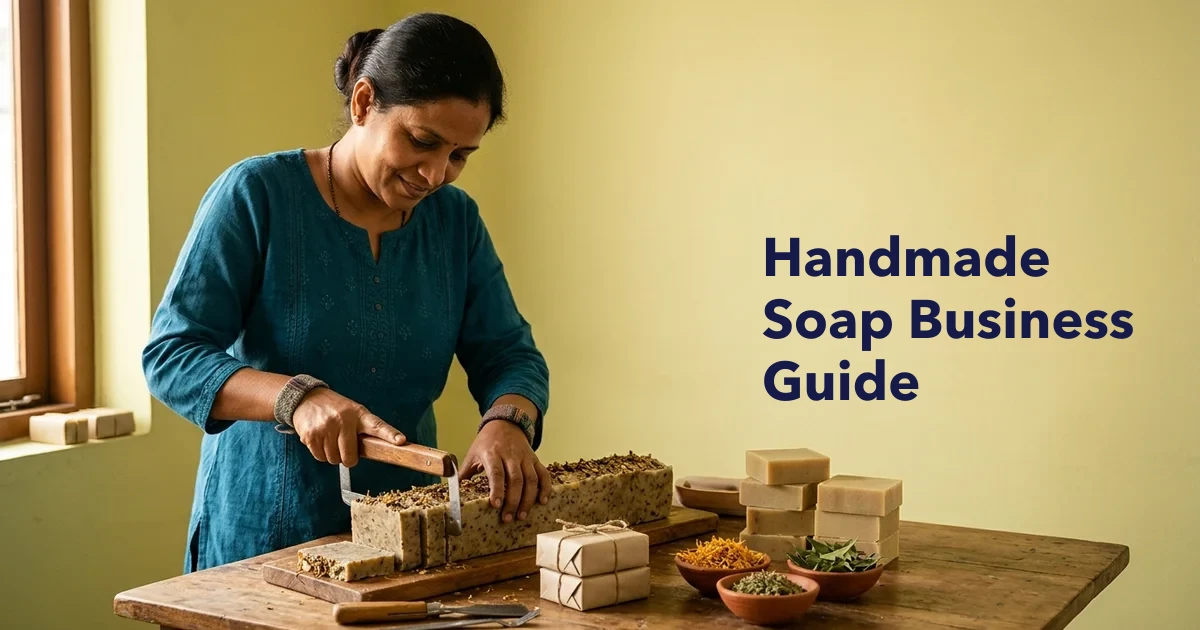
Starting a handmade soap business in India offers creative artisans a direct path to turn traditional craft into a profitable direct-to-consumer (D2C) brand. With increasing consumer demand for natural personal care items, organic cold-process bars, and herbal soaps, clear business planning converts home hobbies into sustainable enterprises. This guide outlines everything you need to manufacture, register, cost, package, ship, and market your products online, including how to move from selling through Instagram DMs to your own store.
How to Start a Handmade Soap Business in India: A Practical Step-by-Step Guide
Launching a commercial soap venture requires a clear focus on product differentiation, chemical safety, and efficient production workflows.
Choosing Your Niche & Soap Formulation
Launching a successful collection begins by narrowing your product scope rather than trying to appeal to every buyer. The Indian market features distinct buyer categories, including buyers looking for cold-process organic soaps, herbal soaps, and high-end aromatic gift sets. Cold-process soap making relies on combining plant oils with sodium hydroxide lye, preserving natural glycerin for superior moisturizing properties.
Melt-and-pour formulations offer a faster entry point for beginners, but cold-process and hot-process methods yield stronger brand positioning. Focus on formulations for specific skin types such as oily, sensitive, or dry skin, without claiming to treat skin conditions. Incorporating regional ingredients like turmeric, neem, sandalwood, saffron, or coconut milk creates an authentic value proposition that resonates with conscious shoppers.
Essential Tools and Raw Material Sourcing
Setting up your initial workspace requires specialized equipment dedicated exclusively to soap making for hygiene and safety. Your primary tool kit must include heat-resistant polypropylene containers, digital precision scales measuring to 0.1 grams, stainless steel stick blenders, silicone molds, and protective gear. Chemical safety requires eye goggles, nitrile gloves, and respirators during the lye-mixing phase.
Raw material sourcing dictates your product quality and gross profit margins. Source carrier oils such as extra virgin coconut, olive, castor, and palm oils from certified wholesale suppliers in bulk quantities. Verify that essential oils carry certificates of analysis (CoA) to guarantee purity. Secure sodium hydroxide with minimum 98% purity levels from accredited chemical vendors across major industrial distribution hubs.
Legal Licenses and Business Registration Requirements in India
Operating a personal care brand legally in India requires compliance with state cosmetic regulations and federal tax mandates.
Company Registration and GST Basics
Establishing a legal business structure forms the foundation for merchant account processing, corporate banking, and retail contracts. Most Indian soap artisans start as a Sole Proprietorship due to low compliance costs and simple setup protocols. As business revenue expands or external investment becomes necessary, converting to a Limited Liability Partnership (LLP) or Private Limited company offers personal asset protection.
GST registration becomes mandatory once turnover crosses the goods threshold (₹40 lakh in most states), or from the start if you ship goods to other states. Registering for GST early is beneficial even prior to reaching mandatory thresholds. It enables you to claim input tax credits on raw materials, packaging supplies, and machinery purchases while opening corporate accounts with domestic shipping vendors. Registering on the Udyam portal as an MSME can help you access government schemes and small-enterprise lending programs.
Cosmetic Safety and Package Labeling Compliance
Handmade soaps sold in India fall under the governance of the Drugs and Cosmetics Act, 1940 and the Cosmetics Rules, 2020. Commercial production requires a cosmetics manufacturing licence from your State Licensing Authority (the state drugs controller): you apply on Form COS-5, and the licence is issued on Form COS-8 after the premises are inspected. Manufacturing facilities must comply with Good Manufacturing Practices (GMP) regarding clean water supply, dust-free batch production, and dedicated chemical storage spaces. Confirm current requirements on the CDSCO website or with your state drugs control department.
Package labeling must comply strictly with Indian consumer protection standards. Every retail soap box or wrapper must display mandatory details clearly:
- Complete list of ingredients.
- Net weight in grams at the time of packing.
- Batch number, manufacturing date, and use-before date.
- Full name, physical address, and customer care contact details of the manufacturer.
- Manufacturing License Number and MRP (inclusive of all taxes).
Cost Breakdown and Profit Margins for Small-Batch Soap Makers
Building a resilient economic model requires precise calculation of batch yield, direct ingredient expenditure, operational overhead, and retail markups.
Calculating Unit Production Cost
Determining the exact unit cost of a single soap bar requires tracking every input that goes into a production batch. Calculate direct costs by summing raw ingredients, essential oils, additives, and primary packaging materials, then divide that total by the net batch yield. Factor in small production scrap losses during saponification, trimming, and curing.
An illustrative example (your numbers will differ):
| Cost Component | Cost per 100g Bar (INR) | Proportion of Total |
|---|---|---|
| Base Oils (Coconut, Olive, Castor) | ₹22.00 | 40% |
| Essential Oils & Fragrance | ₹12.00 | 22% |
| Botanicals & Clays | ₹4.00 | 7% |
| Kraft Paper Packaging & Label | ₹7.00 | 13% |
| Batch Utilities & Labor Allocation | ₹10.00 | 18% |
| Total Unit Cost | ₹55.00 | 100% |
Beyond direct material expenses, allocate indirect operational overheads across your monthly production output. These indirect expenses include testing labor, quality analysis, water purification, web hosting, studio rent, and prototype batches. Knowing your true unit production cost lets you set sustainable retail pricing without pricing out conscious D2C consumers.
Pricing Models for Retail vs Wholesale
Pricing your product lines properly protects your gross profitability across diverse distribution channels. Your D2C price must leave margin to absorb digital ad spending, payment processing fees, promotional discounts and the GST inside the MRP.
Wholesale distribution to boutiques, spas, and curated eco-stores operates on lower margins but yields higher sales volume. Wholesale buyers expect a sizeable discount off your direct retail price. Setting your consumer pricing carefully from day one ensures wholesale transactions remain profitable after accounting for bulk fulfillment and packing labor.
Designing and Packaging Your Soap Line for Online Sales
Visually compelling and eco-conscious packaging communicates your brand story immediately while protecting delicate bars during long-distance shipping.
Eco-Friendly Packaging Options
Modern shoppers who buy artisanal personal care products prioritize sustainable, minimal-waste packaging. Replace plastic shrink wrap with unbleached kraft paper wraps, recycled paper boxes, cotton drawstring bags, or biodegradable cigar bands. These natural materials protect cold-process soap bars by letting them breathe while reinforcing your position as an eco-conscious brand.
Ensure outer shipping boxes utilize sturdy corrugated cardboard designed to handle handling across Indian courier networks. Cushion orders using shredded kraft paper or compostable starch peanuts instead of plastic bubble wrap. Using custom brand stamps with soy-based inks on plain kraft mailers gives your unboxing experience a premium, hand-crafted feel while keeping packaging expenses reasonable. Packed weight sets your weight-slab shipping charges.
Product Photography That Drives Conversions
Because online shoppers cannot smell or touch your products, visual presentation drives digital purchase decisions. Shoot product imagery under bright, indirect natural sunlight to reflect true color tones and textural details of botanical add-ins. Highlight visual elements like swirling clays, embedded flower petals, or coarse coffee grounds using close-up macro shots.
Maintain consistent styling across your entire product line to give your storefront a clean, professional appearance. Show bars alongside their core natural ingredients—such as fresh aloe vera leaves, raw honeycombs, or cinnamon sticks—to communicate product benefits visually. Clean, high-resolution imagery lowers customer hesitation, reduces bounce rates, and supports higher product pricing.
Building Your E-Commerce Store for a Handmade Soap Brand
Many soap makers start with Instagram DMs, until orders get lost in chats. Selling directly through an independent storefront allows you to control your brand messaging, build direct buyer relationships, and avoid marketplace closing and shipping fees.
Setting Up UPI and Card Payments via Razorpay
Providing a simple checkout experience tailored to Indian consumer preferences is essential for converting store visitors into buyers. Integrating Razorpay into your independent ecommerce site allows customers to complete transactions using UPI apps like Google Pay, PhonePe, and Paytm, alongside credit cards, debit cards, and net banking.
UPI is how many Indian shoppers pay, making a fast mobile payment process critical for lowering abandoned carts. Displaying security trust badges and payment logos near your checkout button reassures first-time buyers that their financial transactions are completely safe.
Managing Pincode-Based Shipping and Order Desks
Fulfillment logistics in India rely on accurate pincode routing across regional courier partners, including India Post. Show the shipping charge for the buyer's pincode before they hit the checkout button.
Structure your shipping rates logically based on order weight and destination zones. Offer free shipping thresholds (for instance, on orders above ₹799) to increase your average order value (AOV). Managing your order dispatch process efficiently gets products out of your workshop quickly, reducing customer support inquiries and building brand trust.
Search Engine Optimization Strategies to Sell Soap Online
Directing targeted organic traffic to your product pages requires a structured approach to search engine optimization tailored for D2C storefronts. Applying specialized e-commerce SEO strategies helps your artisanal brand rank for buyers searching for natural personal care items.
Keyword Research for Niche Soap Categories
Avoid competing exclusively for broad search terms like "soap" or "buy soap." Focus instead on commercial intent keywords that reflect specific buyer needs, skin types, and ingredient preferences. Targeting mid-tail and long-tail terms yields higher conversion rates because visitors searching those phrases are actively preparing to buy.
Primary search terms to incorporate across your site catalog include:
organic cold process soap indiahandmade charcoal soap bar for oily skingoat milk soap online shoppingayurvedic neem turmeric soap barnatural shea butter soap for dry skin
Integrate these keywords naturally into your product page titles, H1 tags, meta descriptions, and ingredient descriptions. Write comprehensive 200-word descriptions for every product bar, detailing skin feel, full ingredient lists, lather traits, and scent notes.
Implementing Product Schema for Enhanced Search Snippets
Structured data markup helps search engines read and display your ecommerce product data accurately within search results. Adding Product and Offer JSON-LD schema markup directly to your page code makes your listings eligible for rich snippets showing price, stock status and, if you have genuine reviews, star ratings. See our guide on how to implement Product schema.
{
  "@context": "https://schema.org/",
  "@type": "Product",
  "name": "Organic Cold Process Neem Soap Bar",
  "image": "https://example.com/images/neem-soap.jpg",
  "description": "Handmade cold-process neem soap bar crafted with extra virgin coconut oil and organic neem leaf powder.",
  "brand": {
    "@type": "Brand",
    "name": "Your Brand"
  },
  "offers": {
    "@type": "Offer",
    "priceCurrency": "INR",
    "price": "220.00",
    "availability": "https://schema.org/InStock"
  }
}
Rich snippets help your product listings stand out visually on search engine results pages (SERPs), improving click-through rates. Make sure your schema price data matches your actual on-page checkout price, or Google may ignore the markup.
How Auditing Store Schema and Site Health Drives Organic Traffic
Maintaining high organic search visibility requires systematic technical audits of your storefront code and site speed metrics. To learn more about general SEO audit principles, explore our complete SEO audit checklist.
Validating Page-Level Structured Data
As you add new soap scents, gift box bundles, and seasonal products, structured data errors can quietly slip into your page markup. Invalid schema markup prevents search engines from displaying rich snippets, reducing your visibility in shopping search results.
Use the free Digispot AI Chrome extension to inspect individual product pages right in your browser. Its Schema tab shows your JSON-LD, confirming that mandatory properties—such as price, currency, availability, and image URLs—are structured correctly. Catching schema warnings early protects your search visibility across your entire catalog.
Crawling the Store to Fix Technical Errors
Large online catalogs often suffer from technical issues like duplicate category listings, broken link chains, and missing alt text on product images. Running regular site audits with the Digispot AI SEO Spider, a desktop app that runs on Mac and Windows, helps you find duplicate variant URLs, products missing Product schema and other site health issues across your whole site.
Fixing technical errors keeps search engine crawlers indexing your store efficiently, supporting steady organic growth.
Digital Marketing Channels to Promote Your Handmade Soap Brand
Driving sales for a D2C personal care brand relies on visual storytelling, social engagement, and lifecycle email campaigns.
Content Marketing via Behind-the-Scenes Video
Visual social platforms like Instagram Reels and YouTube Shorts are powerful tools for showcasing artisanal soap production. Showing raw ingredient mixing, precision log slicing, textured tops, and custom stamped details builds authenticity and buyer trust.
Create engaging video formats that highlight your craft process:
- Slicing cured soap logs using precision acrylic multi-bar cutters.
- Demonstrating rich, creamy lather under running tap water.
- Packing eco-friendly gift boxes with hand-stamped kraft wrapping paper.
- Answering common buyer questions about skin types and oil selections.
Include clear call-to-action overlays in your videos that direct viewers to your storefront URL. Authenticity builds a loyal social following that converts directly into store visits and sales.
Email Marketing and Customer Retention Strategies
Acquiring new customers typically costs more than retaining existing ones. Building a direct email list allows you to engage past buyers, introduce new scents, and increase lifetime customer value (LTV). Offer a 10% discount on first purchases to encourage storefront visitors to join your newsletter mailing list. Only email people who agreed to hear from you.
Core D2C email sequences:
- Welcome Series (3 emails): Brand origin story, production standards, first-order discount code
- Post-Purchase Check-in (1 email): Sent 14 days after delivery with usage and storage tips
- Replenishment Reminder (1 email): Sent 45 days post-purchase suggesting a restock
Structure lifecycle campaigns to re-engage buyers around the time their soap bars are likely running low. Sharing educational skincare tips, new batch announcements, and seasonal scents keeps your brand top-of-mind for repeat orders.
Local SEO: Winning Local Customers and Farmers Market Buyers
Combining local search visibility with offline community events creates a steady flow of local buyers and bulk order inquiries.
Optimizing Google Business Profile for Local Exposure
Local buyers actively search for handcrafted gifts, natural skincare boutiques, and artisan markets nearby. Registering and managing your business presence helps you show up prominently in regional search results. For a complete strategy, read our detailed Google Business Profile optimization guide.
Ensure your business name, workshop address, operating hours, and customer phone details remain consistent across every web listing. Upload clear photos of your workshop, product collections, and craft fair displays to build credibility. Encouraging local buyers to leave detailed reviews helps move your business up in regional local pack map rankings.
Leveraging Offline Craft Fairs for Online Brand Growth
Participating in local flea markets, organic pop-up markets, and artisan craft fairs offers immediate customer feedback and direct offline sales. Pop-up market stalls give shoppers the opportunity to smell your essential oil blends, feel bar textures, and speak directly with the soap maker.
Offline market conversion playbook:
- Display clear QR codes on table signage linked to your online store discount landing page.
- Hand out printed sample cards carrying a custom coupon code for online reorders.
- Collect customer phone numbers and emails, with consent, for your newsletter list in exchange for entry into a giveaway hamper.
- Offer branded tote bags carrying your web domain URL with every physical market purchase.
Bridging offline market interactions with digital reorders transforms casual weekend event visitors into repeat buyers on your online store.
Scaling Your Soap Business: Wholesale, Gifting, and Retaining Customers
Expanding your business beyond individual D2C sales requires targeting high-volume corporate orders, boutique distribution, and recurring revenue strategies.
Building a B2B Corporate Gifting Line
Corporate events, festive occasions like Diwali, and wedding favors present lucrative high-volume sales opportunities for artisanal soap businesses. Creating customized gift hampers that feature personalized labels, eco-friendly wooden soap dishes, and curated scent collections allows you to capture corporate budgets, much like candle store gift bundles.
Reach out to corporate HR teams, event planners, and wedding coordinators 60 to 90 days ahead of major festive seasons. Provide clear downloadable B2B product catalogs detailing tiered wholesale volume pricing, custom branding options, and minimum order quantities (MOQs). High-volume corporate gifting builds baseline revenue that funds your brand's growth and marketing efforts.
Improving Order Completion and Repeat Customer Rate
Scaling your enterprise sustainably requires optimizing your website's conversion rates and minimizing order drop-offs. Audit your store's mobile performance regularly, ensuring product pages load within two seconds to prevent drop-offs. If your site feels sluggish, work through your Core Web Vitals to speed up response times.
Call shoppers whose payment failed. Offering Cash on Delivery (COD) as an option alongside Razorpay UPI checkouts lowers customer friction. Delighting buyers with fast fulfillment, thoughtful plastic-free packaging, and complimentary sample mini-bars turns first-time shoppers into repeat buyers.
Launch Your Online Soap Store with Digispot AI
Launching a profitable handmade soap brand requires combining quality craft production with a reliable digital storefront. With consumer interest in natural personal care items across India, establishing your independent online presence provides full control over your customer relationships, pricing strategies, and brand image.
Ready to move your soap orders out of Instagram DMs? See how Digispot builds a handmade soap store on your own domain, with Razorpay on your own account, pincode-based shipping rates and an order desk, payment-ready in 1–2 days.
More in the Selling Online in India guide
Start with the How to Start an Online Store in India: A Two-Day Launch Plan.
Audit any page in seconds
200+ SEO checks including Core Web Vitals, schema markup, meta tags, and AI readiness — trusted by 1,250+ SEO experts and marketers.
Frequently Asked Questions
Here are some of our most commonly asked questions. If you need more help, feel free to reach out to us.

Maya Krishnan is an SEO and AEO specialist at Digispot AI. She helps agencies and businesses across industries and countries grow organic traffic from Google and AI search, and knows the major SEO platforms well, from desktop crawlers to all-in-one suites. She checks and approves every article published under her name.
More from Maya Krishnan