E-commerce SEO Guide: Basics to Advanced
Master e-commerce SEO with our complete guide. Learn how to optimize product pages, improve site structure, and increase your store's search visibility.
 Maya Krishnan
E-commerce SEO remains the single most powerful driver of sustainable online store growth. While paid advertising can bring immediate results, a well-executed SEO strategy creates lasting value, compounding returns, and consistent organic traffic for your business without the per-click cost.
Key Takeaways
- Write unique product descriptions. Copying the manufacturer's text puts you in a duplicate-content pile with dozens of other stores. Focus your best-sellers first, and lead with benefits over specs.
- Tame faceted navigation. Filters for size, color, and price silently create thousands of near-duplicate URLs. Use canonical tags and parameter rules before they bloat your crawl budget.
- Never delete a page that has equity. Keep out-of-stock pages live with a "notify me" option, and 301 redirect discontinued products instead of serving a 404.
- Treat page types differently. Product pages sell, category pages organize, and intent pages (buying guides, comparisons) capture research traffic — each needs its own optimization approach.
- Guard your Core Web Vitals. Speed and layout stability affect both rankings and conversions, so audit LCP, CLS, and INP regularly.
Introduction
Consider this scenario: A talented artisan crafts exceptional jewelry pieces that rival high-end brands in quality and design. Despite the product excellence, her online store struggles with visibility—a common challenge that many e-commerce businesses face. This disconnect between product quality and digital visibility highlights why SEO has become crucial for online retail success.
One would agree that the best products in the world are worthless if they can't be found.
What is E-commerce SEO?
E-commerce SEO is the systematic process of optimizing your online store to increase its visibility in search engines. It acts as a bridge between your products and potential customers, ensuring your store appears when customers search for relevant products or solutions. Unlike standard website SEO, e-commerce SEO involves complex technical challenges like faceted navigation, dynamic URLs, and managing thousands of product pages simultaneously.
The Business Case for SEO
The data speaks for itself:
- Studies show that 68% of online experiences begin with a search engine.
- The first five organic results account for 67.6% of all clicks.
- A well-optimized product page can increase conversion rates by up to 200%.
While paid advertising can bring immediate results, a well-executed SEO strategy creates lasting value and consistent organic traffic for your business.
Paid Advertising: Immediate results but stops when you stop paying. SEO: Takes time to build but provides long-term sustainable growth. Cost per Acquisition: Generally lower with SEO over time. Brand Authority: SEO builds lasting credibility and trust.
What is E-commerce SEO (In Human Terms)
Think of e-commerce SEO as your store's personal tour guide on the internet. You know how your GPS helps people find that awesome hole-in-the-wall restaurant? That's what good SEO does for your online store. It puts up the digital equivalent of billboard signs saying "Hey! Over here! We've got exactly what you're looking for!"
Why Should You Care? (Real Talk)
I'll be honest - I used to think SEO was just some technical mumbo-jumbo that only nerds cared about (sorry, SEO friends!). But here's the reality I learned the hard way:
- When was the last time you went to page 2 of Google? Exactly.
- Remember trying to find that specific product and ending up on Amazon because it showed up first? That's SEO at work.
- Fun fact: I once helped a small pet supply store increase their sales by 200% just by fixing their product titles. No fancy marketing, no paid ads - just good old SEO.
How E-commerce SEO Actually Works
Okay, let's forget the technical jargon and talk about this like we're having coffee together.
The "Library" Effect
Remember that librarian in school who could somehow find any book you needed? Google or similar search engines are basically that librarian on steroids. Here's how they work:
-
Finding Stuff (Crawling) Picture a really caffeinated intern running through your store, taking notes about everything they see. That's Google's crawler. If your site structure is messy, the crawler gets lost. Ensuring your
robots.txtand sitemap are clean is step one. -
Organizing Everything (Indexing) Now imagine that intern organizing all those notes into the world's most detailed filing system. They're categorizing products, noting prices, reading descriptions - the whole nine yards. If you have duplicate content or thin descriptions, the intern files your page in the "junk" folder.
-
Recommending Things (Ranking) When someone asks for something specific, our intern knows exactly which shelf to check and why that product would be perfect for the customer. This decision is based on hundreds of signals, from page speed to keyword relevance.
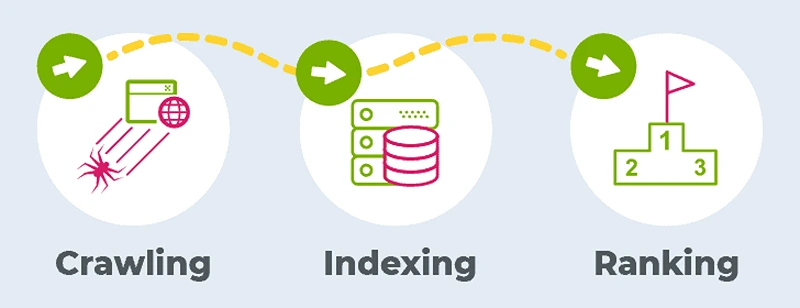
For more details on how Google search works, you can read this blog post.
Real Talk About Keywords
You know how your mom might call it a "sofa" but your friend calls it a "couch"? That's why keywords matter. You need to speak your customers' language.
Here's a real story: I once worked with a luxury furniture store that kept using the term "settee" in their listings. Guess what? Nobody was searching for "settee" - they were all searching for "small sofa" or "loveseat." Once we updated the language, their traffic doubled.
Understanding the intent behind the keyword is just as important as the word itself.
- Informational Intent: "Best running shoes for flat feet" (They want a guide).
- Commercial Intent: "Nike Air Zoom vs Adidas Ultraboost" (They are comparing).
- Transactional Intent: "Buy Nike Air Zoom size 10" (They are ready to purchase).
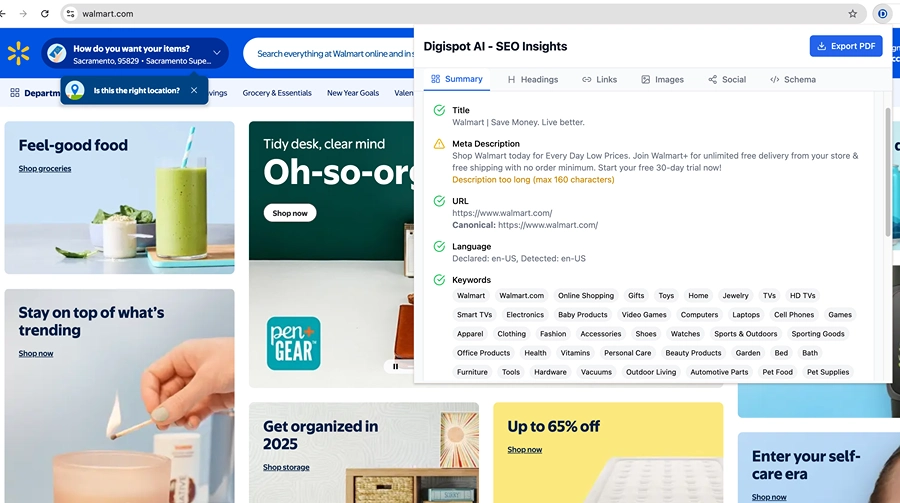
Below is an image from Digispot AI - FREE Chrome Extension that helps you decode SEO of any website.
The Different Flavors of E-commerce SEO
To build a store that ranks, you need to treat different page types differently. A product page has a different job than a category page.
Product Pages: Your Digital Sales Team
Think of your product pages as your most energetic and knowledgeable sales associates. Imagine that one salesperson who knows everything about the product and can present it in a way that resonates with customers—this is exactly how your product pages should function.
Too many stores just copy the manufacturer's description. This is a huge mistake. Google sees the same text on fifty other sites and ignores yours.
Real-World Example: Meet Tom, who runs a camping gear store. His product page for a camping stove used to list just the basic specs. After we revamped it, we included:
- Real-life camping scenarios where the stove came through in tough conditions.
- Customer stories showcasing its performance in different weather.
- Authentic customer photos using the product in the wild.
- Expert answers to frequently asked questions by seasoned campers.
This makeover resulted in a 150% sales increase over the next three months.
Optimization Checklist for Product Pages:
- Title Tag: Include Brand + Model + Key Feature (e.g., "Sony WH-1000XM5 Wireless Headphones | Noise Canceling").
- Meta Description: Highlight the USP (Unique Selling Proposition) like "Free Shipping" or "2-Year Warranty" to improve click-through rates.
- H1 Header: Must match the product name clearly.
- Unique Description: At least 300 words of unique content.
For a deeper dive into optimizing individual pages, check out our guide on on-page SEO best practices.
Category Pages: Your Store Layout
Your category pages serve as the blueprint for your online store. Think of them as the departments in a brick-and-mortar store—when well-organized, customers can easily navigate and find exactly what they're looking for. No one wants to be stuck in a disorganized, chaotic store.
Search engines love category pages because they are high-level hubs of authority.
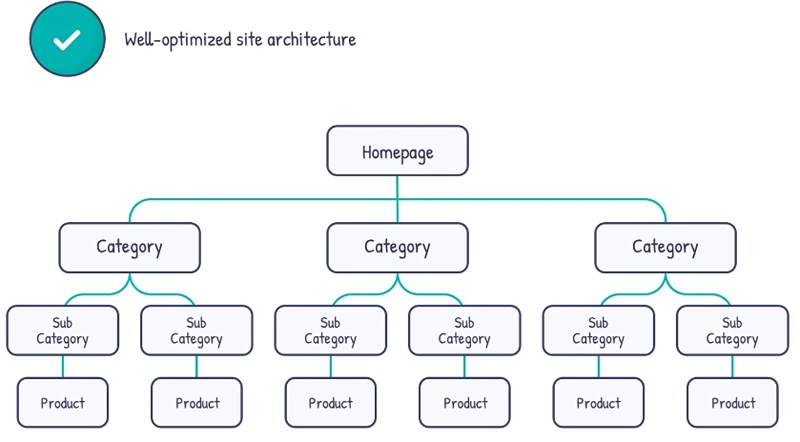
Strategic Advice: Don't let your category pages be empty grids of products. Add a few paragraphs of text at the bottom of the page describing the collection, answering common questions about the category, and linking to related sub-categories. This adds semantic relevance that Google craves.
Intent Pages: Your Store's Guidebook
Intent pages are your store’s helpful guidebook—leading customers to exactly what they want. These pages are not necessarily product-focused, but they relate closely to a product category. For example, a "Gaming Laptops" category could include an intent page called "Best Budget Gaming Laptops" or "Top Gaming Laptops for Streaming."
Here are the key types of intent pages:
- Buying Guides: Directing customers through the purchase journey.
- FAQ Pages: Answering common customer queries.
- How-to Guides: Offering tutorials that relate to products.
- Comparison Pages: Helping customers compare options.
- Review Pages: Providing in-depth product evaluations.
These pages guide users and search engines to understand what your store offers, improving both user experience and SEO performance. If you also sell through Amazon, Etsy, or similar platforms, our guide to SEO for marketplace product listings covers the extra optimization those channels require.
Enhancing Product Pages with Schema Markup
Product pages can also leverage structured data to improve visibility in search results. By adding schema markup for entities like Product, Offer, and Review, you can make your product pages eligible for rich results.
Rich results are the "bling" of the search world—star ratings, prices, and stock status that appear right in the search results. They can increase Click-Through Rate (CTR) by 30% or more.
Example JSON-LD for a product page:
{
  "@context": "https://schema.org",
  "@type": "Product",
  "name": "Portable Camping Stove",
  "image": "https://example.com/camping-stove.jpg",
  "description": "A reliable camping stove perfect for all weather conditions.",
  "brand": "OutdoorGear",
  "sku": "CAMP123",
  "offers": {
    "@type": "Offer",
    "priceCurrency": "USD",
    "price": "49.99",
    "availability": "https://schema.org/InStock",
    "url": "https://example.com/camping-stove",
    "shippingDetails": {
      "@type": "OfferShippingDetails",
      "shippingRate": {
        "@type": "MonetaryAmount",
        "value": "0",
        "currency": "USD"
      }
    }
  },
  "aggregateRating": {
    "@type": "AggregateRating",
    "ratingValue": "4.8",
    "reviewCount": "125"
  }
}
The below example is from Walmart's product page.
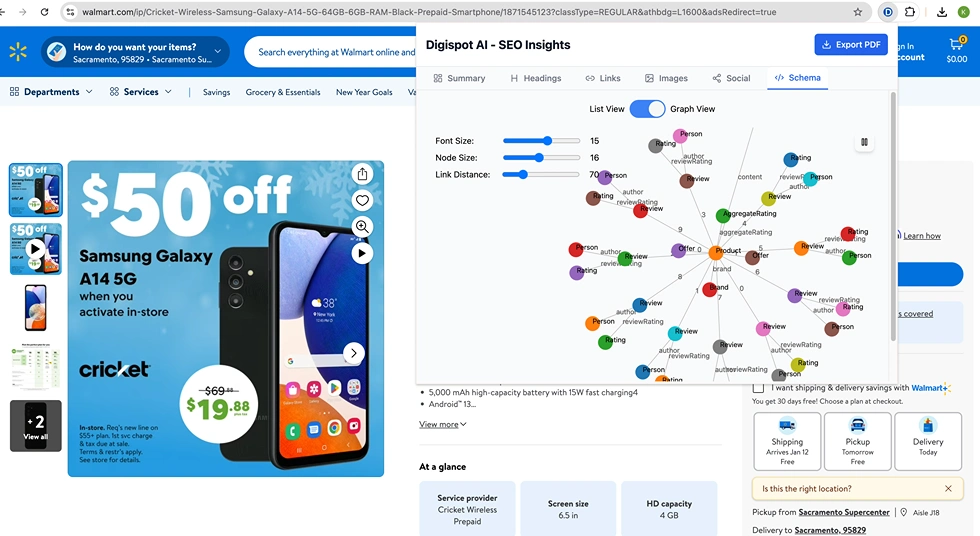
Following the schema markup can definitely improve your product page's visibility in search results across Google and other search engines. For a step-by-step walkthrough tailored to stores, see our guide on how to implement product schema. Not sure if your schema is valid? You can visualize and test it using Digispot AI's Schema Visualizer.
Quick Success Story: A client's electronics store had a messy category structure. We reorganized it like this:
- Created clear, logical categories (like "Gaming" → "Gaming Laptops" → "Budget Gaming Laptops").
- Added helpful category descriptions with real usage scenarios.
- Included buying guides at the top of each category.
- Made the navigation as smooth as butter.
Result? 80% increase in category page traffic in just two months.
A Brief History of E-commerce SEO (The Fun Version)
The Wild Beginnings (Late 90s - Early 2000s)
E-commerce SEO in its early days was a bit like the Wild West—chaotic, experimental, and full of loopholes:
- Keyword stuffing was rampant ("Buy shoes buy shoes buy shoes").
- Meta tags were often manipulated to rank for irrelevant terms.
- Sneaky tricks like white text on white backgrounds fooled both users and search engines.
It worked—until it didn’t. As search engines like Google got smarter, these tactics quickly fell out of favor.
The Evolution (2000s-2010s)
By the 2000s, the SEO landscape began maturing:
- Content Rules: Search engines prioritized quality content over spammy tactics.
- Mobile Revolution: The rise of smartphones made mobile optimization essential.
- Structured Data: Schema markup became a game-changer, enabling rich snippets and better SERP visibility.
E-commerce SEO was no longer about gaming the system; it was about providing value.
The Present Day (2020s)
Today, e-commerce SEO is as much about technology as it is about content:
- AI and Machine Learning: Search engines use AI to understand user intent and rank pages. AI tools can help generate product descriptions, personalize experiences, and analyze user behavior.
- Knowledge Graphs: Platforms like Google integrate knowledge graphs to display product information, reviews, and FAQs directly in search results.
- User Experience (UX): Fast-loading, mobile-first, and accessible websites dominate rankings.
- Social Commerce: Platforms like Instagram, TikTok, and Pinterest have blurred the line between social media and e-commerce.
The Future of E-commerce SEO
The future of e-commerce SEO promises even more exciting changes as AI and automation reshape the landscape:
- AI Summaries in Search Results: Search engines are evolving into answer engines. Summarized AI-driven results may replace traditional rankings for common queries, showcasing product highlights directly on SERPs.
- Knowledge Graph Expansion: Products, reviews, and offers from multiple vendors are integrated into platforms like Google Shopping, creating a seamless, centralized shopping experience.
- AI-Powered Personalization: Websites and search engines are using AI to recommend products tailored to individual preferences, browsing history, and even predicted needs.
- Voice and Visual Search: As voice assistants and visual recognition improve, optimizing for these queries will be critical.
- Decentralized Marketplaces: With platforms like Google and Amazon consolidating vendor data, smaller businesses will need to optimize for these ecosystems to stay visible.
- Eco-Conscious SEO: With growing consumer demand for sustainable shopping, SEO strategies may increasingly highlight eco-friendly products, carbon offsets, and transparent sourcing.
E-commerce SEO is no longer just about ranking; it’s about being present where customers are looking, whether that's on Google, social media, or their favorite app. The future is not just about optimization—it’s about integration, personalization, and innovation.
What Good SEO Actually Does For Your Store
Let me break this down with a real story. Jane (name changed) runs a small skincare store. When she started, she was getting maybe 10 visitors a day. After implementing proper SEO:
The Numbers Don't Lie
- Organic traffic went from 10 to 500 visitors per day.
- Conversion rate jumped from 1% to 3.5%.
- Revenue increased by 400%.
How'd She Do It?
- Fixed basic technical issues (like her site being slower than a turtle in molasses).
- Created actually helpful product descriptions.
- Started a blog answering real customer questions.
- Built a proper site structure.
When Things Go Wrong (And How to Fix Them)
This is the part where experience counts. E-commerce sites are prone to specific technical disasters that don't affect simple blogs.
The Case of the Disappearing Products
Had a client whose entire product catalog vanished from Google overnight. Panic stations! Turned out they had accidentally checked a tiny box in their website settings that said "discourage search engines." Oops! One checkbox later, crisis averted.
Lesson: Always check your global configuration settings after a platform update (Shopify, WooCommerce, Magento).
The "Copy-Paste Catastrophe"
Picture this: A fashion store owner copied manufacturer descriptions for all 500 products because, hey, who has time to write unique descriptions? Three months later, traffic tanked. We fixed it by:
- Creating a content calendar to rewrite 10 descriptions per week.
- Adding real customer quotes.
- Including actual styling tips from their team.
If you are struggling with duplicate content issues, read our guide on common SEO mistakes to avoid to ensure you aren't sabotaging your rankings.
Keep a watchful eye on your site's speed
Every one second delay in page load time can result in a 20% drop in conversions. The data is clear - faster sites rank higher in search results due to Google core web vital metrics being used in search ranking.
For e-commerce, Core Web Vitals are even more critical.
- LCP (Largest Contentful Paint): How fast the main product image loads.
- CLS (Cumulative Layout Shift): Does the content jump around when a user tries to click "Add to Cart"? This is a conversion killer.
- INP (Interaction to Next Paint): How quickly the page responds when a user filters a category or clicks a button.
Learn how to audit and improve these metrics in our Core Web Vitals SEO Guide.
Invest in your site's mobile friendliness
Mobile-friendly sites rank higher in search results due to Google's mobile-first indexing. Also, the internet traffic is completely shifting towards mobile devices. For ecommerce, this is a must. If your checkout button is hard to tap on a phone, you are losing money every single day.
Because Google now crawls and ranks the mobile version of your store, anything hidden or broken on mobile is effectively invisible for ranking. Watch for these common mobile killers:
- Tap targets too close together. Add-to-cart, quantity, and filter buttons need at least 48px of spacing so thumbs don't mis-tap.
- Content parity gaps. If your desktop product page shows reviews and specs but the mobile version collapses or drops them, Google only sees the mobile version.
- Intrusive interstitials. Full-screen newsletter or app-install pop-ups on mobile can suppress rankings.
- Slow, unoptimized hero images. Serve responsive, compressed images — see our guide on image compression for faster load times.
A quick test: open your top product page on a real phone, try to complete a purchase, and note every place you have to pinch, zoom, or hunt for a button. Each one is a lost sale.
Improve your site's architecture and layout
A proper site architecture is the backbone of any good SEO strategy. It helps search engines understand your site and its content, making it easier for them to find and rank your pages.
The Faceted Navigation Trap:
E-commerce sites often use filters (facets) like Size, Color, and Price. If not handled correctly, these create thousands of duplicate URLs (e.g., ?color=red and ?color=blue&size=small).
- Solution: Use canonical tags to point these variations back to the main category page, or use
robots.txtto prevent crawling of low-value parameter URLs. If canonicalization is new to you, our explainer on what a canonical URL is covers exactly how to set these tags up.
If this sounds technical, Digispot AI can help you identify and fix these architectural issues automatically with AI-powered audits.
Best Practices (That Actually Work)
Product Page Magic
Let's make those product pages sing:
Title Format: Product Name | Key Feature | Brand
Example: Ergonomic Office Chair | Memory Foam | ComfortPro
Pro Tip: Write product descriptions like you're excitedly telling a friend about it, not like you're writing a technical manual. Focus on benefits, not just features.
- Feature: "1000mAh battery"
- Benefit: "Listen to music for 12 hours straight without recharging."
Category Page Success
Make your category pages work harder:
- Write unique intros (no copying!).
- Add helpful filters (like price range, size, color) but manage them technically.
- Include real customer photos.
- Add buying guides where relevant.
Handling Out-of-Stock Products
This is a common headache. Do you delete the page?
- Temporary Out of Stock: Keep the page up! Add a "Notify me when available" button. Do not remove the URL, or you lose its ranking power.
- Permanently Discontinued: Redirect (301) the URL to the closest equivalent product or the parent category. Never just 404 (delete) a page that has backlinks and traffic.
Tools You Actually Need (Not Just the Expensive Ones)
You don't need a $500/month enterprise tool to get started.
Free Tools That Rock
- Google Search Console (GSC): Your new best friend. It tells you exactly what keywords drive traffic and highlights technical errors.
- Google Analytics (GA4): Because data is gold. Ensure "E-commerce Tracking" is enabled to see revenue per channel.
- Mobile-Friendly Test: Because phones are life.
- Digispot AI: Helps you bring all of this together. Get instant SEO insights on any page with our free Chrome extension.
Paid Tools Worth Your Coffee Money
- Screaming Frog: Essential for finding technical issues like broken links or oversized images on large e-commerce sites.
- Ahrefs or SEMrush: Great for competitor research and keyword gap analysis.
- Hotjar: To see how people actually use your site (heatmaps are great for optimizing "Add to Cart" placement).
- Digispot AI: We help you bring the technical and content strategy together. We also help you get insights from the data that actually move the needle.
Success Stories (Because Who Doesn't Love a Good Before/After?)
The Hobby Shop Hero
Mark turned his hobby shop's website from a ghost town to a bustling marketplace.
- Before: 100 visitors/month.
- After: 10,000 visitors/month.
- How: Focused on long-tail keywords for specific products. Instead of trying to rank for "RC cars" (too competitive), he targeted "best electric RC car for beginners under $200". Our guide on how to target long-tail keywords breaks down how to find and prioritize these low-competition phrases.
The Pet Supply Pioneer
Sarah's pet supply store became the go-to place for exotic pet supplies.
- Strategy: Created detailed guides for rare pet care.
- Execution: She wrote "The Ultimate Guide to Bearded Dragon Diet" and linked products directly within the guide.
- Result: Built a community through quality content and increased average order value by 40%.
How to Stay Ahead
- Keep your site fast and mobile-friendly.
- Create genuinely helpful content.
- Stay human in your approach.
- Watch your competitors (but don't copy them).
- Regularly audit your site. For a comprehensive list of what to check, use our SEO Audit Checklist.
Wrapping This Up (The "What Now?" Section)
Look, I know this has been a lot to take in. If you're feeling overwhelmed, don't worry - Rome wasn't built in a day, and neither is great SEO. Start small:
- Fix technical issues first. Start with a free audit from Digispot AI. A solid foundation is non-negotiable.
- Focus on your best-selling products. Optimize the top 20% of your products that bring in 80% of your revenue.
- Create helpful content. Answer the questions your customers are actually asking.
- Monitor and adjust. SEO is a living, breathing process.
Ready to improve your SEO? Try Digispot AI for comprehensive website audits and actionable recommendations that take the guesswork out of optimization.
Remember - every e-commerce giant started exactly where you are now. Amazon used to be just a guy selling books from a garage. Now look at them!
Questions You're Too Afraid to Ask (But Everyone Has)
Q: How long until I see results? A: Honestly? Usually 3-6 months for noticeable changes. SEO is like growing a garden, not microwaving a meal. Technical fixes can show faster results (weeks), while content ranking takes longer.
Q: Do I really need to write unique descriptions for everything? A: Yes, but start with your best-sellers and work your way down. Progress over perfection! If you have thousands of products, consider using AI tools to help generate drafts, but always have a human review them.
Q: What if I make a mistake? A: Unless you accidentally delete your whole site or block Google via robots.txt, most SEO mistakes are fixable. Don't be afraid to experiment!
Q: How do I handle seasonal products? A: Don't delete the pages when the season ends. Remove the navigation links but leave the page live with a "Returns in 2026" message, or redirect it to a relevant category. This preserves the SEO value you built up during the season.
Keep Learning & Growing
SEO is always changing, and that's what makes it exciting! Stay curious, keep testing, and most importantly - keep it human. Your customers are real people, not search engines.
Remember, the best SEO strategy is one that you can actually implement and maintain. Start where you are, use what you have, and keep improving bit by bit.
Good luck on your SEO journey! And hey, if you try something from this guide and it works (or doesn't), I'd love to hear about it. We're all in this together! 🚀
Related deep-dives
Continue with these closely related guides:
- digital marketing & seo — Digital Marketing & SEO: Complete Beginner Guide 2026
- to get seo — How to Get an SEO Job: Career Guide & Skills
References and Additional Resources
Audit any page in seconds
300+ SEO checks including Core Web Vitals, schema markup, meta tags, and AI readiness — trusted by 1000+ SEO experts and marketers.
Frequently Asked Questions
Here are some of our most commonly asked questions. If you need more help, feel free to reach out to us.
Written by
Maya Krishnan
Digital growth expert
Maya is a seasoned expert in web development, SEO, and digital strategy, dedicated to helping businesses achieve sustainable growth online. With a blend of technical expertise and strategic insight, she specializes in creating optimized web solutions, enhancing user experiences, and driving data-driven results. A trusted voice in the industry, Maya simplifies complex digital concepts through her writing, empowering readers with actionable strategies to thrive in the ever-evolving digital landscape.