
How to Get an SEO Job: Career Guide & Skills
Land your dream SEO job with this career guide. Learn essential skills, build a portfolio, get certified, and ace interviews to start your career.
 Maya Krishnan
Search traffic is the lifeblood of the modern internet. Every day, billions of queries flood Google, Bing, and AI platforms like ChatGPT and Perplexity. For businesses, appearing in these results isn't just vanity—it's survival.
This reliance on organic visibility has created a massive opportunity gap. Companies are desperate for professionals who can navigate the complex algorithms that dictate who gets seen and who gets ignored. If you enjoy solving puzzles, analyzing data, and thinking creatively, an SEO career puts you at the intersection of technology and psychology.
You don't need a computer science degree or thousands of dollars in tuition to break in. What you need is a strategic roadmap. This guide strips away the noise and provides actionable steps to land your first SEO job, from mastering the essential skills to acing technical interviews.
What Exactly is an SEO Job?
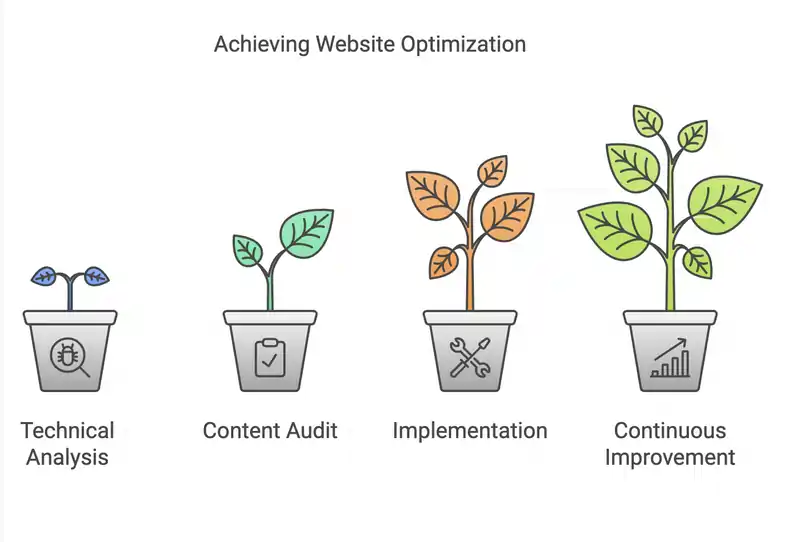
An SEO (Search Engine Optimization) specialist's primary directive is clear: drive high-quality organic traffic to a website. But the day-to-day execution is far more nuanced than simply "ranking higher." It involves a continuous cycle of auditing, strategy, implementation, and analysis to align a website with both user intent and search engine guidelines.
Modern SEO roles are often "T-shaped." This means you possess a broad understanding of all marketing disciplines while maintaining deep expertise in one specific area of search.
Here are the core pillars you will likely encounter:
Technical SEO
This is the foundation. No matter how great your content is, it won't rank if search engines can't crawl or index it. Technical SEOs focus on the architecture of the web. You might spend your days optimizing XML sitemaps, fixing redirect chains, or improving Core Web Vitals.
- Key Focus: Ensuring the website infrastructure is healthy.
- Deep Dive: Learn more about optimization in our Core Web Vitals SEO guide.
On-Page SEO
On-page optimization deals with the elements visible to users and search bots on a specific URL. It requires a keen eye for detail. You will optimize header structures (H1, H2, H3), refine internal linking strategies, and ensure keywords are used naturally.
- Key Focus: Relevance and user experience on individual pages.
- Resource: Master the basics with our Meta Tags Optimization Guide.
Off-Page SEO
Your reputation is defined by who vouches for you. Off-page SEO focuses on building authority through backlinks (citations from other sites). This is often the hardest part of SEO because it requires outreach, relationship building, and digital PR. You aren't just tweaking code; you're convincing other humans that your content is worth sharing.
Local SEO
For brick-and-mortar businesses, ranking globally doesn't matter—ranking locally does. This role involves managing Google Business Profiles, building local citations, and managing reviews. It's vital for connecting businesses with customers in their immediate vicinity.
- Deep Dive: Explore strategies in our Local SEO Complete Guide.
Content SEO
Search engines don't just match keywords; they try to understand intent. Content SEOs research what users are actually looking for and create comprehensive materials to satisfy those needs. This includes identifying gaps in existing content and structuring articles for readability and engagement.
- Key Focus: Relevance, depth, and E-E-A-T (Experience, Expertise, Authoritativeness, Trust).
- Resource: Learn how to find opportunities with our Content Gap Analysis Guide.
Analytics and Reporting
If you can't measure it, you can't improve it. Data analysis involves tracking Key Performance Indicators (KPIs) like organic sessions, conversion rates, and bounce rates. You will use tools like Google Analytics 4 (GA4) and Google Search Console to tell a story about what is working and what isn't.
Why Pursue an SEO Career? The Benefits Are Clear!
Embarking on an SEO career path offers a wealth of benefits that make it an attractive option for many. It is one of the few industries where self-taught experts often outperform those with traditional degrees.
- High Demand and Stability: As long as people use search engines (traditional or AI-based) to find answers, businesses will need SEOs. The shift toward AI Overviews (AIO) and Answer Engine Optimization (AEO) is only increasing the need for technical experts who understand how machines process information.
- Excellent Earning Potential: Entry-level salaries are competitive, but the ceiling is high. Specialists who can demonstrate ROI (Return on Investment) can command six-figure salaries or high consulting rates.
- Dynamic and Engaging Work: SEO is never static. Google updates its algorithm thousands of times a year. If you hate monotony, you will love the constant challenge of adapting to new ranking factors and technologies.
- Impactful Role: Your work directly drives revenue. Seeing a client's traffic graph spike upward because of a strategy you implemented provides a tangible sense of accomplishment.
- Flexibility: SEO is a digital-first profession. Whether you want to work for a tech giant, a small agency, or as a freelance nomad, the role supports remote work and flexible schedules.
- Transferable Skills: The analytical rigor and psychological insight you develop in SEO apply to almost any business role, from product management to UX design.
How to Get an SEO Job: Your Step-by-Step Guide
Securing your first SEO job might seem daunting, but with a structured approach, it's entirely achievable. Here’s a detailed roadmap to go from novice to hirable professional.
Step 1: Build a Strong Foundation – Learn the Basics
Before you can excel, you need to understand the fundamental concepts. Do not rush this stage; shaky foundations lead to poor strategies later.
- Understand Search Engine Mechanics: Learn the difference between crawling (finding pages), indexing (storing pages), and ranking (ordering pages). Read Google's "How Search Works" documentation thoroughly.
- Master User Intent: Keywords are just proxies for what a human wants. Are they looking to buy (transactional), learn (informational), or find a specific website (navigational)?
- Technical Literacy: You don't need to be a software engineer, but you must understand how the web works. Learn what an HTTP status code is (200 vs 404 vs 301). Understand the role of JavaScript in rendering.
- E-E-A-T Principles: Google places high value on Experience, Expertise, Authoritativeness, and Trustworthiness. Understanding how to demonstrate these signals is crucial for modern SEO.
- Learn More: Read our detailed E-E-A-T SEO Guide to understand quality signals.
Step 2: Acquire Essential Skills and Tools
An SEO professional is only as good as their toolkit and the skills to wield them.
Key Soft & Hard Skills:
- Critical Thinking: SEO is rarely black and white. You need to hypothesize why a ranking dropped and test solutions.
- Data Storytelling: Clients don't care about "canonical tags"; they care about sales. You must learn to translate technical metrics into business value.
- Adaptability: With the rise of AI tools like ChatGPT and Google Gemini, you must be willing to pivot your strategies from traditional keywords to conversational entities.
- Basic HTML/CSS: You should be able to look at a page's source code and identify a missing title tag or a "noindex" directive without relying solely on software.
Essential Tools:
Familiarity with various SEO tools is a must. Employers expect you to know your way around these dashboards.
| Tool Category | Examples of Tools | What They Do |
|---|---|---|
| Keyword Research | Google Keyword Planner, Ahrefs, SEMrush, Moz Keyword Explorer | Help identify relevant keywords, assess search volume, and analyze keyword difficulty. |
| Website Audit/Crawl | Screaming Frog, Sitebulb, Ahrefs, SEMrush | Identify technical SEO issues like broken links, crawl errors, duplicate content, and circular redirects. Digispot AI takes this further by auditing for over 200 ranking factors, specifically checking for issues that affect visibility in both traditional search and AI answer engines. |
| Backlink Analysis | Ahrefs, SEMrush, Moz Link Explorer, Majestic | Analyze a website's backlink profile to find toxic links or discover where competitors are getting their authority from. |
| Rank Tracking | SEMrush, Ahrefs, SERPWatcher, AccuRanker | Monitor daily positions for target keywords across different geographies and devices. |
| Content Optimization | Surfer SEO, MarketMuse, Clearscope, Frase | Analyze top-ranking pages to suggest semantic terms and structure. A Content Studio, such as the one offered by Digispot AI, uses AI agents to generate SEO-optimized content briefs and drafts, ensuring you cover the topic comprehensively. |
| Analytics & Reporting | Google Analytics, Google Search Console | The source of truth for traffic data. You must master GSC to understand how Google views your site. Platforms like Digispot AI integrate these data sources to provide a unified view, highlighting correlations between technical changes and traffic shifts. |
| Schema Markup | Schema.org, Google Structured Data Markup Helper | Code that helps search engines understand entities (products, reviews, events). Use the free Schema Markup Generator to create valid JSON-LD code without needing a developer. |
| Local SEO | Google Business Profile, BrightLocal, Yext | Manage physical location data, ensuring Name, Address, and Phone (NAP) consistency across the web. |
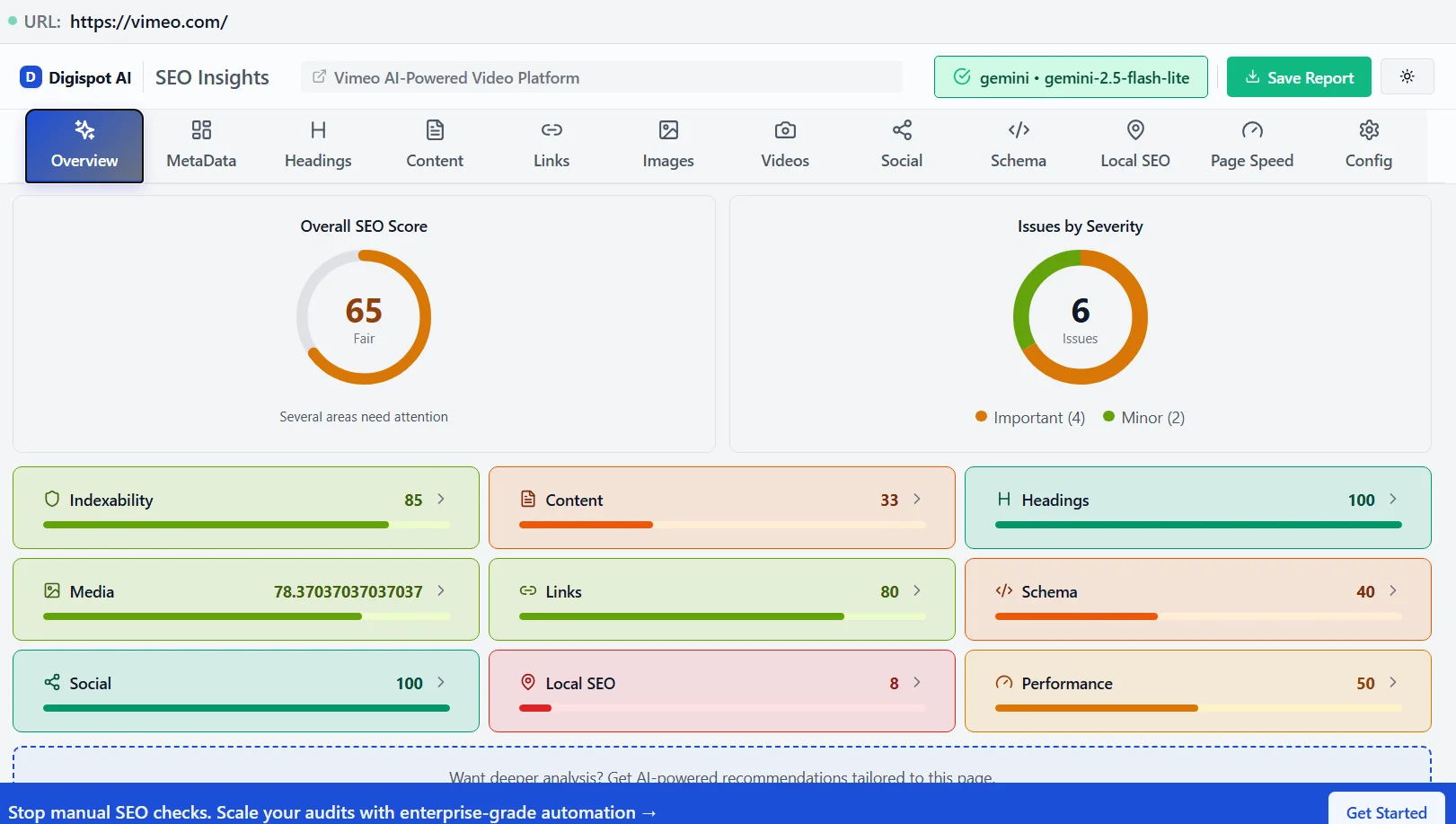
| Browser Extensions | SEO Minion, MozBar, Lighthouse, Digispot AI Insights | Quick on-page audits directly in your browser. Get instant SEO insights on any page with our free Chrome extension, which visualizes schema, checks meta tags, and audits Core Web Vitals in one click. |
Step 3: Gain Practical Experience
Knowledge without application is just theory. You cannot learn SEO strictly from reading blogs; you must break things and fix them.
- The "Sandbox" Project: This is the most critical step. Buy a domain name (approx. $10) and set up a WordPress site. Pick a topic you are passionate about—hiking, mechanical keyboards, vegan cooking—and try to rank for it.
- Action: Write 10 articles. optimize them. Build links. Watch the data in Search Console. When a recruiter asks, "How do you handle indexing issues?" you can answer with a real story from your own site.
- Volunteer for Non-Profits: Many charities have terrible websites and zero budget. Offer to fix their technical errors or optimize their Google Business Profile. The stakes are lower, but the gratitude (and the portfolio piece) is real.
- Document Everything: Did you increase organic traffic by 20%? Did you fix a critical canonical error? Take screenshots. Save the "before" and "after" data. This is the raw material for your portfolio.
Step 4: Network and Build Your Personal Brand
SEO is a tight-knit community. Who you know often matters as much as what you know.
- Twitter/X and LinkedIn: Follow industry leaders like John Mueller (Google), Aleyda Solis, and Barry Schwartz. Engage with their content intelligently. Don't just say "Great post"; ask a specific question about their findings.
- Local Meetups: Look for "Search Marketing" or "Digital Marketing" meetups in your city. Meeting people face-to-face builds trust faster than any cold email.
- Share Your Learning: You don't need to be an expert to post. Share your journey. "I just learned how to implement FAQ schema, here is what I did wrong first..." is highly relatable and engaging content that shows you are active and learning.
Step 5: Craft a Compelling Resume and Portfolio
Your resume needs to speak the language of results, not just duties.
- Quantify Achievements: Instead of "Responsible for SEO," write "Increased organic traffic by 45% YoY by optimizing site architecture and content clusters."
- Showcase Your Portfolio: Create a simple PDF or web page showcasing your case studies. Include:
- The Challenge: "Client wasn't ranking for local terms."
- The Solution: "I audited citations and optimized GMB profile."
- The Result: "Map pack visibility increased by 300% in 3 months."
- Highlight Tool Proficiency: Explicitly mention the SEO tools you are proficient in. For example, stating familiarity with comprehensive platforms that integrate Google Search Console and Google Analytics, like Digispot AI, can show you understand the bigger picture of SEO management.
Step 6: Ace the Interview
SEO interviews often include a practical component. Be ready.
- The "Audit" Test: It is common for employers to give you a URL and ask, "What is wrong with this page?"
- Tip: Start with the basics. Check the title tag. Check the robots.txt. Check for mobile responsiveness. Don't look for complex problems until you've verified the simple ones.
- Tool Tip: Use the free On-Page SEO Analysis tool to quickly gather data points for your answer.
- Explain "Why": If you suggest a change, explain the business impact. "We should add schema markup because it improves our click-through rate in search results, bringing more qualified leads."
- ** admit What You Don't Know:** SEO changes weekly. If asked a question you don't know, say, "I haven't encountered that specific issue, but here is how I would research the solution." This shows problem-solving skills, which are more valuable than memorized facts.
Enhancing Your Journey with Smart Tools
In the modern landscape, efficiency is a competitive advantage. The best SEOs don't do everything manually; they leverage intelligent tools to automate data gathering so they can focus on strategy.
For instance, consider a comprehensive AI SEO platform like Digispot AI. Such a platform can be incredibly useful in various aspects of an SEO job:
- Comprehensive Auditing: Manually checking 1,000 pages for missing alt text is a waste of time. Imagine a tool that audits websites in both mobile and desktop modes, identifying issues across more than 200 ranking factors, including content quality, technical SEO health, local SEO optimization, and page performance. This level of detailed analysis helps you quickly pinpoint areas for improvement, much like Digispot AI promises to do.
- Unified Performance Tracking: Context switching destroys productivity. Seamless integration with essential tools like Google Search Console and Google Analytics means you can track and improve performance from a single dashboard. This streamlines reporting and ensures you're always acting on the most current data.
- Schema Visualization: Structured data is invisible to the naked eye but critical for machines. Tools that help you visualize this layer of the web are essential for debugging.
- Learn More: Understand the power of structured data in our Advanced Schema Markup Guide.
- Instant Page Audits: The Digispot AI free community Chrome extension is a great example of how you can get immediate insights into any webpage. It helps you audit a page right in your browser, powered by advanced LLM models. This means you can quickly check for issues, understand schema markup implementation, detect problems, and visualize data on the fly – a perfect tool for an SEO on the go.
The Future of SEO Jobs: AI and Beyond
A common question aspiring SEOs ask is: "Will AI replace SEO jobs?"
The answer is no, but it will change them. As search engines evolve into "Answer Engines" (like Google's Gemini-powered overviews), the role of an SEO is shifting from "optimizing for keywords" to "optimizing for answers."
You will need to understand how Large Language Models (LLMs) interpret content. You will need to focus more on unique, first-hand experience (E-E-A-T) because AI can generate generic information but it cannot replicate human experience.
Tools like Digispot AI are built for this new reality. By utilizing a multi-LLM AI engine (GPT-4/5, Claude, Gemini, DeepSeek), Digispot provides insights that traditional tools miss, helping you optimize for the next generation of search.
Conclusion: Start Your SEO Journey Today
The world of SEO is exciting, challenging, and incredibly rewarding. It is a career where curiosity pays off and where you can build a reputation based on results, not just credentials.
By dedicating yourself to learning the fundamentals, gaining practical experience through personal projects, and leveraging powerful AI-driven tools, you can carve out a successful career in this rapidly growing field.
Ready to take the next step?
- Start Learning: Pick one resource from this guide and dive deep.
- Start Doing: Launch your sandbox site this weekend.
- Start Optimizing: Try Digispot AI to get comprehensive website audits and actionable recommendations that will help you see the web like a search engine does.
Your dream SEO job is within reach – go out there and optimize your future!
References
- How Search Works | Google Search Central
- Search Engine Optimization (SEO) Starter Guide | Google Search Central
- Understand structured data | Google Search Central
- Google Search Console Help
- Google Analytics Help
- Digispot AI - FREE On Page SEO Audit Tool
- Digispot AI - FREE Chrome Extension for SEO Insights
- What is Keyword Research and How to Do It? | Moz (Beginner's Guide)
- The Ultimate Guide to Link Building | Search Engine Journal
Audit any page in seconds
300+ SEO checks including Core Web Vitals, schema markup, meta tags, and AI readiness — trusted by 1000+ SEO experts and marketers.
Frequently Asked Questions
Here are some of our most commonly asked questions. If you need more help, feel free to reach out to us.
Written by
Maya Krishnan
Digital growth expert
Maya is a seasoned expert in web development, SEO, and digital strategy, dedicated to helping businesses achieve sustainable growth online. With a blend of technical expertise and strategic insight, she specializes in creating optimized web solutions, enhancing user experiences, and driving data-driven results. A trusted voice in the industry, Maya simplifies complex digital concepts through her writing, empowering readers with actionable strategies to thrive in the ever-evolving digital landscape.