Top 10 SEO Tools in 2026: What Each One Does Best
The top SEO tools in 2026, grouped by job: crawling, keywords, content, backlinks, rank tracking. What each does well and how to choose for your team.
Selecting the best AI-powered SEO tools for 2025 and 2026 requires evaluating how software handles both traditional search engines and emerging conversational answer engines. This guide reviews top platform stacks, technical crawlers, and analytics software to help agencies and in-house teams build an efficient workflow.
What Are the Best SEO Tools for Modern Search Engines in 2026?
Discover how evaluating hybrid platform stacks improves visibility across both legacy search engines and conversational AI engines. Modern organic search spans Google, Bing, ChatGPT, and Google AI Overviews simultaneously. Evaluating platforms on raw database size alone misses how users discover content today.
To set a baseline for software evaluation, marketing teams must measure data accuracy, crawling mechanics, integration depth, and automation. Disconnected legacy point tools create data silos and delay critical technical fixes. Unified workspaces that merge site health, keyword discovery, and first-party analytics save teams dozens of hours each month.
Rather than relying on separate point solutions for every micro-task, modern teams build their stacks around centralized platforms that connect technical diagnostics with performance data.
The Shift to AI Engine Optimization (AEO) and Automated Audits
Search engine optimization extended into AI Engine Optimization (AEO) when conversational models began answering search queries directly. Evaluating visibility now means tracking citations inside ChatGPT alongside traditional Google rank positions.
Automated site audits must also run real browser rendering to discover hidden client-side JavaScript issues. Static HTML scrapers miss modern single-page application errors, making real-browser crawling essential for maintaining organic visibility.
The Five Core Jobs SEO Software Must Perform
Learn how mapping tool capabilities to essential technical and content jobs stops software budget waste. Every high-performing search strategy relies on software executing five foundational operational functions. Mapping team bottlenecks to these five tool categories ensures your budget goes to platforms that solve actual execution gaps.
Technical site audits find indexation blockers, rendering failures, broken links, and Core Web Vitals regressions. Keyword intelligence tools reveal search intent, search demand, long-tail variations, and topical content gaps. Content optimization tools compare drafts against top-ranking SERP competitors. Link intelligence maps backlink profiles, while multi-engine tracking proves rank performance across channels.
| Core Job | Primary Strategic Purpose | Essential Metrics & Outputs | Representative Tools |
|---|---|---|---|
| Technical Audits | Identify crawl, rendering, indexation, and Core Web Vitals issues | Status codes, crawl depth, LCP/INP/CLS field data, render trees | Digispot AI, Screaming Frog, Search Console |
| Keyword Research | Uncover user search intent, query demand, and topical gaps | Search volume estimates, keyword difficulty, intent classifications | Semrush, Ahrefs, Google Keyword Planner, Ubersuggest, Moz |
| Content Optimization | Align written copy with real-time SERP structural signals | Term frequencies, heading structures, readability metrics | Surfer SEO |
| Backlink Profiling | Analyze incoming link quality, velocity, and referring domains | Referring domains, anchor text distribution, Trust Flow | Majestic, Ahrefs, Moz Pro, Semrush |
| Rank & Performance Tracking | Monitor search engine positioning and first-party conversion data | Organic clicks, impressions, rank position trends, conversion goals | Search Console, SE Ranking, Digispot AI |
Finding structural issues early requires systematic checks across every page asset. Reviewing a comprehensive on-page SEO checklist and the SEO audit checklist helps teams establish standard operating procedures before running automated site scans. For metrics, see SEO analytics tools and metrics.
Technical Auditing and Site Health
Technical site auditing forms the foundation of organic search performance. A site with indexing blocks or JavaScript rendering errors cannot rank, regardless of content quality.
Automated auditing tools scan site architecture to surface orphan pages, missing canonical tags, incorrect status codes, and slow resource loads. Catching these technical debt items protects existing search traffic from sudden drops.
Keyword Intelligence and Content Gap Discovery
Keyword intelligence guides your content roadmap toward topics with verified demand. Modern keyword research analyzes contextual intent rather than just search volume numbers.
Content gap discovery highlights specific subtopics that competitors cover but your site lacks. Identifying these gaps allows teams to structure topical clusters that build search engine authority.
Top 10 SEO Tools for 2026: Detailed Feature Comparison
Compare the leading SEO platforms to find the right balance of technical depth, database size, and workflow automation. Selecting organic search software requires looking past brand awareness to examine underlying feature architecture. This comparison reviews ten top platforms, detailing what each does best and where specific architectural trade-offs exist.
1. Digispot AI: Browser-Based Audits, GSC Analytics & AI Engine Tracking
Digispot AI provides unified SEO workflow automation by executing over 200 automated browser checks across desktop and mobile user agents. Unlike legacy crawlers that only evaluate raw HTML, Digispot AI executes client-side JavaScript to reveal actual rendered DOM states.
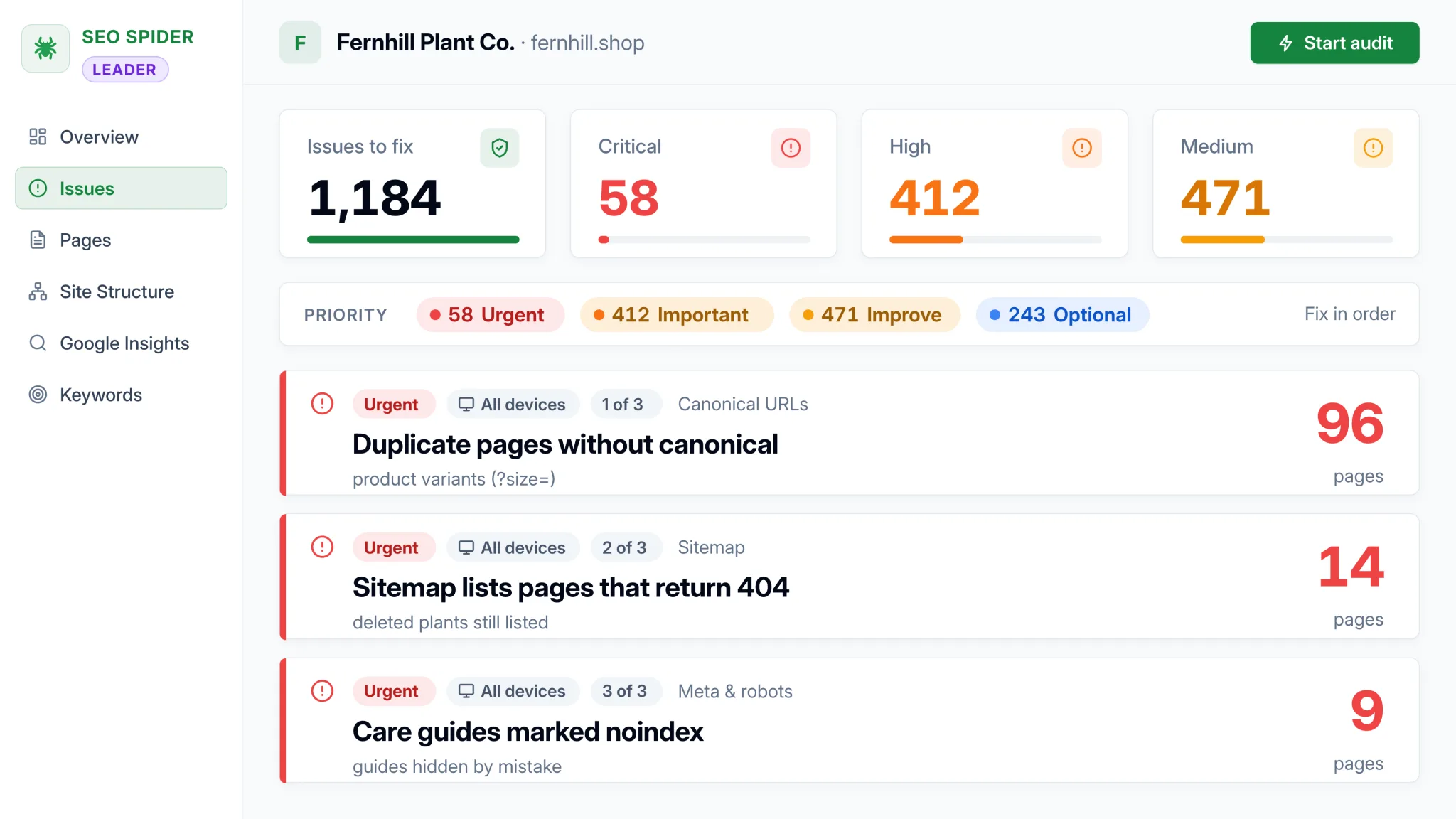
The platform integrates directly with Google Search Console and Google Analytics 4, surfacing first-party traffic and impression data right beside technical audit issues. Its desktop SEO Spider includes a Model Context Protocol (MCP) server, allowing local AI models like Claude, Cursor, or ChatGPT to run audits directly from your local terminal.
Digispot AI also features AI Mentions, tracking brand visibility and citation rates inside ChatGPT and Google AI Overviews. Digispot AI ships on four surfaces:
- Cloud app (app.digispot.ai): audits, Search Analytics, SERP Intelligence, Keyword Research, Backlinks, Content Studio and the AI SEO Analyst for teams tracking progress together. See pricing.
- SEO Spider: a desktop crawler for Mac and Windows with the same depth and a local MCP server, so AI agents work from real crawl data at a fraction of the token cost.
- Chrome extension: free, with 150+ on-page checks, live Core Web Vitals, SERP analysis and AI crawler access checks.
- WordPress plugin: free, with 76 checks, schema, sitemaps, redirects and an optional AI agent that proposes changes for you to approve.
One paid plan covers Cloud, the desktop Spider and WordPress Pro, including the data and AI credits, with no per-tool add-ons. Plans run from Free to Starter at $19/mo, Pro at $49/mo and Agency at $199/mo. Digispot is the closest tool here to Screaming Frog in spirit; see the Digispot vs Screaming Frog comparison. For a side-by-side with Semrush, read the Semrush alternative guide. Not sure where to start? Run the free on-page SEO analysis tool on one URL.
2. Semrush: Comprehensive Keyword Intelligence & Market Analytics
Semrush remains a widely used competitive intelligence suite with broad databases for keyword analysis, domain comparisons, and paid search research. Its Keyword Magic Tool allows marketers to filter millions of search queries by intent, volume, and keyword difficulty.
The platform includes rank tracking, site auditing, backlink analysis, and PR monitoring modules. Teams that rely heavily on market research, PPC ad copies, and broad domain comparisons find Semrush well-suited for high-level competitive analysis. Module lists change, so confirm them on Semrush's own product pages.
3. Google Search Console: Free First-Party Data & Indexing Status
Google Search Console provides definitive first-party performance metrics directly from Google's index. It shows real clicks, impressions, average CTR, and average rank positions for every query driving traffic to your domain.
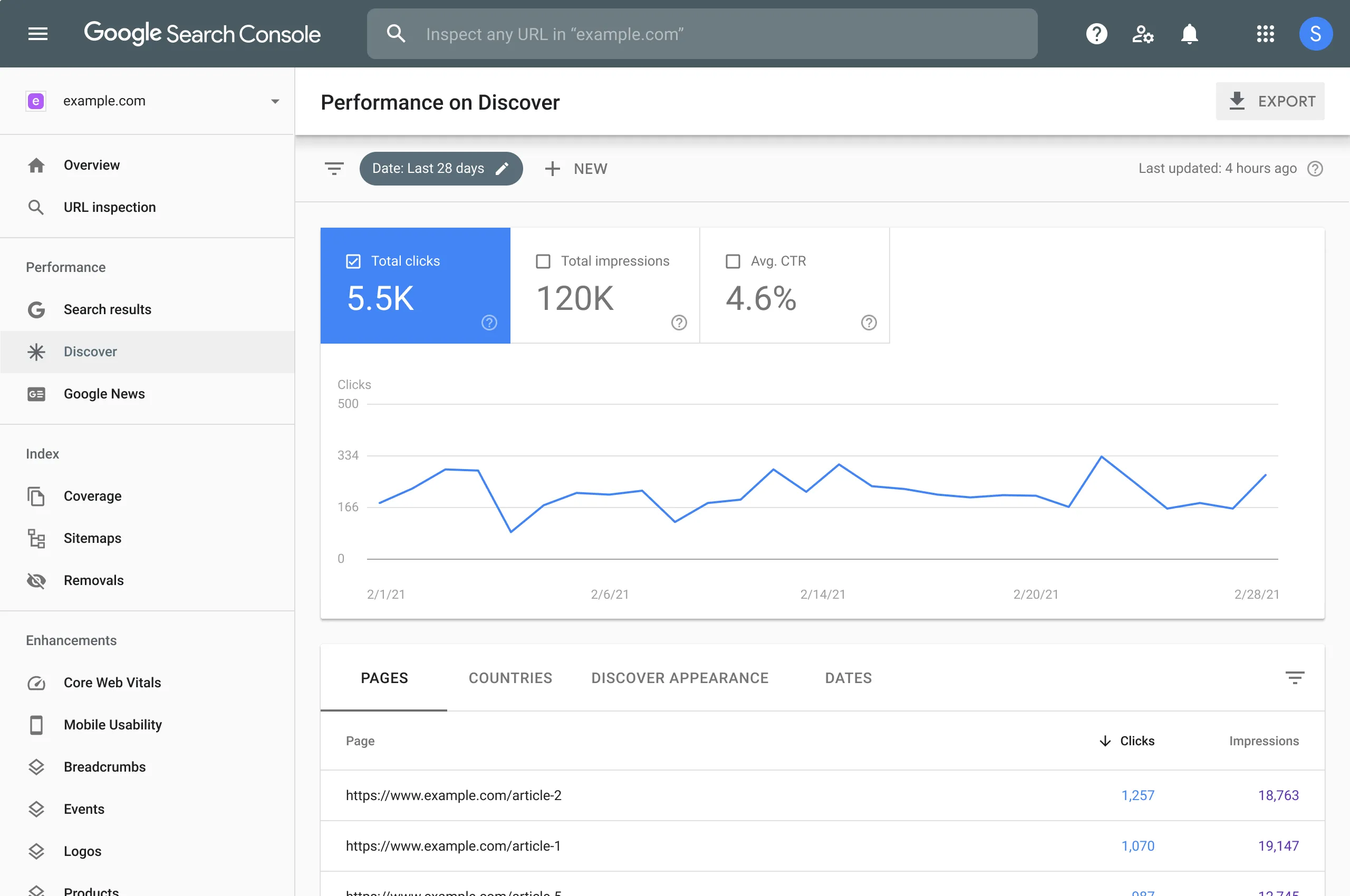
Digispot connects Search Console and GA4 so the same data sits beside each audit issue. Search Console monitors URL indexation statuses, alerting webmasters to crawl errors, security issues, and manual actions. It also reports field Core Web Vitals data—measuring Largest Contentful Paint (LCP), Interaction to Next Paint (INP), and Cumulative Layout Shift (CLS)—based on real Chrome user experiences.
4. Ahrefs: Industry-Standard Link Building & Backlink Analysis
Ahrefs is known for its extensive backlink web crawler and Site Explorer database. Link building teams use Ahrefs to evaluate domain link profiles, analyze referring domain growth, and uncover competitor link sources.
For where each is stronger, see Digispot AI vs Ahrefs. Beyond link intelligence, Ahrefs provides keyword research tools, content explorers, and position tracking. Its Site Audit tool scans websites for technical errors, though its core strength remains domain backlink analysis and anchor text mapping.
Specialized SEO Web Tools for Technical Audits and Crawling
Explore dedicated technical crawlers and diagnostic platforms built to catch deep rendering and indexation errors. Technical specialists often require specialized auditing software to diagnose deep crawl, indexation, and architectural defects across complex enterprise sites. Choosing between local desktop crawlers and continuous cloud monitoring architectures depends on site scale and team workflows.
5. Screaming Frog: Advanced Desktop Technical Auditing, Automated Monitoring & SEO Notification Systems
Screaming Frog SEO Spider is a desktop crawler designed for technical specialists who require granular control over crawl parameters. It analyzes status codes, inspects response headers, identifies redirect chains, and extracts custom HTML data using XPath and CSS selectors.
| Architecture Type | Hardware & Execution | Trade-off |
|---|---|---|
| Desktop crawlers (e.g., Screaming Frog, the Digispot AI SEO Spider) | Run locally on your own hardware; crawl data stays on your machine | Uses local memory and CPU on large crawls |
| Cloud apps (e.g., Digispot AI Cloud) | Run in the cloud with shared projects and Search Console sync | Data sits in the vendor's workspace; shared team views |
For teams evaluating desktop audit options, read our analysis of Screaming Frog alternatives to compare local resource usage against cloud setups.
Desktop tools provide raw data extraction flexibility, while cloud apps suit teams that want shared projects. Re-running audits after each release helps technical issues get resolved before affecting search visibility. Handling technical breakdowns like custom status errors effectively prevents traffic drops, as shown in our guide to managing SEO 404 error pages.
Content Optimization and Keyword Research Platforms
Review how real-time content scoring software guides topic coverage while keeping copy natural and user-focused. Content optimization software compares writing drafts against top-ranking SERP competitors to highlight target keyword density, structural headers, and topic completeness. Writing purely for software algorithms, however, risks creating repetitive, over-optimized text that degrades user experience.
6. Surfer SEO: Real-Time Content Editor and SERP Benchmarking
Surfer SEO analyzes top-ranking pages for a target query and generates structural guidelines for content creators. Its Content Editor provides real-time scoring based on word count, heading structures, image counts, and phrase usage.
Writers use Surfer's guidelines to cover essential subtopics that rank on page one. Treating content scores as strict rules can lead to unnatural phrasing, so editors must prioritize clarity and expertise over arbitrary score thresholds. Tools cannot supply experience or trust; read our E-E-A-T guide.
7. Ubersuggest: Accessible Keyword Discovery for Solopreneurs
Ubersuggest provides an entry-level keyword discovery and site auditing interface designed for solopreneurs and small business owners. It supplies search volume trends, keyword suggestions, basic backlink data, and top SEO web tools for entry-level site analysis.
While it lacks the deep data crawling of enterprise platforms, Ubersuggest offers an easy learning curve. It gives site owners a clear, budget-friendly overview of keyword opportunities without complex configuration.
Link Intelligence, Rank Tracking, and Domain Authority Tools
Understand how off-page authority metrics and multi-engine tracking tools evaluate backlink quality and rank positioning. Authority metrics help SEO managers evaluate domain strength, link acquisition opportunities, and keyword rank trajectory. Differentiating proprietary third-party metrics from real search engine algorithms is critical when allocating link-building budgets.
8. Moz Pro: Accessible Metrics & Domain Scoring
Moz Pro introduced Domain Authority (DA) and Page Authority (PA), metrics widely used across the industry to project search competitive strength. The platform includes Keyword Explorer, Link Explorer, site crawl tools, and rank tracking dashboards.
Domain Authority is a calculated third-party estimate, not a direct Google ranking factor. Using Moz Pro to track competitive authority trends helps contextualize link growth, but teams should avoid viewing DA target increases as primary campaign goals.
9. SE Ranking: Multi-Engine Rank Tracking & Agency Dashboards
SE Ranking is a rank tracking platform with site auditing, backlink monitoring and reporting aimed at digital marketing agencies.
Agencies use SE Ranking to build client reporting dashboards. Check its current plans and features on its own pricing page before buying.
10. Majestic: Link Graph Analysis & Trust Metrics
Majestic focuses strictly on backlink mapping and link graph visualization. It created proprietary metrics such as Trust Flow (evaluating link quality based on proximity to trusted seed sites) and Citation Flow (measuring raw link quantity).
Majestic's Topical Trust Flow categorizes backlinks into industry verticals, revealing whether a site holds topical authority in specific subjects. Link acquisition teams use these metrics to audit backlink profiles and eliminate spam targets. Exploring effective off-page SEO strategies helps turn link graph data into successful outreach campaigns.
Essential Free SEO Tools Every Strategy Needs
Uncover essential zero-cost search tools and browser extensions to build an effective analysis workflow without added expense. High-performing SEO strategies do not require massive software budgets to generate traffic growth. Combining Google's free utilities with browser extensions creates a lightweight, zero-cost analysis stack that yields actionable insights.
First-Party Google Utilities
Google Keyword Planner provides foundational query data directly from Google Ads database, serving as a baseline for keyword expansion. While volume numbers reflect broad ad buckets, it remains useful for discovering commercial keyword variants.
Google Trends reveals temporal demand shifts, seasonal spikes, and emerging search queries before standard keyword databases update. PageSpeed Insights measures real-world user performance, providing LCP, INP, and CLS field data via the Chrome User Experience Report (CrUX).
Free Browser Extensions & Schema Generators
Free utilities speed up daily analysis by exposing metadata and structured data instantly. The Digispot AI Chrome Extension runs over 150 on-page checks, inspects live Core Web Vitals, and verifies schema markup directly in your active browser window.
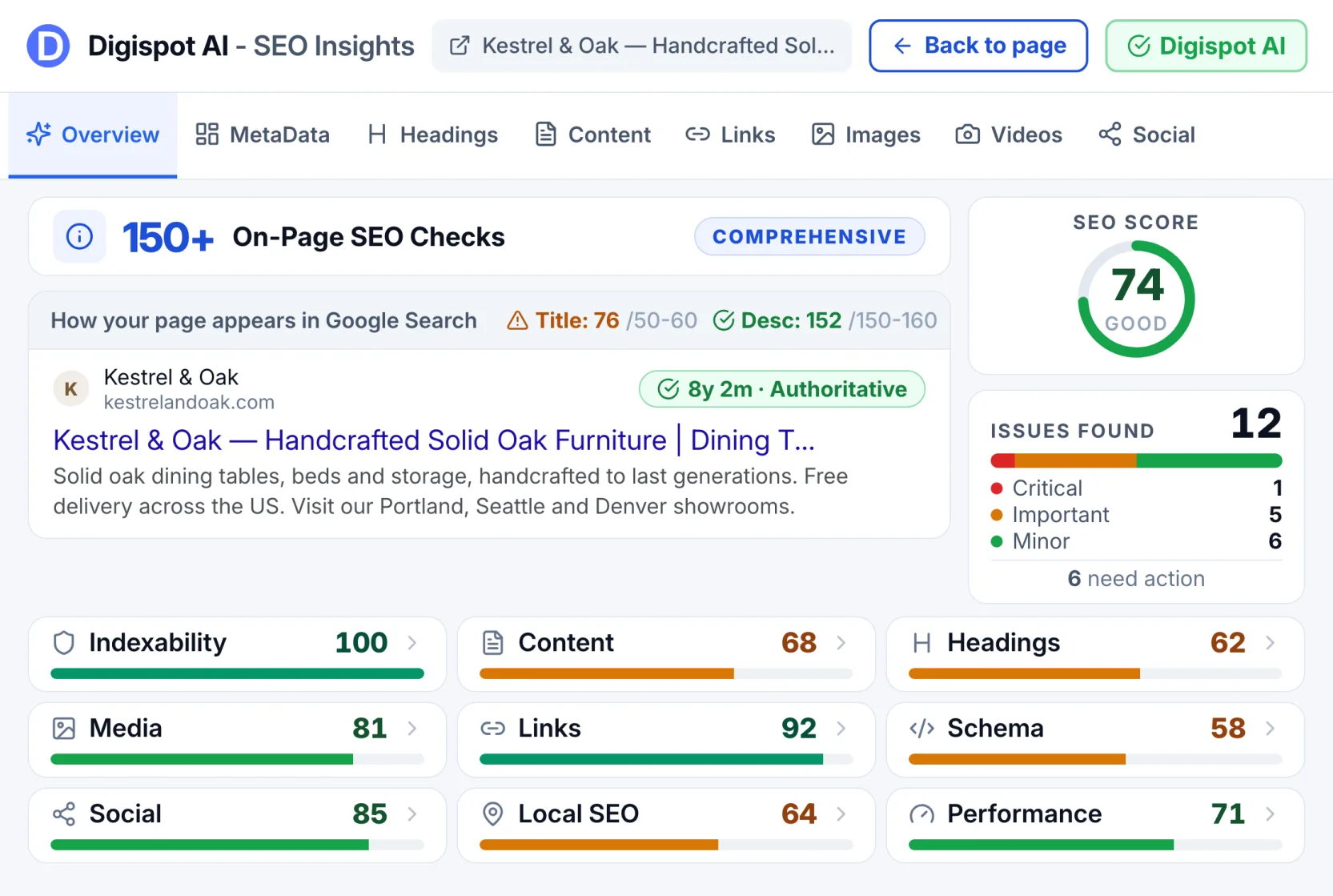
Complementing browser extensions with the Digispot schema markup visualizer and generator ensure search engines interpret your entity data correctly. Generating valid JSON-LD code for Organization, Product, and Article schemas clarifies page context for search engines without manual coding errors.
Free tools worth adding
Practical zero-cost tools expand analysis capabilities without inflating software spending. Combining Google Keyword Planner, Google Trends, and PageSpeed Insights with browser plugins gives teams reliable baseline performance data across keyword demand and page speed.
How to Choose the Right SEO Software for Your Business
Match your business structure and technical bottlenecks to the ideal combination of SEO tools and features. Selecting an SEO platform requires matching your team's operational bottlenecks with software capabilities. Teams struggling with indexing failures need deep browser crawlers, while content teams require strong keyword research and SERP analysis tools.
| Primary Operational Bottleneck | Recommended Tool Stack | Key Selection Feature |
|---|---|---|
| Indexing & Technical Failures | Digispot AI Spider + Search Console | Real-browser rendering & local MCP integration |
| Content Strategy & Gaps | Surfer SEO + Digispot AI Insights | SERP term frequency & search intent mapping |
| Multi-Client Agency Work | SE Ranking + Digispot AI Agency plan | Many client sites, GSC + GA4 beside each audit |
Total cost of ownership involves evaluating seat limits, project allocations, crawl budgets, and API access options. Upgrading to higher tier plans often becomes necessary as your site inventory scales.
Agency Stack vs In-House Marketing Requirements
For agency workflows, see SEO automation for agencies. Digital marketing agencies managing multiple clients require multi-domain support, shared dashboards, and flexible seat licensing. Agency software must handle high-volume technical audits and clear client dashboards.
In-house marketing teams focus deeply on single domains or tight domain portfolios. They benefit from software connecting third-party keyword data directly with internal revenue goals, conversion tracking, and Google Search Console metrics. Aligning technical diagnostic data with revenue metrics is thoroughly detailed in our analysis of SEO analytics tools and metrics.
Best Practices for Getting Maximum Value from SEO Software
Implement proven verification processes to ensure automated tool data directly supports your organic growth goals. Maximizing return on software investments requires using tools to inform human decisions rather than blindly trusting proprietary scores. Relying exclusively on domain authority estimates or automated content scores creates dangerous strategic blind spots.
Cross-Referencing Tool Data with Search Console Truth
Third-party SEO platforms estimate monthly search volumes, backlink counts, and keyword positions using proprietary scrapers and data modeling. These metrics provide useful directional trends, but they rarely match first-party realities.
Key components of search engine data verification:
- First-Party Search Console Data: Serves as the primary source of truth for clicks, impressions, and real rankings.
- Third-Party Market Intelligence: Provides directional competitor data and search volume estimates from Semrush or Ahrefs.
- AI Engine & Brand Citations: Tracks conversational search presence and answer engine visibility using Digispot AI.
Always cross-reference third-party metrics against Google Search Console impressions and real conversion tracking in GA4. Establishing a "verify before fixing" workflow prevents engineers from spending time addressing false positives surfaced by automated auditing tools.
Use tools well
Maximize software value by using automated outputs to inform strategic human decisions rather than blindly chasing proprietary metrics. Cross-referencing third-party estimates against Google Search Console first-party data prevents teams from acting on false positives.
Streamline Your Search Strategy with Modern AI SEO Automation
Learn how unifying audits, analytics, and AI tracking elevates search engine visibility across all channels. Combining technical site auditing, first-party Search Console data, and AI search tracking creates a strong competitive advantage in modern search channels. Automating routine site monitoring prevents technical debt from quietly eroding organic performance over time.
Search strategies now have to adapt to conversational engine discovery. Implementing modern audit workflows helps your domain keep visibility across traditional blue links and AI answer platforms.
Try testing free browser extensions and on-page tools to benchmark your site health today. Start with the free Chrome extension, then see pricing for the one plan that covers every Digispot tool, built for agencies and in-house teams.
Product names and trademarks belong to their owners. Digispot AI is not affiliated with any tool named above. Competitor descriptions reflect public information as of November 2026; check each vendor's site for current details.
In this SEO Tools guide series
- Best Screaming Frog & Sitebulb Alternatives for 2026
- Best Semrush Alternative for 2026: Digispot AI
- Digispot AI vs Ahrefs: An Honest SEO Tool Comparison
- Digispot AI Chrome Extension: Free On-Page SEO Auditor
- SEO Workflow Automation for Agencies With Digispot AI
- SEO Tools for In-House Teams: Audit, Track, Report
- Building an AI-Era SEO Platform: What to Audit
- Google Search Console Integration: Unified GSC & GA4 Data
Audit any page in seconds
200+ SEO checks including Core Web Vitals, schema markup, meta tags, and AI readiness — trusted by 1,250+ SEO experts and marketers.
Frequently Asked Questions
Here are some of our most commonly asked questions. If you need more help, feel free to reach out to us.

Maya Krishnan is an SEO and AEO specialist at Digispot AI. She helps agencies and businesses across industries and countries grow organic traffic from Google and AI search, and knows the major SEO platforms well, from desktop crawlers to all-in-one suites. She checks and approves every article published under her name.
More from Maya Krishnan