
TikTok Search SEO: Master the Social Search Algorithm
Learn how to optimize content for TikTok search. Discover the ranking factors, keyword strategies, and technical tips to win at vertical video search.
 Maya Krishnan
Search behavior is undergoing a fundamental shift. For years, "Googling it" was the universal default for finding answers. Today, that monopoly is fracturing. Data indicates that nearly 40% of young users now prefer TikTok and Instagram for search over Google Maps or Search.
This isn't just a trend for teenagers. It represents a migration toward visual, socially-validated search results. If you are a marketer or business owner, ignoring TikTok social search SEO means ignoring a massive segment of your potential audience who are actively looking for solutions you provide.
TikTok is no longer just an entertainment app; it is a discovery engine. Its algorithm has evolved from a simple recommendation system into a sophisticated search index that parses text, audio, and visual data to answer user queries.
To stay competitive, you must adapt your SEO strategy to include social search. This guide covers the mechanics of TikTok's search algorithm, how to conduct video-specific keyword research, and the technical steps to rank your content both on the app and in Google’s search results.
Key Takeaways
- Treat TikTok as a search index, not a feed. Its search algorithm rewards relevance and semantic matching, so build videos to answer specific queries rather than chase viral engagement.
- Optimize every readable layer. The algorithm ingests spoken audio (ASR), on-screen text (OCR), and captions — front-load your primary keyword across all three within the first three seconds.
- Write full, keyword-rich captions. With up to 4,000 characters available, describe the video like a mini blog post and place the most important keyword in the opening sentence.
- Mine the search bar and competitor comments. Predictive suggestions and the questions in comment sections are the exact long-tail phrases your audience will type next.
- Bridge TikTok to Google. Match captions to real Google queries, keep handles consistent across platforms, and embed videos on your site with VideoObject schema to earn Short Videos carousel placement.
The Shift from Social Media to Social Search
Understanding the "why" behind this shift is crucial for executing the "how." Users are turning to TikTok for search because the intent differs from traditional web search.
When a user searches on Google, they often want a specific answer, a website, or a product page. When they search on TikTok, they want validation and demonstration. They are looking for:
- Visual Proof: Seeing a product in action rather than reading a description.
- Authentic Reviews: Hearing a real person's experience rather than reading a curated blog post.
- Immediate Utility: "How-to" content that gets straight to the point in under 60 seconds.
This behavior mimics search intent optimization strategies used in traditional SEO. The goal remains the same: satisfy the user's query as quickly and accurately as possible. However, the format has changed from long-form text to short-form video.
The Hybrid Search Economy
We are entering a hybrid search economy. Users might start a discovery process on TikTok ("best budget laptop 2026") to see options and reviews, then move to Google for technical specs and purchasing.
Your strategy must capture attention at that initial discovery phase. If your brand isn't visible where the search begins, you lose the customer before they even consider visiting your website.
Decoding the TikTok Search Algorithm
TikTok's search algorithm differs from its "For You Page" (FYP) algorithm. The FYP prioritizes engagement velocity (likes, watch time, shares). The Search algorithm prioritizes relevance and semantic matching.
When a user types a query, TikTok analyzes specific data points to return results. It operates much like a traditional search spider but for video files.
Key Indexing Signals
| Signal Type | Description | Optimization Action |
|---|---|---|
| Visual Content | Computer vision analyzes frames to identify objects, text, and scenes. | Ensure your product or topic is clearly visible in the first 3 seconds. |
| Audio Transcripts | Automated Speech Recognition (ASR) converts spoken words into searchable text. | Speak your primary keywords clearly in the video. |
| Text Overlays | The algorithm reads text placed on top of the video via Optical Character Recognition (OCR). | Add on-screen titles that match search queries. |
| Metadata | Captions, hashtags, and location tags provide direct context. | Write keyword-rich captions (500+ characters) using natural language. |
| User Interactions | Likes and shares validate quality, but "saves" signal high informational value. | Create reference-heavy content that users feel compelled to save. |
Understanding these signals allows you to reverse-engineer success. You are not just making a video; you are creating a data-rich asset that the algorithm can categorize and serve to high-intent users.
Keyword Research for Short-Form Video
Traditional keyword tools like Semrush or Ahrefs are excellent for Google data, but they don't always reflect how people search on social media. Social queries are often more conversational and trend-driven.
1. The Native Search Bar Method
The most accurate data comes directly from the source. Open TikTok and type your broad industry term (e.g., "SEO tips"). Before you hit enter, look at the predictive text dropdown. These are high-volume queries currently trending.
Once you search, scroll horizontally through the related tabs (Top, Videos, Users, Sounds, Hashtags). Look specifically at the "Others searched for" section often found in the comment sections of top videos or integrated into search results.
2. TikTok Creative Center
TikTok offers a free tool called the Creative Center. It allows you to view trending hashtags, songs, and creators by region and industry. You can see which hashtags are on the rise and which are declining.
- Action: Filter by your industry to find "breakout" tags.
- Analysis: Click on a trending tag to see the "Related Interests" data. This helps you build a semantic map of what your audience cares about.
3. Cross-Referencing with Google Trends
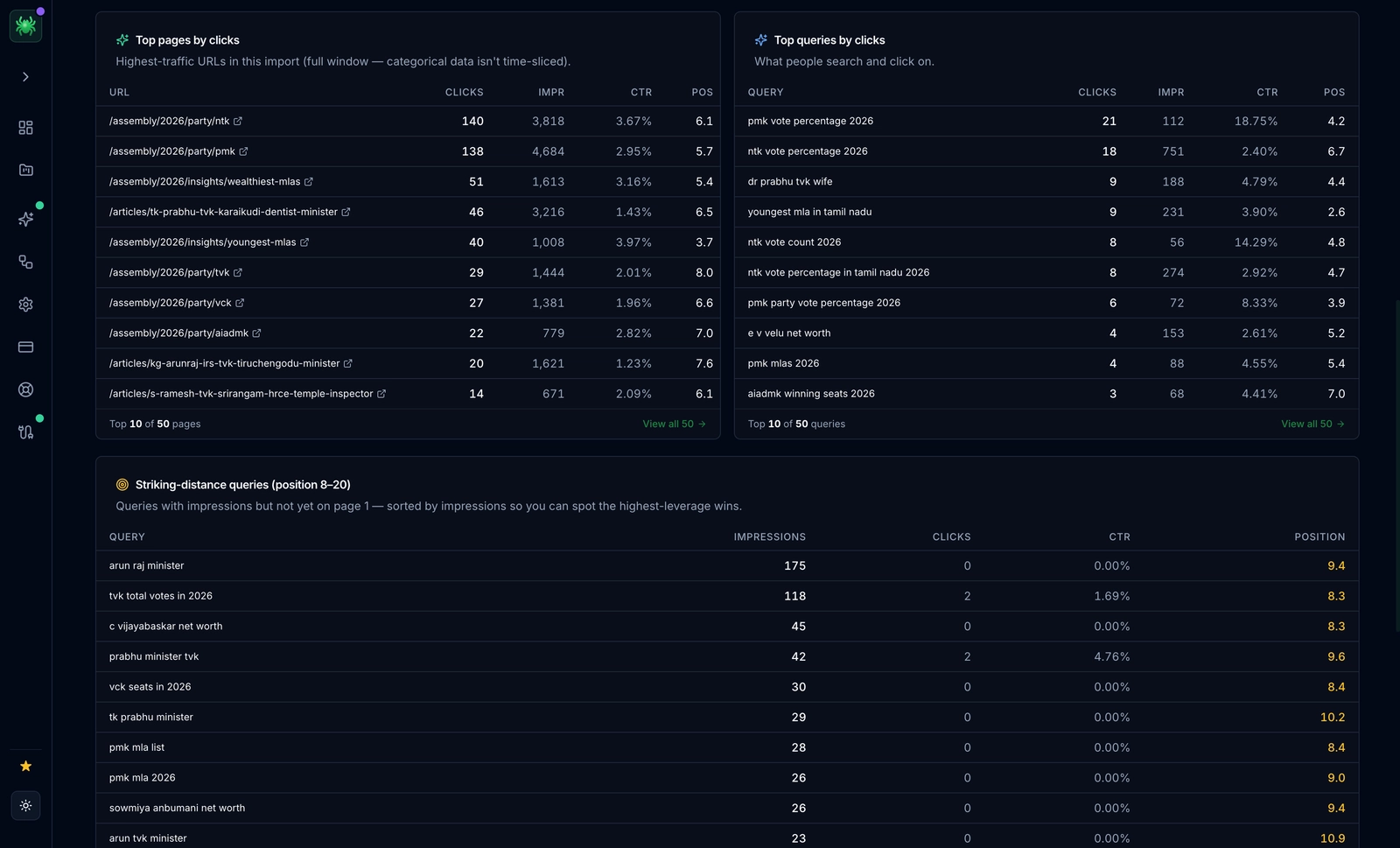
Social trends often bleed into Google Search. Use Digispot AI to track if these social keywords are gaining traction in traditional SERPs. If you see a spike in "TikTok made me buy it" style queries for your product category, you know the demand exists on both platforms.
4. Competitor Comment Analysis
Your competitors' comment sections are goldmines for long-tail keywords. Look for questions users are asking.
- "Does this work for sensitive skin?"
- "Can you show how to set it up?"
- "What is the price in USD?"
These specific questions are exactly what users will type into the search bar later. Create content that directly answers these questions, using the exact phrasing in your title.
Sort competitor videos by "most liked comments" to find the recurring pain points rather than one-off replies, and note any question that appears across several creators — repetition signals genuine search demand, not a fluke. Keep a running list and cluster the phrasings by theme (setup, pricing, compatibility, results) so a single filmed session can knock out five or six related queries. Because these conversational phrasings mirror the way people search on the web too, feed the strongest ones into your written content as part of a broader plan to target long-tail keywords — the same query often has demand on both TikTok and Google, and covering both compounds your reach.
Optimizing Your TikTok Profile for Entity SEO
Before individual videos can rank, your profile must establish authority. In semantic search SEO, this is known as establishing your "entity." TikTok needs to know who you are and what niche you serve.
Username and Display Name
Your handle (@username) should ideally be your brand name. Your Display Name (the bold text above your bio) is searchable. If you are an SEO consultant, include "SEO" or "Marketing" in your Display Name (e.g., "Maya | SEO Strategist"). This helps you appear in accounts searches.
The Bio SEO Stack
You have limited characters, so be efficient.
- Niche Statement: Clearly state what you do using keywords. "Helping SaaS companies scale with SEO."
- Authority Signals: "5M+ Views" or "Featured in Forbes."
- CTA: Direct users to your link-in-bio.
Niche Consistency
If you post about cooking one day and cryptocurrency the next, the algorithm cannot categorize your account. This hurts your search visibility. Stick to a primary content pillar for at least the first 90 days to establish topical authority.
Step-by-Step Video Optimization Framework
This is the core of your TikTok social search strategy. Treat every video upload like publishing a blog post. It needs structure, keywords, and optimization.
1. The "Hook" as a Title Tag
Your opening 3 seconds act like an H1 tag. You must visually and verbally state the topic.
- Visual: Use a text overlay that stays on screen for 3-5 seconds. Example: "How to Fix Broken Links."
- Verbal: Speak the keyword immediately. "Here is how you fix broken links on your website..."
2. Keyword-Rich Captions
Gone are the days of short, vague captions. TikTok now supports up to 4,000 characters. Use this space!
- Write a mini-blog post describing the video content.
- Include primary and secondary keywords naturally.
- Place the most important keywords in the first sentence (front-loading).
Example: Bad: "Check this out! 🔥 #seo" Good: "Here is a complete guide on how to fix broken links to improve your website rankings. Broken backlinks can hurt your SEO score, so use this simple method to reclaim lost authority. #SEOtips #DigitalMarketing"
3. Strategic Hashtagging
Hashtags function as broad categorization buckets.
- Broad: #SEO, #Marketing (High competition, helps categorize niche)
- Niche: #TechnicalSEO, #LinkBuilding (Lower competition, higher intent)
- Specific: #BrokenLinkBuilding (Very high intent)
Avoid using #FYP or #ForYou. They are too diluted and provide no semantic value to the search algorithm.
4. Accessibility Features
Enable automated captions (subtitles). Many users watch without sound, but more importantly, these captions add another layer of text for the algorithm to index. Edit the auto-captions to ensure your keywords are spelled correctly.
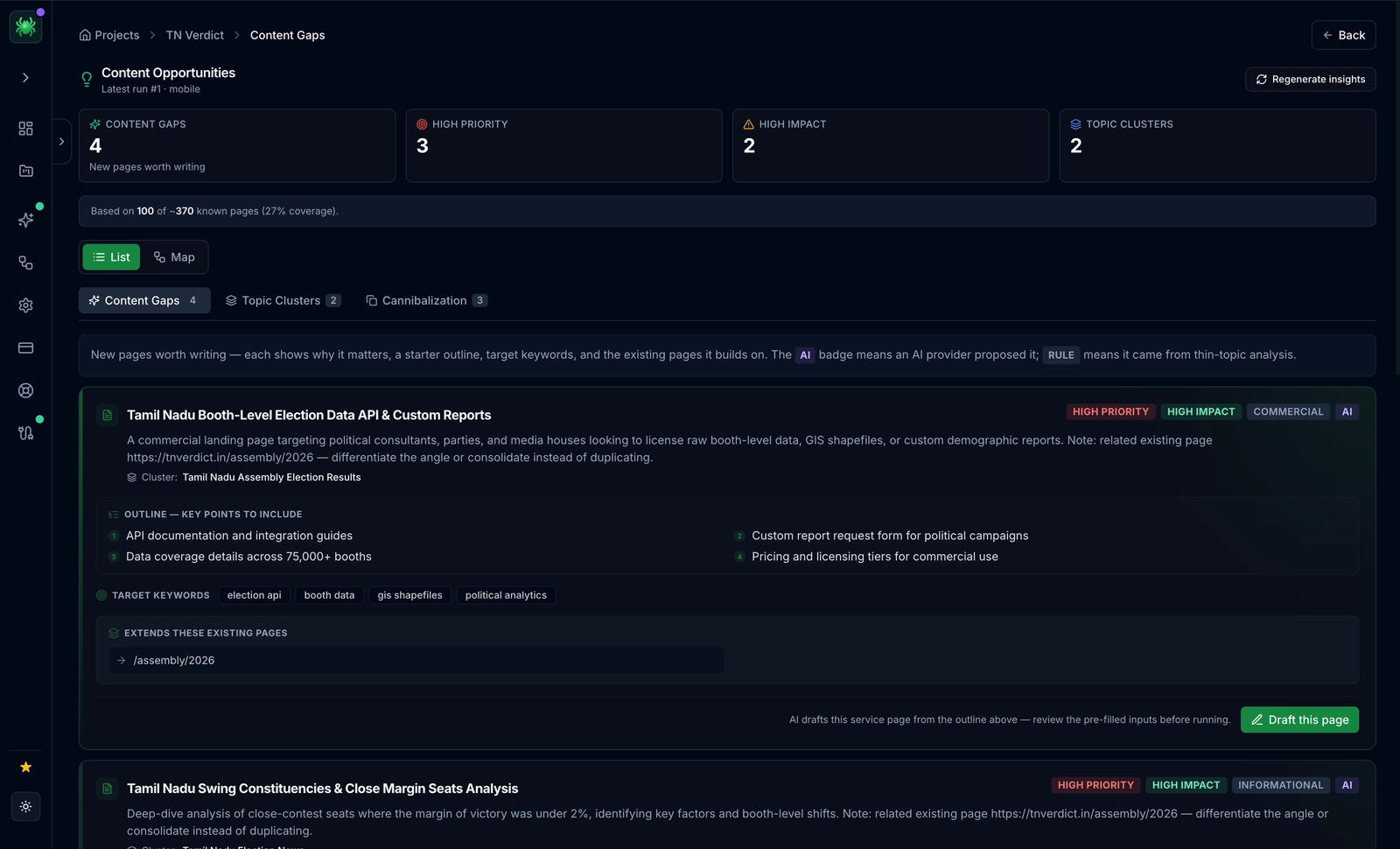
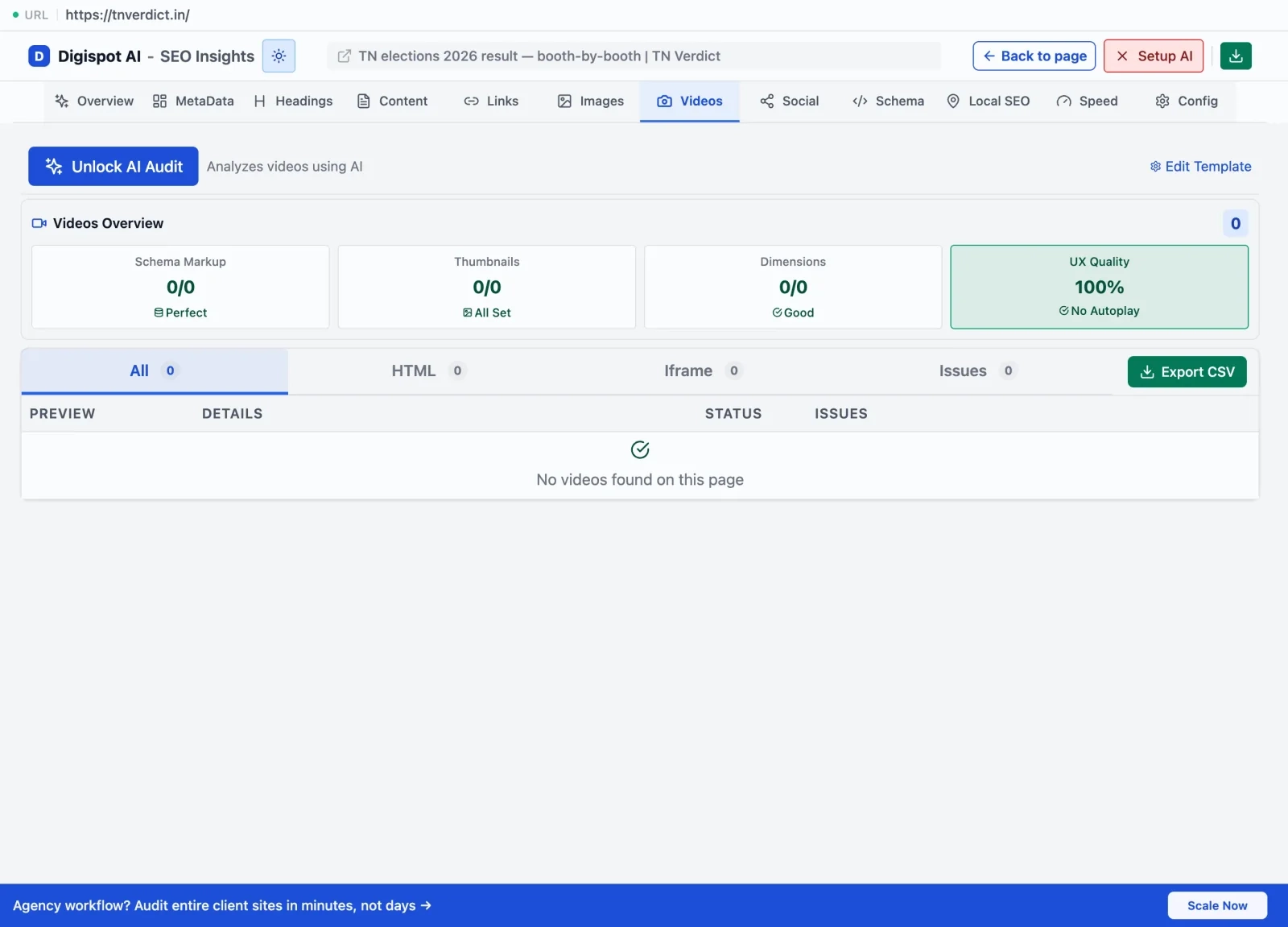
"Digispot AI can help you identify content gaps in your strategy by analyzing which competitor pages are ranking for these same questions on Google."
Technical SEO Factors for TikTok
While you don't have access to a robots.txt file on TikTok, technical principles still apply.
Video Quality and Aspect Ratio
TikTok prioritizes high-definition content. Videos uploaded in 1080p rank better than 720p. Always shoot in 9:16 (vertical). Letterboxed landscape videos (16:9) signal "repurposed content" and often see reduced reach.
Native Features vs. Third-Party Tools
The algorithm favors videos edited within TikTok or CapCut (owned by ByteDance). Using native text features allows the system to read your text overlays easily. If you burn in text using Adobe Premiere, the OCR (Optical Character Recognition) might struggle to read it depending on the font and contrast.
Location Tagging
For local businesses, the location tag is a critical ranking factor. It anchors your content to a specific geographic entity. If you run a bakery in Chicago, tagging "Chicago, IL" tells the algorithm to show your video to users in that area searching for "bakery."
Layer the location signal instead of relying on the tag alone. Say the city or neighborhood aloud in the first line ("best croissant in Wicker Park"), repeat it in the caption, and add a text overlay naming the area so ASR, OCR, and metadata all reinforce the same place. Tag the specific venue rather than just the city when possible — a named business location carries more weight than a broad regional tag and helps you surface for "near me" style discovery. Keep the geographic entity consistent with the name, address, and phone details you use elsewhere online, since these are the same signals that power advanced local SEO strategies on the web. When you produce a series for one market, reuse the same location entity across every video so the algorithm builds a clear picture of where you operate.
Leveraging TikTok for Google SERP Domination
Google and Bing are aggressively integrating social content into search results. Search for a recipe or a workout routine on Google mobile, and you will likely see a "Short Videos" carousel.
To get your TikToks into this carousel:
- Keyword Matching: Ensure your video caption and text overlay match a high-volume Google query exactly.
- Cross-Platform Consistency: Use the same handle and branding across TikTok, YouTube Shorts, and Instagram Reels. Google connects these entities. If YouTube is part of your mix, pair this with a dedicated YouTube video SEO ranking strategy so each platform reinforces the same topical authority.
- Schema Markup: While you can't add schema to TikTok directly, you can embed your TikTok videos on your website. Use the free Schema Markup Generator to add
VideoObjectschema to the page where you embed the content. This helps Google index the video and associate it with your domain.
If you are unsure how your current content is performing on traditional search, try the free On-Page SEO Analysis tool to audit the pages where you've embedded your social content.
Measuring Social Search Performance
Vanity metrics like "views" are insufficient for measuring search success. You need to track intent-based metrics.
TikTok Analytics (Business Suite)
Go to Analytics > Content > Click on a specific video. Look for the "Traffic Source" breakdown.
- If "Search" appears in your traffic sources, your SEO strategy is working.
- Note the specific search queries listed (TikTok often shows you exactly what terms brought users to the video).
Search Conversion Rate
Track how many users click the link in your bio after watching a search-optimized video. These users usually have higher intent than FYP browsers. Use UTM parameters in your bio link to attribute traffic specifically to TikTok.
Advanced Tactics: The "Zero-Click" Social Strategy
Similar to zero-click searches in Google SEO, many TikTok users want the answer without leaving the app.
Does this have value? Yes. It builds massive brand affinity. If you solve a problem quickly in a video, the user remembers you as the expert.
- Structure: Question -> Answer -> Context.
- Visuals: Use green screen effects to show screenshots or diagrams.
- Follow-up: "I have a free checklist for this linked in my bio."
This establishes authority. When that user eventually needs a paid tool or service, you are the first brand they search for.
Future-Proofing: AI and Social Search Evolution
As Artificial Intelligence continues to evolve, the line between social search and generative answers will blur. Platforms like Google's AI Overviews and SearchGPT are already synthesizing information from various sources, including social video transcripts.
By optimizing your TikTok content with clear audio, text overlays, and structured captions, you are making your content AI-readable. You are preparing your brand not just for TikTok search, but for the Large Language Models (LLMs) that scrape this data to answer user questions. The same principles that help you optimize content for LLMs on the web — clear structure, explicit answers, and unambiguous phrasing — carry directly over to social video transcripts.
Get instant SEO insights on how your web pages (and embedded social content) are performing with our free Chrome extension. It provides real-time data on how search engines view your content structure.
Start Improving Your Social Search Visibility Today
TikTok SEO is not a fad; it is the response to a changing digital behavior. Users demand visual, authentic, and immediate answers. By treating TikTok as a search engine rather than just a viral video app, you unlock a sustainable stream of high-intent traffic.
Action Plan:
- Audit: Review your top 10 performing videos. Did you include keywords in the text overlay and captions?
- Research: Spend 15 minutes using the TikTok search bar to find questions your customers are asking.
- Create: Film 3 videos this week specifically designed to answer those questions.
- Optimize: Apply the "Hook + Caption + Hashtag" framework to every upload.
Ready to improve your search visibility across all platforms? Try Digispot AI for comprehensive website audits, competitor intelligence, and actionable recommendations to dominate the SERPs in the age of AI search.
References
Audit any page in seconds
300+ SEO checks including Core Web Vitals, schema markup, meta tags, and AI readiness — trusted by 1000+ SEO experts and marketers.
Frequently Asked Questions
Here are some of our most commonly asked questions. If you need more help, feel free to reach out to us.
Written by
Maya Krishnan
Digital growth expert
Maya is a seasoned expert in web development, SEO, and digital strategy, dedicated to helping businesses achieve sustainable growth online. With a blend of technical expertise and strategic insight, she specializes in creating optimized web solutions, enhancing user experiences, and driving data-driven results. A trusted voice in the industry, Maya simplifies complex digital concepts through her writing, empowering readers with actionable strategies to thrive in the ever-evolving digital landscape.