DeepSeek Search Optimization: 2026 AEO Guide
Master Answer Engine Optimization (AEO) for DeepSeek V3 and RAG search. Rank in AI answers with technical SEO and structured data.
 Maya Krishnan
Search works differently now. While Google remains the dominant entry point for web navigation, the rise of "Answer Engines" driven by Large Language Models (LLMs) has created a parallel ecosystem. Among these, DeepSeek has rapidly emerged as a formidable player, particularly with its V3 open-source model which rivals GPT-4 in reasoning and coding capabilities.
For SEO professionals, ignoring DeepSeek is a strategic error. Unlike traditional search engines that rely on link graphs, DeepSeek and similar models rely on Retrieval-Augmented Generation (RAG). They don't just find your content; they read it, understand it, and decide whether to synthesize it into an answer for the user.
If your content isn't optimized for this machine-reading process, you effectively don't exist in the AI search landscape.
This guide details the specific technical and content strategies required to optimize for DeepSeek. We will move beyond basic SEO advice and examine the mechanical requirements of Mixture-of-Experts (MoE) models, token economics, and semantic structuring.
Key Takeaways
- Treat DeepSeek as an answer engine, not a link engine. It synthesizes responses with Retrieval-Augmented Generation (RAG), so optimize for being read and cited, not just indexed.
- Lead with the answer (BLUF). Put the direct, factual answer in the first 200 words of each section so the model can extract it without wading through fluff.
- Feed the model structured data. JSON-LD (
Article,FAQPage,TechArticle,Product) gives DeepSeek unambiguous ground truth and lowers hallucination risk. - Keep the page machine-readable. Allow the
DeepSeek-Crawler, serve clean SSR/static HTML, and reduce DOM depth so text extraction stays cheap and accurate. - Build entity authority. Consistent brand and author signals across your site and external profiles raise the model's confidence score in citing you.
Understanding DeepSeek's Architecture for AEO
To optimize for DeepSeek, you must understand how it consumes data. DeepSeek V3 utilizes a Mixture-of-Experts (MoE) architecture. Unlike a dense model that activates all parameters for every query, an MoE model activates only a fraction of its "experts" relevant to the specific prompt.
This has massive implications for your content strategy:
- Topical Purity: Your content must clearly signal which "expert" should handle it. A page that wanders between unrelated topics confuses the routing network, reducing the probability of retrieval.
- Context Windows: DeepSeek boasts an massive context window (up to 128k tokens in some implementations). However, "lost in the middle" is a real phenomenon. Critical information must be placed at the start or end of the context document, not buried in the middle.
- Token Economics: LLMs "pay" a computational cost to process text. They prefer concise, high-density information. Fluff is not just bad writing; it is a computational inefficiency that lowers your content's utility score.
Digispot AI uses a multi-LLM engine that specifically analyzes your content against these MoE architectures, helping you predict how models like DeepSeek interpret your pages.
Technical Foundations: Crawlability and Rendering
DeepSeek uses its own crawler (DeepSeek-Crawler) to build its training datasets and real-time retrieval indices. Unlike Googlebot, which is highly forgiving of messy JavaScript, AI crawlers generally prefer clean, static HTML for efficiency.
Optimizing for the DeepSeek Crawler
- Robots.txt Configuration: Ensure you are not inadvertently blocking AI agents. While some publishers block
GPTBot, blocking DeepSeek removes you from one of the fastest-growing ecosystems. See our walkthrough on how to optimize for AI crawlers for a complete agent allow/deny matrix.User-agent: DeepSeek-Crawler Allow: / Disallow: /checkout/ Disallow: /cart/ - Server-Side Rendering (SSR): While DeepSeek is capable of rendering JS, rely on SSR or static generation. The faster the text payload is delivered, the higher the crawl efficiency. If your site depends on client-side hydration, review our JavaScript dynamic rendering guide to make sure AI crawlers receive the fully-formed text.
- Clean DOM Structure: Reduce DOM depth. Excessive
divwrappers confuse the text extraction layers. Your HTML should semantically outline the document structure.
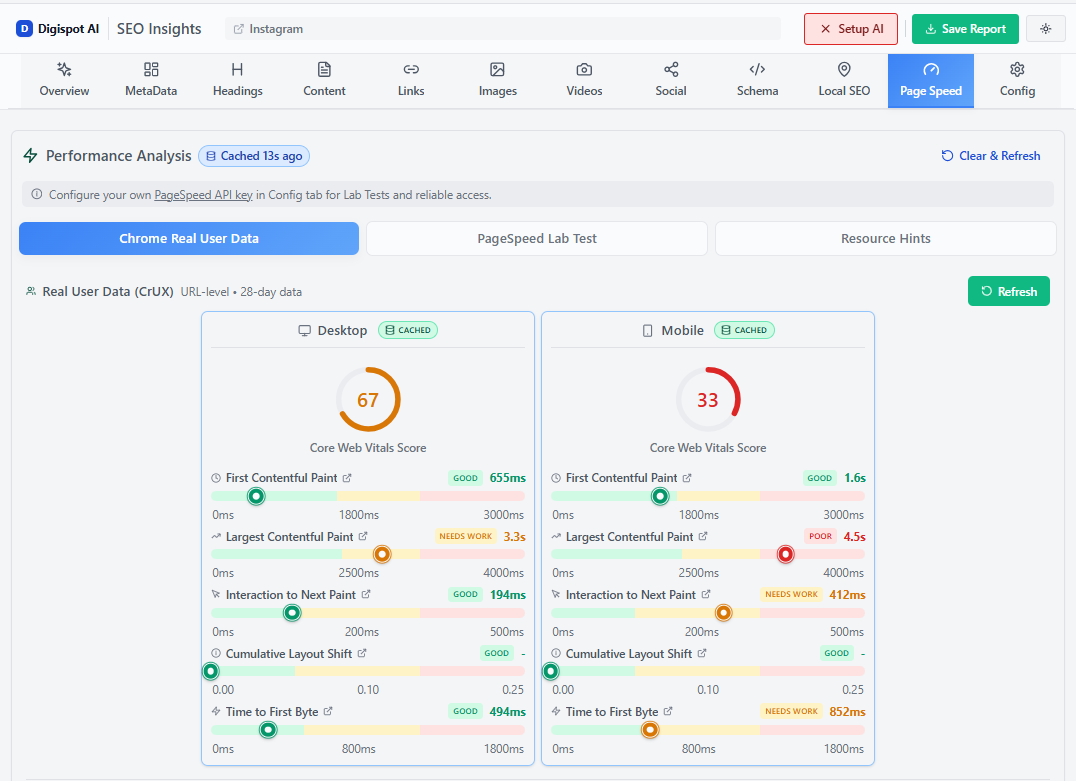
You can instantly check if your DOM is too complex for efficient AI parsing using our free Chrome extension. It highlights DOM density and render-blocking resources that might impede AI crawlers.
Structured Data: The Language of LLMs
If HTML is for browsers, Structured Data (JSON-LD) is for LLMs.
DeepSeek relies heavily on structured data to hallucination-proof its answers. When an LLM generates a response, it looks for "ground truth" to anchor its reasoning. Schema markup provides this ground truth in a machine-readable format that requires zero inference.
Essential Schema Types for DeepSeek
- Article/NewsArticle: Must include
author,datePublished, andheadline. - FAQPage: This is the "cheat code" for AEO. By formatting questions and answers in schema, you directly feed the RAG system Q&A pairs it can mimic.
- Product: Critical for e-commerce. Include
price,availability, andreviewnested data. - TechArticle: Since DeepSeek excels at coding and technical queries, using
TechArticlefor documentation helps route your content to the model's coding experts.
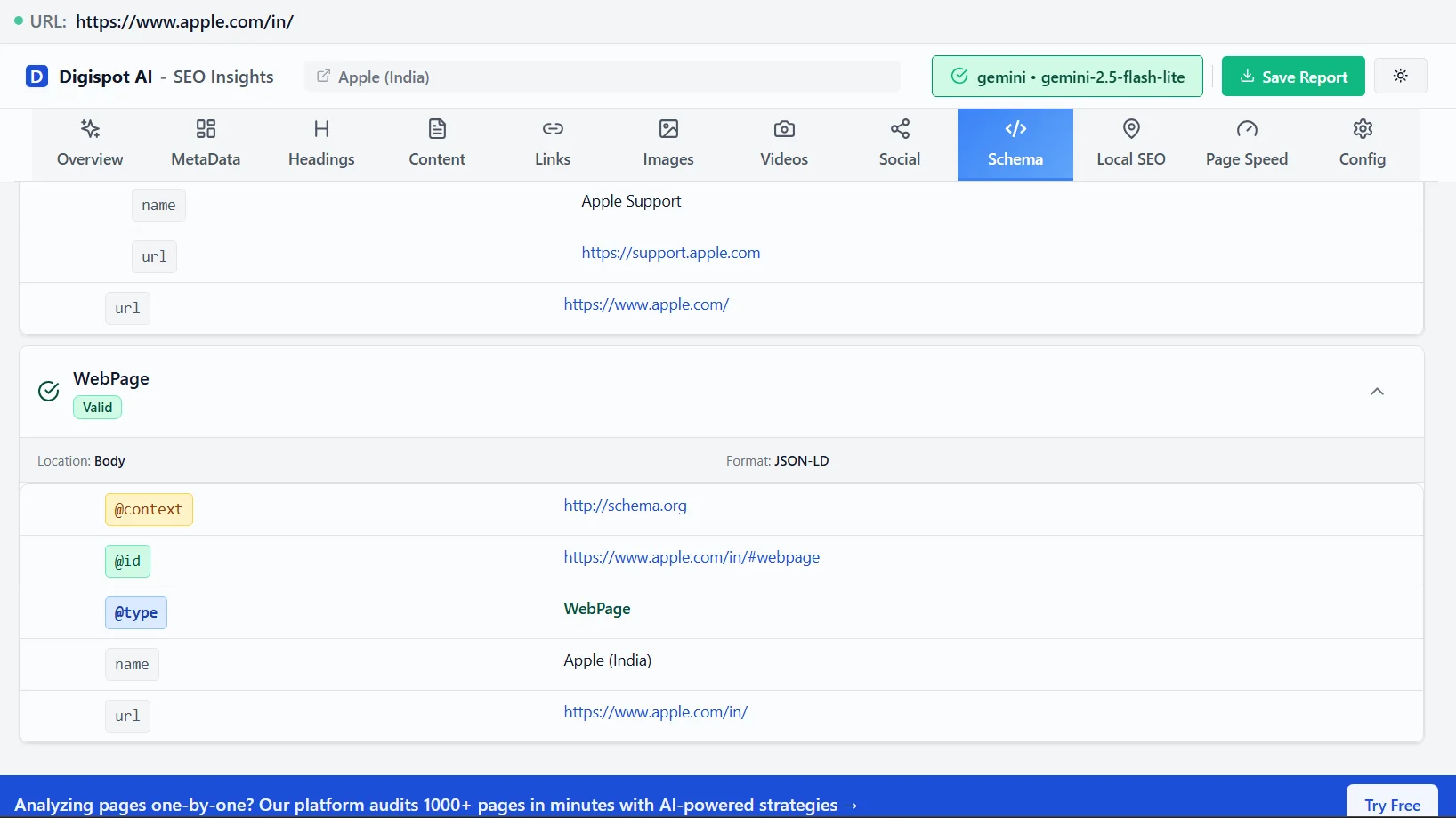
Implementing this correctly can be difficult manually. Use the free Schema Markup Generator to create valid, error-free JSON-LD that you can copy and paste directly into your site headers.
For a deeper dive into implementation, read our guide on advanced schema markup strategies.
Content Strategy: Writing for the "Inference Engine"
Optimizing text for DeepSeek requires a shift from "Keyword Optimization" to "Context Optimization." You are no longer trying to match a string of text; you are trying to complete a pattern of reasoning.
The BLUF (Bottom Line Up Front) Method
DeepSeek prioritizes the beginning of content inputs. Structure your content so the most critical answer appears in the first 200 words.
- Traditional SEO: "In this article, we will explore the various nuances of X..." (Fluff)
- DeepSeek AEO: "X is a [definition]. It works by [mechanism]. The primary benefit is [benefit]." (Direct)
Information Density and Formatting
LLMs parse markdown efficiently. Structure your content to look like a clean datasheet:
- Use Definition Lists:
Term: Definitionformats are easily ingested. - Data Tables: Tables are vector-gold. They establish relationships between entities (e.g., Price vs. Feature) clearly.
- Logical Headings: Do not use clever headings. Use descriptive ones. Change "Don't break the bank" to "Cost-Effective Strategies."
By improving the semantic clarity of your content, you also improve your standing in traditional search. Learn more about how this connects to semantic search SEO.
Entity Authority and E-E-A-T
DeepSeek, like Google, attempts to discern truth from noise. It assigns "weights" to sources based on perceived authority. This is where E-E-A-T (Experience, Expertise, Authoritativeness, and Trustworthiness) applies to AI models.
Establishing Entity Consistency
Your brand is an "entity" in the model's vector space. If your brand is associated with "Enterprise Software" in 80% of citations but "Cheap Web Hosting" in 20%, the model's confidence score drops.
- Unified Biography: Ensure your "About Us" page, author bios, and external profiles (LinkedIn, Crunchbase) use consistent language to describe what you do.
- Citations: Getting mentioned in other high-authority documents (news, whitepapers) trains the model to associate your brand with specific topics.
- Author Verification: Attribute content to real experts. DeepSeek V3 creates associations between authors and topics. An article about "medical advice" written by "admin" has a near-zero trust weight.
For a comprehensive breakdown of how to build authority signals, refer to our E-E-A-T SEO Guide.
Code and Technical Documentation Optimization
One of DeepSeek's primary differentiators is its performance on coding benchmarks (HumanEval). It is widely used by developers and integrated into IDEs.
If you are a B2B SaaS or technical company, ranking in DeepSeek's coding answers is a massive organic channel.
Best Practices for Technical Content:
- Valid Code Blocks: Ensure all code snippets are syntax-highlighted and actually functional. The model "runs" code mentally; broken code is penalized. Always declare the language on the fence (
```python,```bash) so the model routes the block to the correct language expert and preserves indentation on extraction. - Comment Your Code: Comments within code blocks help the model understand the intent behind the function, improving the likelihood of it being recommended for that specific intent. Prefer a short header comment stating what the snippet does over line-by-line noise—state the input, the output, and any prerequisites the reader needs.
- Show Complete, Runnable Examples: Fragments that reference undefined variables force the model to guess. Include imports, setup, and expected output so DeepSeek can present the block as a self-contained solution rather than paraphrasing it.
- API Documentation: Structure API docs with clear Request/Response examples—method, endpoint, headers, a sample payload, and the exact JSON returned. This allows DeepSeek to accurately construct API calls for users asking "How do I use the X API?" Our guide to SEO for API documentation covers how to structure reference pages so both crawlers and models can parse them.
- Version and Date Your Docs: Technical answers decay quickly. Surfacing a visible "last updated" date and version number signals recency, which raises the trust weight of the page for time-sensitive coding queries.
Zero-Click and Answer Engine Optimization
The goal of DeepSeek is often to provide a "Zero-Click" experience—giving the user the answer without them leaving the interface. While this sounds counter-intuitive for traffic, being the cited source builds immense brand awareness and drives high-intent traffic from users who need deep verification.
To win these spots:
- Identify questions your audience asks.
- Provide the answer immediately in a concise paragraph (<50 words).
- Follow up with "Steps," "Lists," or "Data" that the model can extract.
This mirrors the strategy for Google's featured snippets. You can learn more about capturing these positions in our guide on zero-click search strategies.
Monitoring AEO Performance
Tracking success on DeepSeek is harder than Google Analytics. There is no "Search Console" for DeepSeek yet. However, you can infer performance through:
- Referral Traffic: Check analytics for referrers containing
deepseek,chat, or purely direct traffic spikes correlating with specific content updates. Segment these visits separately—AI-referred users tend to arrive with deeper intent and higher engagement, so track scroll depth and conversion rather than raw sessions. - Brand Mentions: Use tools to monitor how often your brand appears in AI-generated outputs, and log how you are described. A shift in the adjectives and topics the model attaches to your name is an early signal that your entity association is strengthening or drifting.
- Prompt Testing: Periodically ask DeepSeek the head questions your content targets and record whether you are cited, paraphrased, or absent. This manual sampling is the closest proxy to a "rank check" until dedicated consoles exist.
- AEO Audits: Regularly audit your site to see if it meets the technical criteria for AI ingestion. The same principles apply across every model—our answer engine optimization guide breaks down the shared checklist for DeepSeek, ChatGPT, and Google AI Overviews.
Digispot AI offers the industry's first AEO tracking module, allowing you to monitor how your brand is perceived and cited across DeepSeek, ChatGPT, and Google AI Overviews.
Action Plan: Optimizing for DeepSeek Today
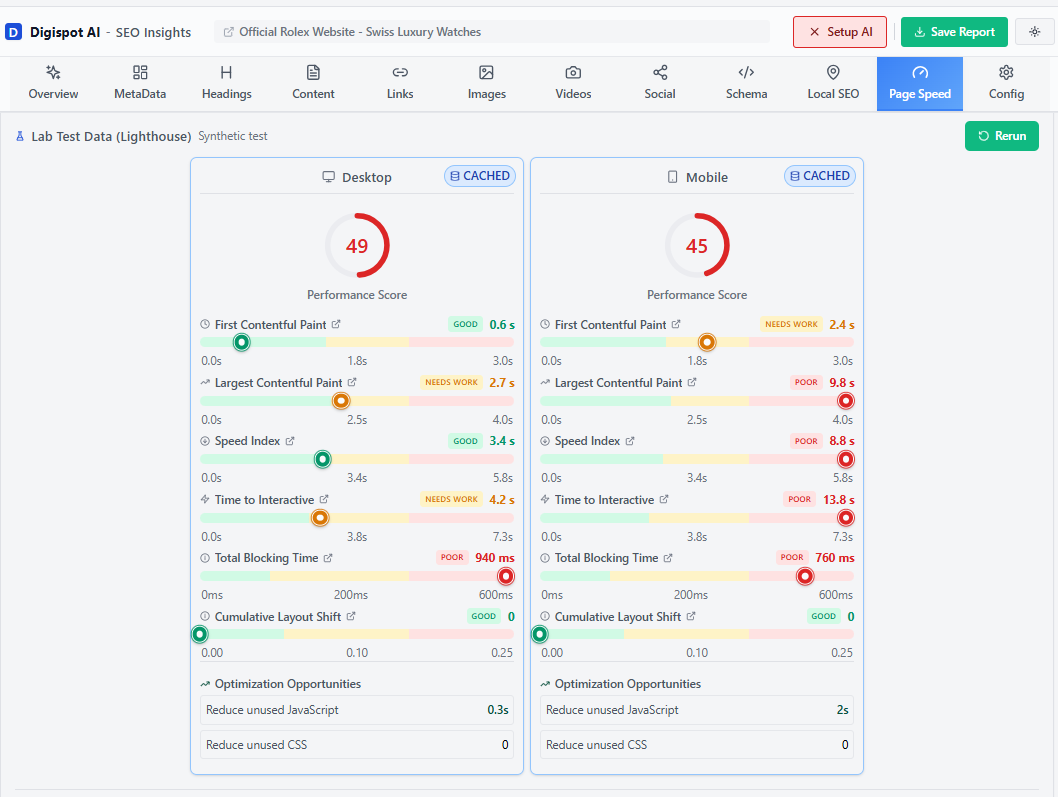
The window to establish authority in these new models is now. Once the model "learns" that your site is the authority on a topic, that weight is carried forward into future versions (V4, V5).
Step-by-Step Checklist:
- Audit Your Technicals: Ensure
DeepSeek-Crawleris allowed and your HTML renders efficiently. Try the On-Page SEO Analysis tool to catch immediate errors. - Implement Schema: Add
Article,FAQPage, andOrganizationschema to every relevant page. - Revise High-Traffic Content: Rewrite introductions to be direct (BLUF method). Add data tables to text-heavy posts.
- Build Entity Signals: Audit your "About" pages and author bios for consistency.
Conclusion
DeepSeek represents the fragmentation of search. We are moving from a monopoly (Google) to a diverse ecosystem of specialized agents and models. Optimizing for DeepSeek is not just about capturing traffic from one platform; it is about future-proofing your content for the AI era.
Content that is clean, structured, factual, and authoritative will win in every environment—whether it's a traditional search engine or a next-generation neural network.
Ready to improve your search visibility across all platforms? Try Digispot AI for comprehensive website audits and actionable recommendations that bridge the gap between traditional SEO and AEO.
Related deep-dives
Continue with these closely related guides:
- what is seo? — What is SEO? The Complete Guide to Search Engine Optimization in 2026
References
Audit any page in seconds
300+ SEO checks including Core Web Vitals, schema markup, meta tags, and AI readiness — trusted by 1000+ SEO experts and marketers.
Frequently Asked Questions
Here are some of our most commonly asked questions. If you need more help, feel free to reach out to us.
Written by
Maya Krishnan
Digital growth expert
Maya is a seasoned expert in web development, SEO, and digital strategy, dedicated to helping businesses achieve sustainable growth online. With a blend of technical expertise and strategic insight, she specializes in creating optimized web solutions, enhancing user experiences, and driving data-driven results. A trusted voice in the industry, Maya simplifies complex digital concepts through her writing, empowering readers with actionable strategies to thrive in the ever-evolving digital landscape.