SaaS SEO-A Blueprint for Sustainable Growth
SEO blueprint for SaaS companies to drive sustainable growth. Learn product-led content, technical optimization, and strategies for software search visibility.
 Maya Krishnan
Great products die in obscurity every day. In the SaaS marketplace, building a revolutionary platform is only the first step; if your ideal customer cannot find you when they are searching for a solution, your code might as well not exist.
The digital landscape is your primary battleground, and search visibility is the ammunition. This is where SaaS SEO transcends its role as a marketing channel and becomes a fundamental business asset. It is the art and science of positioning your software in front of decision-makers exactly when they are looking for answers.
But SaaS SEO is not simply about ranking for "software" keywords. It requires architecting a strategy that builds a resilient engine for long-term growth, reducing reliance on paid acquisition (CAC), and improving Customer Lifetime Value (LTV).
This guide provides a professional framework for developing a sophisticated SaaS SEO strategy. We will move beyond basic definitions to explore the nuances of B2B search, advanced technical optimization, and how to future-proof your presence against AI disruptions.
What is SaaS SEO and Why is it Unique?
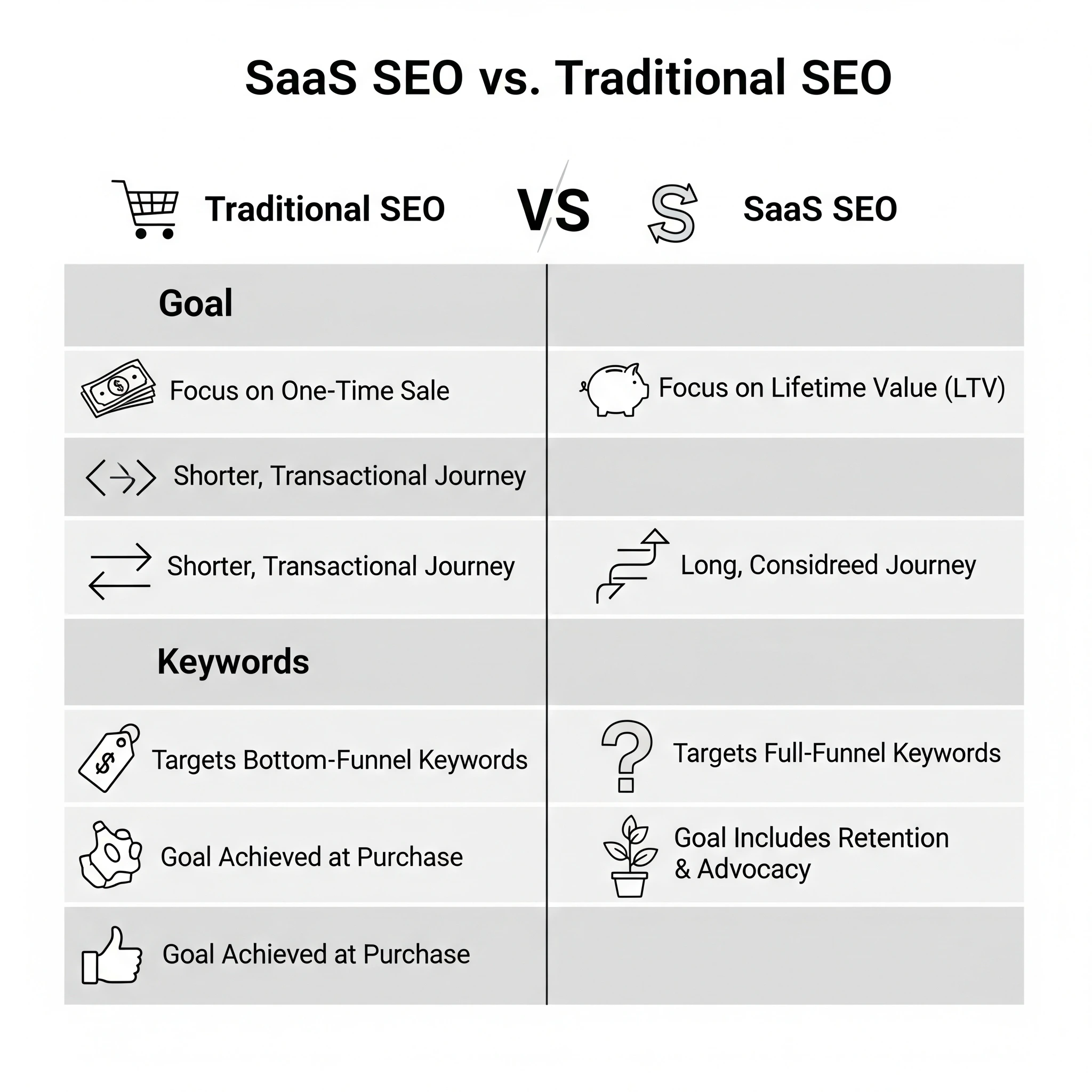
SaaS SEO is the process of increasing the organic traffic for a Software-as-a-Service company by earning top rankings on search engine results pages (SERPs) for relevant keywords. Unlike e-commerce SEO, which focuses on transactional speed, SaaS SEO focuses on nurturing long-term relationships.
The customer journey here is complex. It typically involves multiple touchpoints, various stakeholders (from end-users to CTOs), and a longer consideration phase. You aren't just selling a widget; you are selling a subscription that integrates into a business's workflow.
The Retention Mandate
The subscription model means customer retention is as vital as acquisition. SEO efforts must not stop at the sign-up page. They must extend to the entire customer lifecycle—onboarding, adoption, and advocacy.
Help center articles, API documentation, and "how-to" guides serve a dual purpose: they attract new users searching for specific technical solutions and keep existing customers happy, reducing churn. If a user struggles to use a feature and Googles the solution, your documentation should appear first—not a competitor’s blog post criticizing your UX.
Technical SEO: Engineering for Performance
A winning strategy is built upon a solid technical foundation. If search engines cannot crawl, index, and render your pages efficiently, your content investments are wasted.
Core Web Vitals and User Experience
For SaaS companies, your marketing site is often a preview of your product's performance. If your landing page is sluggish, users assume your app will be too. Google’s Core Web Vitals—Largest Contentful Paint (LCP), Interaction to Next Paint (INP), and Cumulative Layout Shift (CLS)—are critical ranking signals.
You must aim for an LCP under 2.5 seconds. Anything slower correlates with higher bounce rates and lower trial sign-ups. To master these metrics, review our guide to Core Web Vitals optimization for specific engineering fixes.
Crawl Budget and Architecture
SaaS sites can grow rapidly, especially if you utilize programmatic SEO to create thousands of integration pages or template libraries. This can exhaust your crawl budget, leaving important pages unindexed.
- Logical Hierarchy: Ensure a flat architecture where key pages are no more than three clicks from the homepage.
- Sitemap Hygiene: Split XML sitemaps by content type (e.g.,
/blog-sitemap.xml,/features-sitemap.xml,/integrations-sitemap.xml) to monitor indexation rates granularly. - Internal Linking: Use a strategic internal linking structure to pass authority from high-traffic blog posts to high-value feature pages.
Identifying these structural issues manually is difficult. Digispot AI can help you identify and fix these crawlability issues automatically with AI-powered audits.
Mobile-First Indexing
Even if your B2B customers convert on desktop, Google indexes the mobile version of your site. Ensure your responsive design does not hide critical content or calls-to-action on smaller screens.
Before launching new pages, run them through a comprehensive SEO audit checklist to catch canonical errors, broken links, or heavy script loads that might sabotage rankings.
Keyword Research: Decoding User Intent
Effective keyword research for SaaS is not about search volume; it is about intent validation. You must decipher why a user is searching. We map this directly to the sales funnel:
1. Top-of-Funnel (ToFu): Problem Aware
Users here experience a pain point but don't know the solution.
- Queries: "how to reduce customer churn", "remote team productivity tips"
- Strategy: Create educational guides that define the problem and softly introduce your methodology.
2. Middle-of-Funnel (MoFu): Solution Aware
Users know solutions exist and are comparing options. This is the battleground for high-intent traffic.
- Queries: "best CRM for startups", "Asana vs Trello", "Slack alternatives"
- Strategy: Build comparison pages and "Best of" lists. Be honest about where you win and where you don't. Transparency builds trust.
3. Bottom-of-Funnel (BoFu): Product Aware
Users are ready to buy or try.
- Queries: "Digispot AI pricing", "Salesforce integration", "buy social media scheduler"
- Strategy: Optimize landing pages for conversion. Ensure pricing is clear and "Book a Demo" CTAs are prominent.
Pro Tip: Collaborate with your PPC team. Identify keywords with high conversion rates in paid campaigns and prioritize them for organic optimization. This data-backed approach reduces the risk of targeting vanity keywords.
Content Strategy: Product-Led Growth (PLG)
In SaaS, content is a feature of the product. The goal is to shift from creating content that just ranks to creating content that demonstrates value.
Product-Led Content
Don't just write about a problem; show how your tool solves it. This is Product-Led Content. Instead of a generic post on "How to manage projects," write "How to automate sprint planning using [Your Tool]'s new Kanban view."
- Show, Don't Just Tell: Use screenshots, GIFs, and interactive embeds of your product within the blog post.
- Solve the Immediate Pain: Give the user the answer, then offer the tool as the accelerator.
One of the common SEO mistakes SaaS brands make is hiding their product behind a wall of theory. Put your product front and center.
The "VS" and "Alternative" Strategy
Competitor comparison pages are high-converting assets. If you don't define how you compare to your biggest rival, they will do it for you (and likely bias the narrative).
- Create distinct pages for "YourBrand vs Competitor".
- Target "Competitor Alternatives" keywords.
- Use comparison tables to highlight feature gaps you fill.
Diversifying Content Formats
Different stakeholders consume information differently.
- Whitepapers/Ebooks: For the C-suite requiring deep industry analysis.
- Templates/Tools: Free headline analyzers, ROI calculators, or PDF templates act as powerful lead magnets and link-bait.
- Webinars: repurpose these into transcripts and blog posts to capture long-tail search traffic.
For a deeper dive on structuring your content for readability and signals, check out our on-page SEO best practices.
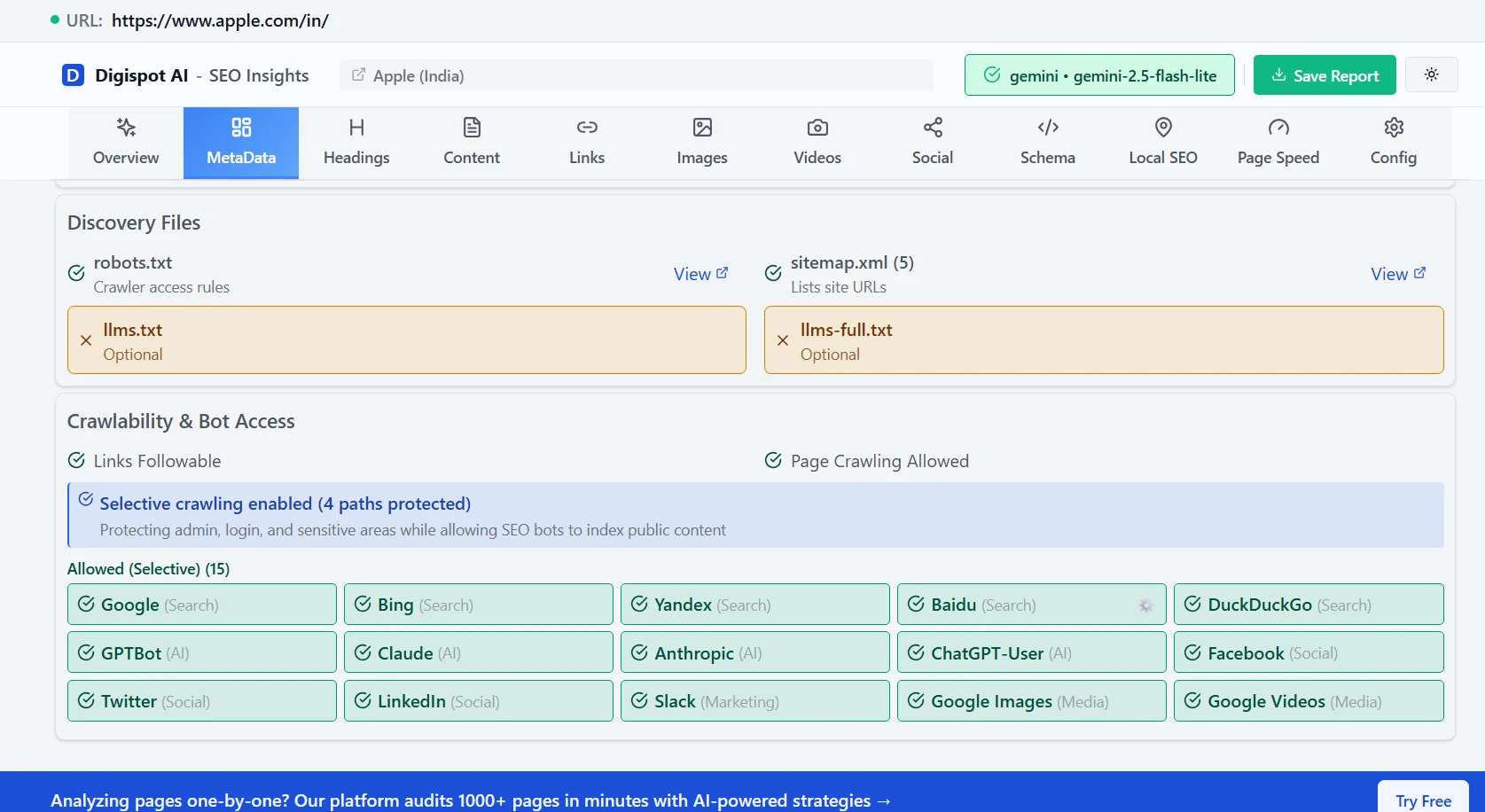
Get instant SEO insights on any page with our free Chrome extension.
Authority Building: Trust as a Ranking Factor
Google's E-E-A-T (Experience, Expertise, Authoritativeness, Trustworthiness) guidelines are critical for B2B SaaS. You are asking businesses to trust you with their data and money; your off-page signals must reflect stability and authority.
Digital PR and Data Storytelling
Journalists love unique data. As a SaaS company, you likely sit on a goldmine of proprietary user data (anonymized, of course).
- Tactic: Publish an "Industry Benchmark Report" derived from your platform's usage trends.
- Result: High-authority news sites link to your report as a primary source. This attracts backlinks that money cannot buy.
Strategic Guest Podcasting
Podcast appearances are the new guest blogging. They build high-trust relationships with niche audiences. Often, show notes include do-follow links to your site.
- Pitch yourself as a subject matter expert, not a software salesperson.
- Discuss industry trends, challenges, and future predictions.
Integration Partnerships
Leverage your integration partners. If your software integrates with HubSpot or Slack, ensure you are listed in their app directories. These are high-authority domains that drive qualified referral traffic and pass significant link equity.
Measuring Success: SaaS SEO KPIs
Vanity metrics like "total impressions" do not pay the server bills. You must track KPIs that align with business growth.
- Marketing Qualified Leads (MQLs) from Organic: How many trial sign-ups or demo requests originated from search? Use attribution modeling to credit first-touch organic visits.
- LTV:CAC Ratio: SEO is an upfront investment that lowers CAC over time. A healthy SaaS business targets a ratio of 3:1 or higher.
- Keyword Velocity: How fast are you capturing new keywords compared to competitors?
- Branded vs. Non-Branded Traffic: An increase in branded search indicates brand awareness is growing. An increase in non-branded traffic indicates your top-of-funnel content is working.
- Conversion Rate by Page Type: Differentiate between the conversion rate of a "What is X" blog post (likely low) and a "Best X Software" landing page (should be high).
Use tools like Google Search Console for ranking data and Google Analytics 4 for behavioral flow. If you see high traffic but low conversions, revisit your user intent matching or CTA placement.
The Future: AI Search and SGE
The landscape is shifting with the introduction of AI Overviews (formerly SGE) in Google. Users are getting answers directly in the search results without clicking.
- Optimize for Answers: Structure your content to directly answer "What", "How", and "Why" questions immediately after the heading. This increases the likelihood of being cited in an AI snapshot.
- Be the Source of Truth: AI models are trained on authoritative data. If you publish original research and expert insights, AI is more likely to reference your brand.
- Focus on Brand Entity: Ensure Google's Knowledge Graph understands who you are. A clear "About Us" page, consistent NAP (Name, Address, Phone) data, and Crunchbase profiles help solidify your entity status.
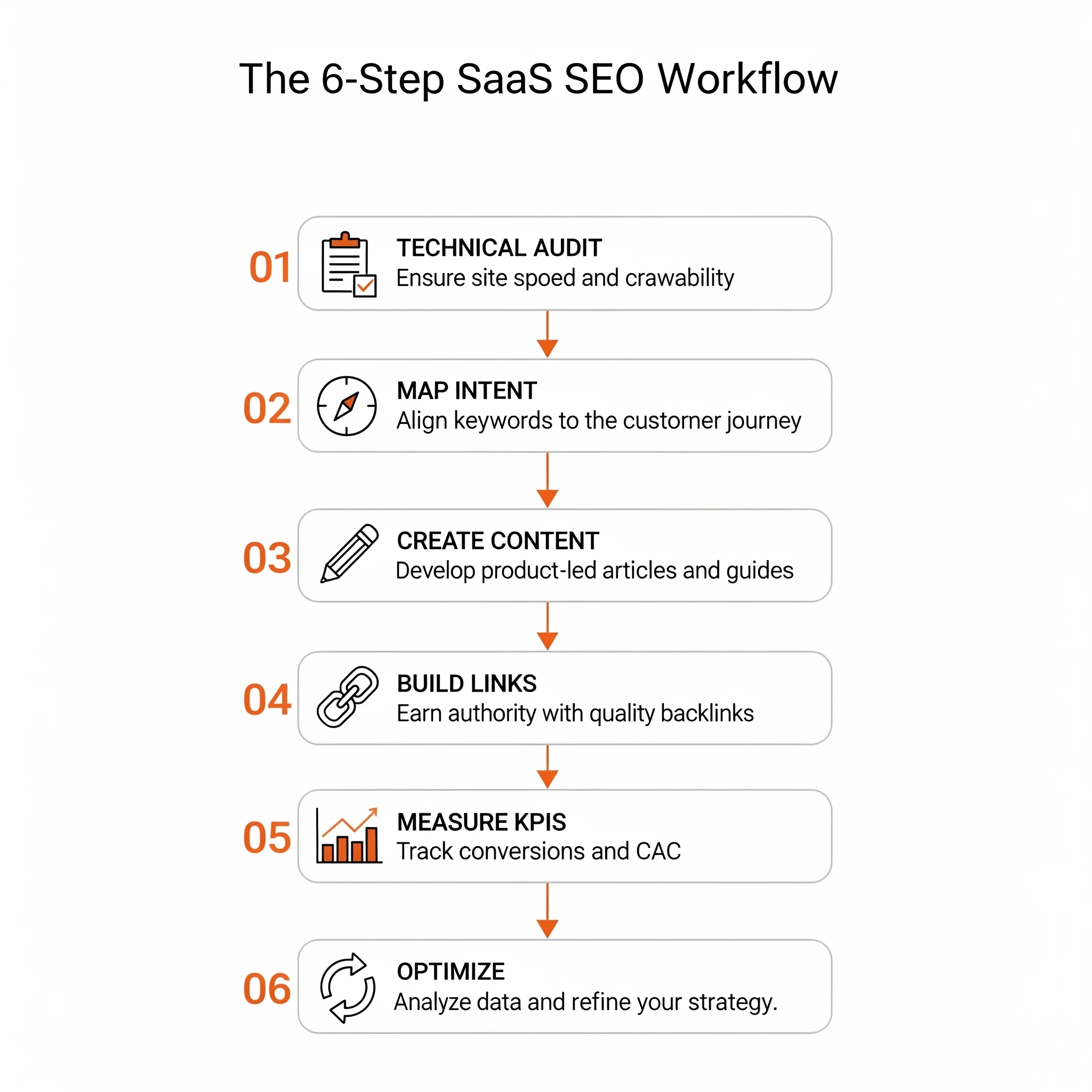
Conclusion: The Long Game
SEO for SaaS is not a quick fix. It is a compound interest account for your marketing. It requires patience, technical excellence, and a relentless focus on user value.
By building a fast, technically sound website, creating content that helps users solve real problems, and earning authority through genuine expertise, you build a moat around your business. You stop renting attention from ad networks and start owning your audience.
Ready to improve your SEO and build that engine? Try Digispot AI for comprehensive website audits and actionable recommendations that drive real growth.
References
Audit any page in seconds
300+ SEO checks including Core Web Vitals, schema markup, meta tags, and AI readiness — trusted by 1000+ SEO experts and marketers.
Frequently Asked Questions
Here are some of our most commonly asked questions. If you need more help, feel free to reach out to us.
Written by
Maya Krishnan
Digital growth expert
Maya is a seasoned expert in web development, SEO, and digital strategy, dedicated to helping businesses achieve sustainable growth online. With a blend of technical expertise and strategic insight, she specializes in creating optimized web solutions, enhancing user experiences, and driving data-driven results. A trusted voice in the industry, Maya simplifies complex digital concepts through her writing, empowering readers with actionable strategies to thrive in the ever-evolving digital landscape.