
SEO for News Websites - Dominate Online Journalism
Essential SEO strategies for news websites. Learn how to optimize your site, rank in Google News, and drive traffic to your news content.
 Maya Krishnan
SEO determines whether your breaking story reaches millions or gets buried in the archives. For news publishers, the stakes are incredibly high. Unlike evergreen content marketing where you have weeks to rank, news SEO operates in minutes. You must implement effective strategies instantly to capture the "Top Stories" carousel, appear in Google Discover, and dominate search results before the cycle moves on.
This guide provides a technical and strategic blueprint specifically tailored for news websites, moving beyond basic advice to operational workflows that drive readership.

The High-Velocity World of News SEO
News SEO is a distinct discipline. It resembles conducting a live orchestra rather than recording a studio album. You cannot pause to retake a scene; you must perform perfectly in real-time. Traditional SEO focuses on long-term growth, but news organizations face the unique challenge of optimizing content that has a shelf life of mere hours or days.
Consider The New York Times. Their mastery of search visibility isn't accidental. When a major story breaks, they publish immediately with preliminary details and optimized headlines that capture early search interest. As the story develops, they update the same URL, enriching the coverage with context, multimedia, and analysis. This "living URL" strategy preserves link equity and maintains search rankings while delivering quality journalism.
The Guardian demonstrates another sophisticated approach: topic clustering. They create networks of related articles linked together, helping search engines understand the full semantic context of their coverage. During major global events, this strategy helps them dominate broad search terms by signaling authority across an entire subject, not just a single keyword.
Success in this field requires balancing contradictory forces: speed versus accuracy, and technical performance versus ad revenue. Modern news websites must optimize for Core Web Vitals and mobile-first indexing while racing to publish.
Get instant SEO insights on any page to see if you meet these technical standards with our free Chrome extension.
Key Differences Between General SEO and News SEO
Understanding the mechanical differences between standard search and news search is vital for your strategy.
Speed is Currency In news SEO, indexing speed is the primary ranking factor. Regular websites might wait days for a crawl; news sites need to be indexed in seconds. If you want your story to appear in Google News or the "Top Stories" carousel, you need near-instant indexing. This requires a technically flawless XML sitemap structure and a high-performance server environment that pushes updates immediately.
The Originality Imperative Google News creates a distinct ecosystem that penalizes "churn." You cannot simply rewrite a competitor's story and expect to rank. You must add unique value—proprietary data, exclusive interviews, or local on-the-ground reporting. Google's algorithms now explicitly look for "original reporting" tags and citations. If you are covering a major event, ensure your piece includes fresh perspectives unavailable elsewhere.
Accuracy and E-E-A-T News content falls under "Your Money or Your Life" (YMYL) categories, meaning Google applies its strictest quality evaluators. Accuracy isn't just an editorial standard; it's a ranking signal. Fact-checking every detail, citing primary sources, and clearly labeling opinion versus fact are non-negotiable. Learn more about establishing trust in our E-E-A-T SEO guide.
Mobile-First is Mandatory News consumption is overwhelmingly mobile. Users check headlines on transit, during breaks, or via push notifications. Your site must not only be "responsive" but performance-optimized for unstable 4G/5G networks. If your article takes 4 seconds to load because of third-party ads, the user bounces, and Google notices.
1. Site Structure and Navigation
Organizing a news website is like architecting a massive, constantly expanding library. If the architecture is flawed, the best content remains undiscovered.
The Search Bar as Concierge A prominent search bar acts as a concierge for users who know exactly what they want. The Guardian places this front and center, allowing readers to dig through archives instantly. This internal search data is also a goldmine for your editorial team—it tells you exactly what stories your audience feels you are missing.
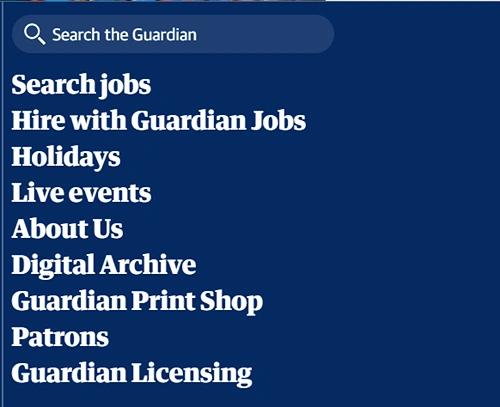
Pagination vs. Infinite Scroll Browsing mechanics affect crawl budget. The BBC uses pagination to break articles into clear, crawlable chunks. The New York Times often uses infinite scroll on mobile to keep engagement high. If you use infinite scroll, you must ensure that the URL changes dynamically as the user scrolls, or Google bot may never see the content past the first "page."
Taxonomy: Categories and Tags Your taxonomy strategy dictates how link equity flows.
- Categories: Broad, static buckets like "Politics," "Technology," or "Sports." These should rarely change.
- Tags: Specific, topical labels like "US Congress," "NFL Draft 2026," or "Inflation." The Washington Post uses this effectively to create topic hubs. When a specific tag gains traction, that tag page becomes a landing page itself, ranking for broad queries.
Breadcrumbs for Orientation Breadcrumbs serve a dual purpose: they keep users oriented (Home > World > Europe > Article) and provide clear structure to search crawlers. Schema markup on breadcrumbs is essential for generating rich snippets in search results.
2. Keyword Research and Optimization
Keyword research for news is less about monthly search volume and more about "search velocity." You are looking for what is trending right now.
The Life Cycle of a News Keyword When a story breaks, the search terms evolve rapidly.
- Phase 1 (The Break): People search generic terms like "earthquake" or "explosion."
- Phase 2 (The Details): Queries become specific: "Magnitude 7.0 earthquake Japan locations."
- Phase 3 (The Context): Users look for analysis: "Japan earthquake tsunami warning map."
During the COVID-19 pandemic, news organizations had to adapt hourly. Initially, terms were "wuhan virus," then "coronavirus," then "COVID-19," and finally specific variants like "Omicron." The Associated Press mastered this by creating dynamic sections that adapted to these changing linguistic patterns.
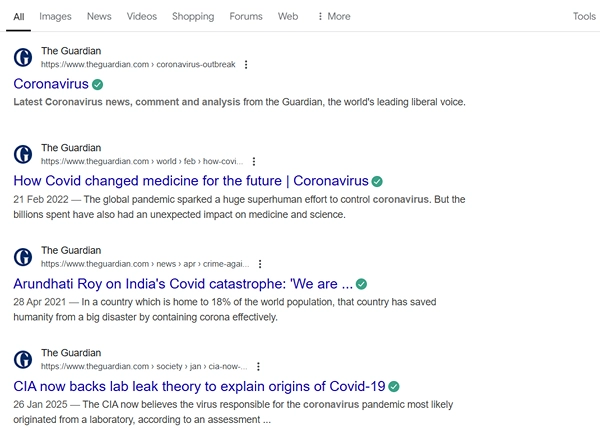
Tools like Google Trends, "Exploding Topics," and even Twitter (X) trending lists are more valuable to a news SEO than traditional keyword planners. You must anticipate the next question the user will ask.
3. Content Optimization Strategies
Optimization in journalism does not mean compromising quality; it means ensuring your quality journalism gets read.
The "Inverted Pyramid" of SEO Journalists are taught the inverted pyramid (most important facts first). Fortunately, this aligns perfectly with SEO. Google weights the first 200 words heavily. Ensure your primary keywords and the core "who, what, when, where" are in the opening paragraphs.
Headline Engineering Your headline is your ad copy. It must satisfy both the dramatic needs of a reader and the literal needs of a machine.
- Basic: "Company Reports Quarterly Results" (Boring, low CTR, no keywords).
- Optimized: "Tesla Shatters Profit Expectations: Q4 Earnings Surge 40% Above Forecasts" (Specific, emotionally engaging, keyword-rich).
Note that you can have a different H1 (on-page headline) and Title Tag (search engine headline). Use the Title Tag to target specific keywords if your editorial headline is too abstract. For more details on on-page elements, read our on-page SEO best practices.
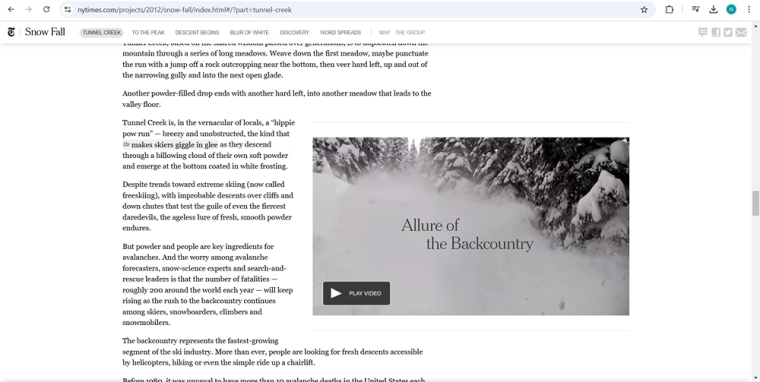
Multimedia Integration Engagement time is a ranking signal. Text walls drive bounces. The New York Times' "Snow Fall" piece proved that multimedia keeps users glued to the page. Even simple inclusions like related tweets, embedded video clips, or data charts can double your time-on-page metrics.
Structured Data (Schema)
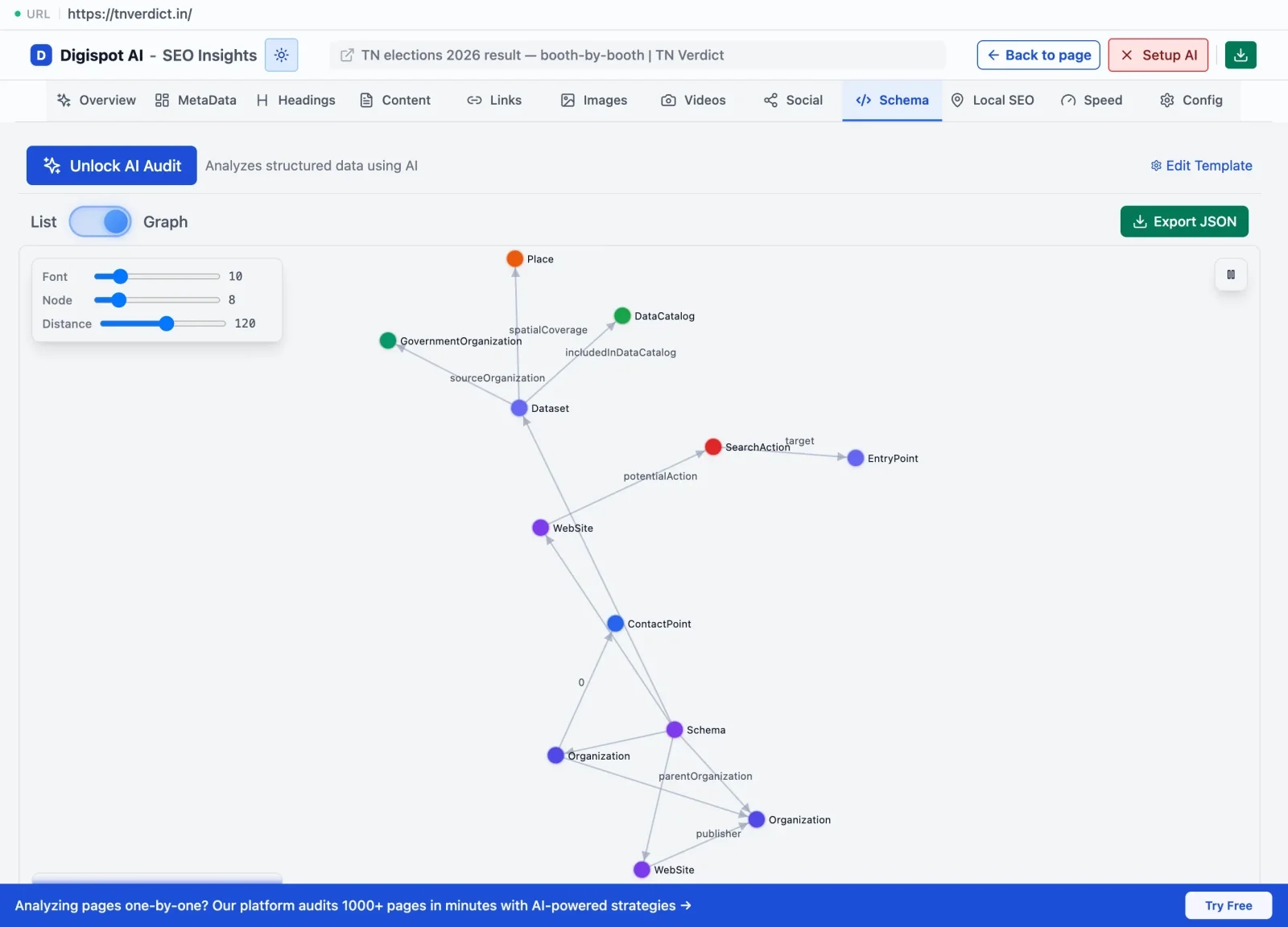
News articles must use NewsArticle schema. This code tells Google the headline, dateline, author, and publisher logo explicitly. Without this, you are unlikely to appear in the Top Stories carousel.
Use the free Schema Markup Generator to create valid NewsArticle or LiveBlogPosting structured data in minutes.
4. Technical SEO for Publishers
Technical SEO for news sites is often a battle against code bloat. Ad scripts, analytics trackers, and paywalls can destroy site performance.
Core Web Vitals and Speed The Financial Times found that a 1-second delay dropped engagement significantly. They implemented aggressive performance budgets to keep pages light. You must focus on:
- LCP (Largest Contentful Paint): The main headline/image must load instantly.
- CLS (Cumulative Layout Shift): Ads loading late and pushing text down is a major user frustration and ranking penalty. Reserve space for ads in your CSS to prevent shifting.
Learn more about optimizing these metrics in our Core Web Vitals guide.
AMP and Its Evolution While Google no longer strictly requires AMP (Accelerated Mobile Pages) for the Top Stories carousel, the performance requirement remains. If you remove AMP, your standard HTML mobile pages must be blazing fast. CNN’s mobile site achieves this with simplified design, large touch targets, and lazy-loading media assets.
Crawl Budget Management
News sites generate thousands of URLs. You don't want Googlebot wasting time crawling articles from 2015 while ignoring today's breaking news. Use robots.txt to manage crawl paths and ensure your XML News Sitemap only contains articles from the last 48 hours.
Digispot AI can help you identify crawl budget waste and fix technical bottlenecks automatically with AI-powered audits.

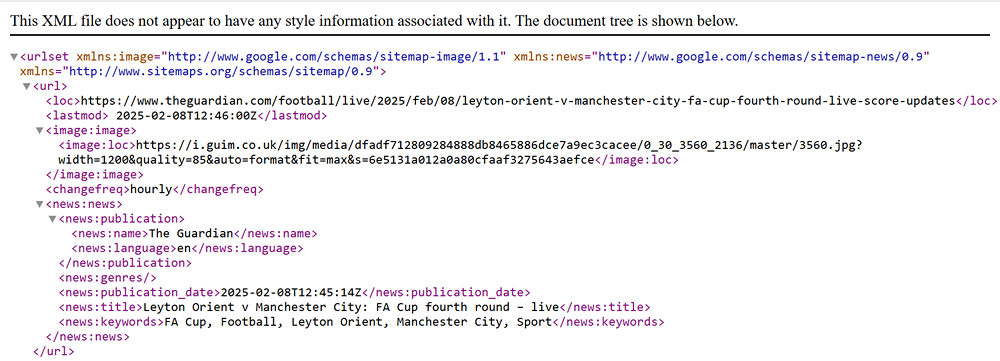
This image illustrates a website with an effective sitemap structure, where categories are distinct and hierarchy is logical.
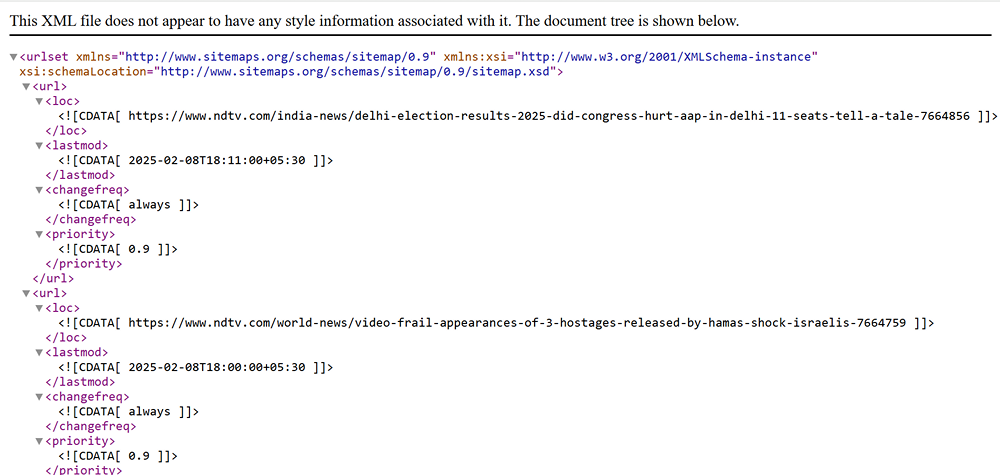
This image shows a poor sitemap structure with overlapping categories and confusing paths.
5. Strategic Link Building
For news sites, link building is about authority and distribution. You are the primary source; you want others to cite you.
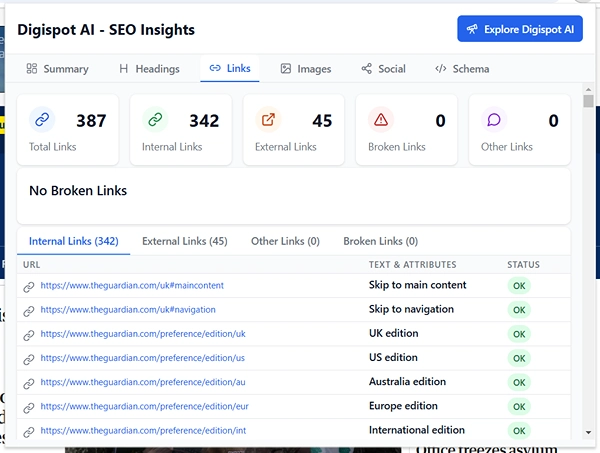
Internal Linking as Narrative Glue Internal links keep readers on your site. When covering a developing story like climate change, The Atlantic links to previous reports, expert bios, and data analysis. This "hub and spoke" model passes authority from your high-traffic homepage to your deep articles.
- Tip: Automate internal linking for entity names (e.g., automatically link the first mention of "President" to the President's topic tag page).
Syndication and Canonicals
If you syndicate content to Yahoo! News or MSN, you must ensure they use a rel="canonical" tag pointing back to your original article. Otherwise, the larger platform might outrank you for your own story.
External Sources
Linking out to high-quality sources (government reports, scientific papers) signals to Google that you have done your research. It boosts your trust score. A common mistake is using nofollow on all external links; use dofollow for trusted sources to be a good citizen of the web.
6. Social Media Integration
Social signals (traffic from social) indirectly impact SEO by driving query volume and brand searches.
Platform-Specific Optimization The Wall Street Journal tailors content format to the user intent of each platform:
- X (Twitter): The breaking headline and a link. Speed is key.
- LinkedIn: The economic impact analysis. Professional tone.
- Instagram/TikTok: Visual summaries. Brand awareness.
Timing and Engagement BBC News analyzed their data and found distinct engagement windows. They schedule "heavy" reads for morning commutes and "lighter" features for evening relaxation. Aligning your publishing schedule with user behavior increases the initial traffic spike, which signals to Google that the content is valuable "hot" news.
7. Google News Optimization
Ranking in the specific "Google News" tab requires specific technical setups beyond general search.
The Publisher Center You must set up your publication in the Google Publisher Center. This allows you to control your branding (logos, fonts) and organize your content sections (e.g., "Latest," "Politics," "Local").
Technical Requirements The Seattle Times excels here by adhering to strict protocols:
- Unique URLs: Every article must have a permanent, unique URL.
- News Sitemap: A dedicated
sitemap-news.xmlthat contains only URLs published in the last 2 days. This pings Google immediately when you publish. - Date Transparency: The publication date and time must be visible between the headline and the text.
The "Top Stories" Carousel To hit this prime real estate on mobile search results, you need high-resolution images (at least 1200px wide) and a high click-through rate (CTR). Your headline must be punchy, and your thumbnail image must be compelling.
8. Analytics and Performance Tracking
Vanity metrics like "pageviews" are insufficient for modern news SEO. You need to track engagement and loyalty.
The Financial Times "Engagement Score" The FT developed a metric based on recency, frequency, and volume (RFV). They found that readers who engage deeply are the ones who subscribe. They track:
- Scroll Depth: Do users read past the first paragraph?
- Recirculation: What percentage of users click another article after reading the first?
- Active Time: Not just time on page (which can be idle), but time spent scrolling or clicking.
If you are struggling to understand your site's performance, read our guide on common SEO mistakes to see if you are tracking the wrong metrics.
9. Local SEO Strategies for Publishers
Local news is experiencing a renaissance in search. Google craves hyper-local content that national giants cannot provide.
Hyper-Local Authority The Minneapolis Star Tribune dominates its market by treating neighborhoods like separate entities.
- Geo-Targeted Keywords: Headlines include specific suburbs or landmarks (e.g., "North Loop Traffic Alert" vs "Traffic Alert").
- Local Entity Schema: Marking up events with
Eventschema helps them appear in "Events near me" searches. - Partnerships: Backlinks from local libraries, universities, and chambers of commerce are incredibly powerful for local authority.
This strategy led to a 45% increase in their local search visibility. National papers can't compete with this granularity.
A Comprehensive Success Story: The Boston Globe
The Boston Globe's digital transformation illustrates how these pieces fit together. They faced declining print revenue and needed a digital lifeline.
- Technical Overhaul: They rebuilt the site to be mobile-first, drastically reducing load times.
- Data-Driven Editorial: They used search trends to assign stories, not just editorial hunches.
- Structure: They cleaned up their internal tagging system, removing thousands of duplicate tags that were diluting link equity.
- Local Focus: They doubled down on Boston-specific sports and politics, optimizing for long-tail local queries.
The result was a 65% increase in mobile readership and sustainable digital subscriber growth. They proved that SEO is not just a marketing tactic; it is a business survival strategy.
Conclusion: Build Your News SEO Engine
SEO for news websites is a dynamic and continuous process that requires constant attention. It is not a "set it and forget it" task. Just as news stories evolve, your SEO strategy must adapt to algorithm updates, new devices, and shifting reader behaviors.
To succeed, you must build a culture of SEO within your newsroom. Journalists should understand why headlines matter. Developers should understand why site speed is non-negotiable. Editors should use search data to inform coverage.
Start by auditing your technical foundation. Is your site fast? Is your sitemap updating correctly? Are you using the right schema? Once the technical base is solid, focus on the editorial workflow—integrating keyword research into the pitch process and optimizing headlines before hitting publish.
Ready to improve your search visibility? Try Digispot AI for comprehensive website audits and actionable recommendations that can help you secure your place in the Top Stories.
References
- Digispot AI: https://www.youtube.com/watch?v=JbBkTtvdwlk - A video about Digispot AI. Digispot AI helps you increase website ranking by simulating Google, Bing, and LLM crawlers to analyze your website against 300+ factors, delivering precise insights to boost visibility across search and AI platforms.
- Google Search Central - SEO Starter Guide: Google Search Documentation - Provides best practices for making your site easily crawlable, indexable, and understandable for search engines.
- Quintype Blog Quintype provides guidance on SEO strategies for journalists, emphasizing the importance of keyword placement, understanding search intent, and adhering to Google News guidelines.
- WebCEO Blog This blog outlines essential steps for SEO for news websites, focusing on optimizing articles for both users and search engines. It recommends using eye-catching titles, meta descriptions, descriptive URLs, and proper headings.
- Stan Ventures Blog This blog offers SEO strategies for journalists, including getting featured on Google's Top Stories by targeting question-based keywords.
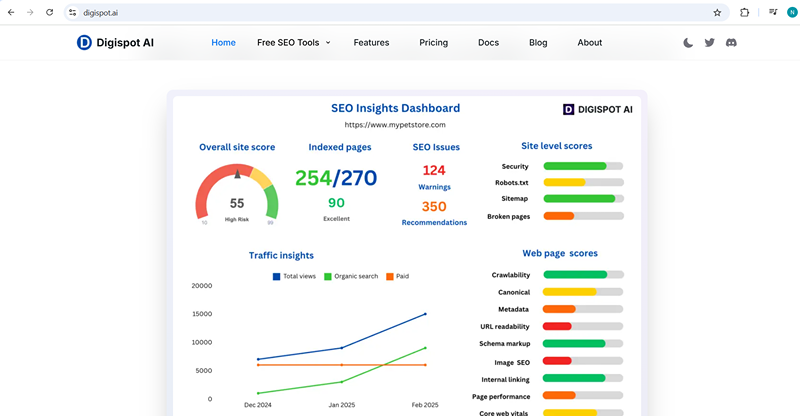
Audit any page in seconds
300+ SEO checks including Core Web Vitals, schema markup, meta tags, and AI readiness — trusted by 1000+ SEO experts and marketers.
Frequently Asked Questions
Here are some of our most commonly asked questions. If you need more help, feel free to reach out to us.
Written by
Maya Krishnan
Digital growth expert
Maya is a seasoned expert in web development, SEO, and digital strategy, dedicated to helping businesses achieve sustainable growth online. With a blend of technical expertise and strategic insight, she specializes in creating optimized web solutions, enhancing user experiences, and driving data-driven results. A trusted voice in the industry, Maya simplifies complex digital concepts through her writing, empowering readers with actionable strategies to thrive in the ever-evolving digital landscape.