
Personalization SEO: Dynamic Content & Rankings
Balance personalization with SEO for dynamic websites. Learn to serve customized content while maintaining crawlability, indexing, and search engine rankings.
 Maya Krishnan
Unlocking Digital Relevance: Your Guide to Personalization-SEO
Walk into your local coffee shop where the barista knows your name and starts your order before you reach the counter. That feeling of recognition and tailored service creates immediate loyalty. Now, translate that experience to the web. When a visitor lands on your site, do they see a generic brochure, or does the experience adapt to who they are, where they are, and what they need right now?
This is the domain of Personalization-SEO. It moves beyond the static goal of "ranking #1" to the dynamic goal of "ranking #1 for the right person with the right content."
In an environment where attention spans are measured in milliseconds, relevance is the only currency that matters. Users expect content to speak directly to their context. If they are browsing from a mobile device in Chicago looking for winter coats, they should not see a desktop-optimized banner for beachwear. Personalization-SEO bridges the gap between technical search visibility and hyper-targeted user engagement, ensuring your digital presence resonates on an individual level.
What is Personalization-SEO? Decoding the Tailored Search Experience
Personalization-SEO is the strategic optimization of your digital ecosystem to serve unique content experiences to specific user segments while maintaining technical accessibility for search engine crawlers. It is a dual-discipline approach:
- For the User: It uses data (location, behavior, device, history) to dynamically alter the on-page experience.
- For the Search Engine: It uses technical signals (schema, canonicals, vary headers) to communicate that this content is tailored, ensuring the correct version is indexed and ranked for the appropriate queries.
Unlike traditional SEO, which often targets the "average" searcher with a static page, personalization-SEO acknowledges that "average" rarely exists. Modern search engines like Google and AI-driven platforms like Perplexity are already personalized engines. They continually adjust the Search Engine Results Page (SERP) based on thousands of signals.
If you optimize for a generic user while Google optimizes for specific individuals, a disconnect occurs. Personalization-SEO aligns your site’s behavior with the search engine’s goal: connecting users to the most relevant answer possible.
The Mechanics of Search Engine Personalization:
To implement this strategy effectively, you must understand the signals search engines analyze to personalize the SERP:
- Geographic Proximity: This is the strongest personalization signal. A search for "digital marketing agency" in London triggers a completely different local pack and organic list than the same search in New York.
- Search History & Patterns: Google builds a profile of user interests. A user who frequently reads about technical audits will see more technical guides rank higher than beginner overviews for the term "SEO check."
- Device Context: Mobile users are often served quick-answer formats, local maps, and app-based results, while desktop users may see more long-form analytical content.
- User Intent Classification: Search engines classify intent (informational, transactional, navigational) and match it to previous user behavior. If a user typically buys after reading reviews, review-heavy content may rank higher for them.
- Temporal Factors: The time of day and day of the week influence results. "Lunch places" searches differ significantly at 11 AM versus 11 PM.
- Language & Locale Settings: The
Accept-Languageheader and account settings determine the language version served, which is critical for international SEO.
Personalization-SEO isn't about "cloaking" (showing different content to bots vs. humans to deceive). It is about helping search engines understand which content serves which audience. It transforms your website from a static library into a dynamic concierge.
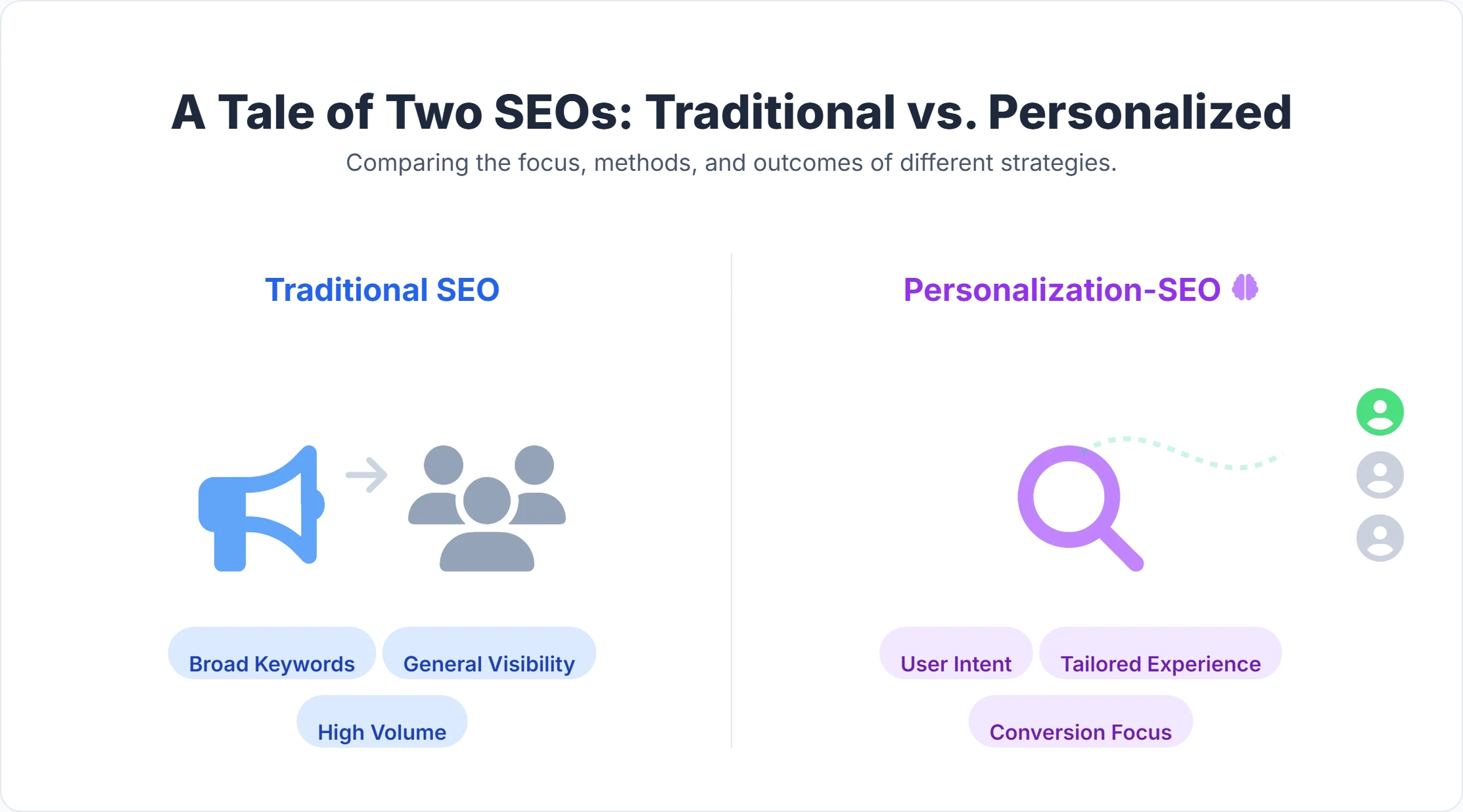
Table 1: Traditional SEO vs. Personalization-SEO
| Feature | Traditional SEO | Personalization SEO |
|---|---|---|
| Primary Goal | High rankings for broad, high-volume keywords | High relevance and conversion for specific user segments |
| Focus | General organic visibility and traffic volume | Tailored user experience, engagement depth, and targeted visibility |
| Keyword Strategy | Short-tail, competitive, volume-based | Long-tail, intent-based, segmented, and conversational queries |
| Content Approach | Static, "one-size-fits-all" pages | Dynamic, persona-driven, modular, and context-specific content |
| Metrics of Success | Organic sessions, keyword position | Conversion rates, time on site, personalized CTR, engagement |
| Technical Implementation | Standard caching, singular canonicals | Dynamic serving, Vary headers, edge computing, complex canonicals |
| User Experience | Uniform for every visitor | Customized, predictive, and highly relevant |
Why Personalization-SEO Matters: The Cascade of Benefits
Adopting a personalization-SEO strategy is a shift from volume to value. It addresses the reality that traffic without relevance is vanity. By tailoring the experience, you unlock benefits that ripple through your entire marketing funnel.
For Users: A Frictionless Digital Journey
- Immediate Relevance: Users find solutions faster. When a B2B executive lands on your homepage and sees enterprise solutions rather than small business plans, friction is removed.
- Cognitive Ease: Personalized interfaces reduce the cognitive load. Users don't have to filter through irrelevant information to find what applies to them.
- Enhanced Trust: A site that "knows" what a user needs (e.g., remembering a size preference or a previous topic interest) builds subconscious trust and authority.
- Discovery Speed: By surfacing related content based on viewing history, users discover deeper value in your site without searching for it.
For Businesses: Efficiency and Growth
- Dominance in Niche Segments: You may not beat a giant competitor for the broad term "shoes," but personalization-SEO allows you to dominate "women's running shoes for flat feet" for users searching with that specific intent history.
- Surging Click-Through Rates (CTR): When your title tag and meta description dynamically match the user's query context (e.g., including their city name or specific need), CTR skyrockets.
- Higher Conversion Rates: This is the ultimate ROI metric. Personalized calls-to-action (CTAs) perform significantly better than generic ones. A CTA saying "Get Your Enterprise Audit" works better for an enterprise visitor than a generic "Sign Up."
- Reduced Bounce Rates: Immediate relevance keeps users on the page. Low bounce rates and high dwell time are positive engagement signals that feed back into Google's ranking algorithms (RankBrain).
- Defensible Competitive Moat: Competitors can copy your content, but they cannot easily copy your data-driven personalization logic. This creates a unique value proposition.
- Resource Efficiency: Instead of creating 500 weak pages, you can create 50 strong pages that dynamically adapt. This streamlines maintenance and consolidates link equity.
- Cost Savings via Automation: Platforms like Digispot AI streamline the heavy lifting of auditing and optimization. By automating the technical checks for 300+ ranking factors, you save hours of manual analysis while ensuring your personalized setup remains error-free [cite: Digispot AI description].
Table 2: Key Benefits of Personalization-SEO
| Benefit Category | Description | Business Impact |
|---|---|---|
| User-Centric | Tailored results, reduced friction | Higher satisfaction, increased trust, longer session duration |
| Traffic & Leads | Qualified traffic, higher organic CTR | More sales-ready leads, improved lead quality scoring |
| Conversions | Dynamic CTAs, specific landing page matching | Higher sales velocity, increased average order value (AOV) |
| Brand Equity | Perception of service and intelligence | Repeat business, positive word-of-mouth, brand differentiation |
| Technical SEO | Better engagement signals (Dwell time) | Improved rankings due to positive user interaction data |
| Efficiency | Consolidated URL structure, automated adaptation | Reduced content bloat, more efficient crawling budget use |
How Personalization-SEO Works: The Key Pillars of a Tailored Strategy
Implementing this strategy requires a convergence of psychology, data science, and technical SEO. You must build a system that understands intent and delivers content without breaking the technical rules of search engines.
1. Understanding User Intent: The Heart of Personalization
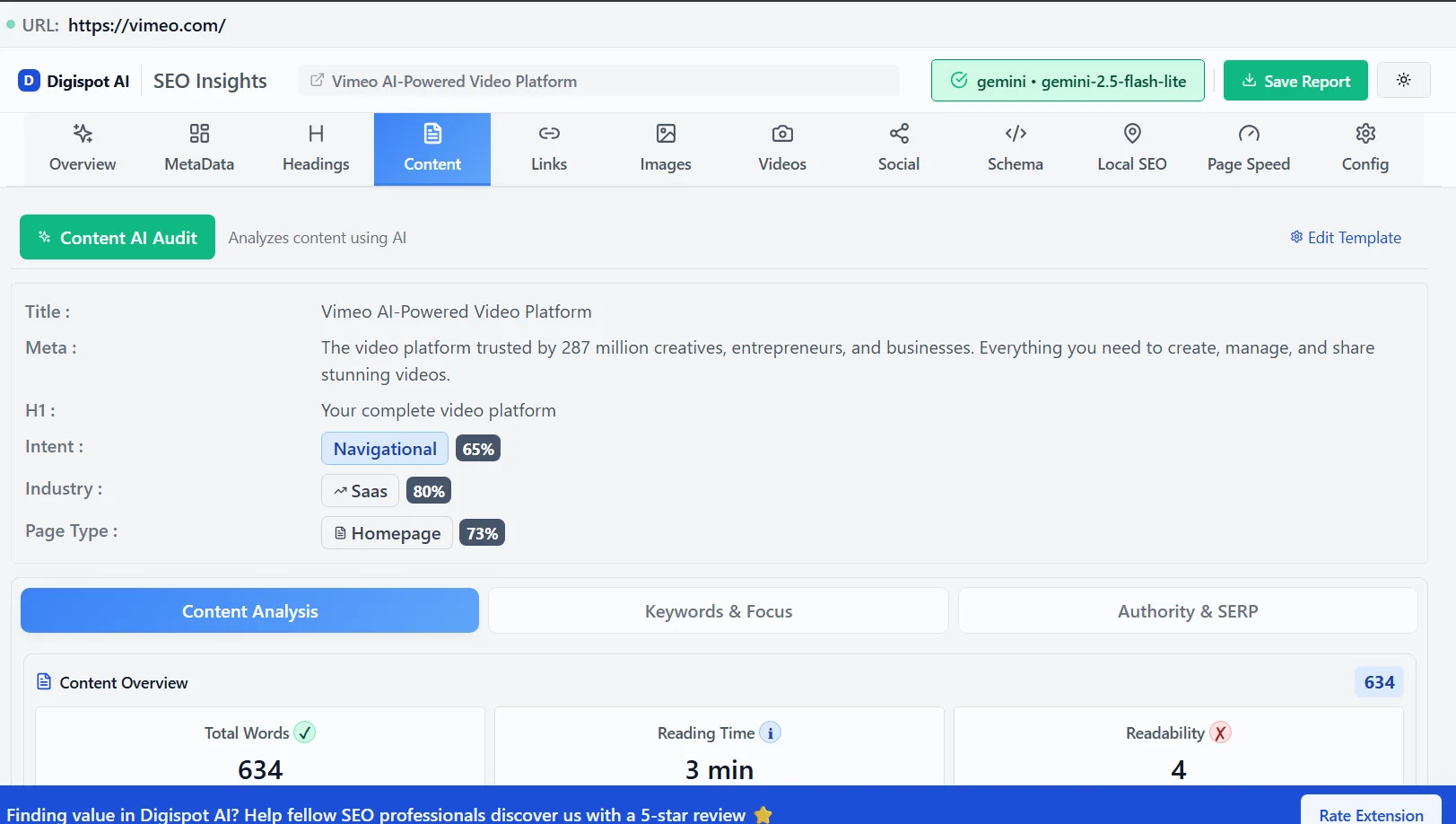
Intent is the "why" behind the query. Google's algorithms (BERT, MUM) are obsessed with intent. Personalization-SEO requires you to map your content not just to keywords, but to the user's stage in the journey.
- Intent Categories:
- Informational: "How to fix a leak" (Needs guides, videos).
- Navigational: "Digispot login" (Needs direct links).
- Transactional: "Buy wrench" (Needs product pages).
- Commercial Investigation: "Best tools for plumbing" (Needs comparisons, reviews).
- Explicit vs. Implicit Intent:
- Explicit: The user types "cheap hotels in Austin."
- Implicit: The user types "hotels," but their IP address is in Austin, or they previously searched for "Austin flights." Your site must be able to read these implicit signals to personalize the landing page effectively.
- AI Deciphering: Modern AI helps decipher these layers. Digispot AI’s platform uses advanced LLMs to analyze content against user intent signals, ensuring your pages answer the specific questions your segments are asking [cite: Digispot AI description].
2. Leveraging User Data (Ethically and Responsibly)
Data is the fuel for personalization. However, the mechanism of collection matters for SEO and trust.
- First-Party Data: This is data you collect directly (site behavior, purchase history). It is the most reliable and safest form of data.
- Contextual Signals: IP address (for location), User-Agent (for device), and Referrer (where they came from). These allow for "cold start" personalization for new visitors.
- The Privacy-First Approach: Google is phasing out third-party cookies. Your personalization strategy must rely on first-party data and contextual signals. Transparency is key. A clear privacy policy and cookie consent manager are not just legal requirements; they are trust signals.
3. Content Tailoring: Delivering the Right Message
Once you know the intent and have the data, you must serve the content.
- Dynamic Text Replacement: Changing H1s or introductory paragraphs based on the search term or referral source. Example: A visitor from a "SEO Audit" ad sees "The Ultimate SEO Audit Tool," while a visitor from a "Rank Tracking" blog post sees "Precision Rank Tracking & Audits."
- Modular Content Blocks: constructing pages from interchangeable blocks. You might swap a "Testimonials" block with a "Case Studies" block for enterprise visitors.
- Persona-Based Content Creation: Use tools to generate content variations. Digispot AI's content studio helps you generate SEO-optimized content using AI agents, allowing you to efficiently produce tailored variations for different personas without sacrificing quality [cite: Digispot AI description]. For more on maintaining high standards, see our guide on content quality standards.
4. Technical SEO for Personalization: Laying the Foundation
This is where many strategies fail. If you personalize content but block Googlebot, or serve different content to the bot than the user (cloaking), you risk penalties.
- Dynamic Serving vs. Responsive Design:
- Responsive: The same HTML is sent to all devices; CSS changes the layout. This is Google's preferred method.
- Dynamic Serving: The server detects the device and sends different HTML. If you use this, you must use the
Vary: User-AgentHTTP header. This tells caching servers and Googlebot that the HTML changes based on the user agent, preventing the wrong version from being indexed.
- The
VaryHeader: Critical for all personalization. If you personalize based on location, useVary: Accept-LanguageorVary: Region(if supported). This ensures that the cache doesn't serve a New York version of the page to a user in London. - Schema Markup: Structured data is your translator for search engines. It clarifies the context of your content. For personalization, use
Audienceschema or specificOfferschema for different regions. The Digispot AI Schema Markup Generator allows you to create these snippets easily to signal your content's relevance. - Client-Side vs. Server-Side Rendering (SSR):
- Server-Side: The server does the personalization logic and sends the final HTML. Better for SEO because Googlebot sees the personalized content (if not behind a login).
- Client-Side: JavaScript alters the page after it loads. This can be riskier for Core Web Vitals (causing layout shifts) and indexing if Googlebot doesn't execute the JS perfectly. Ensure you use SSR for critical content elements.
5. Local SEO: Hyper-Targeting Proximity
Local SEO is the most common form of personalization. Google alters results based on the user's latitude and longitude.
- Google Business Profile (GBP): This is your anchor in the local ecosystem. Keep it updated.
- Local Landing Pages: Create specific pages for each location you serve. Do not just duplicate content and swap the city name. Add local reviews, local team photos, and specific directions.
- "Near Me" Optimization: Use local schema and ensure your Name, Address, and Phone (NAP) data is consistent across the web.
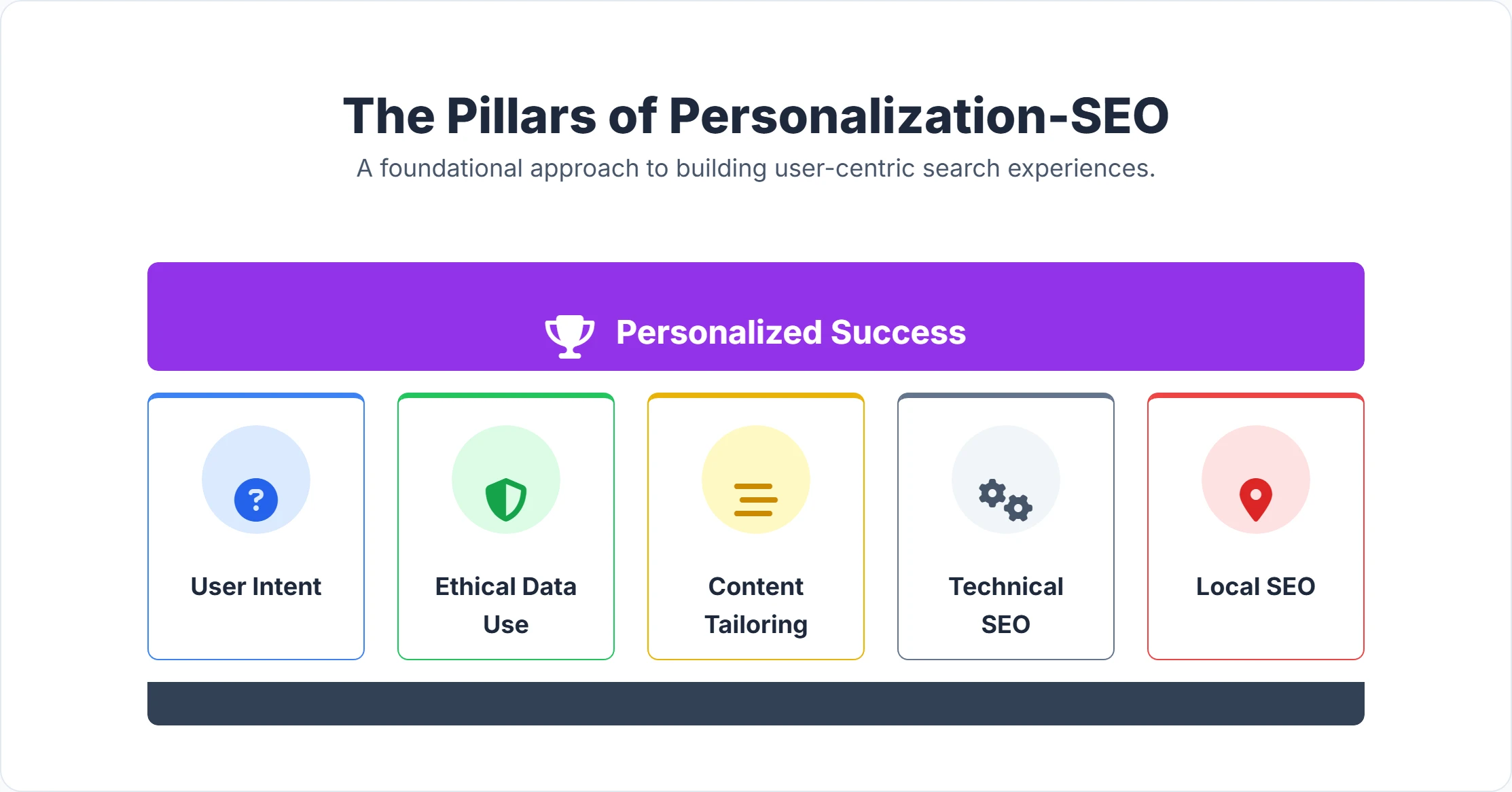
Table 3: Key Pillars of Personalization-SEO
| Pillar | Description | Technical Consideration |
|---|---|---|
| User Intent | Aligning with the goal behind the query | Keyword mapping, semantic analysis |
| Ethical Data Use | Using first-party and contextual signals | GDPR/CCPA compliance, secure data handling |
| Content Tailoring | Dynamic and modular content experiences | Avoiding duplication, maintaining core relevance |
| Technical SEO | Infrastructure supporting dynamic delivery | Vary headers, Canonical tags, SSR, caching logic |
| Local SEO | Geographic relevance and proximity | LocalBusiness Schema, GBP optimization |
Implementing Personalization-SEO: A Step-by-Step Guide to Digital Empathy
Embarking on a personalization-SEO journey requires a structured approach. It's not a one-time fix but an ongoing process of analysis, optimization, and iteration.
Step 1: Audience Segmentation and Data Collection
Before you can personalize, you must know who you're personalizing for.
- Identify High-Value Segments: Use Google Analytics 4 (GA4) to identify which demographics or locations convert best. Look at the "Tech" overview to see device usage.
- Create Data-Driven Personas: Move beyond "Marketing Mary." Create personas like "Enterprise Eddie - NYC - Mobile - High Intent."
- Map the Customer Journey: Understand the touchpoints. Does a user usually read a blog post, check pricing, and then request a demo? Personalize the "pricing" page for users who have already read the blog.
Step 2: Intent-Based Keyword Research
Shift your keyword strategy to focus on the intent behind the search.
- Long-Tail Strategy: Target specific queries. Instead of "SEO software," target "SEO software for large e-commerce sites." These users have specific needs that you can personalize for.
- Question Mining: Use tools like Answer the Public to find questions. "How to automate SEO audits?" indicates a need for efficiency.
- Intent Mapping: Assign an intent tag (Info, Nav, Trans) to every target keyword. This dictates the type of content you serve. Learn more about identifying content gaps in our content gap analysis guide.
Step 3: Content Creation and Dynamic Optimization
This is where your tailored content comes to life.
- Base Content vs. Dynamic Content: Establish a "base" version of your content that is universally relevant. This is what search engines will primarily index. Then, define the dynamic elements (CTAs, examples, testimonials) that will change.
- Using AI for Variations: Writing unique copy for 10 segments is time-consuming. Use the Digispot AI content studio to generate variations of your headers and intros tailored to different industries or intents [cite: Digispot AI description]. For deeper insights on AI content, read about AI content SEO strategies.
- A/B Testing: Never assume a personalization will work. Test the personalized version against the generic one. If the generic version performs better, your personalization hypothesis was wrong.
Step 4: Technical Implementation and Safeguarding
Ensure your website's technical foundation supports personalization without confusing crawlers.
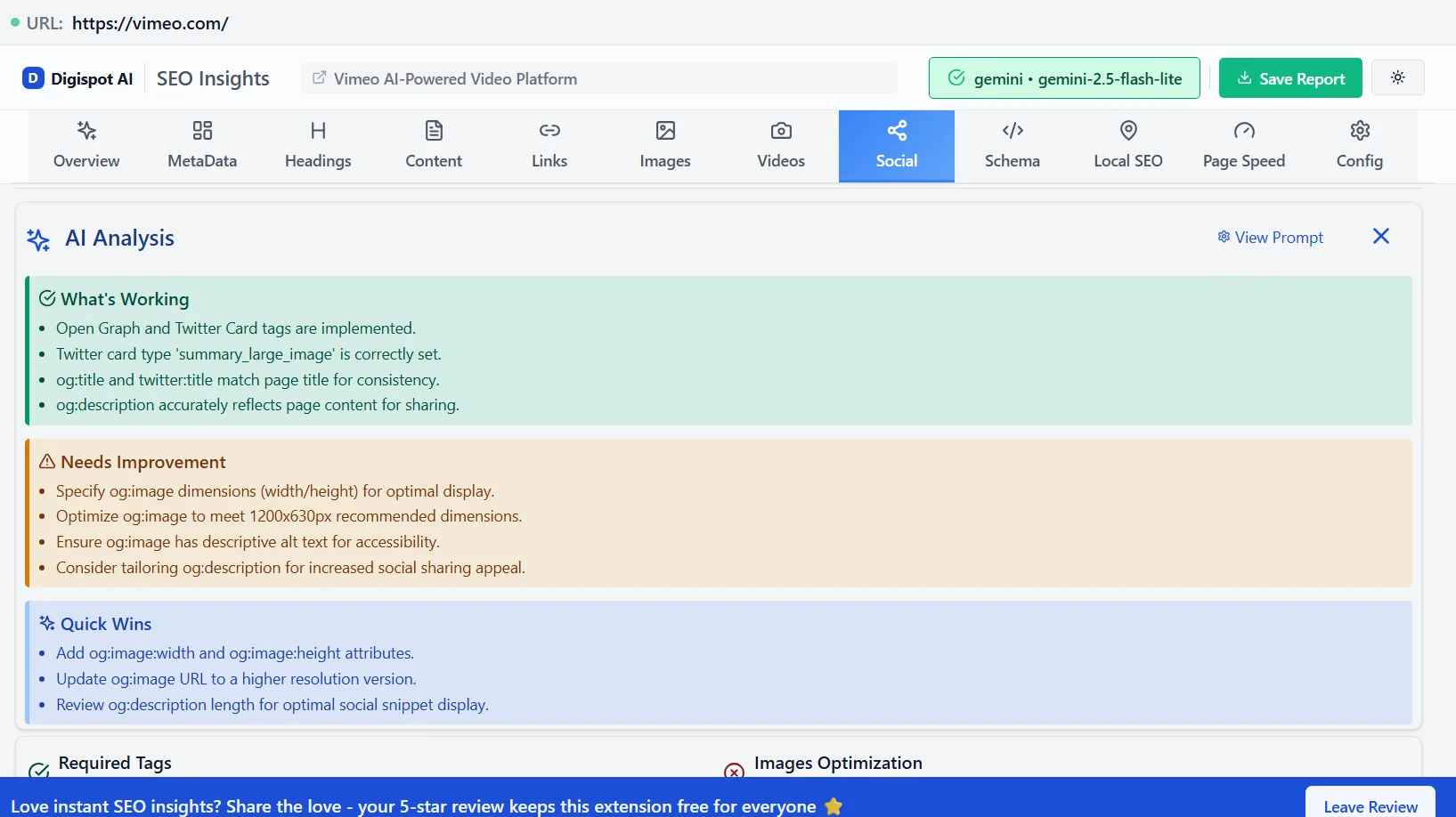
- Implement Schema Markup: Use the Digispot AI Chrome Extension to validate that your schema is present and correct on all page variations.
- Configure Canonical Tags: If you create separate URLs for different personas (e.g.,
example.com/solutions/healthcarevs.example.com/solutions/finance), ensure they are self-canonicalized. If you use parameters (e.g.,?industry=healthcare), decide if you want them indexed. Usually, you should canonicalize parameters back to the main page unless the content is significantly unique. - Check for Cloaking: Ensure that if you serve personalized content to a user, you are not treating the Googlebot User-Agent differently for the purpose of deception. It is acceptable to treat Googlebot as a generic "USA" user, but do not show Googlebot a page about "Puppies" if users see "Casino."
- Monitor Core Web Vitals: Personalization scripts can slow down your site. Dynamic content insertion can cause Cumulative Layout Shift (CLS). Use placeholders or server-side rendering to mitigate this.
Step 5: Monitoring and Analysis
Personalization is a loop, not a line.
- Integrated Analytics: Use the Digispot AI platform to integrate Google Search Console and GA4 data. This allows you to see if your personalized pages are actually ranking for the specific keywords you targeted [cite: Digispot AI description].
- Track Personalized Metrics: Look at "Time to Convert" and "Return Visitor Rate." Personalization should decrease the time it takes for a user to buy and increase the likelihood they return.
- Regular Audits: Dynamic sites break easily. A script update can break your schema or meta tags. Regularly run a comprehensive audit. Digispot AI can help you identify and fix these issues automatically with AI-powered audits analyzing 300+ ranking factors. For a manual checklist, refer to our SEO audit checklist for 2026.
Table 4: Personalization-SEO Implementation Steps
| Step | Description | Key Action/Tool |
|---|---|---|
| 1. Audience Segmentation | Define distinct user groups and create detailed personas | GA4, CRM data analysis |
| 2. Intent-Based Research | Identify keywords reflecting specific user needs | Long-tail analysis, Search Console query data |
| 3. Content Production | Develop dynamic, persona-driven content blocks | Digispot AI Content Studio, Modular design |
| 4. Technical Setup | Implement Vary headers, schema, and SSR | Digispot AI Chrome Extension, Dev team implementation |
| 5. Monitoring & Iteration | Track performance and refine based on data | Digispot AI Platform, Opportunity Finder |
The Role of AI in Supercharging Personalization-SEO
Artificial intelligence is not just a tool for writing; it is the engine that makes scalable personalization possible. Humans cannot manually adjust a website for every visitor in real-time. AI can.
- Predictive Intent Analysis: AI analyzes patterns to predict what a user will want before they ask. If a user reads three articles on "link building," AI can predict they are interested in "backlink analysis tools" and dynamically adjust the sidebar recommendations.
- AEO (Answer Engine Optimization): As users turn to AI search engines like ChatGPT and Perplexity, optimization shifts from keywords to "answers." These platforms are highly personalized. They remember the context of the entire conversation. Digispot AI specializes in AEO tracking, helping you understand how your brand appears in these conversational, personalized AI results [cite: Digispot AI description].
- Automated Technical Auditing: AI agents can crawl your site as different user agents (mobile, desktop, different locales) to ensure the experience is consistent and error-free. The Digispot AI platform analyzes over 200 ranking factors, using multi-LLM engines to detect subtle issues that traditional logic-based crawlers miss [cite: Digispot AI description].
- Scale and Speed: AI content agents can take a core piece of content and "spin" valid, high-quality variations for different industries (e.g., "SEO for Lawyers" vs. "SEO for Dentists") in minutes, maintaining topical authority across niches.
Table 5: AI's Role in Personalization-SEO
| AI Application | How it Helps Personalization-SEO | Example |
|---|---|---|
| Intent Recognition | Understands context beyond keywords | Matching "slow site" query to "Core Web Vitals" service |
| Content Generation | Creates tailored content at scale | Generating 50 industry-specific landing page intros |
| Predictive Analytics | Forecasts behavior for proactive serving | Suggesting "Enterprise Plan" based on browsing history |
| Automated Auditing | Detects technical failures in dynamic setups | Identifying missing schema on mobile views instantly |
| AEO Optimization | Optimizes for AI Chat search results | Structuring data for ChatGPT citation pickup |
Digispot AI: Empowering Your Personalization-SEO Efforts
The journey to truly personalized SEO might seem intricate, but with the right tools, it becomes a manageable and highly rewarding endeavor. Platforms like Digispot AI are specifically designed to simplify and accelerate this process, bringing best practices into an automated and user-friendly model that allows businesses to operate at scale with accuracy [cite: Digispot AI description].
When striving for better rankings in Google and other AI search engines, understanding your website's strengths and weaknesses is paramount. Digispot AI helps by auditing websites in both mobile and desktop modes, allowing you to identify critical issues and providing guidance on how to solve them, ensuring your site is always performing optimally for a personalized experience [cite: Digispot AI description]. This dual-mode auditing is crucial because personalization often breaks on mobile while working on desktop.
Furthermore, tracking and improving performance is made seamless through Digispot AI's integrations with Google Search Console and Google Analytics [cite: Digispot AI description]. This synergy offers a holistic view of your website's performance in personalized search results, enabling data-driven decisions that propel your rankings and traffic upwards.
One of the standout features for advancing personalization-SEO is the Digispot AI Opportunity Finder, which helps you to spot valuable opportunities in the market [cite: Digispot AI description]. This tool can identify segments you are neglecting—perhaps there is a high search volume for your service in a specific city you haven't optimized for.
Coupled with a powerful content studio, which helps you to generate SEO-optimized content using AI agents, creating highly relevant and tailored content for your specific audience segments becomes incredibly efficient [cite: Digispot AI description]. You can maintain topical authority while speaking directly to the needs of distinct personas.
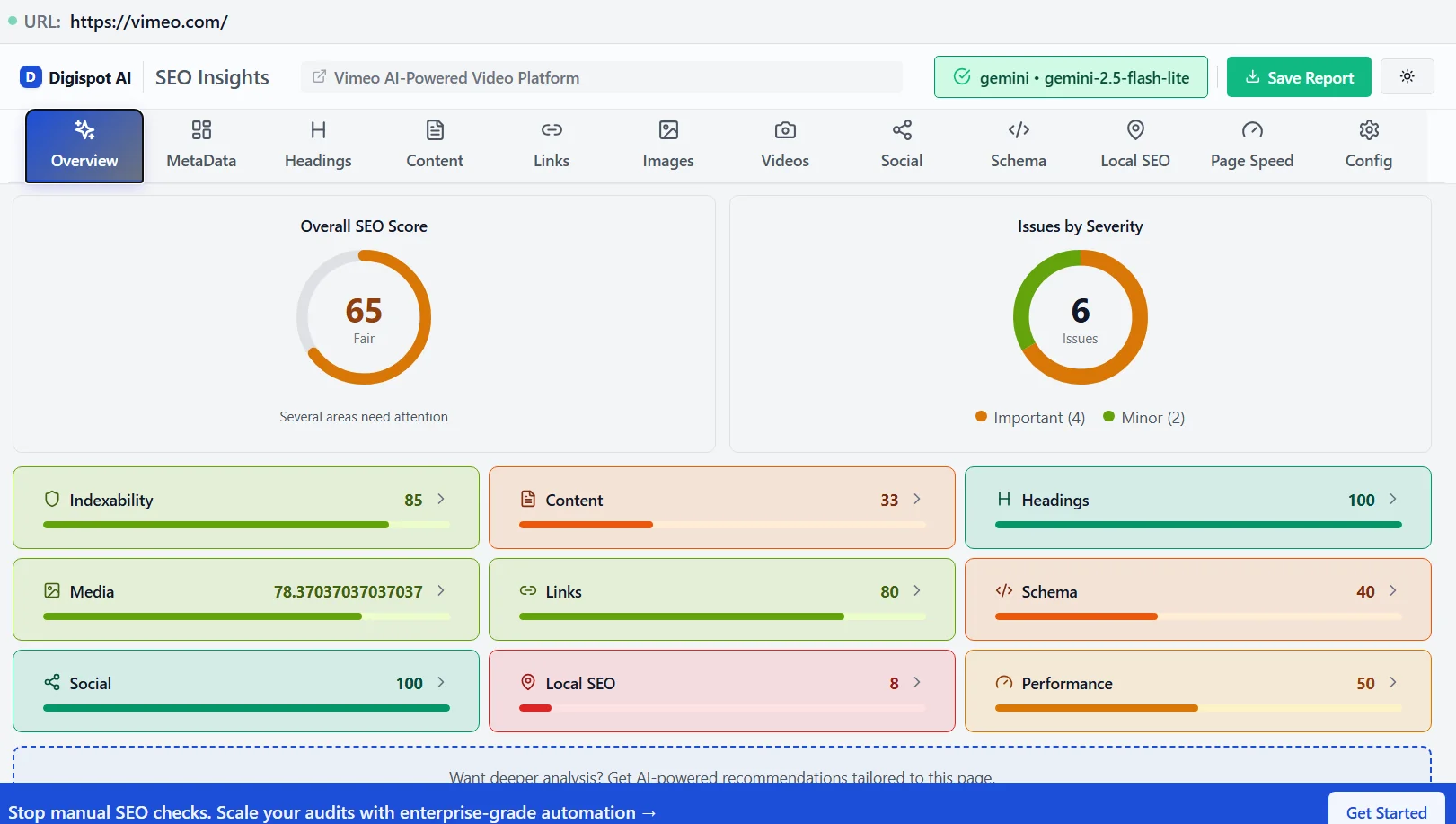
Moreover, the platform’s analytical capabilities are robust, understanding and helping you rank better by analyzing your site for over 200 ranking factors. This comprehensive approach encompasses content, technical SEO, local SEO, and page performance, ensuring every angle that influences personalized search visibility is covered [cite: Digispot AI description].
For those who want to quickly audit their own website pages directly in their browser, Digispot AI also offers a free community Chrome extension. This powerful tool is powered by popular LLM models and helps you audit, detect, and visualize crucial elements like schema markup, which is vital for search engines to understand your content for personalized results [cite: Digispot AI description]. This extension provides instant insights, helping you to make on-the-fly improvements to your individual web pages.
By leveraging a platform that integrates these features, businesses can streamline their personalization-SEO strategy, leading to significant improvements in business visibility, a tangible increase in traffic and business leads, and valuable time and cost savings [cite: Digispot AI description].
Common Challenges and How to Overcome Them in Personalization-SEO
While the benefits are clear, implementing personalization-SEO involves navigating technical and ethical minefields. Awareness of these challenges allows for proactive solutions.
- Data Privacy & Compliance (GDPR/CCPA):
- Challenge: Users are increasingly wary of tracking. Regulations impose strict fines for mishandling data.
- Solution: Adopt a "Privacy by Design" philosophy. Rely on first-party data. Use transparent cookie consent banners. Ensure your personalization adds value, not creepiness. Focus on contextual personalization (based on current session) rather than behavioral (historical tracking) if consent is not granted.
- Technical Complexity & "Cloaking" Risks:
- Challenge: Serving different content can accidentally look like cloaking to Google, leading to de-indexing.
- Solution: Always keep the "base" HTML consistent for the primary content. Use the
Vary: User-Agentheader correctly. If you use JavaScript for personalization, ensure it doesn't hide the main content from the initial HTML snapshot. Use dynamic rendering strategies to serve pre-rendered content to bots if necessary.
- Performance Impact (Core Web Vitals):
- Challenge: Personalization tools often use heavy JavaScript that delays page rendering or causes layout shifts (CLS) as content swaps out.
- Solution: Use Server-Side Rendering (SSR) where possible. If using client-side scripts, reserve space for dynamic elements using CSS aspect ratios to prevent layout shifts. Audit your Core Web Vitals regularly with the Digispot AI Chrome Extension.
- Content Fragmentation:
- Challenge: Managing 50 versions of a homepage is a logistical nightmare.
- Solution: Don't personalize everything. Focus on high-impact areas like headlines, hero images, and CTAs. Use a Headless CMS that supports modular content to manage variations centrally.
- Caching Issues:
- Challenge: CDNs love to cache static pages. They might cache the "logged-in" version of a page and serve it to a public user.
- Solution: Configure your CDN to respect
Varyheaders. Use "Edge Side Includes" (ESI) to cache the static parts of the page while keeping the personalized bits dynamic.
The Future of Personalization-SEO: A Glimpse Ahead
The trajectory of personalization-SEO points towards even more sophisticated, seamless, and proactive experiences.
- Predictive Personalization: AI will move from "reactive" (you searched for X, so here is Y) to "predictive" (based on your business type and season, you will need Z). Search engines will start surfacing content before the user explicitly queries it, via platforms like Google Discover.
- Biometric and Mood-Based Search: As wearables advance, search results might eventually adapt to stress levels or physical activity context (e.g., shorter, bolder answers when a user is running).
- The Rise of "Agentive" Search: Users will have personal AI agents that search for them. Optimizing for these agents means structured data and API accessibility will become more important than visual design.
- Visual and Voice Integration: Personalization will extend to the format of the answer. A user driving might get a voice summary, while a user at a desk gets a comparison table. Your content must be structured to support all these modalities. On-page SEO best practices will evolve to include multi-modal optimization.
Start Improving Your Personalization Strategy Today
The days of static, broadcast-style websites are fading. The digital ecosystem demands relevance, and personalization-SEO is the mechanism to deliver it. By understanding user intent, ethically leveraging data, crafting tailored content, and optimizing your website's technical foundation, you can transform your online presence from a generic billboard into a series of meaningful, individual conversations.
Embracing a personalized approach aligns your strategy with how modern search engines operate and how users expect to interact with the digital world. It is about building deeper connections, driving more qualified traffic, and securing sustainable growth.
Ready to improve your search visibility? Try Digispot AI for comprehensive website audits and actionable recommendations that help you bridge the gap between technical SEO and personalized user experiences. The future of digital success belongs to those who dare to be truly personal.
References
- Personalization & Google Search results | Google Search Help
- About search intention | Google Search Central Community
- Intro to How Structured Data Markup Works | Google Search Central | Documentation
- Mobile-first Indexing Best Practices | Google Search Central | Documentation
- Using site speed in web search ranking | Google Search Central Blog
- What Is Local SEO: A Complete Guide - The CMO
- AI Features and Your Website | Google Search Central | Documentation
- Rank Higher on Google and ChatGPT with Digispot AI SEO Platform
- FREE Google Chrome Extension - Digispot AI SEO Insights
Audit any page in seconds
300+ SEO checks including Core Web Vitals, schema markup, meta tags, and AI readiness — trusted by 1000+ SEO experts and marketers.
Frequently Asked Questions
Here are some of our most commonly asked questions. If you need more help, feel free to reach out to us.
Written by
Maya Krishnan
Digital growth expert
Maya is a seasoned expert in web development, SEO, and digital strategy, dedicated to helping businesses achieve sustainable growth online. With a blend of technical expertise and strategic insight, she specializes in creating optimized web solutions, enhancing user experiences, and driving data-driven results. A trusted voice in the industry, Maya simplifies complex digital concepts through her writing, empowering readers with actionable strategies to thrive in the ever-evolving digital landscape.