
Real Estate SEO - The Ultimate Guide to Getting More Leads
Learn the real estate SEO strategies you need to build authority, dominate local search, and create a predictable pipeline of high-intent clients.
 Maya Krishnan
The property market has shifted fundamentally. The journey to a new home doesn't start on a sidewalk; it starts in a search bar. According to the National Association of Realtors, 99% of homebuyers aged 23 to 56 use the internet during their search. More importantly, 51% of buyers find the actual home they purchase online.
For real estate professionals, these numbers are a wake-up call. Relying solely on referrals or paid ads is no longer sustainable. You need a way to meet high-intent buyers exactly where they look. Mastering Search Engine Optimization (SEO) transforms your digital presence from a static brochure into a lead generation engine.
This guide is your blueprint for digital dominance. We will dismantle the components of a high-performance SEO strategy, from granular keyword analysis to technical implementation. We will move beyond "getting clicks" to engineering a predictable pipeline that positions you as the definitive authority in your market.
The Strategic Imperative of SEO in Real Estate
Real estate marketing has evolved. A doctoral study on digital strategies emphasizes that modern agents need technology to simplify communication and educate clients. SEO is the mechanism that delivers this at scale.
While paid advertising (PPC) stops working the moment you stop paying, SEO builds a compounding asset. A robust organic strategy offers specific advantages:
- Trust and Authority: Buyers trust organic results more than ads. Ranking high for "best schools in [City]" validates your expertise before you even speak to the prospect.
- Cost Efficiency: SEO provides a lower long-term cost per lead compared to direct mail or Zillow Premier Agent leads.
- Intent Matching: You connect with prospects at the exact moment of need. Someone searching "sell my house fast [City]" has a very different urgency than someone browsing "home decor ideas."
Your objective is clear: optimize your website, content, and local profiles to dominate Search Engine Results Pages (SERPs) for queries that drive revenue.
The Foundation - Advanced Keyword and SERP Analysis
Keyword research is the bedrock of your campaign. In real estate, broad terms like "homes for sale" are often dominated by national portals like Redfin or Zillow. To win, you must go deeper.
A. Mastering Keyword Stratification
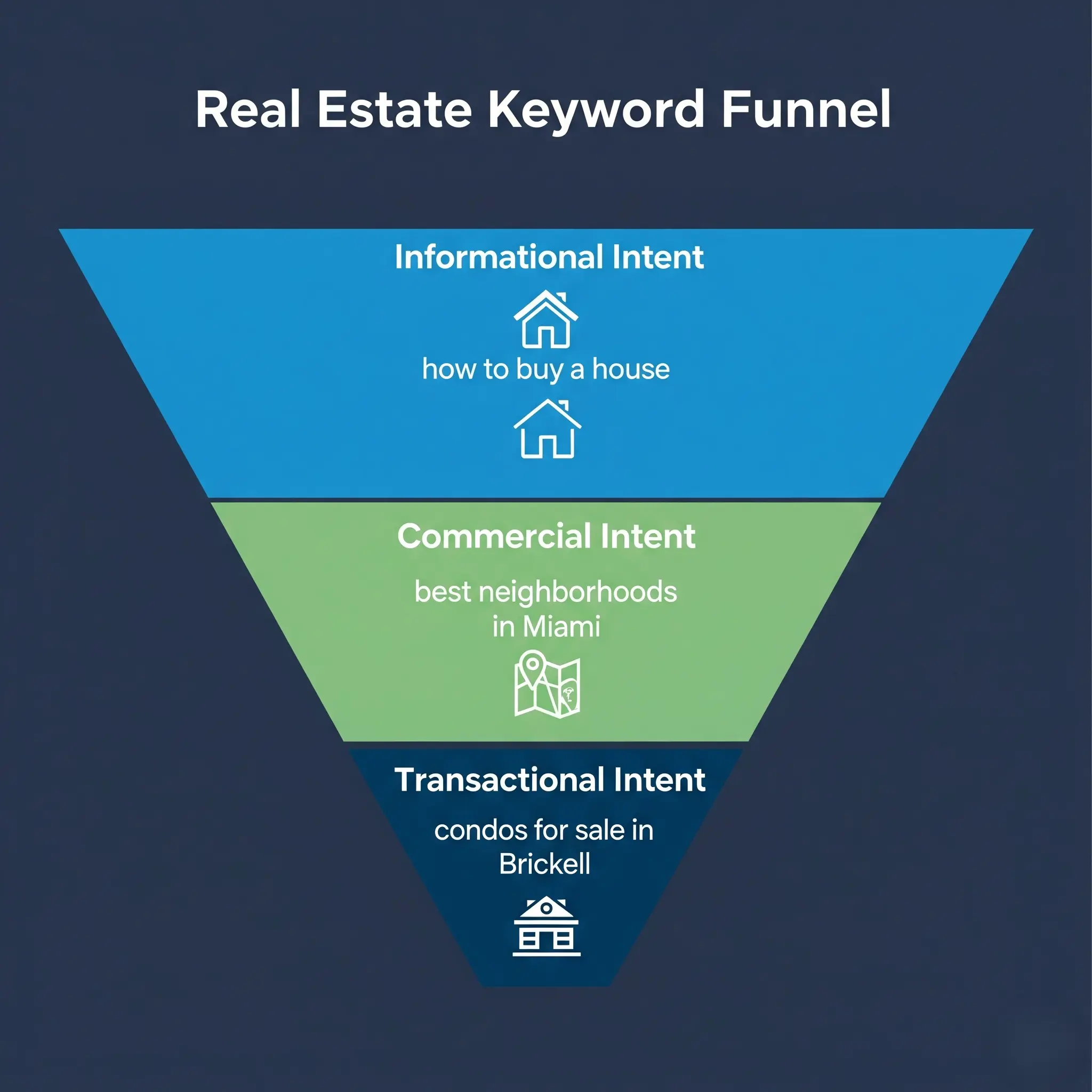
You must segment your keywords based on where the user is in their buying journey. This ensures you have content for every stage of the funnel.
- Informational Keywords: Users are gathering data.
- Examples: "how to buy a house in Austin," "closing costs in Florida."
- Strategy: Create educational blog posts. This builds trust early.
- Navigational Keywords: Users are looking for you specifically.
- Examples: "[Your Name] reviews," "Compass Real Estate [City]."
- Strategy: Ensure your homepage and contact pages are optimized for your brand name.
- Transactional Keywords: High intent. Users are ready to hire or buy.
- Examples: "top listing agents in [Zip Code]," "buy condo downtown Miami."
- Strategy: Optimize your service pages and main listing categories for these terms.
- Long-Tail Keywords: Specific phrases with lower volume but higher conversion.
- Examples: "4 bedroom house with pool in Eanes ISD," "pet friendly condos near [Park Name]."
Targeting long-tail terms is often the quickest path to ranking. These users know exactly what they want.
B. The Power of Hyper-Local Targeting
Real estate is hyper-local. As highlighted in The HyperLocal HyperFast Real Estate Agent, winning a specific geographic niche creates a defensive moat around your business.
Your keyword strategy must be granular. Stop targeting just "Chicago real estate." Start targeting:
- Neighborhoods: "Lincoln Park luxury homes"
- School Districts: "Homes for sale in Stevenson High School district"
- Landmarks: "Condos near Millennium Park"
- Property Types: "Victorian homes for sale in San Francisco"
C. Tools and Competitive Analysis
Do not guess what people are searching for. Use professional tools to validate your intuition.
-
Seed Keyword Identification: Start with your core service area.
-
Competitor Gap Analysis: Use tools like Semrush or Digispot AI to see what your local competitors rank for. Identify terms they are missing.
-
SERP Analysis: Look at the actual results. If the top 10 results are all Zillow and Realtor.com, that keyword is highly competitive. Look for queries where local agent sites or blog posts appear on page one.
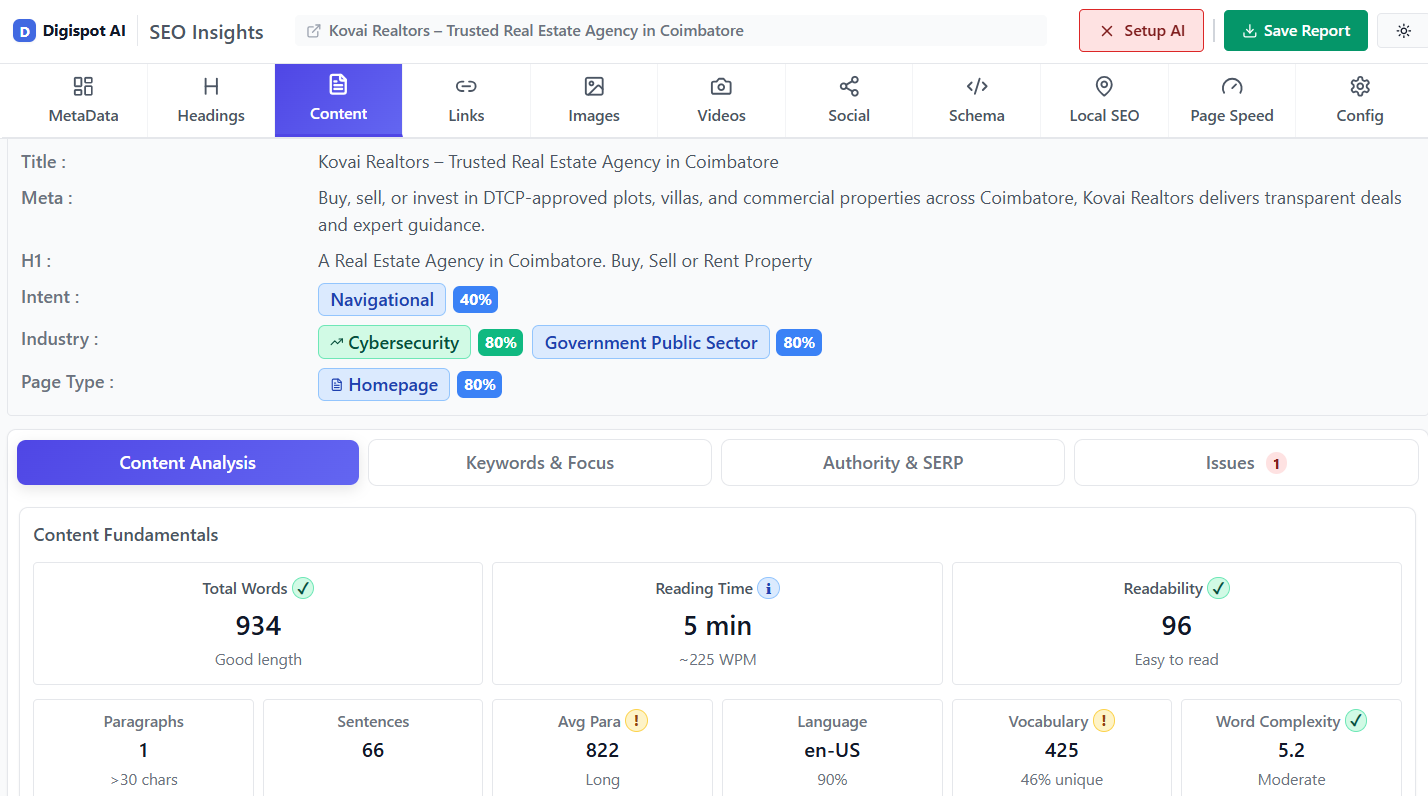
Pro Tip: Use the free Digispot Chrome extension to instantly analyze the keywords and heading structures of competitor pages directly in your browser.
On-Page SEO: Engineering a High-Performance Website
On-page SEO tells search engines what your content is about. It involves optimizing individual pages to rank higher and earn more relevant traffic. For a deeper dive, check our guide on on-page SEO best practices.
Title Tags and Meta Descriptions
These are your first impression in the search results. They must be compelling.
- Bad Title: Home Page - Smith Realty
- Good Title: Downtown Seattle Real Estate | Condos & Lofts | Smith Realty
- Meta Description: Use this space to sell the click. Include your phone number and a call to action. "Browse exclusive listings in Downtown Seattle. Expert guidance for buyers and sellers. Schedule your private tour today. (206) 555-0199."
URL Structure
Keep URLs clean and descriptive.
- Avoid:
yourwebsite.com/p=123 - Use:
yourwebsite.com/listings/austin-tx/78704/contemporary-homes
Content Optimization and E-E-A-T
Google evaluates content based on Experience, Expertise, Authoritativeness, and Trustworthiness (E-E-A-T). Your content must demonstrate deep local knowledge.
Instead of generic listing descriptions, write comprehensive neighborhood guides. Mention specific coffee shops, commute times, and local history. This signals to Google that you have actual experience in the area, not just scraped data. Learn more about building trust signals in our E-E-A-T guide.
Internal Linking Strategy
Strategic internal linking helps search engines understand your site structure. It also keeps users on your site longer.
- Link from your high-traffic blog posts to your listing pages.
- Link from neighborhood guides to relevant school district pages.
- Use descriptive anchor text. Instead of "click here," use "view homes in Hyde Park."
For a complete breakdown of how to structure these connections, read about internal linking strategies.
Local SEO: The Playbook for Geographic Domination
Local SEO is arguably the most critical component for agents. You want to appear in the "Local Pack"—the map with three business listings at the top of Google results.
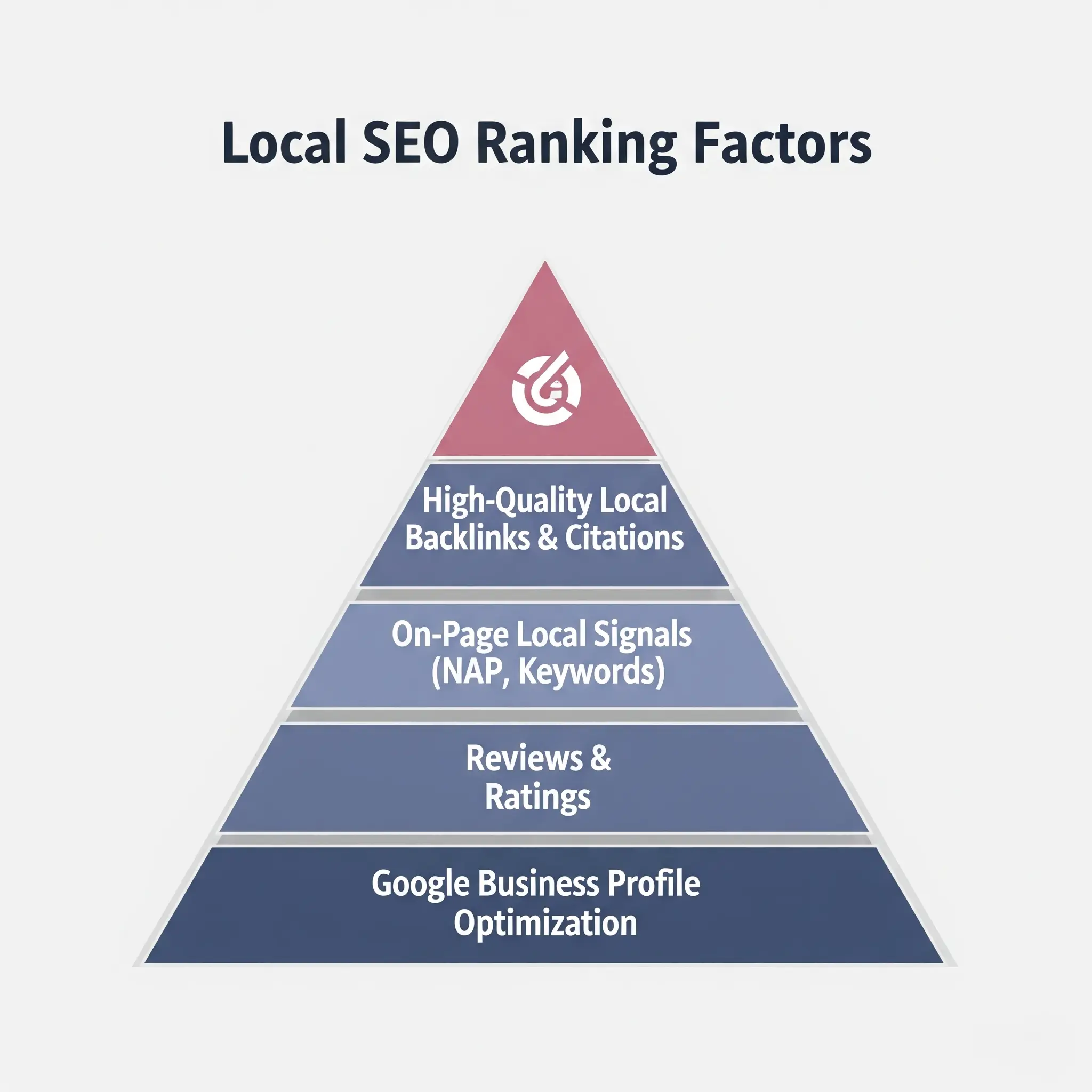
A. Google Business Profile (GBP) Optimization
Your GBP is your digital storefront. An optimized profile can drive more calls than your website.
- Claim and Verify: This is step one.
- Complete Every Field: Don't skip the "Services" or "Service Areas" sections. Be specific about the neighborhoods you cover.
- Primary Category: Use "Real Estate Agency" or "Real Estate Agent."
- Photos: Upload high-quality images of yourself, your team, sold listings, and your office. Profiles with photos get 42% more requests for directions.
- Updates: Use Google Posts weekly. Share open house announcements, "Just Sold" case studies, or snippets of market reports.
B. Reviews and Engagement
Reviews are a major ranking factor. Implement a system to request reviews from every client at closing.
- Respond to Everything: Reply to every review, positive or negative. This shows prospective clients (and Google) that you are attentive and professional.
- Keywords in Reviews: Encourage clients to mention specific details. "Sarah helped us buy our dream home in West Loop" is more valuable than "Sarah was great."
C. NAP Consistency
Your Name, Address, and Phone number (NAP) must be identical everywhere. If your GBP says "Suite 100" and your website says "#100," it can confuse search engines.
- Audit your citations on Zillow, Realtor.com, Yelp, and Facebook.
- Ensure consistency across local business directories.
Need a quick check? Digispot AI can audit your local presence and identify NAP inconsistencies across the web automatically.
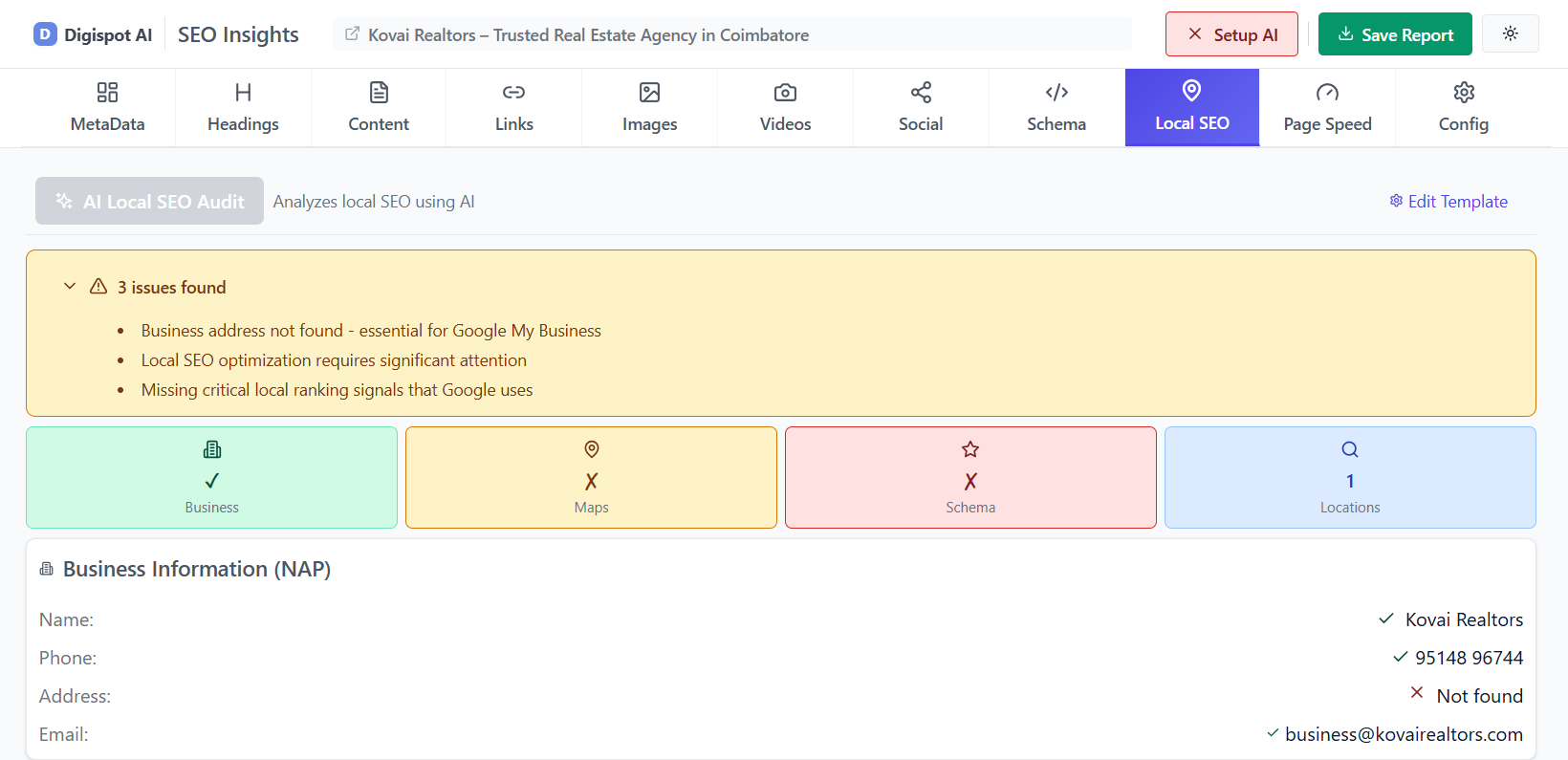
Turn invisible SEO data into clear visuals with our Free Chrome extension.
Technical SEO: Ensuring a Flawless Foundation
Technical SEO ensures search engines can crawl and index your site without issues. If your foundation is cracked, your content won't rank.
A. Schema Markup (Structured Data)
Schema is code that helps Google understand your content. For real estate, it is essential for earning "Rich Snippets"—enhanced search results that show price, ratings, and availability.
RealEstateListing: Tag your property pages to display price, bed/bath count, and floor size directly in SERPs.RealEstateAgent: Use this on your "About" or "Agent Profile" pages to link your social profiles and contact info.LocalBusiness: Reinforce your geographic location.
Implementation can be complex. You can use the free Schema Markup Generator to create valid JSON-LD code in minutes without needing a developer.
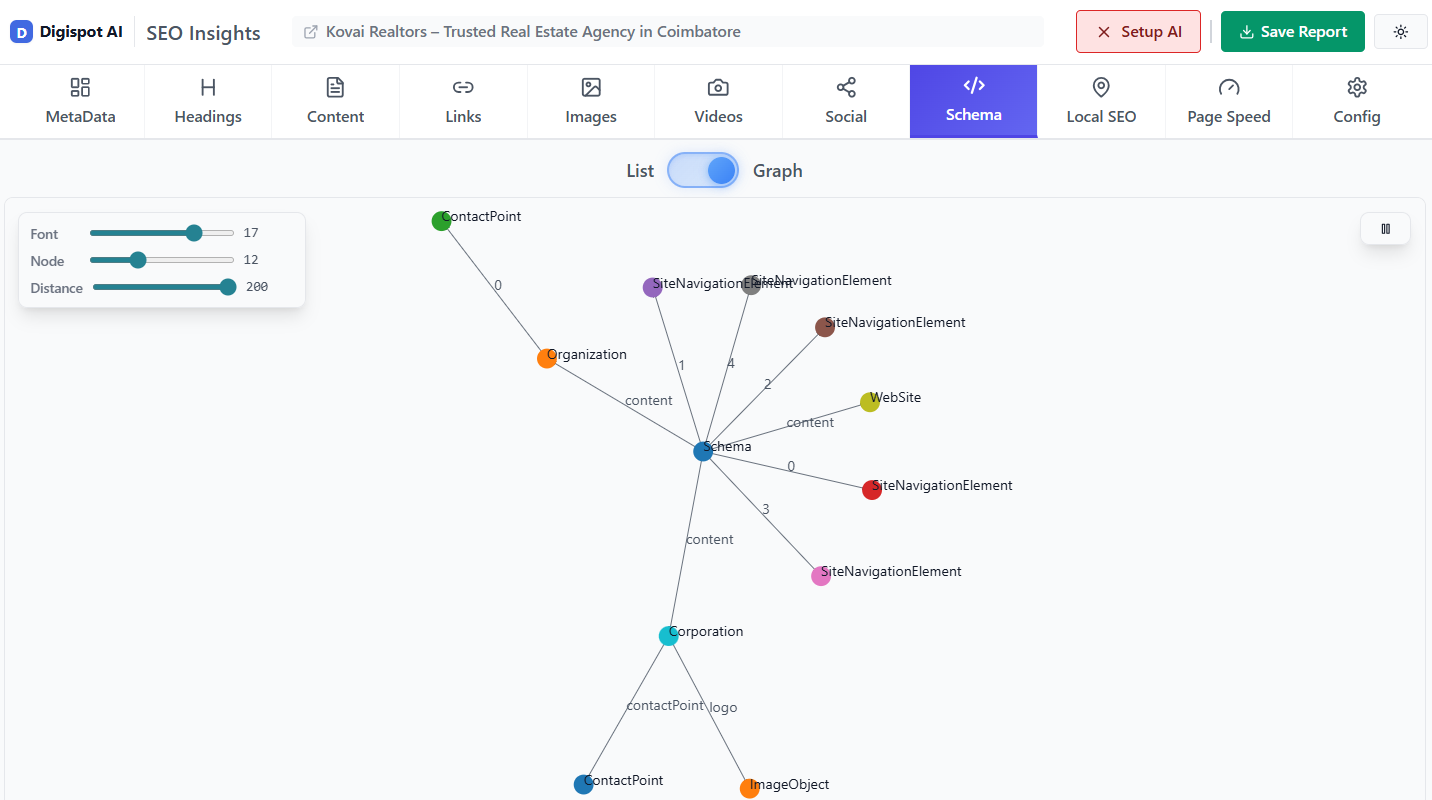
Turn invisible SEO data into clear visuals with our Free Chrome extension.
B. Core Web Vitals and Speed
Real estate sites are image-heavy. Large, unoptimized photos kill site speed, frustrating users and hurting rankings.
- Compression: Compress every image before uploading. Tools like TinyJPG or ShortPixel are essential.
- CDN: Use a Content Delivery Network to serve images faster.
- Mobile Experience: Google uses mobile-first indexing. If your site is slow or broken on a phone, you will not rank.
For a detailed guide on improving these metrics, see our Core Web Vitals guide.
Off-Page SEO: Building Unassailable Authority
Off-page SEO focuses on increasing your site's authority through backlinks. Think of a backlink as a vote of confidence from another website.
A. Quality Over Quantity
A link from a local news station or a chamber of commerce is worth far more than 100 links from low-quality directories. Focus on relevance.
B. Strategic Link Building Tactics
- Local Sponsorships: Sponsor a little league team or a 5K charity run. Most organizations will link to sponsors from their website. This is a powerful, hyper-local signal.
- Guest Blogging: Write articles for local interior designers, mortgage brokers, or moving companies.
- Digital PR: Publish a study on "The Rising Cost of Rent in [City]" and pitch it to local journalists. Data-driven content attracts high-quality news links naturally.
- Unlinked Mentions: Use tools to find places where your agency is mentioned but not linked. Reach out and politely ask for the link.
Analytics and Continuous Improvement
SEO is not a "set it and forget it" task. You must track your performance to understand what works.
Key Metrics to Track
- Organic Traffic: Are more people finding you via search?
- Keyword Rankings: Are you moving up for your target neighborhood terms?
- Local Pack Visibility: How often do you appear in the map pack?
- Conversions: This is the most important metric. Track form fills, phone calls, and "schedule a tour" clicks.
Tools of the Trade
- Google Search Console: Essential for checking technical health and seeing exactly which queries drive traffic.
- Google Analytics 4 (GA4): Use this to track user behavior on your site.
- Digispot AI: Use our platform for real-time rank tracking and AEO (Answer Engine Optimization) insights to see how you appear in AI answers like ChatGPT or Google Gemini.
Common mistakes often derail SEO efforts. Make sure you aren't falling victim to these common SEO errors that can stagnate your growth.
Conclusion: Start Improving Your Rankings Today
Achieving dominance in real estate SEO is a marathon, not a sprint. It requires a commitment to quality, technical precision, and genuine local engagement. A 2020 study on digital media in real estate confirmed that the industry is still under-utilizing these strategies, which means the door is wide open for agents willing to put in the work.
By implementing the frameworks in this guide—from capturing long-tail keywords to optimizing your Google Business Profile—you do more than just improve your rankings. You build a sustainable business asset that generates high-intent leads regardless of market fluctuations.
Ready to take control of your search visibility? Start by auditing your current performance. Use the free On-Page SEO Analysis tool to scan your key landing pages. For a complete strategic overhaul, try Digispot AI to access comprehensive site audits and AI-driven recommendations tailored for the real estate market.
References
- Rabby, F., Chimhundu, R., & Hassan, R. (2020). The impact of digital media on real estate marketing: A review. Sydney International Business Research Conference.
- McCain, M. S. (2023). Effective Digital Marketing Strategies for Increased Engagement in Real Estate. Trident University International.
- Johnson, L., & Brown, M. (2024). A Study On Social Media Role In Digital Marketing In Real Estate. IJCRT.org.
- Digispot AI. (2025). Comprehensive SEO Services for Real Estate Professionals.
- Digispot AI. (2025). FREE Chrome Extension for SEO Insights.
- Digispot AI. (2025). FREE On-Page SEO Audit Tool.
- Digispot AI. (2025). FREE Schema Markup Visualizer.
Related deep-dives
Continue with these closely related guides:
- investment advisor seo — Investment Advisor SEO: Financial Services Guide
- law firm seo — Law Firm SEO - The Ultimate Guide to Getting More Clients
Audit any page in seconds
300+ SEO checks including Core Web Vitals, schema markup, meta tags, and AI readiness — trusted by 1000+ SEO experts and marketers.
Frequently Asked Questions
Here are some of our most commonly asked questions. If you need more help, feel free to reach out to us.
Written by
Maya Krishnan
Digital growth expert
Maya is a seasoned expert in web development, SEO, and digital strategy, dedicated to helping businesses achieve sustainable growth online. With a blend of technical expertise and strategic insight, she specializes in creating optimized web solutions, enhancing user experiences, and driving data-driven results. A trusted voice in the industry, Maya simplifies complex digital concepts through her writing, empowering readers with actionable strategies to thrive in the ever-evolving digital landscape.