Generative AI for SEO The Ultimate Guide
Master Generative AI and LLMs for SEO transformation. Learn to leverage AI tools for content creation, optimization, and search performance improvement.
 Maya Krishnan
When ChatGPT launched in November 2022, it didn't just capture a million users in five days—it fundamentally altered the trajectory of digital marketing. We moved from an era of static search algorithms to dynamic, conversational intelligence. This wasn't just software that could organize data; this was software that could reason and create.
Powered by OpenAI’s infrastructure, ChatGPT demonstrated that machines could maintain context, understand nuance, and generate human-like text. The subsequent explosion of generative AI has seen tech giants like Google (Gemini), Anthropic (Claude), and Meta (Llama) releasing models that are progressively smarter, faster, and more cost-effective.
One standout is DeepSeek-V3, an open-source large language model that recently made headlines for delivering GPT-4 level performance at a fraction of the training cost. As these barriers to entry lower, the ripple effects hit Search Engine Optimization (SEO) harder than perhaps any other industry. Marketers are moving beyond simple content generation; they are using these tools to restructure how they audit sites, analyze competitors, and predict ranking shifts.
Generative AI and Large Language Models (LLMs) are not just tools—they are the new infrastructure of search. This guide details exactly how to integrate them into your workflow to survive and thrive in this new environment.
Key Takeaways
- Optimize for answers, not just links. With AI Overviews summarizing results directly, your goal shifts from ranking blue links to becoming the source the AI cites. Structure content around clear questions and direct answers.
- Use AI to augment, not replace, humans. Let the model handle outlines, meta data, and first drafts, then have an editor add unique experience, original data, and brand voice—the "Information Gain" that separates ranking content from spam.
- Fact-check every AI output. LLMs hallucinate confidently. Verify all statistics, dates, and quotes before publishing, especially for YMYL topics like health and finance.
- Build topical authority with clusters. Use AI for semantic keyword clustering and intent mapping so you plan content hubs, not disconnected pages, and dominate a niche faster.
- Lean on AI for technical wins. Generate valid Schema JSON-LD, hreflang tags, robots.txt rules, and GSC regex instantly—translating your requirements into error-free code.
What is Generative AI?
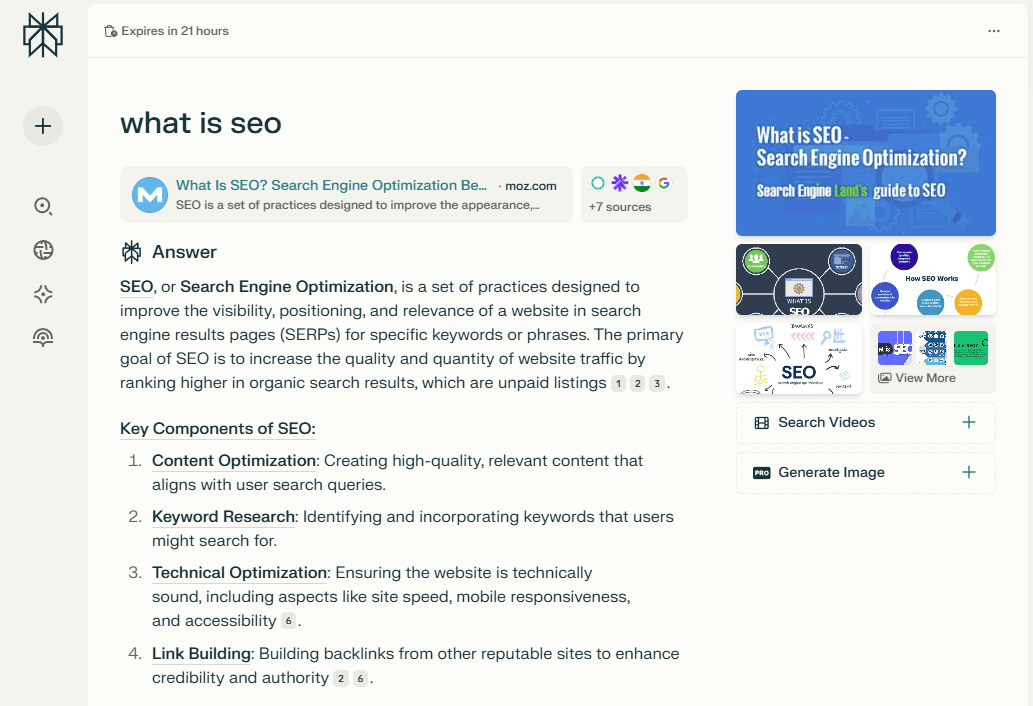
To truly leverage this technology, you must understand the mechanical difference between the "traditional" AI of the past decade and the Generative AI of today.
Traditional AI functions like a specialized analyst. It excels at pattern recognition within defined datasets. When Netflix suggests a movie or your email provider flags spam, it is using discriminatory AI—it sorts, classifies, and predicts based on historical data. It is a closed loop.
Generative AI is a creator.
Powered by Large Language Models (LLMs)—sophisticated neural networks trained on petabytes of text, code, and imagery—this AI understands the relationships between words and concepts (vectors). It doesn't just retrieve information; it predicts the most likely next token in a sequence to construct entirely new outputs.
It can:
- Synthesize complex research papers into executive summaries.
- Write code snippets (Python, JavaScript, Schema JSON-LD) to solve specific technical SEO problems.
- Simulate user personas to test how different audiences perceive your content.
- Generate unique images and visual assets from text descriptions.
The objective of generative AI in an SEO context is to augment human capability. While it requires human oversight to ensure accuracy and brand voice, its ability to process vast amounts of data and output structured drafts allows you to execute strategies at a velocity that was previously impossible.
| Feature | Traditional AI | Generative AI |
|---|---|---|
| Primary Function | Analyze and Classify | Create and Synthesize |
| Data Interaction | Closed loop (learns from provided data) | Open loop (learns patterns to generate new data) |
| SEO Application | Spam detection, ranking algorithm updates | Content drafting, code generation, entity mapping |
How is AI Changing Google Search Itself? (The Rise of SGE and AEO)
The urgency to adopt generative AI stems from a critical shift: Google is transforming from a search engine into an answer engine. This evolution, often referred to as the Search Generative Experience (SGE) or "AI Overviews," fundamentally alters the Search Engine Results Page (SERP).
When a user submits a complex query, Google's AI now often generates a detailed "snapshot" at the top of the results. This snapshot synthesizes information from multiple sources to answer the query directly.
This shifts the SEO paradigm from "10 blue links" to a zero-click reality.
- The Threat: Informational queries (e.g., "what is canonical tag") may result in zero clicks because the AI answers the question immediately. Simple fact-based traffic will likely decline.
- The Opportunity: This is where Answer Engine Optimization (AEO) comes into play. If your content is structured correctly, authoritative, and cited by the AI, you appear prominently within that snapshot. This position signals immense trust and authority.
To win in this environment, you cannot simply target keywords. You must optimize for entities and answers. You need to become the source the AI trusts enough to cite—the discipline covered in our answer engine optimization (AEO) guide. Digispot AI specializes in AEO tracking, helping you understand not just where you rank, but how often you are cited in these AI-generated responses.
How to Use Generative AI for SEO: A Comprehensive Guide
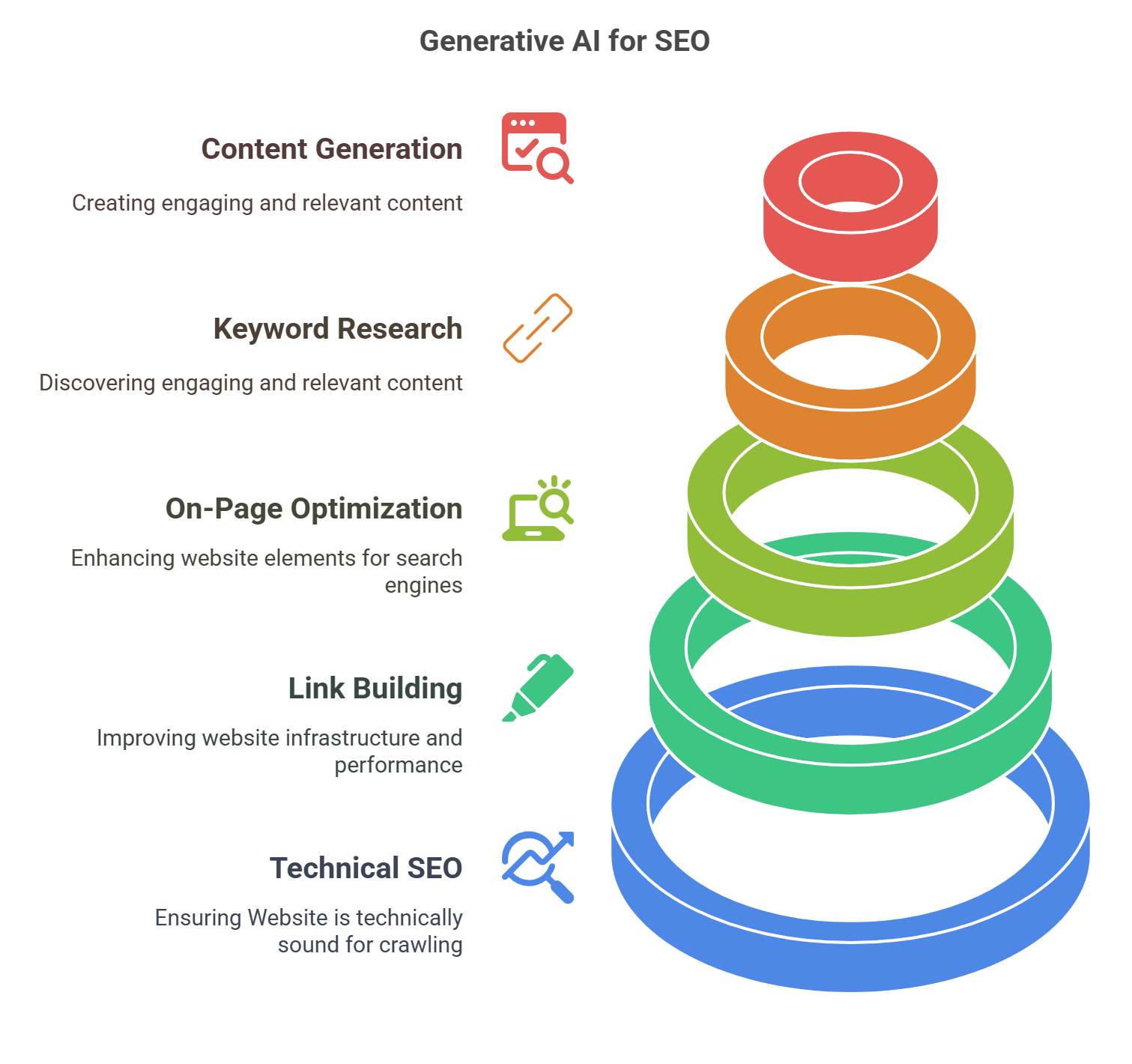
Generative AI offers diverse applications for SEO, transforming content creation, keyword strategy, and technical optimization. Here is how to implement it practically.
1. Content Generation: Scale Your Content Engine
This is the most visible application of LLMs, but most users only scratch the surface. It allows you to break through writer's block and scale production, but quality control is paramount.
-
Blog Posts and Articles: Do not use AI to write the final draft. Use it to generate detailed outlines, counter-arguments, and structural ideas.
-
The SEO Payoff: You can cover topical maps (clusters of related content) much faster. By publishing comprehensive coverage on a niche topic quickly, you build "Topical Authority," a key ranking factor.
-
Actionable Prompt Strategy: Instead of a generic prompt, use "Chain of Thought" prompting. Ask the AI to first analyze the top 10 search results for a keyword, identify gaps in their content, and then create an outline that fills those gaps.
"Act as a senior content strategist. Analyze the topic 'Beginner Indoor Gardening.' Identify 3 common questions that competitors often fail to answer in depth. Create an outline that prioritizes these missing insights, ensuring the content offers unique value. Target primary keyword 'beginner indoor gardening'."
-
-
Website Copy & Product Descriptions: For e-commerce sites with thousands of SKUs, writing unique descriptions is a massive bottleneck. AI can generate unique, benefit-driven descriptions based on feature lists.
- The SEO Payoff: Eliminates "thin content" penalties and duplicate content issues common in e-commerce, while improving long-tail keyword visibility.
-
Meta Titles & Descriptions: Writing 50 meta descriptions is tedious. AI can generate them instantly, adhering to character limits.
- The SEO Payoff: Fresh, engaging meta descriptions improve Click-Through Rate (CTR). A higher CTR tells Google your result is relevant, often leading to better rankings.
2. Keyword Research & Topic Discovery: Uncover High-Value Keywords
Generative AI moves beyond simple search volume data. It helps you understand the intent and context behind the keywords.
-
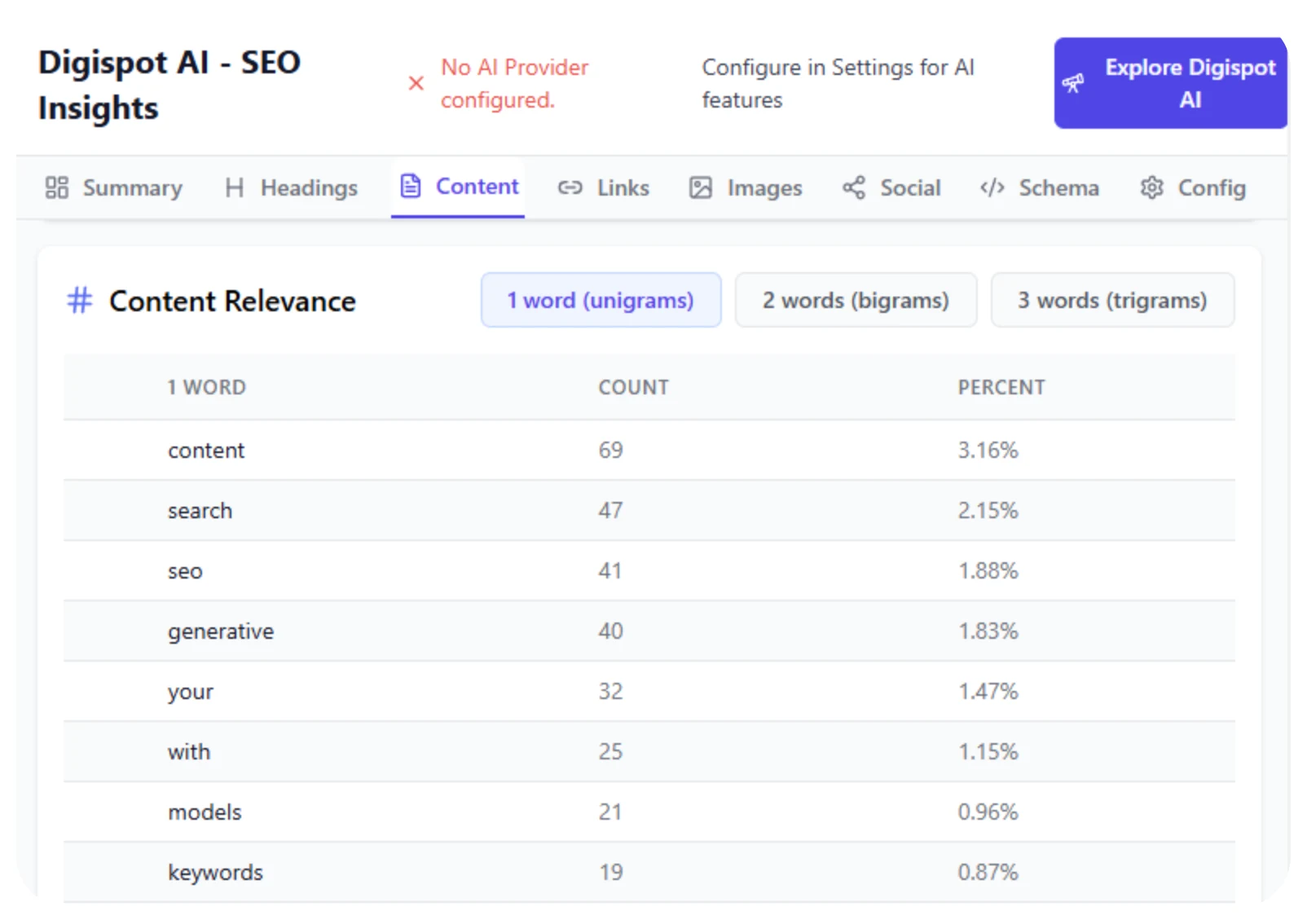
Semantic Clustering: Instead of a list of disconnected keywords, AI can group thousands of keywords into "semantic clusters" or topics. This helps you plan a content hub rather than just a single page.
- The SEO Payoff: Targeting clusters helps you dominate a niche. If you are auditing your current keyword strategy, check out our guide on on-page SEO best practices to see how to integrate these clusters effectively.
-
Creating Keyword Variations: LLMs are excellent at finding natural language variations. If you target "best running shoes," AI can suggest conversational queries like "what running shoes prevent shin splints?" or "sneakers for marathon training flat feet."
- The SEO Payoff: This optimizes your content for Voice Search and Natural Language Search, which are becoming dominant with the rise of AI assistants like Siri and Alexa.
-
Uncovering Trending Topics: While most LLMs have a knowledge cutoff, tools connected to the web (like Perplexity or Digispot's live analysis) can synthesize real-time news to identify rising trends before they show up in traditional keyword tools. Prompt a web-connected model to "list emerging subtopics and questions gaining traction in [your niche] over the last 30 days, and flag which ones have little existing published coverage." Cross-reference the output against Google Trends breakout queries and community signals (Reddit threads, YouTube comments, support tickets) so you validate genuine momentum instead of a one-off spike. For a repeatable process, see our guide on finding trending SEO keywords.
- The SEO Payoff: Being the first to cover a rising trend (First Mover Advantage) often results in acquiring high-authority backlinks naturally as others cite your original reporting.
-
Analyzing Search Intent: You can feed a list of keywords into an AI and ask: "For each keyword, classify the user intent as Informational, Transactional, or Navigational, and suggest the best content format (e.g., Blog Post, Product Page, Calculator)."
- The SEO Payoff: Aligning content format with user intent reduces "pogo-sticking" (users clicking back immediately), a negative ranking signal.
3. On-Page Optimization: Perfect Every Page
Fine-tune your existing content to maximize its ranking potential.
-
Content Audits and Optimization: Paste your content into an LLM alongside your target keyword. Ask it to act as a "Google Quality Rater" and critique the content based on E-E-A-T principles. It might suggest: "You lack a clear author bio," or "Your conclusion doesn't summarize the actionable takeaways."
- The SEO Payoff: This provides an objective second set of eyes on your content, helping you catch optimization gaps before publishing.
-
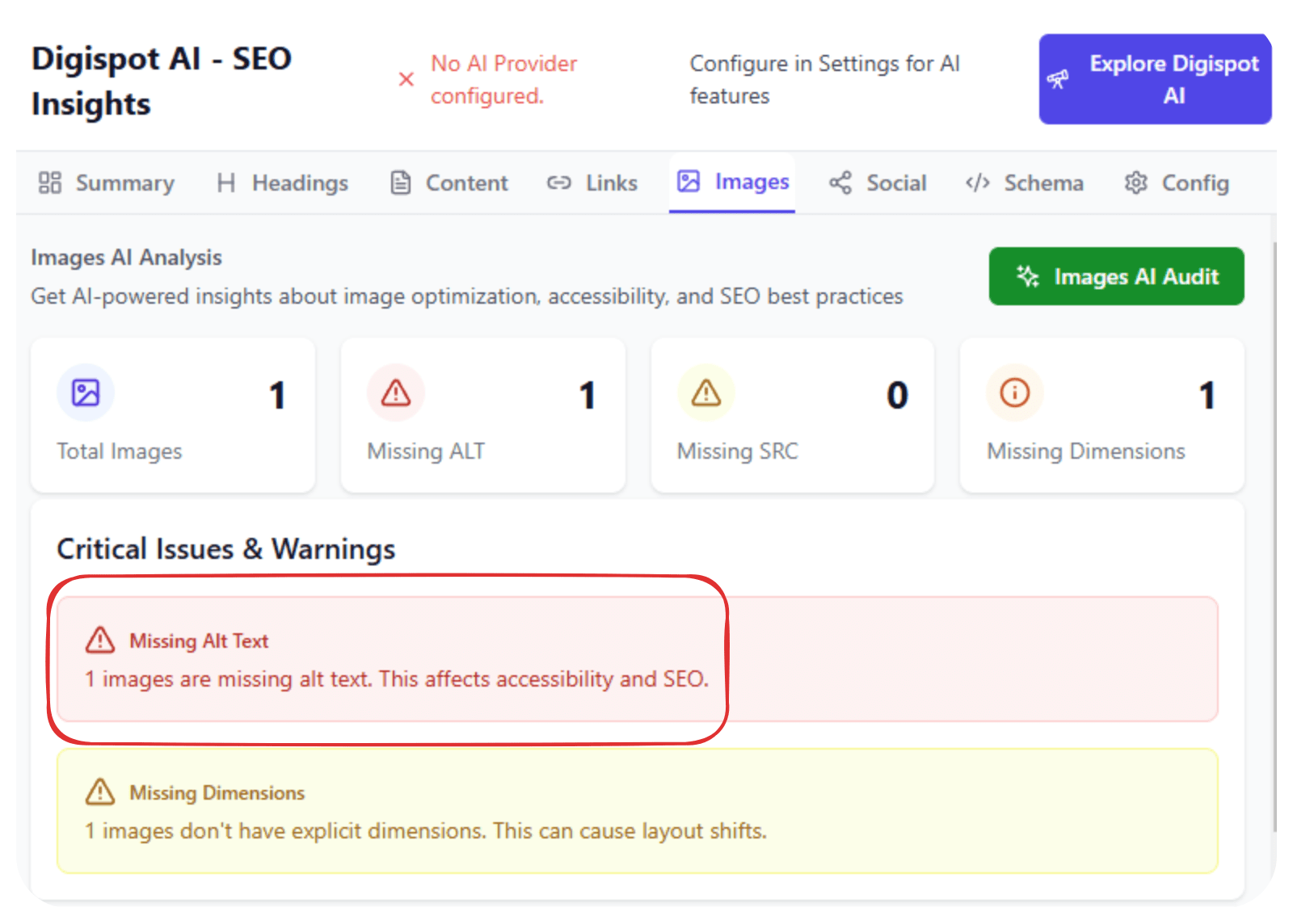
Generate Image Alt Text: Visual Language Models (VLMs) can "see" images. You can upload your blog images and ask the AI to write descriptive, keyword-rich alt text.
- The SEO Payoff: Accessibility is a ranking factor. Furthermore, Google Images is a significant source of traffic. Proper alt text helps Google understand the visual context of your page.
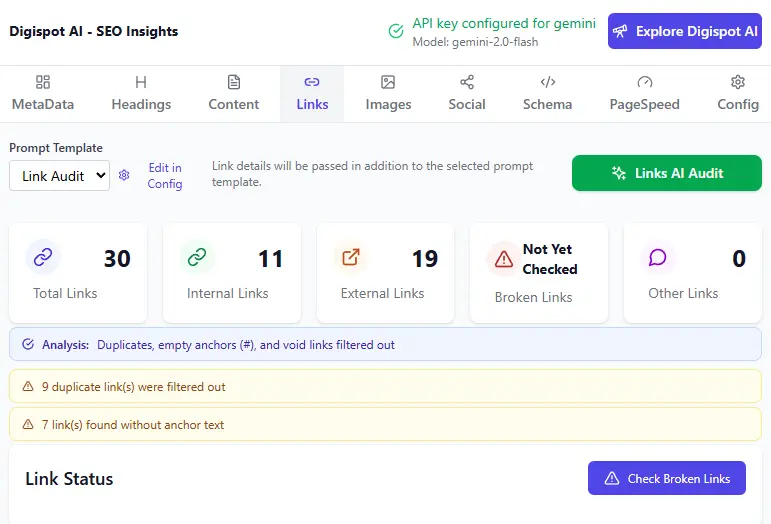
Get instant SEO insights on any page, including alt text analysis, with our free Chrome extension.
4. Technical SEO: Strengthen Your Site's Foundation
Technical SEO often scares marketers, but Generative AI acts as a translator between you and the code.
-
Create Robots.txt and Hreflang Tags: Syntax errors in these files can de-index your site. AI can generate the exact code snippets you need based on your requirements. Always treat the output as a draft: paste generated
robots.txtdirectives into Google Search Console's robots.txt report to confirm you are not accidentally blocking key directories, and validate hreflang clusters for reciprocity (every language version must reference every other, plus itself) and correct ISO language-region codes. A single missing return tag or a typo likeen-UKinstead ofen-GBcan silently break international targeting. For the underlying rules, see our robots.txt setup guide and the hreflang guide for international SEO.-
The SEO Payoff: Ensures search engines can crawl and index your important pages efficiently without wasting crawl budget on irrelevant sections.
-
Actionable Prompt Example:
"I have a multi-language site (English and Spanish). Generate the correct Hreflang tags for the homepage 'example.com' and the Spanish version 'example.com/es'. Output the code for the HTML header."
-
-
Generate Schema Markup (Structured Data): Schema markup is critical for AEO. It helps AI engines understand "This is a product," "This is a price," or "This is a recipe." Writing JSON-LD code manually is difficult; AI does it instantly.
- The SEO Payoff: Valid Schema increases the chance of winning Rich Snippets (stars, prices, images in search results), which drastically improves visibility. Use the free Schema Markup Generator to create valid structured data in minutes, and learn the fundamentals in our structured data and schema for SEO guide.
-
Code Optimization & Regex: Use AI to write Regular Expressions (Regex) for Google Search Console to filter performance data. For example, "Write a Regex to filter all queries containing 'how to' or 'what is'."
- The SEO Payoff: Better data analysis leads to better strategy. Understanding your technical performance is key—learn more in our Core Web Vitals guide.
5. Link Building: Scale Your Outreach
Link building is the engine of authority. While you should never automate the relationship, AI can automate the research.
-
Find Link Opportunities: AI can analyze a competitor's article and list the external sources they cited. These are potential outreach targets for your own content.
- The SEO Payoff: Generates a highly targeted list of prospects who clearly link to content similar to yours.
-
Personalize Outreach Emails: Generic "Dear Webmaster" emails are deleted instantly. Use AI to scan a prospect's recent blog post and draft an email that references a specific point they made.
-
The SEO Payoff: Personalized outreach increases open and response rates. Even a 5% increase in conversion here can lead to dozens of high-value links over a year.
-
Actionable Prompt Example:
"Analyze this article: [URL of target article]. The author is [Name]. My complementary guide is here: [URL]. Write a short, friendly email. Do not sound salesy. Compliment their point about [Specific Topic] and mention how my guide adds data on that specific point."
-
Best Practices for Applying Generative AI in Search Engine Optimization
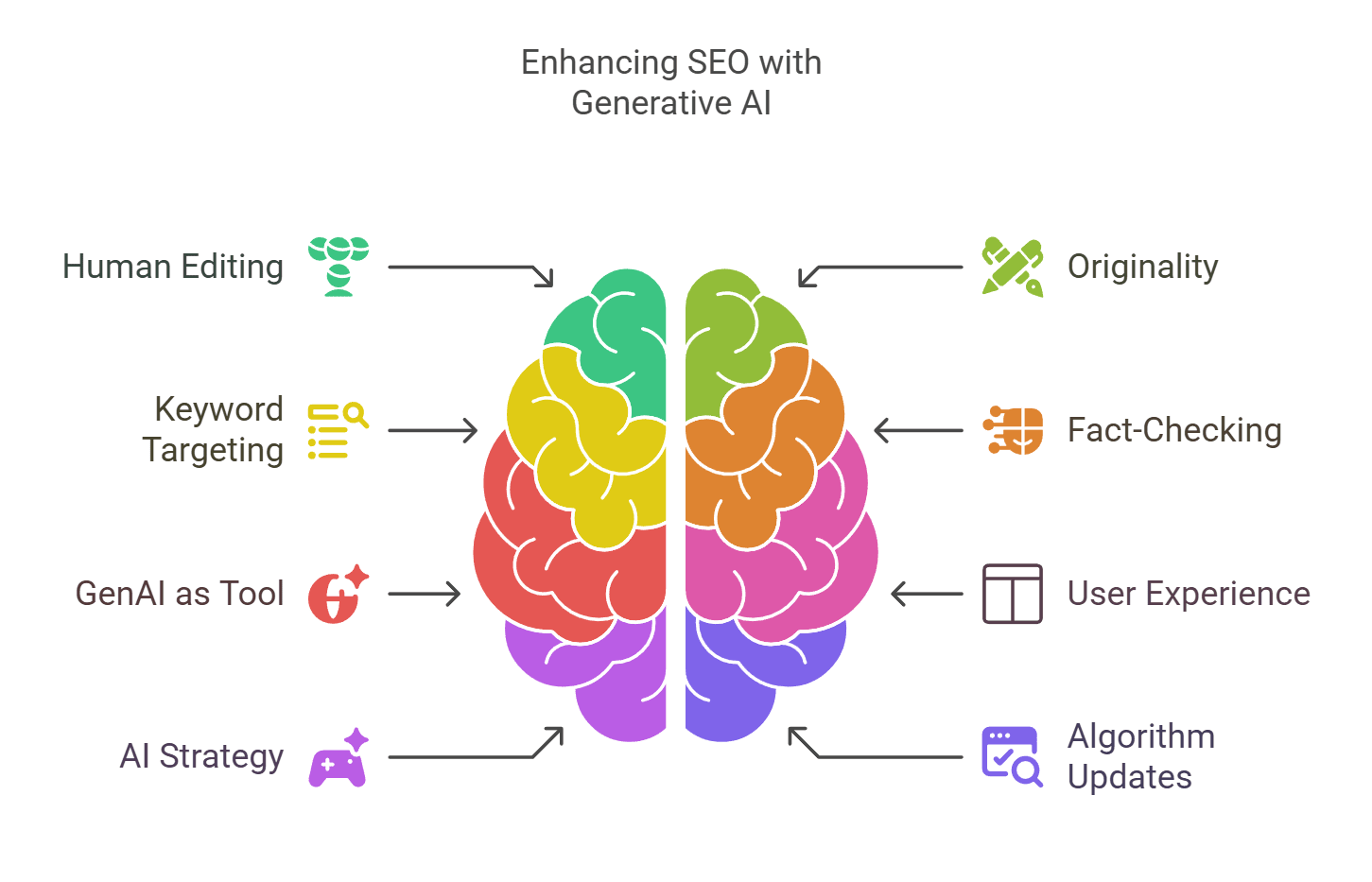
AI is a power tool. Used incorrectly, it can damage your brand. To succeed long-term, adhere to these operational rules.
-
Rule #1: The Human is the Editor-in-Chief. Google has stated that they reward content produced for people, not by automation. If you copy-paste raw AI output, you risk publishing generic, repetitive text that fails to engage readers. Always rewrite the introduction and conclusion, and inject your brand's specific tone of voice.
-
Add Your Unique Value (Information Gain). LLMs are trained on existing data. If you only use AI, you are repeating what is already known. You must add "Information Gain"—new data, a unique opinion, a personal story, or a proprietary case study. This is what separates ranking content from "spam."
-
Fact-Check Relentlessly. LLMs can "hallucinate"—confidently stating facts that are completely wrong. If you publish a financial or medical inaccuracy, it can destroy your trust with users and search engines. Verify every statistic, date, and quote.
-
Optimize for People, Not Just Bots. AI might suggest stuffing keywords to hit a mathematical density. Ignore this. Read your content aloud. If it sounds robotic, rewrite it. User engagement metrics (time on page, scroll depth) are critical ranking signals.
-
Develop an AI Content Strategy. Don't use AI randomly. Define a workflow: "AI handles the outline and meta data; Humans handle the drafting and examples; AI handles the proofreading." This structure ensures consistency. For a deeper dive into strategy, read our SEO Audit Checklist.
-
Stay Updated. The capabilities of models like GPT-4 and Claude 3.5 evolve monthly. Keep an eye on Google's algorithm updates to ensure your AI content remains compliant.
Benefits of Applying Generative AI for SEO (Ranked):
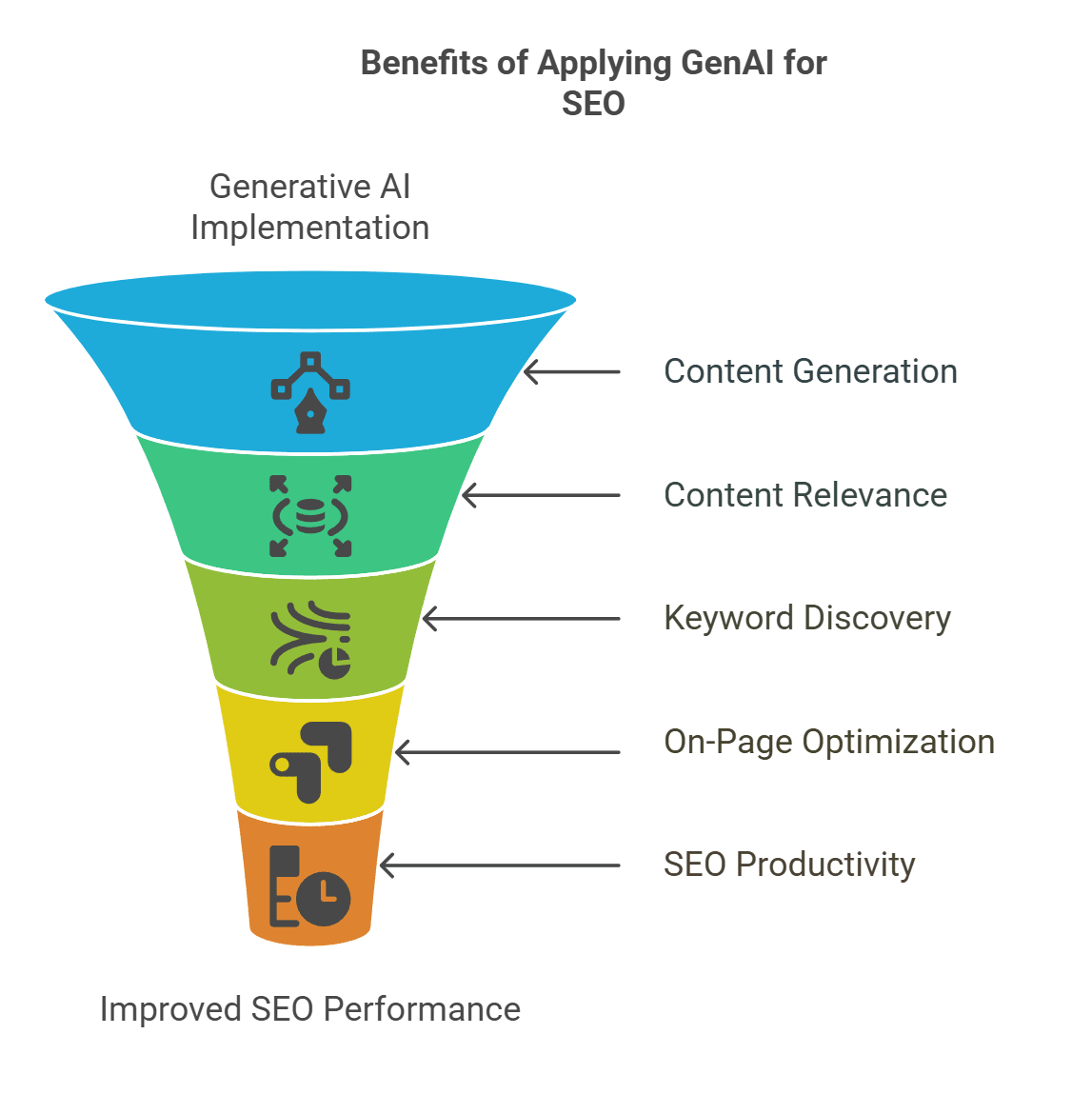
Generative AI is changing the SEO game — helping brands scale faster and rank smarter. Here’s how:
1. Fast & Scalable Content Creation
- You can now deploy optimized blogs, product pages, or local landing pages in minutes rather than weeks. This velocity allows you to target long-tail keywords that competitors ignore because they lack the resources. It turns content from a bottleneck into a growth lever.
Our tool lets you generate SEO-ready content at scale — without burnout.
2. Relevant, Intent-Driven Copy
- AI excels at pattern matching. By analyzing the top 10 search results, it understands exactly what the user wants—whether it's a comparison table, a step-by-step guide, or a definition. It aligns your content with this intent automatically, reducing bounce rates.
Better content = better rankings.
3. Smarter Keyword & Topic Ideas
- Move beyond "search volume" to "topical coverage." AI identifies the semantic gaps in your site structure, showing you exactly which supporting articles you need to write to build authority in your niche.
No more guesswork. Just results.
4. Automated On-Page SEO
- Manual tagging is prone to human error. AI can generate consistent meta tags, headers, structured data, and internal linking suggestions instantly. This ensures a technically healthy site that is easy for Google to crawl. Digispot AI can help you identify and fix these issues automatically with AI-powered audits analyzing 300+ ranking factors.
Bulk optimize with ease using our AI tool.
5. Higher Efficiency, Bigger ROI
- By automating the grunt work—data analysis, drafting, tagging—your team can focus on high-level strategy and creative campaigns. You get more output for every hour of human labor.
Do more with less. Let AI carry the load.
Top 5 SEO tools:
- DigispotAI: The ultimate all-in-one platform. We combine multi-LLM power (GPT, Claude, Gemini) with deep SEO data to provide Answer Engine Optimization (AEO), site audits, and competitor intelligence.
- Semrush: A comprehensive industry standard for keyword research and paid ad data. Excellent for traditional competitive analysis.
- Ahrefs: Known for its massive backlink index. It is the go-to tool for deep-diving into link profiles and understanding off-page authority.
- Google Search Console: The source of truth. Essential for monitoring technical health, indexing status, and actual click data directly from Google.
- Moz Pro: A user-friendly suite great for beginners, offering solid keyword research tools and the famous "Domain Authority" metric.
Related deep-dives
Continue with these closely related guides:
- chatgpt vs google search — ChatGPT vs Google Search: A Comprehensive Comparison for SEOs
References:
- What Is Generative AI SEO and How Does Gen AI Affect SEO Long Term? (Source: https://foundationinc.co/lab/genai-seo)
- Generative Engine Optimization (GEO): The Future of SEO (Source: https://www.singlegrain.com/blog/ms/generative-engine-optimization/)
- What is generative engine optimization (GEO)?(Source: https://searchengineland.com/what-is-generative-engine-optimization-geo-444418)
- What is Generative AI SEO and How to Do it Right(Source: https://attrock.com/blog/generative-ai-seo/)
- What Does Generative AI Mean For Websites And SEO? (Source: https://www.forbes.com/sites/bernardmarr/2023/08/15/what-does-generative-ai-mean-for-websites-and-seo/)
Audit any page in seconds
300+ SEO checks including Core Web Vitals, schema markup, meta tags, and AI readiness — trusted by 1000+ SEO experts and marketers.
Frequently Asked Questions
Here are some of our most commonly asked questions. If you need more help, feel free to reach out to us.
Written by
Maya Krishnan
Digital growth expert
Maya is a seasoned expert in web development, SEO, and digital strategy, dedicated to helping businesses achieve sustainable growth online. With a blend of technical expertise and strategic insight, she specializes in creating optimized web solutions, enhancing user experiences, and driving data-driven results. A trusted voice in the industry, Maya simplifies complex digital concepts through her writing, empowering readers with actionable strategies to thrive in the ever-evolving digital landscape.