IoT SEO: Connected Technology Optimization
Learn how to enhance your IoT website’s search rankings with keyword optimization, technical SEO, and voice search strategies to improve online visibility.
 Siddarth
Introduction to IoT SEO:
The Internet of Things (IoT) is revolutionizing industries by enabling seamless connectivity between devices, sensors, and cloud computing. From smart homes and wearables to industrial automation and healthcare solutions, IoT is reshaping the way businesses and consumers interact with technology.
However, building groundbreaking connected technology is only half the battle. IoT businesses face a major challenge—standing out in a highly competitive market where technological advancements happen rapidly. You might have the most advanced Zigbee-compatible sensor or the most robust industrial gateway, but if your engineering team is the only one who knows it exists, your market share suffers.
With increasing competition from big players like Google, Amazon, and Microsoft, smaller and mid-sized IoT firms need a strong digital presence to attract customers and generate leads. If you are struggling to rank for your core technology terms, understanding what is search engine optimization specifically for the hardware and SaaS sector is your first step toward recovery.
How does SEO help IoT businesses?
For IoT companies, SEO isn't just about traffic—it's about educating a market that might not yet understand they need your solution. Here is how strategic optimization drives growth:
- Improves visibility on search engines: It ensures your products appear on Google, Bing, and DuckDuckGo when engineers and procurement officers search for specifications.
- Helps potential customers find IoT solutions easily: It bridges the gap between technical jargon (e.g., "LPWAN connectivity") and user needs (e.g., "long-range sensor monitoring").
- Boosts credibility and industry authority: High rankings signal that your firm is a market leader, not a fly-by-night startup.
- Enhances lead generation and sales: It drives qualified traffic to your whitepapers and demo request pages, lowering your Customer Acquisition Cost (CAC).
- Supports long-term business growth: Unlike paid ads, organic rankings provide sustainable visibility that compounds over time.
Key challenges faced in IoT SEO:
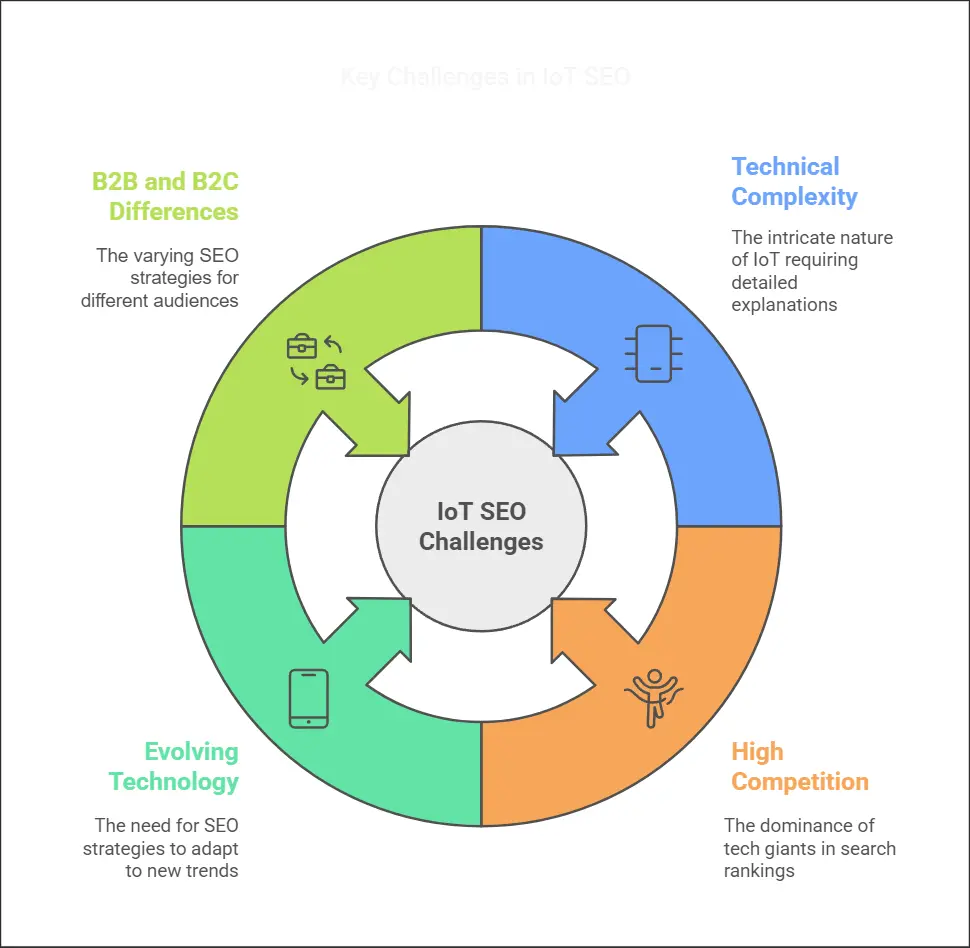
Optimizing for the Internet of Things is distinct from standard SaaS or e-commerce SEO. You are often selling complex hardware-software hybrids to highly technical buyers.
Technical complexity – IoT is a niche industry requiring in-depth explanations. Balancing engineer-level documentation with C-suite-friendly marketing copy is difficult.
High competition – Many tech giants dominate search rankings. Trying to rank for broad terms like "smart home" is nearly impossible for startups, necessitating a more targeted approach.
Ever-evolving technology – Protocols change (Matter, Thread, 5G). SEO strategies must adapt to new developments rapidly to capture search interest for emerging standards.
B2B and B2C differences – Strategies vary based on the target audience. A consumer looking for a "smart bulb" behaves differently than a facility manager looking for "industrial lighting automation."
In this guide, we will explore the best SEO strategies for IoT businesses, including keyword research, content marketing, link-building, and technical SEO.
Keyword Research for IoT SEO:
Keyword research is a crucial aspect of SEO for IoT businesses because it helps them understand what potential customers are searching for and tailor their content accordingly. Since the IoT industry is highly technical and rapidly evolving, selecting the right keywords ensures that businesses can reach their target audience effectively.
Many IoT companies make the mistake of targeting only the solution name (e.g., "Predictive Maintenance Platform") while ignoring the symptoms the user is experiencing (e.g., "reduce motor failure downtime"). Effective research bridges this gap.
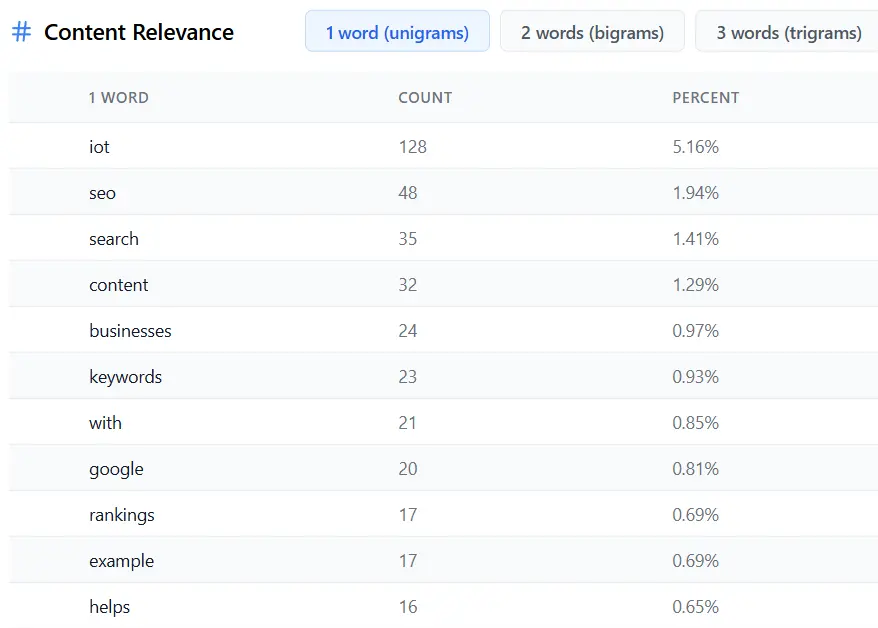
The Importance of Keyword Research in IoT SEO:
Effective SEO starts with keyword research, a fundamental step in ensuring that your IoT-related content reaches the right audience. Since IoT is a technical and niche industry, identifying the correct keywords can help businesses attract targeted traffic—whether they are researchers, developers, businesses, or consumers looking for IoT solutions.
To get this right, you need to understand the concept of search intent. You can read our detailed guide on search intent optimization, but here is how it specifically applies to the IoT sector.
Understanding User Intent in IoT Searches:
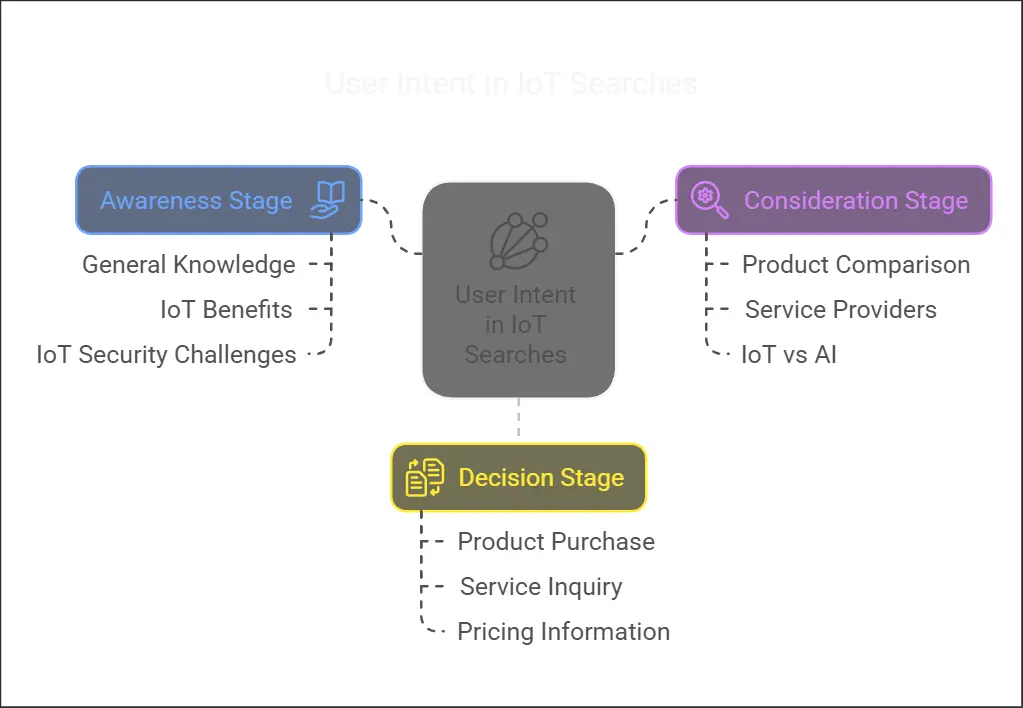
A well-structured keyword strategy involves categorizing keywords based on user intent to align with different stages of the customer journey:
a) Awareness Stage (Informational Keywords):
Users at this stage are looking for general knowledge about IoT. They know they have a problem or an interest, but they don't know your product exists yet.
Example searches: “What is IoT and how does it work?” “Benefits of IoT in smart homes” “IoT security challenges and solutions”
These keywords help educate and build awareness through blog posts, guides, and whitepapers. Ranking here establishes trust before the sales conversation begins.
b) Consideration Stage (Comparative & Navigational Keywords):
Users begin comparing products, solutions, and service providers. They are evaluating specs, compatibility, and pricing models.
Example searches: “Best IoT platforms for startups” “IoT vs AI: What’s the difference?” “Top IoT service providers in India” “Zigbee vs Z-Wave for home automation”
Optimizing for these keywords helps position your business as an authority in the IoT domain. Comparison pages are particularly powerful here.
c) Decision Stage (Transactional Keywords):
Users are ready to purchase or inquire about IoT products and services. These queries often have lower search volume but extremely high conversion rates.
Example searches: “Buy smart home IoT automation system” “IoT security solutions pricing” “Enterprise IoT service providers near me” “Request demo industrial gateway model X”
These keywords are critical for lead generation and conversions.
Types of Keywords for IoT:
Informational Keywords – Used by users looking for knowledge, e.g., “What is IoT in healthcare?”
Transactional Keywords – Used by customers ready to make a purchase, e.g., “Buy smart home automation system.”
Local Keywords – Important for businesses targeting specific regions, e.g., “IoT service providers in Bangalore.”
Technical/Specification Keywords – Specific to the IoT industry. Engineers often search for part numbers, protocols, or specific compatibilities (e.g., "MQTT broker for low power devices").
Keyword Research Tools:
Google Keyword Planner – Helps find relevant keyword search volume directly from Google's data.
Ahrefs & SEMrush – Provide insights into competitor keyword rankings and difficulty scores.
AnswerThePublic – Helps find trending IoT-related questions and visualizations of search behavior.
Digispot AI – Our platform's AI-driven keyword modules can identify "Zero-Search Volume" terms—highly specific technical queries that traditional tools miss but which often lead to high-value enterprise contracts.
By targeting long-tail keywords (e.g., "best IoT home security system for apartments"), businesses can attract highly specific and intent-driven traffic.
Targeting Long-Tail Keywords for Better Conversions
Since IoT is a highly technical field, long-tail keywords (more specific search phrases) help attract the right audience. Instead of competing for broad terms like "IoT devices," targeting long-tail variations such as "best IoT devices for industrial automation" ensures that your content reaches users with specific intent.
For example, ranking for "sensors" is useless. Ranking for "high-temperature piezoelectric vibration sensors for turbines" puts you directly in front of a buyer with a budget.
On-Page SEO Strategies for IoT Websites:
On-page SEO is the foundation of a well-optimized IoT website, ensuring that each webpage is structured effectively to rank higher on search engines. By implementing key on-page SEO best practices, IoT businesses can enhance visibility, user experience, and engagement.
Key On-Page SEO Techniques for IoT Websites:
Optimizing Title Tags & Meta Descriptions The title tag is one of the most important SEO elements, as it tells search engines and users what the page is about. Titles should be concise, engaging, and keyword-rich, such as “Top IoT Trends in 2026 – A Complete Guide.”
The meta description acts as your ad copy in the search results. For IoT, highlighting compatibility or key specs (e.g., "Supports MQTT & CoAP") can significantly improve click-through rates. Learn more about writing effective descriptions in our meta tags optimization guide.
Header Tags (H1, H2, H3, etc.) Proper structuring using header tags improves readability and helps search engines understand the hierarchy and context of the content.
- H1: The primary topic (e.g., "Industrial IoT Gateway Solutions").
- H2: Major features or benefits (e.g., "Edge Computing Capabilities").
- H3: Technical specs or use cases (e.g., "Protocol Conversion").
Internal Linking Connecting related articles and pages within the website improves navigation, reduces bounce rates, and increases session duration. Internal linking also helps search engines understand the relationship between different pages. For example, a product page for a "Smart Thermostat" should link to a support article on "How to Install Smart Thermostats."
Image Optimization Since IoT websites often contain high-resolution images of devices, schematic diagrams, and dashboards, it is crucial to optimize images for both search engines and users. This includes using descriptive alt text (e.g., "Schematic diagram of IoT mesh network") and compressing images to reduce file size.
Schema Markup for IoT Structured data (schema markup) is non-negotiable for tech companies. It helps search engines understand the context of content.
- Product Schema: Display price, availability, and reviews directly in search results.
- SoftwareApplication Schema: Critical for IoT platforms and SaaS dashboards.
- FAQ Schema: Perfect for addressing technical questions right on the SERP.
Pro Tip: Use the free Schema Markup Generator to create valid structured data for your software and products in minutes.
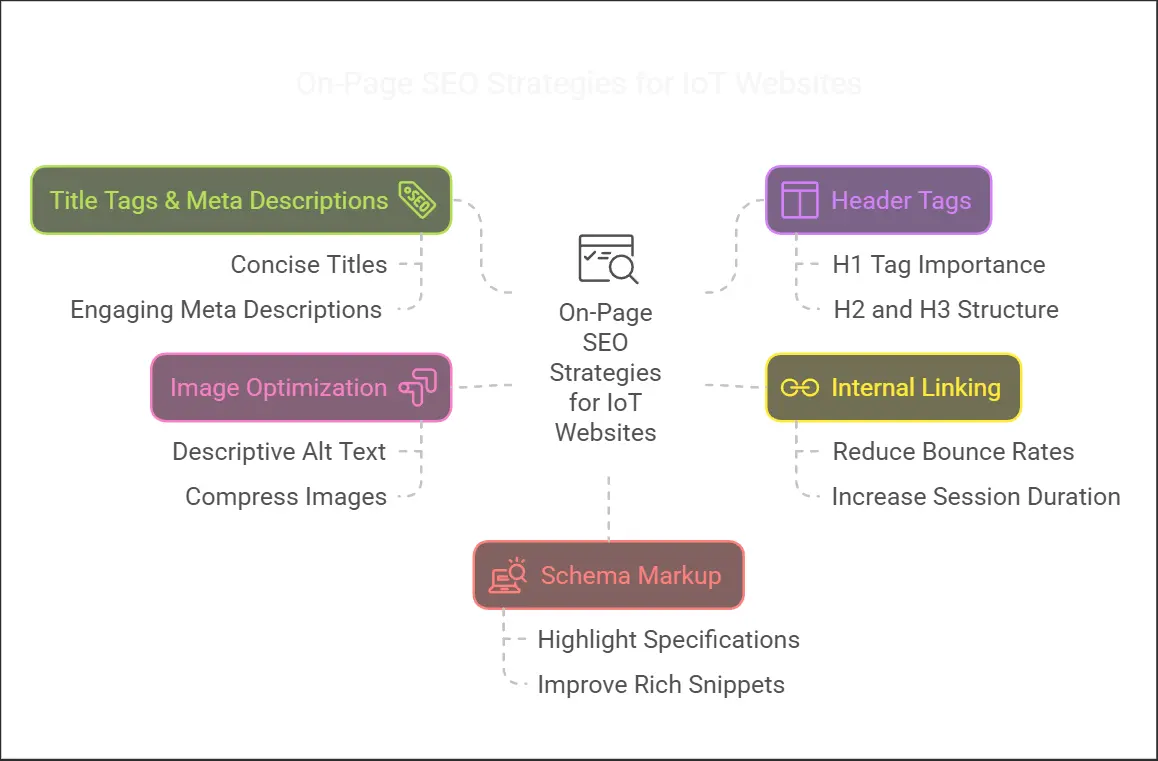
A well-structured on-page SEO strategy ensures higher rankings, improved user experience, and better engagement. If you aren't sure where your pages stand, get instant SEO insights on any page with our free Chrome extension.
Content Marketing for IoT SEO:
Content marketing plays a crucial role in IoT SEO by helping businesses educate their audience, establish industry authority, and improve search engine rankings. Since IoT is a complex and evolving field, potential customers often seek reliable information before making decisions.
Best Content Strategies for IoT SEO:
To maximize the impact of content marketing for IoT, businesses should focus on various content formats that cater to different audience preferences.
1. Blogging
Why it’s important: Blogging is the primary engine for organic traffic. It allows you to target questions that are too long or specific for a product page. Regularly publishing high-quality blog posts allows IoT businesses to:
- Answer common questions about IoT technology, applications, and security.
- Target high-intent keywords related to emerging trends (e.g., "Matter protocol adoption").
- Drive engagement by encouraging users to share technical insights.
Example Topics for IoT Blogs:
- Top 10 Applications of IoT in Smart Homes
- How IoT is Transforming Healthcare with Remote Monitoring
- The Future of IoT Security: Best Practices for Data Protection
2. Case Studies & Whitepapers
Why it’s important: In B2B IoT, buyers need proof. Case studies and whitepapers showcase real-world applications and provide in-depth insights. They help build credibility and trust, especially among decision-makers in industries like manufacturing, healthcare, and logistics who are risk-averse.
Benefits:
- Demonstrates success stories and builds confidence in your IoT solutions.
- Positions the company as an industry leader by offering in-depth research.
- Helps convert leads into customers by showing tangible ROI.
Example Case Study Topics:
- How an IoT-Based Fleet Management System Reduced Operational Costs by 30%
- Improving Patient Care with IoT: A Case Study of Remote Health Monitoring
3. Infographics & Videos
Why it’s important: Visual content is highly engaging and shareable. IoT architectures (Cloud vs. Edge vs. Fog computing) are difficult to explain with text alone. Visuals bridge this gap.
Benefits:
- Infographics simplify complex IoT topics with visual storytelling.
- Videos enhance engagement and can be used for product demos, tutorials, and expert interviews.
- Increases time spent on the website (Dwell Time), which is a positive SEO signal.
Example Video Ideas:
- Explaining IoT in 2 Minutes: A Beginner’s Guide
- Live Demo: How IoT-Based Smart Lighting Saves Energy
4. Guides & E-books
Why it’s important: In-depth guides and e-books provide valuable insights that position a business as an authority. They are also a great way to capture leads by offering them as downloadable resources (Lead Magnets).
Benefits:
- Helps educate potential customers about IoT concepts and best practices.
- Builds an email subscriber base for future nurturing.
- Encourages long-form content, which performs well in SEO rankings.
Example Guide Topics:
- A Beginner’s Guide to Industrial IoT (IIoT)
- The Ultimate Guide to Choosing the Right IoT Platform
The Key to IoT SEO Success: Consistency and Quality:
By consistently publishing high-quality, informative, and engaging content, IoT companies can improve their brand authority and build trust. However, ensure you are managing your resources effectively. Learn more about crawl budget optimization to ensure Google is actually indexing all these new content assets.
Technical SEO for IoT Websites:
Technical SEO is the backbone of any tech website. For IoT companies, this is doubly important because your websites are often built on modern JavaScript frameworks (React, Vue, Angular) to power customer login portals and dashboards.
If search engines cannot crawl your site efficiently, your content strategy will fail.
Key Technical SEO Strategies for IoT Websites:
To achieve better search rankings and user satisfaction, IoT companies should implement the following technical SEO strategies:
Mobile-Friendliness
Why it’s important: With the majority of searches happening on mobile devices, having a fully responsive IoT website is essential. Google uses mobile-first indexing. Furthermore, many IoT users are field technicians or installers accessing your documentation via tablets or phones on-site.
Best Practices:
- Use responsive web design (RWD) to ensure content adapts to different screen sizes.
- Optimize touch-friendly navigation for mobile users.
- Ensure that technical diagrams and specification tables are readable on small screens without breaking the layout.
Page Speed Optimization
Why it’s important: Faster load times improve user experience and reduce bounce rates. IoT websites often include heavy assets like firmware download libraries, high-res product renders, and interactive elements.
Best Practices:
- Use image compression (e.g., WebP format) to reduce file sizes.
- Enable lazy loading for images and videos.
- Implement browser caching and CDNs (Content Delivery Networks) to serve global audiences faster.
- Minify CSS, JavaScript, and HTML files.
HTTPS Security
Why it’s important: Security is the number one concern in the IoT industry. If your marketing site isn't secure, users will assume your device isn't secure. A website without HTTPS encryption can be flagged as "Not Secure," destroying trust immediately.
Best Practices:
- Install an SSL certificate to enable HTTPS encryption.
- Use secure authentication and encrypted API connections if your site hosts a user portal.
- Regularly audit your site for mixed content errors (http resources loading on https pages).
Digispot AI can help you identify and fix these security and performance issues automatically with AI-powered audits analyzing 300+ ranking factors.
Core Web Vitals Optimization
Why it’s important: Core Web Vitals are Google’s key ranking factors measuring page load time, interactivity, and visual stability.
Key Metrics:
- Largest Contentful Paint (LCP): Measures how fast the largest visible element loads (aim for under 2.5 seconds).
- First Input Delay (FID) / Interaction to Next Paint (INP): Measures website interactivity. This is critical for IoT dashboard login pages.
- Cumulative Layout Shift (CLS): Measures visual stability.
Example: An IoT business providing real-time analytics dashboards must ensure that charts and data load instantly without layout shifts, or users will perceive the underlying technology as slow.
XML Sitemaps & Robots.txt for Better Indexing
Why it’s important: Search engines rely on sitemaps to find your content. IoT sites often have thousands of pages (one for every product variation, manual, and driver). A well-structured XML sitemap ensures these are indexed.
Best Practices:
- Generate an XML sitemap and submit it to Google Search Console.
- Use a
robots.txtfile to prevent search engines from indexing low-value pages (e.g., cart pages, admin login panels, internal search results). - Implement canonical tags to avoid duplicate content issues, especially if you have similar product pages for different regions.
Voice Search and AEO for IoT:
With the increasing adoption of voice assistants like Alexa, Google Assistant, and Siri, users are shifting towards conversational searches. However, for Digispot users, we look beyond just "Voice Search" to AEO (Answer Engine Optimization).
Modern search is driven by AI engines (ChatGPT, Perplexity, Google Gemini) that provide direct answers rather than just links.
Key Voice & AEO Strategies for IoT:
- Conversational Keywords & Natural Language: Focus on long-tail, question-based searches. Instead of "smart thermostat," optimize for "How does a smart thermostat save money in winter?"
- Featured Snippets & FAQs: Structuring content in a Q&A format increases the chances of being read aloud by voice assistants or cited by an AI chatbot.
- Local SEO Optimization: Many voice searches have local intent, e.g., "Find IoT automation services near me."
- Technical Definitions: AI engines love clear, concise definitions. Ensure your content clearly defines terms like "latency," "bandwidth," and "edge computing" early in your articles.
As voice search continues to evolve, IoT businesses must adapt their SEO strategies to enhance visibility and cater to this growing trend.
Local SEO for IoT:
While IoT is a global technology, the sales and installation are often local. Local SEO is essential for IoT integrators, installers, and regional distributors. Optimizing Google My Business profiles, acquiring positive local reviews, and using location-based keywords can significantly enhance local search rankings.
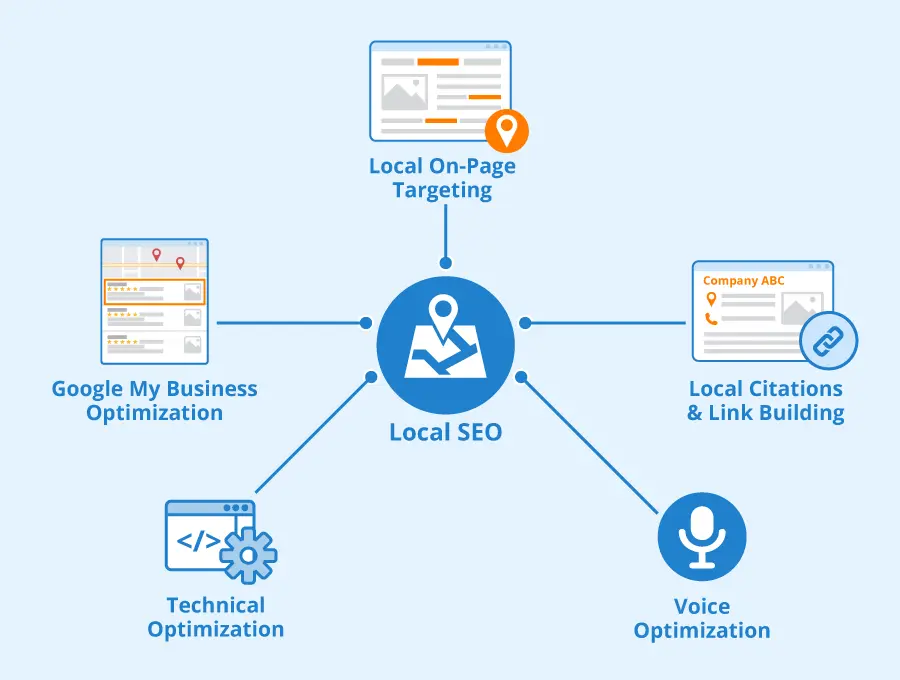
Steps to Improve Local SEO:
- Google My Business Optimization: Claim your profile, add high-quality images of your office or showroom, and encourage happy clients to leave reviews.
- Local Keywords: Target region-specific searches (e.g., "Industrial automation consultants in Texas").
- NAP Consistency: Ensure Name, Address, and Phone Number are consistent across directories (Yelp, YellowPages, industry directories).
- Local Citations: Get listed in local tech directories or chamber of commerce websites.
This helps IoT businesses attract local customers looking for hands-on support and implementation in their area.
Tracking SEO Performance for IoT:
You cannot manage what you do not measure. To refine SEO strategies, monitoring performance metrics is essential.
Best SEO Tracking Tools:
- Google Analytics 4 (GA4): Tracks website traffic and user behavior. For IoT, set up custom events for "PDF Download" (specs) and "Request Quote."
- Google Search Console: Essential for analyzing click-through rates (CTR) and technical indexing issues. Learn how to boost your CTR in our click-through rate optimization guide.
- Digispot AI: Our platform goes beyond basic tracking by analyzing your visibility on AI platforms (AEO) and providing real-time competitive intelligence specific to the tech sector.
Regular analysis allows businesses to adjust SEO strategies for better results, pivoting resources toward the keywords and pages that drive actual revenue.
Conclusion: Start Improving Your IoT Visibility Today
SEO is a powerful tool for IoT companies to increase brand visibility, attract potential clients, and drive conversions. It is not enough to simply build the future of connected technology; you must ensure the world can find it.
By implementing strong keyword research, producing high-value technical content, optimizing your site's architecture, and preparing for the future of AI search, your IoT business can achieve sustainable, long-term growth.
Ready to improve your search visibility? Try Digispot AI for comprehensive website audits and actionable recommendations that bridge the gap between complex technology and market success.
References:
Audit any page in seconds
300+ SEO checks including Core Web Vitals, schema markup, meta tags, and AI readiness — trusted by 1000+ SEO experts and marketers.
Frequently Asked Questions
Here are some of our most commonly asked questions. If you need more help, feel free to reach out to us.
Written by
Maya Krishnan
Digital growth expert
Maya is a seasoned expert in web development, SEO, and digital strategy, dedicated to helping businesses achieve sustainable growth online. With a blend of technical expertise and strategic insight, she specializes in creating optimized web solutions, enhancing user experiences, and driving data-driven results. A trusted voice in the industry, Maya simplifies complex digital concepts through her writing, empowering readers with actionable strategies to thrive in the ever-evolving digital landscape.