Perplexity SEO: Optimize for Perplexity AI (2026 Guide)
Complete Perplexity SEO guide. Optimize your content for Perplexity AI, get cited in answers, and drive traffic from AI search. Checklist included.
 Maya Krishnan
Ever wondered how to make your website stand out on Perplexity.ai? You're not alone. As this AI search engine skyrockets in popularity, with over 15 million monthly active users and a staggering 40% month-over-month growth rate, getting your content featured in its answers is no longer a niche strategy—it's a top priority for businesses and creators. Think of Perplexity as Google's highly intelligent, AI-powered cousin. It doesn't just find websites; it reads, understands, and synthesizes information from them to provide direct, source-backed answers to complex questions.
This guide will walk you through everything you need to know to master Perplexity SEO. We’ll move from foundational principles to advanced, actionable strategies that will get your content noticed, cited, and celebrated by the next generation of search.
Imagine spending years mastering the intricate dance of traditional SEO—carefully selecting keywords, building backlinks, and optimizing meta descriptions—only to discover a new player has arrived on the scene, one that speaks an entirely different language. That's precisely the scenario with Perplexity.ai, the AI-powered "answer engine" that is fundamentally changing how we approach search optimization.
Introduction: The Shift to Answer Engine Optimization
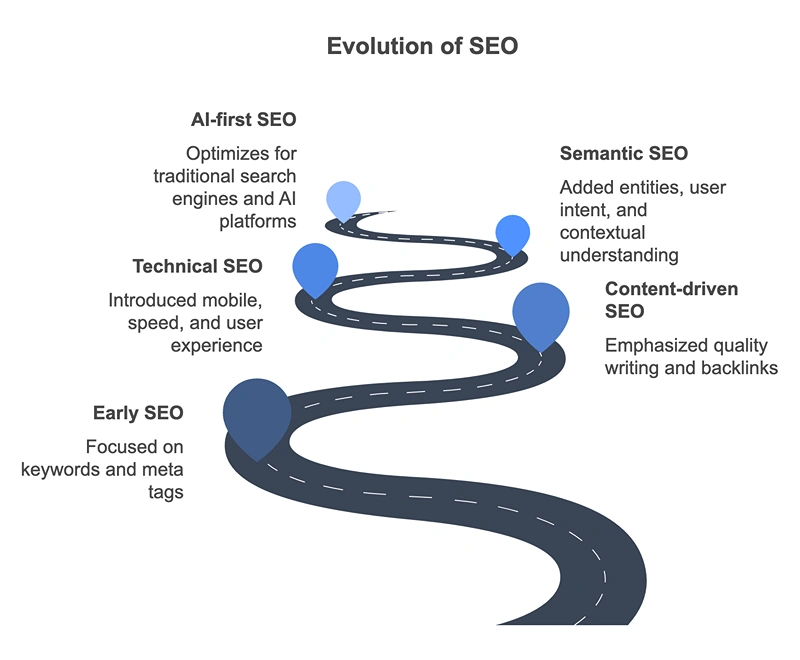
Remember flipping through bulky phone books to find a local business? Then Google arrived and digitized the world's information, making those books obsolete. We are now at another pivotal moment. AI-native search engines like Perplexity are rewriting the rules of online information discovery, shifting the focus from a list of links to a single, synthesized answer.
If traditional SEO was about learning to speak Google's language of keywords and links, Perplexity SEO—often called Answer Engine Optimization (AEO)—is about learning to communicate with an AI. It’s less about gaming an algorithm and more about providing clear, authoritative, and comprehensive information. For the platform-agnostic fundamentals that underpin everything below, start with our complete AEO guide.
While that might sound daunting, it’s actually a return to the core purpose of content: to be genuinely helpful. You don't need to unlearn everything you know about on-page SEO best practices, but you do need to pivot your strategy to accommodate machines that read for comprehension, not just keyword matching.
What Makes Perplexity Different?
Perplexity isn't just a search engine; it's an "answer engine." Unlike traditional platforms that match your query to keywords on a page, Perplexity uses advanced AI models like GPT-4, Claude 3, and its own proprietary LLMs to understand the context and intent behind your question. It then scours the web in real-time, focusing on reputable sources, to formulate a comprehensive answer complete with citations.
Think of it as the difference between a library's card catalog (traditional search) and a conversation with an expert librarian who not only understands your question but can also synthesize information from multiple books to give you a complete picture.
This process is powered by a technique called Retrieval-Augmented Generation (RAG). The AI retrieves information from its web index and then uses that data to generate a new, unique answer. This means having up-to-date, fresh content is critical because RAG systems prioritize the most current information available during the retrieval phase.
Key Differentiators:
- Conversational Follow-ups: You can ask follow-up questions without restating context, creating a natural, conversational flow.
- Source Citation: Every major point in a Perplexity answer is linked to its source. Being cited here is the new "ranking #1."
- Focus Modes: Users can narrow their search to specific platforms like Reddit, YouTube, or academic papers, allowing for more targeted information discovery.
- Ad-Free Model: Perplexity’s primary business model is a premium subscription, not advertising, which centers the entire experience around user value rather than ad impressions.
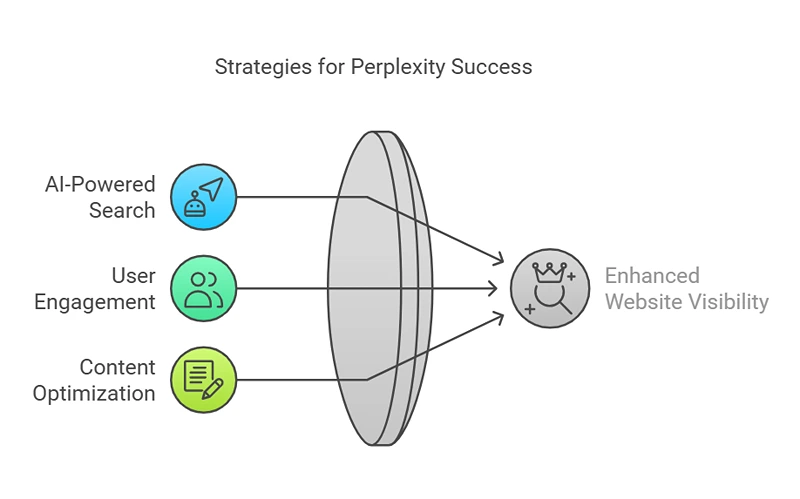
The Unspoken Truth: Why Traditional SEO is Just the Beginning
A common misconception is that you can just sprinkle some "AI-friendly" phrases onto your existing content and call it a day. The reality is more complex. While the fundamentals of good SEO—like mobile-friendliness and site speed—still apply, Perplexity introduces new layers of optimization.
One of the most critical factors is domain authority. Perplexity heavily favors websites it deems credible and trustworthy. It assesses your entire site's reputation, not just a single page. This means a one-off, perfectly optimized article on a low-authority site will likely be ignored in favor of a less-perfect article on a well-established domain like Wikipedia or a major news outlet.
As one expert aptly put it, "LLMs can only summarize what's already visible. If your content isn't showing up in the right places… AI won't know you exist." Therefore, your existing SEO efforts are the foundation upon which your Perplexity strategy must be built. If your site has technical errors preventing crawling, PerplexityBot won't find you either.
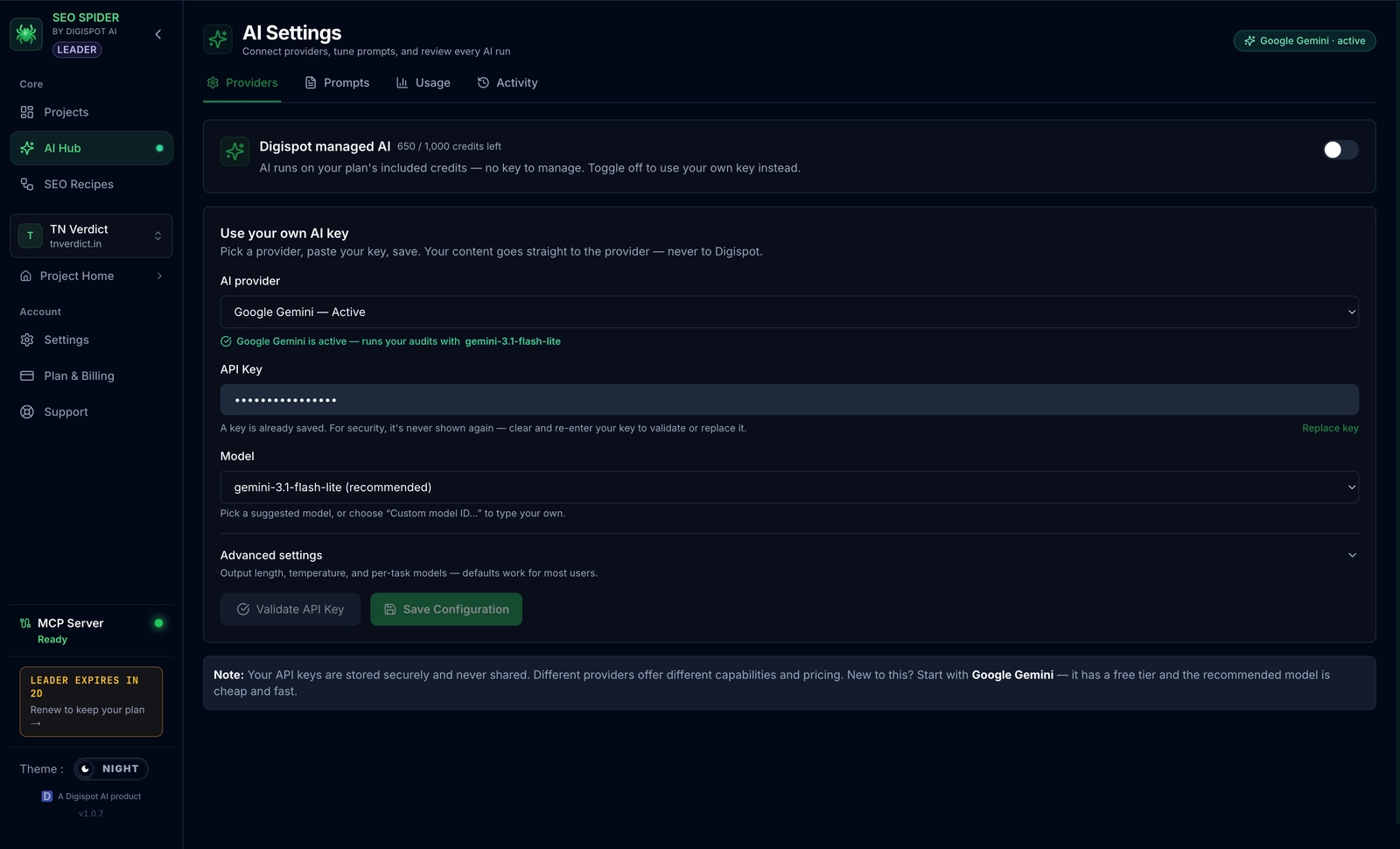
Digispot AI can help you identify and fix these issues automatically with AI-powered audits analyzing 300+ ranking factors, ensuring your technical foundation is solid enough for AI crawlers.
The Core Principles of Perplexity SEO
To win at Perplexity SEO, you need to internalize a new set of principles. These move beyond simple keywords and focus on the quality, structure, and authority of your content.
1. E-E-A-T on Steroids: Experience, Expertise, Authoritativeness, and Trustworthiness
If E-E-A-T is important for Google, it's the entire game for Perplexity. The AI is explicitly designed to find and prioritize "trusted sources" to minimize hallucinations (making things up).
- Experience: Demonstrate firsthand knowledge. Instead of just stating facts, include case studies, real-world examples, and personal anecdotes. Use phrases like "In our testing..." or "We discovered that..." to signal original research.
- Expertise: Showcase your credentials. Use author bios, link to expert profiles, and contribute to reputable industry publications. If you are a medical site, have doctors review content.
- Authoritativeness: Build your domain's reputation. This comes from earning high-quality backlinks, being cited by other authoritative sources, and maintaining a consistent publishing schedule of high-value content. Learn more about building authority in our E-E-A-T SEO Guide.
- Trustworthiness: Be transparent and accurate. Cite your sources, correct errors promptly, and ensure your content is factually sound.
2. Natural Language and Intent Optimization
Forget "keyword density." Think in terms of questions and answers. Your content should be written in a clear, conversational tone that directly addresses the likely queries of your audience. LLMs are trained on natural dialogue, so they prefer content that mimics this flow.
Practical Example:
- Old SEO Headline: "Best SEO Practices 2026 Guide"
- Perplexity-Optimized Headline: "What Are the Most Effective SEO Strategies for 2026?"
Your content should then proceed to answer this question comprehensively, as if you were explaining it to a colleague. Use headings to break down the answer into logical parts, making it easy for both humans and AI to digest. Avoid fluff. If a sentence doesn't add new information, cut it.
3. Comprehensive, Multi-Dimensional Content
Perplexity aims to provide a complete answer. Therefore, your content should strive to be the most comprehensive resource on a given topic. Don't just scratch the surface; go deep. This concept aligns with preventing "thin content," a common issue found during an SEO audit.
- Answer Related Questions: Include a detailed FAQ section that anticipates follow-up questions.
- Cover Sub-topics: If you're writing about "French press coffee," also touch upon bean selection, grind size, water temperature, and comparisons to other brewing methods.
- Create Digital Assets: Think bigger than just a blog post. Create a "digital asset hub"—a comprehensive resource that might include an in-depth guide, a video tutorial, an infographic, and a downloadable checklist.
4. The Power of Structured Data
Structured data, or schema markup, is the language of search engines. It's a way to explicitly tell AI what your content is about. Implementing schema is no longer optional; it's essential for AI search because it removes ambiguity.
- For Recipes: Use
Recipeschema to detail ingredients, cook time, and nutrition. - For Products: Use
Productschema to specify price, availability, and reviews. - For Articles: Use
ArticleandNewsArticleschema to highlight authors, publication dates, and key findings. - For FAQs: Use
FAQPageschema to have your questions and answers directly understood.
Use the free Schema Markup Generator to create valid structured data in minutes. This markup makes your content machine-readable, dramatically increasing the chances that Perplexity will use it as a source.

Practical Steps for Optimization
1. Content Structure
Think of your content structure like building a house. An AI crawler needs to navigate your "rooms" without getting lost.
- Foundation: Core concept explanation. Start with a direct definition or answer (the "snippet" target).
- Walls: Supporting information and examples. Use bullet points and numbered lists heavily. AI models digest lists more accurately than dense paragraphs.
- Roof: Practical applications and conclusions.
Each part should naturally flow into the next, creating a complete and stable structure. Break up text with descriptive H2s and H3s that effectively summarize the section below them.
2. Technical Considerations
While traditional technical SEO elements still matter, Perplexity places more emphasis on specific technical signals:
- Content Freshness: Think of it like keeping your smartphone updated. Perplexity prefers the latest data. Update your
lastModifieddates and ensure your sitemap reflects changes immediately. - Source Credibility: Like checking a reference's credentials. Ensure your SSL certificates are valid and your site has a privacy policy and terms of service.
- Crawlability for PerplexityBot: Ensure your
robots.txtfile doesn't blockUser-agent: PerplexityBot. If the AI can't crawl you, it can't cite you. - Site Speed: Fast loading isn't just for users; it aids efficient crawling. Check your metrics using our Core Web Vitals guide.
Get instant SEO insights on any page, including crawlability checks, with our free Chrome extension.
3. User Intent Alignment
Remember playing "20 Questions" as a kid? Perplexity works similarly – it's trying to understand exactly what the user wants. Your content should anticipate and answer these questions naturally.
If a user searches for "CRM software," their intent could be definition (what is it?), comparison (which is best?), or transactional (buy now). Perplexity often addresses the informational intent first. Ensure your top-of-funnel content is purely educational and objective to capture this traffic.
Advanced Strategies for Marketing Teams
Creating Multi-Dimensional Content
Think of your content like a Swiss Army knife – it should be useful in multiple ways. Instead of creating separate pieces for different keywords (which leads to cannibalization), create comprehensive resources that naturally address various related topics.
Case Study: A tech company's product page was redesigned to include:
- Clear explanations of features (Definitions)
- Real-world usage scenarios (Experience)
- Common troubleshooting tips (Problem Solving)
- Comparison with alternatives (Objectivity)
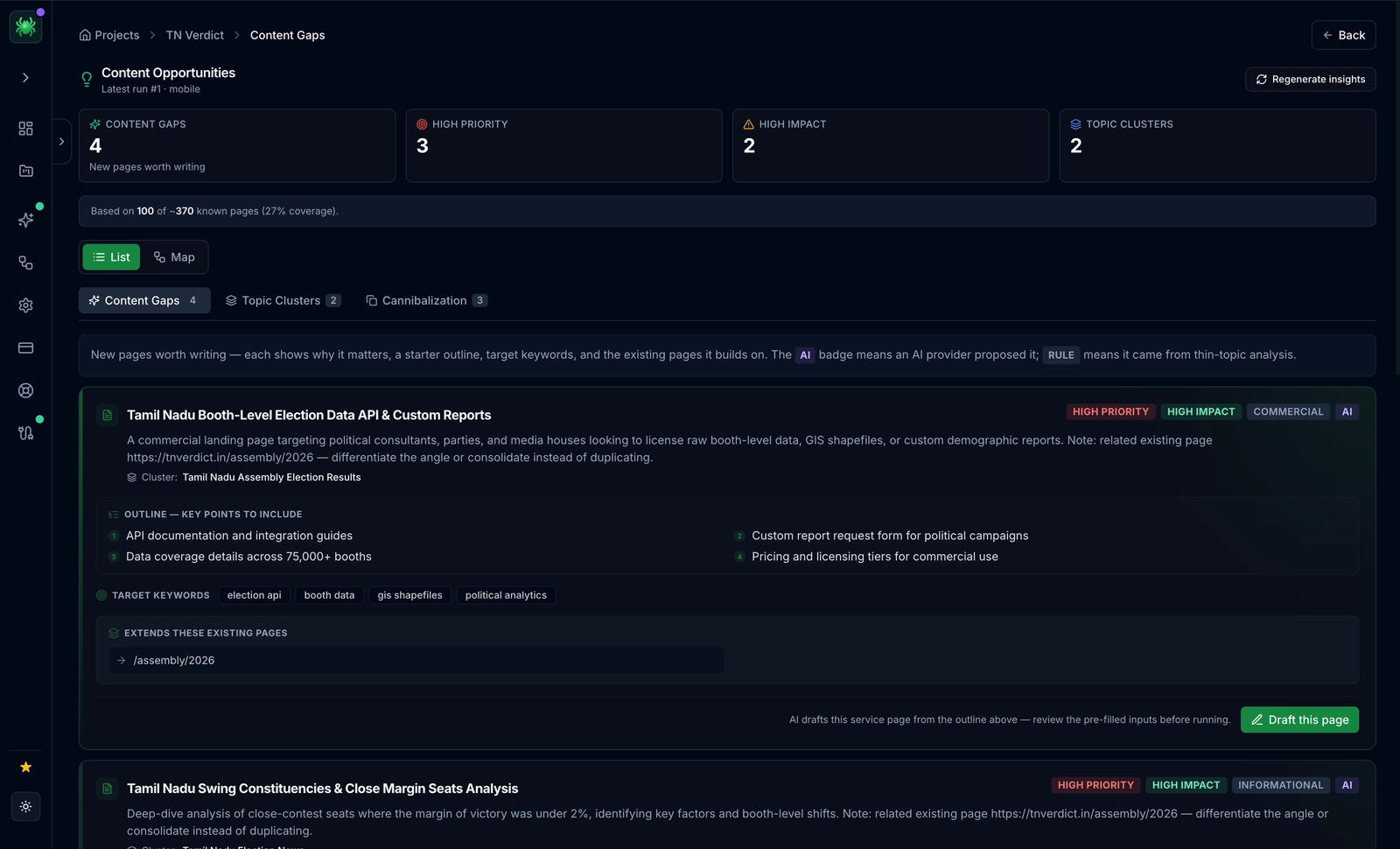
Their Perplexity visibility increased by 60% compared to their old, feature-list-only approach because the AI could pull different "chunks" of information for various user queries from a single authoritative URL.
Measuring Success
Traditional SEO metrics like keyword rankings don't tell the whole story with Perplexity. You won't see a "rank" for a keyword because the output is dynamic text. Instead, focus on:
- Referral Traffic: Check your analytics for
perplexity.aias a referrer. - Brand Mentions: Use social listening tools to see if your brand appears in AI-generated summaries.
- User Engagement: High time-on-page suggests the user found your deep-dive content valuable after clicking the citation.
- Direct Answer Appearances: Manually test your core questions in Perplexity to see if you are cited.
Think of it like measuring a student's understanding – you want to look at their overall comprehension, not just their ability to memorize facts.
Optimization for "Follow-Up" Queries
One distinct feature of Perplexity is the "Copilot" or follow-up question flow. You can optimize for this by structuring content to lead the reader (and the AI) to the next logical step.
If you write a guide on "How to fix a leaky faucet," the next logical questions are "What tools do I need?" and "When should I call a plumber?" explicitly answering these under their own subheadings makes your content "sticky" for the AI's context window.
Common Challenges and Solutions
Challenge 1: Balancing Depth and Clarity
The Issue: You want to be comprehensive, but you don't want to bore the reader (or confuse the AI with irrelevant tangents). Solution: Use the "explain it to a teenager" test. If a 15-year-old would understand it, you're on the right track. Use "Inverted Pyramid" style: simple answer first, details second, technical nuances last.
Challenge 2: Maintaining Natural Language
The Issue: Over-optimizing for keywords makes text sound robotic, which modern LLMs can detect and may de-prioritize as "spammy." Solution: Read your content aloud. If it sounds awkward or robotic, it needs revision. Write for the human user first; the AI is trained to appreciate human-centric writing.
Challenge 3: Keeping Content Fresh
The Issue: Information decay happens fast. An article from 2023 might be ignored by Perplexity in 2025 if newer data exists. Solution: Set up a regular content audit schedule, like spring cleaning for your website. Use the free On-Page SEO Analysis tool to quickly check if your key pages have updated meta data and current dates.
Future of Perplexity SEO
As AI search engines evolve, the landscape will continue to shift. We are moving toward a multimodal future where text, video, and audio are indexed simultaneously.
What to expect:
- Video Indexing: Perplexity is getting better at "watching" YouTube videos to extract answers. Providing transcripts for your video content is now a critical SEO task.
- Expert Authorship: The "who" behind the content will matter more. Verified profiles and clear digital footprints for authors will become major ranking signals.
- Multimedia Integration: Answers will likely include charts, images, and video clips directly. Optimizing your visual assets with alt text and surrounding context is vital.
- Enhanced Context: AIs will remember user preferences over time. Your content needs to be adaptable to different user expertise levels (beginner vs. expert).
Perplexity SEO Checklist: Quick-Start Action Items
Use this checklist to optimize your site for Perplexity AI search today:
- Ensure PerplexityBot can crawl your site — Check
robots.txtdoesn't blockUser-agent: PerplexityBot - Add structured data — Implement
FAQPage,Article, andHowToschema using the Schema Markup Generator - Update content freshness — Ensure
lastModifieddates are current, sitemap reflects changes - Write for questions — Structure content as direct Q&A with clear H2/H3 headings
- Cite your sources — Link to authoritative references; Perplexity trusts sites that cite credible data
- Build domain authority — Earn backlinks from trusted publications and industry sites
- Cover topics comprehensively — Address related sub-questions within the same page
- Add author credentials — Include expert bios, credentials, and verified profiles
- Optimize for natural language — Write conversationally, avoid keyword stuffing
- Monitor referral traffic — Track
perplexity.aireferrals in Google Analytics - Test your visibility — Search your core topics in Perplexity to verify citations
- Run an on-page audit — Use the free On-Page SEO Checker to verify technical health
Start Improving Your Perplexity Visibility Today
Optimizing for Perplexity.ai isn't about learning a completely new language – it's about returning to how we naturally communicate, just in a more structured and thoughtful way. The era of keyword stuffing is over; the era of comprehensive, expert-led answers is here.
Start by auditing your top-performing pages. Do they answer questions directly? Are they structured logically? Is the author's expertise clear? By shifting your focus to these quality signals, you aren't just optimizing for Perplexity—you're future-proofing your SEO strategy for every AI platform that follows.
Ready to improve your search visibility? Try Digispot AI for comprehensive website audits and actionable recommendations that bridge the gap between traditional SEO and the new world of Answer Engine Optimization.
Remember: The best Perplexity SEO doesn't feel like SEO at all – it feels like helpful, natural communication.
References
- Perplexity AI Documentation: Perplexity Developer Guide
- Search Engine Journal - The Rise of AI Search: SEJ Article
- Web Almanac - AI Search Engines: Web Almanac
- Google Scholar - Neural Search Technology: Research Paper
- MIT Technology Review - Future of Search: MIT Review
- Digispot AI - FREE Chrome Extension
- Digispot AI - FREE On Page SEO Audit Tool
- Digispot AI - FREE Schema Markup Visualizer
Audit any page in seconds
300+ SEO checks including Core Web Vitals, schema markup, meta tags, and AI readiness — trusted by 1000+ SEO experts and marketers.
Frequently Asked Questions
Here are some of our most commonly asked questions. If you need more help, feel free to reach out to us.
Written by
Maya Krishnan
Digital growth expert
Maya is a seasoned expert in web development, SEO, and digital strategy, dedicated to helping businesses achieve sustainable growth online. With a blend of technical expertise and strategic insight, she specializes in creating optimized web solutions, enhancing user experiences, and driving data-driven results. A trusted voice in the industry, Maya simplifies complex digital concepts through her writing, empowering readers with actionable strategies to thrive in the ever-evolving digital landscape.