AI Crawlers & SEO: Why Your Website Must Evolve Now
Learn how AI crawlers impact SEO and why optimization is critical. Based on 6 billion crawler requests, get actionable SEO insights for 2026.
 Maya Krishnan
Is your website ready for the AI revolution? A new analysis by Vercel of over 6 billion crawler requests shows a massive shift. AI crawlers are changing how content is discovered. These systems now drive over 35% of automated content interactions.
Generative AI systems like ChatGPT, Claude, and Google Gemini learn by crawling websites. This mirrors how Google has indexed the internet for years. But there's a key difference in how the data is used. AI systems build knowledge models to power conversational responses and content generation. Understanding how Google search works is still important, but the landscape is changing.
Key Takeaways
- Serve content without JavaScript. Most AI crawlers do not render JavaScript, so use server-side rendering or static HTML to ensure your core content is visible in the raw response.
- Structure everything. Clean heading hierarchy, semantic HTML, and comprehensive schema markup help AI systems parse, understand, and cite your pages accurately.
- Fix the technical basics first. Clean URLs, proper redirects, up-to-date sitemaps, and fast Core Web Vitals cut the high 404 error rates AI crawlers experience and improve their coverage.
- Allow the crawlers you want. Blocking AI crawlers in robots.txt removes your content from AI-generated answers, so allow access unless you have a specific reason not to.
- Optimize once, benefit twice. The same practices that satisfy AI crawlers also strengthen traditional search rankings, doubling the return on each fix.
AEO: A New Search Paradigm - Threat or Opportunity?
This AI-powered search, also known as Answer Engine Optimization (AEO), presents both challenges and opportunities. Traditional search patterns are evolving into AI-powered Q&A. Users get summaries and recommendations directly within AI chats. This could bypass traditional website visits.
This shift may decrease top-of-funnel traffic by 20-30%. However, your content can become a trusted source for AI systems. They'll cite your expertise and recommend your products. Make sure your content is discoverable, structured, and authoritative. Businesses that optimize for this new paradigm can become primary information sources.
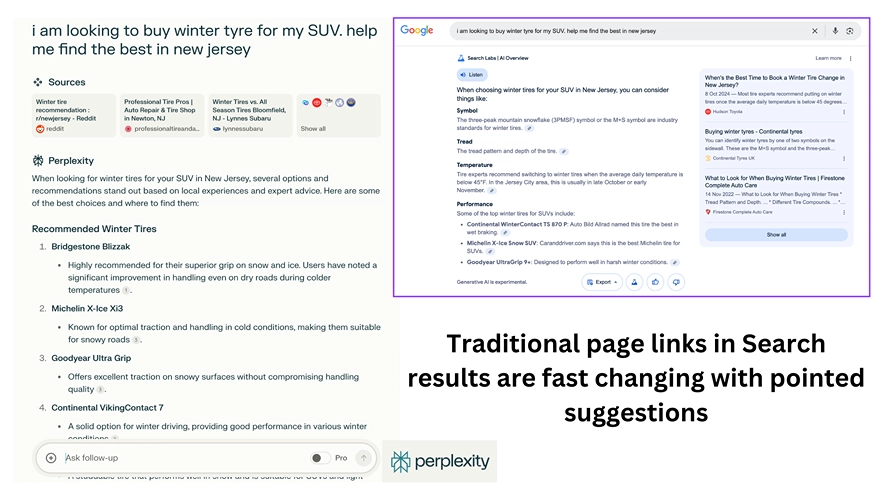
Screenshot showing the impact of AI crawlers on top of funnel traffic from Google and Perplexity examples for AI powered responses
SEO Multiplier: Double Your Impact
The same SEO best practices that optimize your site for search engines also help AI crawlers. This creates a powerful multiplier effect. A single optimization effort enhances both traditional search visibility and AI influence. By adapting to this dual-purpose approach, you can double your digital impact. This guide will help you understand this new landscape.
Try Digispot AI to audit your website's SEO.
1. AI Crawler Scale: Are You Visible?
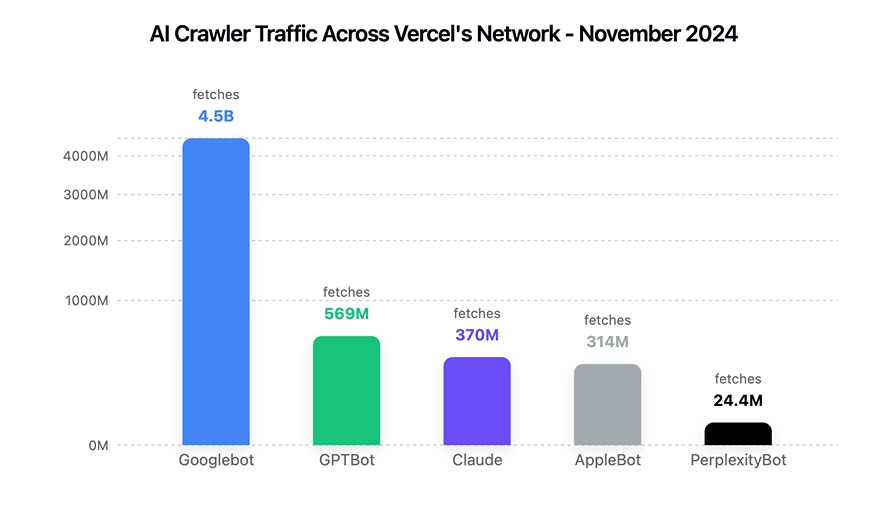
AI crawlers now generate over 1.3 billion monthly requests. ChatGPT (569 million) and Claude (370 million) lead the charge. Ignoring this trend risks invisibility to AI-powered discovery. The first practical step is to confirm these bots are reaching you at all: check your server logs for agents such as GPTBot, OAI-SearchBot, ClaudeBot, Google-Extended, and PerplexityBot. If a crawler never fetches a page, that page can never appear in an AI answer. Once you know they are arriving, the goal shifts to measuring whether your content is actually being cited, and tracking your AI search engine rankings makes that visibility measurable rather than a guess.
How to Avoid It:
- Implement comprehensive AI crawler monitoring by reviewing logs for known AI user agents and their fetch frequency
- Track AI platform representations of your content, noting where and how you are cited in ChatGPT, Claude, Gemini, and Perplexity answers
- Regularly audit your website's AI accessibility, prioritizing your highest-value pages first
2. JavaScript Rendering: What Can AI See?
Most AI crawlers don't execute JavaScript. Only Google Gemini and AppleBot show full rendering capabilities. Your JavaScript-rendered content may not be fully understood. They may only see the bare bones. Dynamic rendering can help.
How to Avoid It:
- Prioritize server-side rendering for critical content
- Implement proper fallbacks for JavaScript functionality
- Use progressive enhancement techniques
- Test your site with JavaScript disabled
3. Content Type Preferences: What Do They Want?
AI crawlers show distinct preferences in content types. ChatGPT prioritizes HTML (57.70%), while Claude focuses heavily on images (35.17%). Misaligning your content strategy risks poor representation. Learn more about optimizing content for LLMs to match how these systems ingest information.
How to Avoid It:
- Balance content types based on crawler preferences
- Optimize image metadata and descriptions
- Structure HTML content for maximum clarity
- Implement comprehensive schema markup
4. Crawler Efficiency: Reduce Errors
High error rates plague AI crawlers. Both ChatGPT and Claude show over 34% 404 errors. Poor technical optimization leads to misrepresentation.
How to Avoid It:
- Maintain clean URL structure
- Implement proper redirects
- Regular sitemap updates
- Monitor and fix crawl errors promptly
5. Geographic Distribution: Where Are They Located?
All major AI crawlers operate from US data centers. This differs from traditional search engines' global distribution. This impacts content delivery.
How to Avoid It:
- Optimize content delivery for US data centers
- Implement CDN solutions
- Monitor regional performance
- Consider global content distribution strategies
6. Technical SEO Foundation: Build a Solid Base
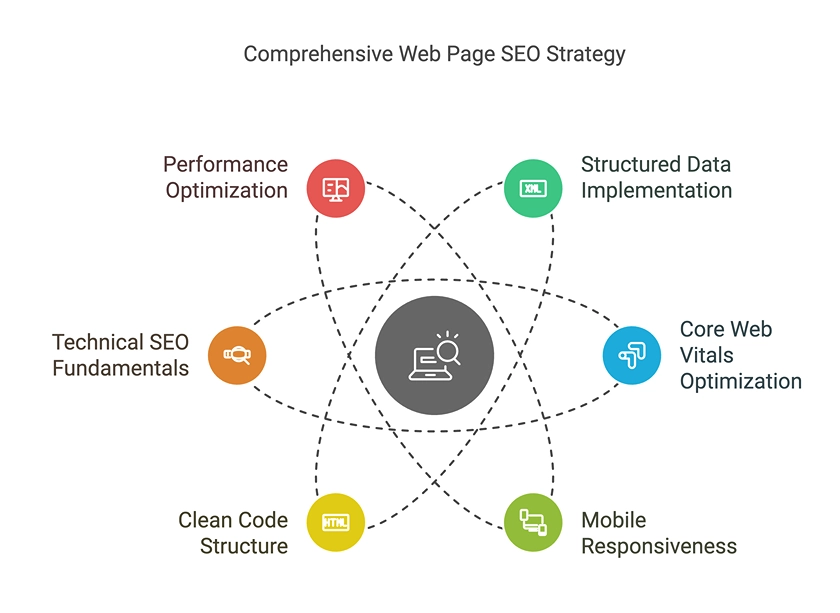
Poor technical implementation prevents AI crawlers from understanding your content. They rely on clean code and metadata. A strong technical SEO foundation is key.
How to Avoid It:
-
Implement proper structured data
- Use Schema.org markup for your content type (Article, Product, FAQ, etc.)
- Include comprehensive organization and breadcrumb markup
- Implement author and publication date schemas
- Add detailed product schemas with pricing, availability, and reviews
-
Optimize Core Web Vitals
- Maintain LCP (Largest Contentful Paint) under 2.5 seconds
- Keep FID (First Input Delay) below 100ms
- Ensure CLS (Cumulative Layout Shift) is less than 0.1
- Monitor Web Vitals through real user metrics (RUM)
-
Ensure mobile responsiveness
- Implement responsive design patterns
- Use appropriate viewport meta tags
- Test across multiple device sizes
- Ensure touch targets are properly sized (minimum 48x48px)
- Maintain readable font sizes on mobile (minimum 16px)
-
Maintain clean code structure
- Use semantic HTML elements (nav, main, article, section)
- Implement proper heading hierarchy (h1-h6)
- Ensure consistent HTML structure across pages
- Minimize unnecessary div nesting
- Keep CSS and JavaScript files optimized and minified
-
Technical SEO fundamentals
- Implement XML sitemaps with proper indexing
- Maintain a clean robots.txt file
- Use canonical tags appropriately
- Implement proper hreflang tags for international content
- Ensure proper HTTP status codes and handling
-
Performance optimization
- Enable server-side rendering for critical content
- Implement proper caching strategies
- Optimize image delivery with WebP/AVIF formats
- Use lazy loading for below-the-fold content
- Minimize render-blocking resources
7. Content Architecture: Create Clear Hierarchy
Unclear content hierarchy confuses AI crawlers. This results in incomplete representation.
How to Avoid It:
- Create clear content hierarchies
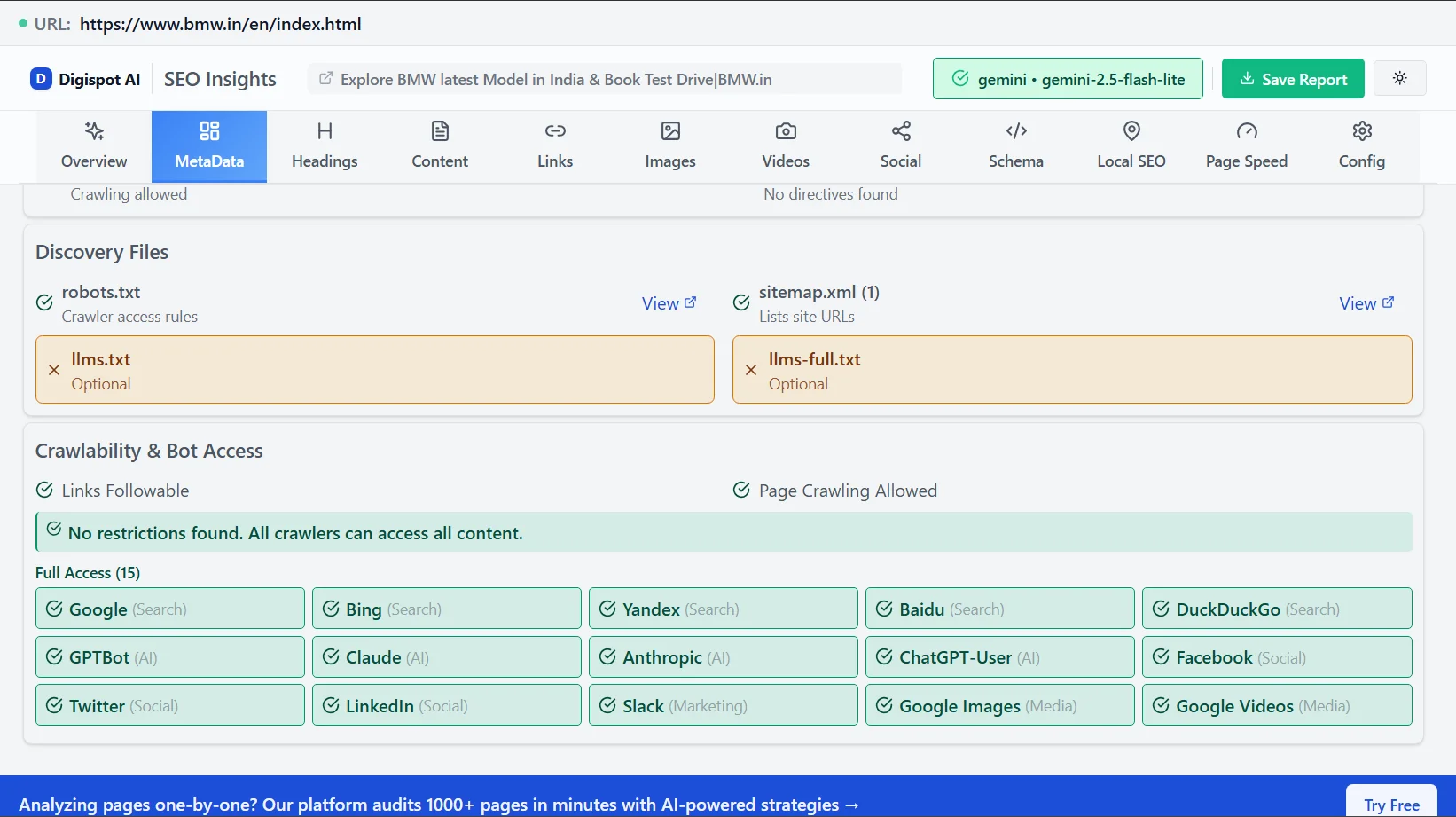
- Explicitly allow AI crawlers to crawl your content, if you don't want them to crawl your content, you can configure your robots.txt file to block specific crawlers
- Take care of your sitemap index, sitemap files with their size to stay within the limits.
- Implement readable hierarchy of your URLs
- Implement proper heading structure in each page
- Use semantic HTML elements
- Maintain consistent entity relationships
- Follow Image SEO best practices with alteast alt text and title attributes
8. Performance Metrics: Optimize Core Web Vitals
Poor performance metrics affect user experience and AI crawler efficiency. Sites with poor Core Web Vitals see reduced crawler coverage.
How to Avoid It:
- Monitor Core Web Vitals
- Optimize image delivery
- Minimize render-blocking resources
- Implement proper caching strategies
9. Entity Recognition: Define Your Brand
Poor entity definition leads to confusion about your products and brand. AI systems build knowledge models around entities, the people, products, organizations, and places your content describes. If your brand is referenced inconsistently or lacks explicit signals, an AI system may conflate you with a competitor, attribute the wrong attributes to your products, or omit you from an answer entirely. Strong entity definition tells the model exactly who you are and how your offerings relate to one another. Explicit structured data and schema markup is the most reliable way to send those signals.
How to Avoid It:
- Implement comprehensive schema markup, using Organization, Person, and Product types with
sameAslinks to your authoritative profiles (Wikipedia, Crunchbase, LinkedIn, official social accounts) - Define clear entity relationships so AI understands that a product belongs to a brand, an author writes for a publication, and a service is offered in a location
- Maintain consistent brand terminology across every page, avoiding variant spellings, abbreviations, or product names that fragment your identity
- Use proper attribute tagging so key facts (founding date, category, price, availability) are machine-readable rather than buried in prose
10. Monitoring and Adaptation: Stay Updated
The AI crawler landscape evolves rapidly. Without monitoring, your optimization efforts become outdated.
How to Avoid It:
- Implement continuous monitoring
- Regular optimization updates
- Track AI platform representations
- Adapt to new crawler behaviors
Get instant insights with our free Chrome extension.
Optimize for AI Crawlers Today
The rise of AI crawlers is a fundamental shift. Your website must evolve to ensure accurate representation. Regular audits and technical optimization are essential. Are you ready for AEO?
Digispot AI helps you understand your website's AI readiness. We cover the points mentioned above and more. In minutes, you can get insights on how to improve. We guarantee business growth. You'll save time and money using our tool.
Get Your AI Readiness Audit Now
References
- Vercel - The Rise of AI Crawlers: Vercel Blog
- JavaScript Rendering Study: MERJ and Vercel Research
- Web Almanac - AI Crawlers: Web Almanac
Audit any page in seconds
300+ SEO checks including Core Web Vitals, schema markup, meta tags, and AI readiness — trusted by 1000+ SEO experts and marketers.
Frequently Asked Questions
Here are some of our most commonly asked questions. If you need more help, feel free to reach out to us.
Written by
Maya Krishnan
Digital growth expert
Maya is a seasoned expert in web development, SEO, and digital strategy, dedicated to helping businesses achieve sustainable growth online. With a blend of technical expertise and strategic insight, she specializes in creating optimized web solutions, enhancing user experiences, and driving data-driven results. A trusted voice in the industry, Maya simplifies complex digital concepts through her writing, empowering readers with actionable strategies to thrive in the ever-evolving digital landscape.