Microsoft Bing SEO: Ranking Factors & Optimization
Optimize for Microsoft Bing search engine. Learn Bing-specific ranking factors, Webmaster Tools setup, and strategies to capture untapped search traffic.
 Maya Krishnan
Are you leaving 20% of your potential revenue on the table? While Google dominates the headlines, Microsoft Bing silently commands a massive, high-value segment of the search market. For many industries, particularly B2B and desktop-heavy sectors, Bing is not just a secondary channel—it is a primary driver of high-intent traffic. Imagine a reservoir of customers who are already searching for your solutions but aren't finding you because your strategy is exclusively Google-focused.
Optimizing for Bing is no longer just about "being thorough." In the era of AI-driven search, Bing has reinvented itself with Copilot and deep integration into the Windows ecosystem. Ignoring this platform means missing out on millions of users on Windows 11, Xbox, and Office 365 who default to Bing services daily.
This guide moves beyond generic advice. We will explore the technical nuances of Bing’s algorithm, from its unique handling of meta data to its reliance on social signals. You will learn how to deploy strategies that capture this unique audience without doubling your workload. Let’s unlock the full potential of your search visibility.
Key Takeaways
- Optimize for precision, not just semantics. Place your exact target keyword at the start of your title tag and align your H1 to match—Bing rewards literal relevance more than Google does.
- Verify in Bing Webmaster Tools and adopt IndexNow. Submit a clean XML sitemap, then use IndexNow to push instant notifications so new and updated pages get indexed within minutes.
- Treat social signals as a ranking lever. Bing weighs shares and engagement from platforms like Facebook, LinkedIn, and X, so pair your on-page work with an active social distribution plan.
- Prioritize desktop UX and multimedia. With a desktop-heavy, higher-income audience, keep the desktop experience fast, add high-resolution images, and structure content to feed Bing Copilot and Cortana answers.
- Set up Bing Places and structured data separately. Bing ignores Google Business Profile signals, so create a Bing Places listing and validate your schema to earn rich results and local visibility.
What is Microsoft Bing SEO?
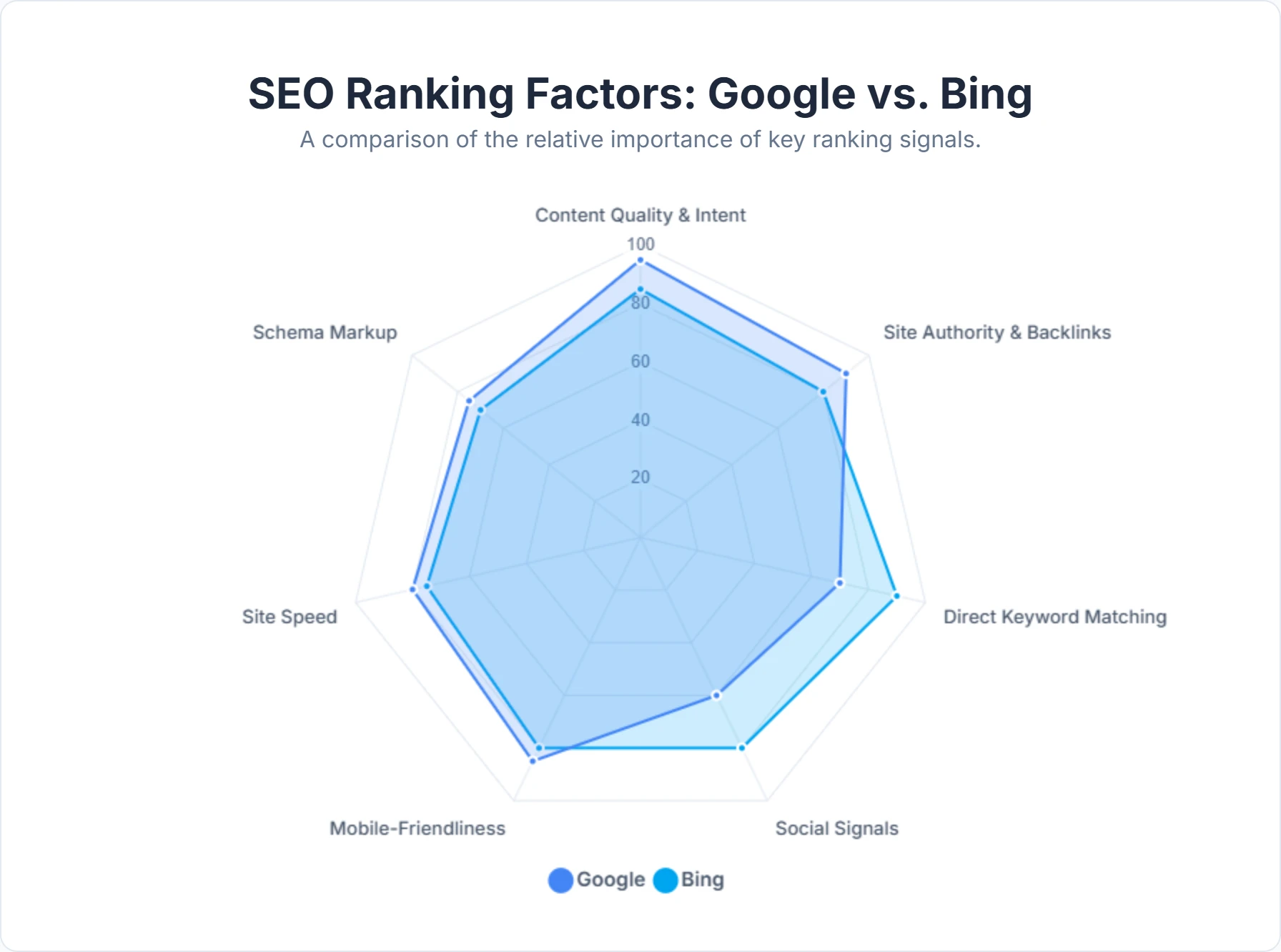
Microsoft Bing SEO involves tailoring your website's technical structure, content, and off-page signals to align with the specific ranking algorithms of the Bing search engine. While it shares many foundational principles with Google SEO—such as the need for fast load times and high-quality content—Bing operates on a distinct set of rules.
To succeed here, you must understand that Bing is not just a clone of Google. It uses a different codebase and prioritizes different signals. For instance, while Google has moved heavily towards semantic understanding and "fuzzy" matching, Bing's algorithms still appreciate precision. This means the way you handle keywords, headers, and metadata needs to be sharper and more deliberate.
Key Characteristics of Bing's Search Engine:
- Microsoft Ecosystem Integration: Bing is the nervous system of Microsoft's products. It powers search in Windows, the Edge browser, Microsoft 365, and Cortana. When a user hits "Search" on their Windows taskbar, they are using Bing. This creates a captive audience that often doesn't visit Google for quick queries.
- Emphasis on Social Signals: Bing has historically been transparent about using social media metrics as a direct ranking factor. If your content goes viral on Facebook or LinkedIn, Bing takes notice and may boost your organic rankings as a result.
- Literal Keyword Matching: While Bing uses AI to understand intent, it is generally more literal than Google. It relies more heavily on finding the exact target keyword in the title tag and H1 header to confirm relevance.
- Multimedia-First Approach: Bing's search results page (SERP) is visually richer. It often displays large image blocks and video carousels above text results. Optimizing for visual search is far more critical on Bing than on other engines.
- Desktop Dominance: Due to its integration with corporate IT environments and desktop operating systems, Bing's traffic is disproportionately desktop-based. This influences how you should view user experience metrics and conversion rate optimization for this channel.
- The IndexNow Protocol: Unlike Google's reliance on crawl budgets and periodic bot visits, Bing pushes for an "instant indexing" model via IndexNow, allowing you to notify the engine the moment content changes.
Why Optimize for Bing?
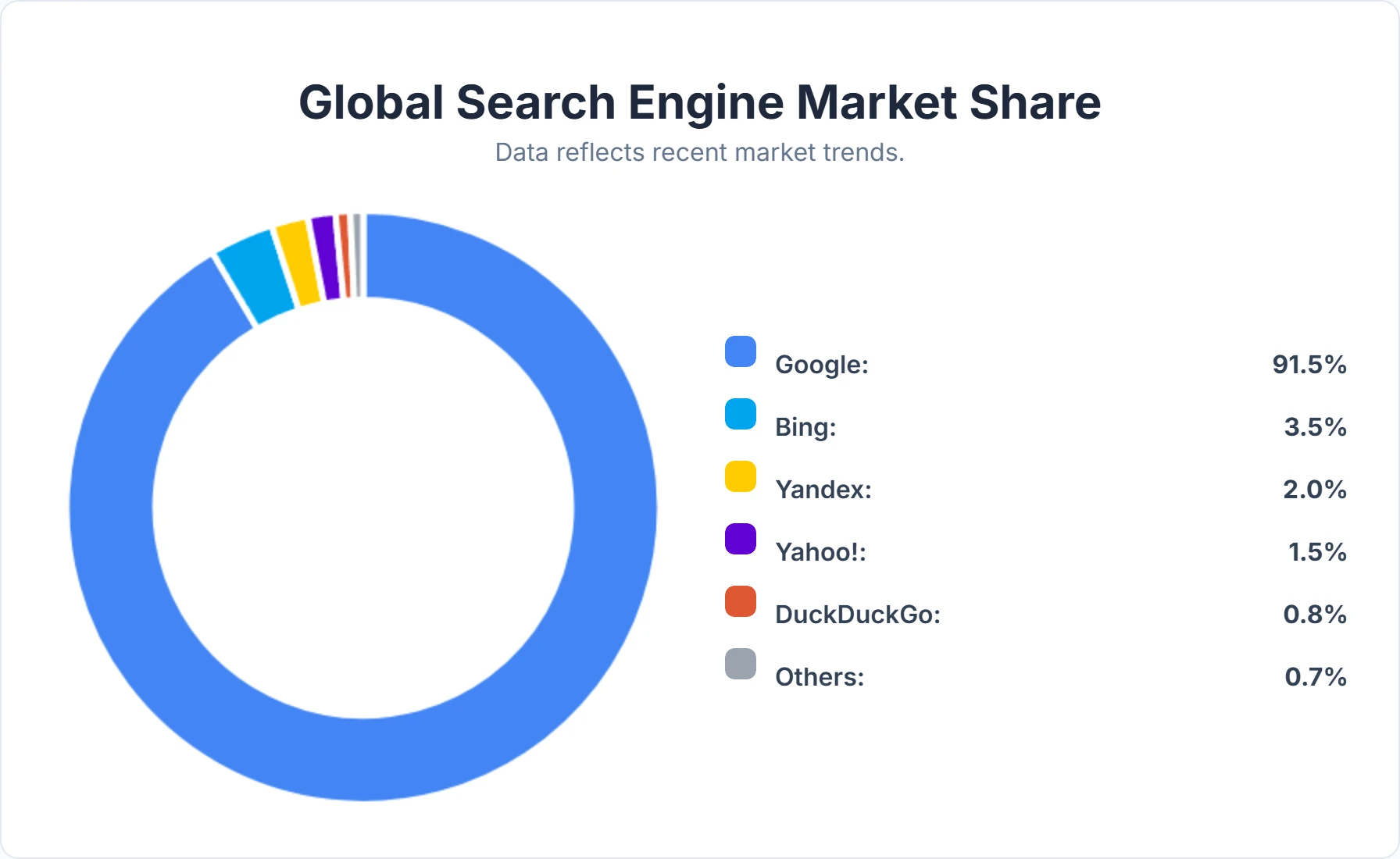
It is easy to dismiss Bing based on global market share numbers, but those averages hide specific realities. In the United States, for example, Bing's share is significantly higher, specifically on desktop devices where high-value purchases often occur.
Strategic Advantages of a Bing-First Approach:
- Access to a High-Income Demographic: Data consistently shows that the average Bing user is older (35+) and has a higher household income compared to the average Google user. This demographic is often less tech-savvy, sticking to default browser settings, but they have significant purchasing power.
- Lower CPC and Competition: Because most SEOs and advertisers fixate on Google, Bing is less saturated. You can often achieve number one rankings on Bing for keywords that would take years to conquer on Google. This applies to paid search as well, where Cost Per Click (CPC) is frequently lower.
- Traffic Diversification: Relying on a single source of truth is a vulnerability. A core update on Google can wipe out 50% of your traffic overnight. A strong presence on Bing acts as an insurance policy, diversifying your risk and stabilizing your lead flow.
- Voice and Console Search: Bing powers the voice search for Amazon's Alexa devices (in many contexts) and the search functionality on Xbox consoles. Optimizing for Bing positions you to capture voice queries and living-room searches that Google misses.
- Local SEO Opportunities: Bing Maps and local listings feed into the entire Windows ecosystem. A user asking Cortana for a "coffee shop near me" will be served Bing Local results. If you ignore this, you are invisible to voice-assisted local searches.
How to Optimize Your Website for Microsoft Bing: A Comprehensive Guide
Understanding the "why" is motivation; understanding the "how" is execution. Below is a detailed breakdown of the optimization strategies that move the needle on Bing.
1. Content is King: Relevance and Readability
Bing prefers content that is comprehensive and easy to digest. While Google might rank a forum thread for a specific query, Bing tends to favor structured, authoritative articles.
- Content Authority: Bing values "static" authority. It wants to see that a page has existed for a while and contains well-researched information. Ensure your content cites sources and links out to other authoritative domains.
- Readability: Bing explicitly mentions readability as a factor. Use short paragraphs and clear formatting.
- Multimedia Integration: Break up text with images and videos. Since Bing is visual-heavy, an article with embedded videos and relevant high-res images will often outrank a text-only wall of words.
Action Step: Audit your top 10 pages. Do they have clear H1 and H2 structures? Are there images with descriptive alt text? Digispot AI can help you identify content gaps and structure issues automatically with AI-powered audits.
2. Keyword Strategy: The Art of Precision
This is where many SEOs trip up. They apply Google's "semantic drift" logic to Bing and lose relevance.
- Exact Match Titles: On Google, you might get away with a clever, punny title. On Bing, if you want to rank for "Best CRM Software," that exact phrase should ideally be at the start of your Title Tag.
- Meta Descriptions: Bing actually uses meta descriptions for ranking signals more than Google. Treat your description not just as ad copy for CTR, but as a place to reinforce your primary keyword. To get this right, you can check our meta tags optimization guide for detailed best practices.
- Header Tags: Ensure your H1 matches your Title Tag closely. H2s should contain direct keyword variations.
- Anchor Text: Internal link anchor text should be descriptive and specific. Avoid "click here." Use "learn about Bing SEO" instead.
3. Technical SEO: IndexNow and Clean Code
Technical SEO for Bing is less about "hacking" the crawler and more about following strict standards.
- IndexNow Protocol: This is a game-changer. Instead of waiting for Bingbot to crawl your site, you push a notification to Bing whenever you create, update, or delete a URL. Setup is straightforward: generate an API key inside Bing Webmaster Tools, host the resulting text file at your domain root (so Bing can verify ownership), then send a simple HTTP request containing each changed URL. Most major CMS platforms and CDNs—including WordPress, Cloudflare, and Wix—ship plugins or native integrations that fire these pings automatically, so once configured it runs hands-free and keeps your content fresh in the index within minutes.
- JavaScript Handling: Bing has improved its ability to render JavaScript, but it is not as advanced as Google. Whenever possible, rely on server-side rendering (SSR) or dynamic rendering to ensure Bing sees your content immediately. If Bingbot fetches a near-empty HTML shell and has to wait for scripts to execute, key content and links may be missed or indexed late.
- Sitemaps: Keep your XML sitemap clean. Bing has reported that dirty sitemaps (containing 404s or redirects) can cause them to distrust the sitemap entirely. Submit only canonical, indexable URLs that return a 200 status, keep the file under Bing's size limits, and reference it in your robots.txt. Our walkthrough on how to create and submit a sitemap covers the format and submission steps in detail.
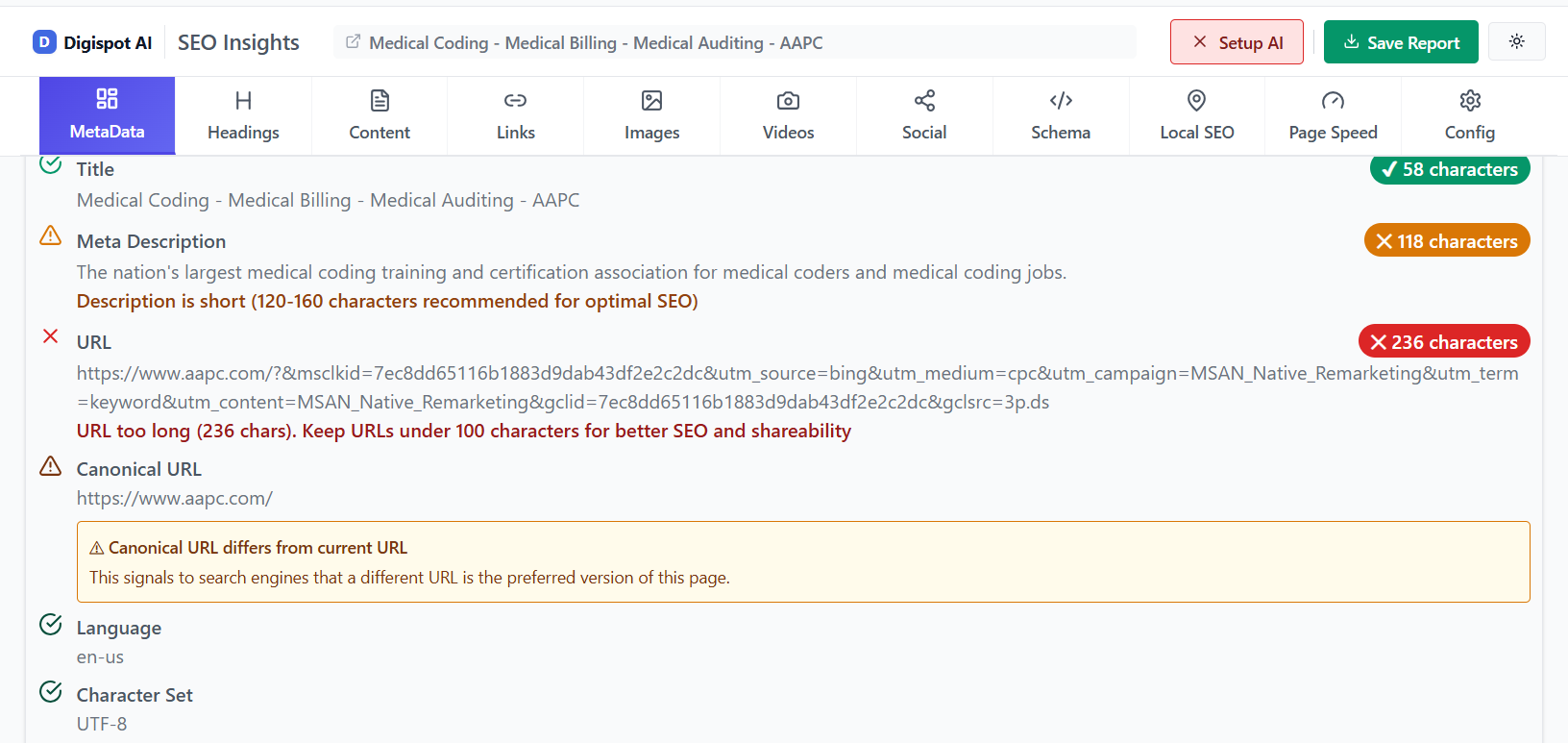
- Clean URLs: Bing struggles more with complex parameters.
example.com/product?id=123is harder for it to rank thanexample.com/product/blue-widget.
Pro Tip: If you are unsure about your technical health, get instant SEO insights on any page with our free Chrome extension. It visualizes technical issues that might block Bingbot.
4. Schema Markup: Speaking Bing's Language
Structured data is critical for Bing. It powers the rich features in their SERPs and feeds the knowledge base used by Copilot.
- Breadcrumbs: Essential for Bing to understand site hierarchy.
- Product Schema: Crucial for e-commerce. Bing displays price history and availability directly in results.
- FAQ Schema: Bing often pulls these into the chat interface.
- Visualizing Schema: It is easy to make syntax errors with JSON-LD. Use the free Schema Markup Visualizer to verify that Bing can read your data correctly.
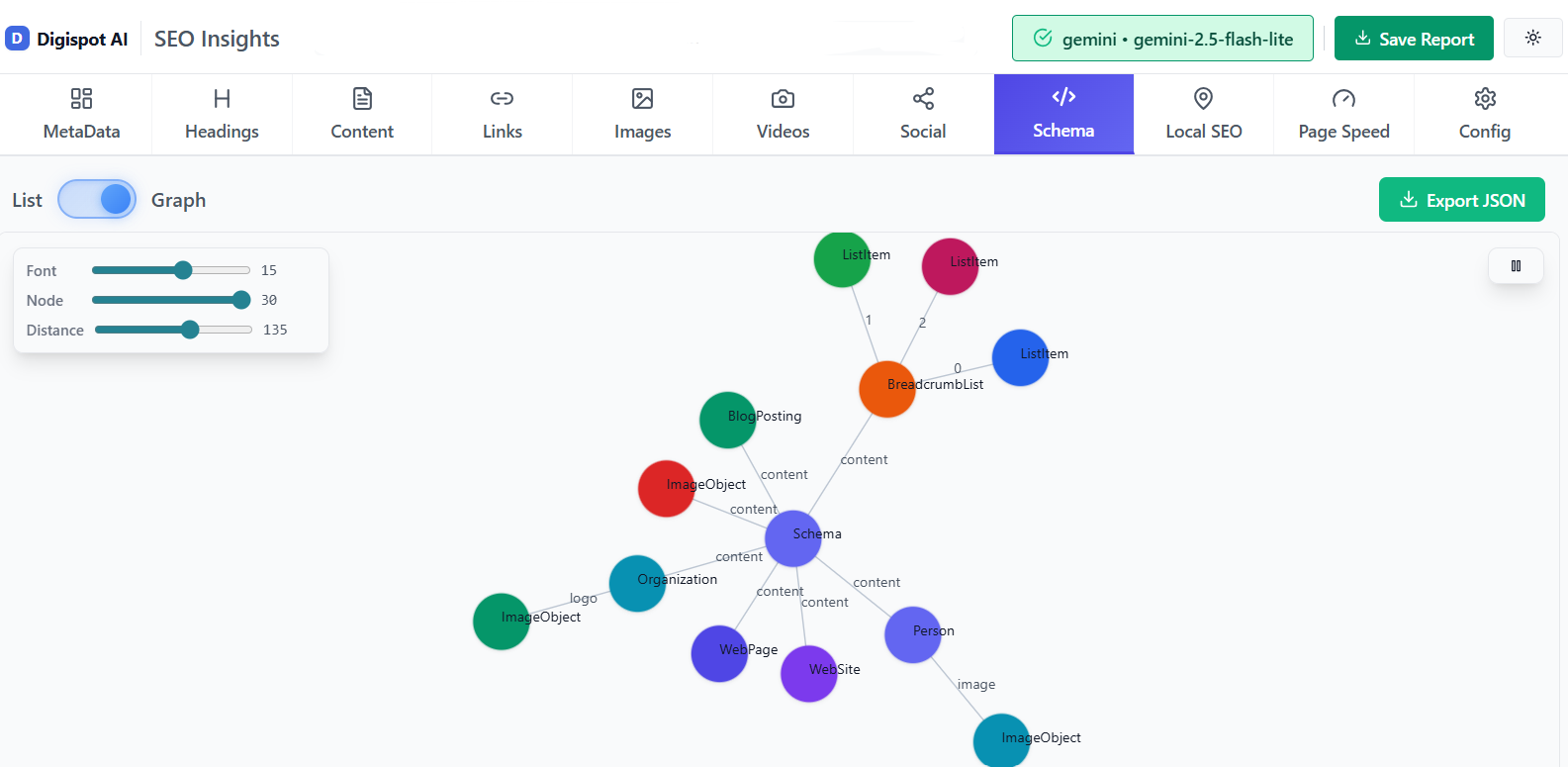
Turn invisible SEO data into clear visuals with our Free Chrome extension.
For a deeper dive into how structure impacts visibility, read our guide on on-page SEO best practices.
5. Backlinks: Quality and Anchor Text
Bing's link graph is smaller than Google's, so it prioritizes quality signals differently.
- Domain Age Matters: A link from a 10-year-old domain is worth significantly more than one from a brand new site, even if the new site has high metrics in third-party tools.
- Extension Bias: Bing has a historical preference for
.gov,.edu, and.orgdomains as trust signals. - Quantity vs. Quality: Bing is less sensitive to sheer volume. A handful of high-trust links will move the needle more than hundreds of low-quality directory links. If you are starting from a weak profile, our guide on how to improve your website's backlink profile outlines where to focus first.
6. User Experience (UX): Clarity and Engagement
Microsoft offers a free tool called Microsoft Clarity, which is similar to Hotjar. Their promotion of this tool suggests that user behavior metrics are significant to them.
- Pogo-Sticking: If a user clicks your result and immediately goes back (bounces), Bing penalizes this heavily.
- Click-Through Rate (CTR): High CTR validates relevance. To improve this, focus on compelling titles and rich snippets. Learn more about boosting these metrics in our CTR optimization guide.
- Site Speed: While important, Bing is slightly more forgiving of slower mobile speeds than Google, provided the desktop experience is snappy.
7. Social Signals: The Hidden Ranking Factor
This is the most distinct difference. If you have a strong social media presence, you are already doing Bing SEO.
- Viral Content: If a page gets thousands of shares on X (Twitter) or Facebook, Bing sees this as social validation and boosts the URL.
- Social Profile Linking: Ensure your social profiles link to your site, and your site links to your profiles. This connects the "entity" of your brand in Bing's Knowledge Graph.
- Implementation: Use Open Graph (OG) tags correctly so that when your content is shared, it looks appealing, driving more engagement that Bing can track.
8. Local SEO: Bing Places
Bing does not use Google Business Profile data. You must set up Bing Places for Business. Because Windows, Edge, and Cortana all route local queries through Bing, a missing or stale listing means you are invisible to a meaningful slice of nearby searchers.
- Verification: You can actually import your verified Google Business Profile directly into Bing Places. This saves time and ensures consistency. If you manage several locations, Bing supports bulk uploads via a spreadsheet, which is far faster than creating each listing by hand.
- Photos: Upload high-quality photos. Bing's local pack is very visual, so add your storefront, interior, team, and product shots at high resolution rather than a single logo.
- Categories: Be specific. Bing allows multiple categories; use them to cover all aspects of your service so you surface for every relevant local query.
- NAP Consistency: Your Name, Address, and Phone must match exactly across Bing Places, your website, and third-party directories. Discrepancies erode trust and split your local signals. The same fundamentals apply across engines, so a local SEO checklist is a useful companion when auditing your listings.
Leveraging AI for Enhanced Bing SEO: The Digispot AI Advantage
Artificial Intelligence is reshaping how search engines rank content, and conversely, how we optimize for them. Platforms like Digispot AI are built to navigate this new landscape, where Answer Engine Optimization (AEO) is becoming as important as traditional SEO.
How Digispot AI Accelerates Bing Optimization:
- Multi-Model Analysis: Digispot AI doesn't just look at code; it uses models like GPT-4 and Claude to analyze the context of your content. This helps ensure your text answers user queries directly—a key factor for ranking in Bing Copilot's chat responses.
- Schema Generation: Creating complex schema for Bing's rich results can be tedious. Use the free Schema Markup Generator to create valid structured data in minutes, ensuring you are eligible for those eye-catching visual snippets.
- Technical Health Monitoring: Bing is sensitive to crawl errors. Digispot AI monitors your site health 24/7, alerting you to 404s or server errors that could cause Bing to de-index your pages.
- Entity Optimization: Bing organizes the web by "entities" (people, places, things). Digispot AI helps you identify which entities are associated with your keywords, allowing you to build content that strengthens your topical authority.
Because Copilot draws heavily on Bing's index, the same structured, answer-first approach also determines whether your pages surface inside Microsoft's assistant—see our guide on how to get indexed on Microsoft Copilot for the specifics.
The Bigger Picture: Business Outcomes
Why invest resources here? Because the ROI of Bing SEO is often higher due to the intent of the user base.
| Business Outcome | How Bing SEO & Digispot AI Contribute |
|---|---|
| High-Value B2B Leads | Bing is the default engine on millions of corporate PCs. Optimizing here puts you directly in front of decision-makers during their workday. Digispot AI helps you target the "informational" queries these users search for. |
| Reduced Customer Acquisition Cost | With lower organic competition, you spend less effort to rank. Digispot AI's "Opportunity Finder" locates low-hanging fruit keywords where Bing volume is high but competition is low. |
| Future-Proofing for AI Search | Bing is leading the charge with Copilot. Strategies that work for Bing (structured data, direct answers) are the exact strategies needed for AI visibility. Digispot AI's AEO tracking prepares you for this shift. |
Advanced Bing Tactics: Multimedia and Voice
To truly dominate Bing, we need to look at two specific areas where it behaves very differently from Google: Visual Search and Voice.
Visual Search Optimization
Bing allows users to search with images (uploading a photo to find similar items) and presents image results more aggressively.
- High-Resolution Images: Bing prefers high-res images. Don't compress them to the point of pixelation.
- Descriptive Filenames:
IMG_1234.jpgis a wasted opportunity. Usemicrosoft-bing-seo-dashboard.jpg. - Image Sitemaps: Ensure your images are included in a dedicated image sitemap or your main sitemap.
Voice Search and Cortana
Cortana draws answers from Bing's featured snippets. To rank here:
- Conversational Keywords: Target long-tail, natural language queries (e.g., "How do I fix a leaking faucet" vs. "faucet repair").
- Concise Answers: Start your paragraphs with a direct answer to the question (30-50 words), then elaborate. This structure is ideal for voice readouts.
- Local Intent: Ensure your Name, Address, and Phone (NAP) data is consistent, as many voice searches are local.
These principles carry across every assistant, so a broader voice search SEO strategy will compound your Cortana gains.
For more on aligning your content with user questions, see our guide on search intent optimization.
Start Improving Your Bing Visibility Today
The digital landscape is too competitive to rely on a single channel. Microsoft Bing offers a unique, high-value audience that is often ignored by your competitors. By implementing the specific strategies outlined above—focusing on technical precision, exact-match relevance, and social signals—you can claim your share of this market.
Remember, optimization is an ongoing process. Tools like Digispot AI are designed to make this journey smoother, automating the technical heavy lifting so you can focus on strategy.
Ready to improve your search visibility? Try Digispot AI for comprehensive website audits and actionable recommendations that work across Google, Bing, and the new wave of AI search engines.
References
Audit any page in seconds
300+ SEO checks including Core Web Vitals, schema markup, meta tags, and AI readiness — trusted by 1000+ SEO experts and marketers.
Frequently Asked Questions
Here are some of our most commonly asked questions. If you need more help, feel free to reach out to us.
Written by
Maya Krishnan
Digital growth expert
Maya is a seasoned expert in web development, SEO, and digital strategy, dedicated to helping businesses achieve sustainable growth online. With a blend of technical expertise and strategic insight, she specializes in creating optimized web solutions, enhancing user experiences, and driving data-driven results. A trusted voice in the industry, Maya simplifies complex digital concepts through her writing, empowering readers with actionable strategies to thrive in the ever-evolving digital landscape.